Thangka & Dzi guides: meanings, craft and collecting
Explore thangka figures, meanings and painting processes, Dzi patterns and care, then return to individual works and collections.

Featured story
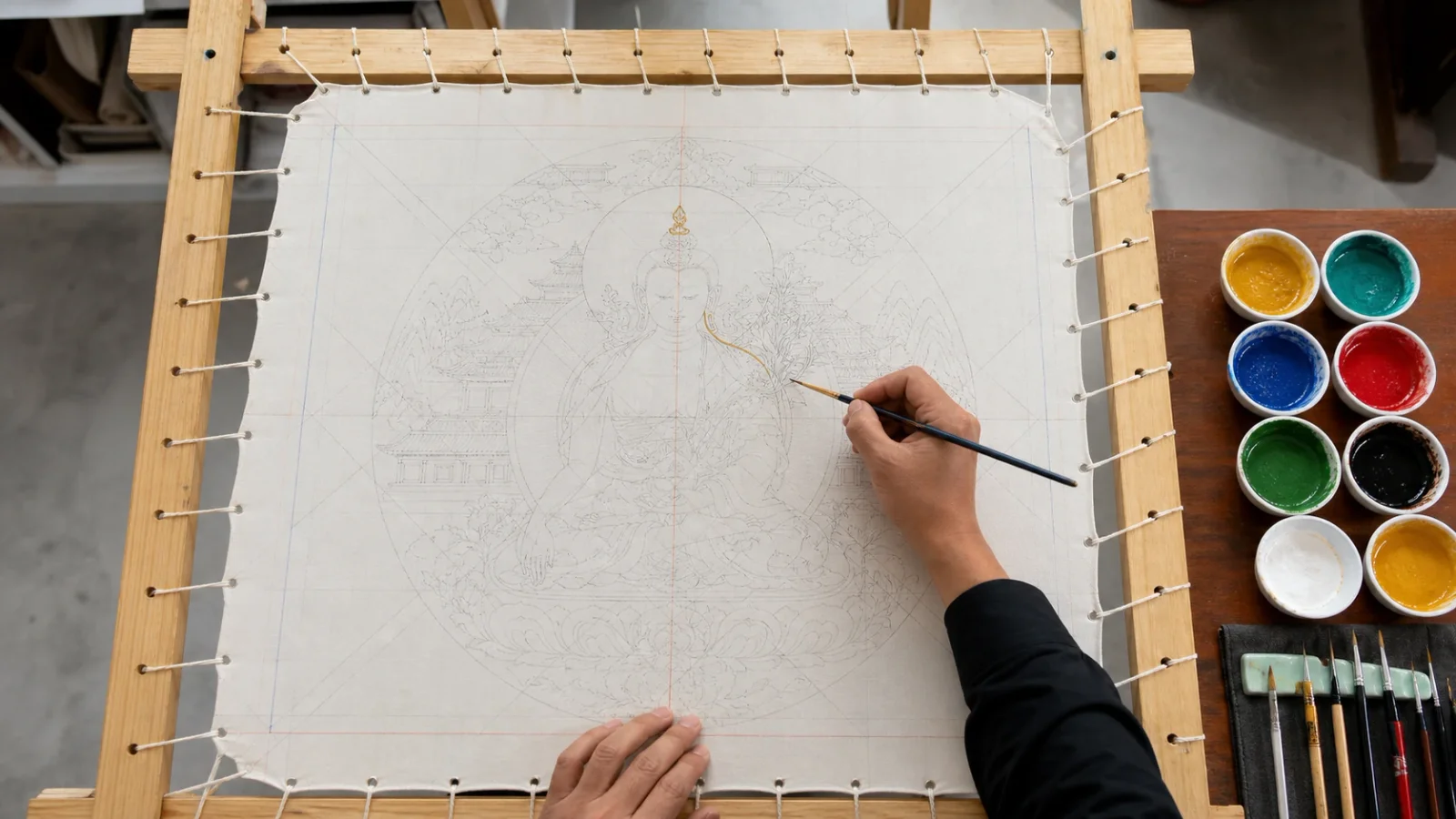
How is a Rebgong thangka made? Follow seven broad stages—from prepared cloth and measured drawing to linework, layered colour, fine detail, genuine 24K gold and final review.
Read article ↗
Subjects & Meaning
What is Yellow Jambhala? Learn the meaning of this Jambhala or Dzambhala form and identify it through the yellow or golden body, citron-like fruit, conch and jewel-releasing mongoose.
Read article ↗
Subjects & Meaning
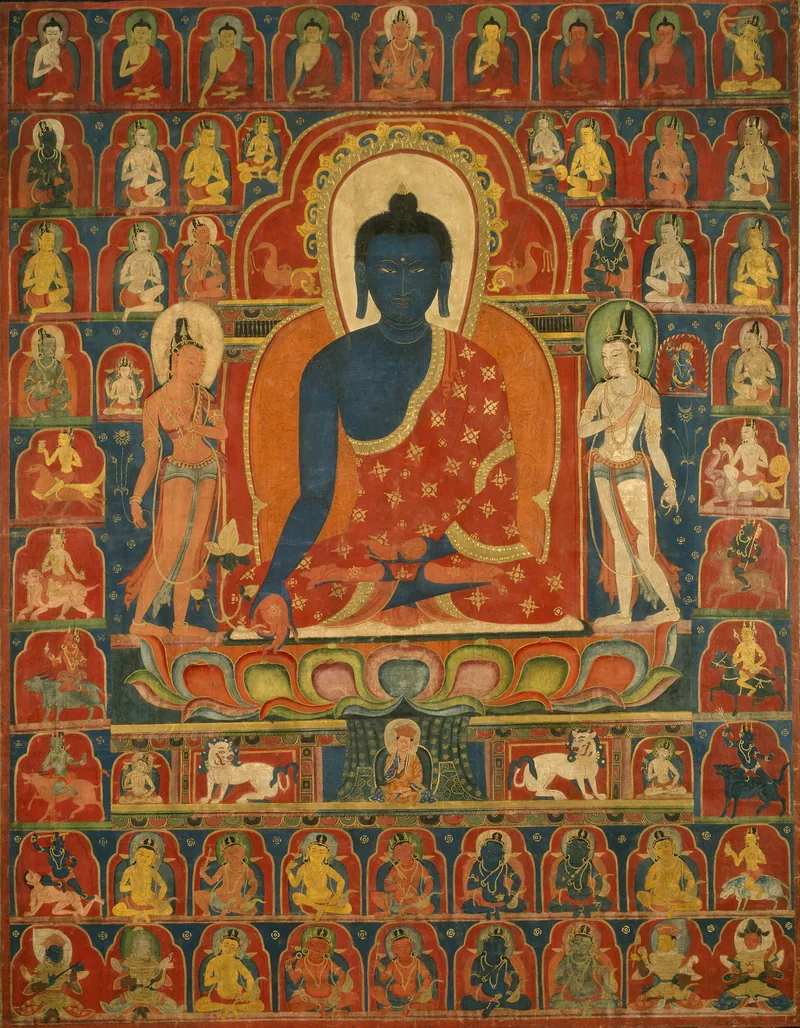
What is Medicine Buddha? Learn how the blue body, medicine bowl and medicinal plant identify Bhaiṣajyaguru, how his imagery varies, and how the subject is understood in traditional healing and compassionate care.
Read article ↗
Subjects & Meaning
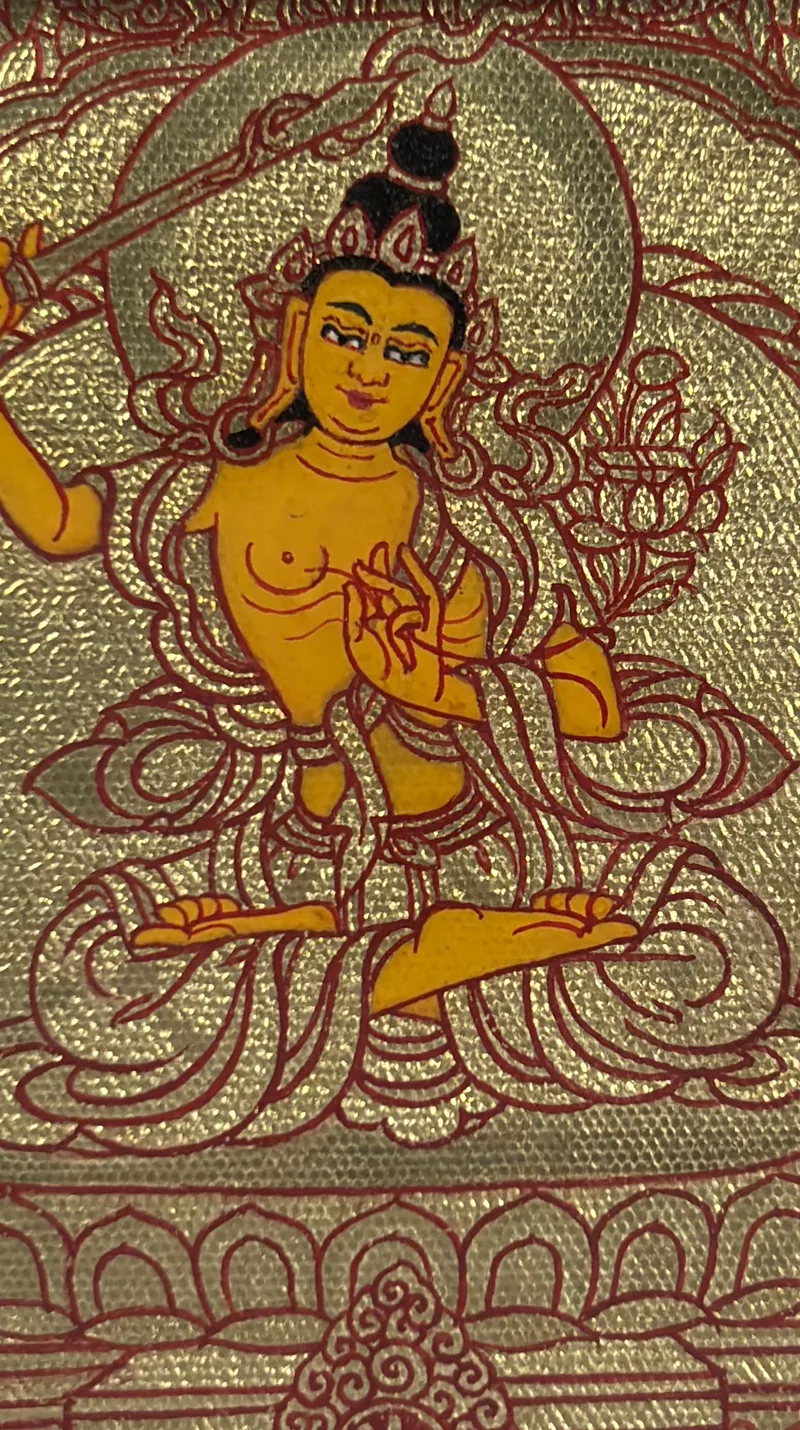
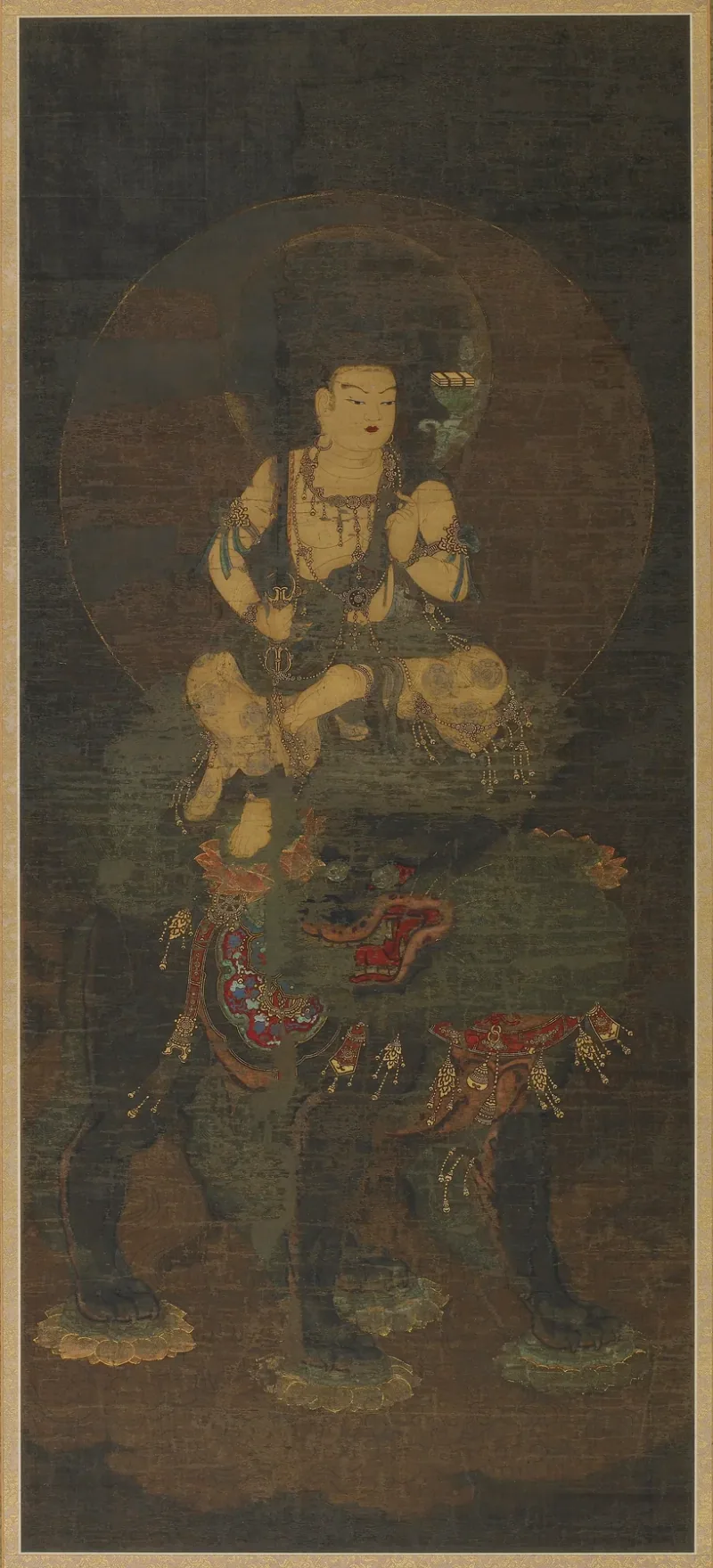
What is Manjushri in Buddhist art? Identify the wisdom bodhisattva through the flaming sword, lotus-borne Prajnaparamita text, youthful form and complete composition; some forms also include a lion mount.
Read article ↗
Subjects & Meaning
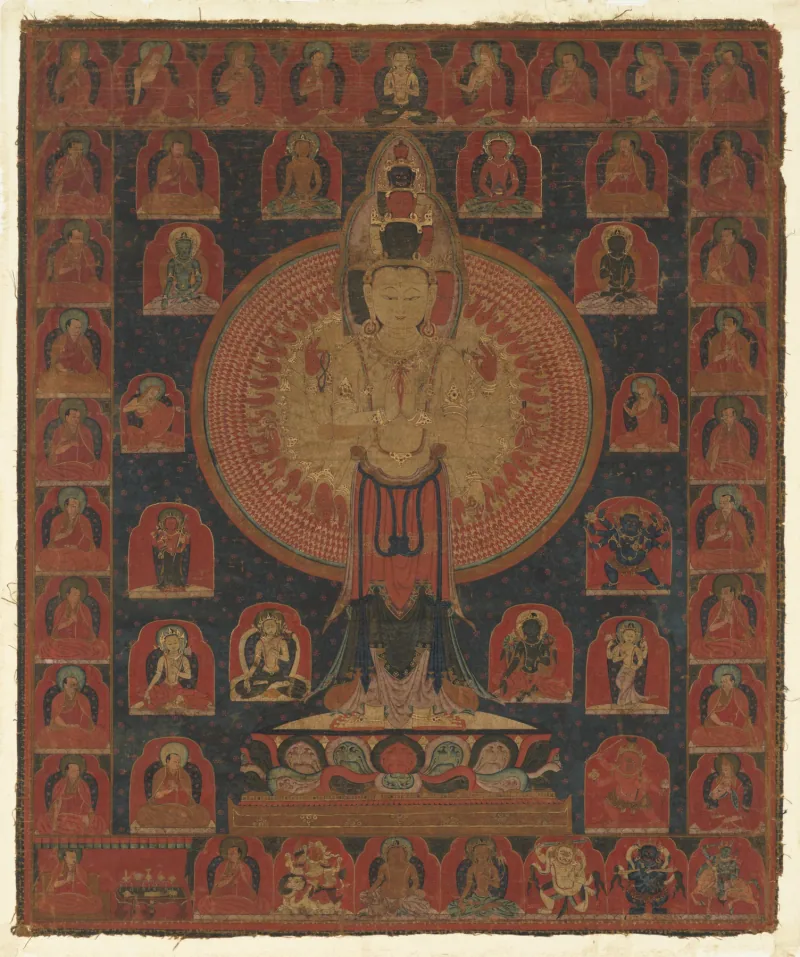
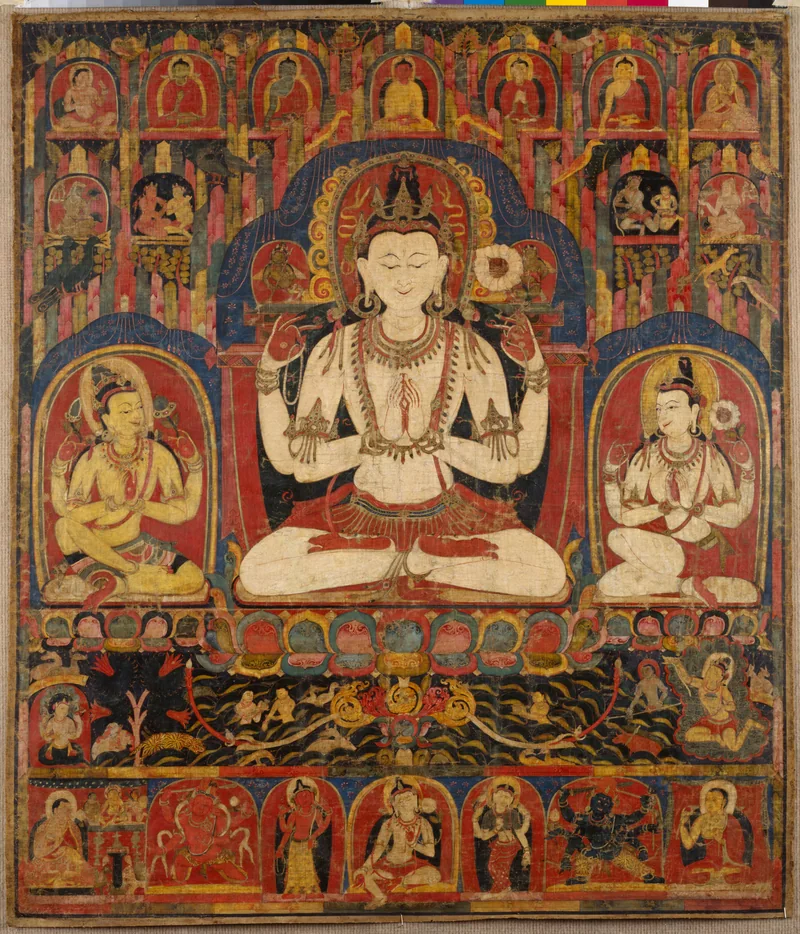
What is Four-Armed Avalokiteshvara? Learn how joined hands, four arms, mala and lotus identify a common Chenrezig form. Catalogues may use Chaturbhuja or Caturbhuja; one Met record uses Shadakshari Lokeshvara, a six-syllable form associated with Om Mani Padme Hum in Buddhist practice.
Read article ↗
Subjects & Meaning
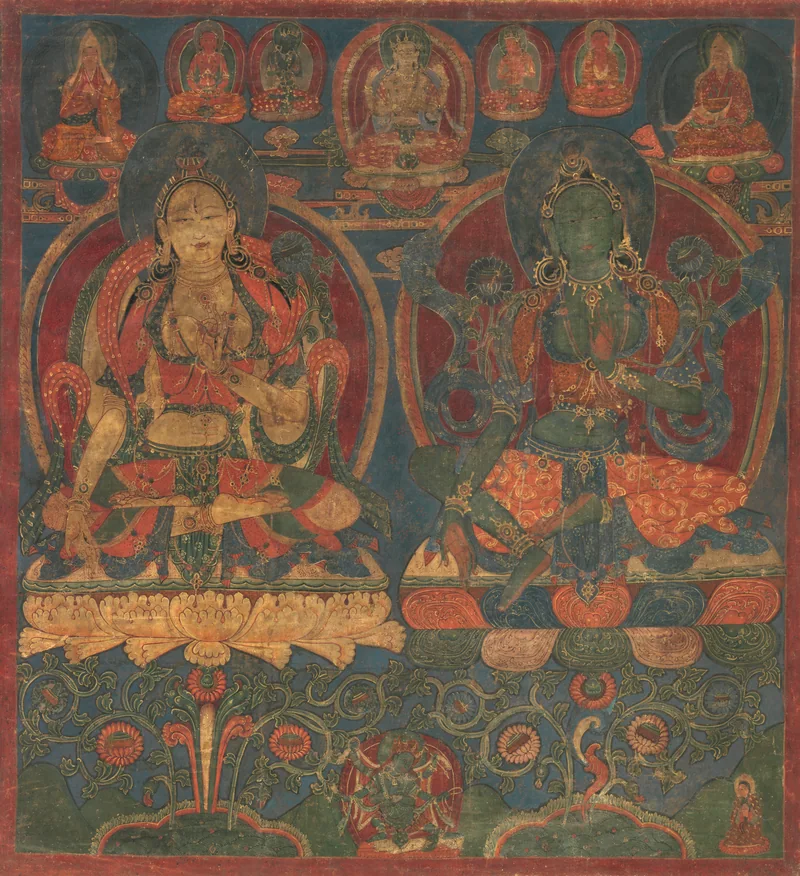
What does White Tara represent? Recognise White Tara—Sitatara—through seven eyes, a white lotus and seated posture, then place her long-life and watchful-care symbolism in its traditional context.
Read article ↗
Subjects & Meaning
What does Shakyamuni Buddha represent? Recognise Shakyamuni—Gautama Buddha—through monastic robes, the earth-touching gesture and the bowl, then read the awakening story behind those visual clues.
Read article ↗
Subjects & Meaning
Green Tara meaning and iconography explained through the green body, extended leg, open hand and lotus—and how Tibetan Buddhist traditions read these clues together.
Read article ↗
Subjects & Meaning
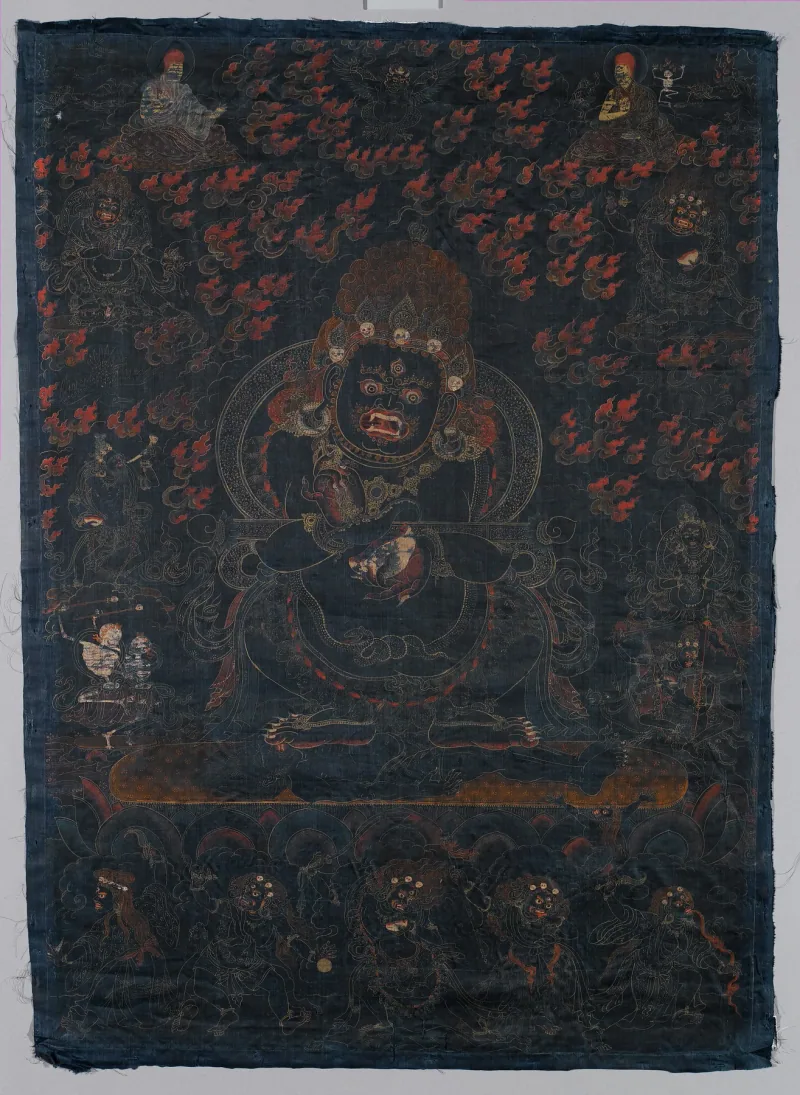
Why do wrathful deities look fierce? Learn how flames, fangs, skulls, weapons and posture work as an iconographic language in Himalayan Buddhist art.
Read article ↗
Collector Guides
How to assess whether a thangka is hand-painted: inspect measured drawing, line work, layered colour, gold detail and close photographs, then verify the individual work record.
Read article ↗
Collector Guides
What determines the price of a thangka? Learn how craft, materials, scale, condition, mounting, documentation and service shape an individual offer.
Read article ↗
Collector Guides
How to choose a Dzi bead: separate visible pattern and material from claims about age, authenticity and provenance, then assess dimensions, condition, treatment and evidence.
Read article ↗
Subjects & Meaning
What do Dzi bead eyes mean? Learn common one-, two-, three- and nine-eye labels, other motifs, and why eye patterns alone cannot prove age, material or authenticity.
Read article ↗
Subjects & Meaning
How to read a thangka: identify the central figure, then combine Buddhist mudras, lotus thrones, posture, attributes and surrounding figures.
Read article ↗
Collector Guides
How to choose a small or miniature thangka: compare the central figure, attributes, line, colour, actual dimensions, viewing distance and individual work record.
Read article ↗
Living with Art
Learn how to measure a thangka and plan its display: separate painted-image, mounting and overall dimensions, then check wall clearance, sightline, furniture and light.
Read article ↗
Living with Art
How to care for a thangka: use a practical routine for light, environment, handling, cleaning, storage and supported transport.
Read article ↗
Subjects & Meaning
What is Vairocana? Recognise Vairocana—also called Mahāvairocana or the Great Illuminator—through gesture, central placement, crown and retinue, and learn why this Buddha is linked with all-encompassing wisdom.
Read article ↗
Subjects & Meaning
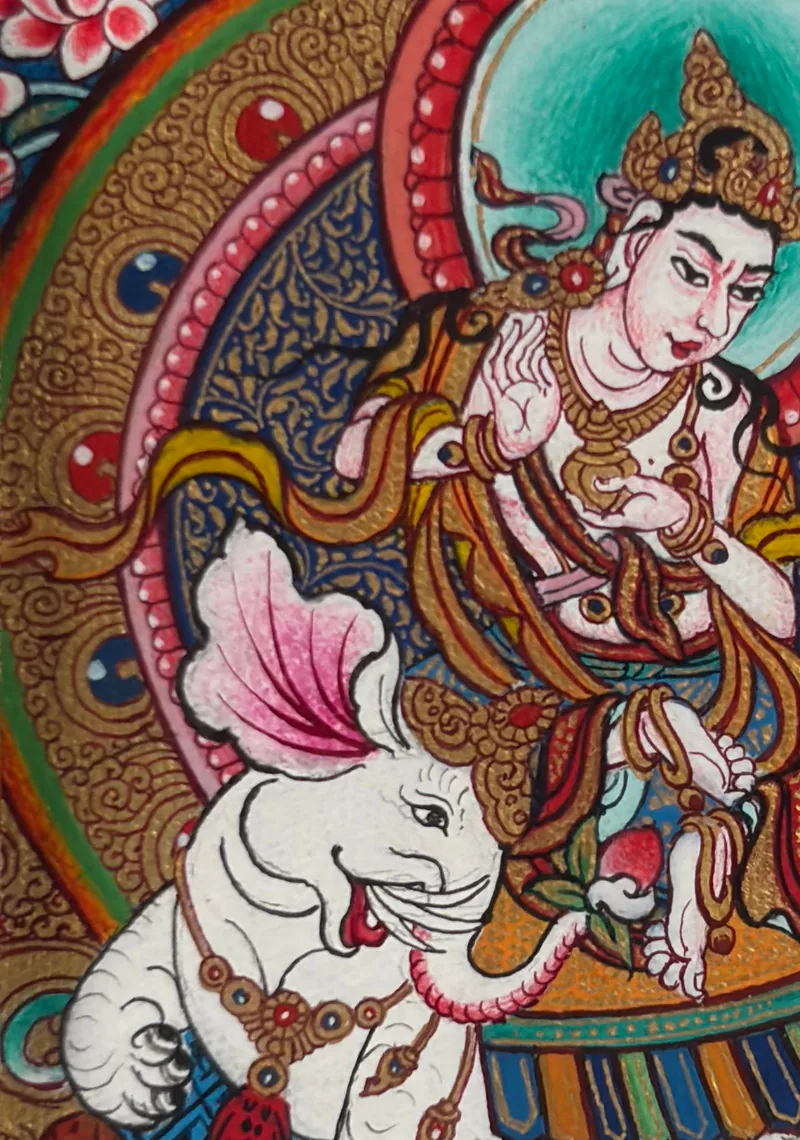
What does Samantabhadra represent? Recognise Samantabhadra—Puxian Bodhisattva—through the elephant, lotus and vow imagery, and distinguish this bodhisattva from the separate primordial-buddha form with the same name.
Read article ↗
Subjects & Meaning
What is Amitabha in Pure Land art? Meet Amitābha Buddha in the Western Pure Land and the Western Triad with Avalokiteshvara and Mahasthamaprapta through its figures, setting and traditional associations.
Read article ↗
Subjects & Meaning
What is Vajrasattva? Learn how the vajra, also called dorje, and bell help identify the figure, and how the Hundred-Syllable Mantra belongs to traditional Vajrayana purification practice.
Read article ↗
Subjects & Meaning
What is Yamantaka? Learn the meaning of Yamantaka—also called Vajrabhairava or Dorje Jigje—and read the buffalo head, flames, multiple faces, arms and ritual attributes in Buddhist art.
Read article ↗
Subjects & Meaning
What is Ākāśagarbha? An introduction to Ākāśagarbha—Akashagarbha or Kokuzo Bosatsu—its changing forms, key visual clues and traditional links with vast wisdom and merit.
Read article ↗
Living with Art
How to care for a Dzi bead: check wearability, protect the surface from water and chemicals, clean gently, and store it separately.
Read article ↗
Craft & Makers
24K gold in thangka explained: see how gold appears in fine linework and ornament, reflects light across the painted surface, and changes with the viewing angle.
Read article ↗
Craft & Makers
Learn the thangka's scroll form, cultural role, complex origins, painting practice, and how a 4 × 5 cm miniature thangka differs from a tsakli card or gau shrine.
Read article ↗
Craft & Makers
What are Regong arts? Learn about the living painting, textile and sculpture tradition of Qinghai's Longwu River basin and its UNESCO Representative List entry.
Read article ↗
Craft & Makers
A documented look at natural-mineral pigments and details painted in genuine 24K gold in the current Himalaya Surprise thangka batch, with notes kept per work.
Read article ↗
Subjects & Meaning
What does the traditional meaning of a thangka include? Explore Buddhist figures, visual symbols and devotional aspirations through a clear cultural reading guide.
Read article ↗
Craft & Makers
A close look at how a complete hand-painted thangka can remain legible at roughly 4 × 5 cm, from measured drawing to line, colour and gold.
Read article ↗
Living with Art
A practical guide to a corded portable miniature thangka, the terms Gau, Ga'u, Gawu and Ghau, and the difference between a framed painting and a box-shaped shrine.
Read article ↗
Collector Guides
A practical way to choose and care for small Himalayan paintings by looking at subject, scale, line, colour, gold work and condition.
Read article ↗
Craft & Makers
A visual guide to Buddhist mandalas: understand the central deity, palace structure, directions, retinue and ritual context without reducing every circular image to the same meaning.
Read article ↗
Subjects & Meaning
Learn the visual and contextual clues that distinguish Shakyamuni Buddha, Amitabha and Medicine Buddha, including robes, gestures, colour, bowl, medicinal attributes and Pure Land imagery.
Read article ↗
Subjects & Meaning
Compare Manjushri, Avalokiteshvara and Vajrapani through their attributes, gestures, appearance and traditional roles in Himalayan Buddhist art.
Read article ↗
Subjects & Meaning
Compare Green Tara and White Tara through body colour, posture, eyes, lotus, hand gestures and their different devotional associations in Himalayan Buddhist art.
Read article ↗
Subjects & Meaning
Compare Jambhala, Vasudhara and Vaishravana through their attributes, gendered forms, vehicles, positions and different roles in Himalayan Buddhist art.
Read article ↗From story to work
Explore figures, meanings and workmanship in individual works.