Materials & technique
Real gold in thangka painting: more than one kind of light
Gold can trace a fine garment line or become the field of an entire painting. Its character comes from the material and from the way a painter turns it into drawing, pattern and light.
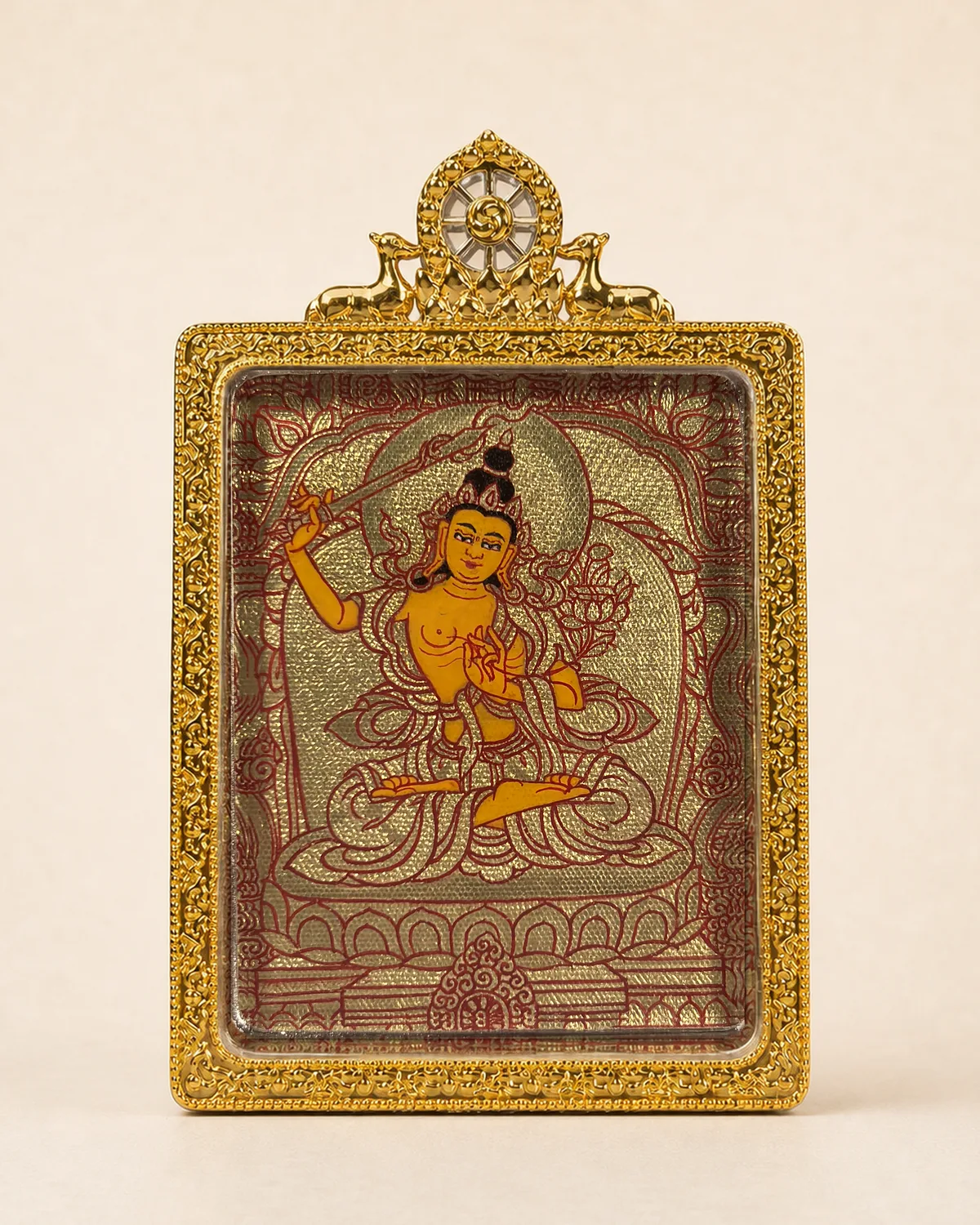
From a distance, a gold-ground thangka first presents a continuous golden field. Closer looking reveals garment folds, flower stems and the edges of lotus petals. What seemed like a limited palette contains many distinctions.
Gold has different jobs in a thangka. It may trace one fold or become the painting’s principal ground. Where it appears, and how it meets other colours, changes the experience of the image.
How does gold become a painting material?
Gold can be prepared as fine particles and mixed with a binder for brush application. A metal becomes a line that follows a garment, petal or ornament. Gold leaf is a different form: metal beaten into thin sheets for application to a surface. The word “gold” alone does not distinguish painted powder from applied leaf.
In painting and manuscript decoration, a prepared gold paint is sometimes called shell gold, a name associated with shells once used as containers. It does not identify a separate metal. The particular use of gold in a thangka depends on the work’s technique.
Gold details and a gold ground
A polychrome thangka can introduce gold among blue, green and red areas. It may follow garments, jewellery or a halo, emphasising details through contrast with nearby colours.
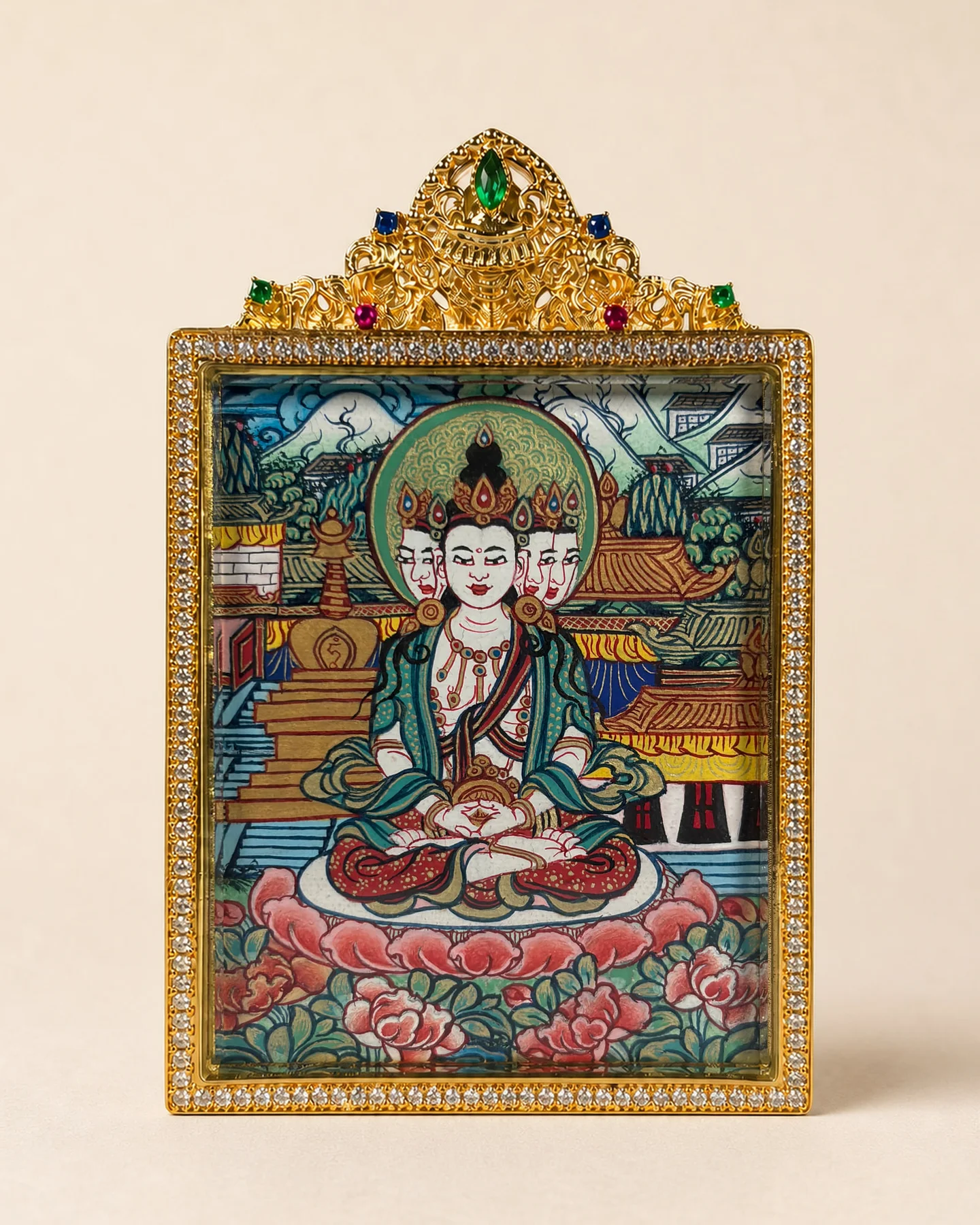
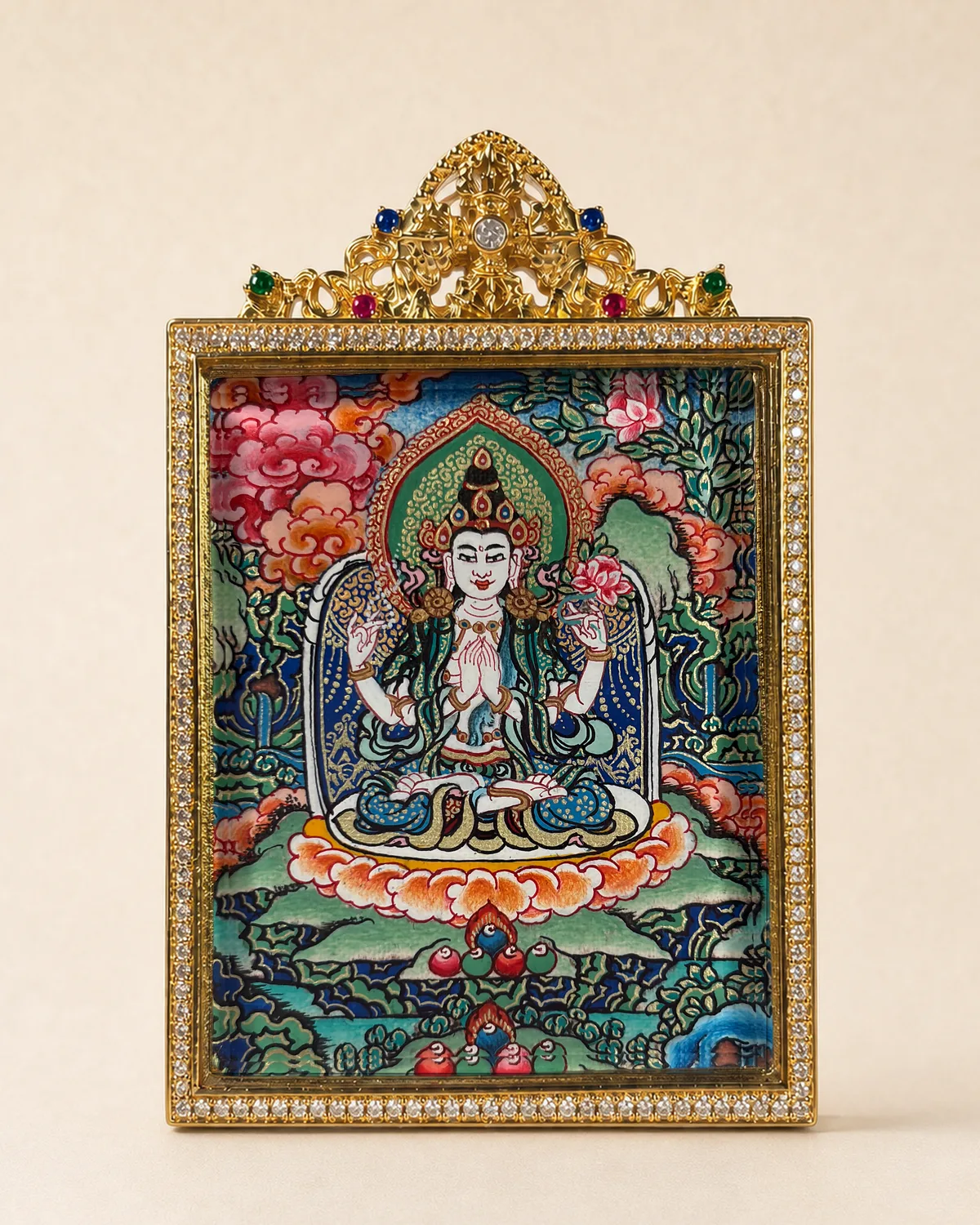
In TG-010, Four-Armed Avalokiteshvara, painted colour establishes the main relationships between figure and setting, while fine gold-coloured ornament works within them. Notice how those details belong to garments and patterns rather than turning the entire composition into a single gold field.
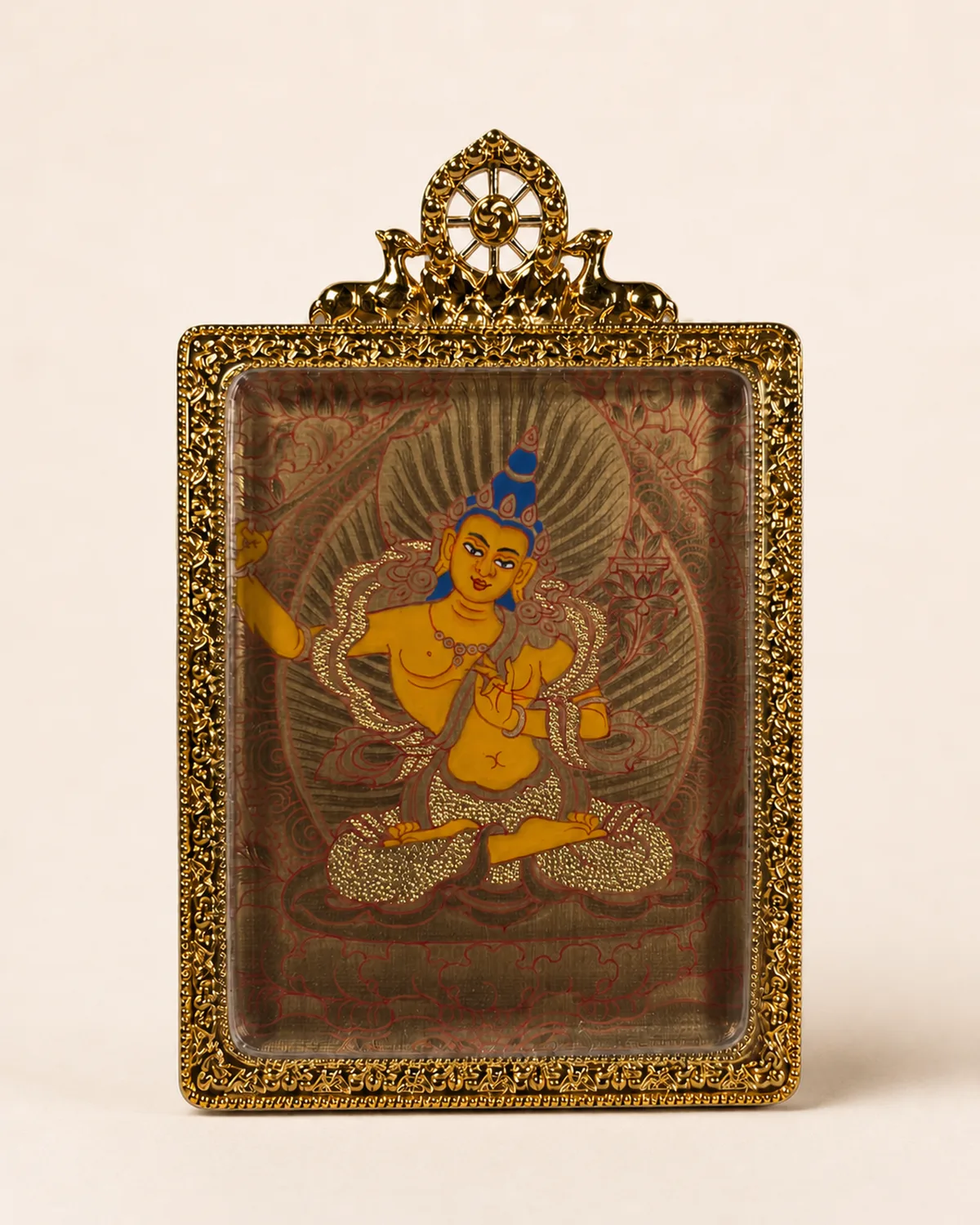
Now return to TG-009, the Manjushri at the beginning. Gold forms the larger field; red drawing describes the figure, garments, flower stems and lotus seat. The comparison is not a ranking of quality, but a view of two ways to organise a picture.
“Gold ground” describes a pictorial approach; “24K” describes gold purity. They are different kinds of information. Consult the individual work’s record for its use of gold, and distinguish gold in the painting from the frame’s material.
More than one kind of shine
Surface treatment affects gold’s appearance. Polishing can make selected areas brighter, and some gold-ground paintings use differences in sheen as decoration. A pattern can emerge without depending entirely on a second colour.
This differs from a painted outline. A line is chiefly read through colour contrast; variations in sheen depend more on lighting and angle. These are possibilities within traditional techniques, not a passage-by-passage analysis of the two works shown here.
A photograph records one lighting condition. With a physical work, soft light and a small change in viewing angle can reveal details in succession. Strong sunlight is unnecessary; gentle, even illumination is more suitable for enjoying a painting.
Spend time inside the gold
Look at the whole picture, then at the divisions within the gold. Figure, halo and garment may share a similar tone while retaining their boundaries. A distinction can depend on one red line, a darker accent or a brighter surface.
Gold brings unity, while drawing separates layers within it. In TG-009, begin with the sword, garments and lotus seat, and get to know the work one passage at a time.