Art & craft
Where do thangka colours come from?
Blue drapery, a green halo, red garments and fine gold detail: explore traditional colour sources alongside the painter’s choices in one miniature.
Thangka colours & traditional pigment examples
1Blue
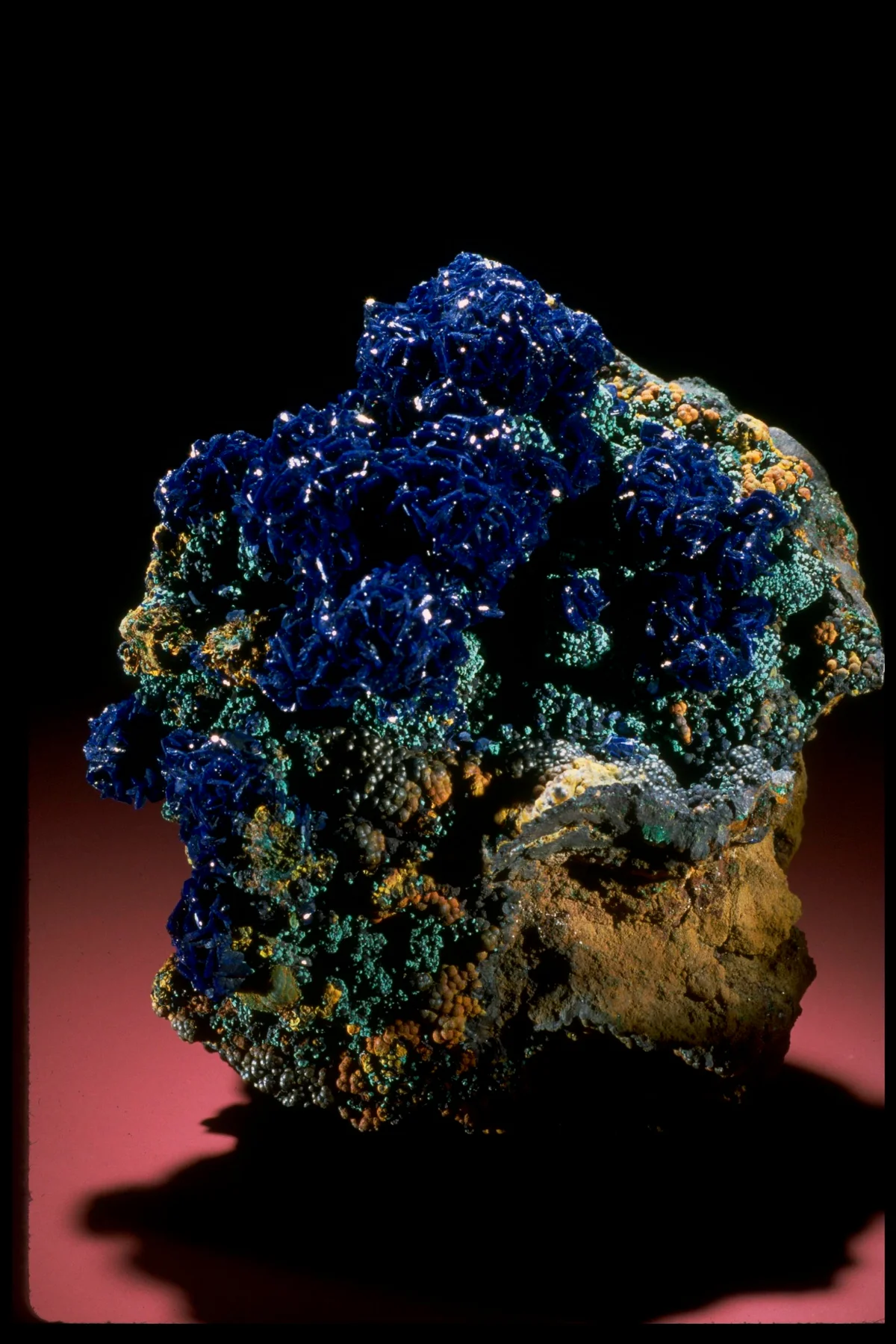
Azurite
2Green
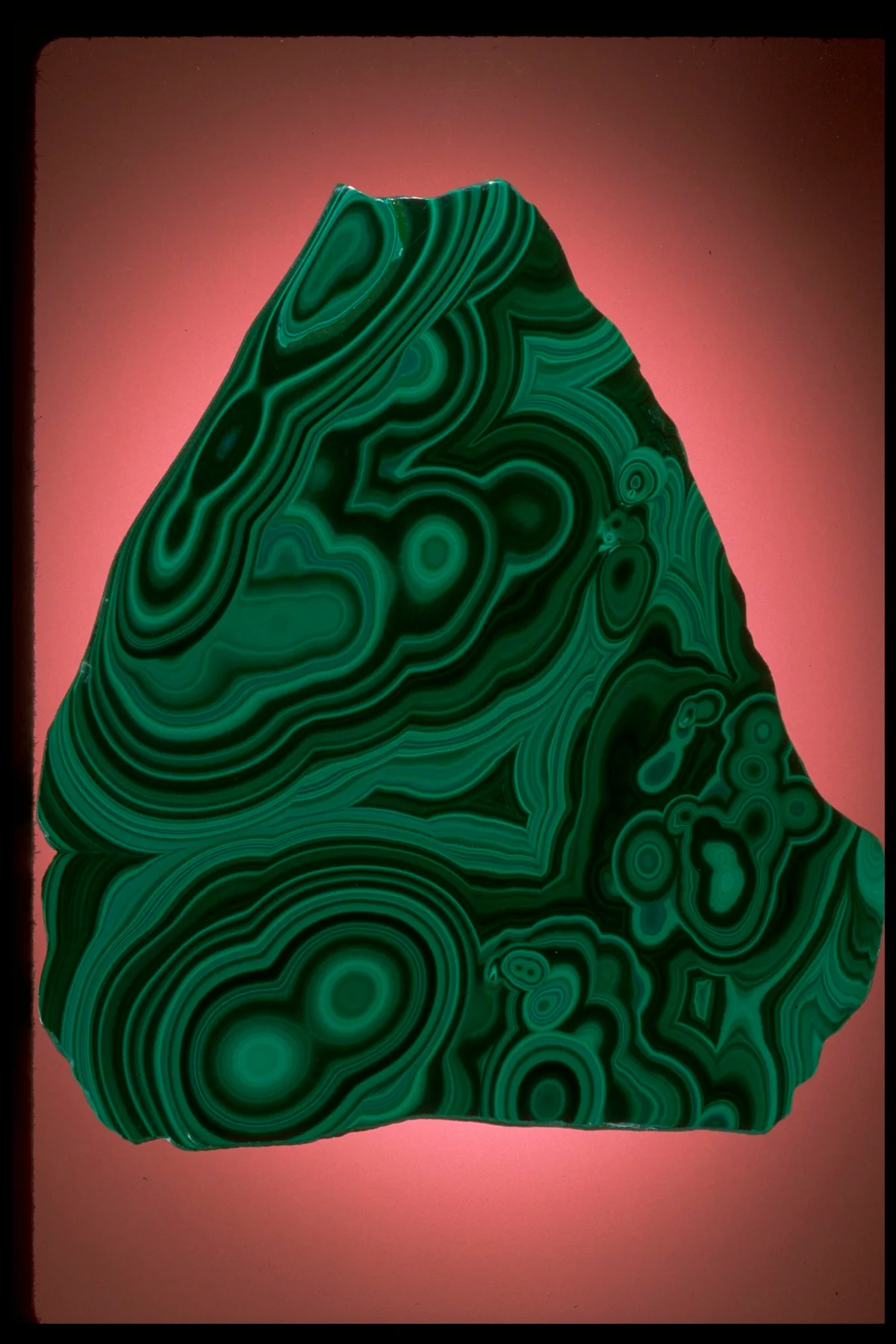
Malachite
3Red
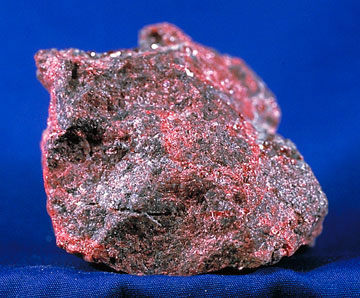
Cinnabar
4Gold
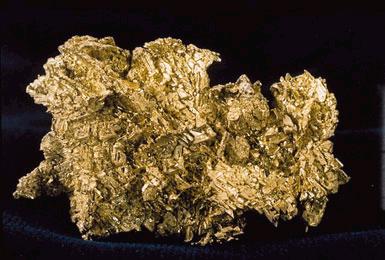
Native gold
A thangka’s colours come both from its pigments and from the painter’s decisions. Traditional palettes include blue from azurite, green from malachite and red from cinnabar, alongside plant-derived indigo, organic red colourants and gold. Preparation and painting turn these materials into figures, flowers, landscapes and ornament.
Look at the painting, then explore traditional colour sources
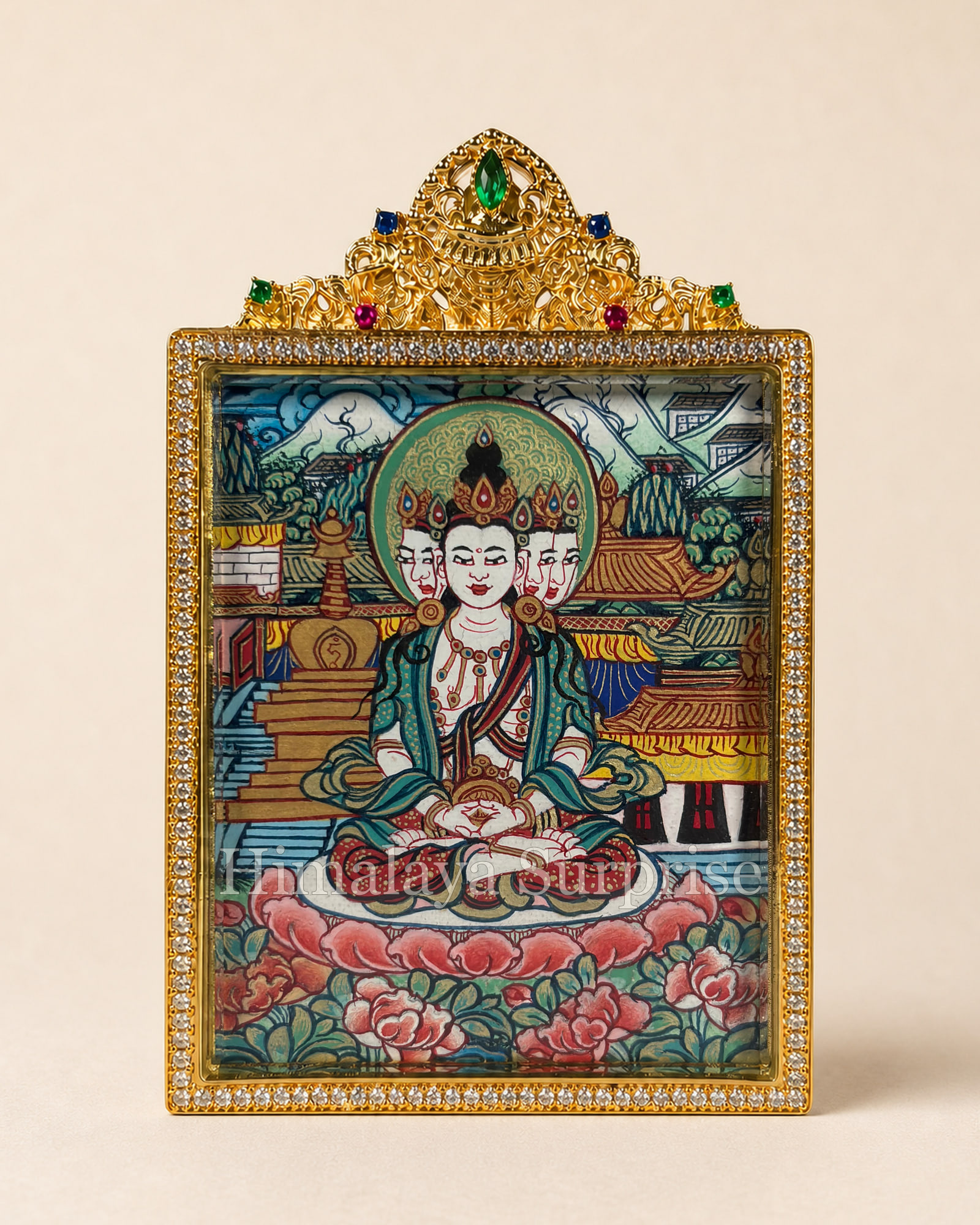
Begin with this Vairocana, TG-001. Blue drapery and a green halo frame the figure; red garments draw attention towards the centre, while gold-coloured patterns enrich the halo.
The specimens below introduce traditional source materials. The painting details show the placement of colour. See TG-001’s work record for its listed materials; pairing an image with a specimen does not mean that every pictured passage has undergone pigment analysis.
Blue, green, red and yellow: the palette
Azurite and malachite provide examples of mineral sources for blue and green. In a thangka, those colours may appear in landscapes, clouds, garments or halos, depending on the subject and composition. Here, drapery and halo show how cool colours can support the central figure.
Red sources include cinnabar and organic colourants. Material choices and the layering of paint affect depth and transparency. In the red garments, broad colour, darker drawing and pale ornament do different jobs that become clearer at close range.
Yellow has its own sources, including orpiment in historical paintings. White contributes light passages and mixtures; black serves outlines and dark details. With plant-derived indigo as well, the palette is more than a set of mineral specimens. Artificially prepared pigments also occur across different periods and workshops.
From powder to painted surface
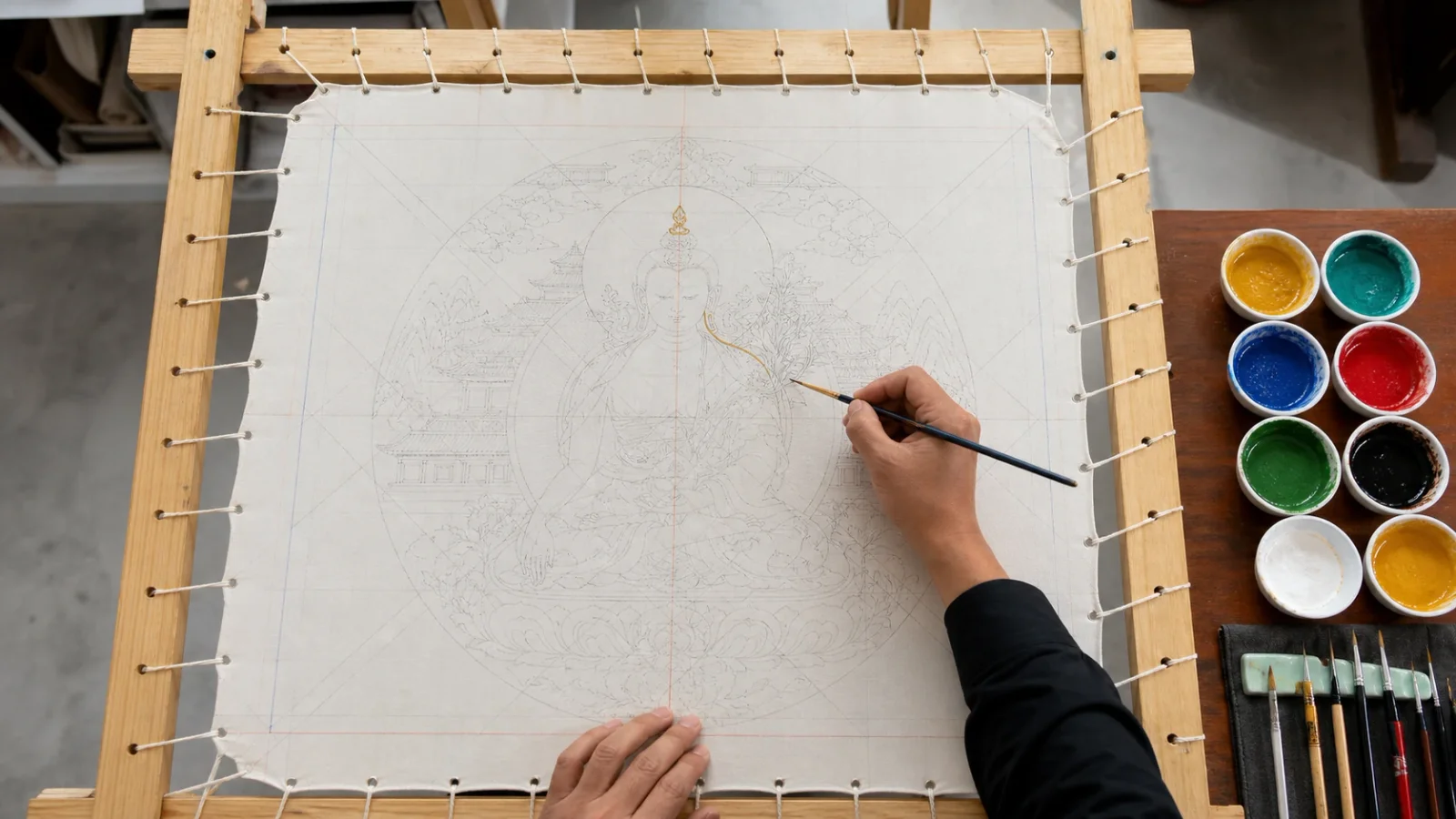
Grinding and selecting mineral material produces pigment particles, which can be combined with a suitable binder and water. The binder helps the colour adhere, while water adjusts its working consistency. Particle character, preparation and paint thickness contribute to the finished surface.
On a prepared painting ground, the artist lays colour, introduces shading and draws contours. Large areas establish the picture’s colour relationships; smaller transitions shape folds and petals; outlines and patterns finish the detail.
Look at the reds and pinks of the lotus seat and the darker garments with pale ornament. Colour does more than fill an outline. Adjacent tones and lines work together to describe form.
How gold adds another layer
The ornament across the green halo gives the colour field another rhythm. In thangka painting, gold can articulate patterns, garments and fine lines against blue, green and red passages.
Prepared gold can be applied with a brush, and selected passages may be polished to increase their brightness. Yellow pigment contributes colour; gold also brings reflected light into the experience of the image.
24K describes gold purity. Its use in a particular work belongs in that work’s material and technique record. In the picture itself, follow the flow of a line, the repetition of a pattern and its relationship to the figure: these are the painter’s decisions made visible.
Bring the details back together
The four passages show blue drapery, a green halo, red garments and gold-coloured ornament. Compare the colour and drawing in each, then return to the whole. Cool surrounding areas, warmer central passages and fine lines establish layers within a few centimetres.
A thangka’s colour is not an isolated list of minerals. Materials provide possibilities; the painter organises them into figures, space and decoration. Understanding their sources becomes most rewarding when it helps you see what they do in this particular work.