Thangkas
Available works
Loading works…
Hand-painted miniature thangkas
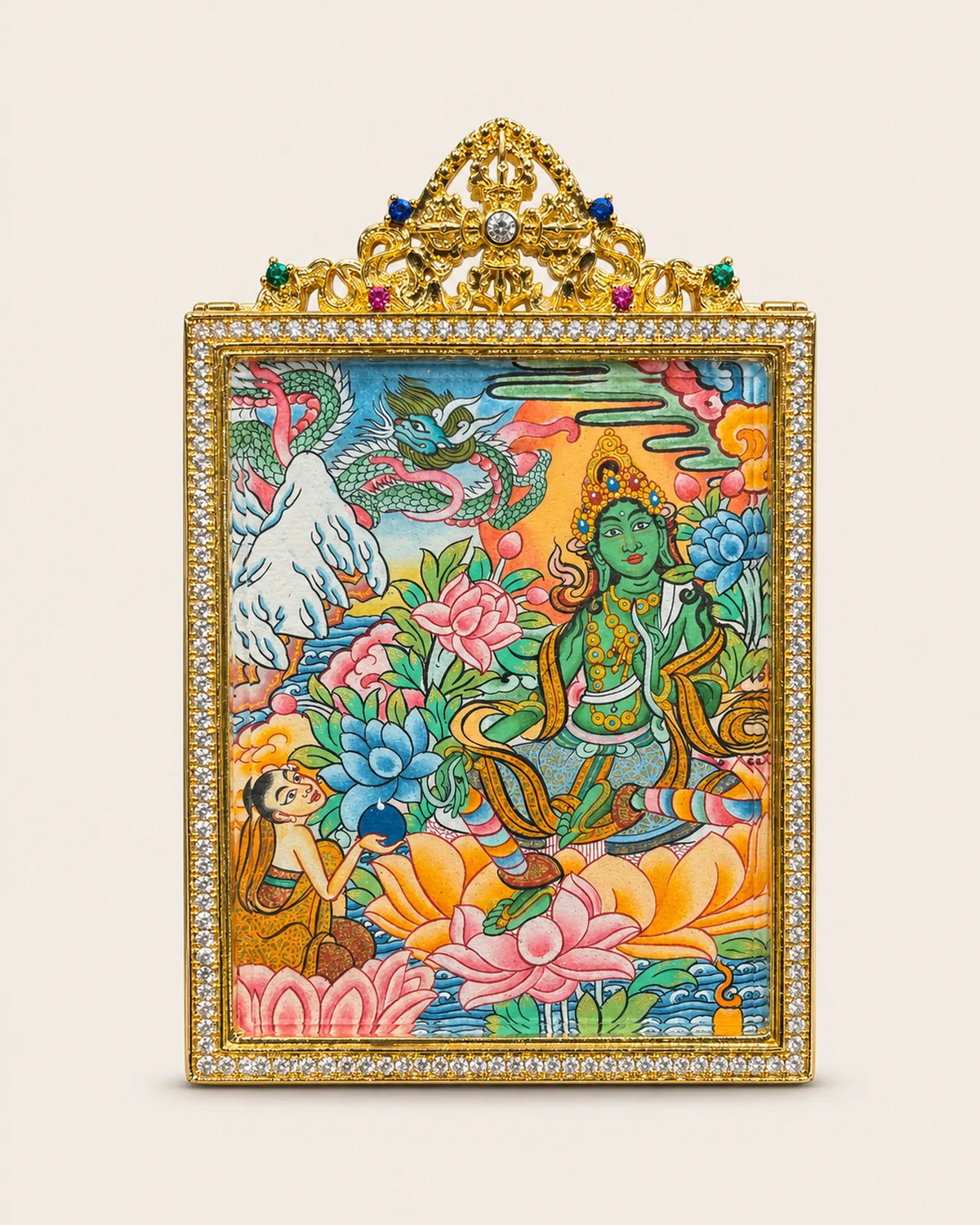
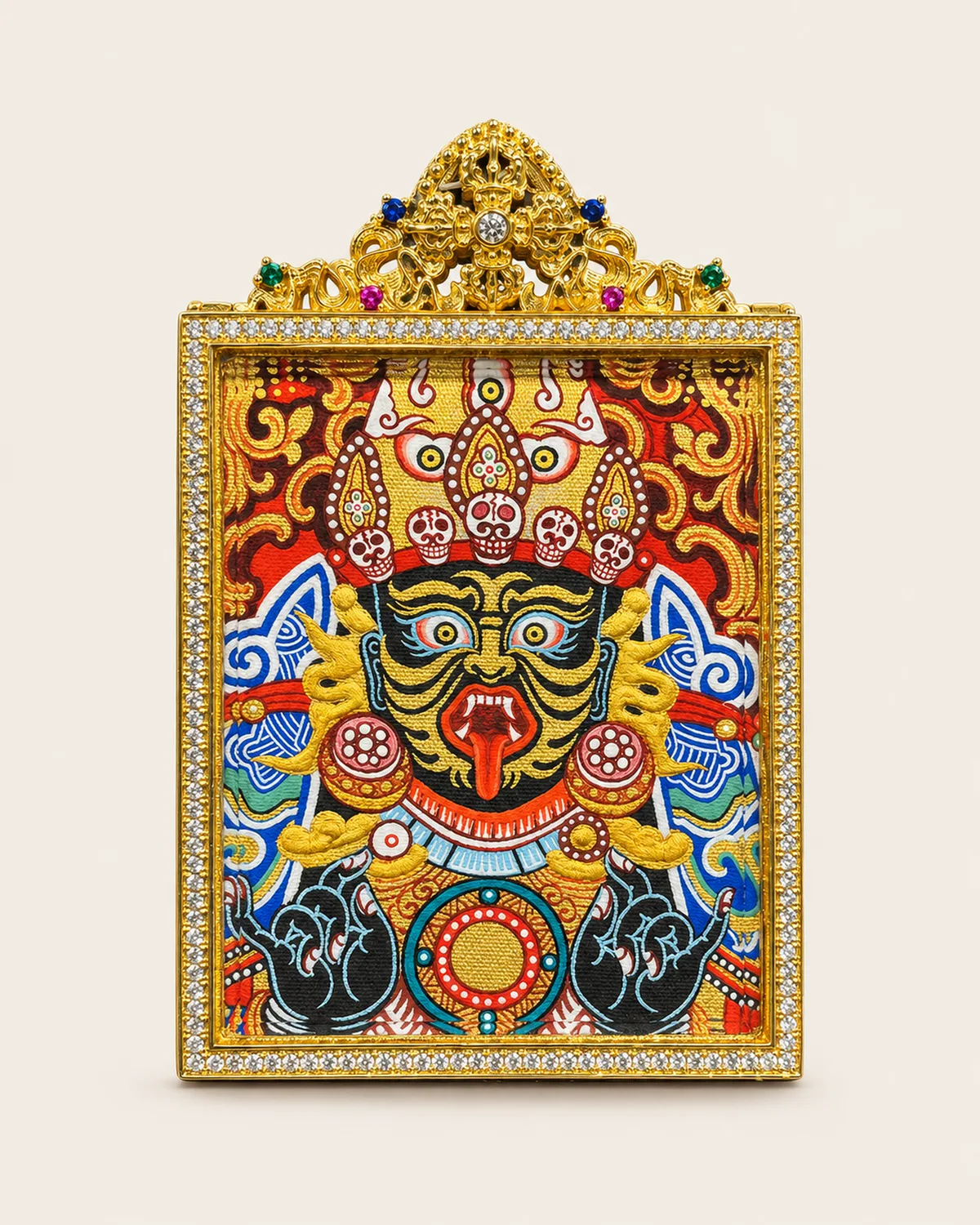
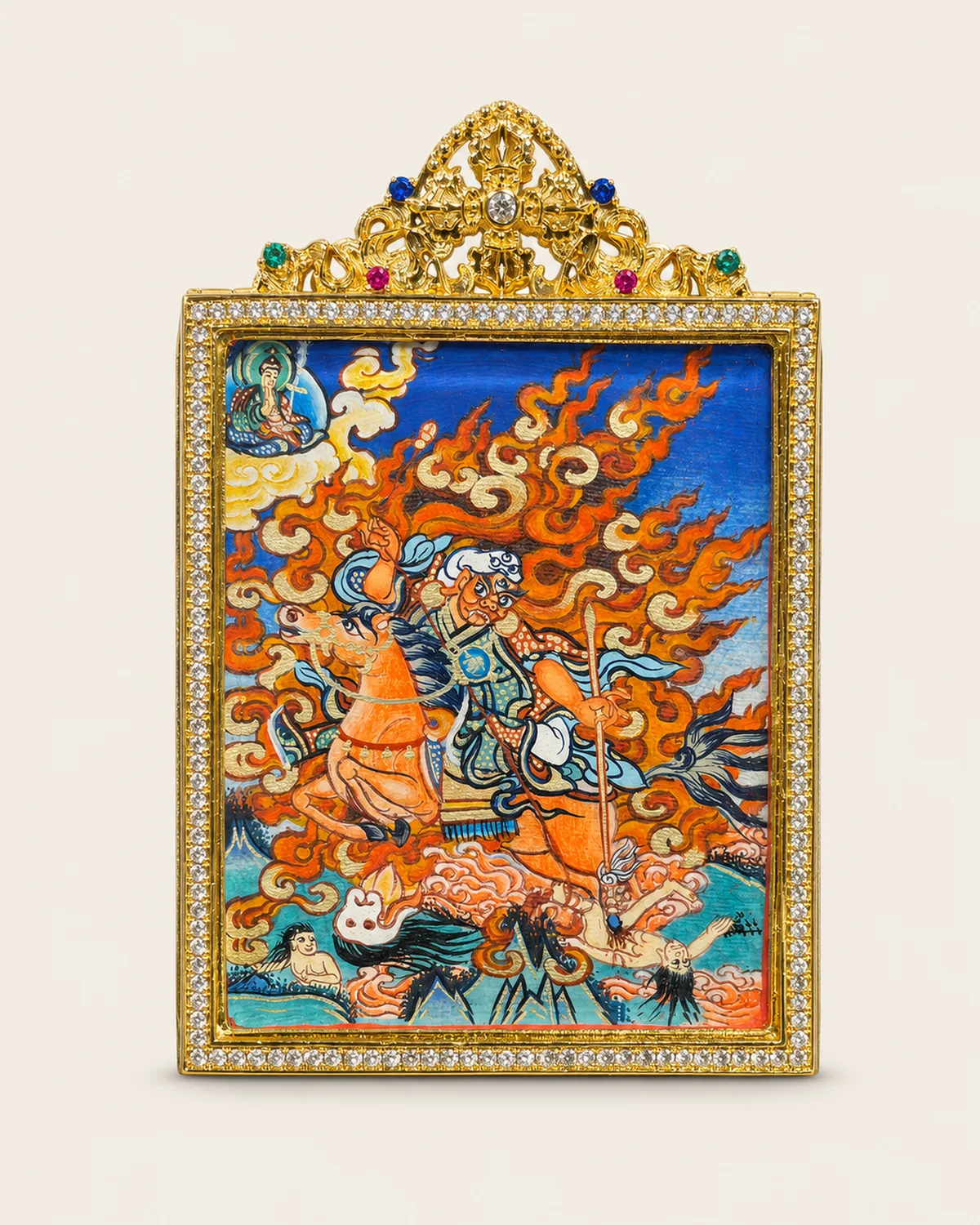
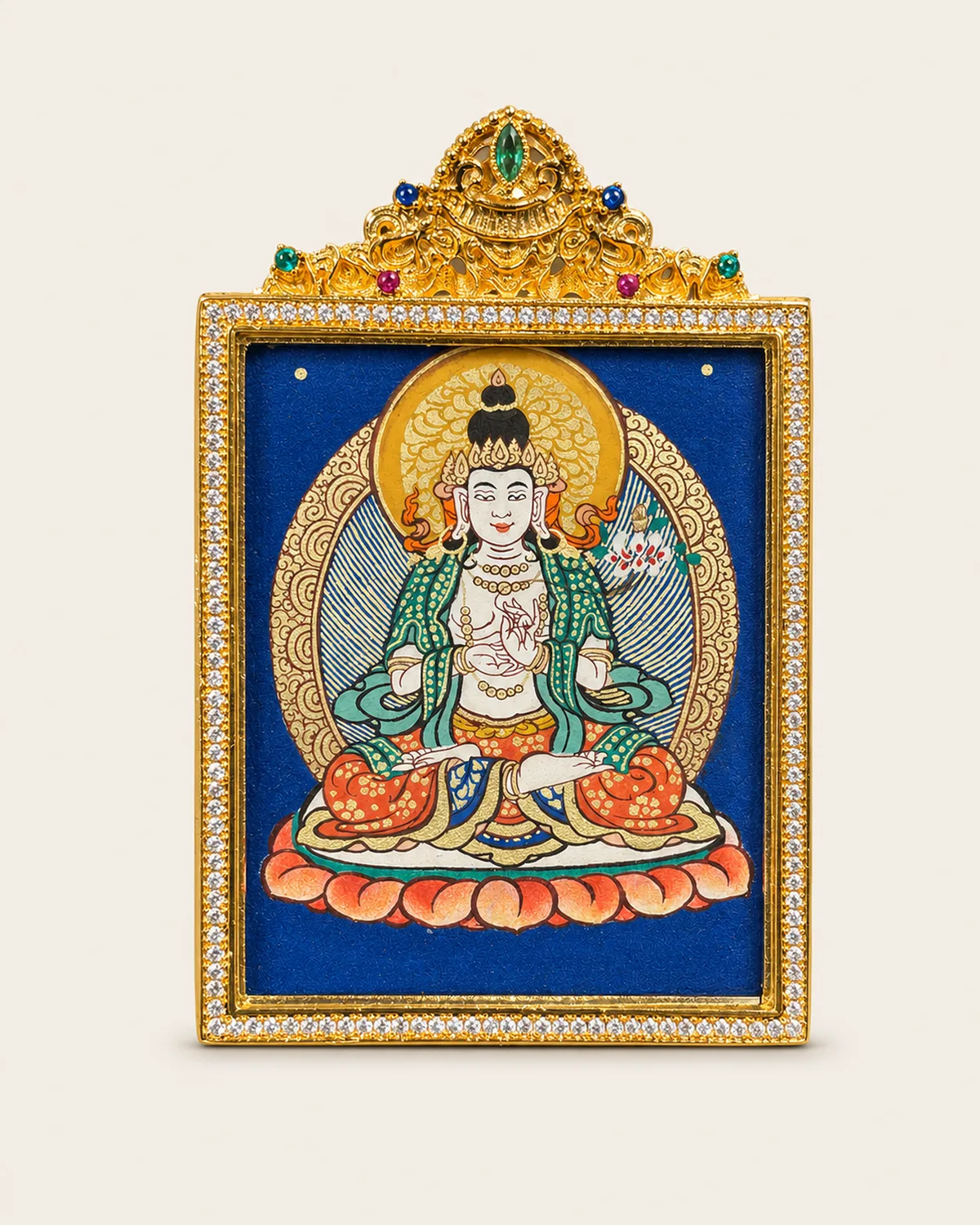
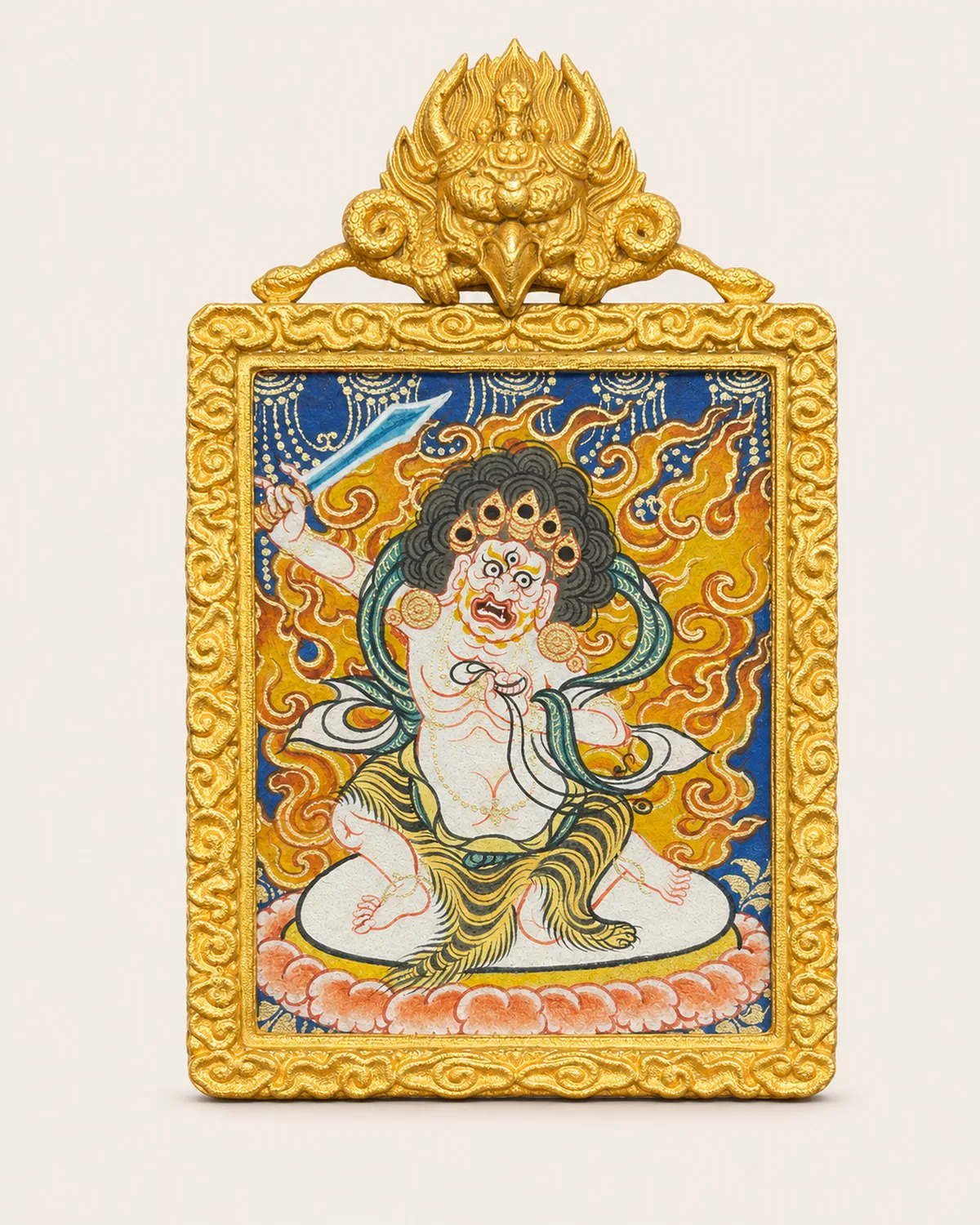
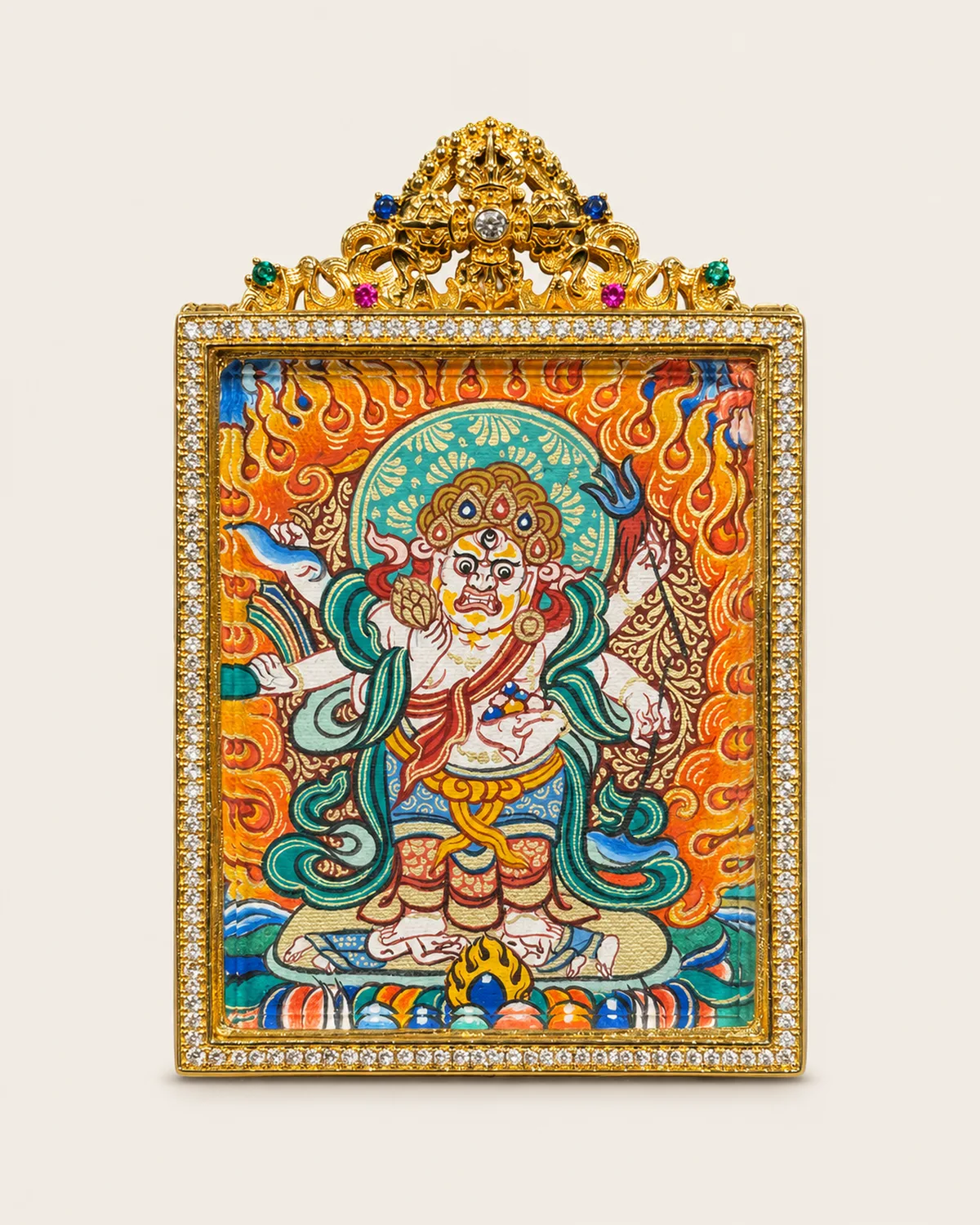
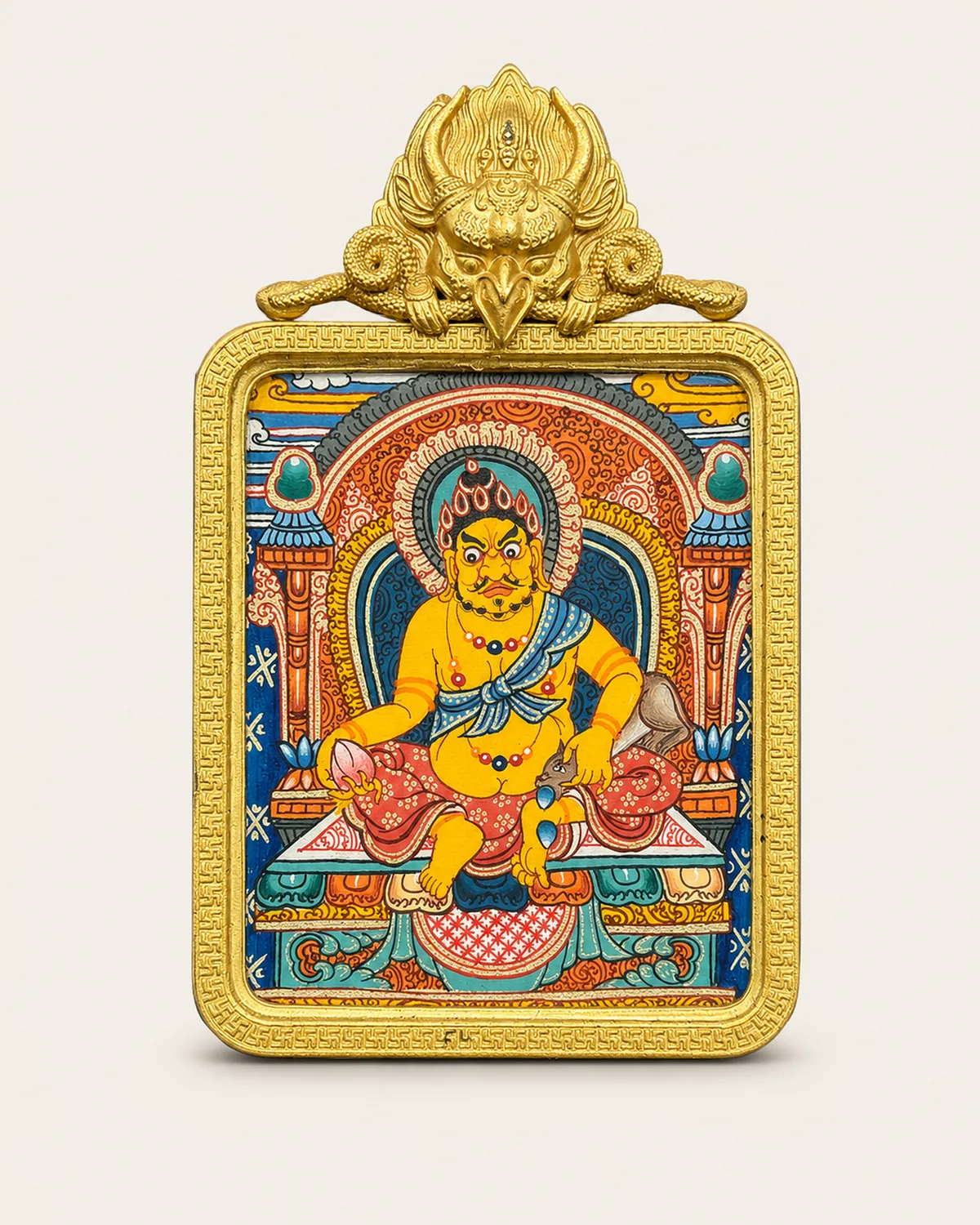
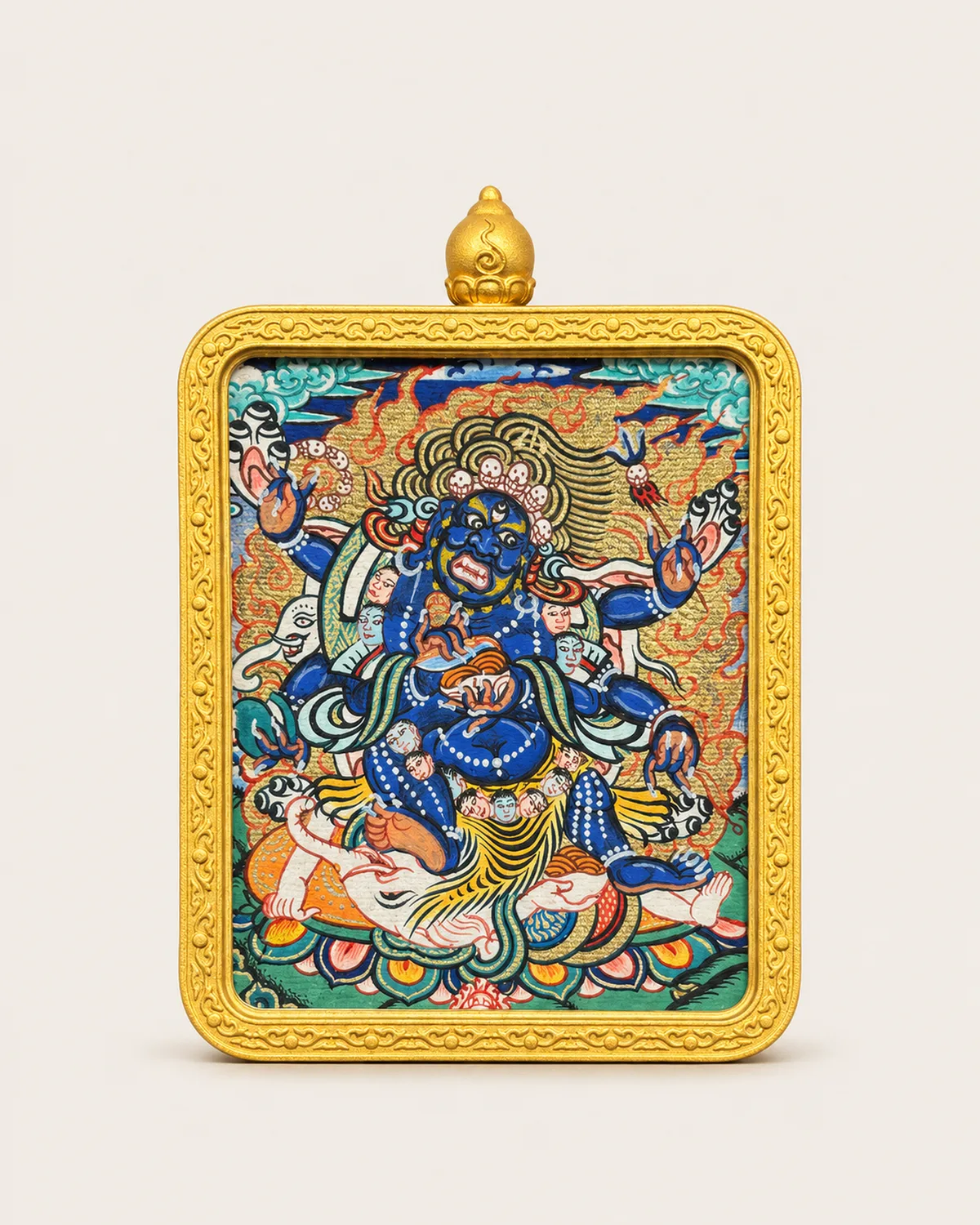
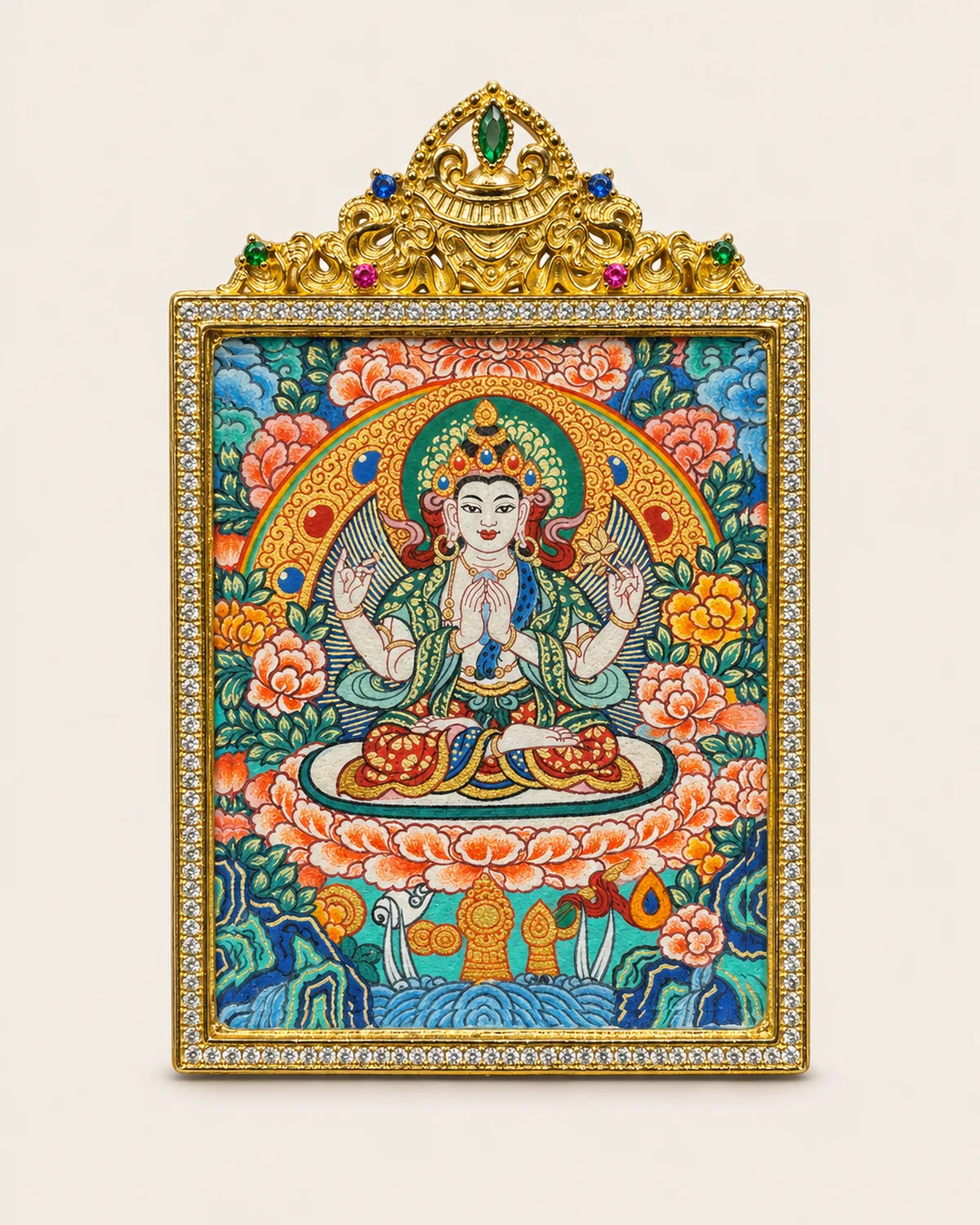
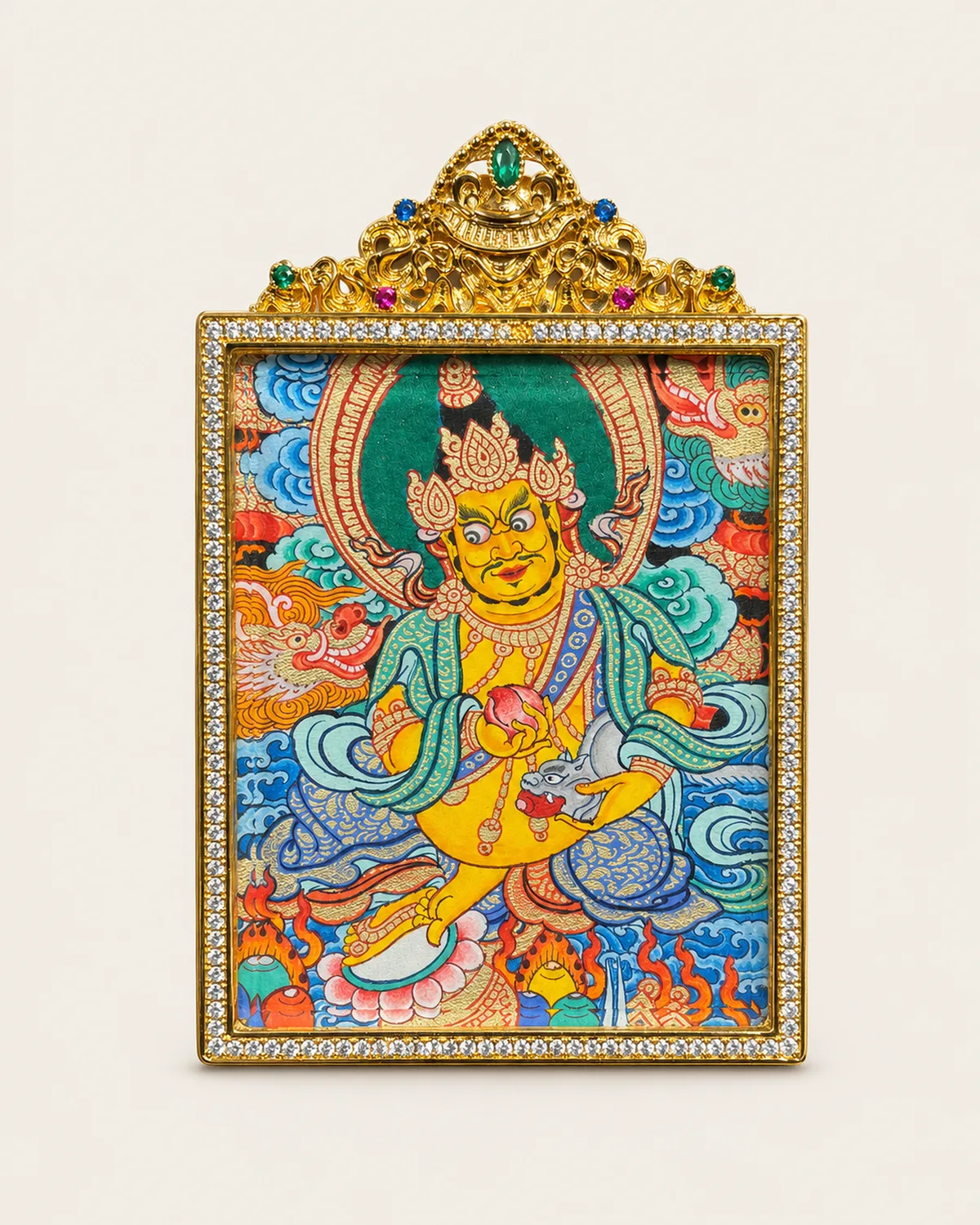
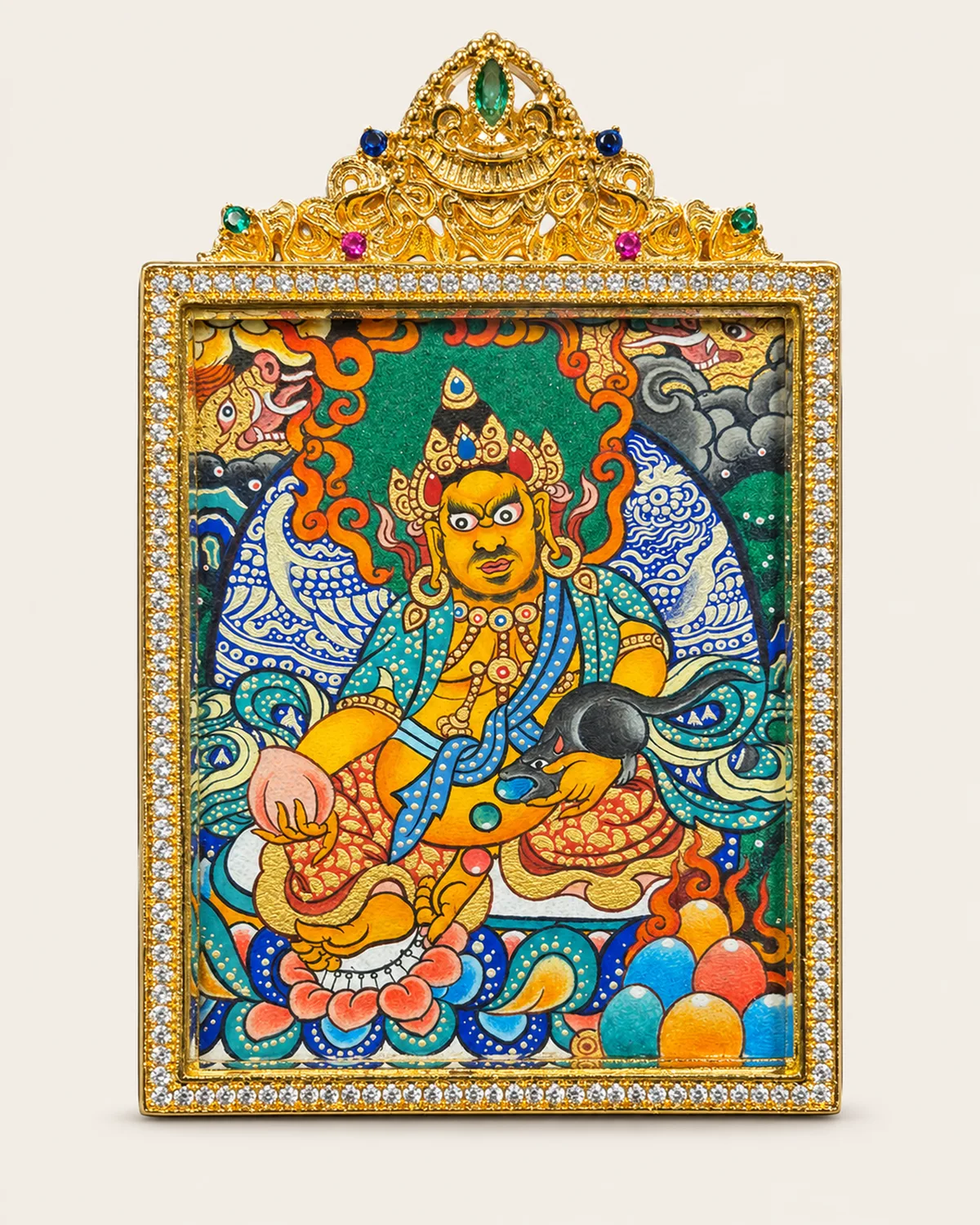
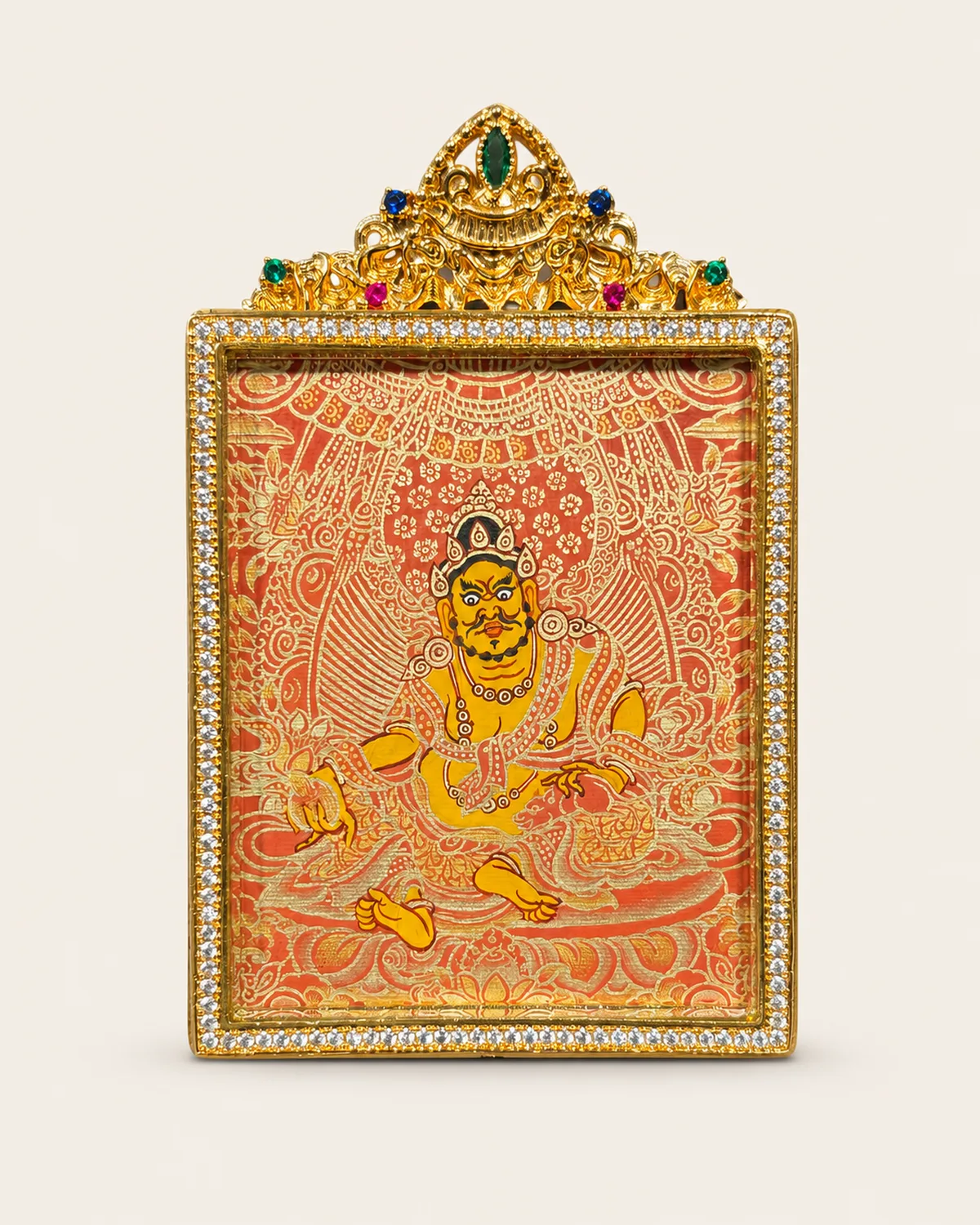
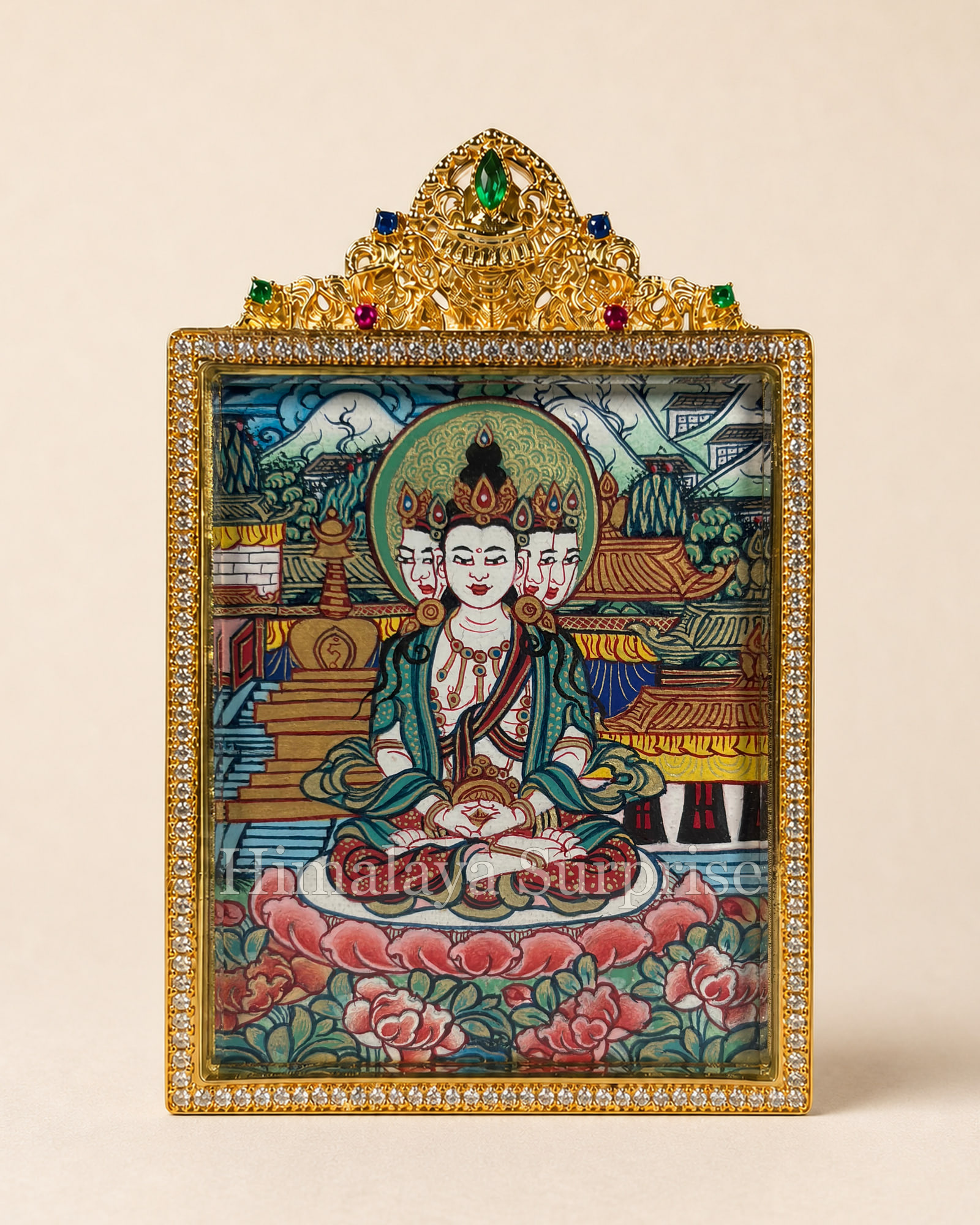
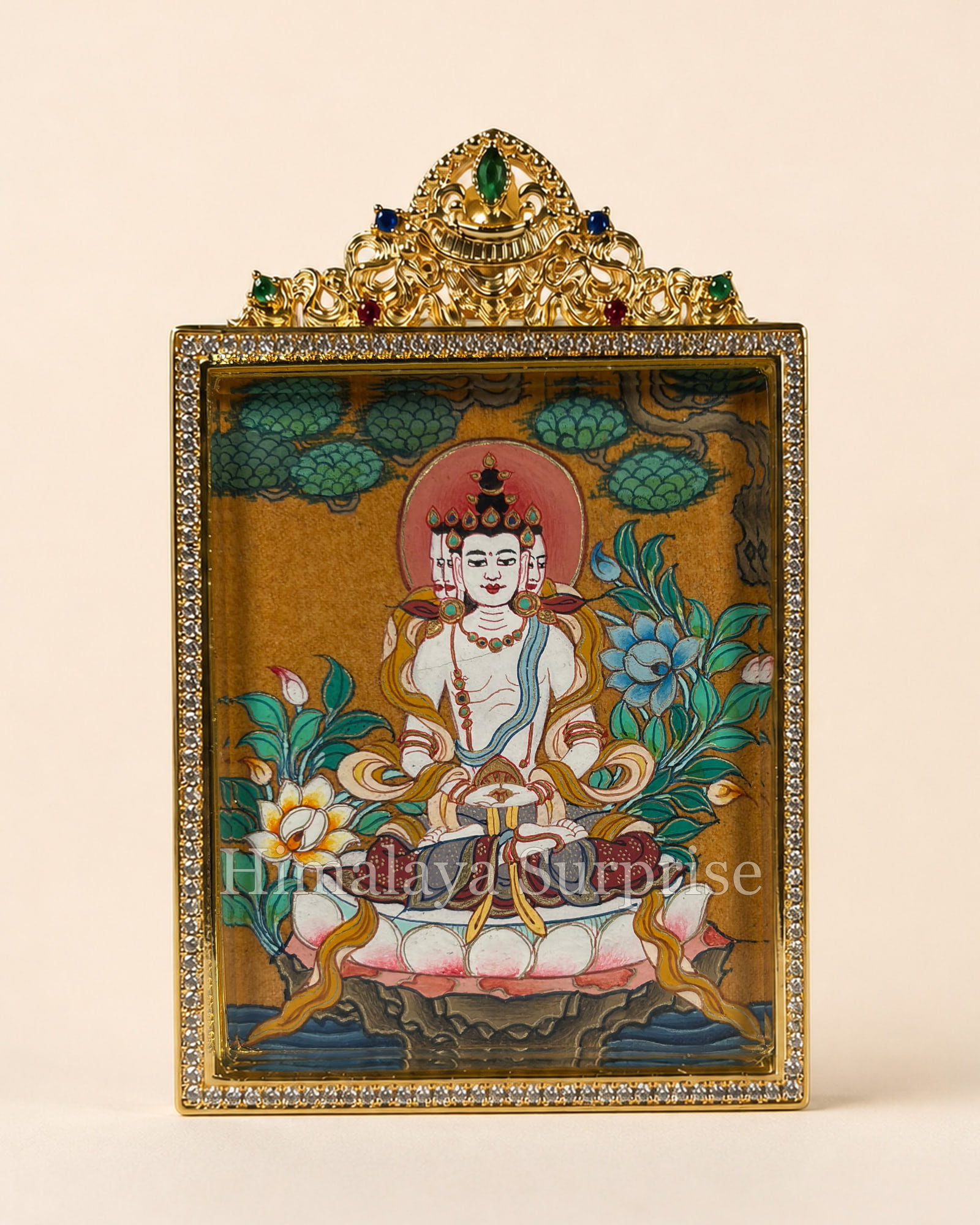
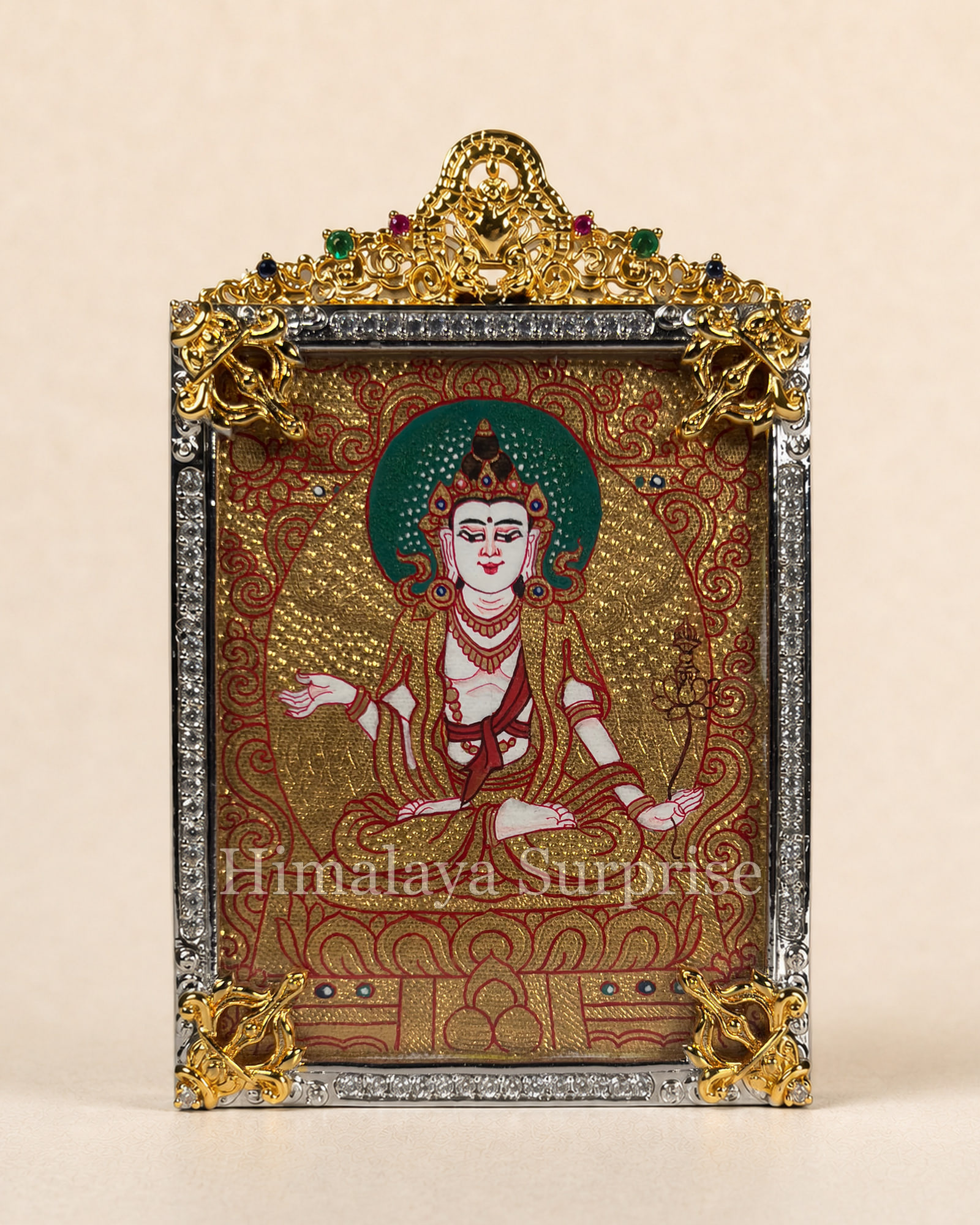
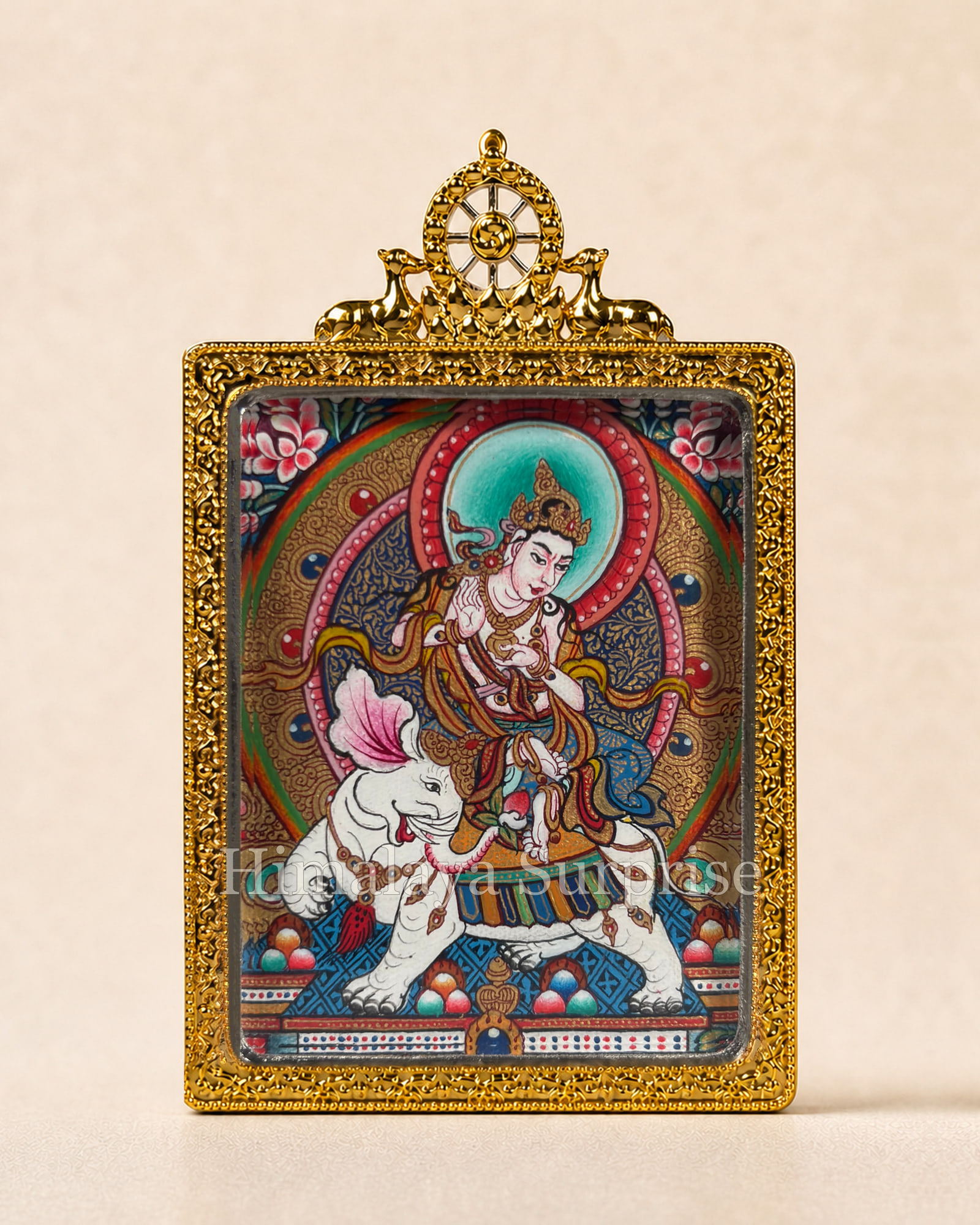
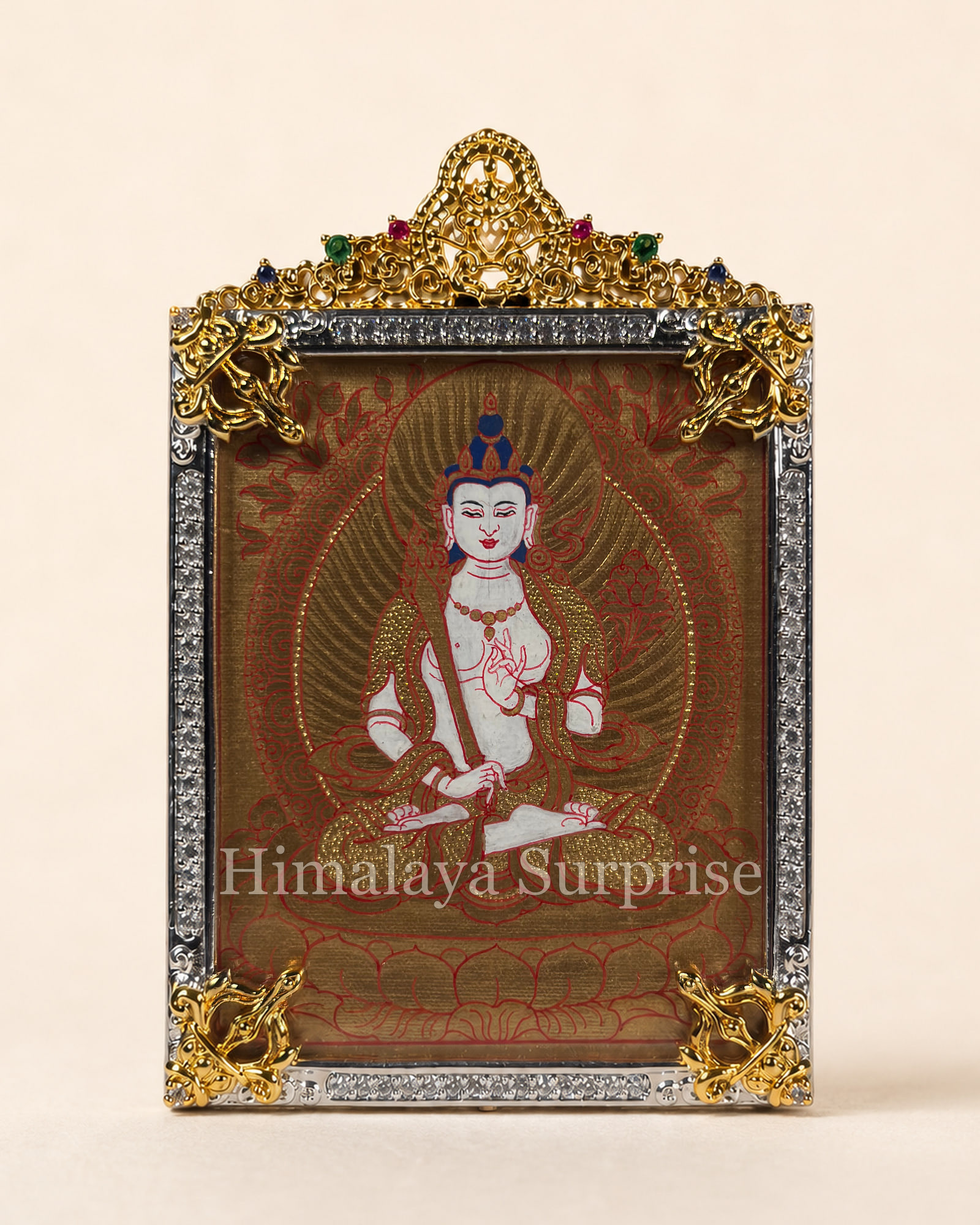
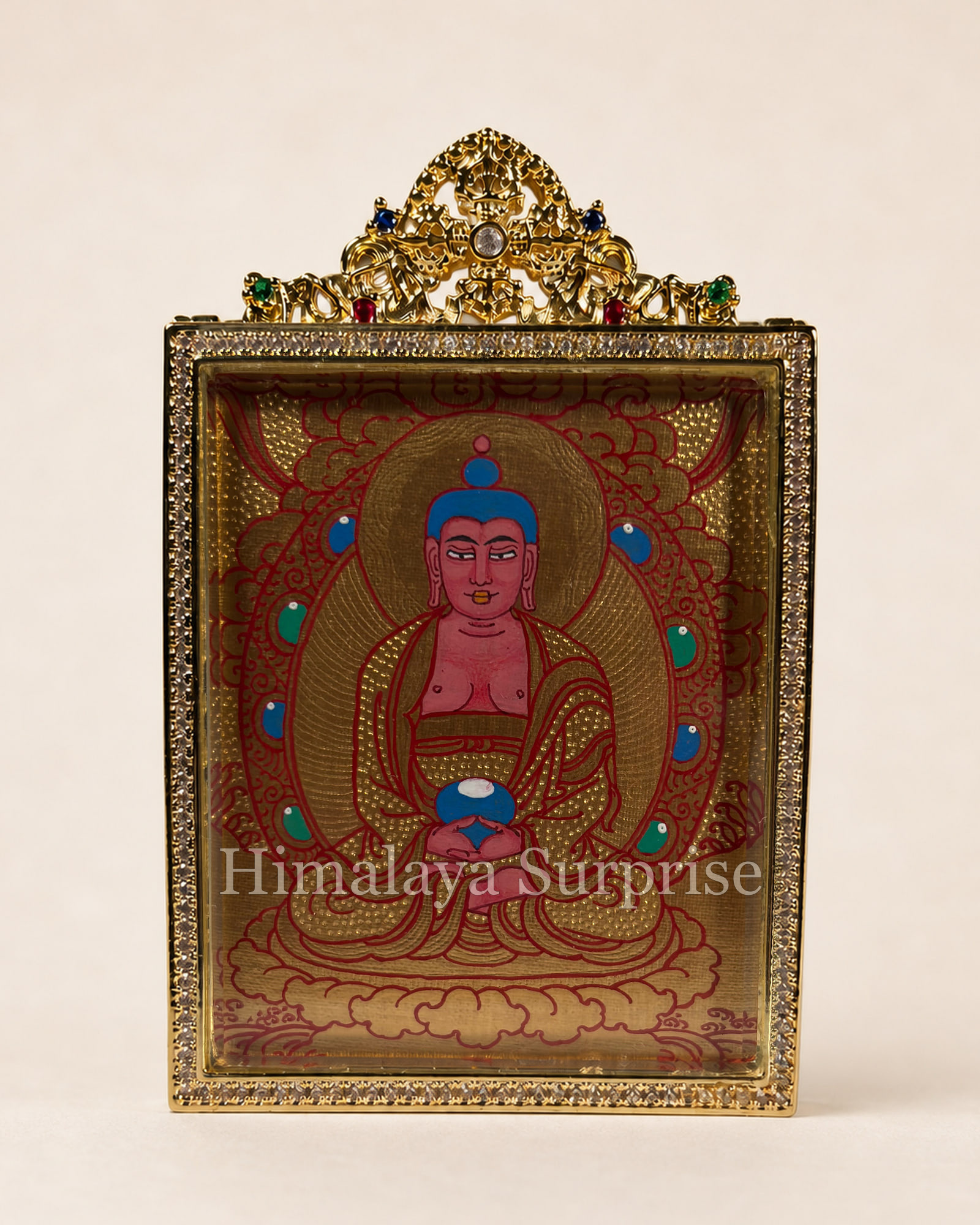
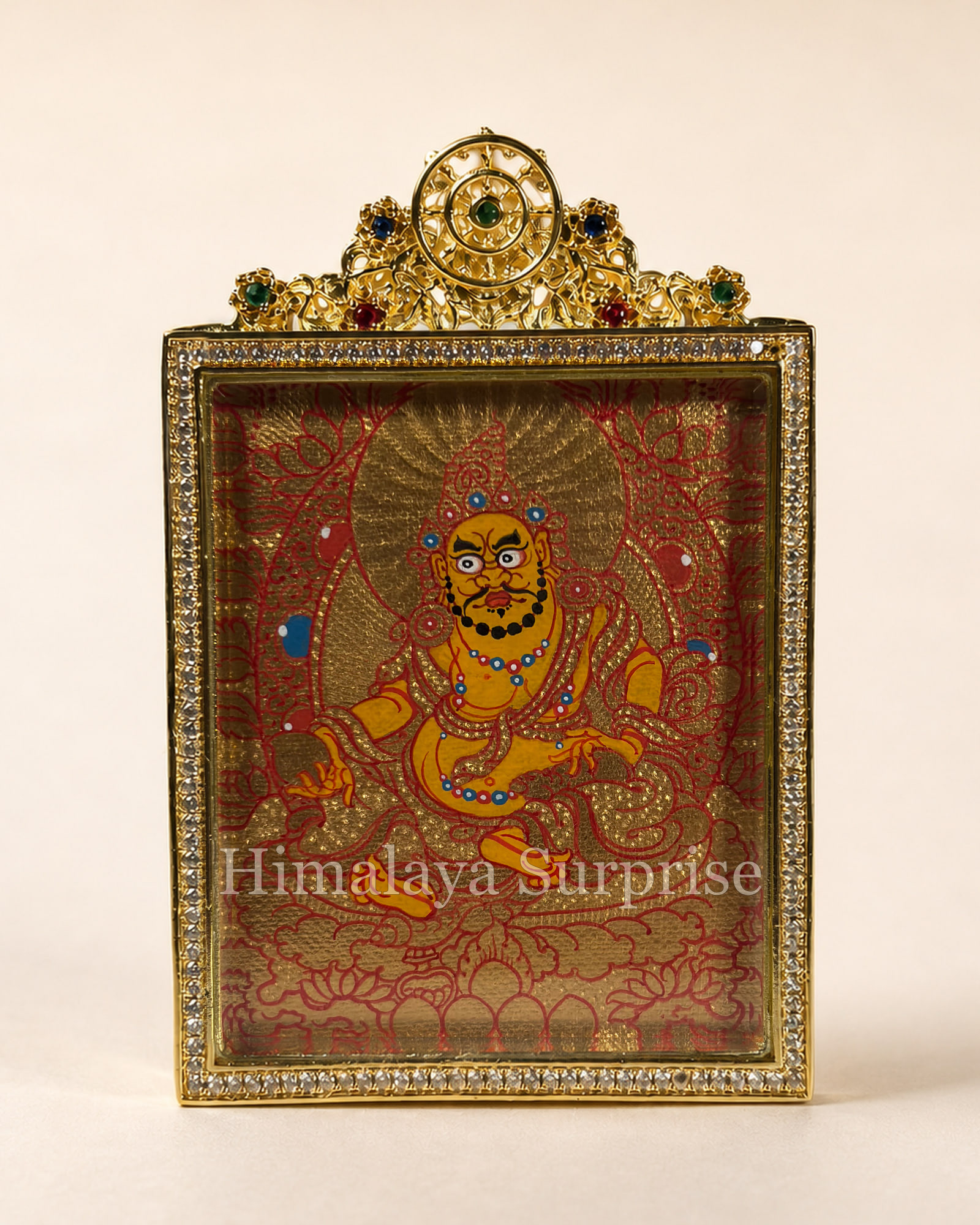
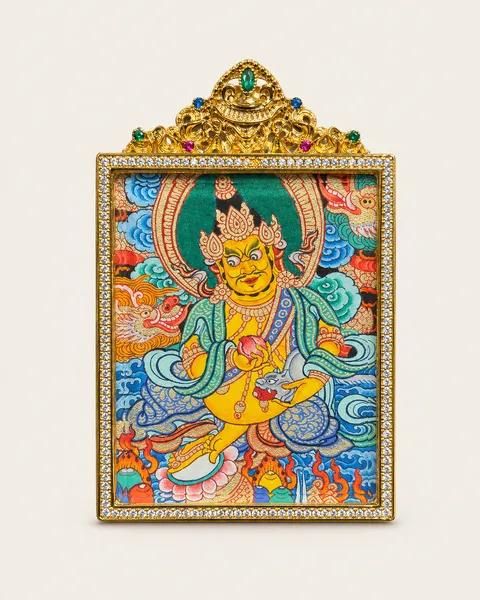
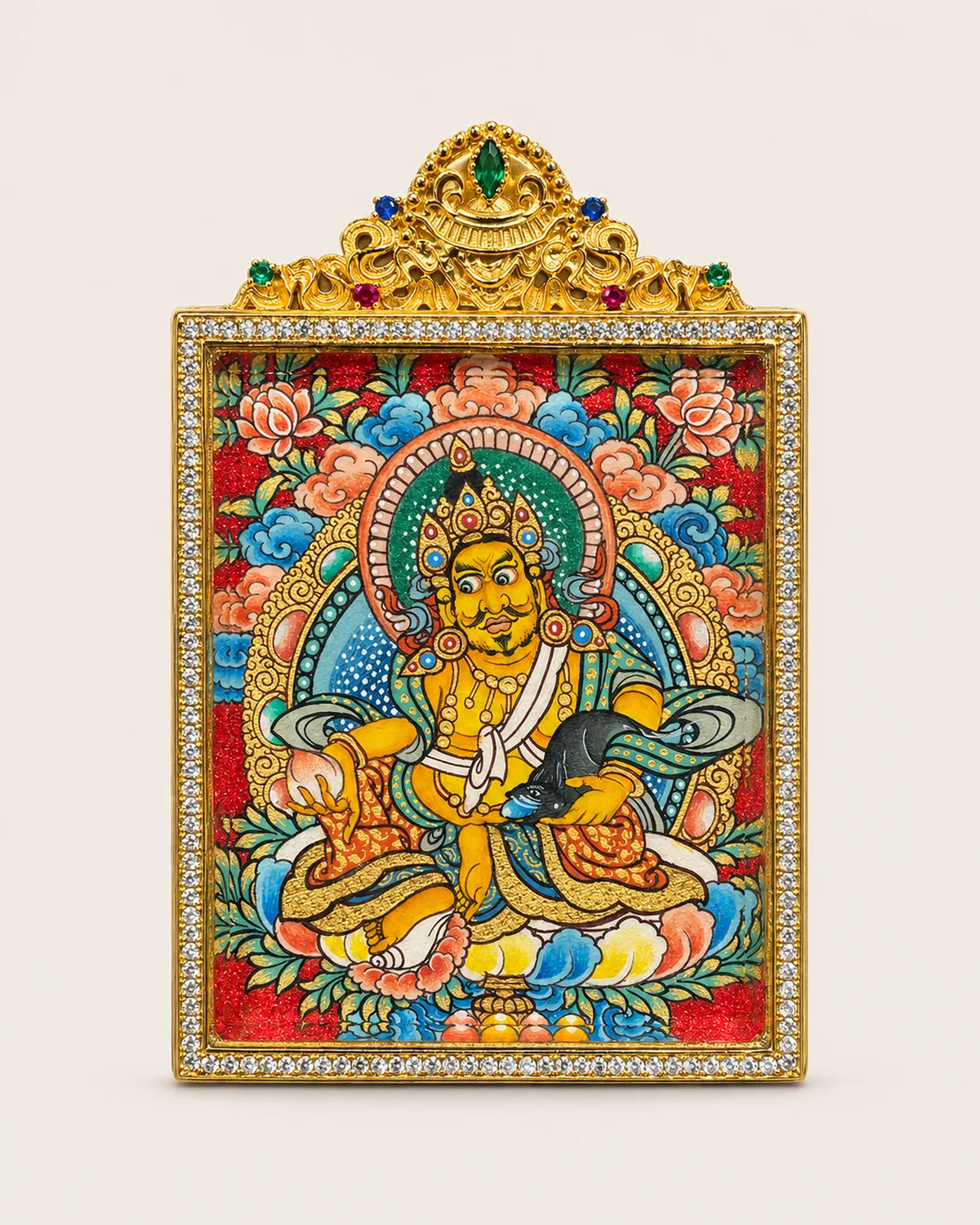
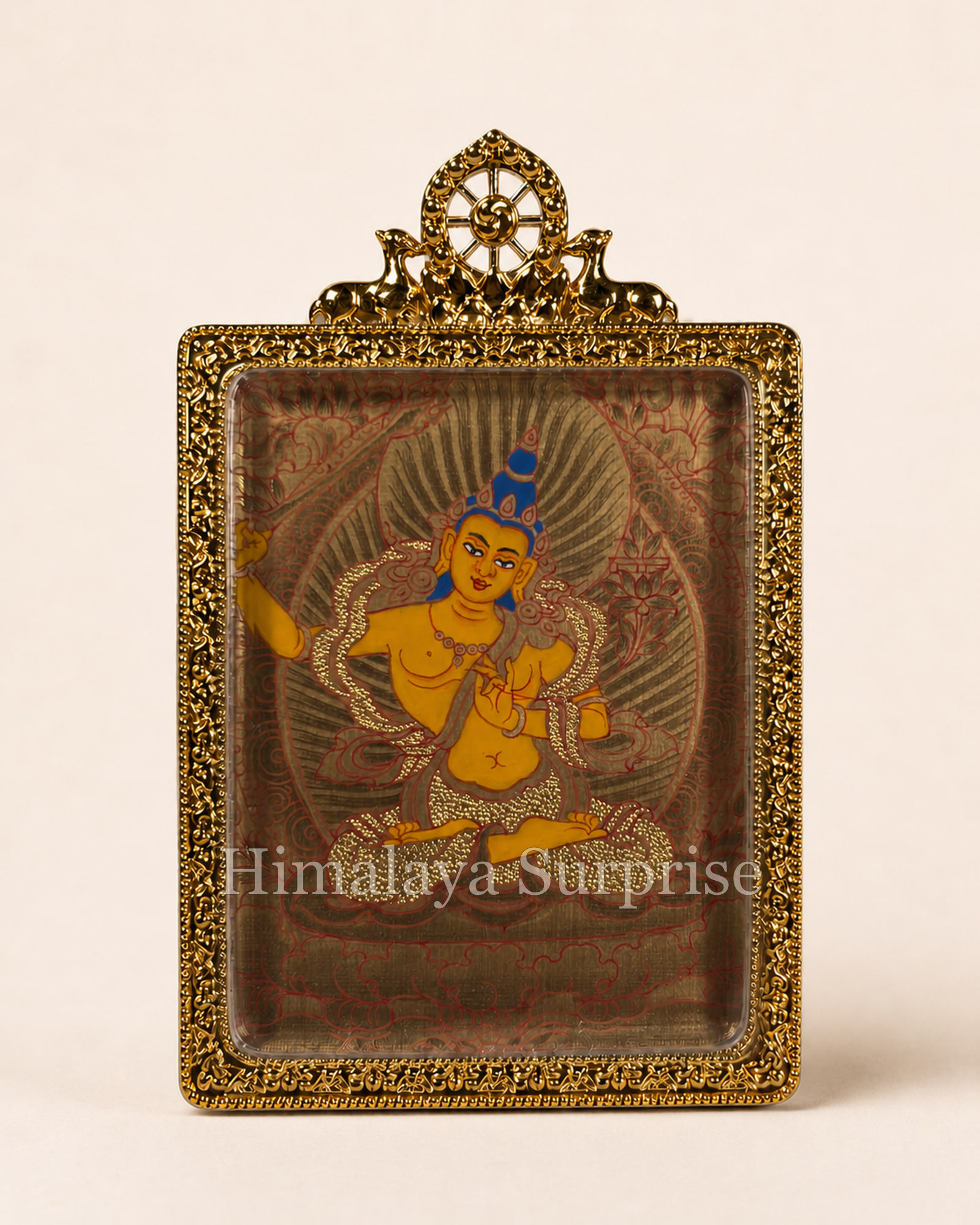
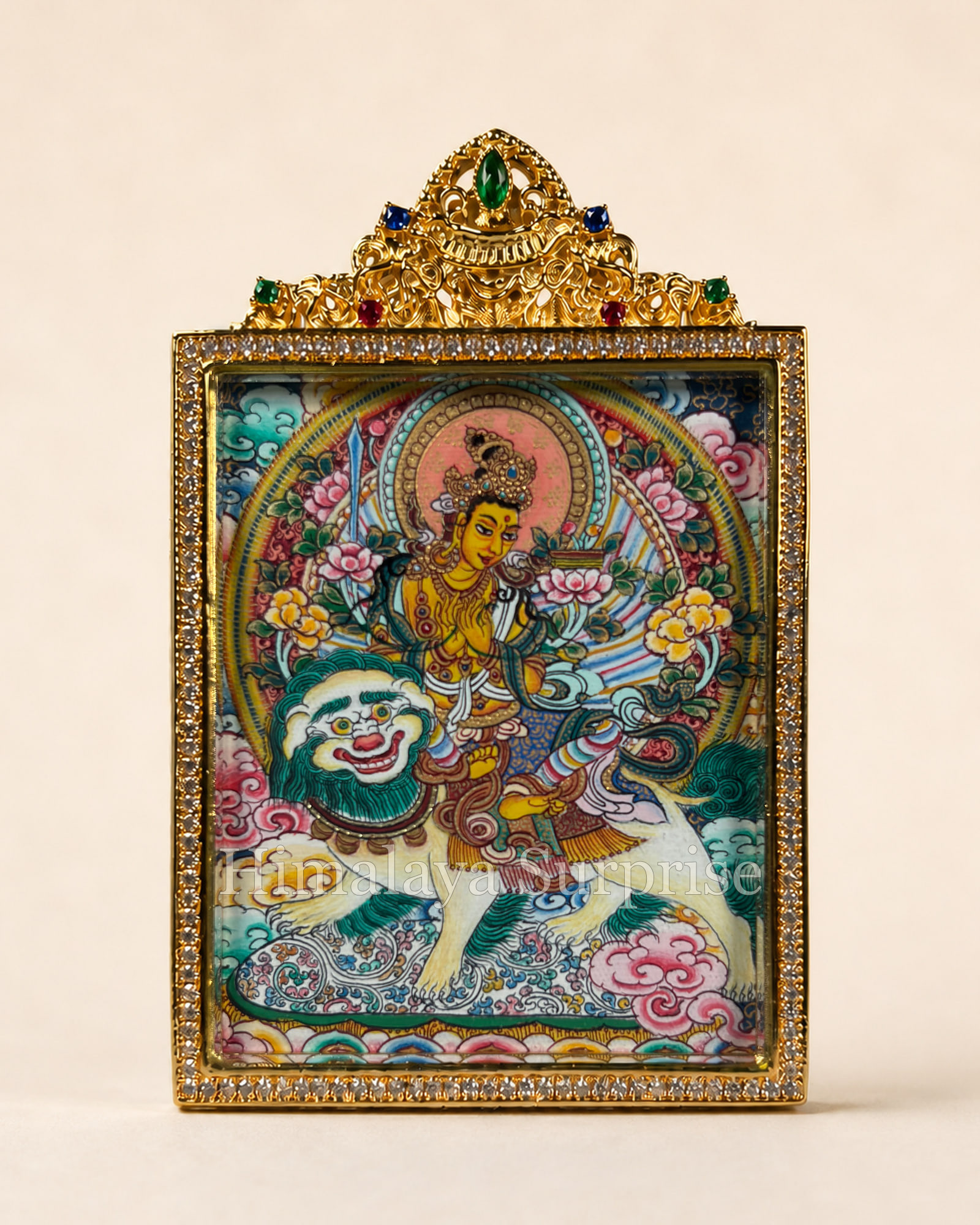
Rooted in Tibetan Buddhist art, thangka painting gives visual form to sacred figures through a precise language of proportion, colour and gesture. Himalaya Surprise brings this tradition into an intimate, wearable format with individually hand-painted miniature thangkas, each with a painted image measuring approximately 4 × 5 cm. Fine lines and mineral pigments define the faces, robes and ritual objects. Some paintings feature details in 24K gold. The collection includes works on gold grounds as well as paintings with multicoloured backgrounds. Manjushri embodies wisdom and Avalokiteshvara compassion. People turn to Green Tara for protection and courage in danger. They pray to Yellow Jambhala for enough to live well and to share with others. Housed in a Gau case and accompanied by a cord, these original paintings can be worn, displayed or collected, bringing artistic craftsmanship and meaningful personal aspirations into everyday life.
About the thangkas and process
A thangka is a painting and devotional image within Tibetan Buddhist traditions, most often depicting Buddhas, bodhisattvas, protectors, teachers or mandalas. After Buddhism travelled from India into Tibet, Tibetan painting absorbed influences from Kashmir, Nepal and China, developing its own iconographic rules, compositional language and painting traditions. A thangka may be used for devotion, offering, study and display; through looking and contemplation, it can also become a steady, intimate image in daily life.
What the figures mean
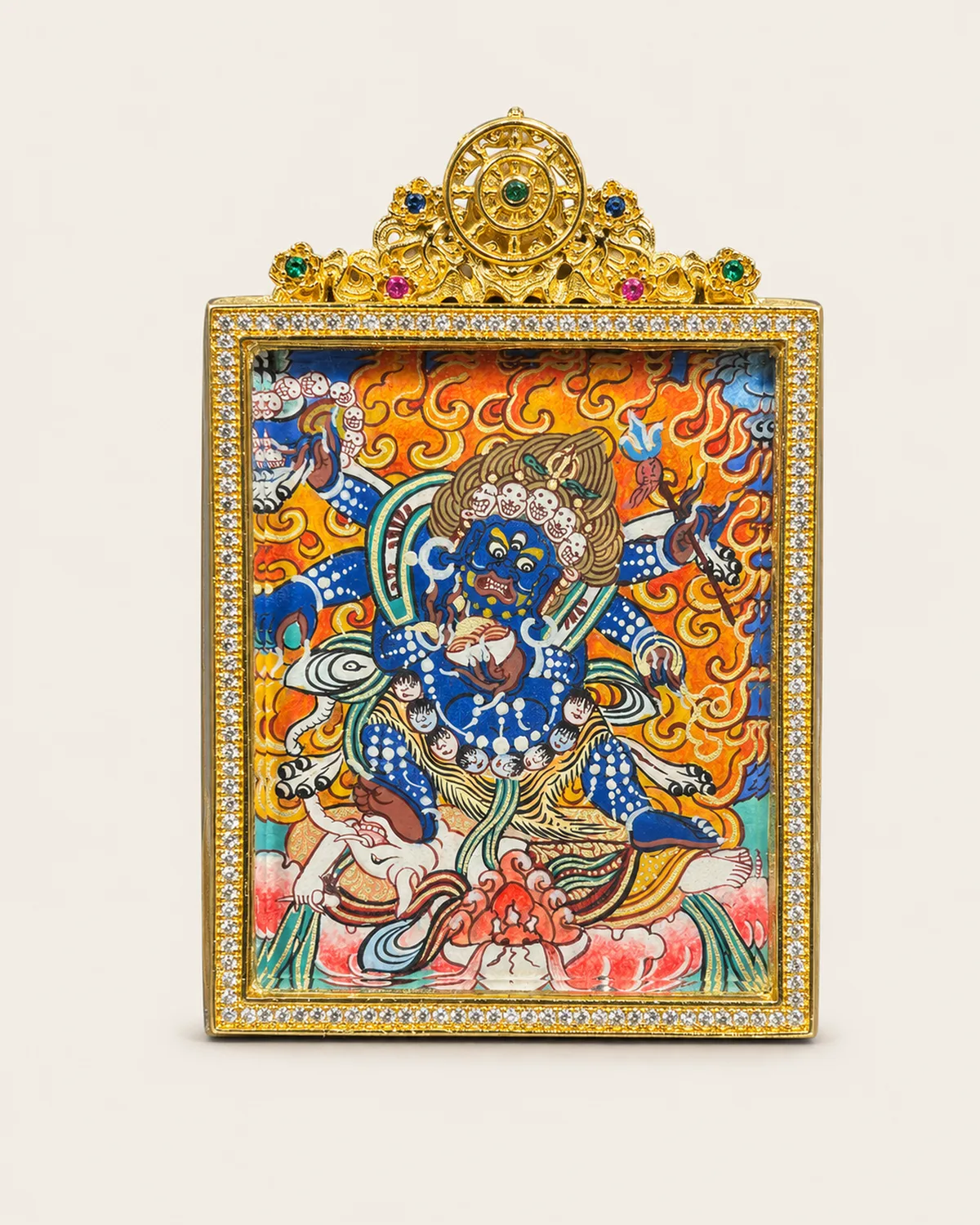
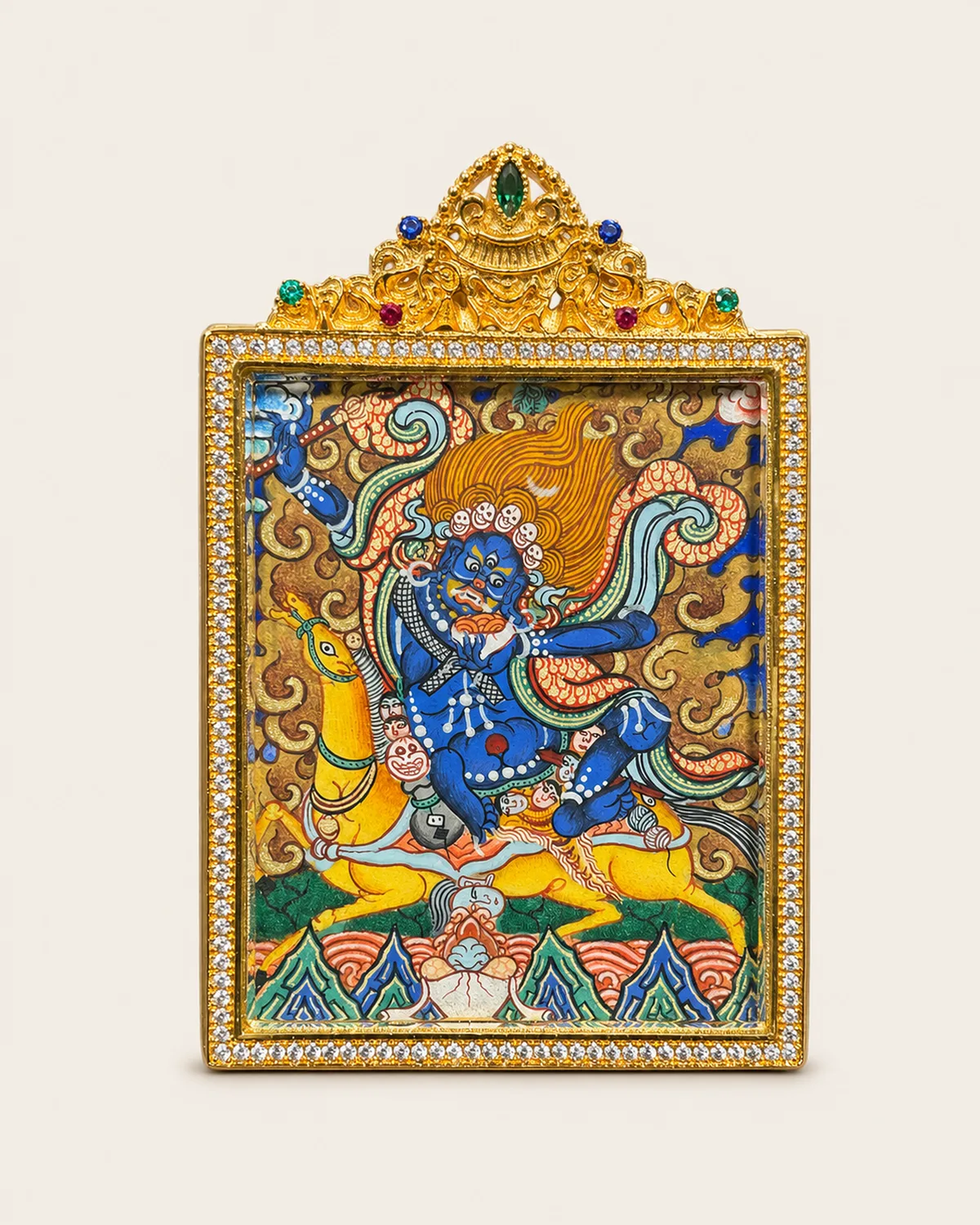
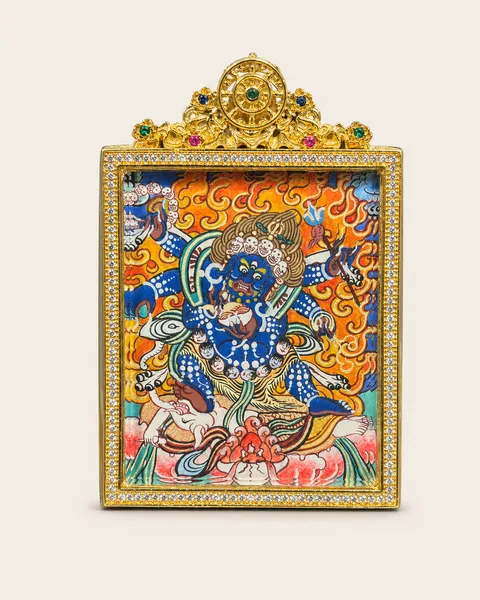
Shakyamuni meditated beneath the Bodhi tree. Buddhists follow his example when they sit quietly to understand what troubles them. Practitioners turn to Six-Armed Mahakala for help overcoming obstacles on their path. When they wish to make a fresh start, they recite Vajrasattva’s hundred-syllable mantra, acknowledge past harm and resolve to act differently.
Miniature thangka and the Gau box
This collection focuses on hand-painted miniature thangkas with a painted image of approximately 4 × 5 cm. The miniature format and Gau box answer a practical need: an image once made for hanging, offering and contemplation can be reduced, protected and carried. Set in a Gau box and fitted with a cord, each painting can be worn, carried or kept nearby as a miniature Buddhist artwork; the case protects the painted image and makes it an everyday companion for viewing and offering. Miniature does not mean simply reduced: figure, posture, mudra, attributes, setting and ornament must remain legible within a very small field. The painted image is approximately 4 × 5 cm; a Gau box frame and cord are included with each work at no additional charge.
Master craftsmanship and the making process
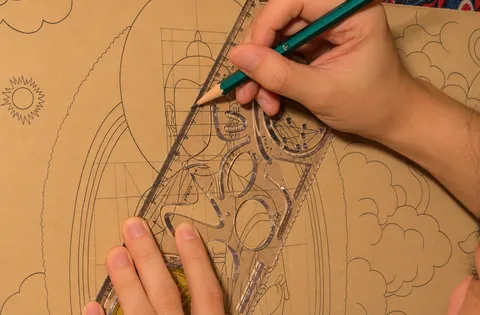
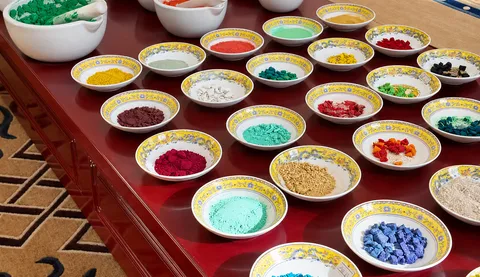
Each work is made by top-level master painters. The process begins with the support: cotton is stretched onto a frame, built up with ox-bone glue and ground, dried and polished repeatedly until the surface is fine and even. The principal figure is then laid out on an iconometric grid; contours are drawn, base colours are placed, and the background, figure, attributes and shading are built layer by layer. Fine brushwork completes the lines, face and eyes, with gold detailing added where the design calls for it. Each work usually takes several weeks; complex compositions with dense detail may continue for months. A 4 × 5 cm painted image is not simply a large painting made smaller: it is a complete order of figure, attributes, gestures, colour layers and space rebuilt at miniature scale. Every line demands control, proportion and exceptional close-range precision. The image uses natural mineral pigments for colour and depth. The Gau box and cord protect the painting and make it possible to wear, carry or keep.
The painted image is approximately 4 × 5 cm; a Gau box frame and cord are included with each work at no additional charge.