Discover / Living with Art
How to Clean and Care for a Thangka
Keep the painted surface untouched while caring for the space around it. A practical guide to dust, light, wearing, storage and changes that call for conservation advice.
In this story
Cleaning a thangka begins with knowing which surface needs care. Dust on a shelf or separate glazing is different from dust on painted cloth. Keep the painting untouched, reduce what settles around it, and let its frame or textile structure guide the way you handle it.
The frame, glazing and painting are different surfaces
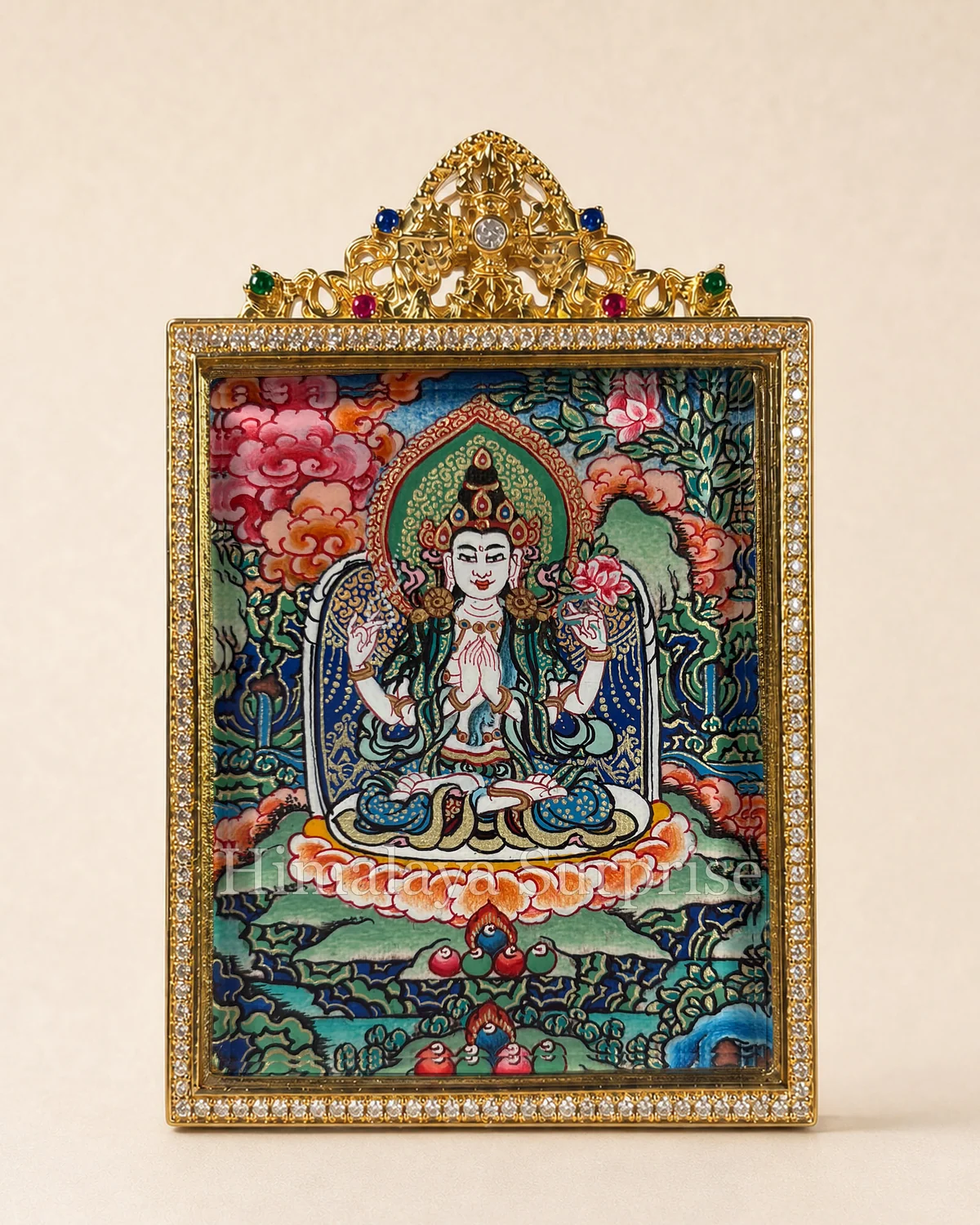
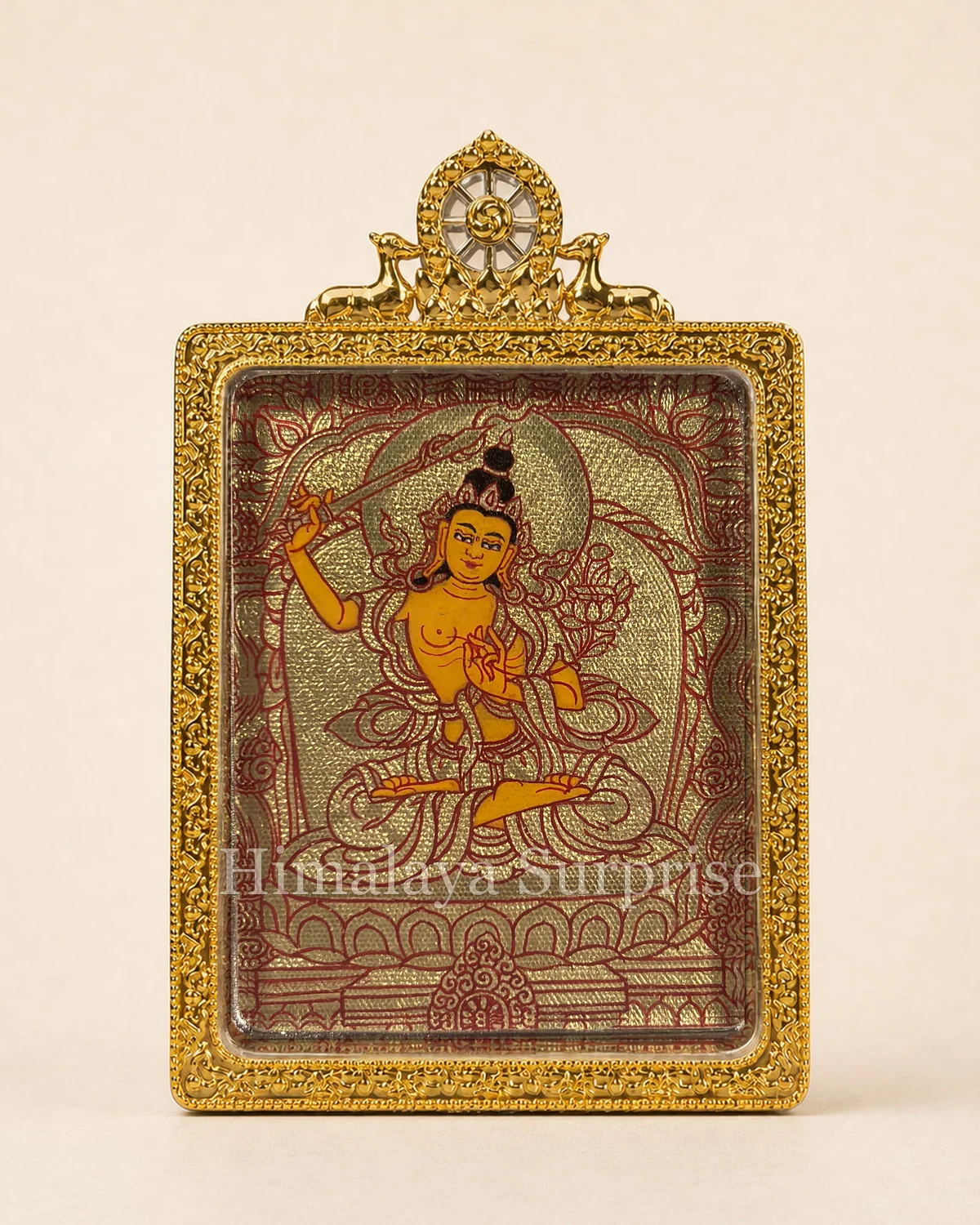
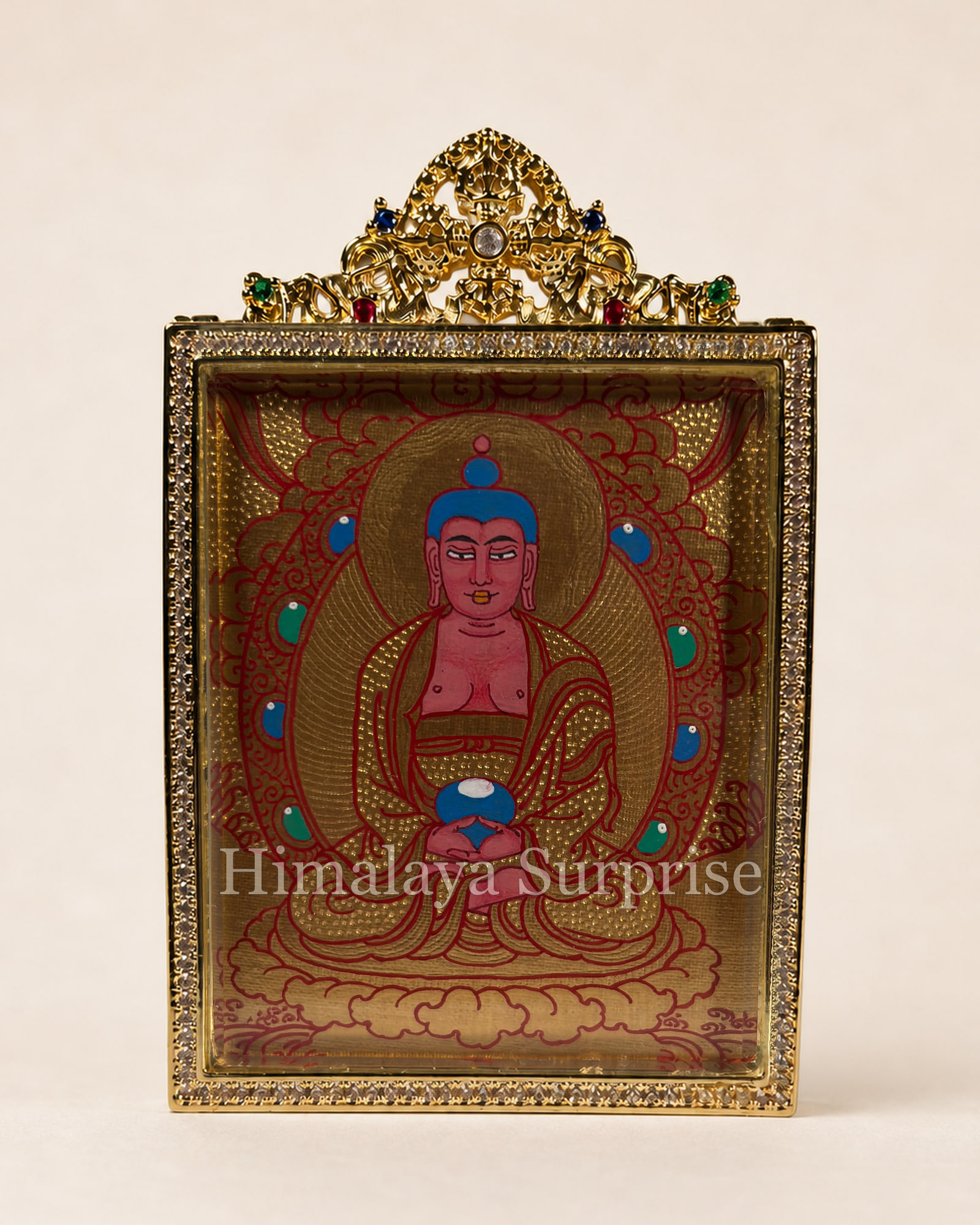
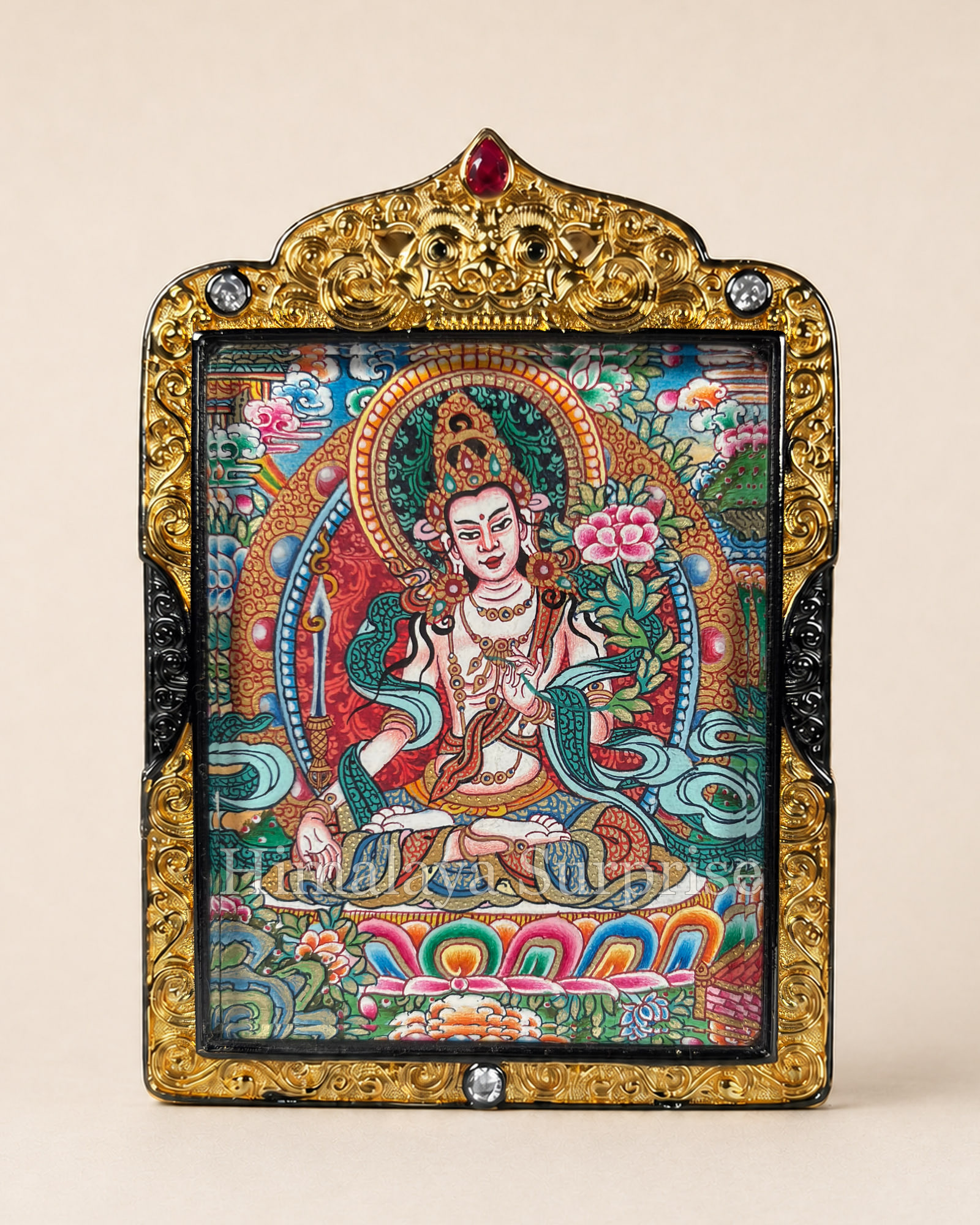
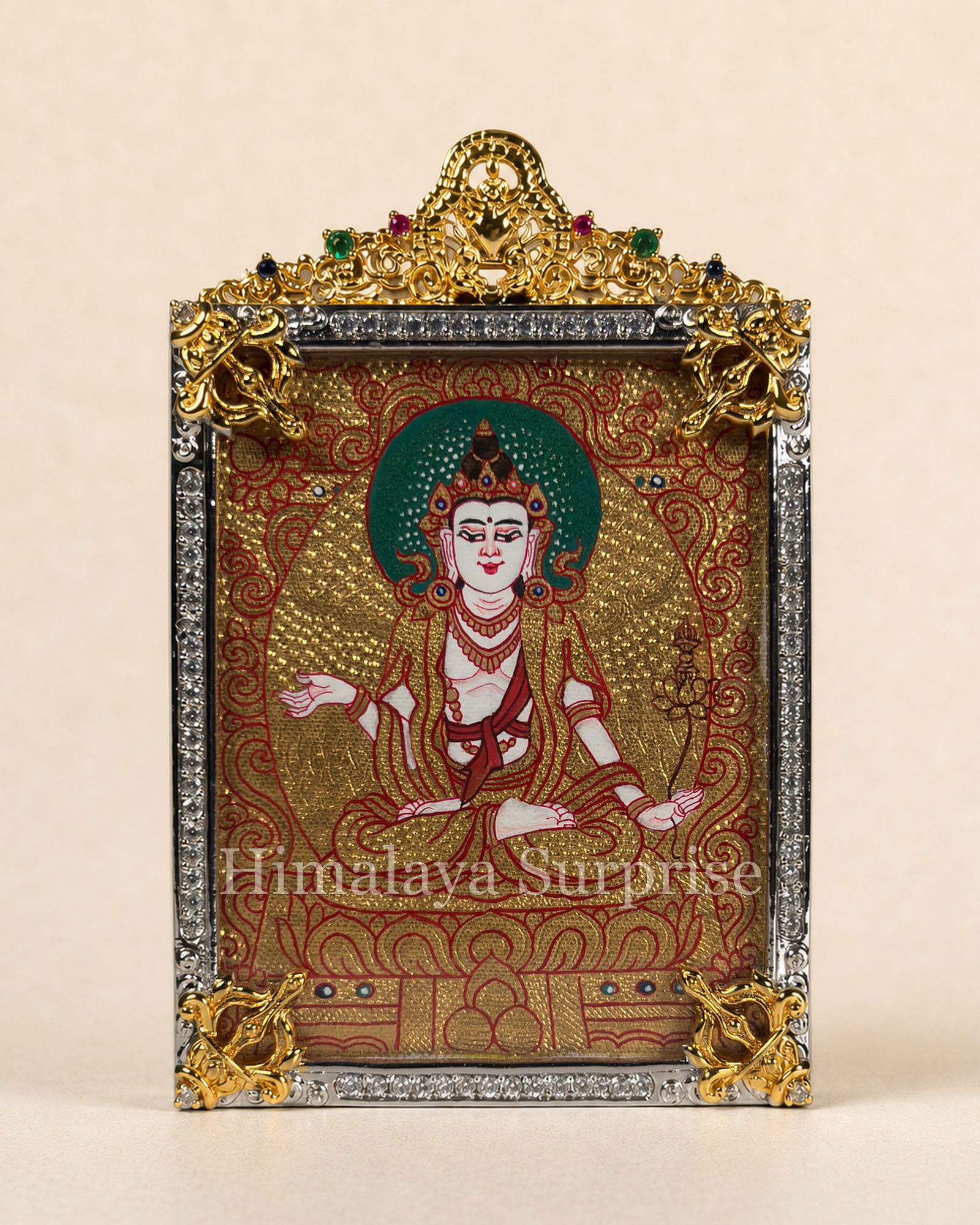
A thangka can bring together a painted image, a prepared ground, fabric, gold details and a textile mounting. A miniature may sit inside a metal housing or frame instead. Cleaning one visible surface can affect another layer beneath it, particularly when moisture reaches an edge or friction catches a small lifted area.
A fingerprint on clearly separate glazing can be addressed as frame care. Dust, soot or a stain on paint is a different matter. If the front surface is difficult to identify, leave it untouched. The same distinction applies to gold: a method intended for metal jewellery is not automatically suitable for fine gold lines on a painting.
Oil-varnished thangka: a coating, not a paint medium
In commercial listings, oil-varnished usually functions as a label for an added surface finish applied after a painting is made. It does not, by itself, identify the binder in the paint beneath it or mean that the image was painted in oil. Treat the label as a question about the surface, not as a complete material description.
A general painting-care model separates support, ground, paint and a possible coating. A coating may change saturation and the way light meets the surface, but it is one layer in the object, not a synonym for every glossy appearance. Separate glazing, gold details catching light and the photograph itself can also change what you see.
For daily care, leave the painted surface untouched, including when it has a coating. Gloss does not identify the finish, and rubbing or applying water, cloth or solvent is not a suitable way to test it.
Reduce dust before it reaches the image
Keep shelves and the space around the work clean, and keep smoke, incense ash, cooking vapour, perfume and cleaning sprays away from it. During decorating or renovation, a painting needs protection from the work area rather than a thorough cleaning afterwards. Choose a position where curtains, pets and passing bags will not brush the image.
Do not wash or wipe the painted surface, apply alcohol or cleaning fluid, or try a swab in a hidden corner. Brushing, blowing or vacuuming loose particles can also disturb pigment. For separate glazing and a stable frame, follow the relevant care instructions, keeping liquid away from seams and the artwork. Opening a housing repeatedly to remove a speck of dust can create more handling than the picture needs.
Gentle light and a steady place
Soft, even light is enough to enjoy fine detail. Keep the work away from sustained direct sun, strong spotlights, heaters, air-conditioning outlets, leaks and damp walls. Light exposure adds up over time, while rapid changes in temperature and humidity can stress the painted layers and textiles. UV-filtering glazing can help with some exposure, but it does not make direct sunlight harmless.
A support should fit the frame and hold it securely without pressing the picture. For a textile-mounted scroll, the hanging structure and fabric need to be considered together. The size and display guide explains how the painted area, surrounding mount and available space affect placement.
Before wearing a miniature, look at the attachment
Support the frame when picking up a miniature. Look at the cord, attachment and fittings before wearing it; the cord should sit comfortably without pulling the housing into an awkward position. Give the piece a smooth place against clothing, away from rough zips, hard ornaments and details that can catch the cord.
Put it away before bathing, swimming, vigorous exercise or activities involving substantial water contact. Let perfume and skincare settle before wearing the work. If a fitting loosens, pause wearing rather than tightening, gluing or adapting the connection yourself. These small habits let the painting remain close without giving its surface the treatment of ordinary jewellery.
Give each format the support it needs
For a stable framed miniature, choose a clean, dry place where it cannot be crushed. Keep it separate from keys and hard jewellery, arrange the cord without tangles and support the frame. Before moving a larger framed work, clear the route and support the frame as a whole, keeping hands away from the image.
A textile-mounted thangka has a different structure. The painted cloth, surrounding fabric, rods, cords and cover can form a connected object. In the historical example shown here, the broad patterned mount is a substantial part of the hanging work. Repeated rolling, unrolling or pressure can stress fragile paint and fabric; a scroll that looks flexible is not necessarily safe to roll.
Keep a fragile or unfamiliar work supported in its existing form rather than folding, flattening or re-rolling it for convenience. A damp or changing work should not be sealed in ordinary plastic. Advice about a suitable support, enclosure or movement plan depends on the actual object, especially when old fabric, lifting paint or loose structural parts are involved.
Notice a change without touching it
Look in even, indirect light. New powder or flakes, a lifting paint edge, a water mark, mould-like spots, a loose seam, insects or a damp smell deserve attention. A mark may be old, so compare with an earlier photograph if one is available. The useful question is whether something has changed, rather than whether the work looks newly made.
Photograph the whole work and the affected area without moving or pressing it simply for a better view. Note when the change appeared and whether there was recent water exposure, smoke, transport or building work nearby. Those details make a conversation about care much more useful than trying to remove the evidence first.
When cleaning becomes a conservation question
Flaking paint, a wet surface, mould, torn fabric or a loose structural part calls for a pause in cleaning and handling. Keep the work supported and seek prompt advice from a conservator familiar with painted surfaces and textiles. Avoid rubbing, spraying, heat-drying, sewing or gluing the affected area. A calm first response leaves more options open.
Professional care may begin with examination and monitoring, rather than immediate treatment. The restoration and condition guide looks at how visible changes, the object’s history and treatment goals are considered together. Everyday prevention continues to matter before and after that work.
A small place in the everyday routine
Good care need not dominate the experience of a painting. A dependable place to rest, gentle light and thoughtful handling leave more time for looking. Returning the work to that place after wearing or a close view can become a quiet part of daily life: simple enough to repeat, attentive enough to make a difference.
Questions and answers
Can I wipe a thangka with a soft cloth?
Do not wipe the painted surface, gold details, ground or textile mount. A soft cloth can still catch a flake, abrade pigment or transfer moisture. First confirm that you are dealing with separate glazing; if you are unsure, leave the surface untouched.
How often should I clean a thangka?
There is no useful universal interval for cleaning the painted surface. Prevent dust, smoke, direct light and moisture, inspect without touching, and let the individual format and condition determine whether professional advice is needed.
How should I move or store a thangka?
Support the frame or existing structural parts, keep the route clear, and do not pull, fold, unroll or re-roll an unfamiliar or fragile work. Keep it away from damp, heat and pressure. If it is wet or changing, do not seal it in ordinary plastic; document it and ask for object-specific advice.
What should I do if a thangka has mould, a damp smell, flaking or water damage?
Stop cleaning and handling. Keep the work supported and separate from other works where practical, photograph the condition and seek prompt advice from a conservator with relevant painted-surface and textile experience. Do not rub, spray, heat-dry, seal or try to flatten the problem.
Does “oil-varnished” mean oil painting?
No. In a commercial listing, oil-varnished generally points to a surface finish or coating added to a completed image; it does not identify the paint binder or mean that the image was painted in oil. General conservation descriptions separate support, ground, paint and coating. Use the label as a question about the surface, not as proof of the medium.