Discover / Display & Care
Thangka Framing: Brocade Scrolls, Modern Frames and Shadow Boxes
Compare brocade scrolls, modern frames and shadow boxes for a thangka. Understand painted versus mounted dimensions, glazing space and the support behind a good display.
In this story
A thangka can hang as a traditional brocade scroll or be presented in a modern frame. Neither is the right choice for every work. A textile mount brings its own colours, proportions and movement; a rigid frame gives the painting a different presence in a room. The most useful comparison begins with what is actually being framed: a painted panel, a complete scroll or a miniature already held in a small housing.
The brocade mount is part of the presentation
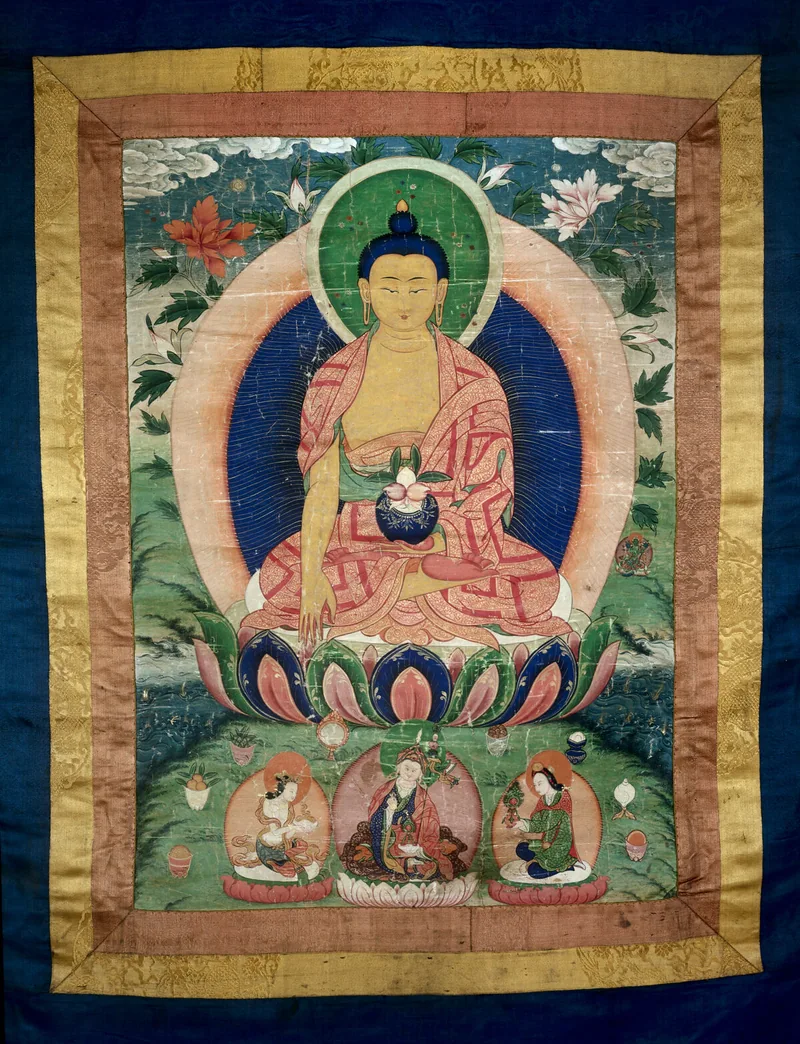
A traditional thangka often combines a painted cloth with a textile surround. Upper and lower rods, cords and a cover cloth may complete the hanging arrangement. The painting occupies one area within a larger object. Its border extends the proportions vertically and gives colour a second role beyond the painted scene. Brocade mounting is therefore more than choosing a decorative strip around a picture.
An open scroll keeps this textile character visible. The soft surround, the weight of the lower rod and the hanging line have a different effect from a firm rectangular frame. Mounts vary, however: cotton, wool and different silks occur in historic works, and a patterned border need not be hand-embroidered. The material and construction belong to the individual object, not to a single standard version of “traditional.”
Painted size and mounted size are different
The distinction becomes concrete in a Tibetan Manjushri painting of the seventeenth–eighteenth century. Its painted image measures 42.5 × 27.9 centimetres; the recorded overall size with its mount is 65.1 × 47 centimetres. Those dimensions describe two different things. A frame chosen only around the painted panel would not accommodate the whole mounted object.
The archival photograph shown here is in black and white. It shows the central figure and the textile surround, but does not display every hanging component. It is useful for seeing how the picture sits inside a larger border. For a modern frame, the outside dimensions and depth add a further layer; for a scroll, the hanging footprint can include rods and cords beyond the cloth. The size and display guide explores those measurements in more detail.
A modern frame changes the setting
A rigid frame can give a small painting a clear position on a wall and an enclosure against accidental contact. A simple dark frame tends to hold the eye near the image; a more elaborate gold-coloured border can echo fine gold details. Neither colour is inherently more appropriate. The balance depends on the painting, the surrounding wall and how much visual space the frame occupies.
A window mat can create a quiet interval around a painted panel. A floating presentation leaves its edges visible instead. That visible edge is an aesthetic choice, not a support method by itself: the cloth still needs to be held appropriately behind it. A frame made for stretched oil-painted canvas is not automatically suitable for a flexible painted textile, and a brocade surround does not have to be removed simply because a rigid outer frame is being considered.
What a shadow box adds
A shadow box is a deeper enclosure. Its extra space can accommodate a textile border or projecting parts while preserving the appearance of a complete mount. The depth also makes room between the artwork and the glazing. This can be a useful middle ground for someone who likes the presence of a brocade scroll but wants it displayed inside a rigid frame.
Depth alone does not explain how the object is supported. A heavy lower rod and a delicate silk surround impose different loads, so the arrangement behind them matters as much as the view from the front. There is no single spacer measurement that suits every thangka. Raised paint, textile folds and the dimensions of the mount all affect the space a particular enclosure needs.
Glass, light and the space in front of the paint
Glass and acrylic are glazing materials; their optical qualities vary between products. Reduced reflection can make fine lines easier to see, and some glazing filters part of the ultraviolet light. Neither makes bright sunlight harmless. The frame and its position work together: a quieter light setting often does more for comfortable viewing than an ambitious glass specification on its own.
The painted surface needs separation from the glazing. Contact can introduce sticking or abrasion as materials and moisture conditions change. A glazed enclosure can reduce falling dust and casual touching, but closing the back is not a cure for dampness. The important parts are the space around the work, its support and a suitable environment—not merely how firmly the frame is sealed.
The support behind a good display
The front of a frame tells only part of the story. The backing and attachments carry the work, and their design should allow for the painting and textiles together. A “float” appearance, an acid-free label or a beautiful wooden surround cannot answer that structural question alone. For a new display, the useful conversation with a framer is simple: what will bear the weight, what will touch the artwork, and how can the enclosure be opened again?
Older textile mounts can look substantial while being fragile, and brittle paint may be stressed by rolling or a new attachment. Where a work is flaking, damp or structurally weak, a conservator can assess it before the mount is changed. This is a different task from choosing a frame colour. Historic thangkas have been housed flat, on supported rolls and in frames; the appropriate approach depends on the object rather than a universal storage rule.
A miniature already in its own housing
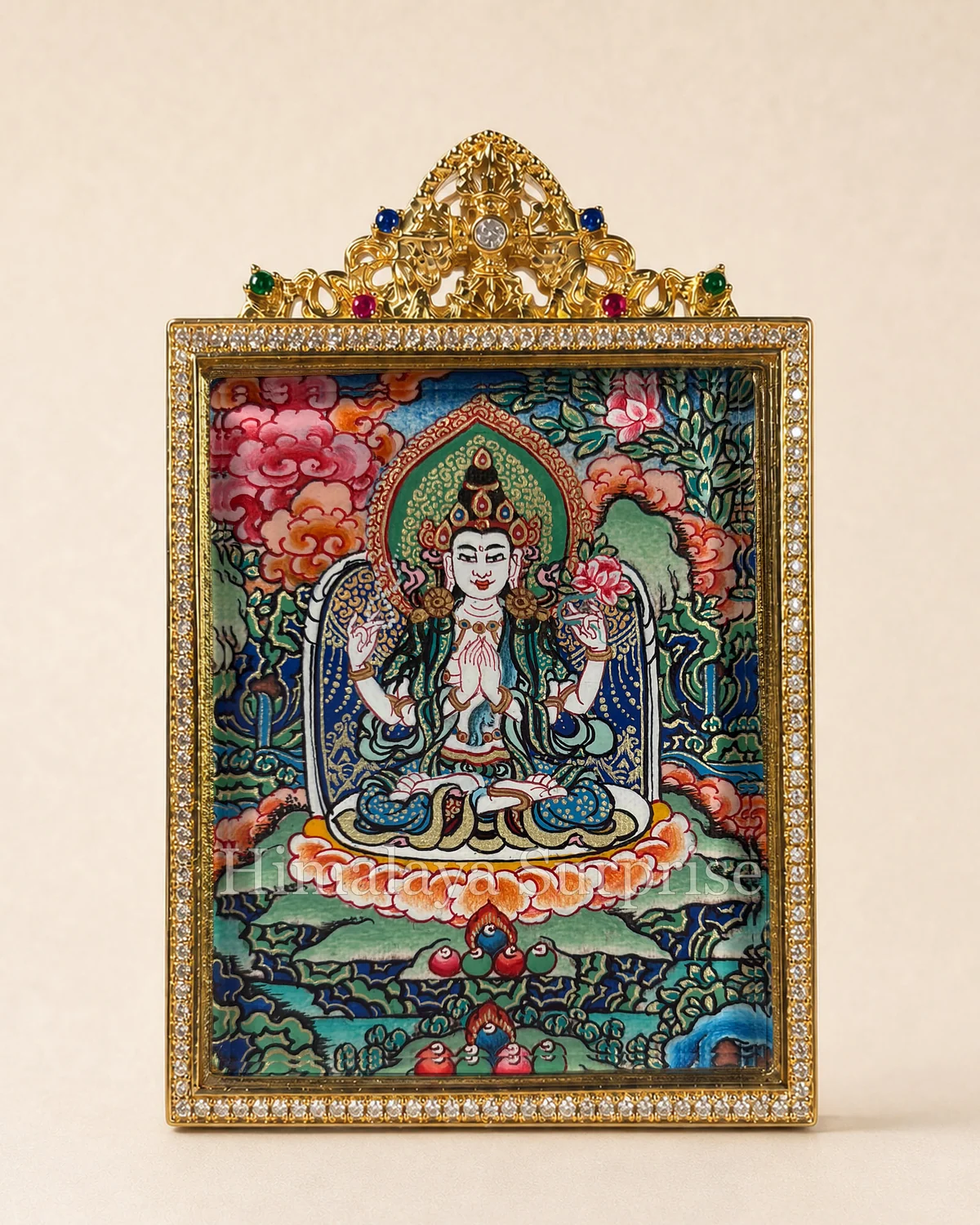
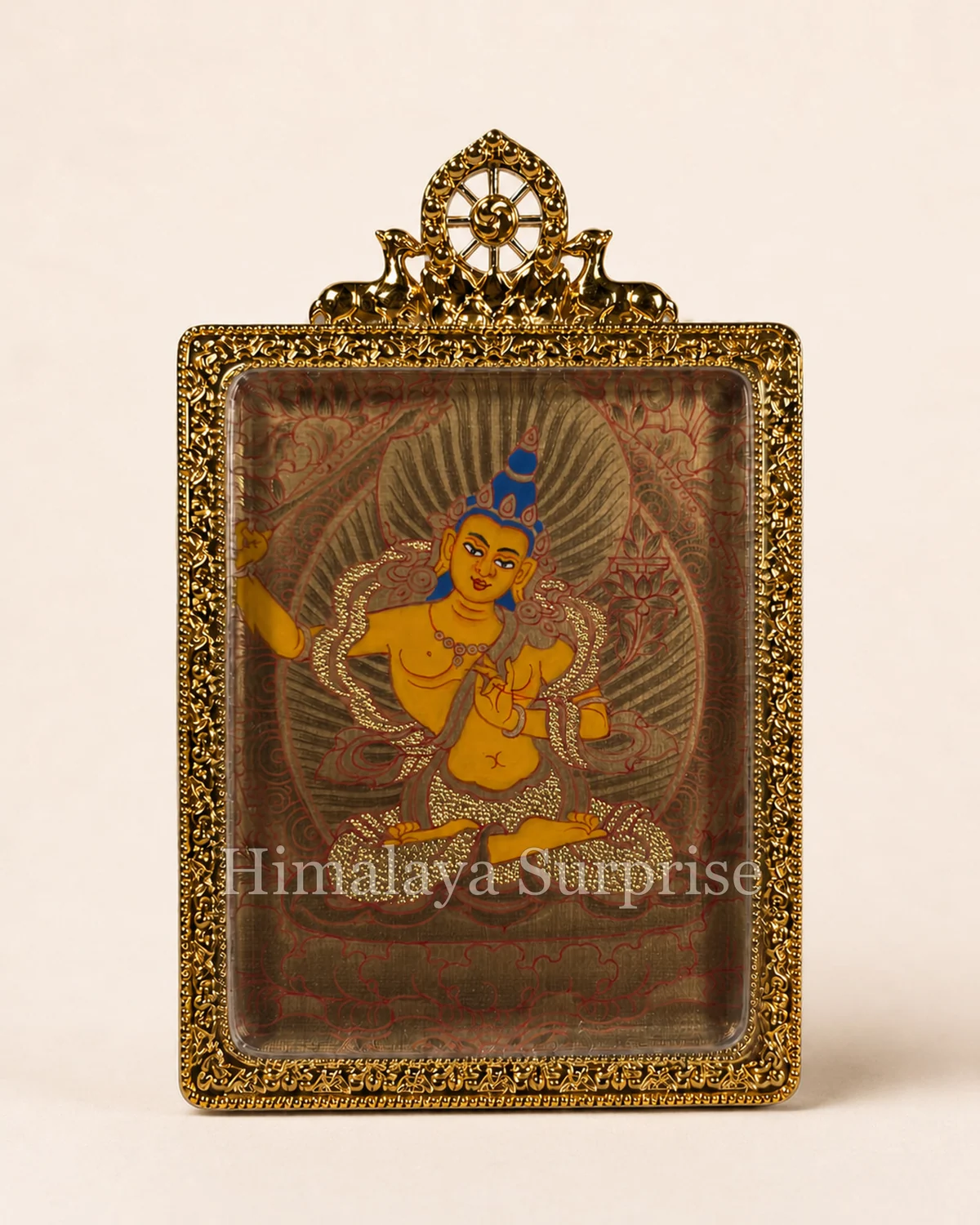
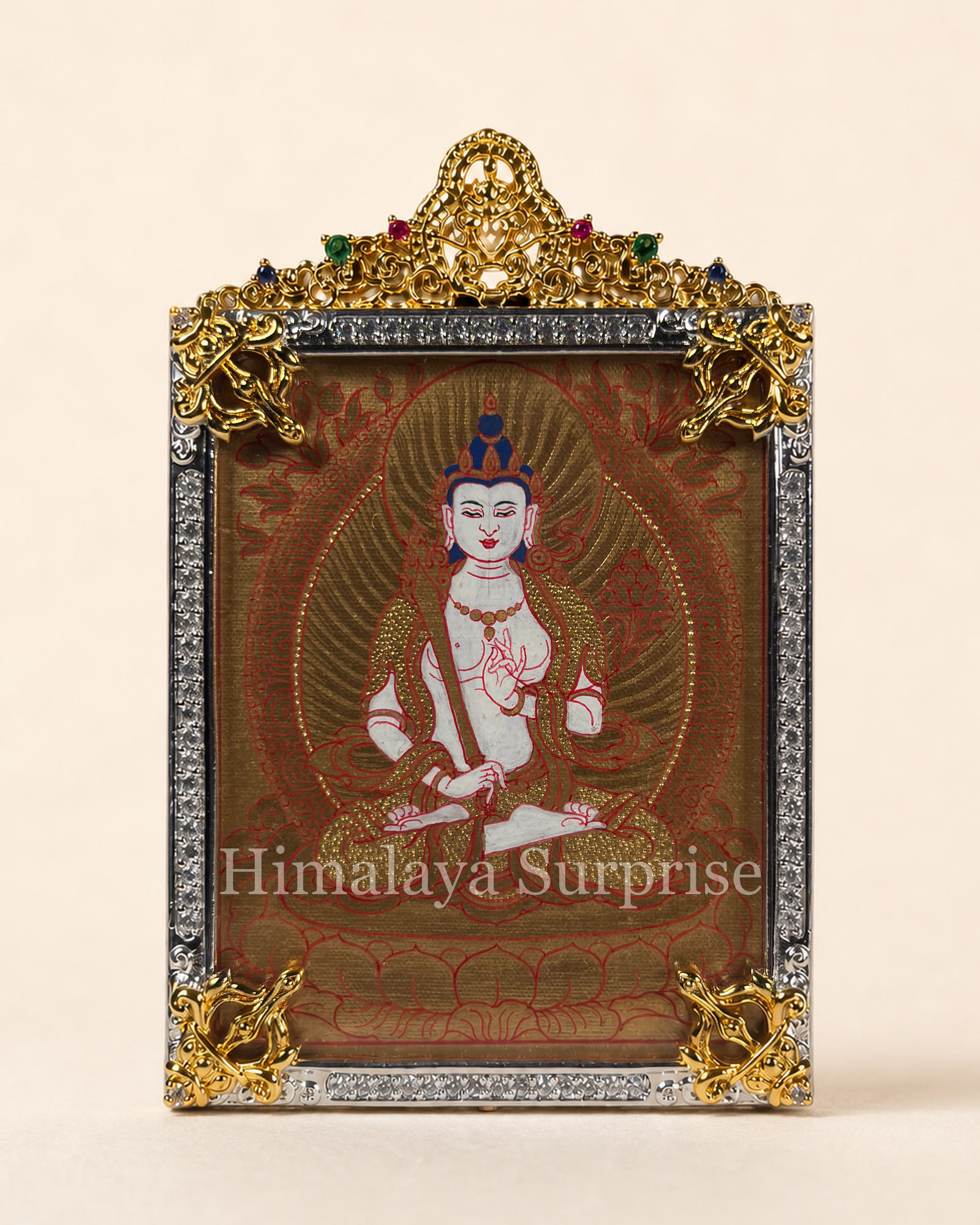
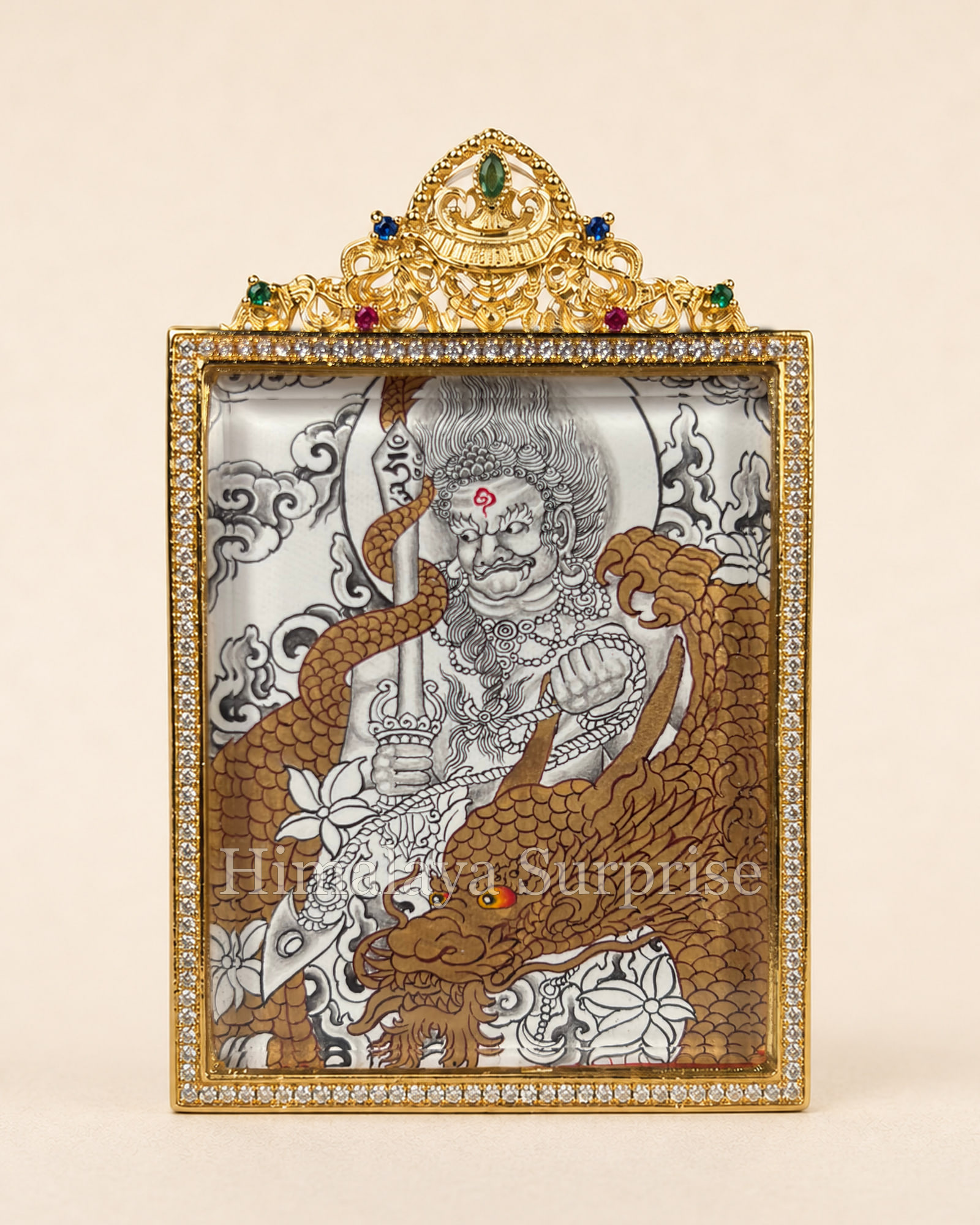
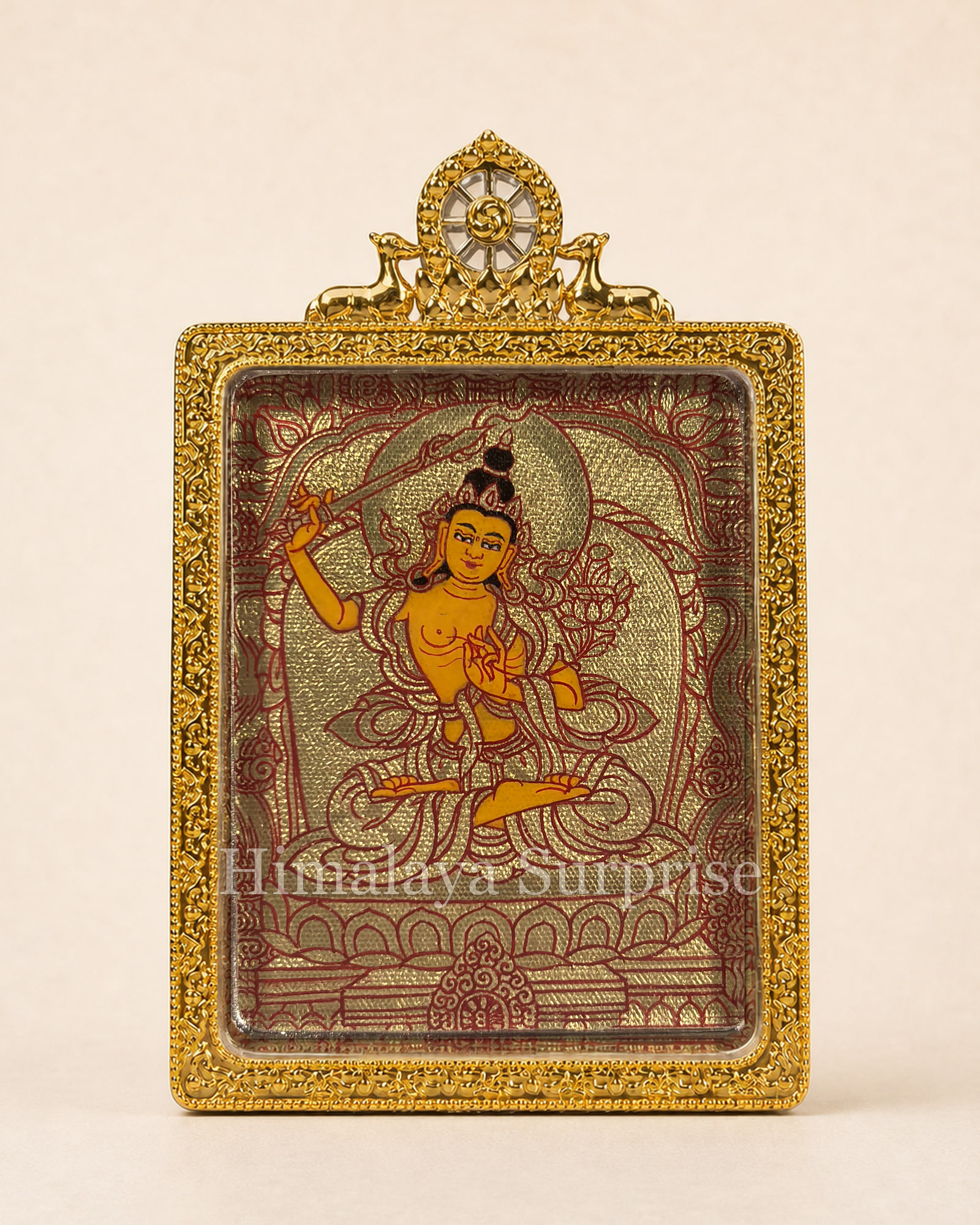
The Manjushri miniature in the opening photograph is already held in a gau box. Its painted image measures 4 × 5 centimetres, excluding that housing. It is a different format from a broad textile scroll, and the visible front does not specify the internal glazing or backing. A miniature of this kind can have a strong presence without being placed in a wall frame: the small border and the close viewing distance already shape its scale.
Across these formats, the frame is most successful when it makes the painting comfortable to see. Sometimes that means letting a textile surround hang freely; sometimes it means a quiet rigid border with generous space around the image. The finished effect comes from the relationship between picture, border and setting. A good frame gives each enough room.
Questions and answers
Can a thangka be framed with glass?
Yes, for suitable works, with appropriate support and space between the painted surface and glazing. Glass or acrylic is only one part of the enclosure; it does not replace careful placement or make direct sunlight harmless.
Is brocade mounting the same as framing?
Brocade mounting creates a textile presentation around the painting, often as a hanging scroll. A modern frame adds a rigid surround or enclosure. A complete textile mount can sometimes be displayed inside a frame without removing its border.
What is a shadow-box frame for a thangka?
It is a deeper enclosure that can leave room for a textile mount, projecting parts and separation from glazing. Its depth is useful, but the work still needs a suitable backing and attachment arrangement.
Which dimensions matter when choosing a frame?
The painted image and the overall mounted object are different measurements. A rigid enclosure also has an outside size and depth. Rods, cords and other hanging components may extend beyond the cloth of a scroll.
Can an old thangka be reframed?
Sometimes, but an older or fragile work may need a conservation assessment first. Flaking paint, weak textile or dampness changes the support question. A new frame should follow that assessment rather than conceal the problem.