Dzi Beads
Available works
Loading works…
Banded agate dzi beads
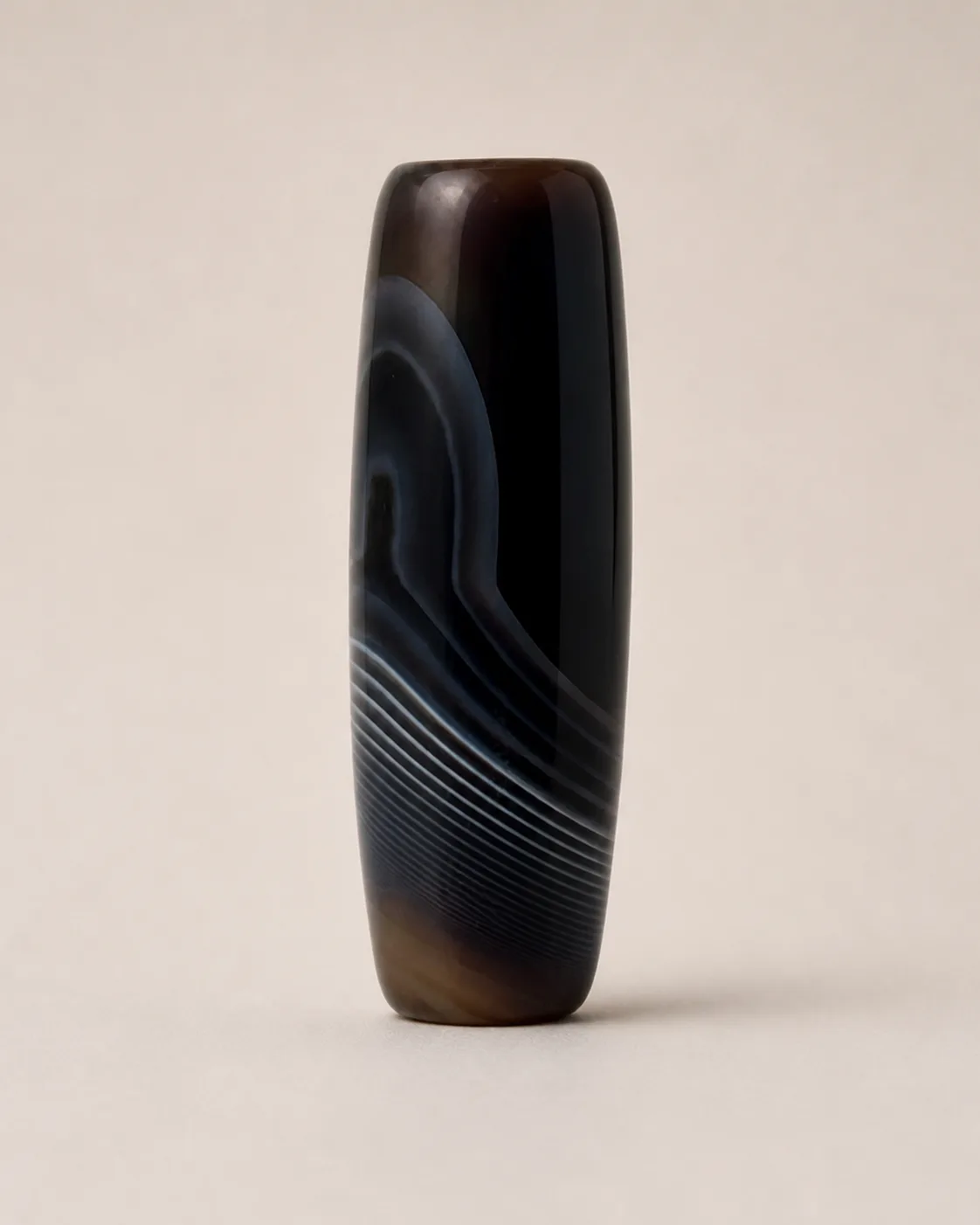
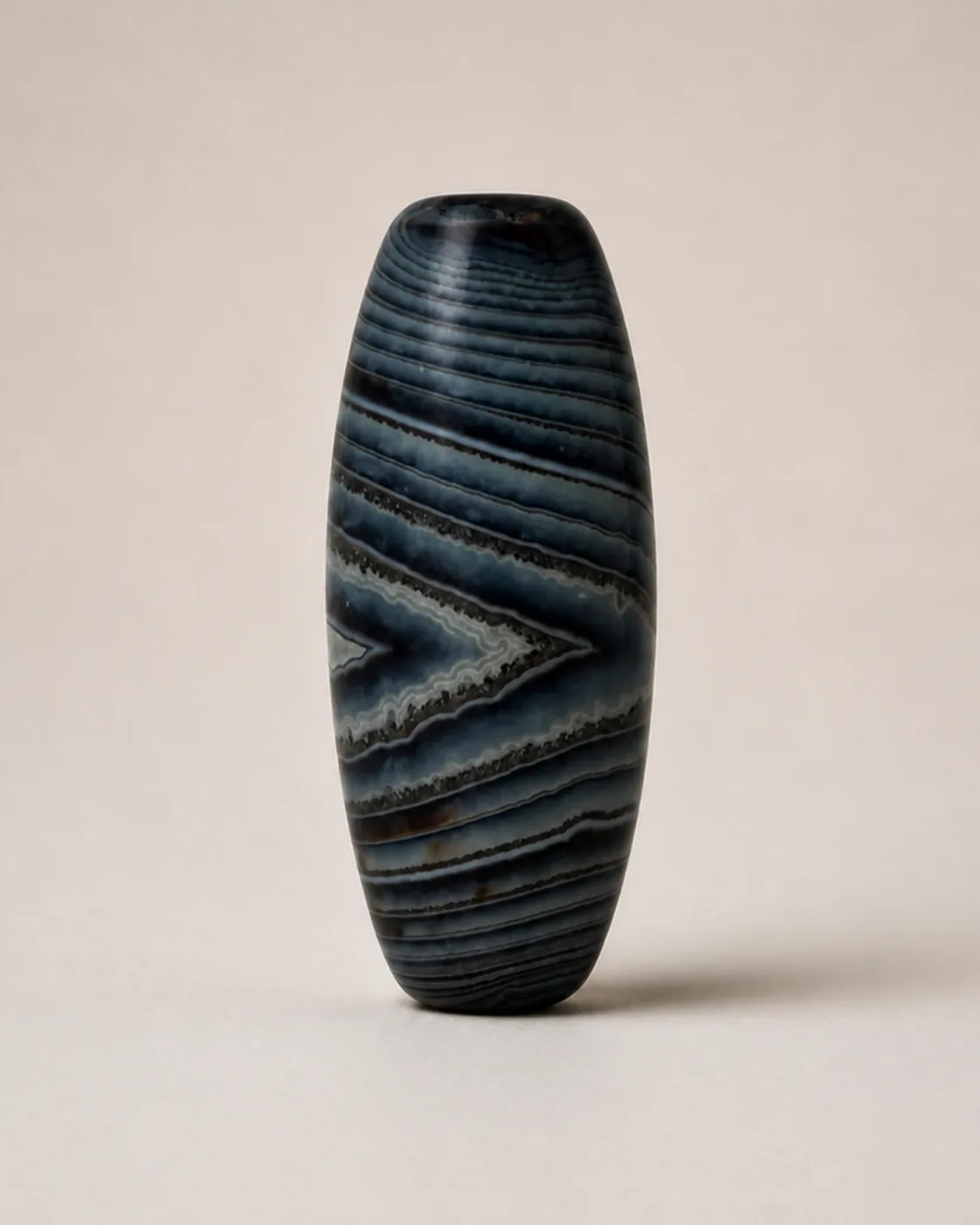
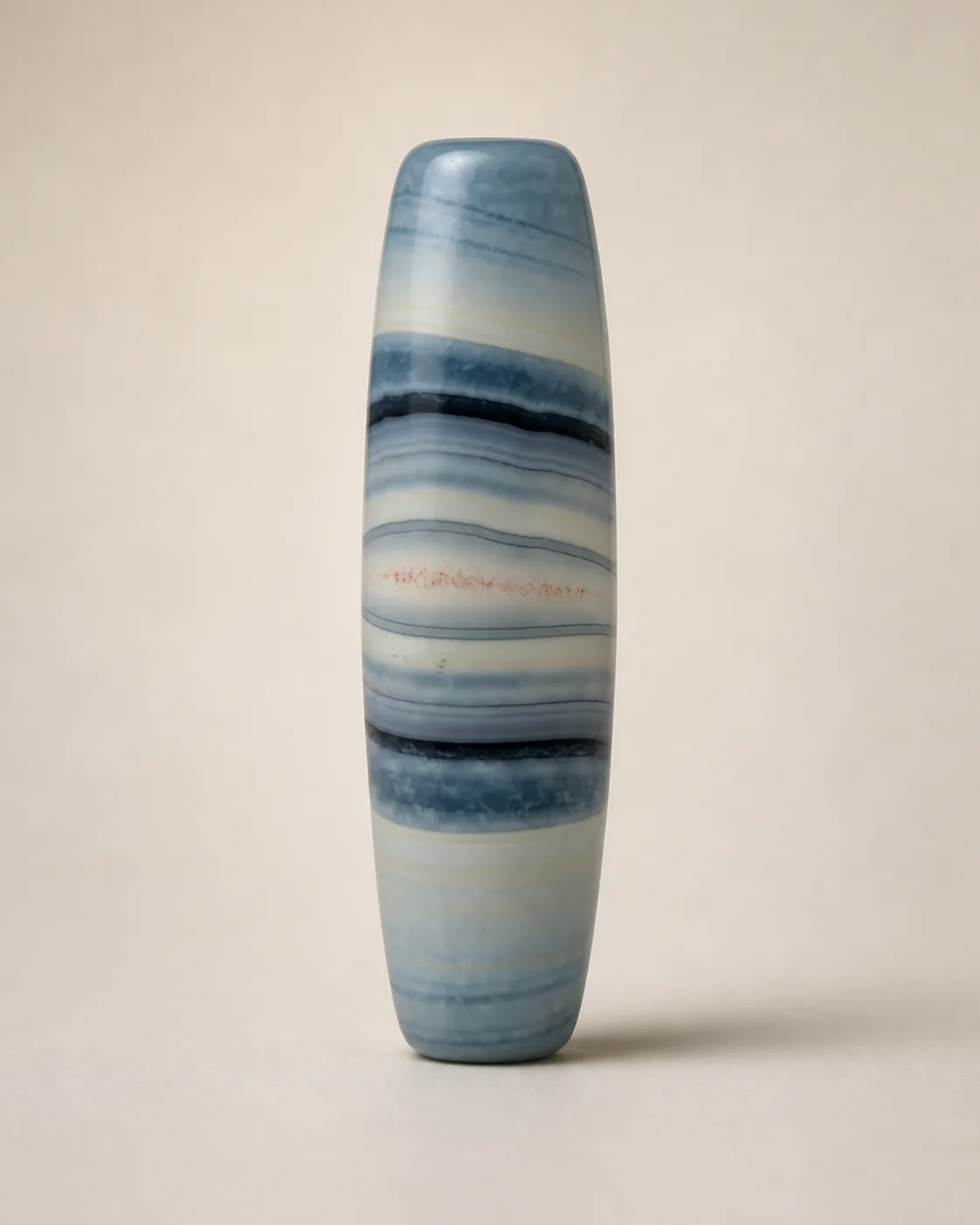
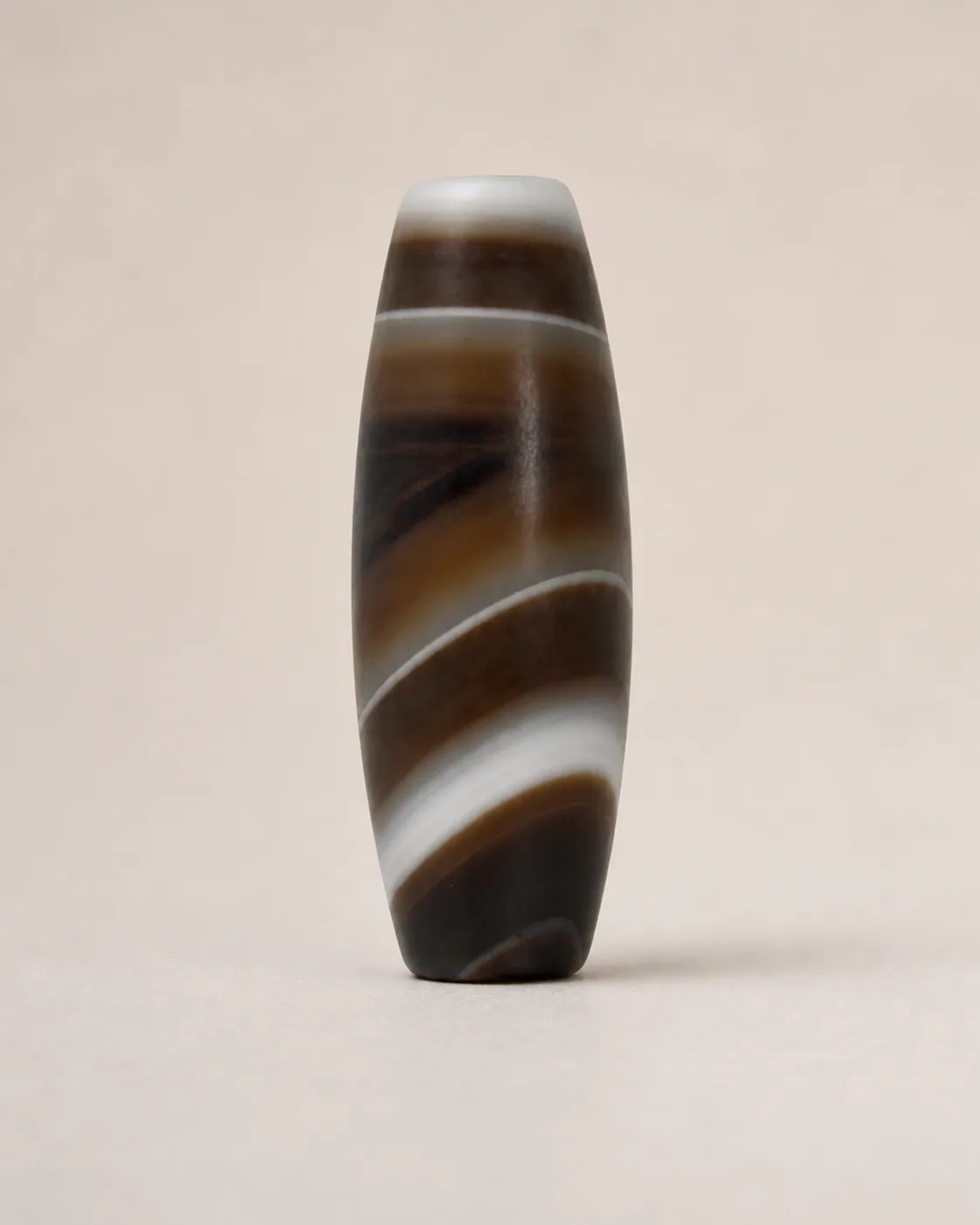
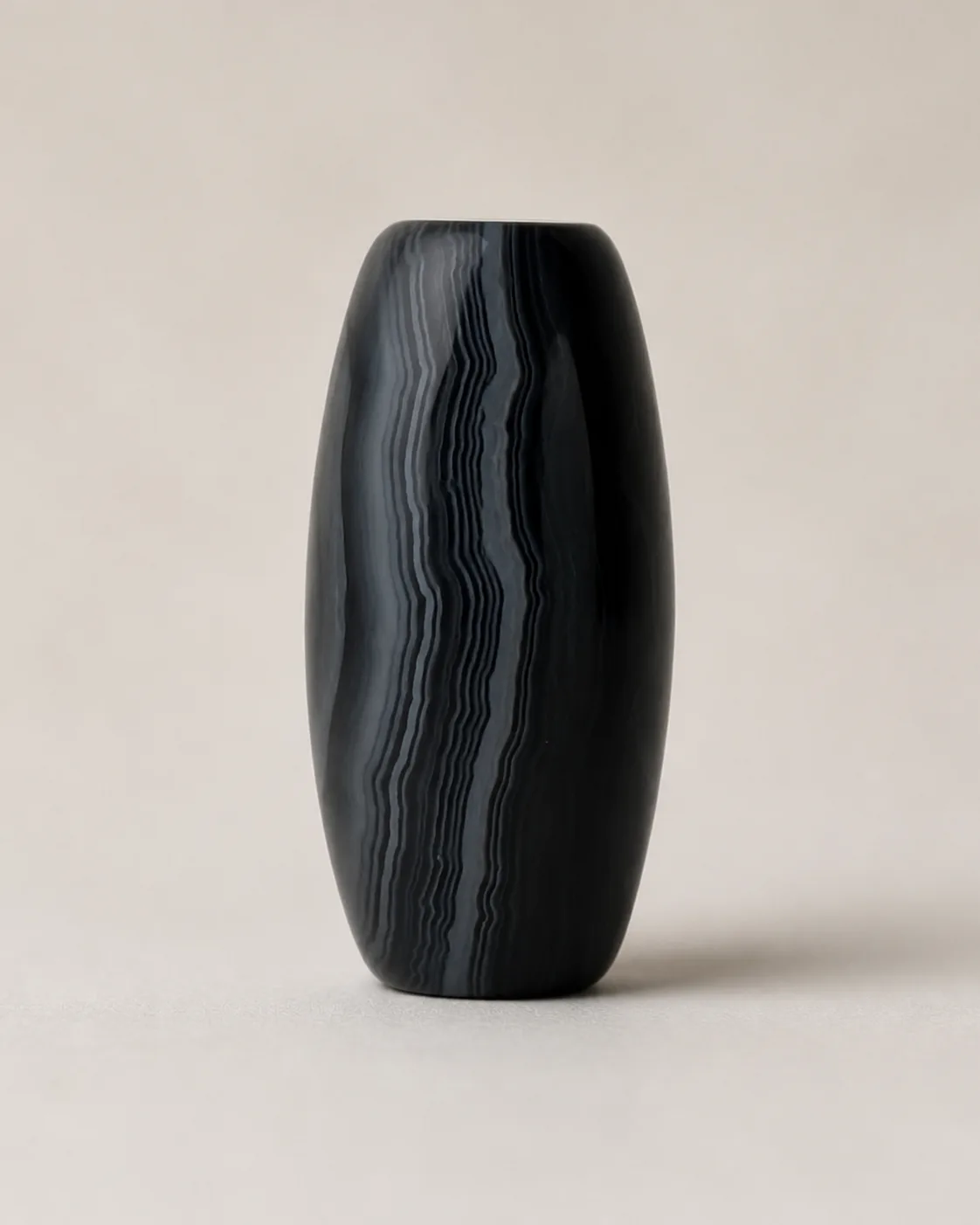
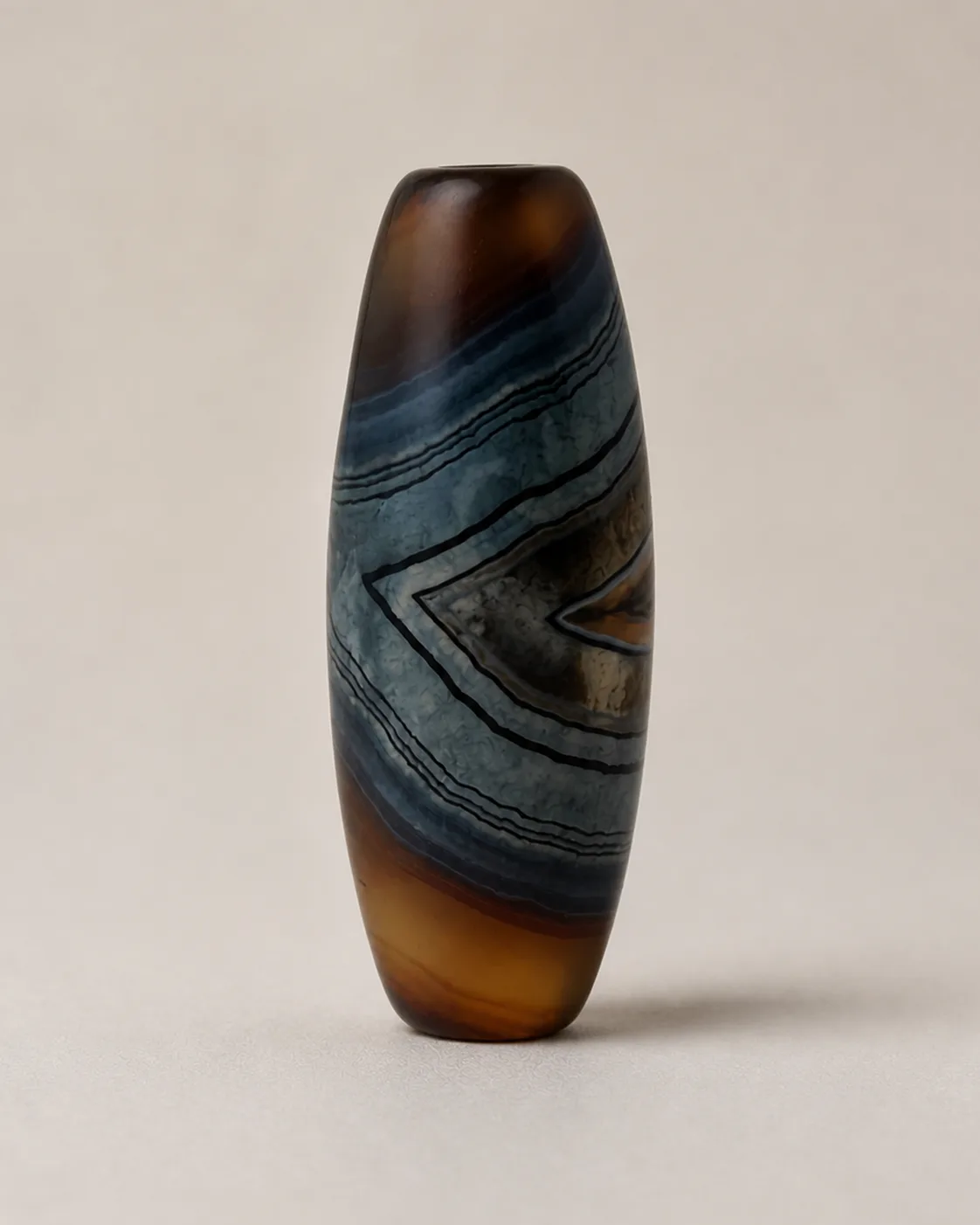
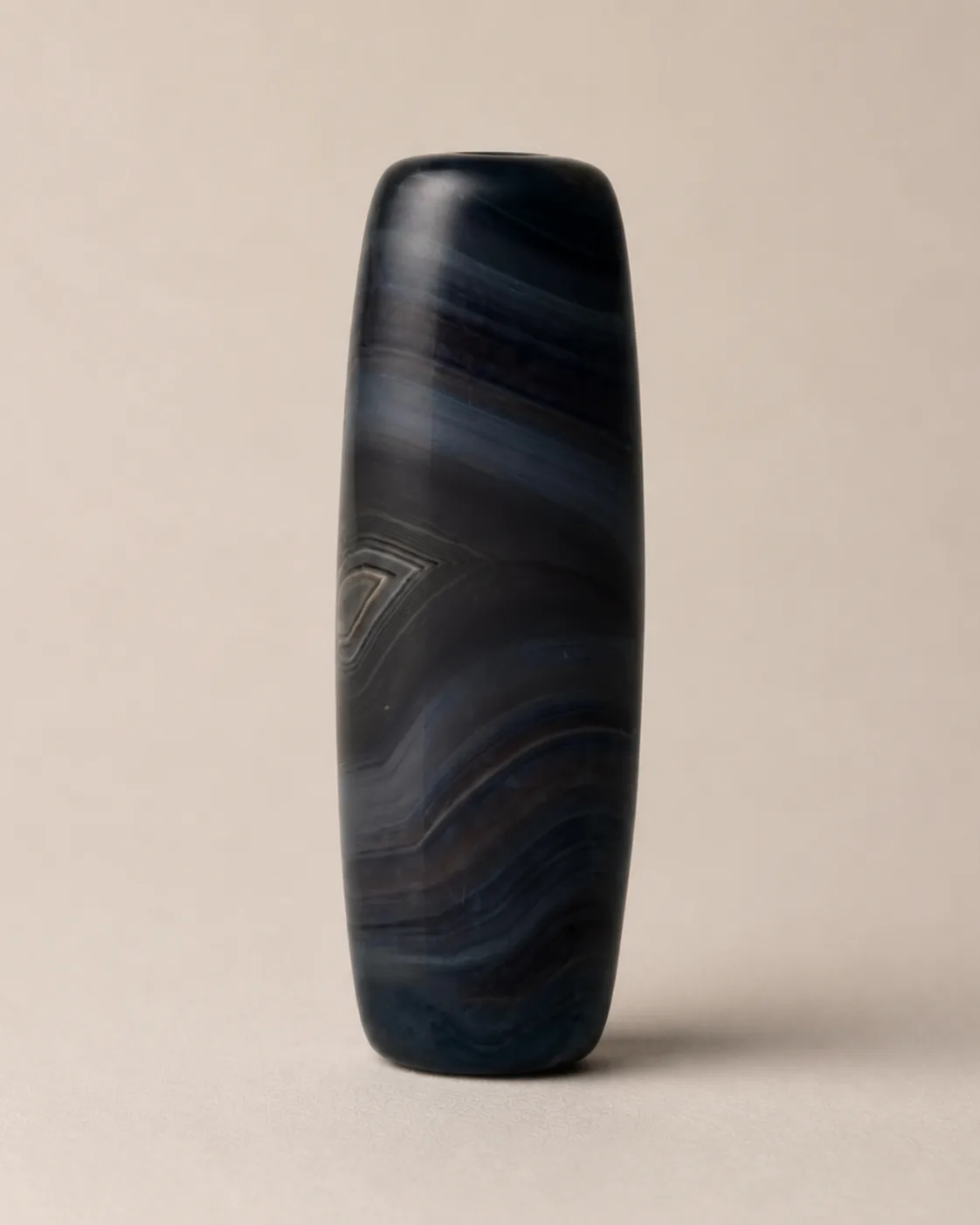
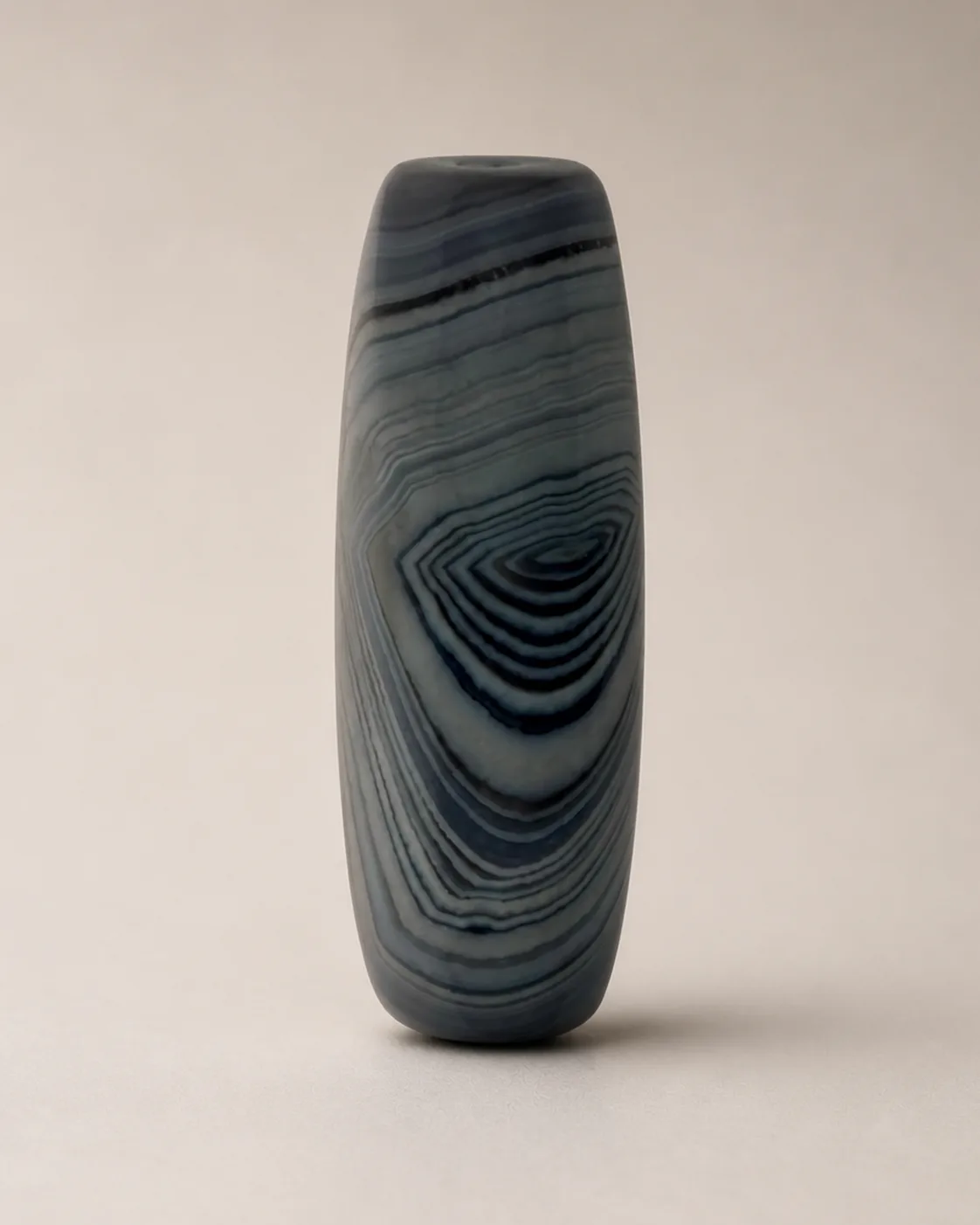
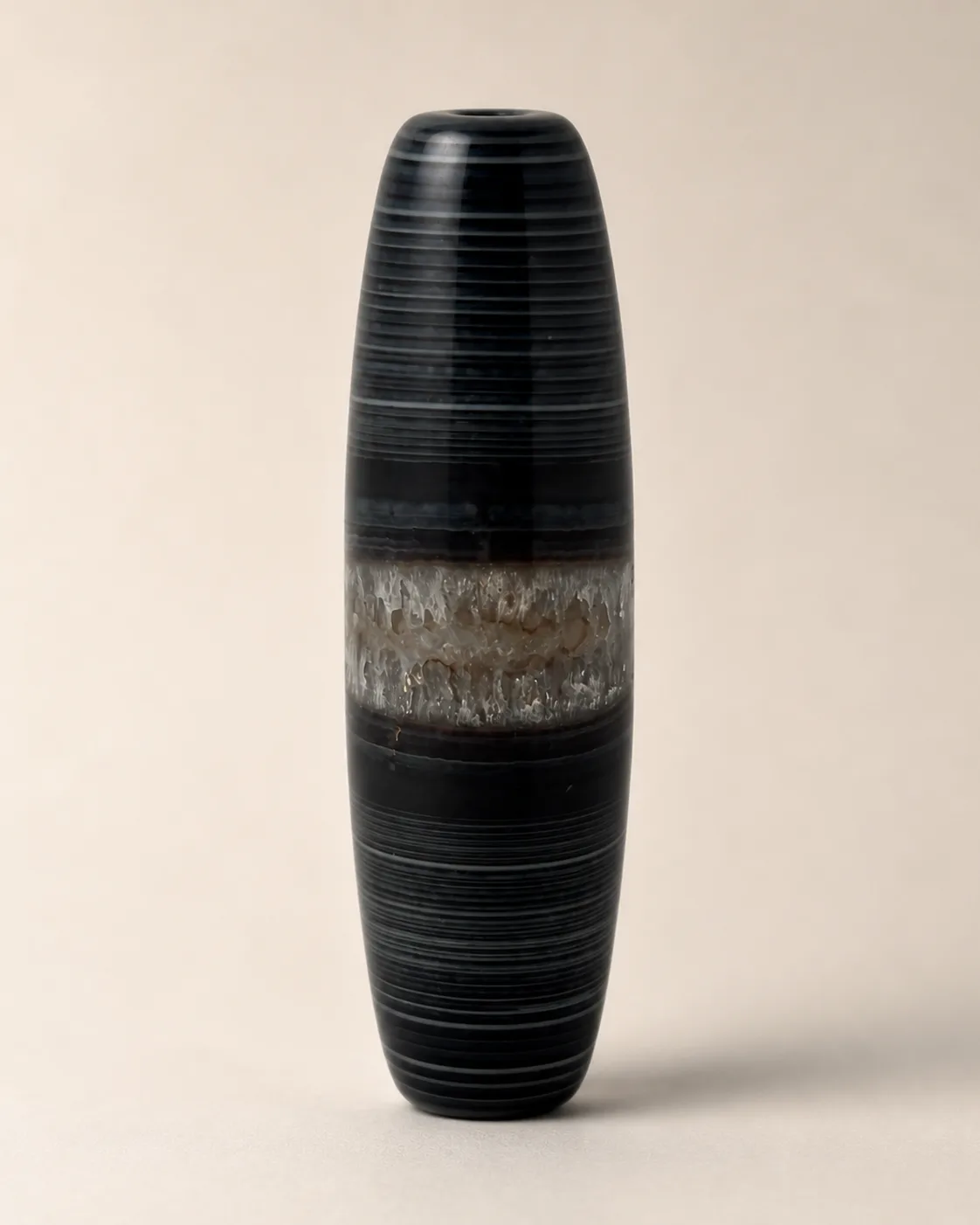
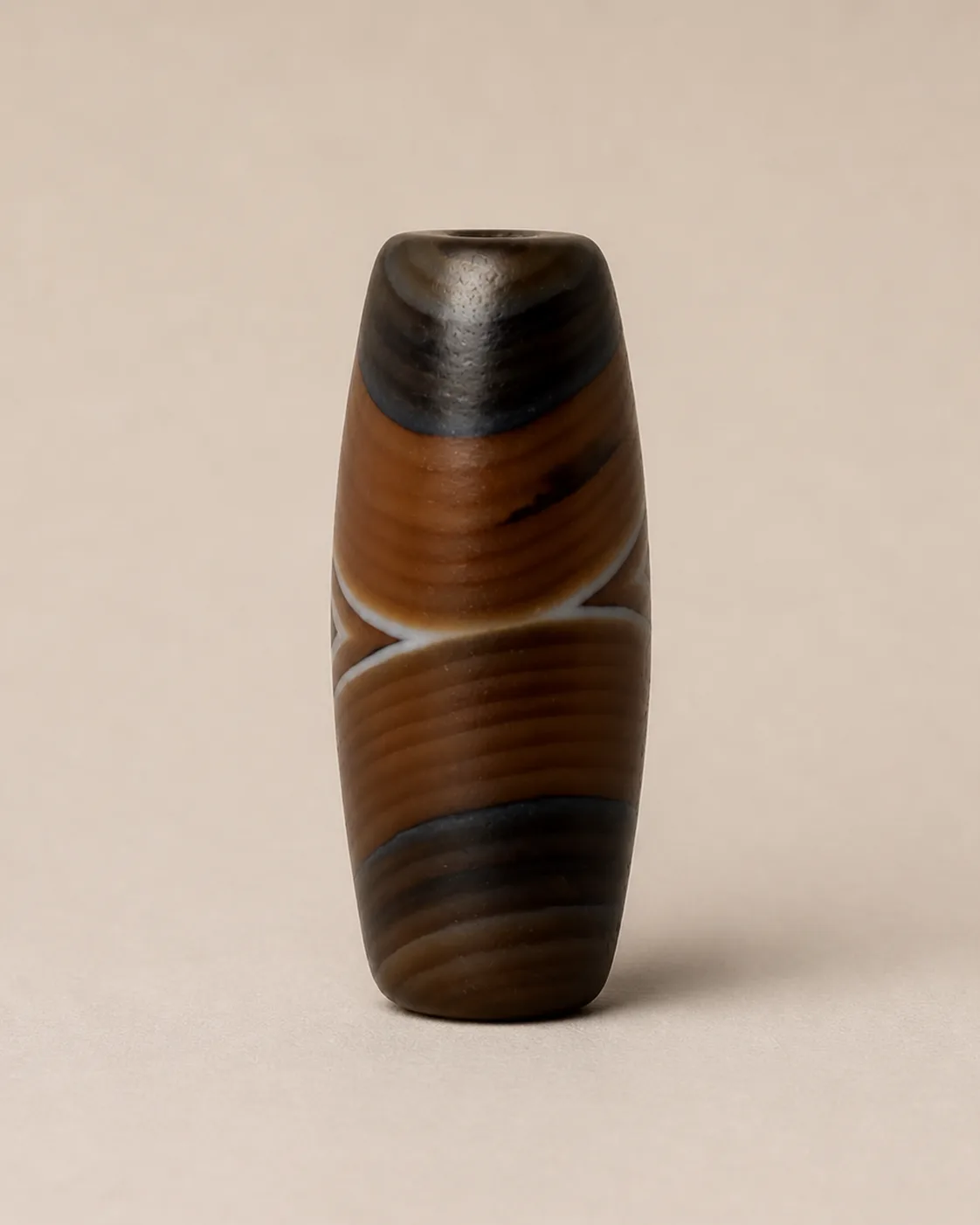
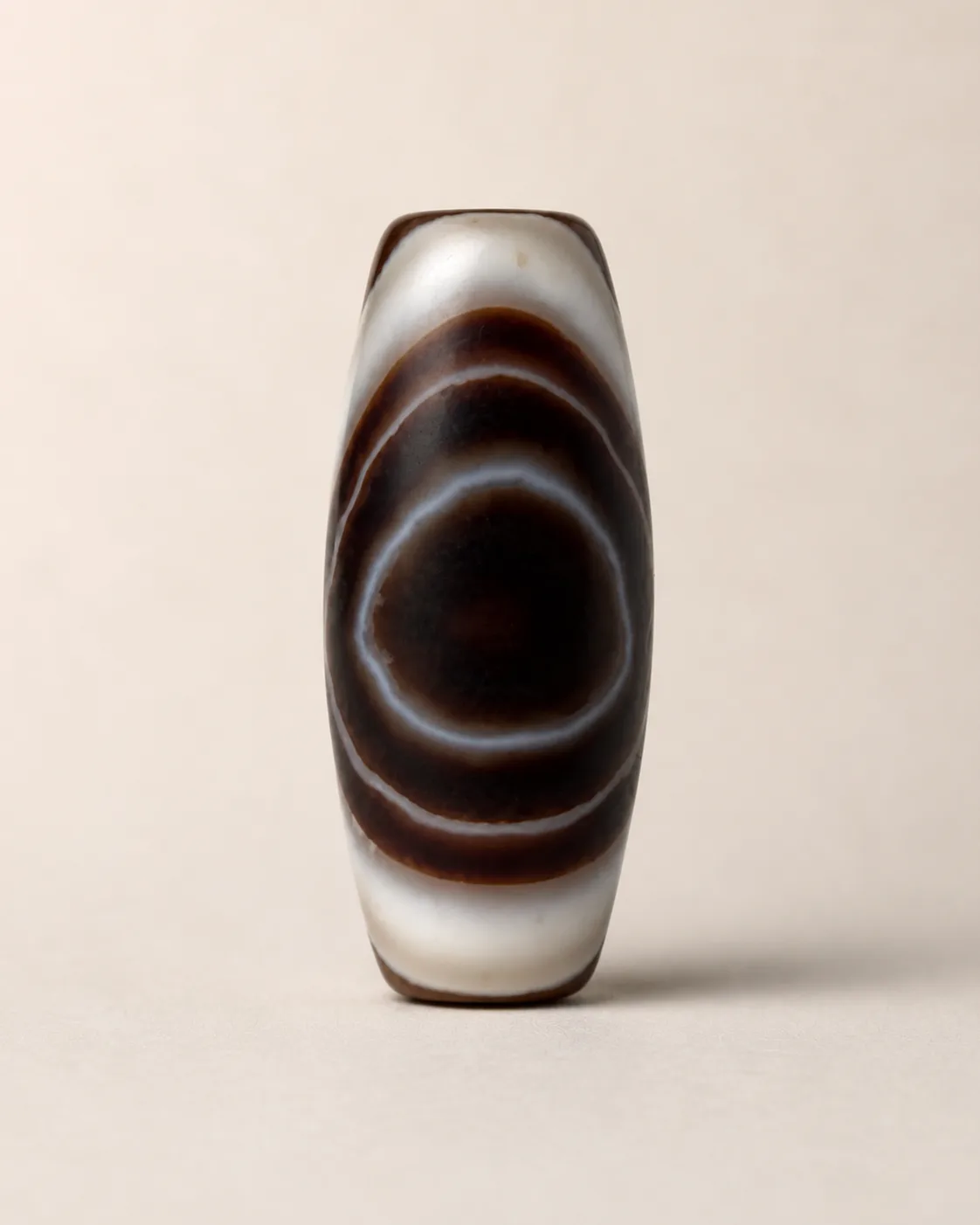
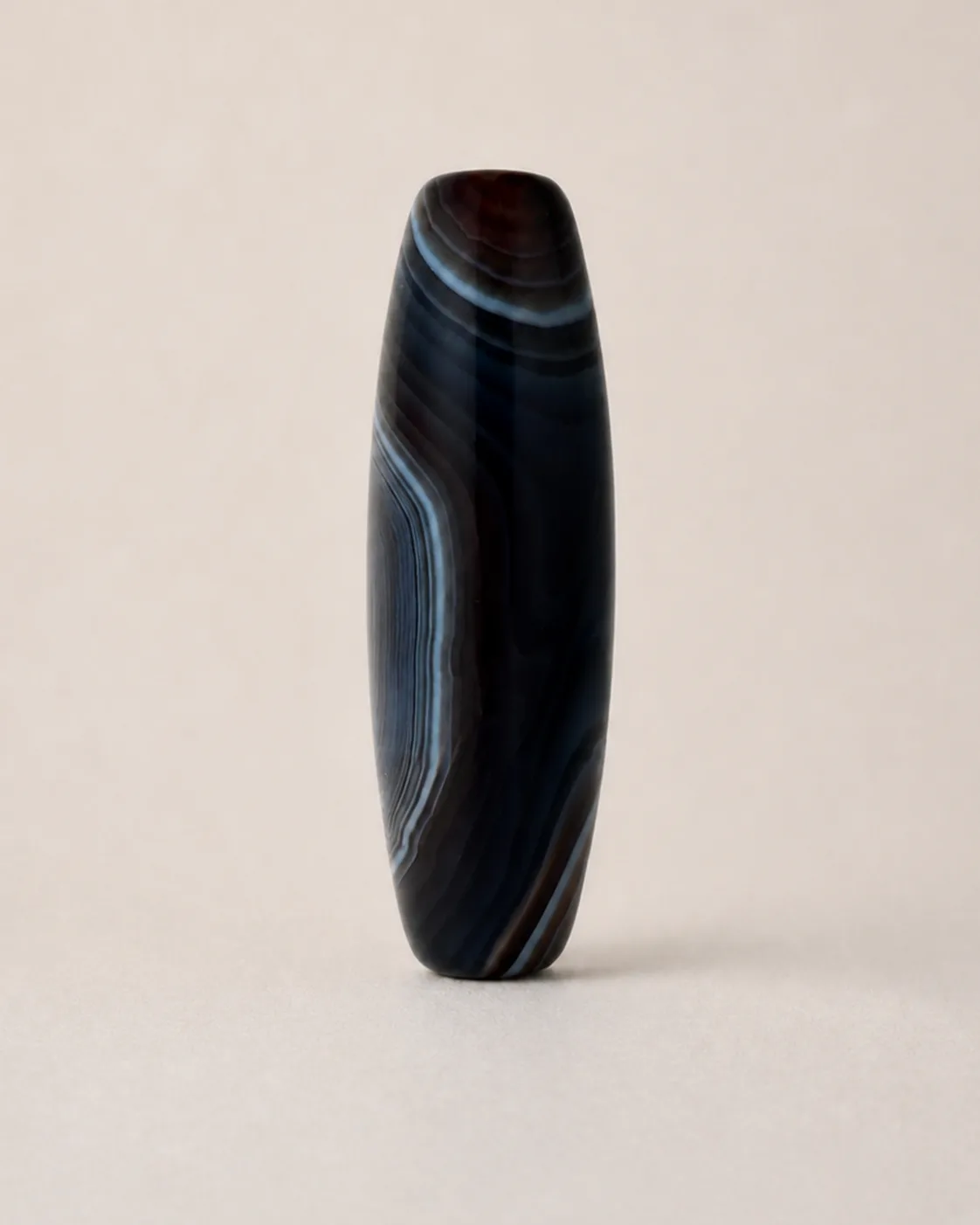
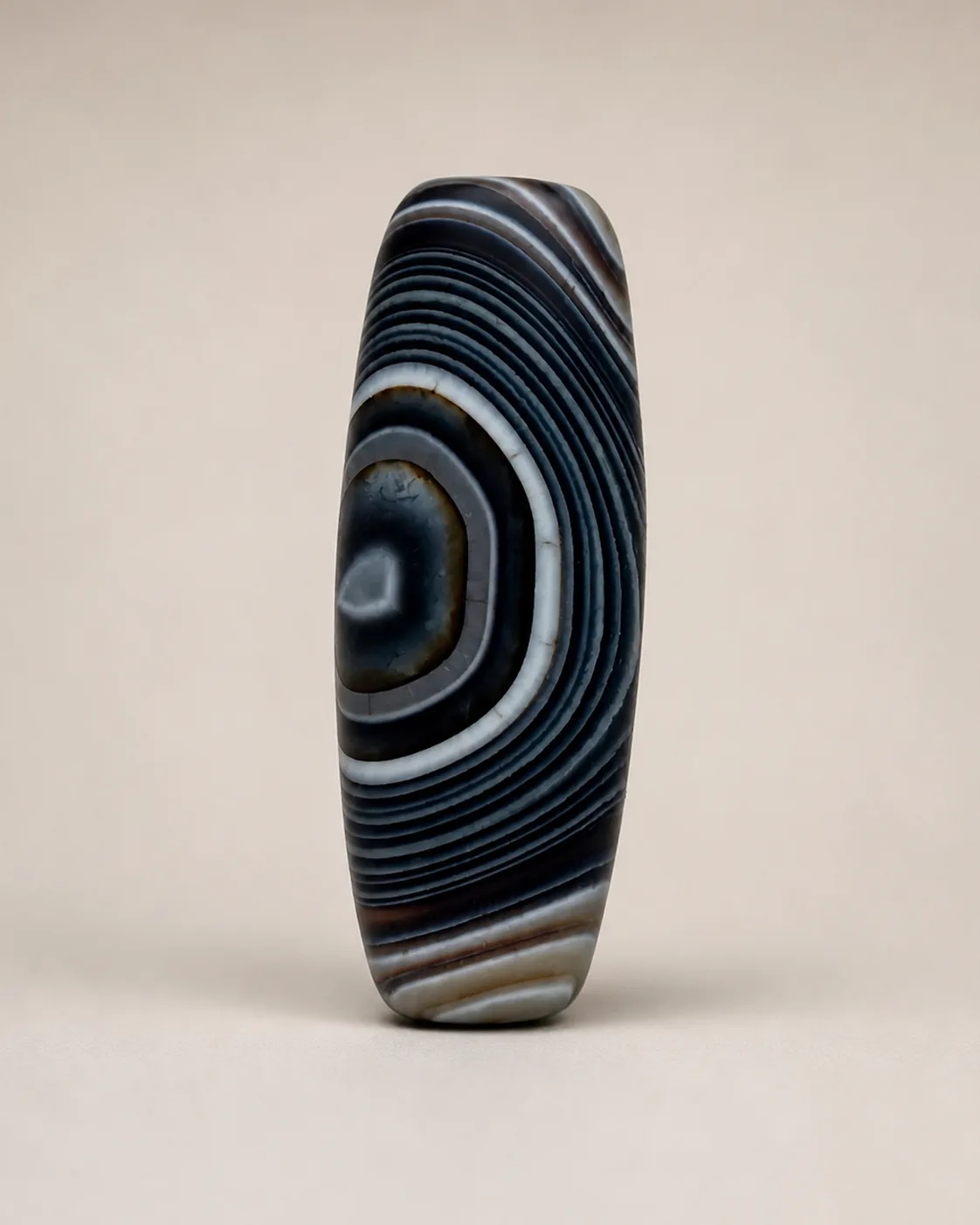
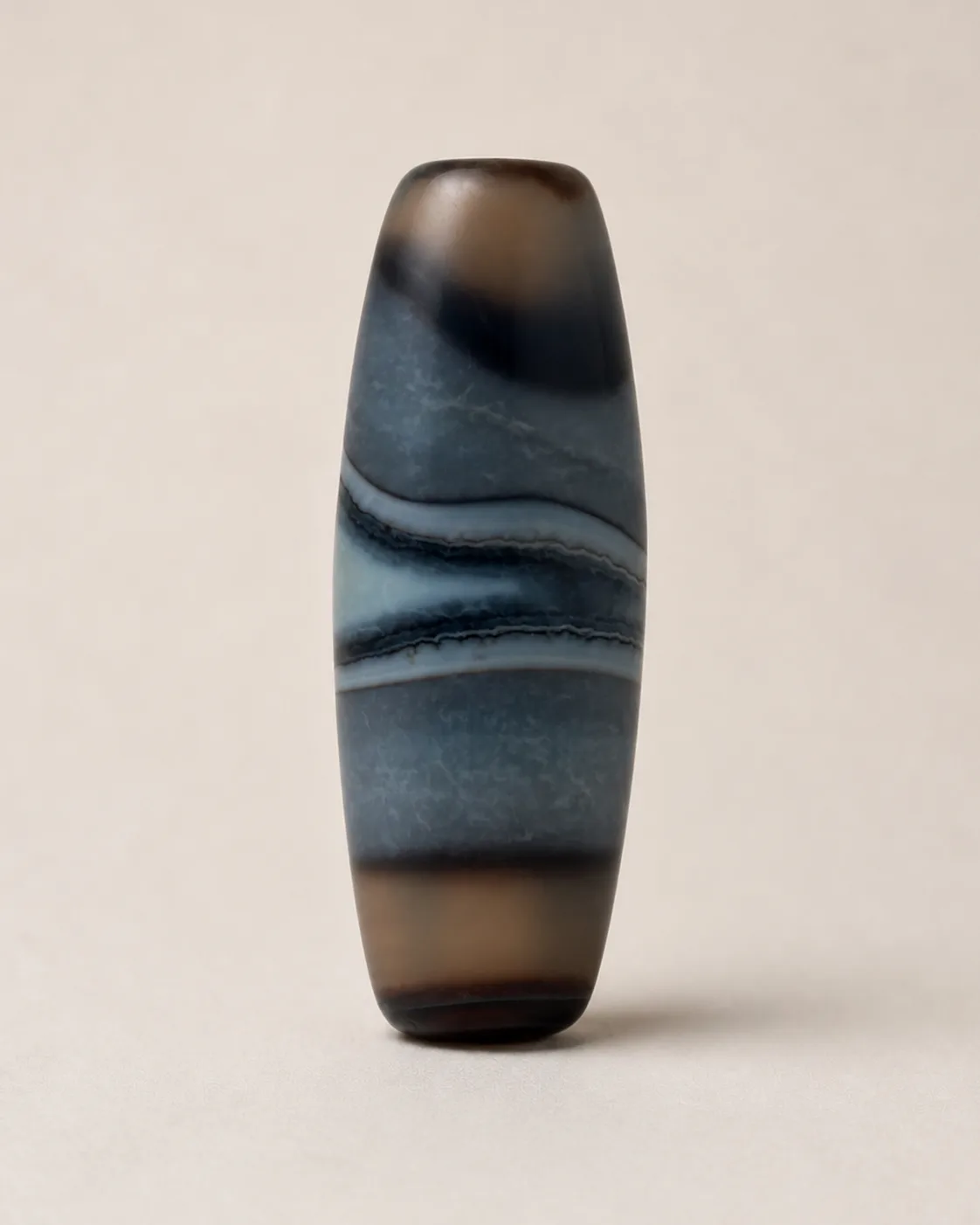
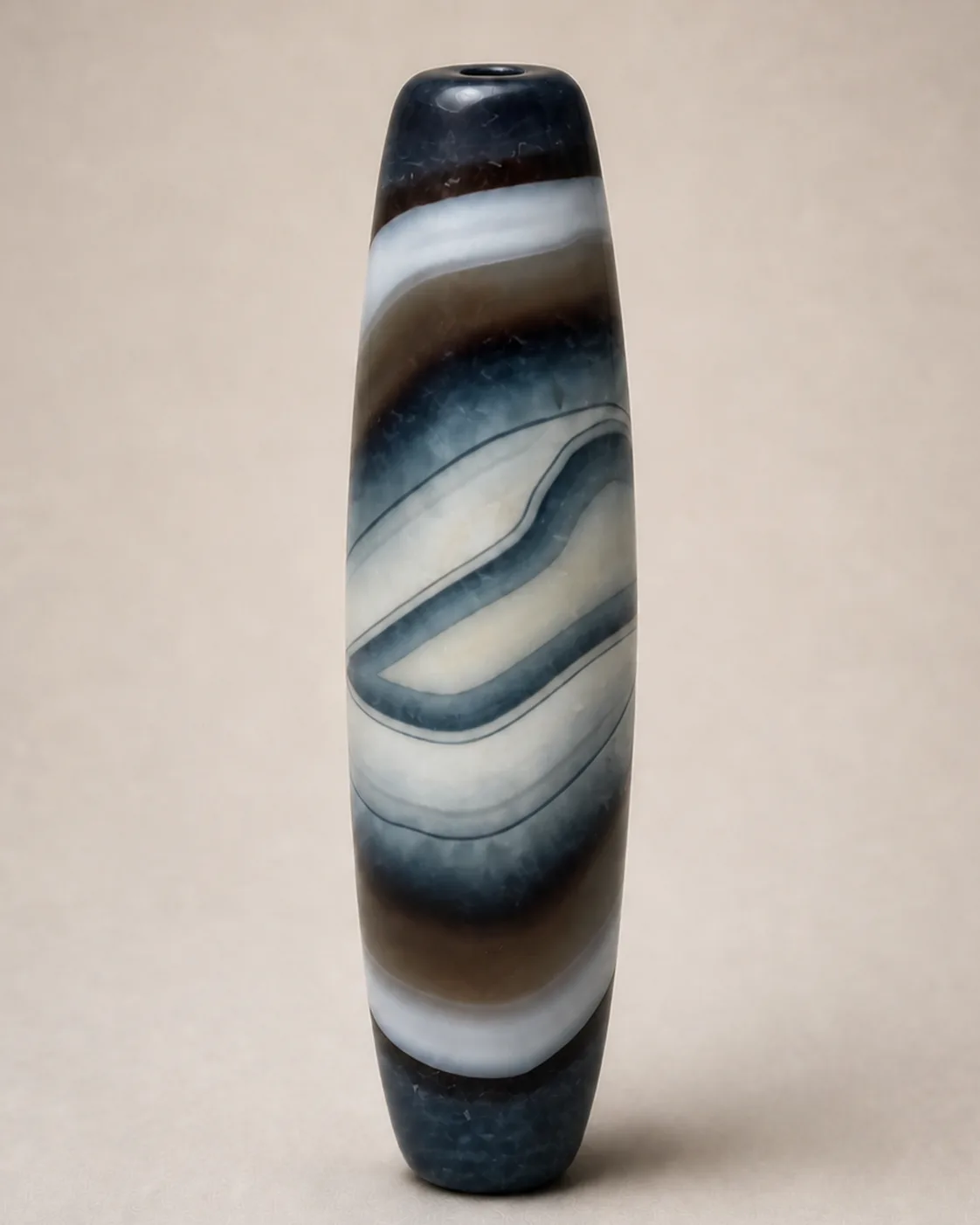
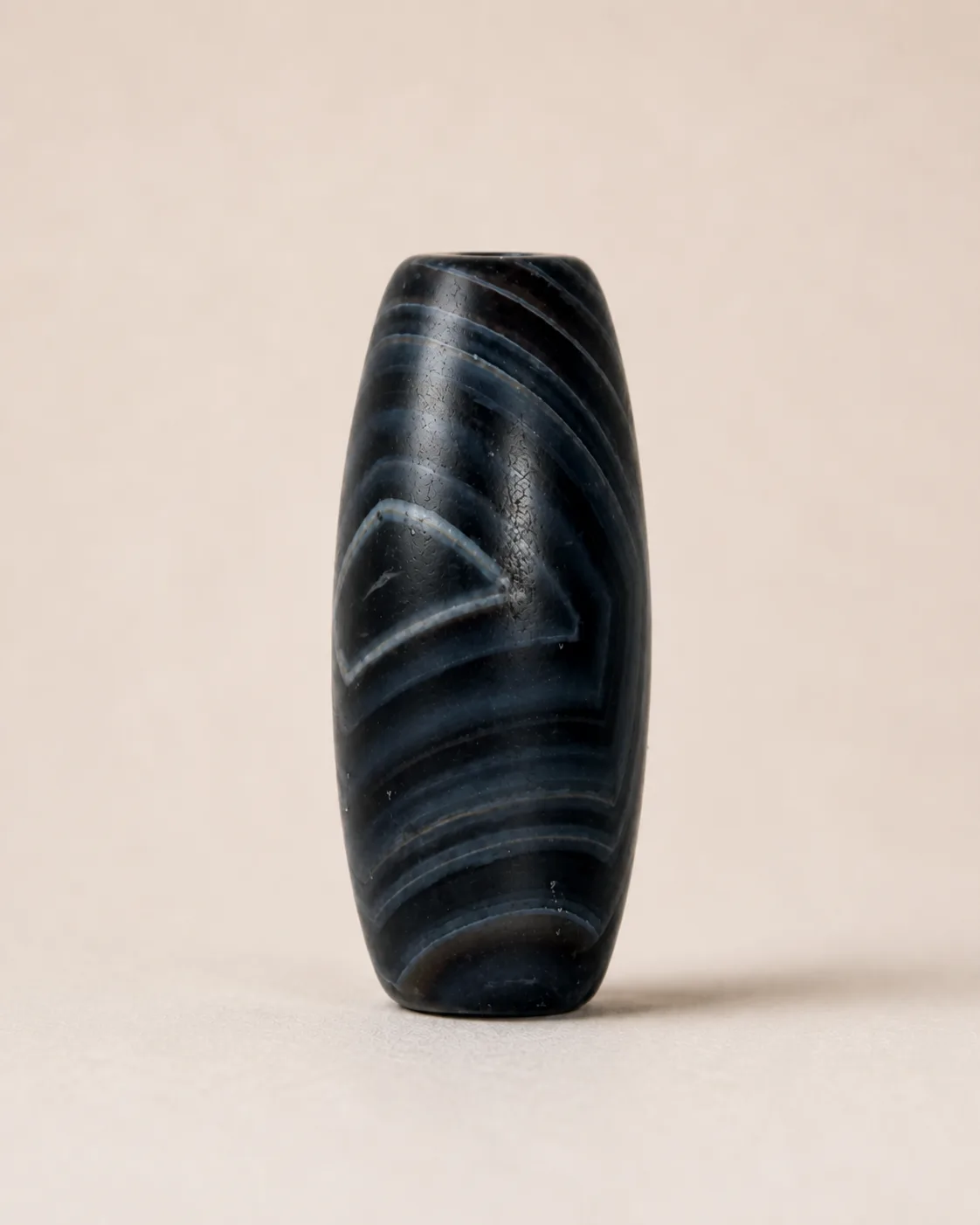
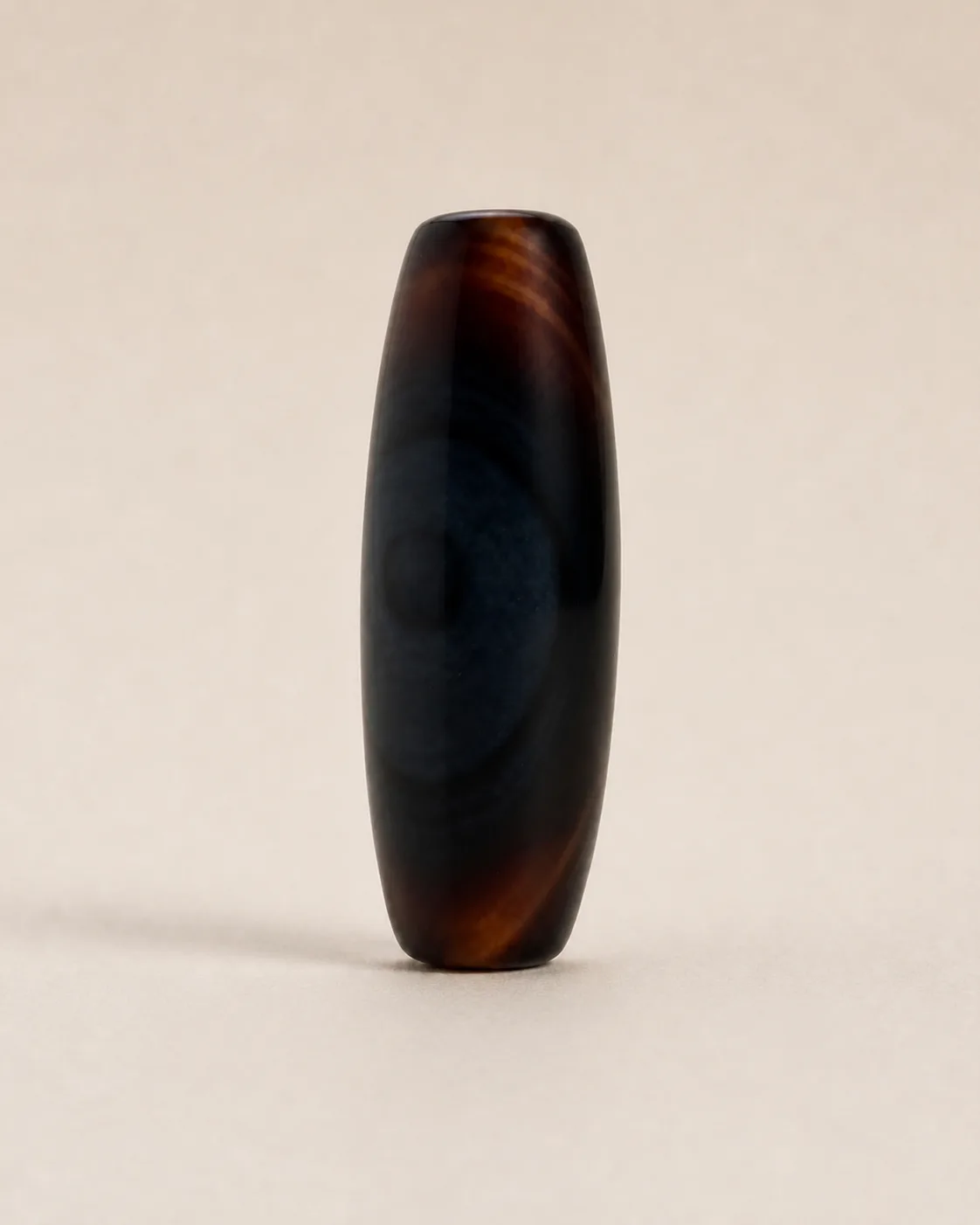
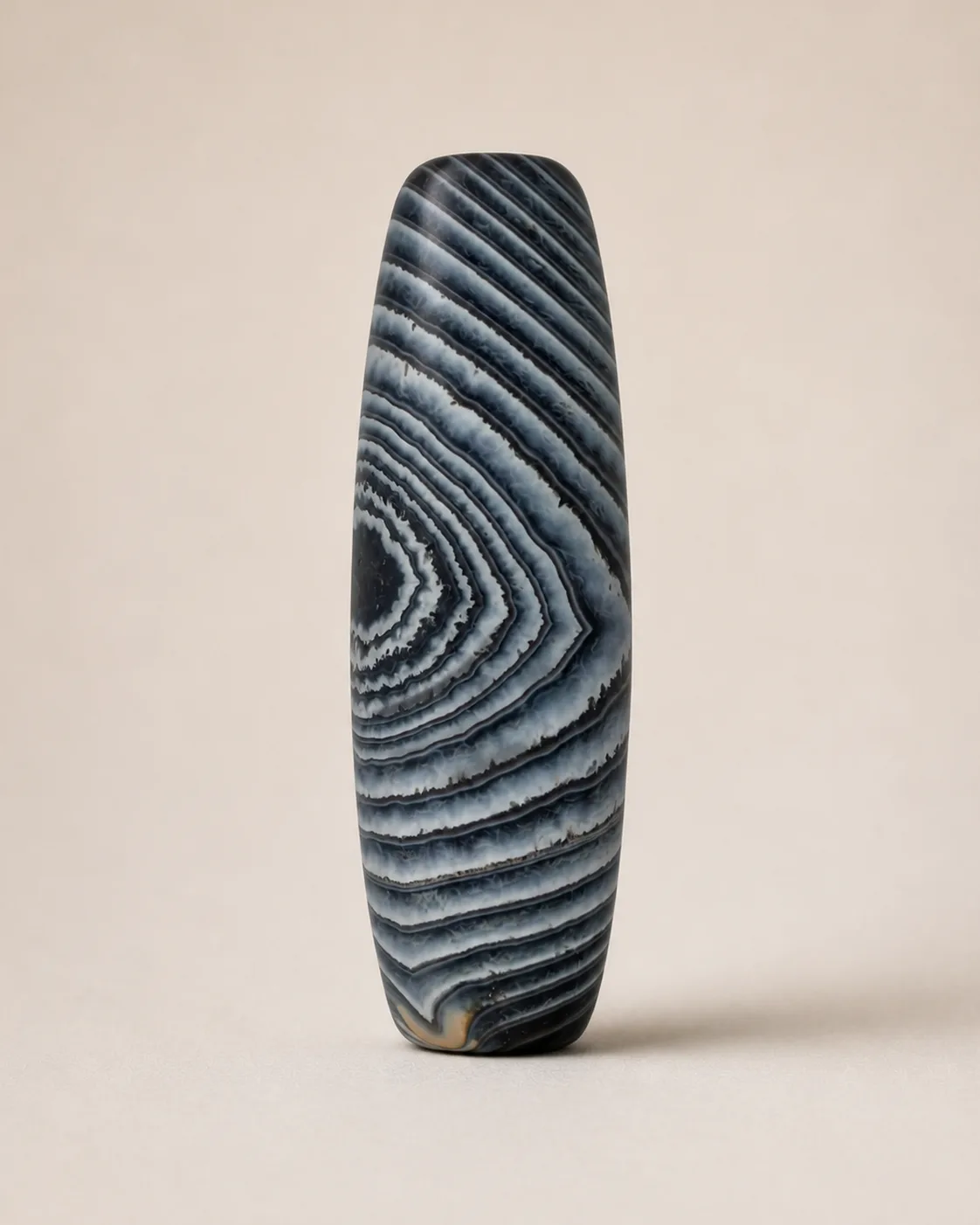
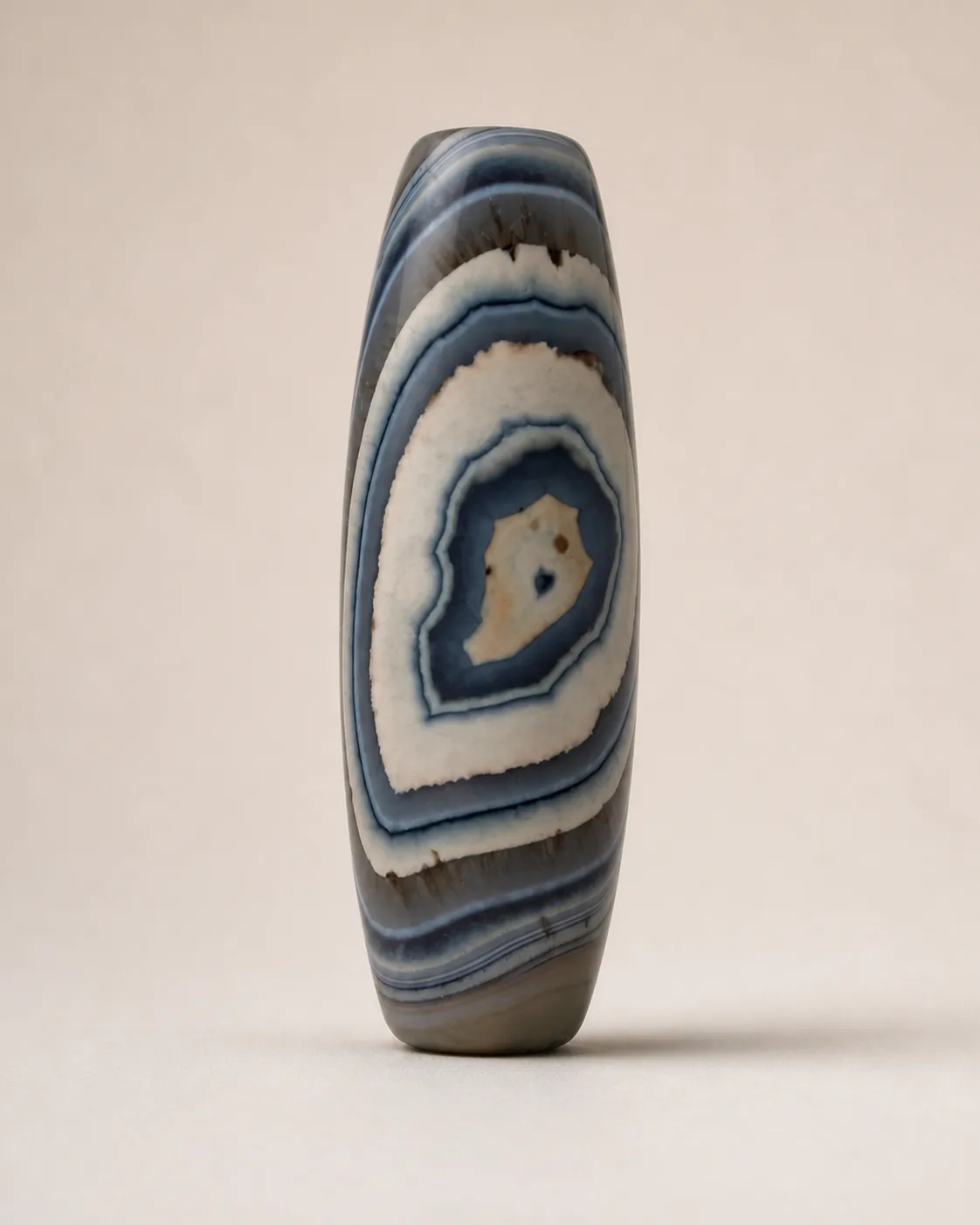
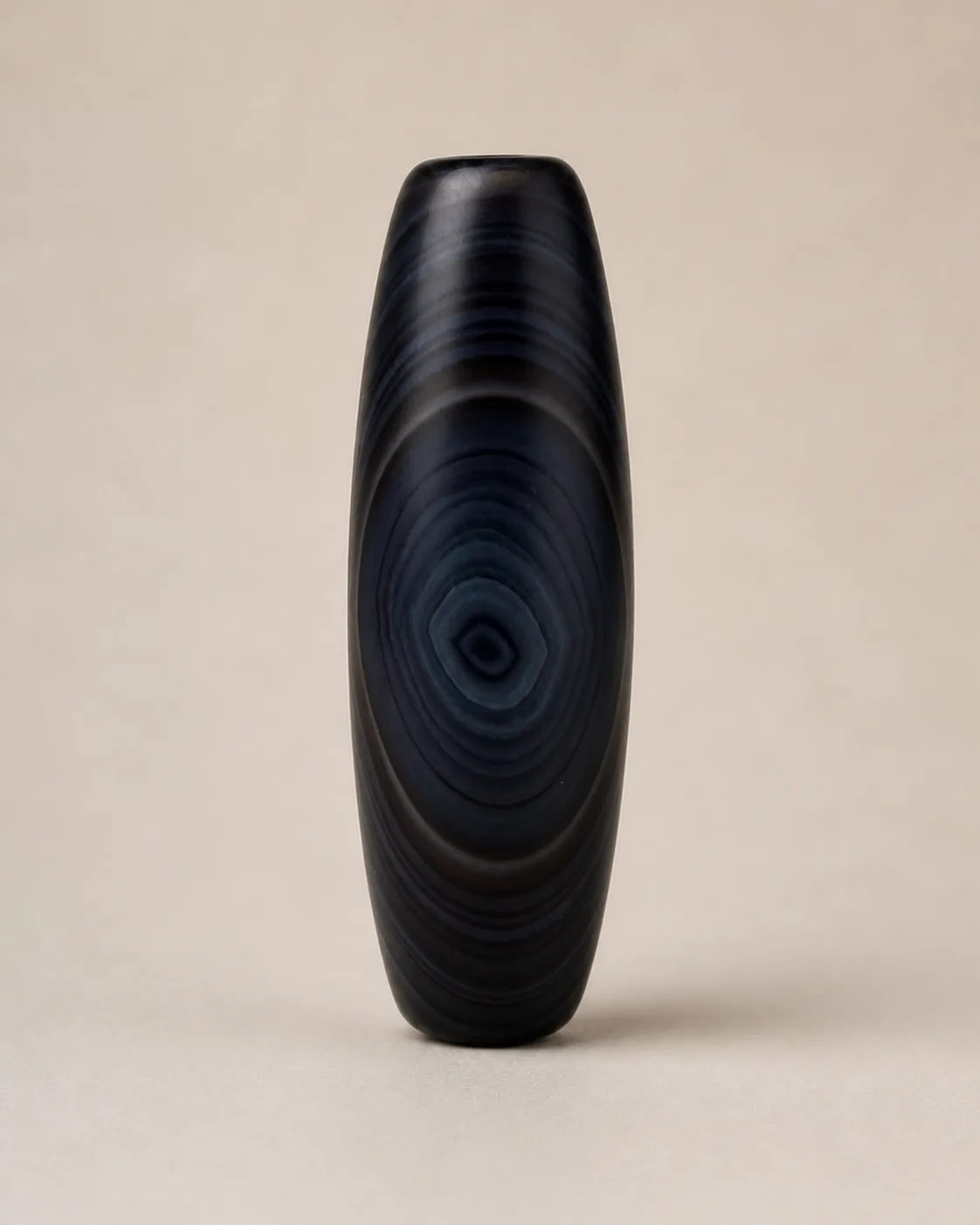
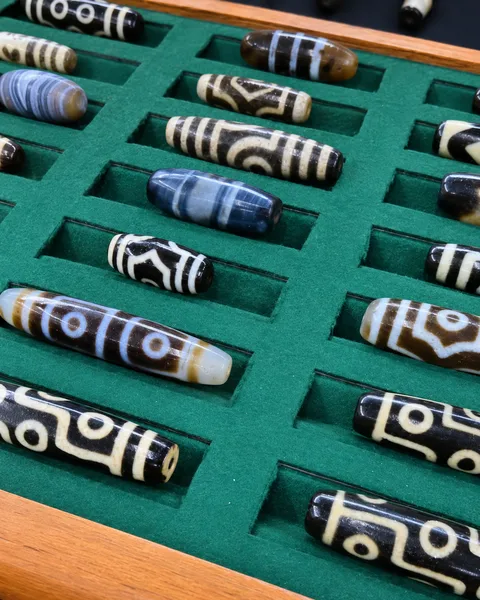
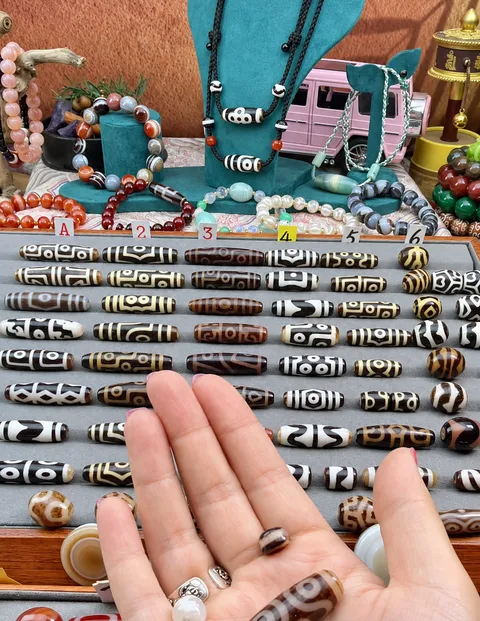
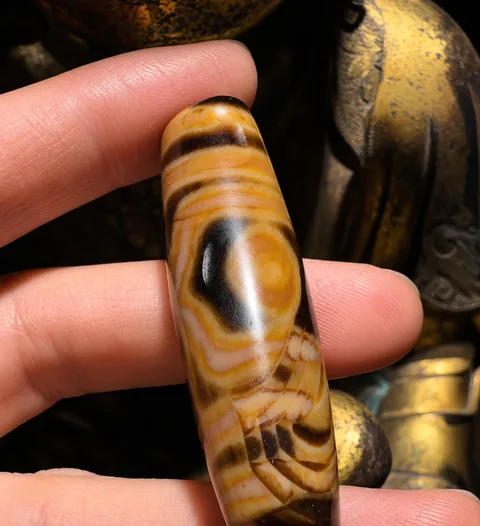
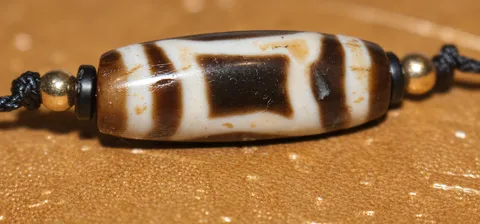
Long treasured in Tibetan and Himalayan adornment, dzi beads are distinguished by their patterned surfaces and the cultural meanings they carry. Himalaya Surprise’s collection centres on natural banded agate, shaped, polished and finished into individual pieces for wearing or collecting. Concentric rings, sweeping bands and angular markings create varied rhythms of line and contrast, while differences in colour, proportion and surface give each bead its own character. Within Tibetan tradition, dzi are associated with protection and auspiciousness, adding a symbolic dimension to their material beauty. Each bead comes with a cord, ready to be worn as a personal keepsake, added to a collection or chosen as a thoughtful gift.
About Dzi beads and patterns
Dzi, also written dZi or gzi, names a patterned-bead tradition associated with Tibetan and Himalayan adornment and collecting. Every bead in this collection is banded agate, shaped, cut, polished and worked to bring out its lines, bands and lustre. Dzi’s early history sits within wider South Asian, Central Asian and Himalayan exchange, while its precise beginnings remain open to research. In Tibetan tradition, it carries meanings as adornment, a collected object and a cultural symbol. Each bead includes a cord for wearing or keeping.
What is a Dzi bead?
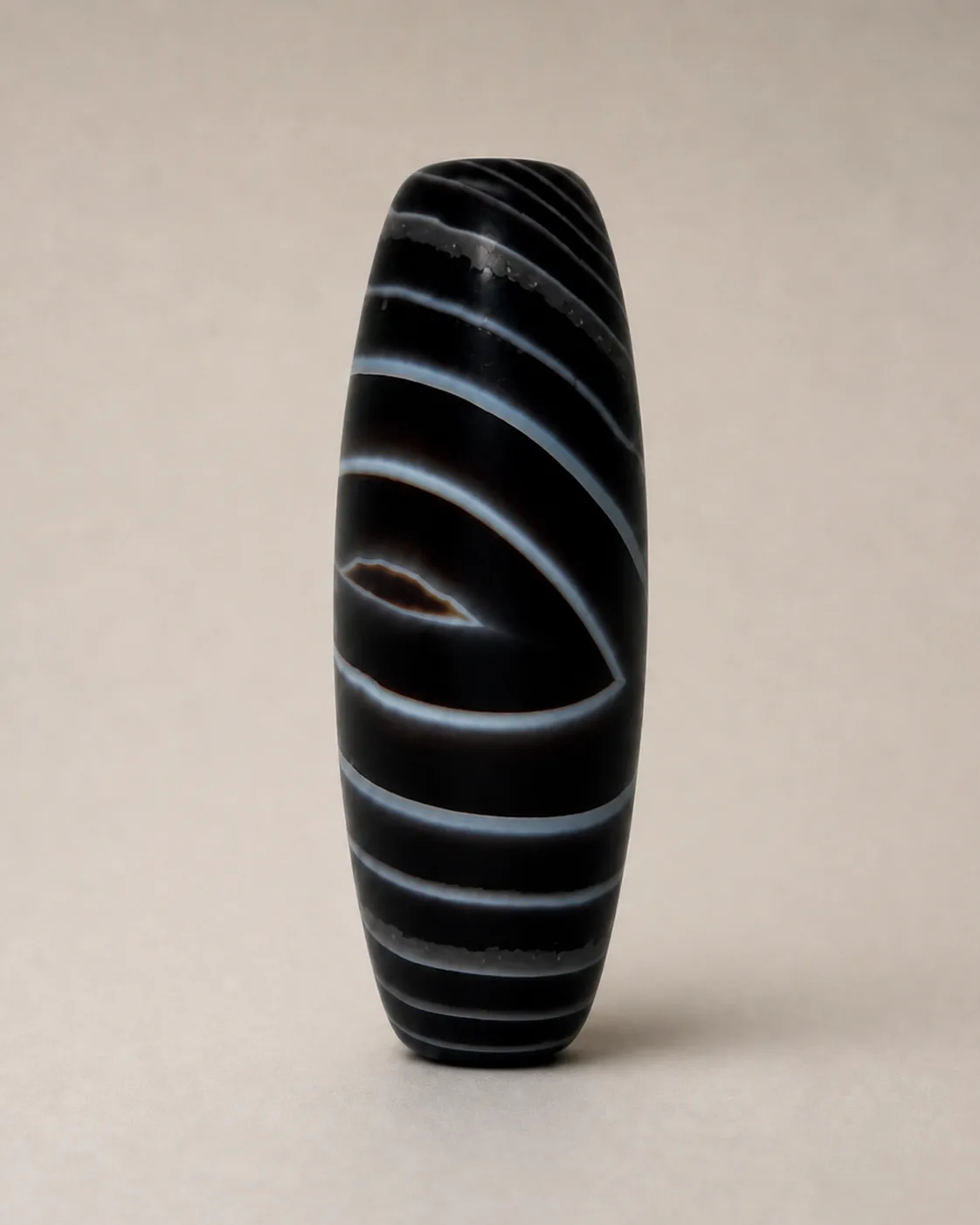
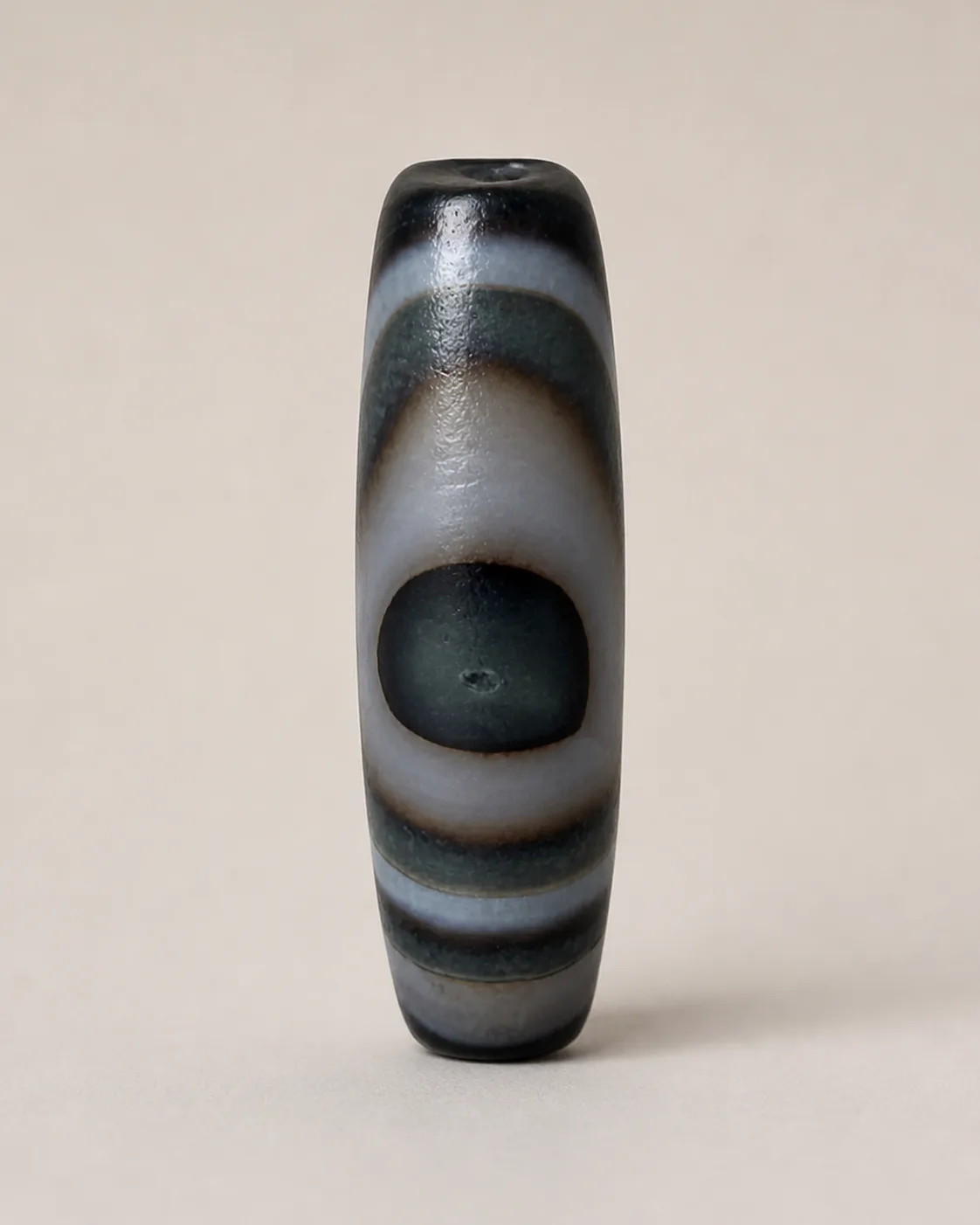
Dzi is a cultural name for a patterned-bead tradition, not the name of one fixed mineral. Related patterned agate appears in South Asian, Central Asian and Himalayan histories of exchange; within Tibetan culture, Dzi developed a distinct life as adornment, collection and symbol. Beads may be rounded, elongated or fuller in profile, with bands, eye-like centres, curves and layered lines.
Banded agate and how its pattern is formed
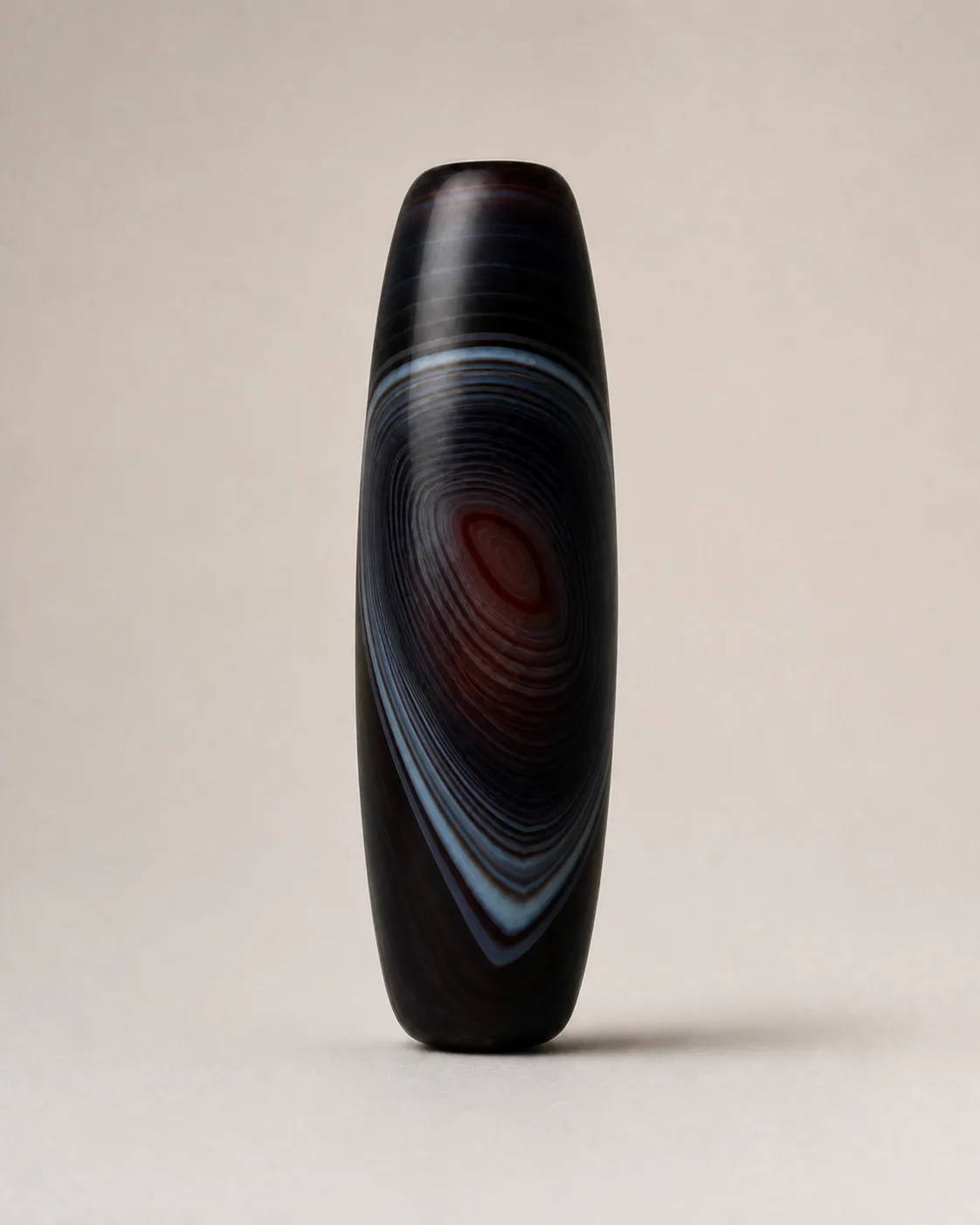
This collection uses banded agate. Natural layers form the ground; shaping, cutting and polishing prepare the bead, and surface work sharpens the lines and tonal contrast. Compare band width, centre position, line depth and bead proportion to distinguish each piece.
Meaning and choosing a Dzi bead
In Tibet, people wear dzi beads as symbols of protection and good fortune. Circular markings that resemble eyes give eye motifs their name. What the number of eyes means varies by tradition. When comparing these banded agate beads, follow a pale band around the curve of each bead in the photographs and see where it turns back.