How Eye Counts Distinguish Types
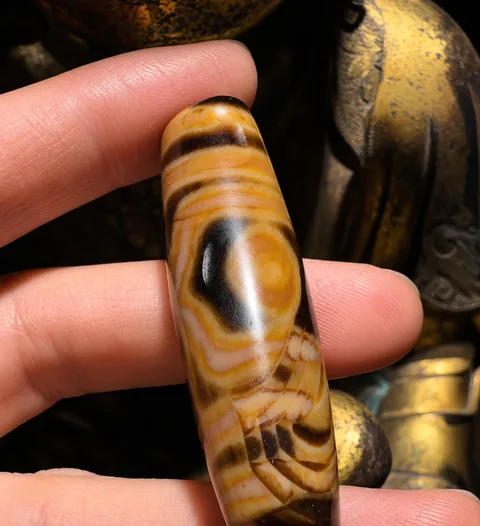
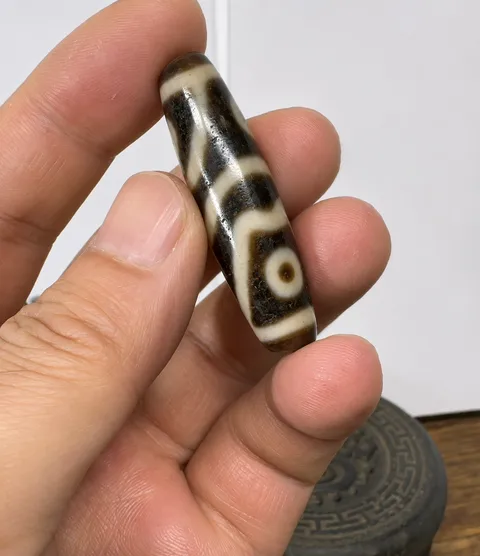
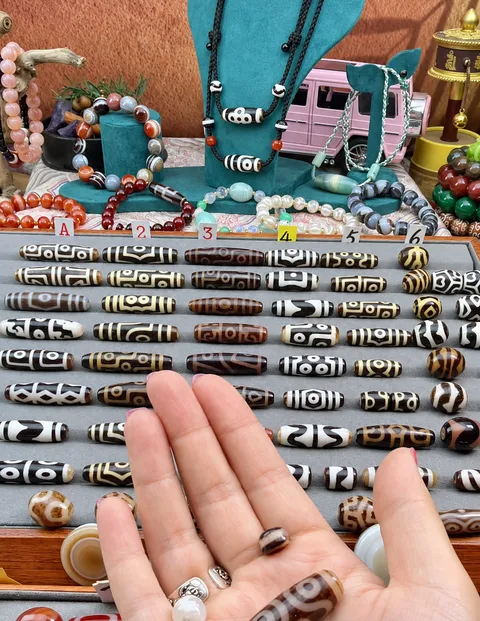
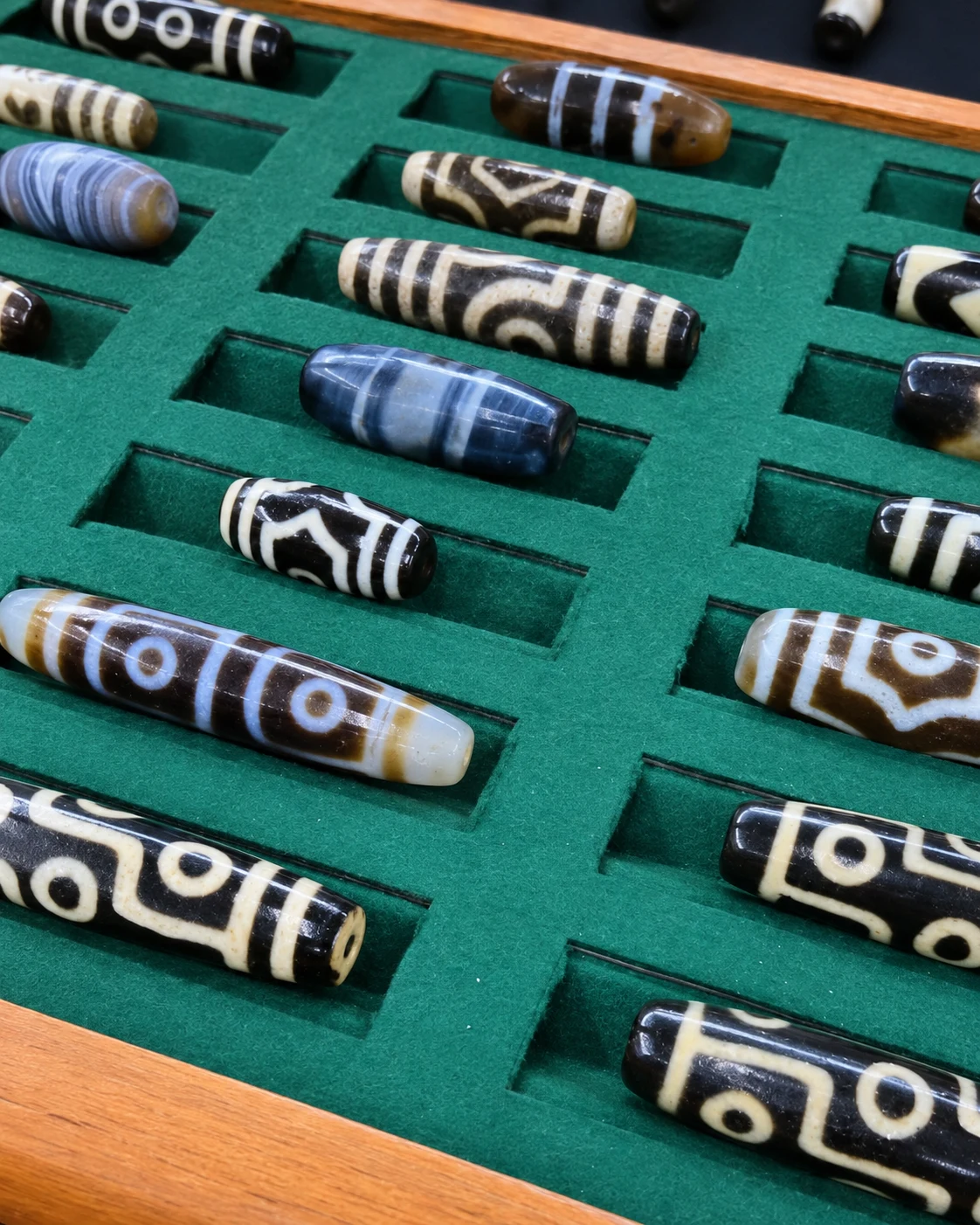
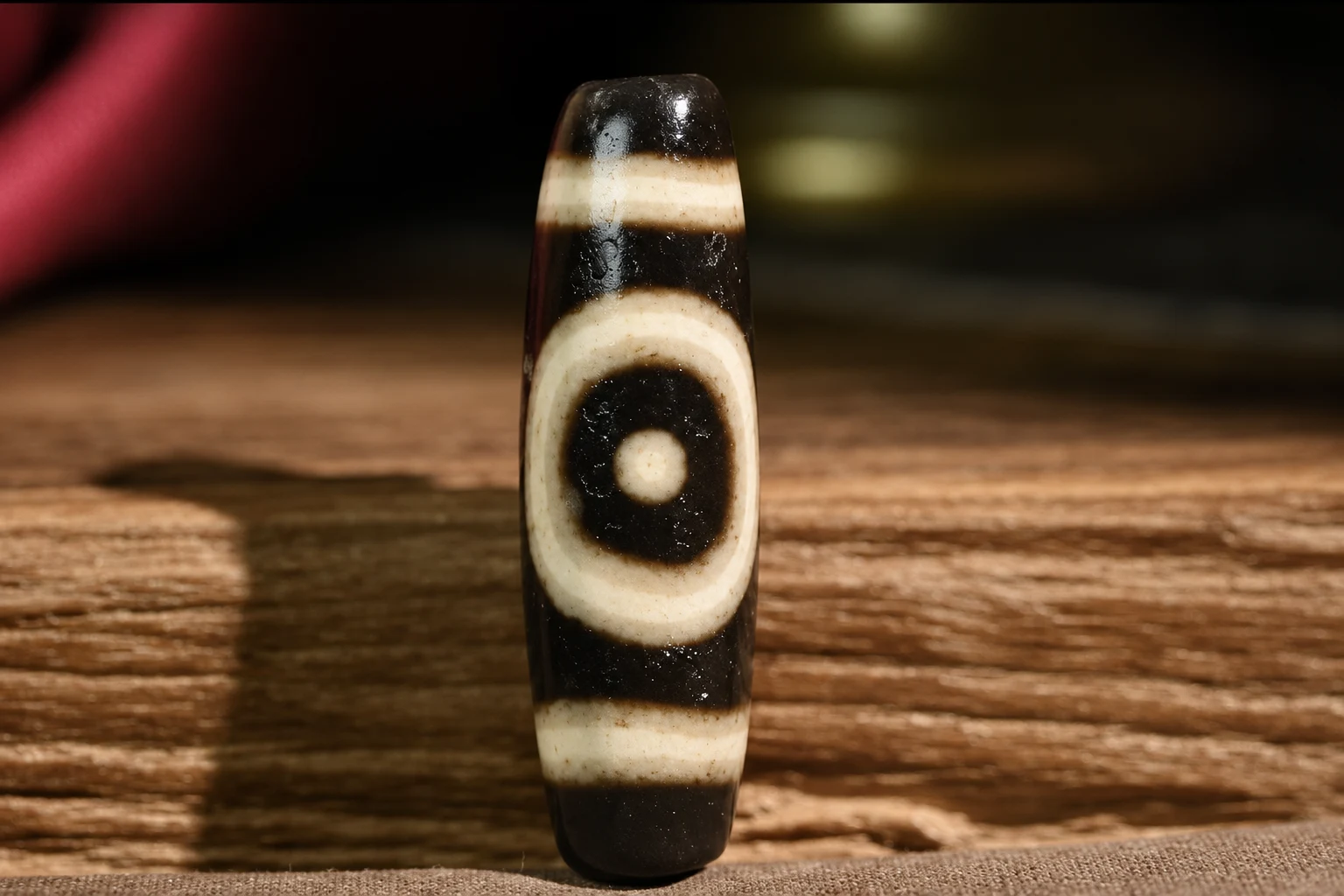
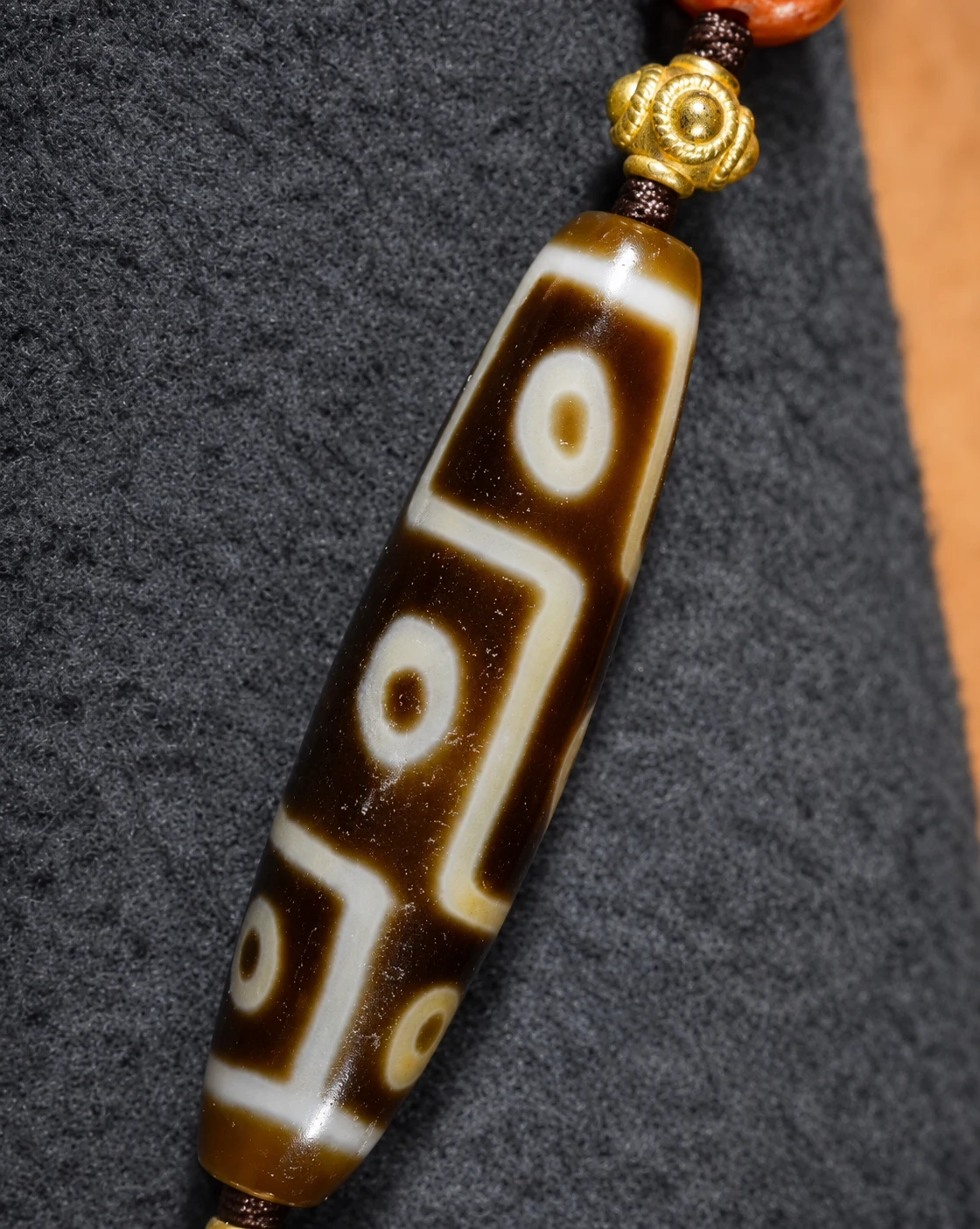
Eye motifs are among the most immediately visible Dzi bead patterns. They usually appear as circular or oval areas. The number and arrangement of eyes enter the type name; common examples range from one eye through nine eyes, with twelve-eye patterns also represented. Eye count and motif placement together form part of a bead’s visual identity. The count gives the pattern a basic structure, while the position of each eye shows how that structure is arranged across the bead.
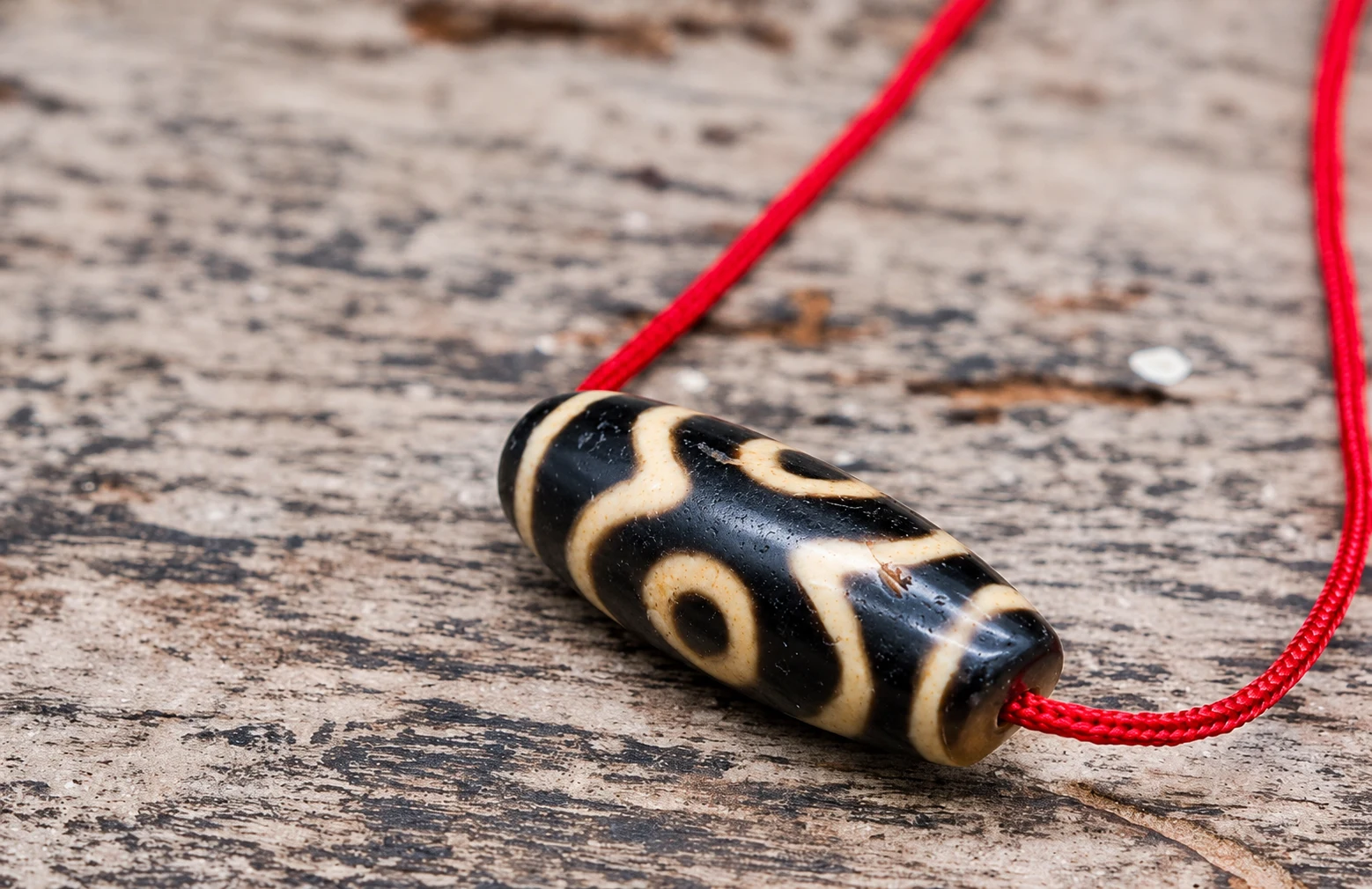
The size, spacing, borders, and symmetry of the eyes change the rhythm of the whole bead. Circular eyes can combine with bands, waves, stripes, or rectangular motifs to create different surface layouts. The same eye count can therefore produce different visual types when the eye shape and accompanying motifs change. A round eye, a narrow eye, and an eye enclosed by a band each create a different surface rhythm even when the number remains the same.
Visual Differences Between Zhichun and Cisi
Zhichun Dzi beads are described through fine material, strong black-and-white contrast, a pronounced opaque appearance, symmetrical motifs, and clearly defined borders. Eyes, rings, and bands form an orderly black-and-white relationship across the surface; symmetry and border clarity become key visual cues for the pattern. The contrast makes the relationship between the eye, ring, band, and surrounding field easy to see on the finished bead.
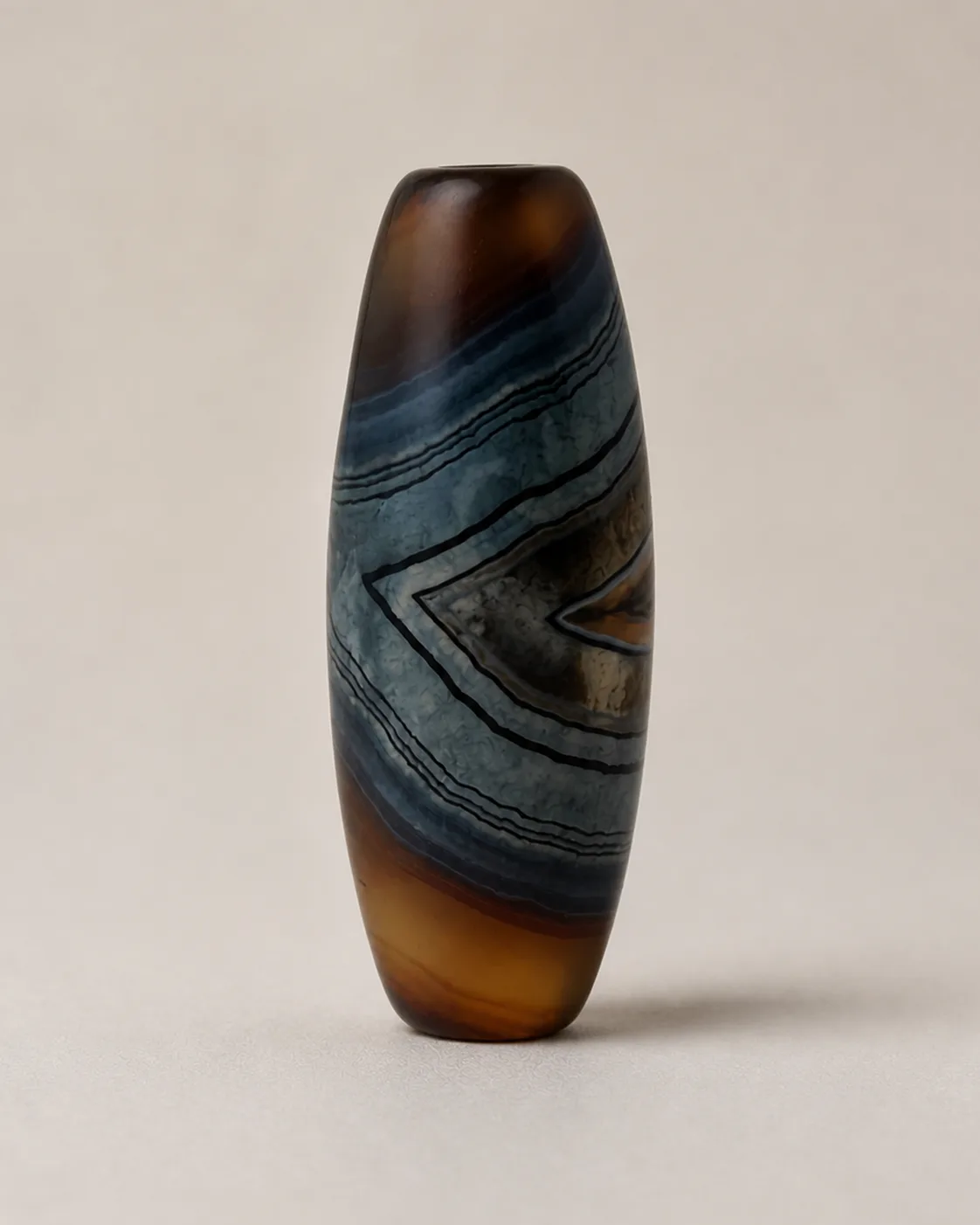
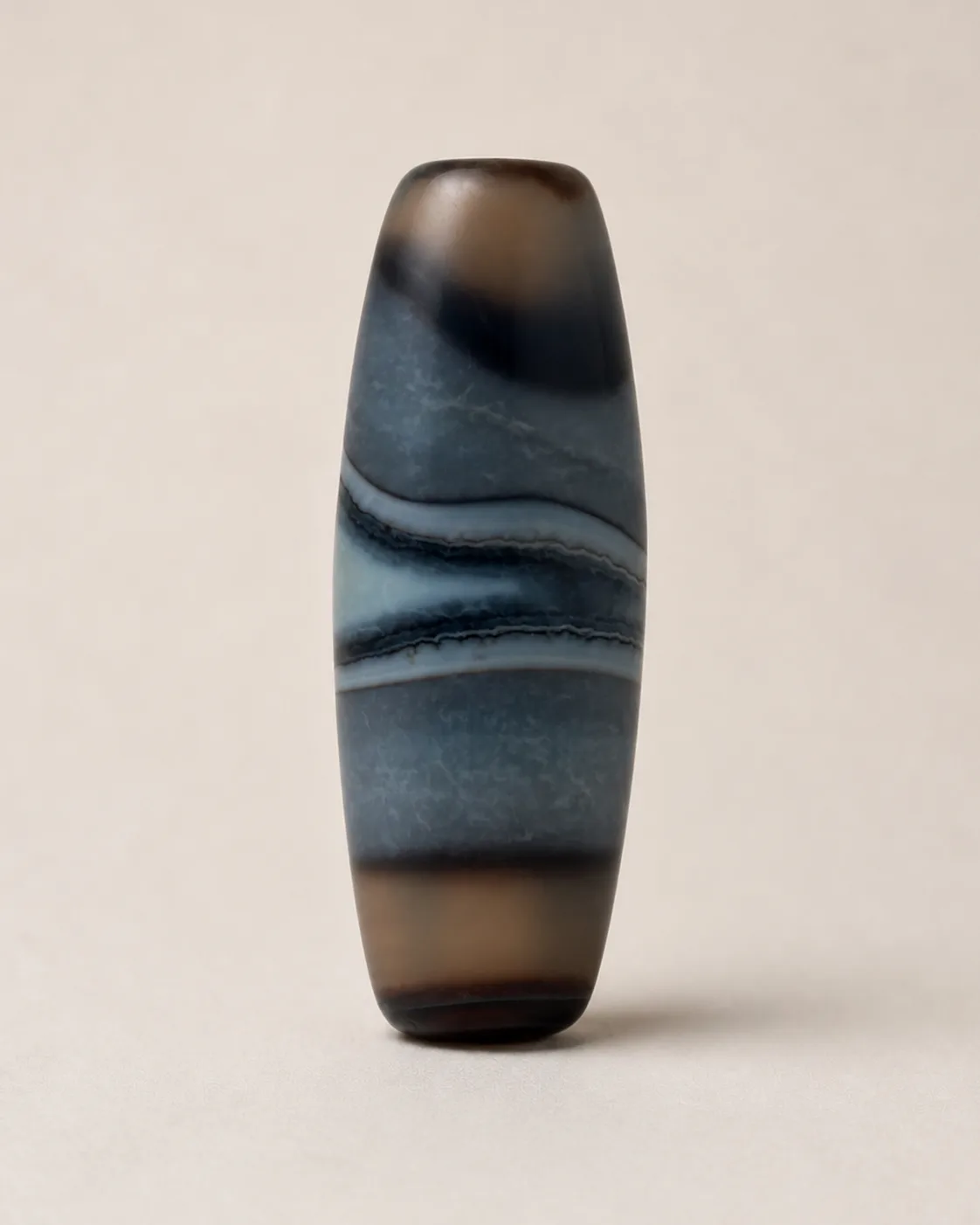
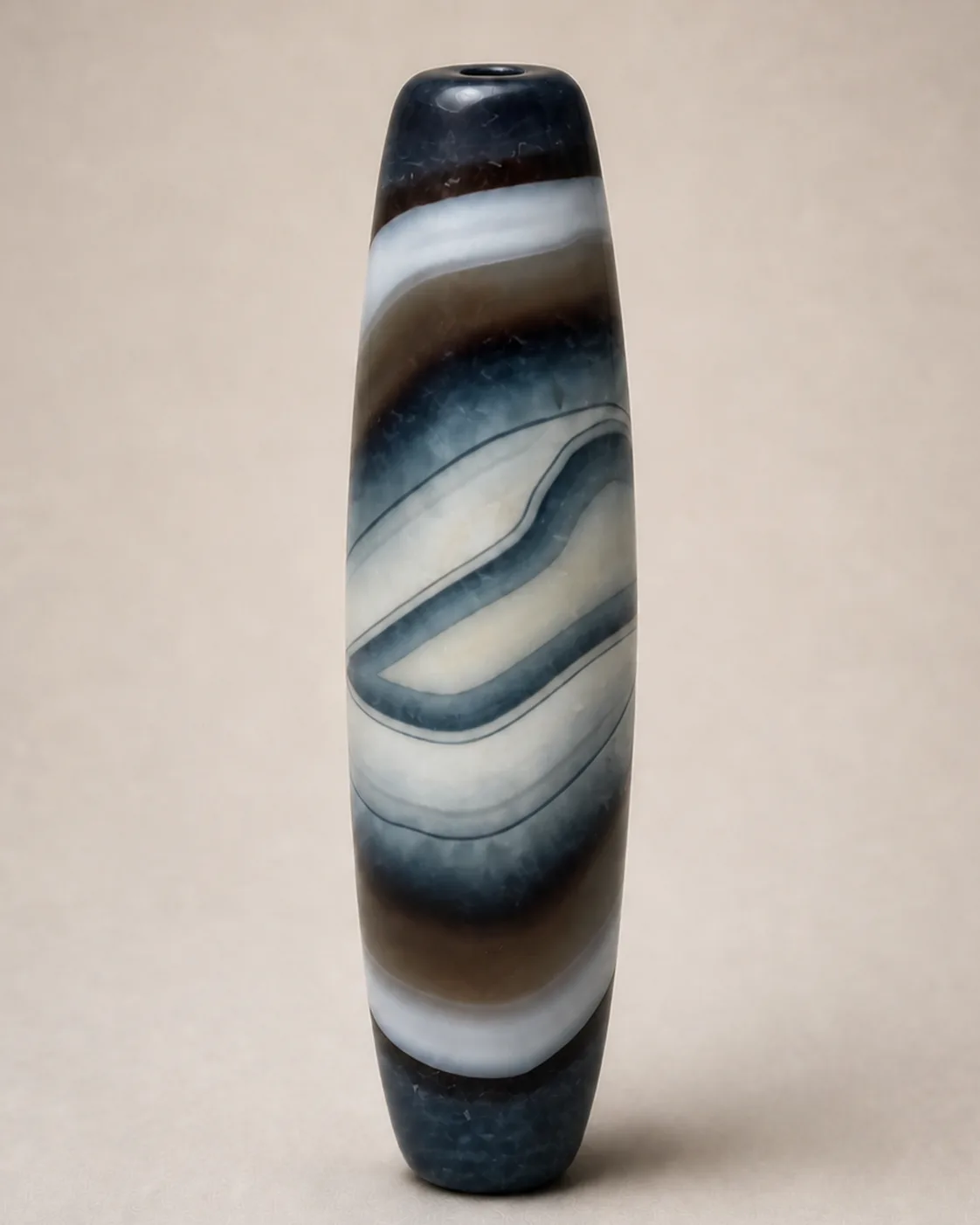
Cisi Dzi beads show more variation in their lines. The material may carry a degree of translucency, transitions along the pattern edges can be softer, and the lines can move with greater variation. Five-line Cisi commonly uses a five-part white-black-white band, while the completeness of the encircling lines, their proportions, and their condition together shape the pattern. Zhichun and Cisi therefore present different rhythms and surface languages. One emphasizes a controlled black-and-white structure; the other gives greater space to line movement, translucency, and softer transitions.
Line Patterns and Line Beads
Line patterns extend as bands across, along, or around the bead. Line beads can appear in three-line, five-line, seven-line, nine-line, and even eleven-line forms. The five-part white-black-white band of five-line Cisi brings line count, color order, and the continuous encircling line into one pattern. Line completeness, proportion, and edge definition all affect the bead’s visual order. A complete encircling line reads as a continuous band, while uneven spacing or a broken edge changes the way the pattern moves around the form.
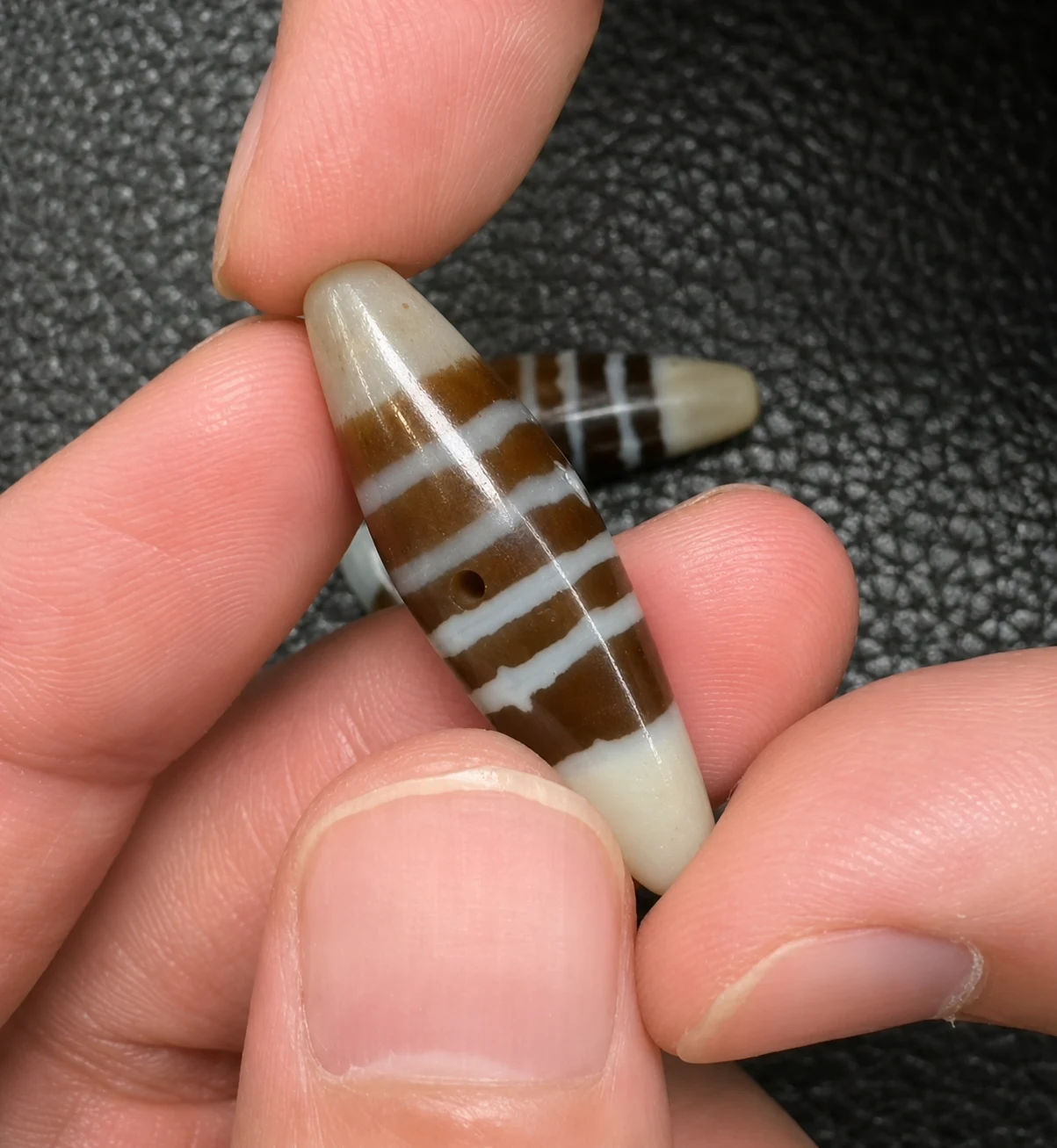
Line beads also show regional differences in appearance. Nepalese line beads tend to have heavier lines; colors associated with the Indus Valley examples can be lighter; Bangladeshi line beads can show an overall coloration. The word “line” identifies the basic organization of the pattern, while the actual appearance depends on line thickness, color, direction, and bead form. Line count therefore gives the viewer a starting point; the full pattern comes from the way those lines occupy the surface.
Tortoise-Shell, Ring, and Common Motifs
Shou beads take their name from tortoise-shell-like patterns. Black with white lines and red with white lines create different tortoise-shell appearances. The pattern is built from grids, arcs, and sections; line continuity and the proportion of the grid determine how clearly the motif reads. This pattern has its own recognizable form within related old-bead families. The grid and curved divisions give the surface a different rhythm from a simple straight band or a single eye motif.
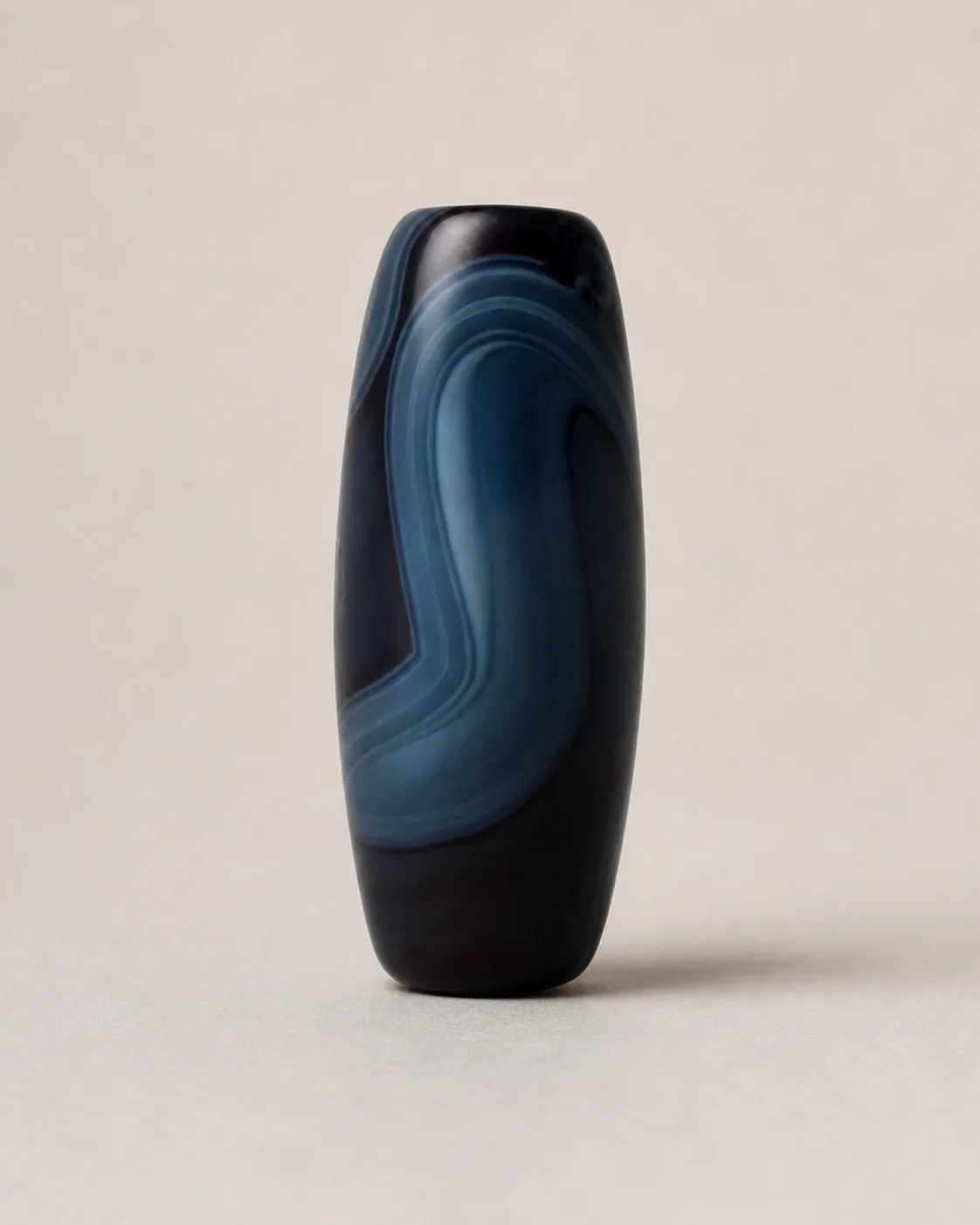
Board beads have a flattened round form. Their face can carry a complete ring pattern with an eye-like motif at the center. Dzi beads and related old beads also show circles, ovals, waves, stripes, rectangles, and black-and-white arrangements. A bead’s type is formed jointly by eye count, line form, accompanying motifs, and the shape of the bead itself. These elements are read together on the finished object, so a name can carry both the pattern system and the physical form of the bead.