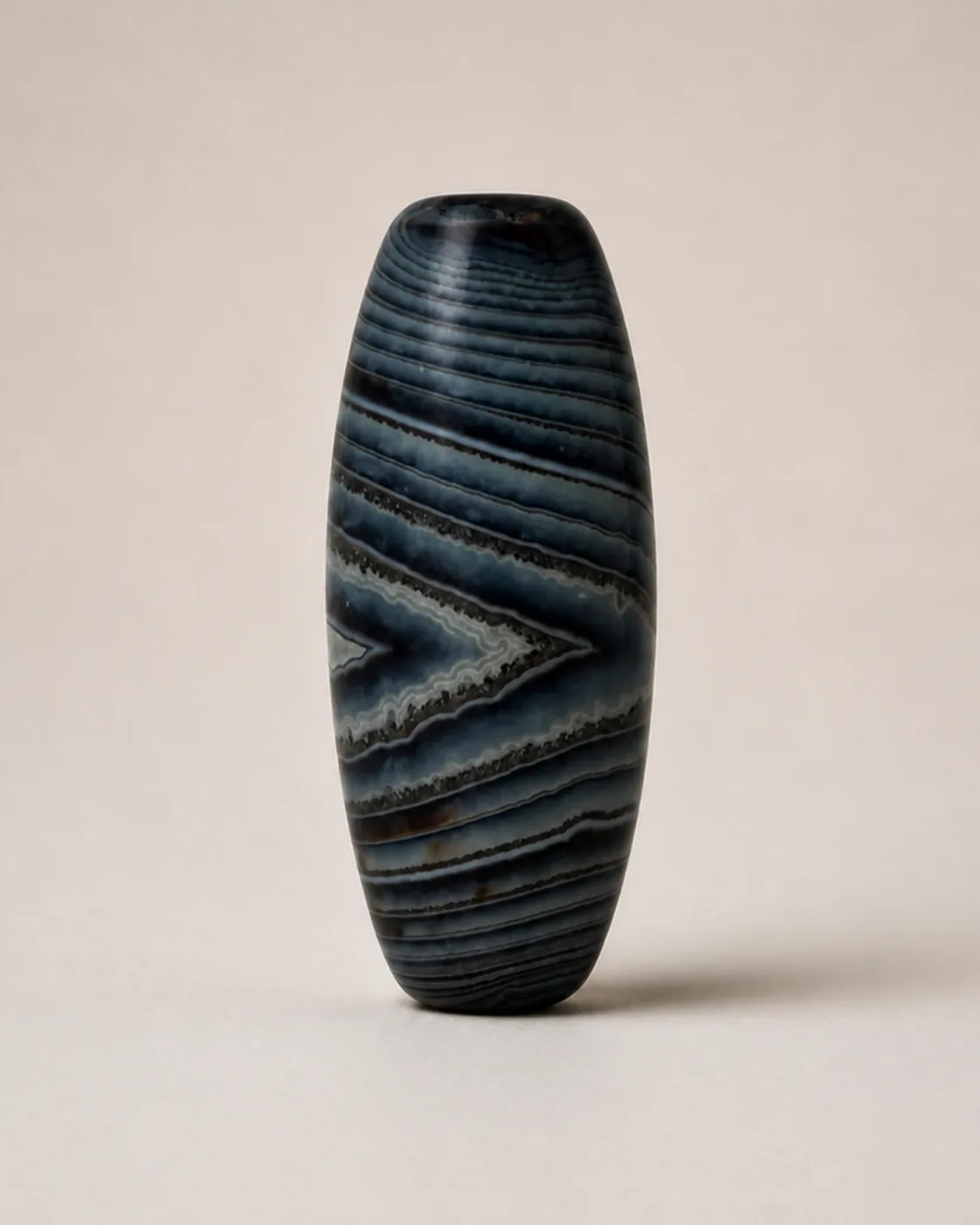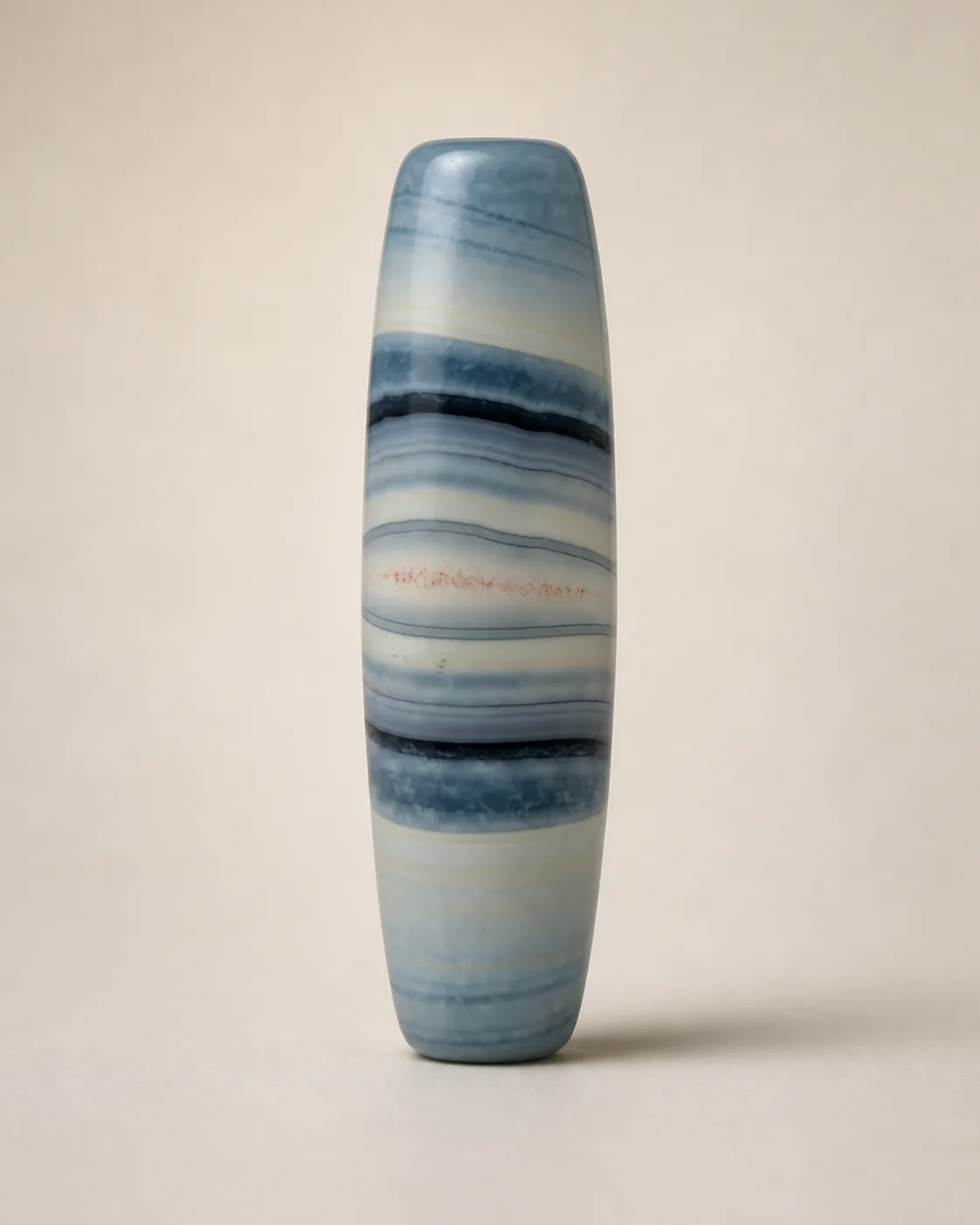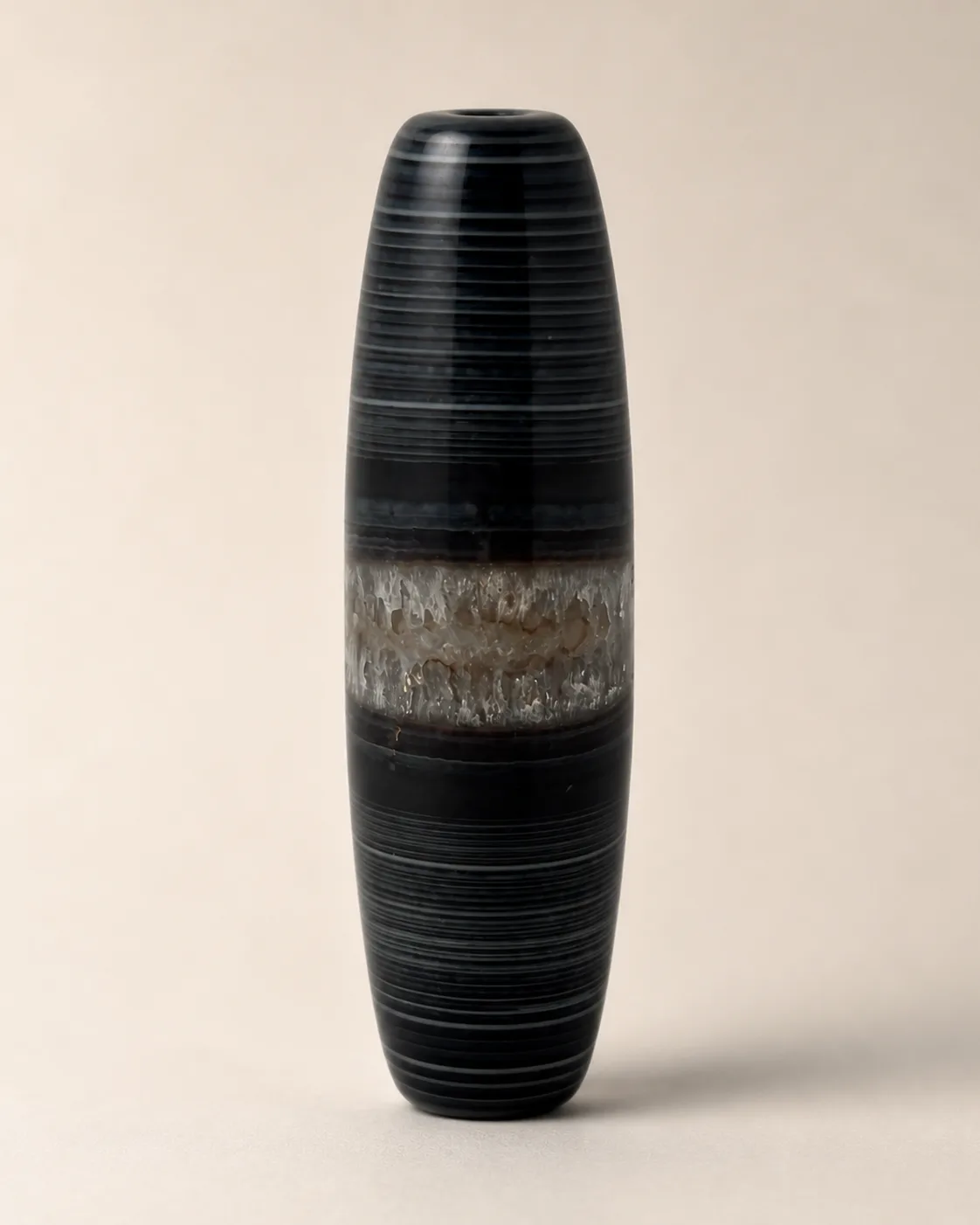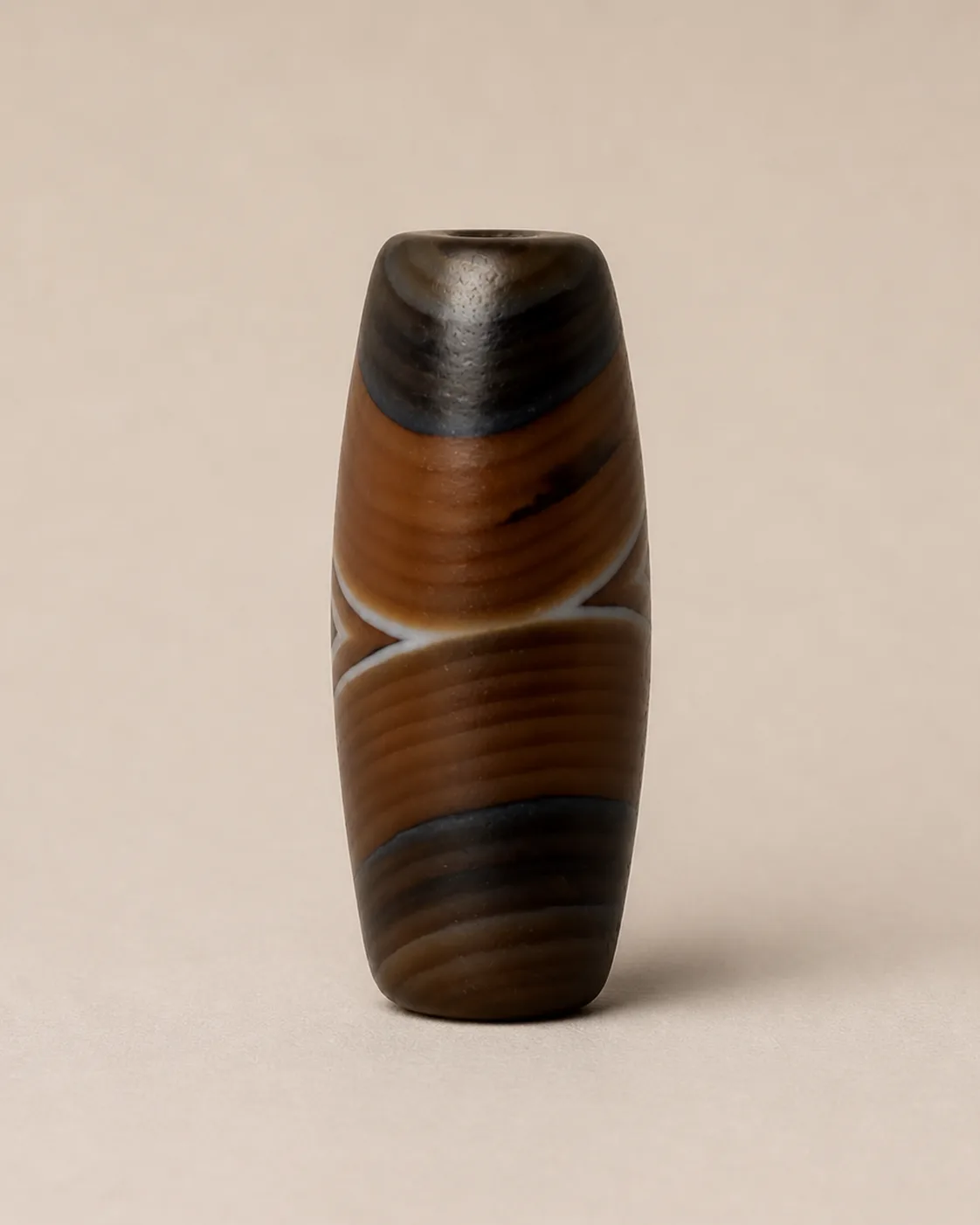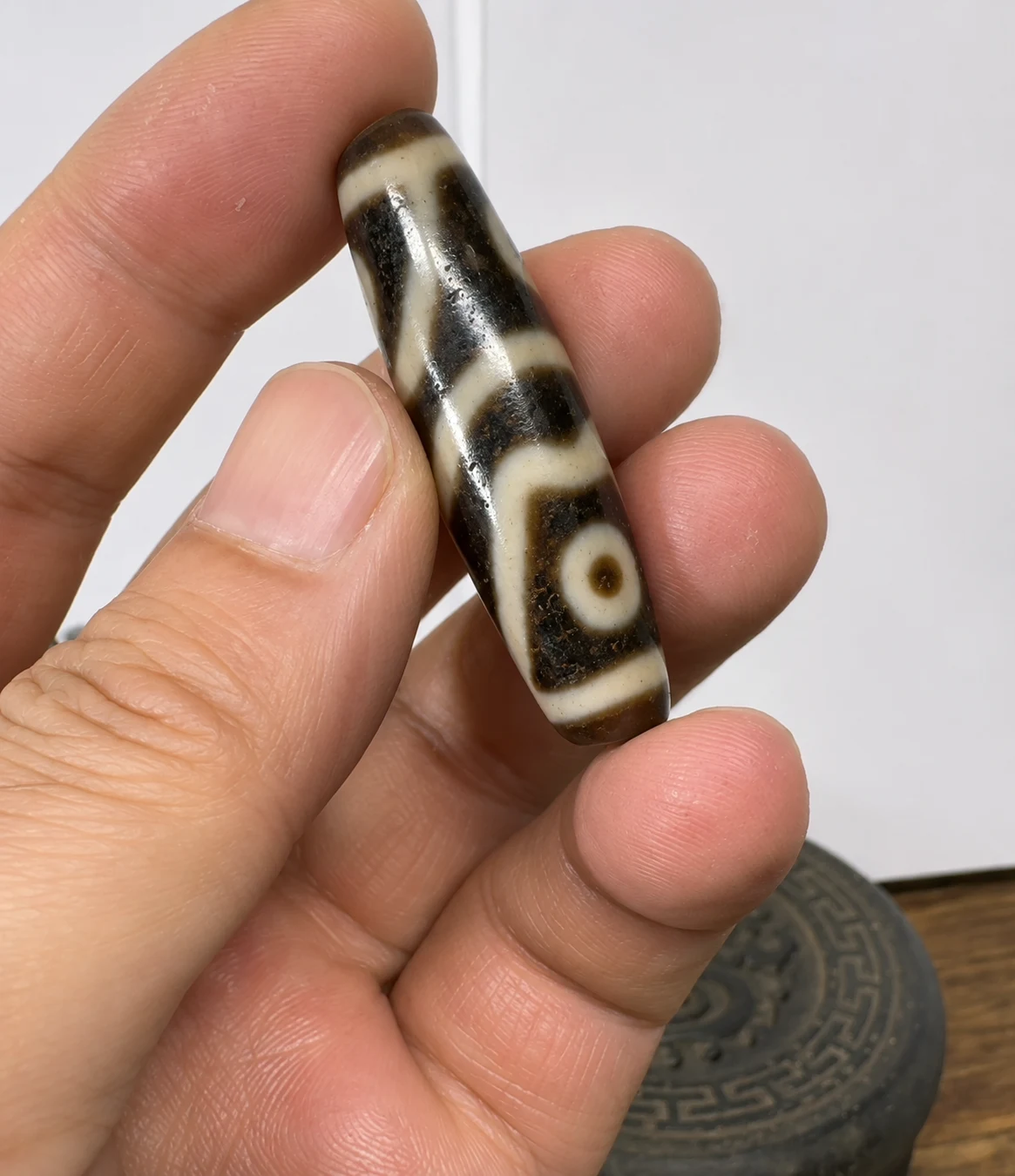
Are Dzi Beads Modern, Old, or Ancient?
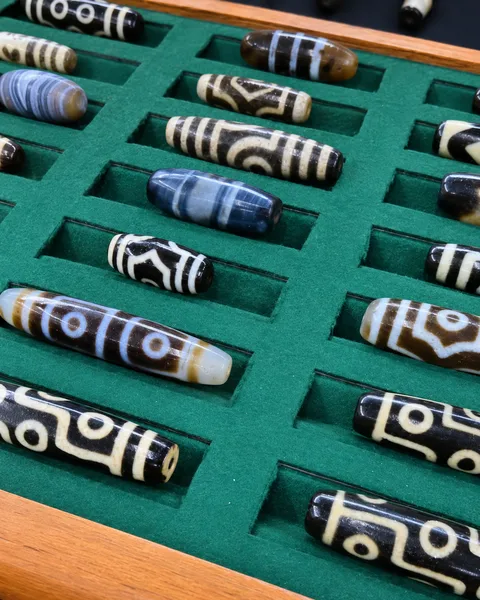
Modern production refers to a bead made in the present period. Old-style craft uses historical bead patterns and surface effects as its reference. An old bead is an object that has circulated through time and carries a history of use; an ancient bead belongs to an earlier period connected with archaeology or documented historical circulation. These names describe production time and circulation status, while eye and line motifs describe a different layer of classification.
The same motif can appear across different production periods. Eye counts, black-and-white relationships, and line direction describe the surface pattern. Material, treatment technique, and ownership or source records describe production and circulation. Age claims become clearer when these kinds of information are kept in one evidence chain. The bead’s visible design remains important, but its design is read together with the stone, the treatment, and the record of circulation.
What Is the Difference Between Zhichun, Cisi, and Old Material Beads?
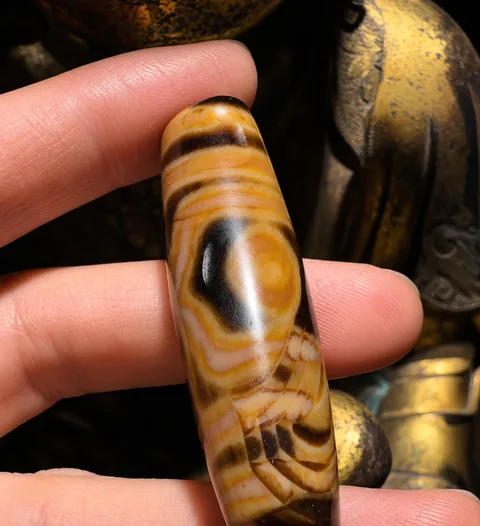
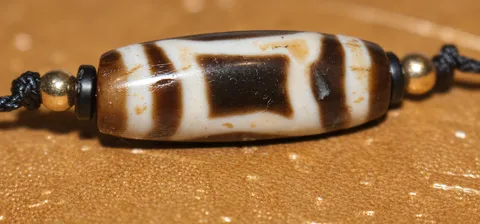
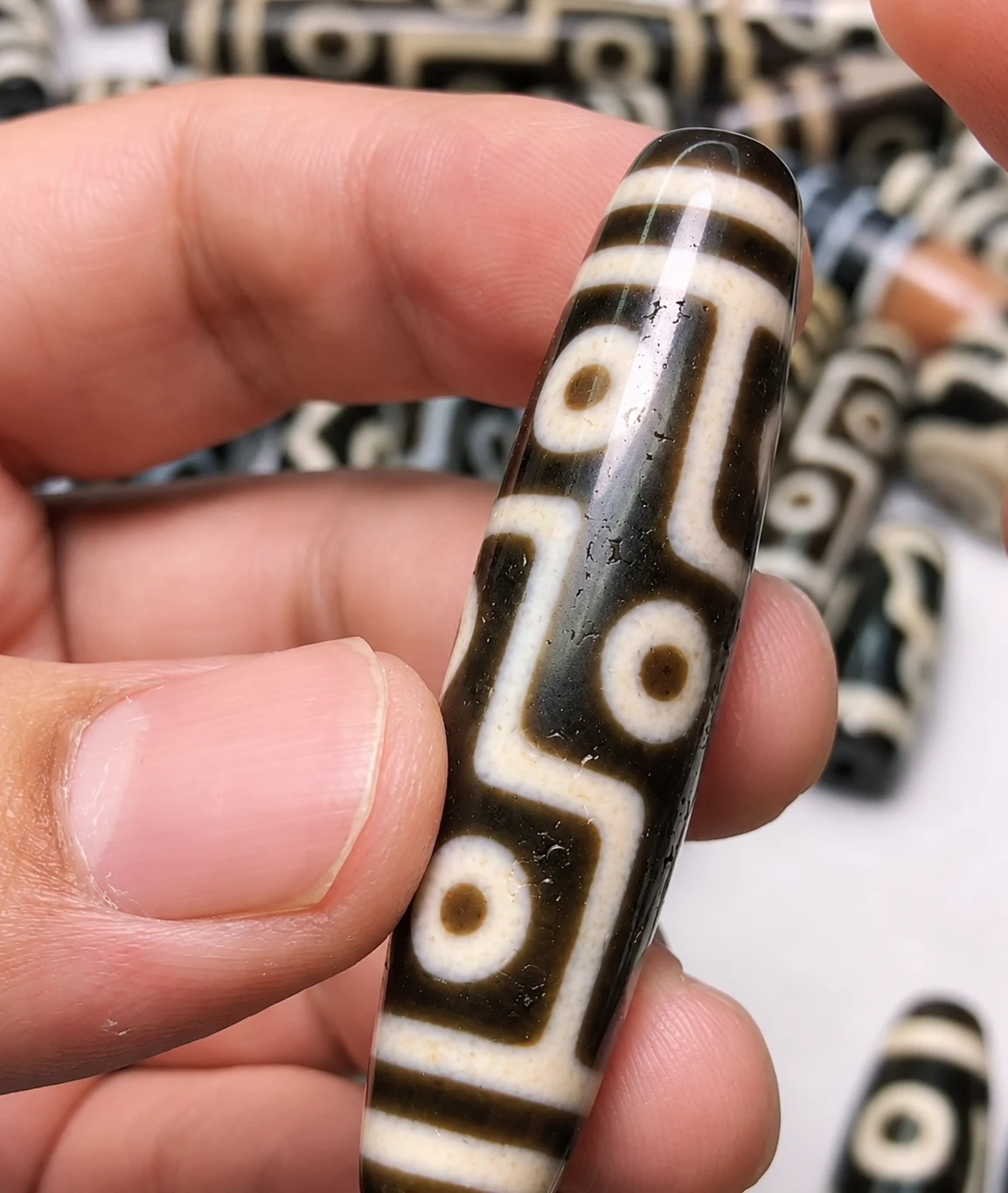
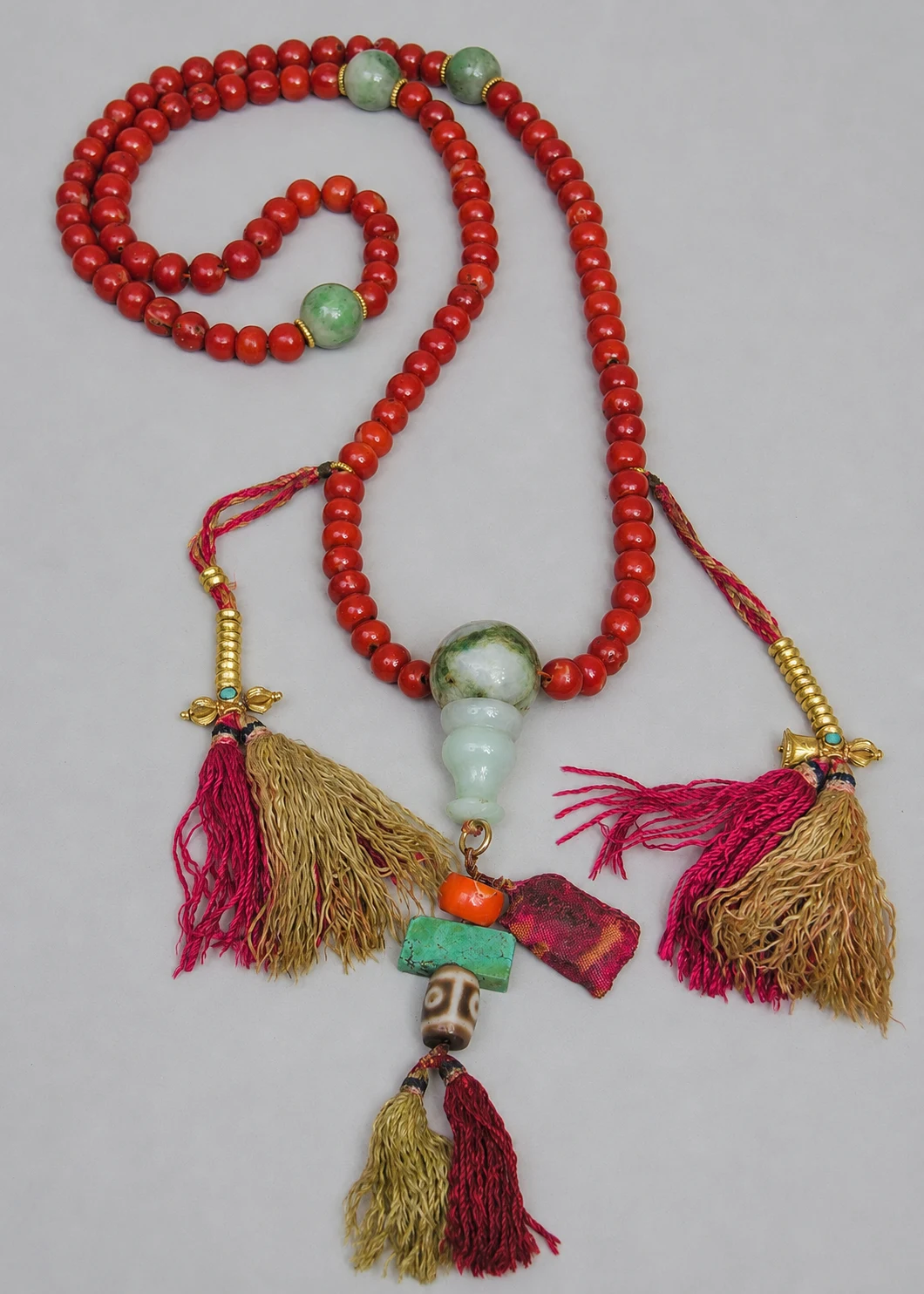
Traditional age narratives for Zhichun emphasize fine material, strong black-and-white contrast, an opaque appearance, symmetrical motifs, and clear borders. These narratives connect the loss of the related craft with the period around the Tang dynasty and place a genuine example within a claim of more than a thousand years. Cisi is described through an earlier craft history, some translucency, more varied line movement, and softer pattern edges. Zhichun and Cisi form two central routes within Dzi bead classification. Their names describe more than a pattern: they also point to different material impressions, line behavior, and craft narratives.
Composite-material beads represent another historical material route. The local account places their production from the early nineteenth century through the Republican period, describes a plastic-like texture, and notes a color close to old beads. Glass beads and old composite-material beads also appeared during the Qing period. They followed or imitated old-bead pattern standards and carry a different age claim from a thousand-year Zhichun bead. Similar names and motifs still require separate records for material and production route. The surface may resemble an older example while the material and manufacturing period belong to a later route.
Does Wearing a Replica Make It an Old Bead?
Within this classification, Tai beads are described as a modern route that imitates Zhichun. They use eye motifs and black-and-white patterns, and long wear can produce surface patina and a polished sheen. Time on the surface records use; it does not change the bead’s original production category. A clear description therefore records production age and wearing time as two separate facts. Patina can describe the history of use, while the bead’s material and construction describe how it was made.
Composite-material beads carry Dzi culture through another material and technique. Their material, texture, and production differ from agate Dzi beads, while their use can still enter the cultural settings of wearing, offering, and inheritance. Modern replicas, historical composite-material beads, and ancient agate beads each have their own material and technical route. Cultural meaning, age claim, and production authenticity should be stated as separate parts of the description. This keeps a later material route visible as its own historical form instead of forcing it into the category of an ancient agate bead.
How Can Dzi Bead Age and Authenticity Be Assessed?
Research-based examination separates the question into material, surface pattern, and production process. A study of a three-eye Dzi bead used X-ray diffraction, X-ray fluorescence imaging, and X-ray absorption spectroscopy. The sample’s main composition was silicon dioxide, consistent with an agate base. The study also observed etched rings and the distribution of copper around them, using these details to discuss how the pattern had been made. This kind of examination connects the visible pattern with the physical evidence inside the surface and the stone.
Material testing answers what the bead is made of. Surface analysis answers how the pattern was formed. Ownership and source records answer where the bead came from. A photograph presents the visible surface; an age claim requires verifiable material, technical, and provenance evidence. A modern product should state its material, production method, and cultural setting clearly. An ancient-bead claim should state age, material, technique, and source history separately. The result is a layered description: what the bead is made of, how its design was produced, and what evidence links it to a historical period.