A Dzi Bead Is a Patterned Ornament
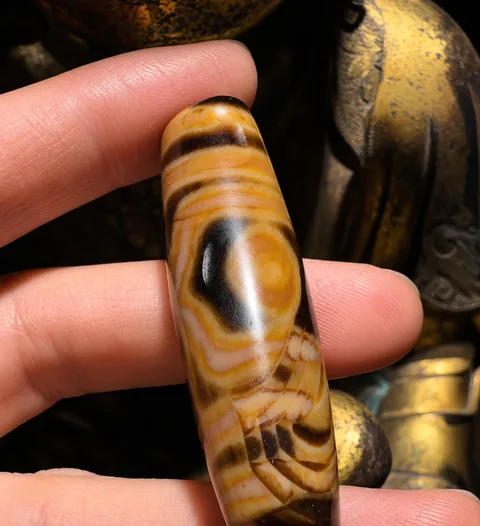
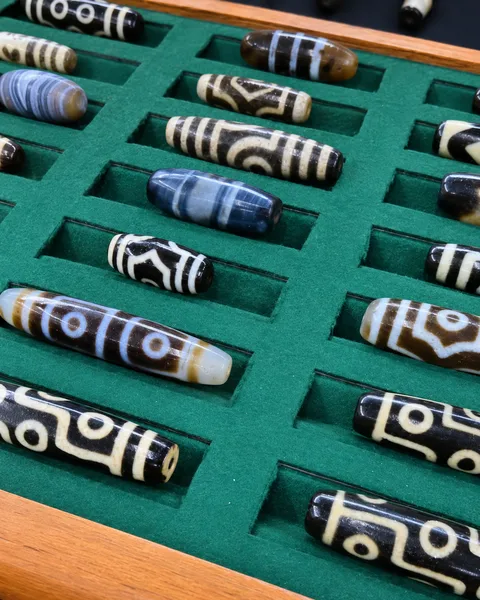
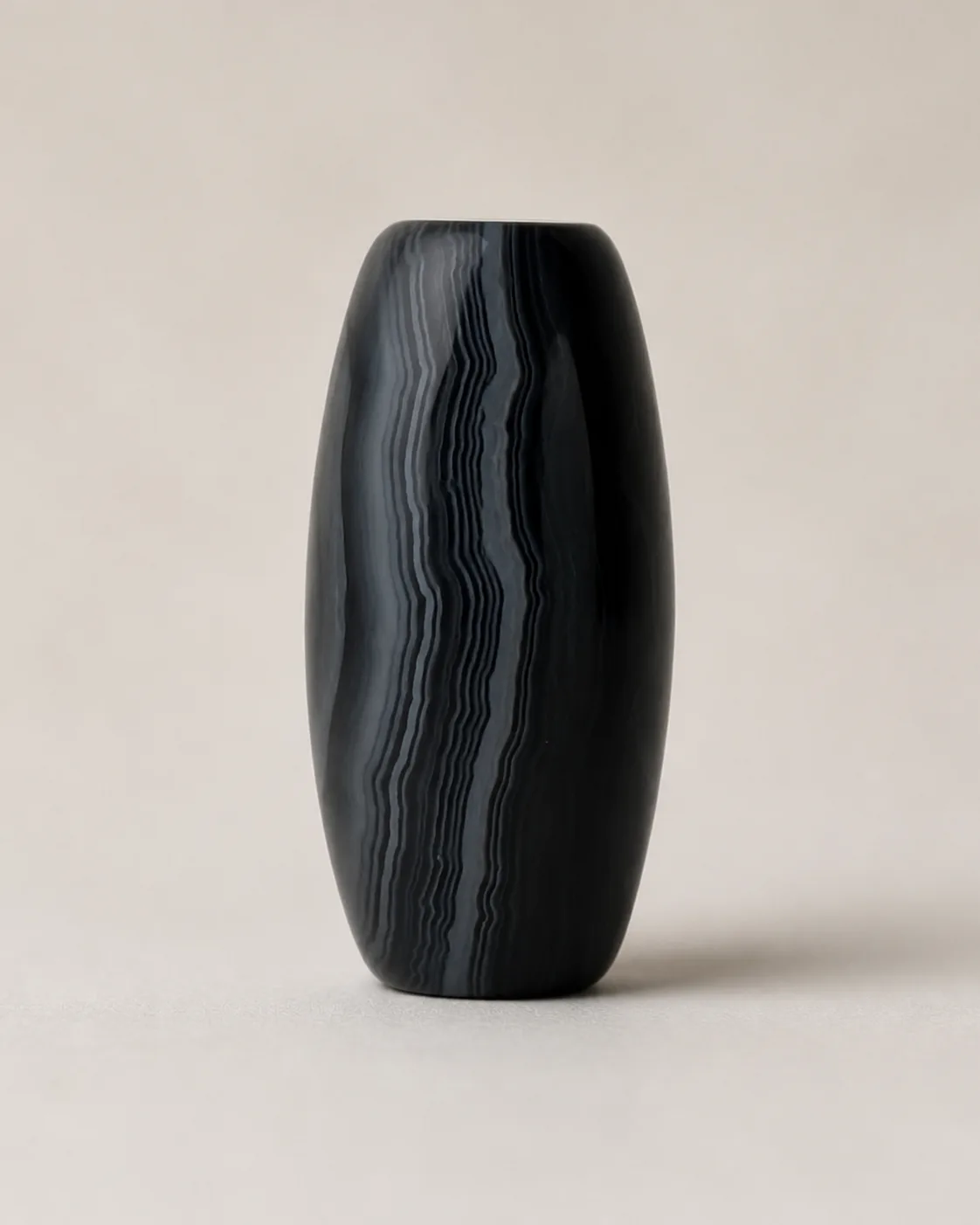
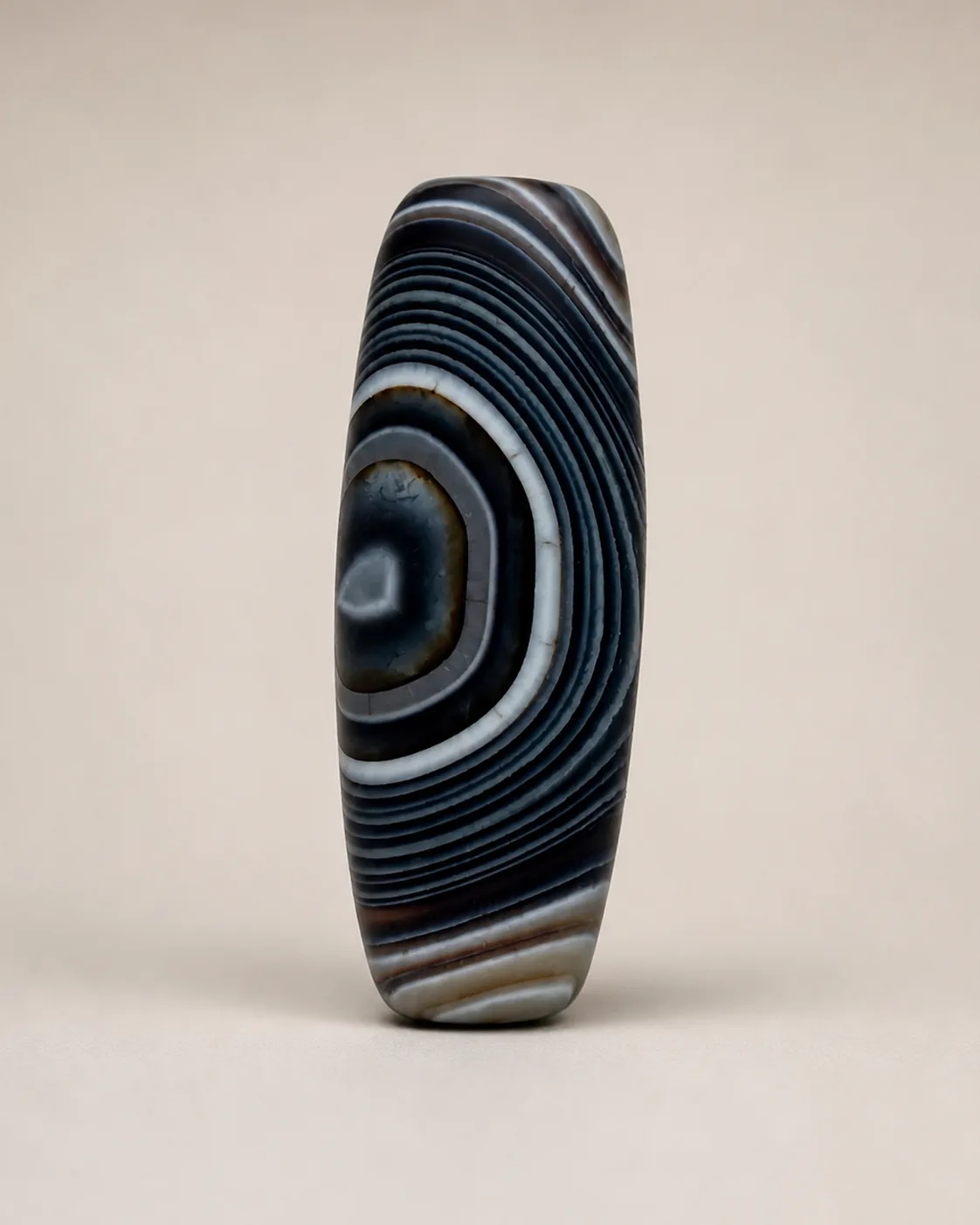
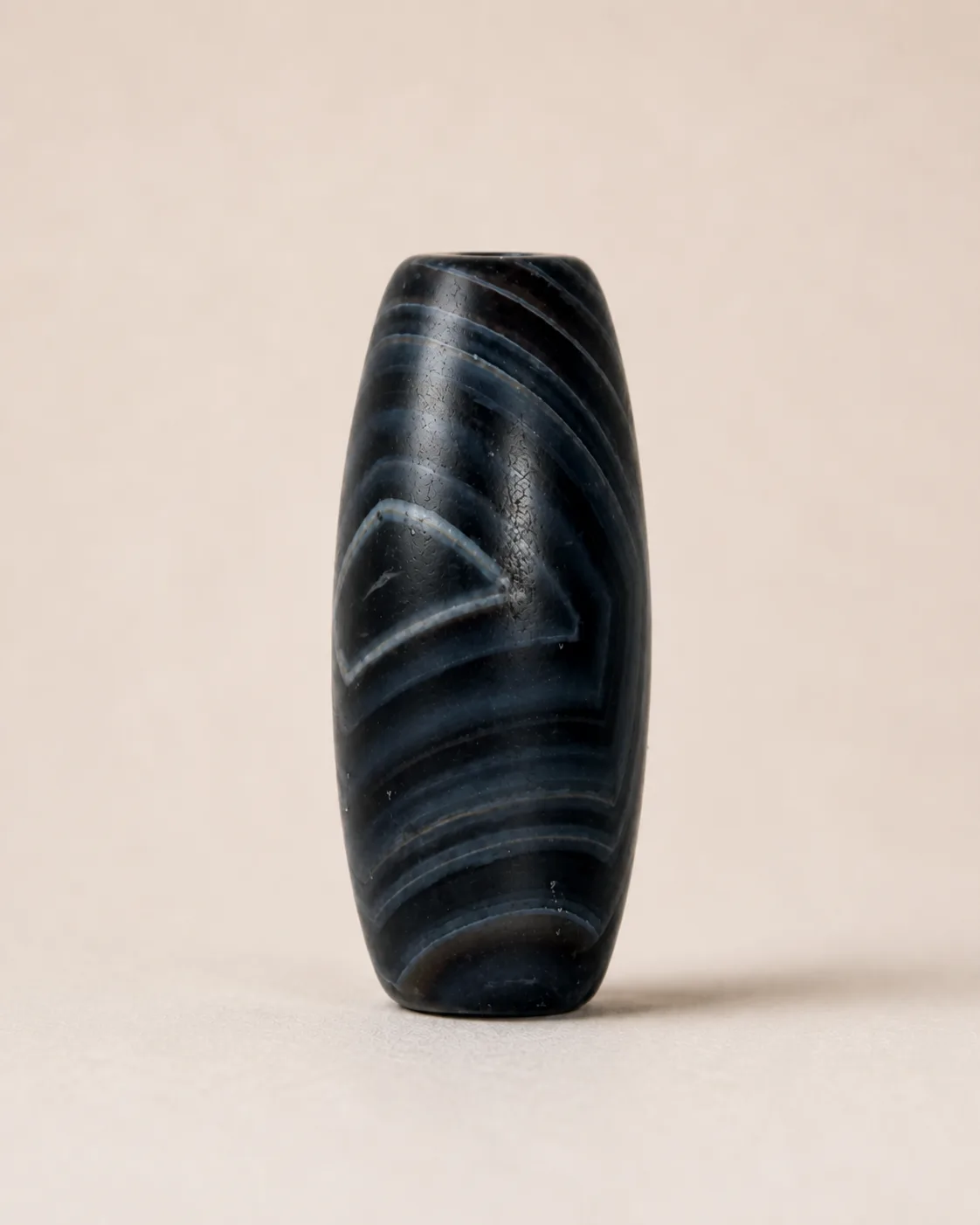
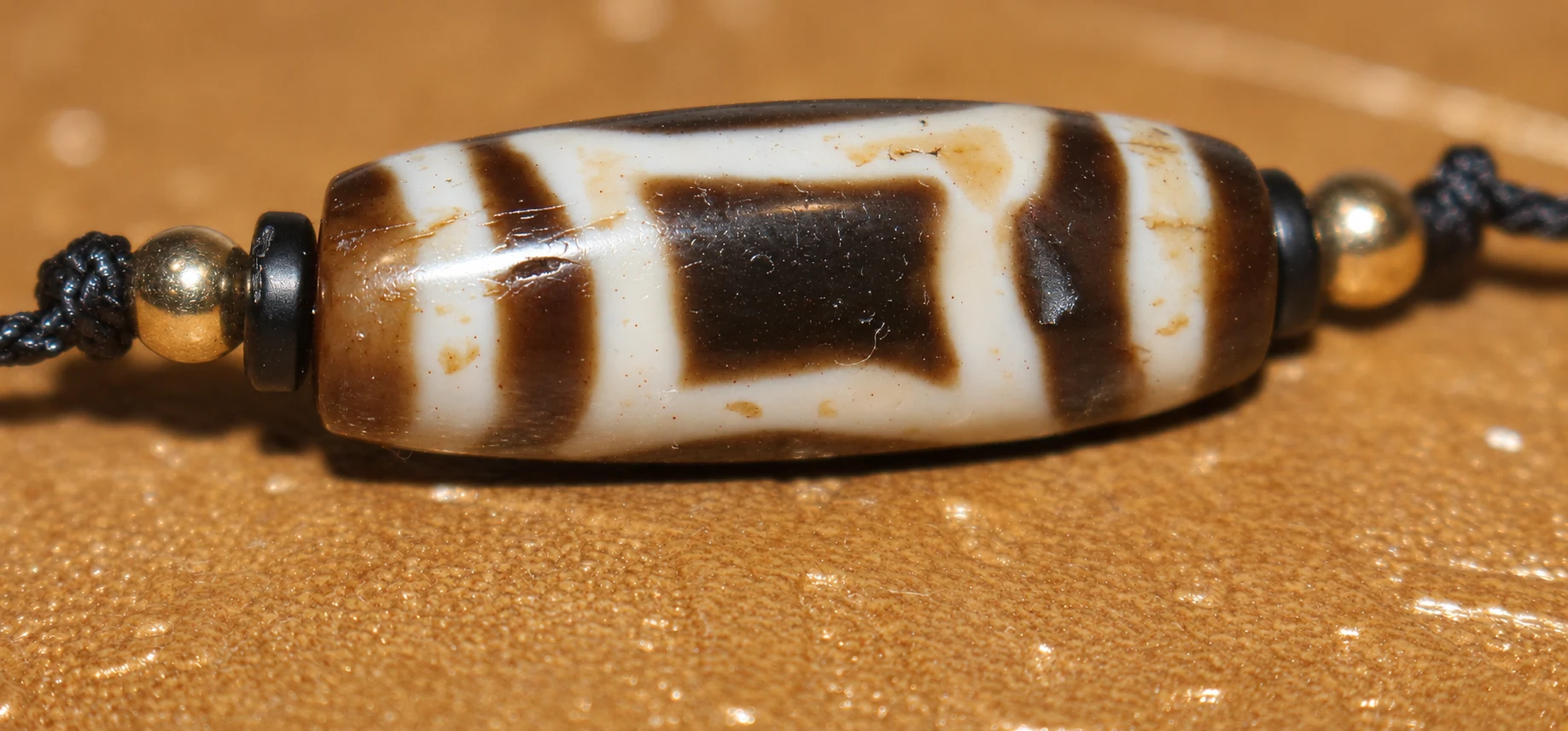
Dzi beads are commonly tubular, cylindrical, or slightly swollen through the middle. Their surfaces carry eye motifs, lines, bands, or other geometric designs. A bead can be worn as an ornament and can also function as a material object within a defined cultural setting. In discussions of Tibetan old beads, zhichun and cisi are often treated as core categories, while line beads, banded agate, and board beads present different combinations of pattern, material, and craft.
The word “dzi” does not cover exactly the same range in every collecting or cultural context. A useful common ground is the visible structure: a shaped bead whose surface carries an ordered pattern of light and dark areas. The pattern gives the bead a distinctive appearance and allows it to be worn, passed down, and understood within a larger tradition. The bead body and the markings are considered together, so a name such as zhichun or cisi points to a visual and material vocabulary rather than to a single decorative shape.
Agate Is a Common Base Material
Agate is a common base material for dzi beads. It belongs to the chalcedony family of quartz and has a dense, hard structure that can be shaped and polished. The bead is formed first, drilled, and then given a patterned surface through additional treatment. Its rounded profile, stone luster, and marked surface establish the material presence of the finished ornament.
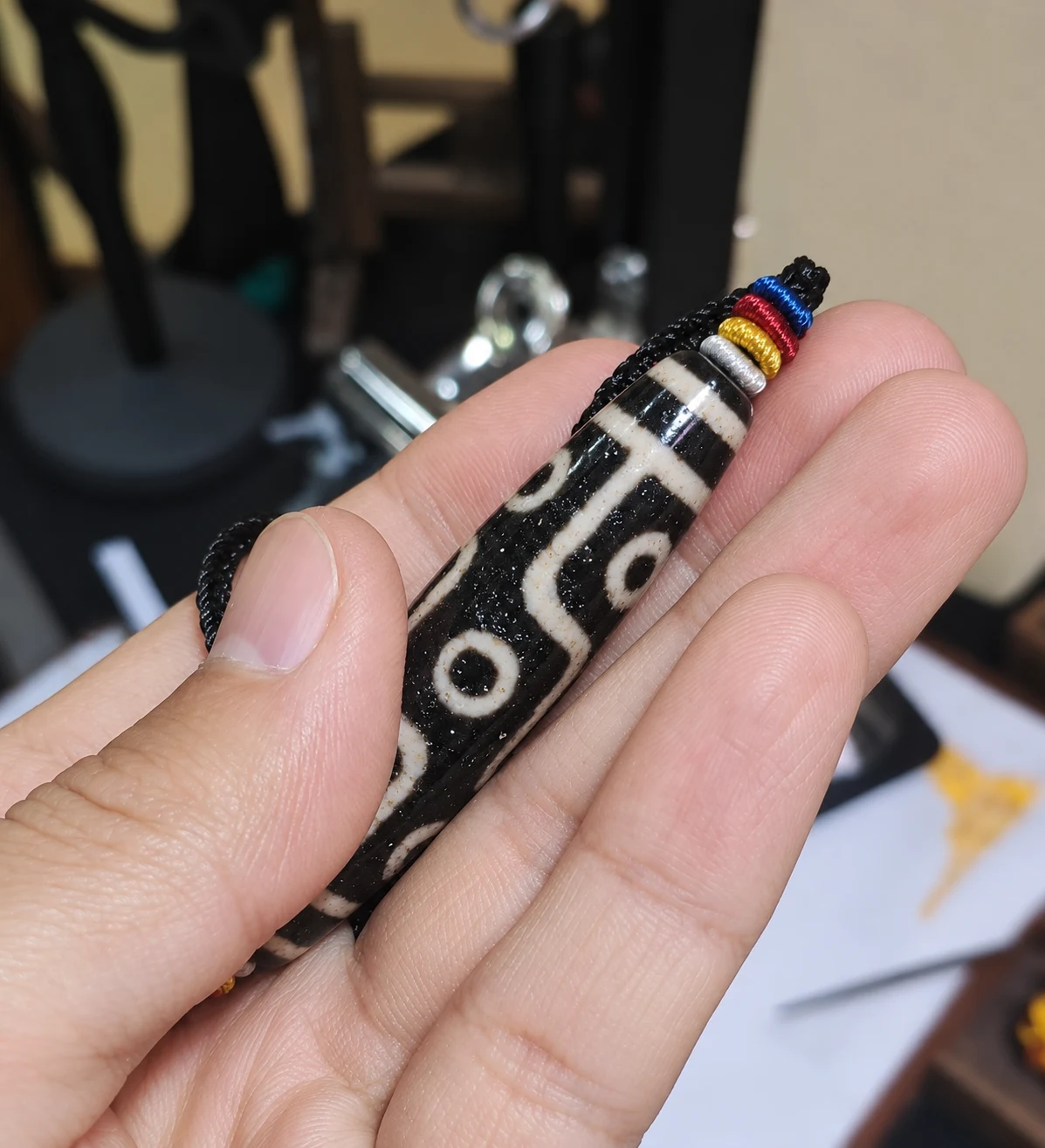
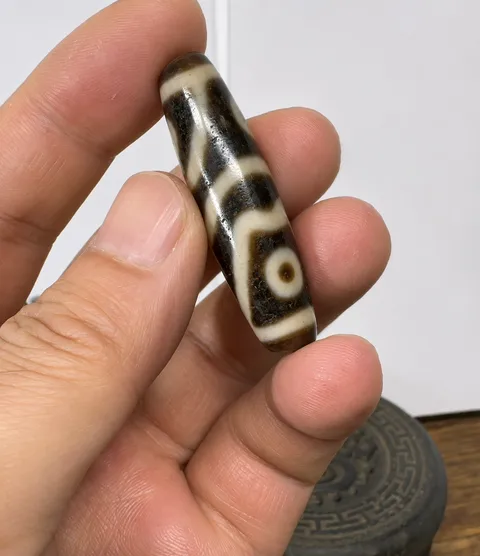
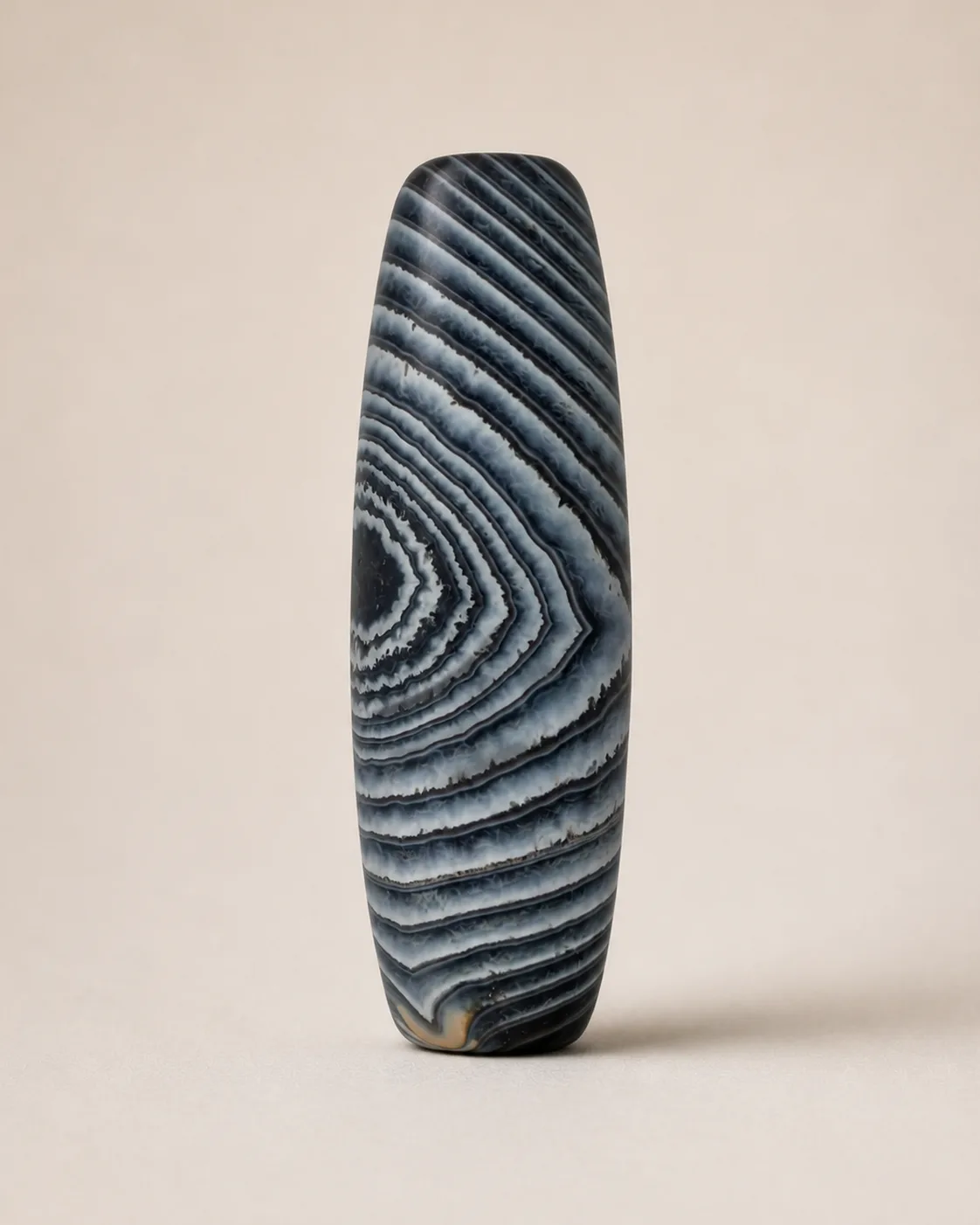
Zhichun is often described through fine material, strong black-and-white contrast, an opaque appearance, and symmetrical patterns. Cisi is often described through a degree of translucency and softer transitions along the pattern edges. These terms become more useful when they are connected to what appears on the bead itself: the stability of the base color, the direction of the lines, the clarity of the pattern, and the overall relationship between the stone and its markings. In this way, material language stays connected to the object in front of the viewer instead of floating as a label without a visual reference.
How Eye and Line Patterns Are Formed
Dzi patterns are created through treatment of the bead surface and become part of the upper layer of the stone. Recorded techniques include applying alkaline materials, adding color or etching the agate, and firing it to fix the design. Different treatments can produce clear boundaries, softened transitions, layered tones, and varied degrees of translucency.
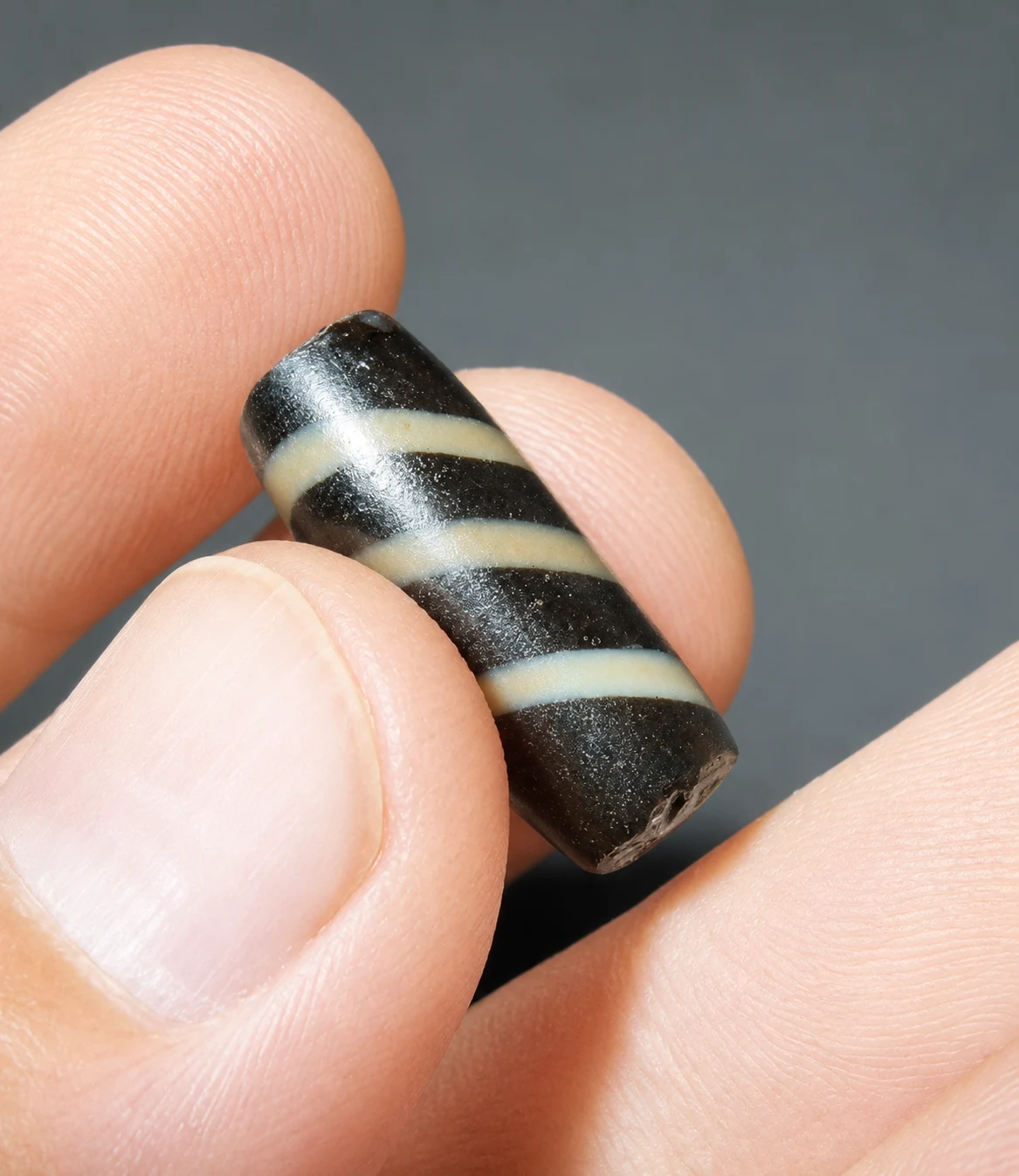
Eye motifs are generally built from ring-shaped areas, while line motifs extend as horizontal or vertical bands. Their number, arrangement, thickness, and symmetry create some of the clearest visual differences among dzi beads. Zhichun is often discussed through sharp black-and-white contrast and defined boundaries; cisi shows more variation in line movement and softer transitions. Eye and line patterns therefore operate as decoration, classification, and part of the bead’s cultural memory. Their arrangement gives people a way to describe and remember a bead across different examples, while the wider meaning remains connected to the tradition in which the bead is used.
Why Dzi Beads Are Connected to Himalayan Culture
In Tibetan life, dzi beads appear through wearing, offering, and inheritance. They can be carried close to the body and can also serve as objects that hold wishes for protection. Traditional belief connects them with safeguarding, peace, the removal of obstacles, and personal aspirations. Long-term use and intergenerational transmission give a bead a place within family memory, religious practice, and everyday life.
Once a dzi bead enters this cultural setting, its markings are more than surface decoration. Eye motifs can be read as protective visual signs, while lines, geometric patterns, and different base colors receive meanings through particular traditions. Interpretations vary across regions, religious settings, and lines of transmission, so the bead’s material, pattern, and use belong to the same cultural object. This is why a basic introduction needs both sides of the subject: the physical bead that can be seen and handled, and the cultural setting that gives its patterns a living meaning.