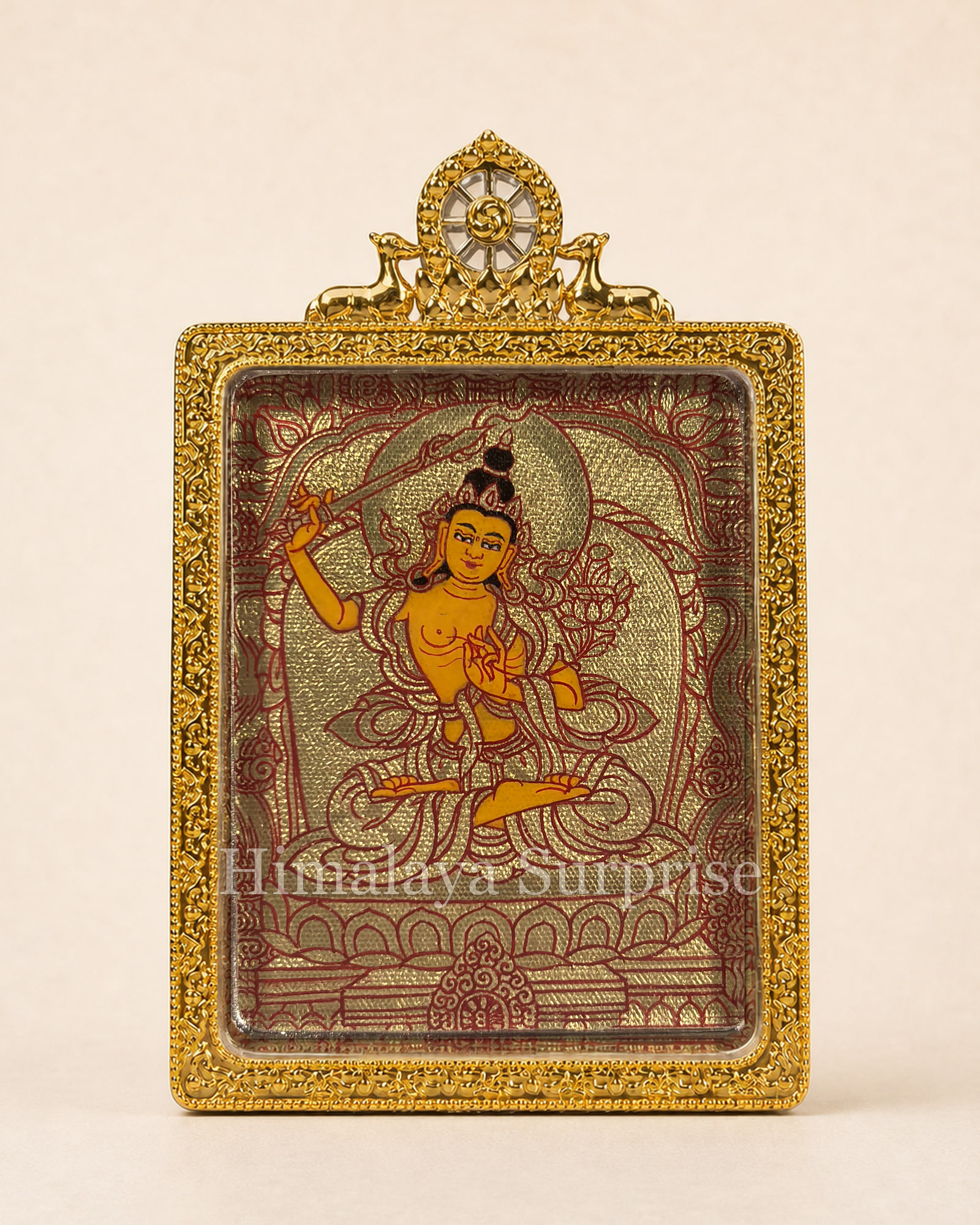
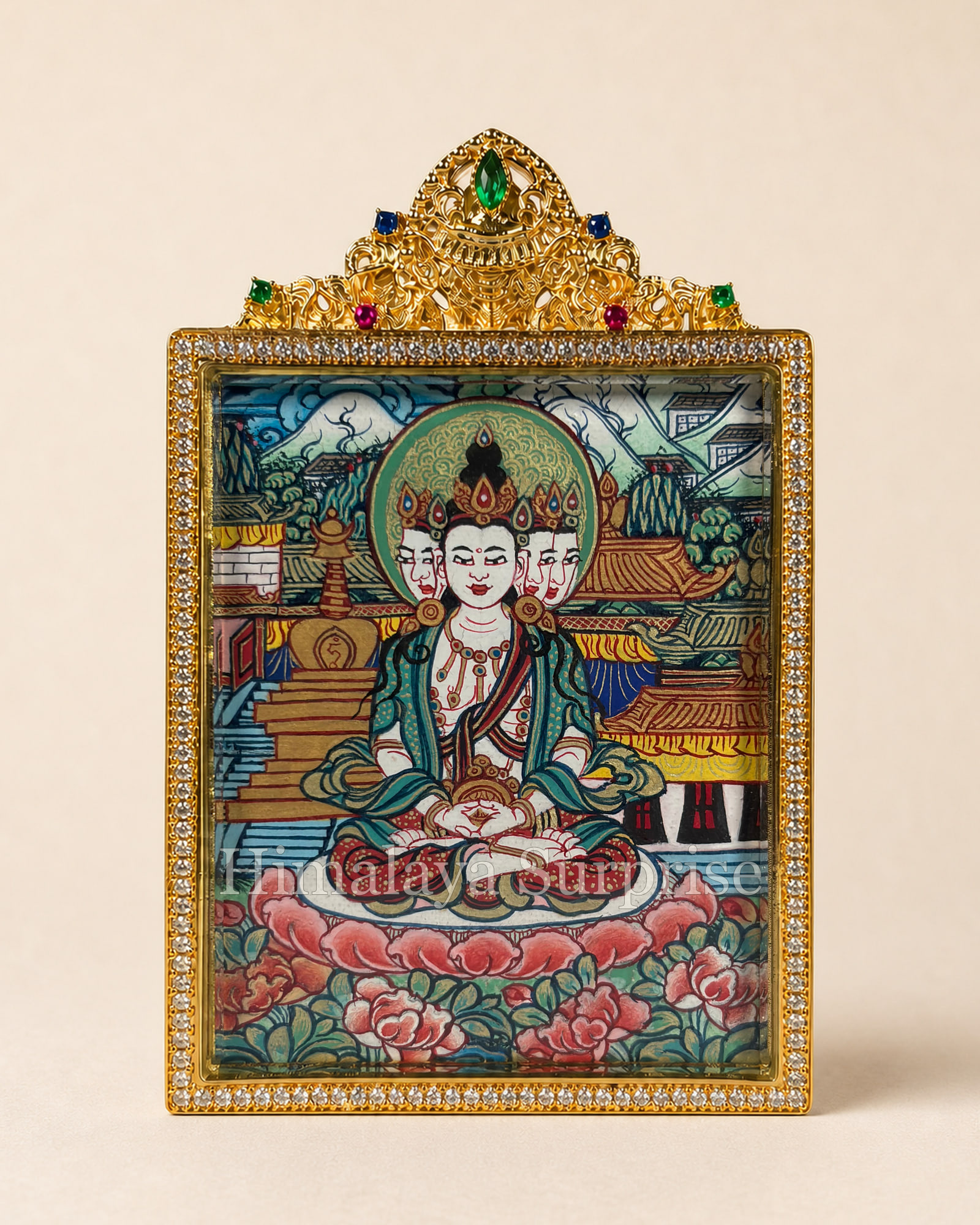
Discover / Display & Care
How to Hang a Thangka: Size, Mounting and Display
Measure the painted panel and complete object, distinguish a framed miniature from a textile scroll, plan support and light, and know when to stop before a fragile thangka is handled.
In this story
A product image may show a painted panel, while the wall must carry a frame, brocade, rods or a housing. That is why “how to hang a thangka” starts with measurement and format, not with a universal hook. This guide keeps ordinary display useful for a stable current work and draws a clear line before a loose, brittle, historic or damaged object is handled.
Identify the format before you choose the hook
A thangka is not measured or hung as a painted rectangle alone. A current miniature may sit in a frame or a housing; a traditional textile-mounted scroll may include a brocade border, top and bottom rods, cords and a cover cloth; an unmounted or partly mounted work needs another plan. Start with the complete object you have.
The first question is physical, not symbolic: what carries the weight? Look at the back and edges without forcing them. Note whether a frame supports the work, whether a rod is secure and whether cords or seams are loose. Display advice for a stable contemporary object should never be applied automatically to a brittle, warped, flaking or unfamiliar scroll.
Record three sizes, not one
Write the measurements in one unit: the painted panel, the mount or frame, and the complete hanging footprint. For a scroll, the last measurement runs from the top hanging point to the bottom rod or lowest textile and includes the full width. For a framed miniature, record the visible image, outside frame and depth from the wall. These numbers answer different questions.
A product photograph may crop the brocade or show the painted panel without its frame. Do not use the panel size to decide whether the complete work fits above a shelf, beside a door or inside a niche. Use a temporary paper outline to check the complete footprint before any wall support is fixed, and leave enough clearance to handle the object without touching the painted surface.
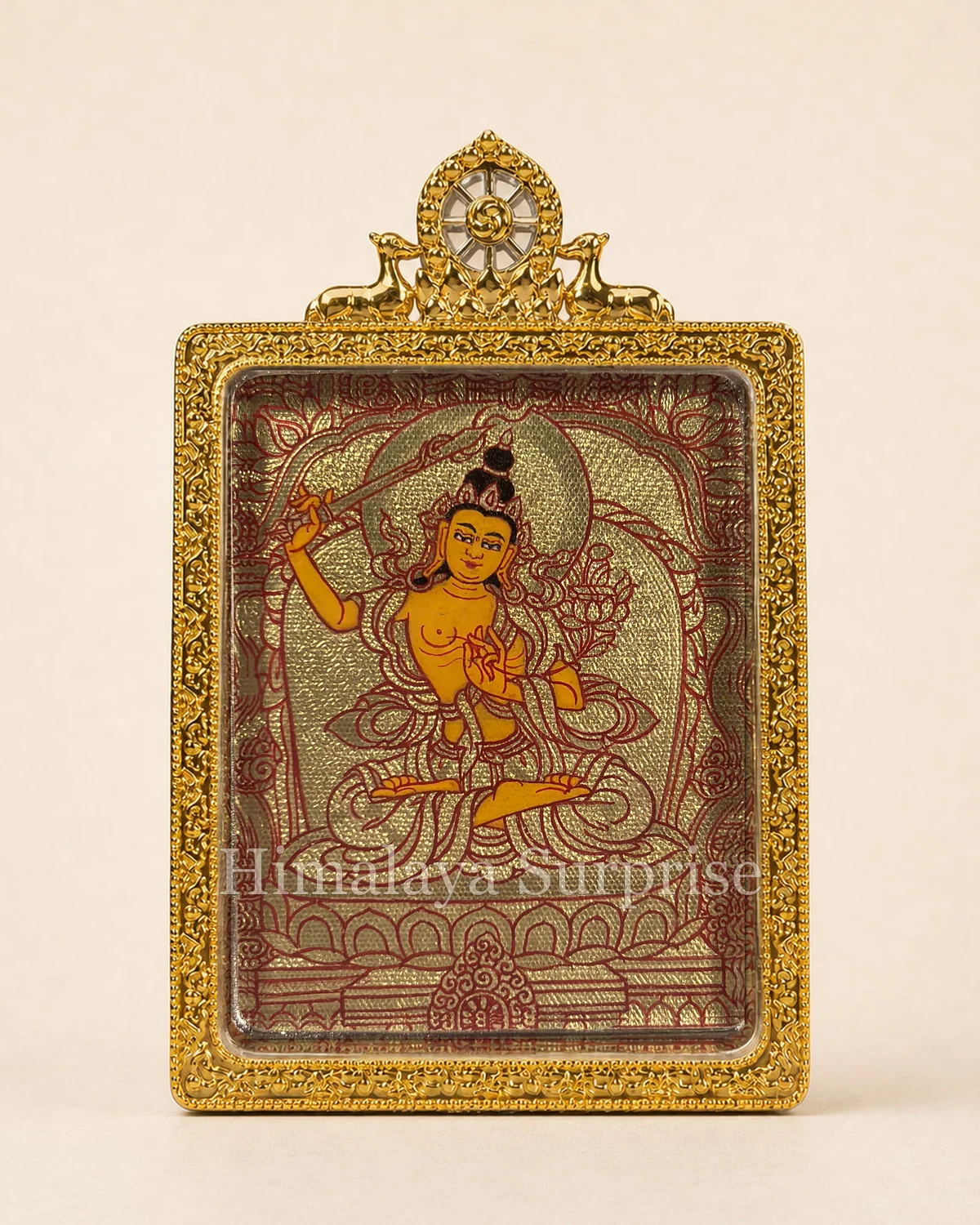
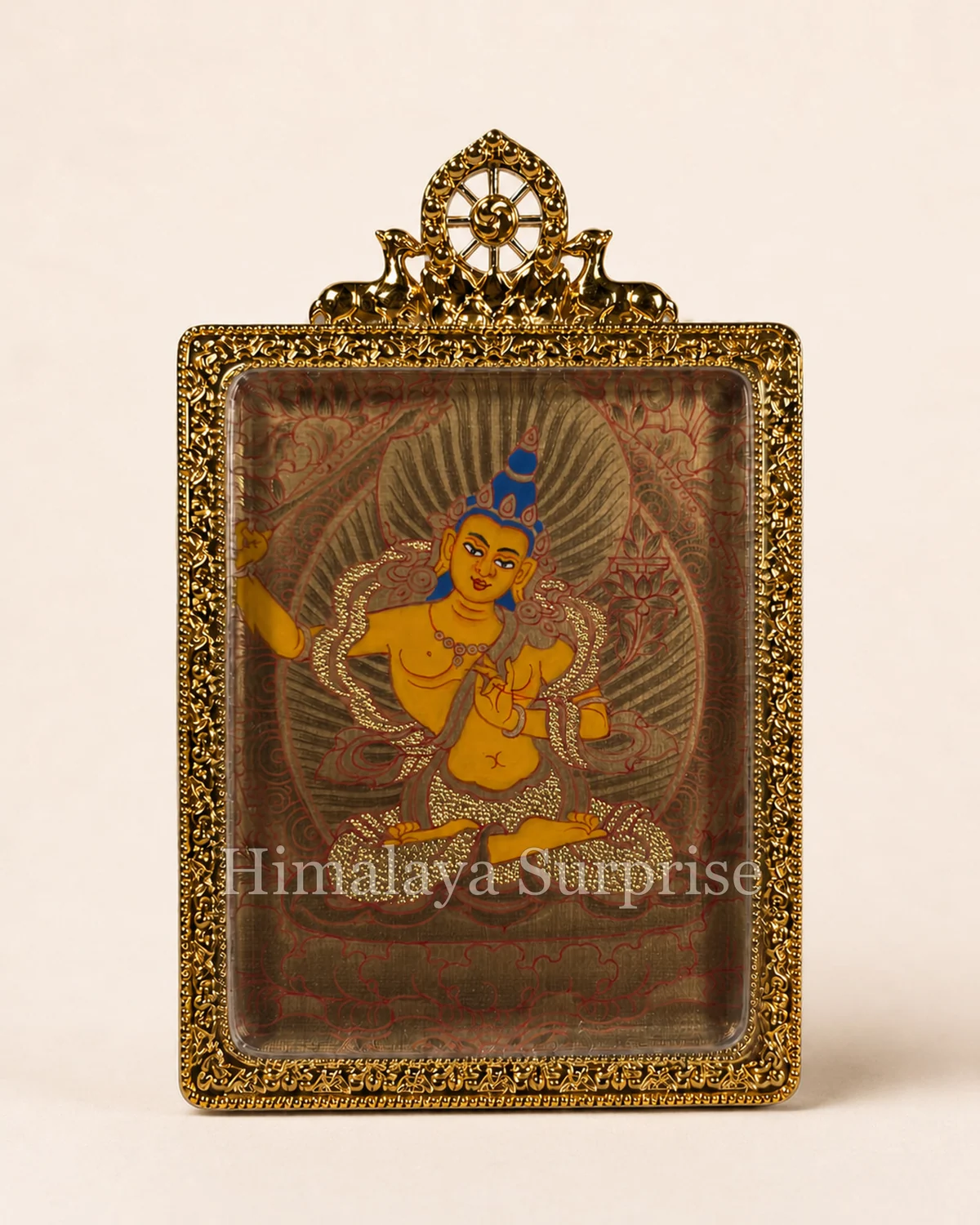
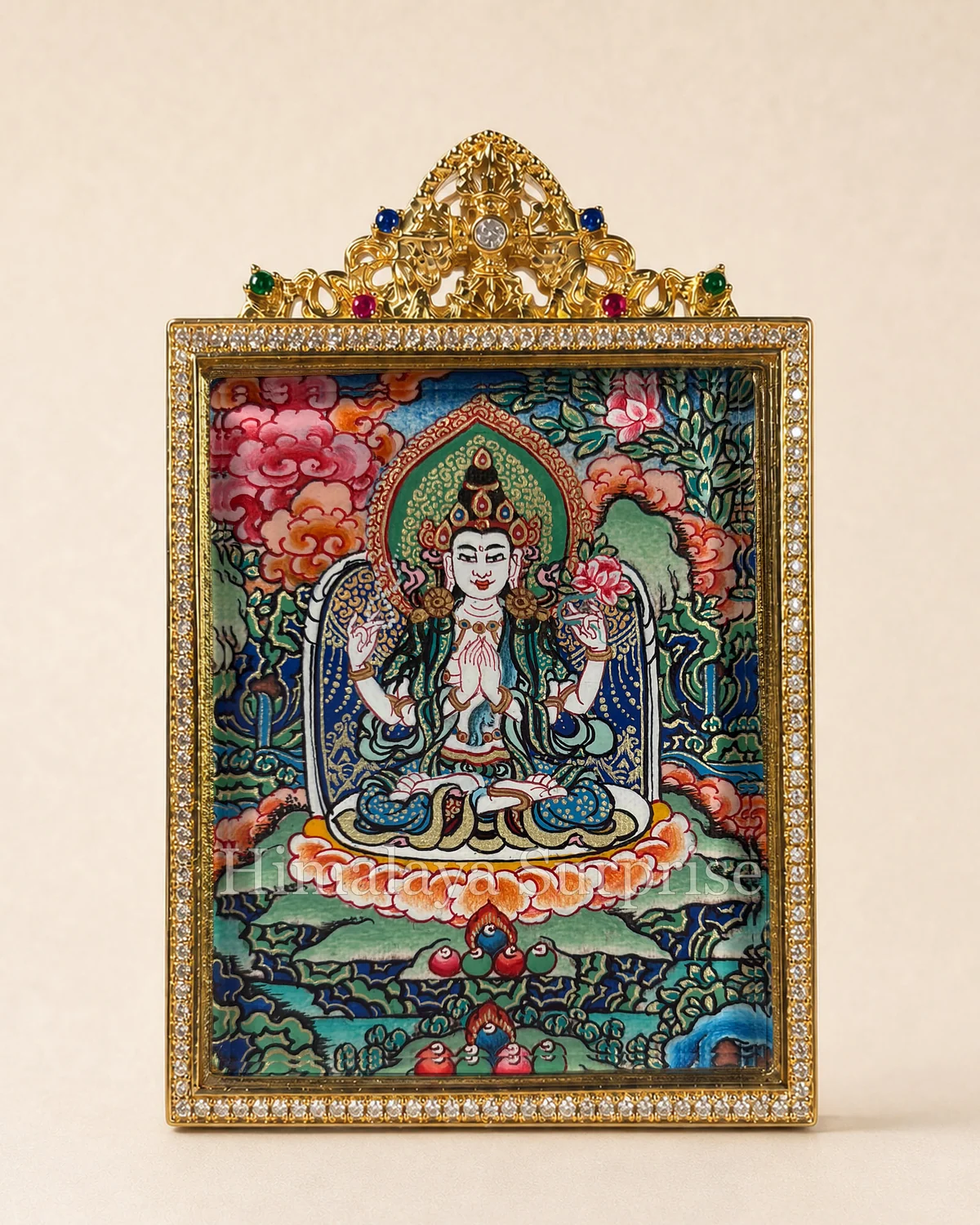
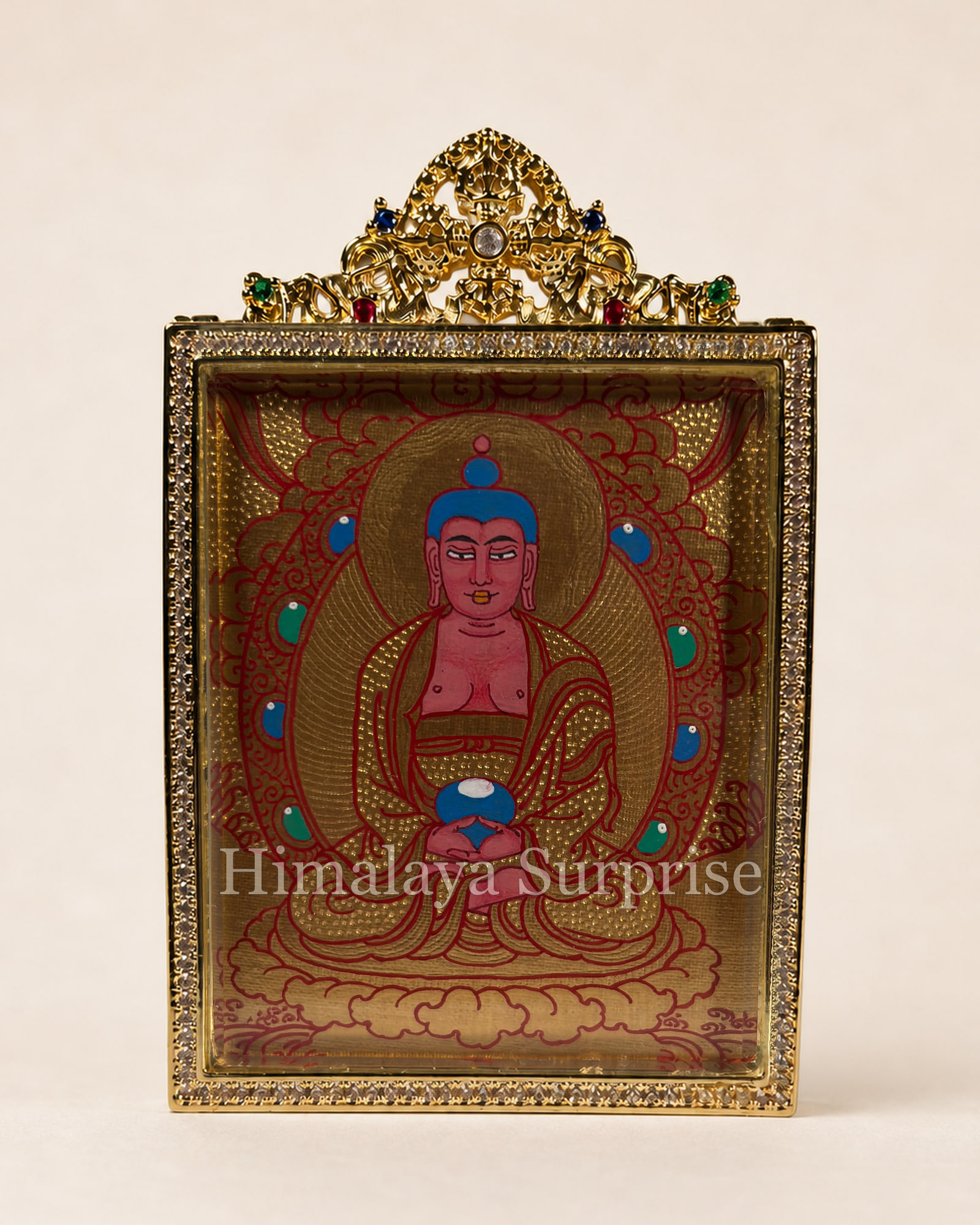
The miniature shown above has a recorded painted image of 4 × 5 cm; its housing adds to that footprint. The historical Thousand-Armed Avalokiteshvara illustrated here has a recorded image of 73 × 61 cm. Neither measurement gives the outside dimensions of a finished frame or a complete hanging mount. In the mounted Wellcome painting, the broad textile surround makes the distinction immediately visible.
Plan the wall and the sightline
Choose a wall where the complete work will not touch a radiator, window, shelf, doorway or passing bags. Eye level is a useful starting point, but there is no single correct height for every room. The painting’s scale, the furniture and the normal seated or standing position all change the result. A paper outline lets you test the composition before the work is lifted.
A shrine, study, living room or office can each have a different place in someone’s life. Some people follow a particular religious tradition when arranging sacred images. Physical display still asks the same practical questions: can the work be supported securely, seen comfortably and kept away from harmful light, heat and contact? There is no compass direction that answers all of them.
Match the support to the wall and the object
The wall, fastener and hanging point must together carry the complete object. The correct hardware depends on wall construction, weight, frame or rod, and condition. A one-hook instruction may suit one light format from one seller, but it is not a universal rule. Never put a nail, pin or adhesive through painted cloth, brocade or a loose textile seam.
For a stable framed work, check the frame hardware and wall load before lifting. For a textile-mounted scroll, check the top rod, cords and seams without putting tension on the painting. If the support moves, the textile pulls unevenly or the cord is frayed, stop. A hanging test is not a safe way to discover that a structure is weak.
A careful sequence for a stable current work
Use this sequence only when the format is understood and the work is stable and intact. Clear the handling area. Before lifting, have the wall support and hardware matched to the wall and the actual load. Use clean, dry hands and lift from the frame or structural support, never from the painted surface. A large or deep frame should have a second person helping. Seat the work gently, check level and full support, then step back and look for unexpected strain.
For a framed miniature, the frame or housing should remain the load-bearing structure. Do not add pressure to the glazing or press the artwork to make it sit flat. For a scroll, keep the top support level and allow the bottom rod or textile to hang free. If the object does not settle naturally, return it to a supported position rather than correcting it by pulling.
Rolling and unrolling are different from hanging a frame
A textile scroll is a connected object: the painting and its mount form an assembly that can include top and bottom stiff bars, a cover cloth and cords. That relationship is why a scroll should be unrolled slowly and supported by its structure. Do not snap the lower rod down, pull the upper cord to straighten a tilt or let the painted cloth carry the hanging load.
Unroll only when the textile and paint are sound and the format is familiar. Keep both hands under the structural areas and control the fall. If the surface cracks, sticks, sheds pigment or the fabric catches, stop immediately and keep the work supported. A framed miniature does not need this textile sequence; follow the frame or housing documented for that object instead.
A loose protective cloth may cover the painted image. On a sound contemporary scroll designed for it, the cloth can be lifted and arranged loosely above the picture using its existing retaining cord. Keep the fabric away from the painted surface; avoid tight folds and never pull a cord to force the arrangement. Some scrolls have a different cover or none at all, so this detail depends on the mount.
Light and the surrounding room
Choose stable, moderate conditions rather than a dramatic sunlit wall. Direct sun and strong heat can accelerate fading or stress in paint and textile. Keep the work away from radiators, cooking vapour, bathrooms, open windows during damp weather, candles, smoke, sprays and places where hands or curtains will repeatedly brush it. Prevent dust from settling; do not wipe the painting as if it were glass.
There is no single room humidity number or lighting recipe that makes every thangka safe. A frame, glazing or cover can change the small environment around the object and must not press against raised paint. For a current work, follow its care note; for a historic, loose or valuable work, use a conservator’s object-specific recommendation rather than improvising a frame or cover.
Know when display becomes conservation
Stop before handling if the cord, seam, rod or frame is loose; the textile is brittle or torn; the paint is powdering, lifting or sticking; there is mould, water damage or an unknown format; or any plan requires pressure, adhesive, pinning, wet cleaning or forced unrolling. Photograph the whole object and the symptom in even light, record the date and recent movement, and keep the work supported.
Once the work is supported and the room suits it, give yourself time to look from both near and far. A small painting draws attention to fine lines; a larger scroll brings its textile surround into the room. A comfortable position lets those differences be enjoyed without repeated moving. Everyday care continues that attention after the work is in place.
Questions and answers
Should I use the painted area or the complete size when planning a wall?
Use the complete object to plan the wall, hardware and clearance, then use the painted area to judge the visual scale. Record both: the panel alone does not tell you how wide a brocade mount, frame or bottom rod will be.
Can I use one hook or nail for every thangka?
No. Hardware depends on the wall, total weight, frame or rod and condition. A one-hook instruction for a light, stable format is not a safe rule for a loose, damaged or historic textile-mounted work.
How is hanging a scroll different from displaying a framed miniature?
A scroll has structural rods, cords, textile mounting and often a cover cloth; it must be supported and unrolled slowly only when sound. A framed miniature should be supported by its frame or housing and should not be handled like a textile scroll.
How high should a thangka hang, and how much light is safe?
Eye level is a starting point, not a fixed rule. Test the complete outline from the normal viewing position and keep it away from direct sun, strong heat and damp air. Exact light and humidity needs depend on the object and should be set by its care record or a conservator.