Discover / Collector Guides
Thangka Price: Size, Painting and What You Are Comparing
Understand thangka prices through real miniature examples, painted size, drawing, gold, mounting and the differences between prints, commissions and historical paintings.
In this story
Thangka prices vary widely because the word covers very different objects: prints, hand-painted miniatures, large hanging paintings and historical works. Size, drawing, materials and presentation all contribute. In our collection, the three 4 × 5 cm paintings illustrated here have these current catalogue listings: : US$2,095; : US$2,095; : US$1,695. Those are prices for individual works, rather than a rate for every painting of that size.
Three miniatures, two prices
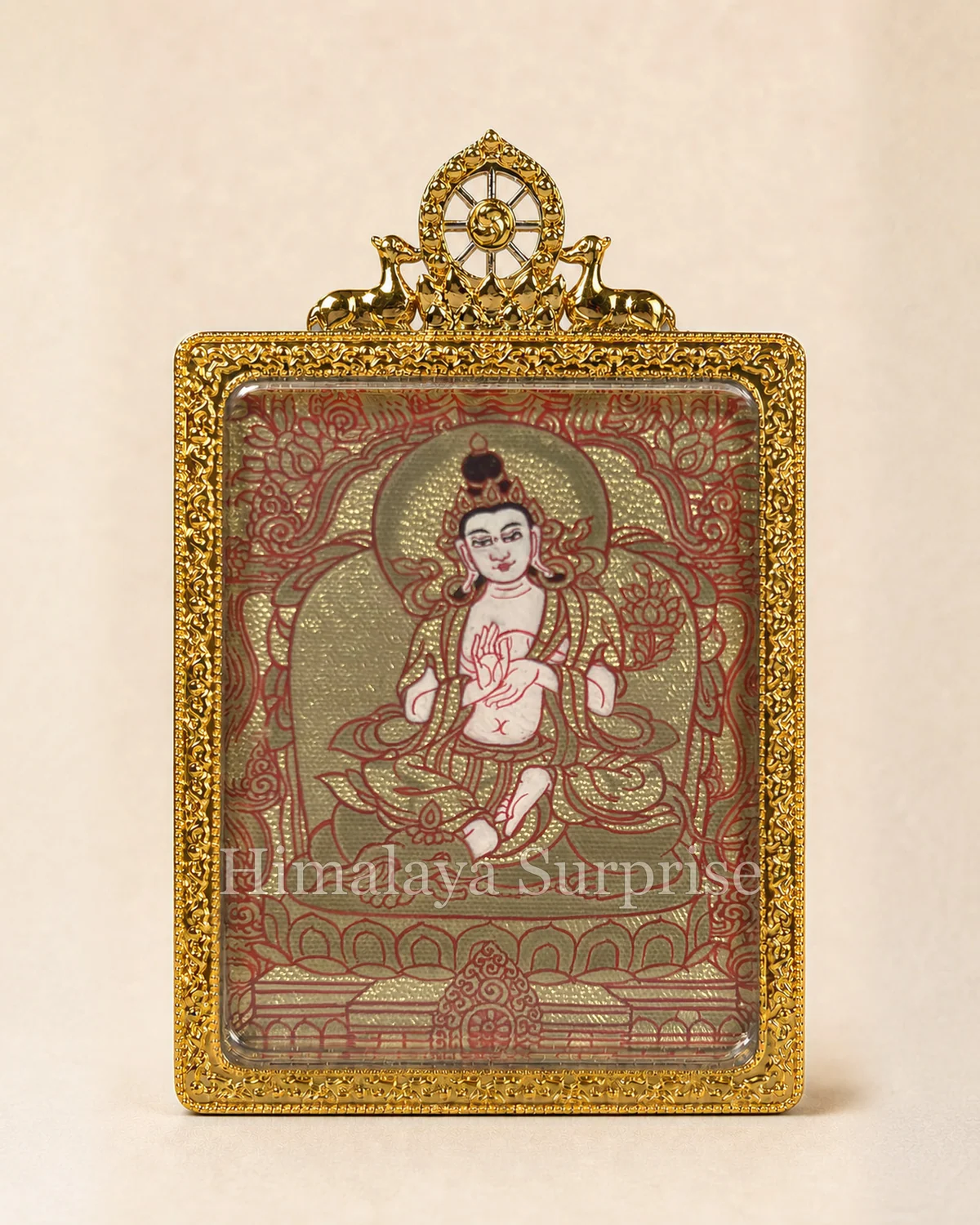
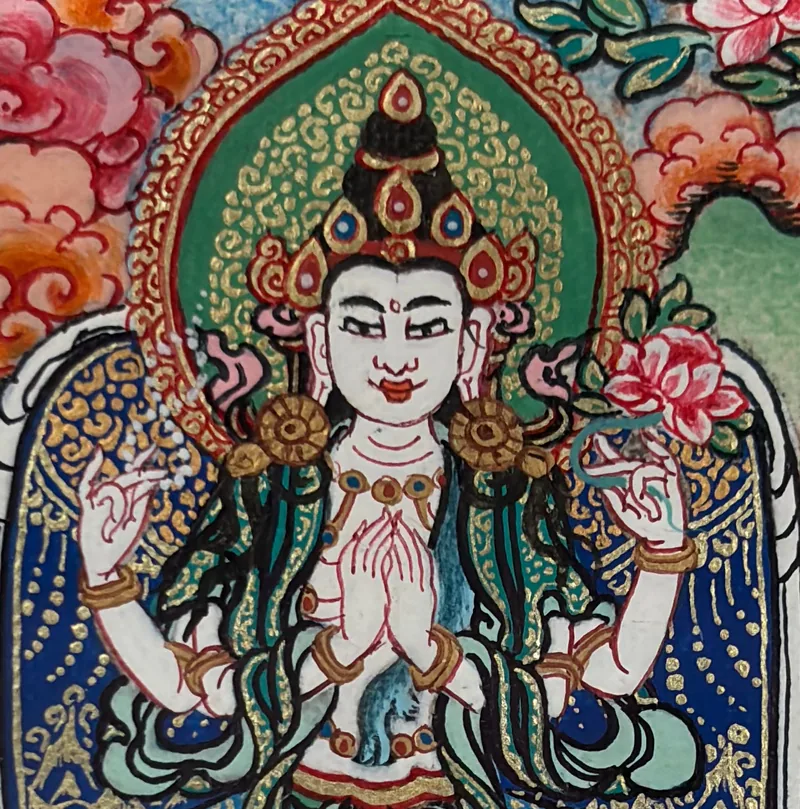
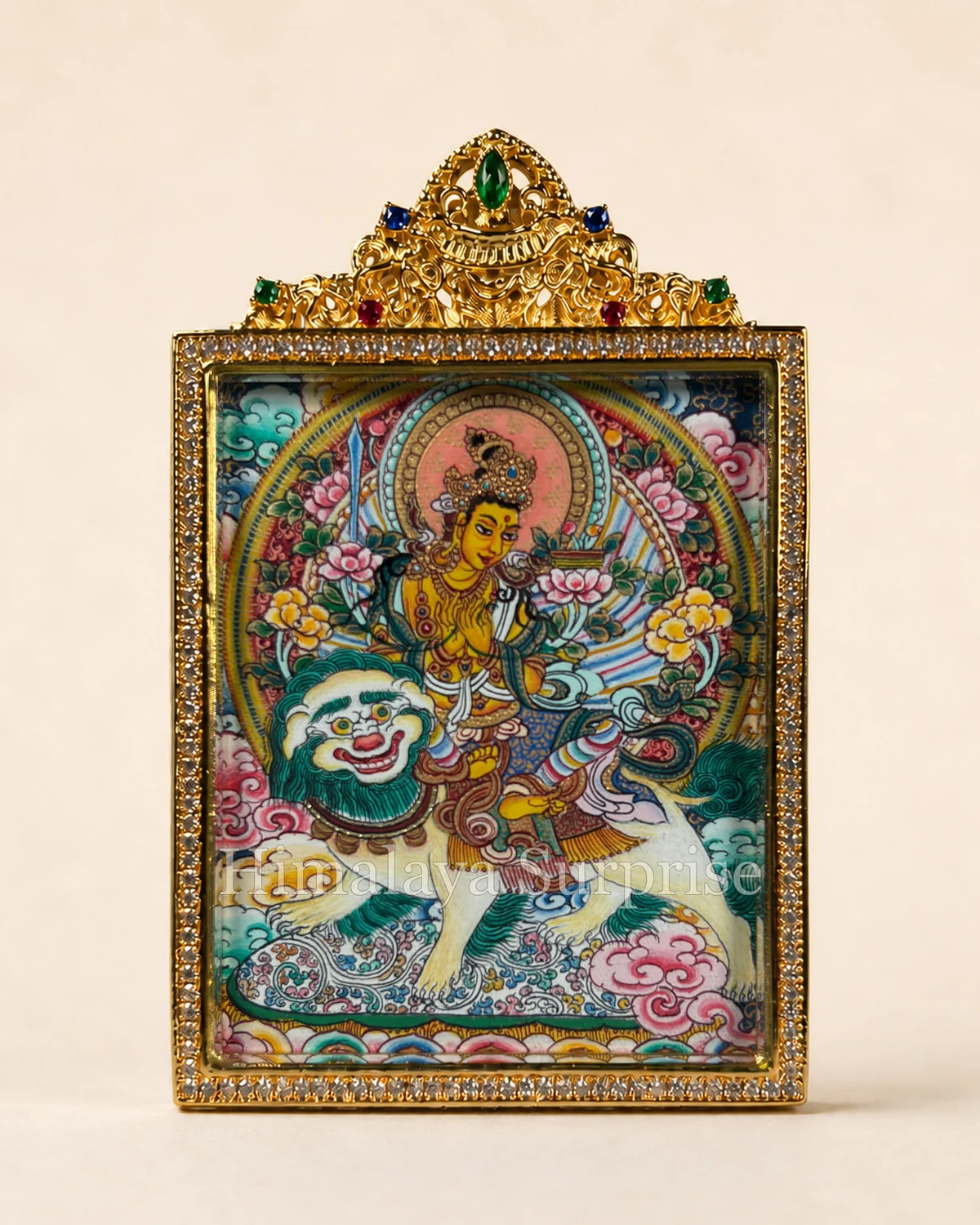
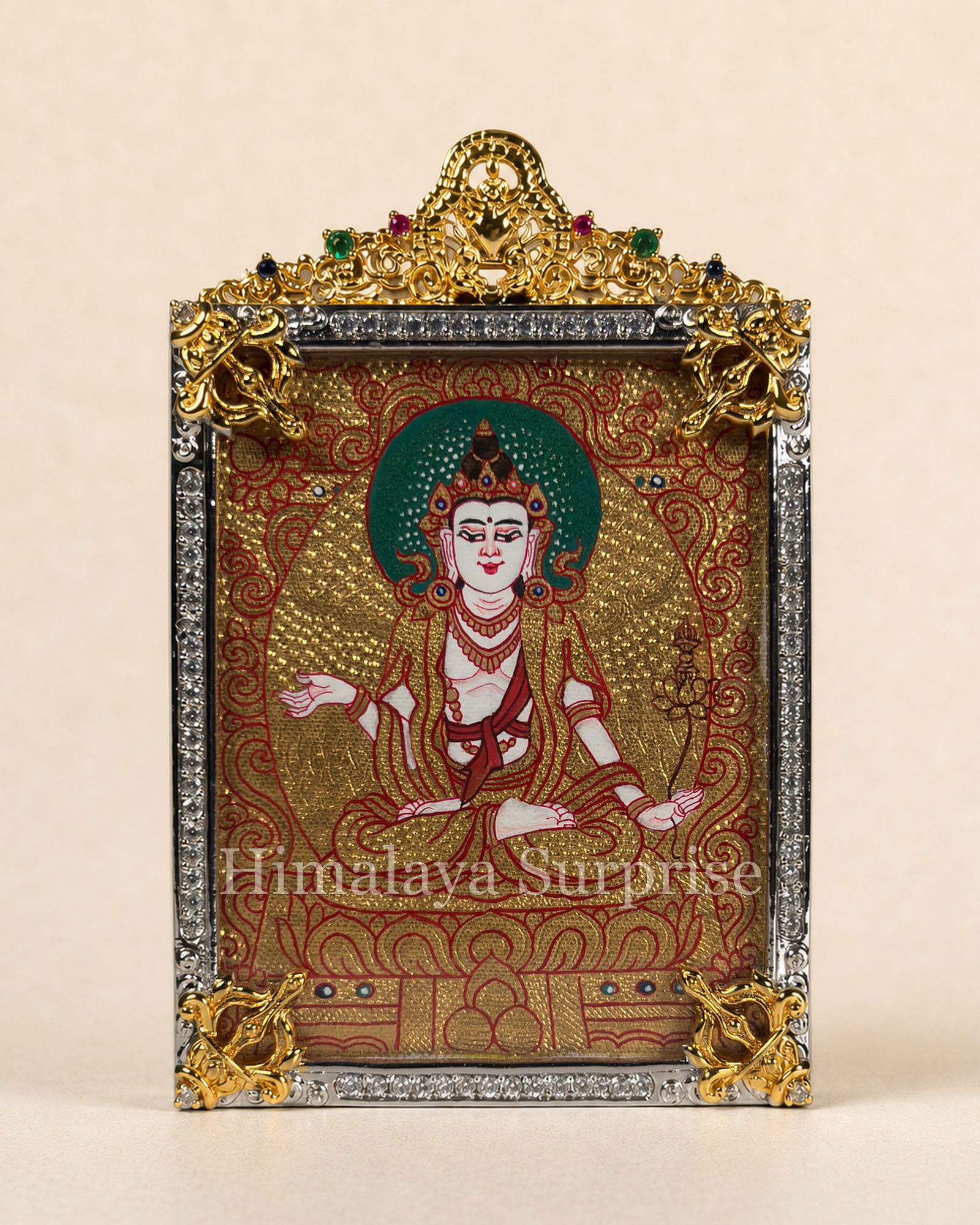
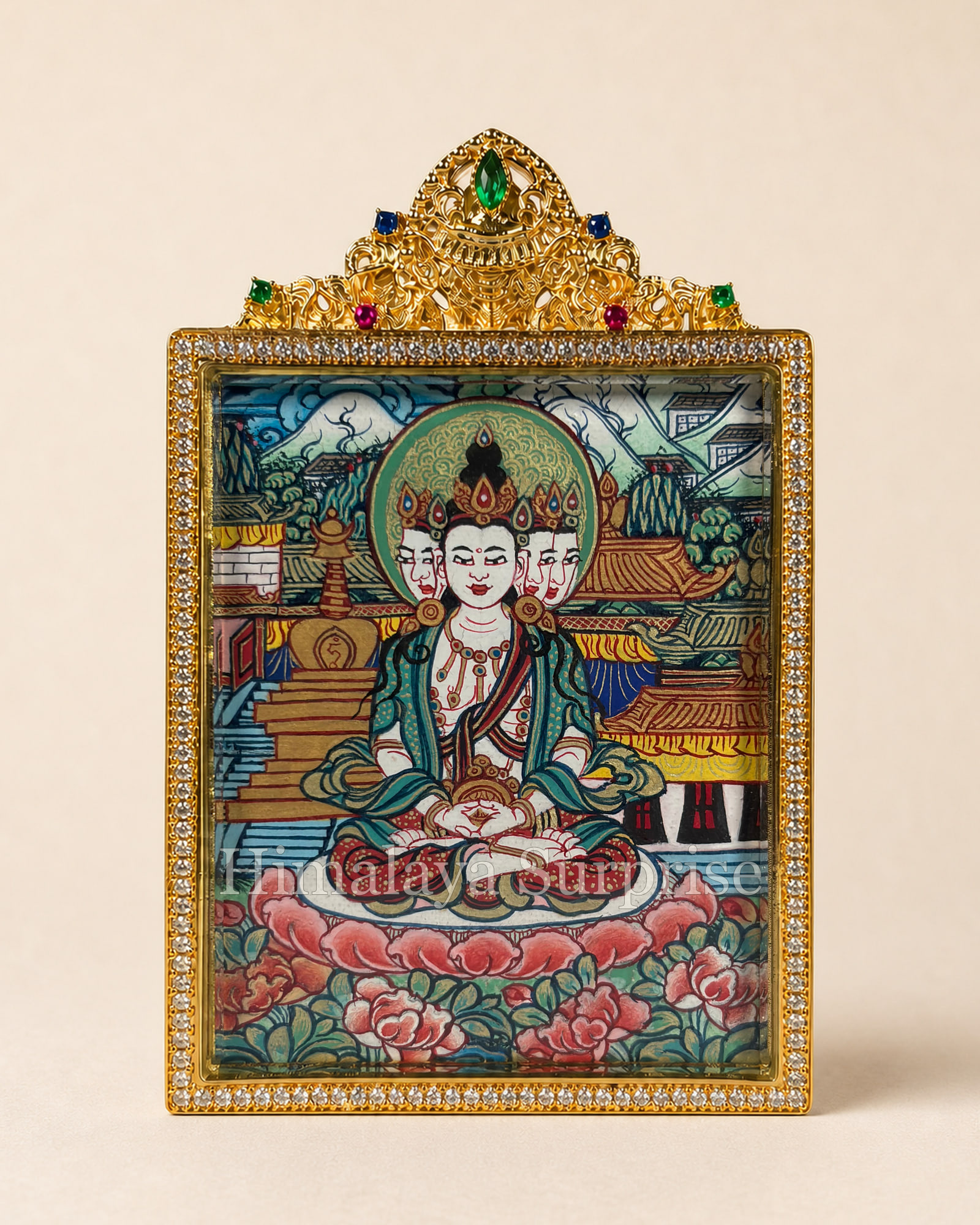
The Four-Armed Avalokiteshvara above is , a polychrome miniature. Manjushri , shown further below, has a gold ground; depicts Standing Shakyamuni. Their current catalogue listings are : US$2,095; : US$2,095; : US$1,695. All three have a four-by-five-centimetre painted image and include a Gau box and cord.
This small comparison already complicates two familiar assumptions: that equal dimensions mean equal prices, or that a gold ground always costs more than polychrome painting. The figures, drawing and colour arrangements differ. The prices alone do not disclose how many hours each took or why the seller set a particular amount. What they provide is a concrete starting point for looking at the paintings themselves.
A print, a painting and a commission
A printed reproduction can share a subject with a hand-painted original while involving a different kind of production. An individual painting has its own drawn lines, layers of colour and surface. Embroidered and appliqué thangkas introduce another set of materials and skills. Comparing their prices without first separating the formats mixes different objects into one category.
A finished painting and a commission also offer different experiences. With an existing work, the image is already available to view. A commission involves choices about the subject, scale and presentation, alongside a schedule for making it. Its quote belongs to that particular project. A price for a ready-made work cannot automatically predict the cost of commissioning a similar one.
The painted image is smaller than its frame
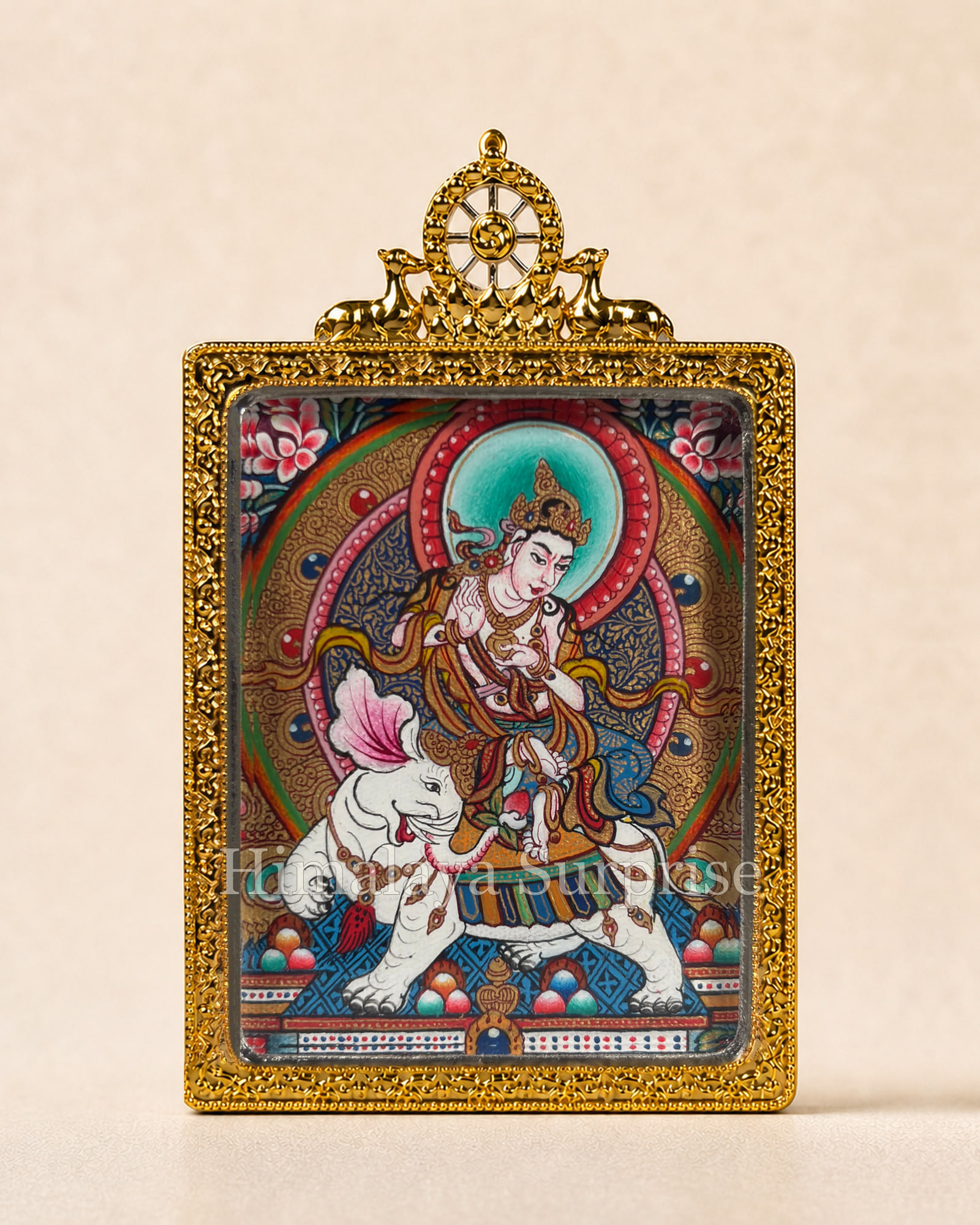
In the Shakyamuni miniature, the standing Buddha and surrounding listeners occupy a painted area only four centimetres wide and five high. The photograph also includes a much larger decorative surround and its hanging loop. The listed painting size therefore describes the image inside, rather than the complete object.
The same distinction matters for wall paintings. Brocade, rods and a covering veil can extend well beyond the painted panel. Larger painting surfaces generally call for more material and working area, but area is only one part of the work. A compact image with many carefully separated figures can require a different kind of attention from a broad, relatively open composition.
What the drawing brings to the work
Look at the face, fingers and garment edges in a close view. A line can be very fine yet hesitant, or slightly broader and assured. Proportions give the figure its posture; contours separate hands from attributes; small changes around the eyes and mouth shape the expression. These qualities make a painting worth spending time with, even when they are difficult to compress into a price label.
Complexity is about relationships as well as detail. Avalokiteshvara’s four arms need enough separation to remain readable. A mandala arranges many forms around a precise centre, while a narrative painting connects figures through gesture and direction. Adding ornament alone does not make a composition more accomplished. The way its parts work together matters as much as their number.
Gold ground and polychrome painting
In Manjushri , red contours stand against a gold ground. Hair, jewellery, folds and the lotus seat remain distinct within a restrained palette. In Avalokiteshvara , green, red, blue and white divide the image into a much more colourful arrangement. The current catalogue lists as US$2,095 and as US$2,095. They offer different visual experiences without establishing a universal hierarchy between the two approaches.
Gold, pigments, the prepared cloth and the mount contribute in different ways. Gold covering a broad field is not the same use as a few fine accents; a gold-coloured frame is separate again from the painted surface. Pigment preparation and layered colour also involve work. The more useful comparison is how the materials have been handled in a particular image, rather than treating a single material name as its complete value.
Contemporary works and historical paintings
Historical paintings enter a different market from contemporary retail works. Their date, attribution, condition and collecting history can shape specialist interest. A repaired textile mount or areas of paint loss may also change how a historical work is understood and cared for. These questions accompany a particular surviving object; age is not a price formula.
An auction estimate, an auction result and a gallery asking price describe different moments in a sale. None is a valuation of a different painting simply because the subject looks similar. Artist recognition and workshop reputation can contribute to the market for contemporary work too, but they operate alongside the painting’s individual qualities and the circumstances of its sale.
Mounting and the total purchase
A painting may be offered as an unmounted panel, a finished textile hanging or a framed miniature. Those forms include different amounts of work beyond the image. A fitted box changes how a miniature is carried and protected; a brocade mount changes how a larger painting hangs. Presentation is part of what the price includes, even though it is not part of the painted area.
Delivery and import charges can make two similar headline prices lead to different totals. Framing added later has its own cost. Comparing the same currency and the same included items gives a clearer view of the purchase. For the three miniature examples here, the Gau box and cord are included; their prices remain individual retail examples rather than a guide to every thangka on the market.
A price and a painting you enjoy
Once the format, scale and presentation are clear, it becomes easier to compare a few works that appeal to you. One may have a face you return to; another may carry a striking arrangement of colour or unusually graceful lines. Price helps set the scope of the choice. The reasons to enjoy the painting remain in its image.
Questions and answers
How much does a thangka cost?
The format and individual work make a large difference. The three 4 × 5 cm miniatures illustrated here have these current catalogue listings: : US$2,095; : US$2,095; : US$1,695. Prints, large commissions and historical paintings belong to different comparison groups.
Why can a hand-painted thangka be expensive?
Drawing, repeated colour work, materials, scale and mounting can all contribute. Maker recognition and the market setting may also matter. The number of figures or the size alone does not explain every price.
Does a larger thangka always cost more?
No. Compare the painted area, rather than the outer frame, and consider drawing and composition alongside size. A small, densely worked painting and a larger, open image are different kinds of work.
Is gold ground always more expensive than polychrome?
No fixed rule follows from those labels. The current catalogue lists Manjushri as US$2,095 and polychrome Avalokiteshvara as US$2,095. The amount and handling of materials vary between individual works.