Discover / Collector Guides
How to Buy a Thangka: Choosing a Painting Online
Choose a thangka through its subject, drawing and scale. A practical guide to hand-painted works, prints, mounting, price and buying online.
In this story
A thangka often catches your attention before you know its name. It may be a calm face, a luminous gold ground or a remarkably small, detailed scene. Choosing one becomes easier when you connect that first attraction with the kind of work it is, its scale and the way you would enjoy it. Online, a few individual paintings viewed closely are more useful than a long list of promises.
Begin with what draws you to the image
A figure, a colour or a particular composition can be a good starting point. A single Buddha offers a different viewing experience from a many-figured narrative or a geometric mandala. Some people want a painting for a room; others enjoy a small object at close range, collect a particular subject or choose a gift. There is room for more than one reason to like the same work.
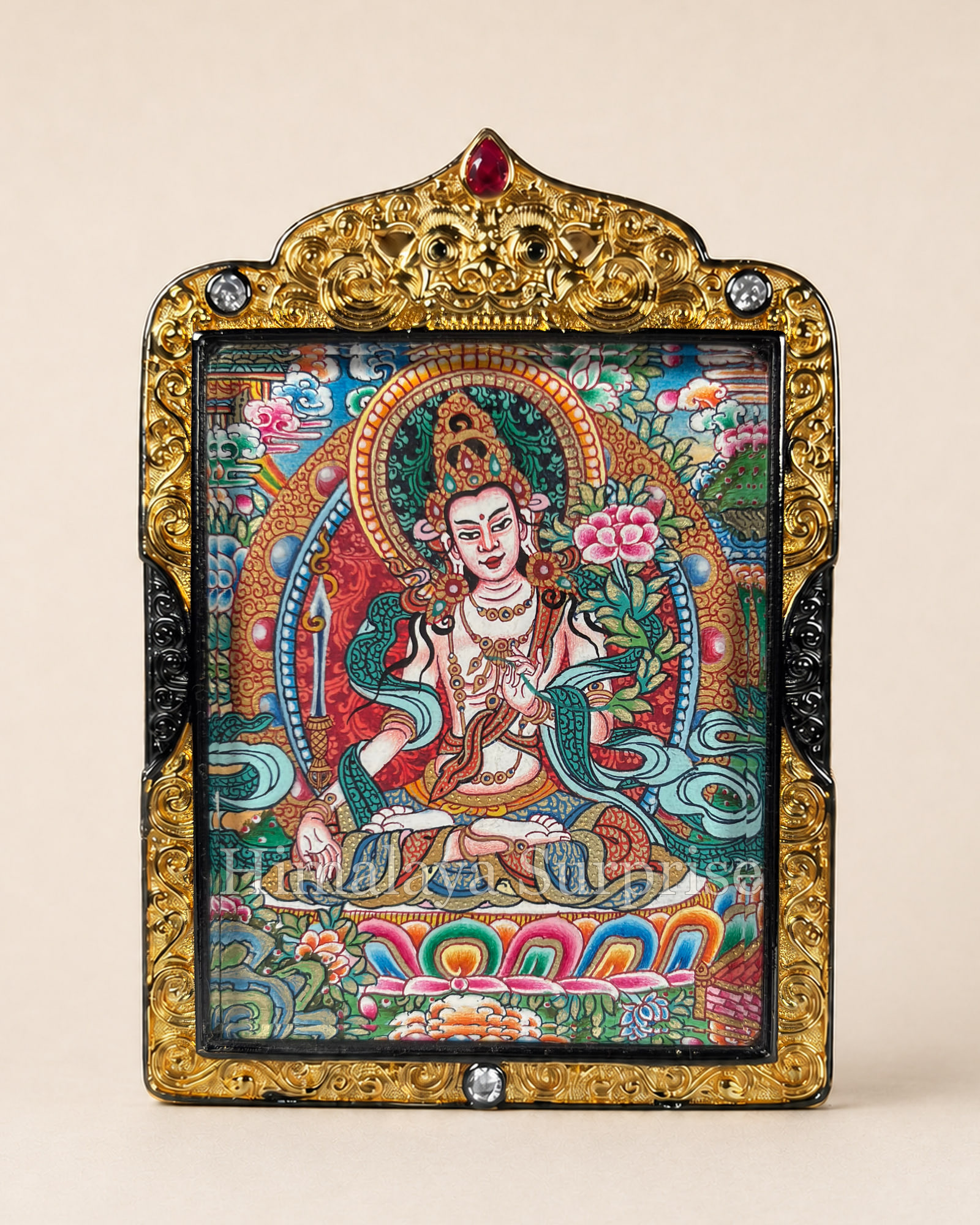
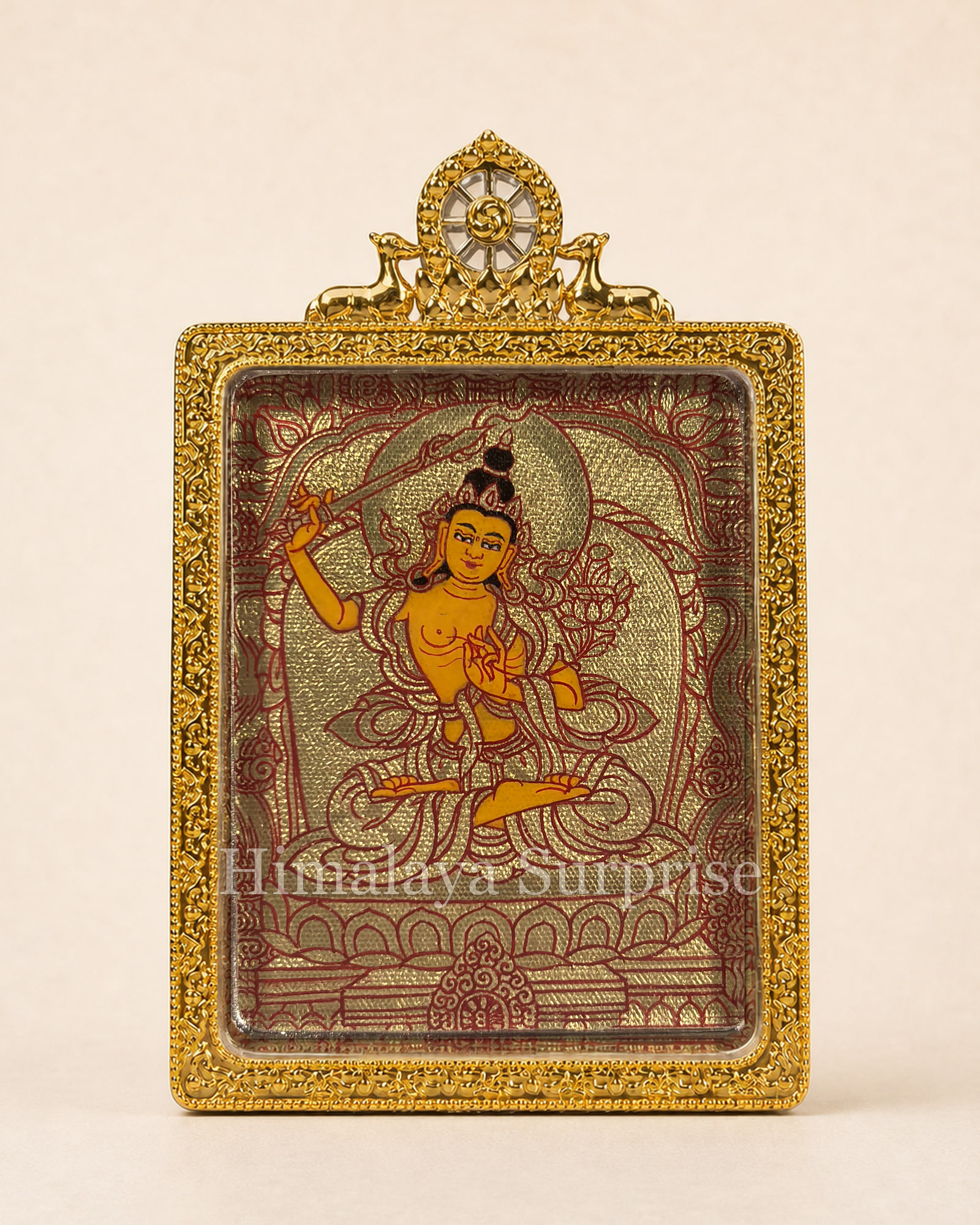
At this stage, compare a few images rather than trying to learn every Buddhist subject at once. Notice which one you return to and what keeps your attention there. In the gold-ground miniature TG-008 above, a quiet seated figure emerges from closely worked red contours and gold. A brightly coloured painting may appeal for an entirely different quality. Neither palette is a universal starting point for a first purchase.
Get to know the subject
A title gives the first orientation; the figure’s hands, attributes and companions add detail. Learning a little about them can make the painting more rewarding to look at. Yellow Jambhala, illustrated here, is associated with wealth and generosity in Buddhist tradition. Other subjects carry different stories and devotional associations. Those associations describe a tradition, rather than a result promised by owning its image.
If a subject interests you, follow it beyond the shop title. Our guide to reading a thangka explains how figures and gestures work together, while individual subject articles explore their particular imagery. For a painting intended for a specific religious practice, the relevant teacher or community can guide that choice. For a personal collection, familiarity and visual pleasure are useful places to begin.
Hand-painted works, prints and textile thangkas
The same subject can appear in a hand-painted work, a printed reproduction or a textile thangka made with embroidery or appliqué. These are different forms of making, even when an online search places them together. A print may be an accessible way to live with a favourite image. An individual painting offers its own drawn contours, colour layers and surface. A textile work brings another kind of texture and construction.
Descriptions such as hand-painted, original and antique answer different questions. Hand-painted describes a method; original can distinguish a painting from a reproduction; antique makes a claim about age. Colour or an uneven-looking surface in a photograph cannot settle all three. Compare the actual format being offered, then spend time with the picture itself. A contemporary painting does not need to resemble an old one to be enjoyable.
Compare the drawing, not just the amount of detail
Look first at the face and hands, then at the figure’s posture and the relationships around it. Do the fingers remain readable? Do garment edges flow naturally? Can a small attribute be distinguished from its background? A crowded composition and a spare one can both be accomplished. More decoration does not automatically mean more assured drawing.
With two or three individual work pages open, you can move between the full image and any available close views. The full view shows balance and colour; a detail makes a contour or expression easier to see. Photographs also reflect lighting and the screen on which you view them. When one small point would make a difference to your choice, a simple question about that point is enough.
Picture its actual scale
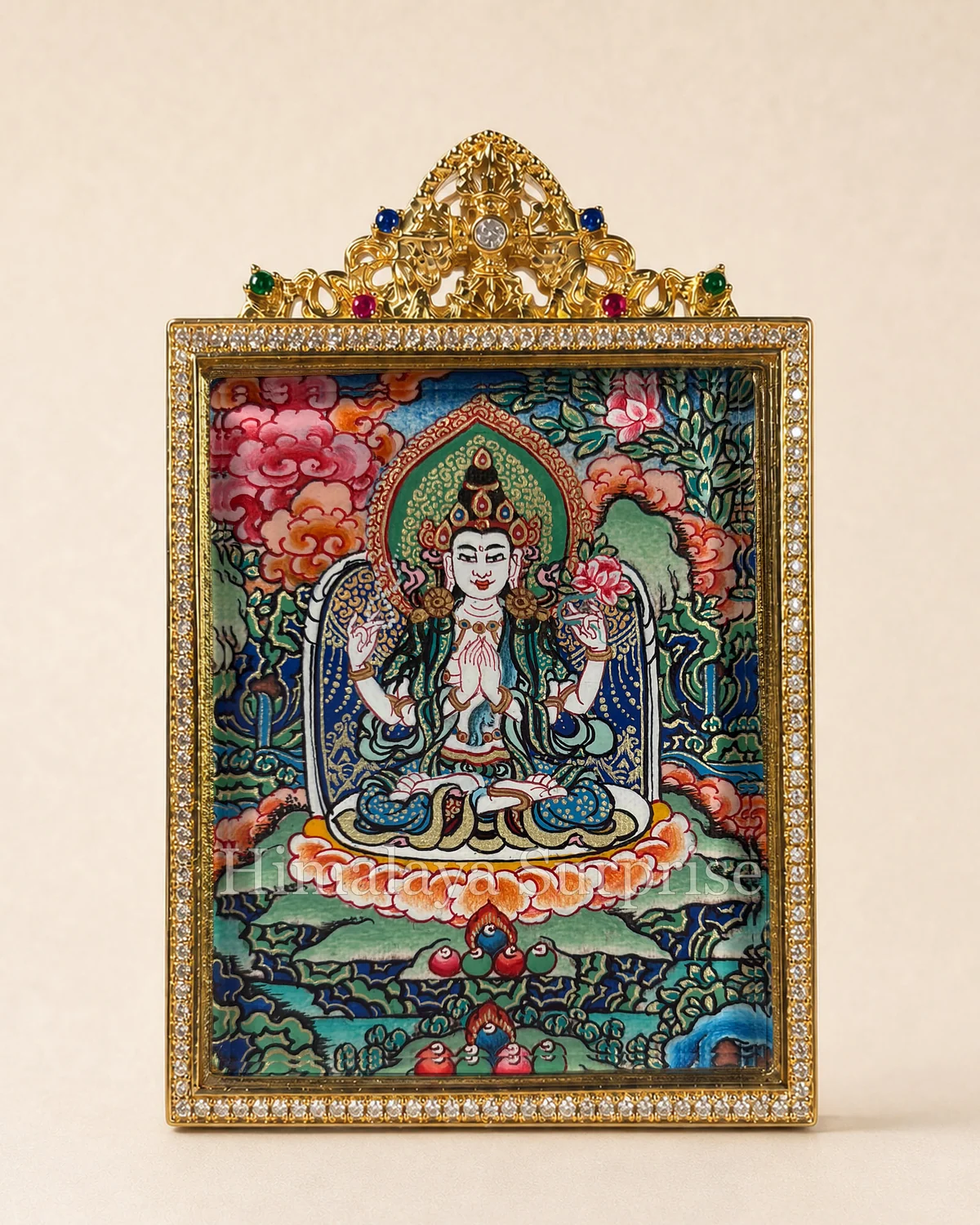
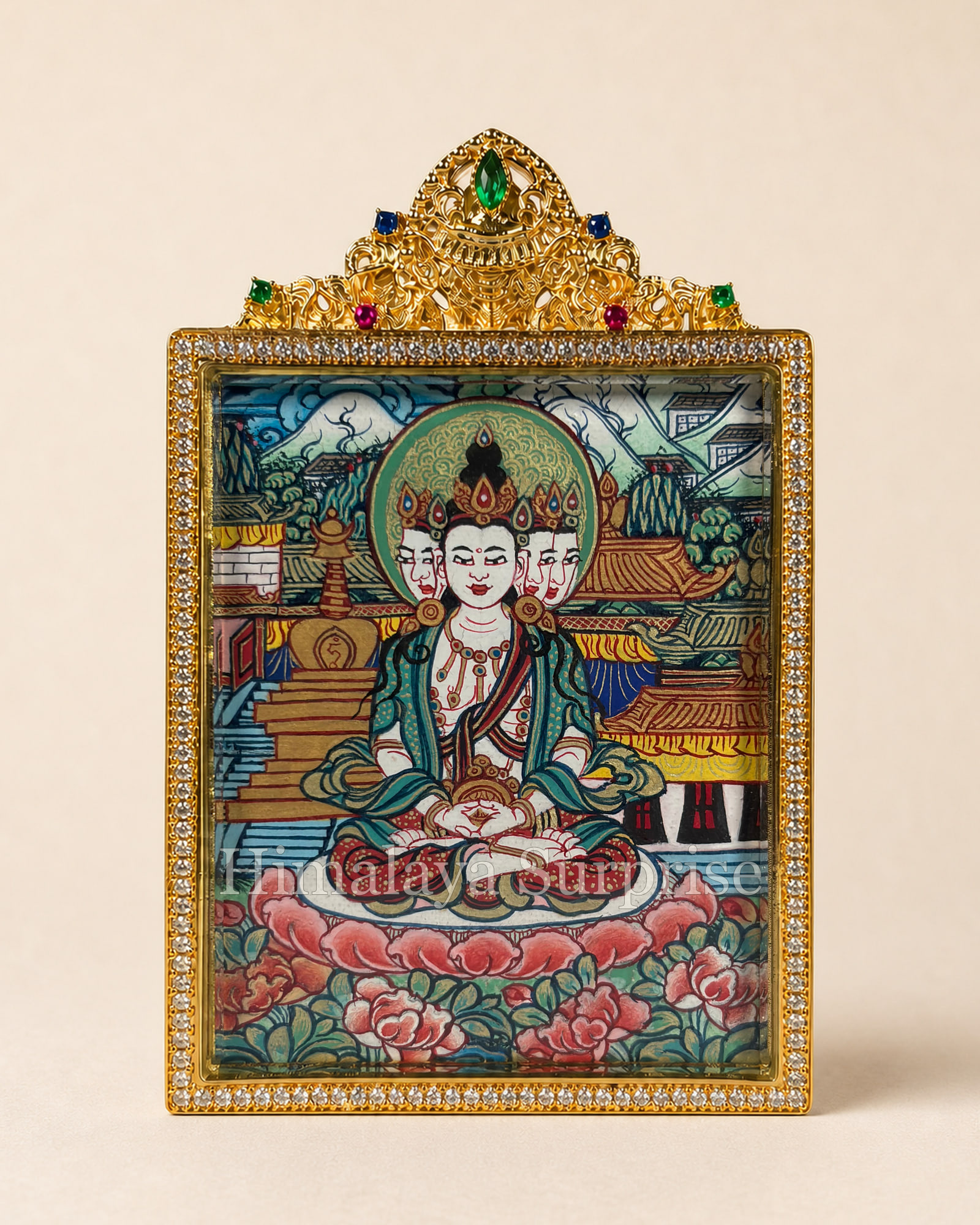
Vairocana TG-001 has a painted image measuring 4 × 5 cm. The photograph shows a decorative surround and hanging loop as well, so the complete object is larger than the picture inside. At this scale, the hands, faces and lotus are details for close viewing. It offers a different experience from a large painting intended to be seen across a room.
For a hanging thangka, brocade, rods and a covering veil can extend beyond the painted panel. A wall space that fits the picture may not fit the whole hanging. Consider the available space and the distance from which you will look. An unmounted painting, a textile hanging and a framed miniature each bring a different arrangement to a shelf, niche or wall.
Set a budget around comparable works
A useful budget starts with comparable formats and sizes. A printed image, a densely worked miniature and a large commission involve different kinds of production. Gold ground, polychrome colour and framing may also contribute differently. The thangka price guide looks at three real miniatures, including a gold-ground and a polychrome work with the same listed price.
Compare what the price includes as well as the amount. A ready-to-display work and a bare painted panel may need different additional spending. Delivery and import charges can change the total too. Choosing within a comfortable range leaves space to enjoy the painting for its own qualities. A high price is not, by itself, a measure of how much you will like living with an image.
From the choice to an online order
Once you have found a work you like, its individual page provides the route to purchase or an enquiry about that piece. A finished work can be viewed before ordering; a commission involves an agreed subject, scale and making schedule. A timeframe for one painting does not establish a standard production time for every thangka. Online shops may offer either arrangement, or both.
For Himalaya Surprise, the buyer guide brings payment, delivery, order tracking and returns together in one place. It is the current reference for those practical details, which can depend on the destination and order. If a question remains about the work you have chosen, keeping the enquiry to that particular piece makes the conversation straightforward.
A painting to return to
The strongest reason to choose a painting is often the one that first drew you to it. Learning its subject and understanding its scale can deepen that interest without replacing it. After the work arrives, give yourself time to look slowly: the expression, the colours and the small relationships may become more familiar with each viewing.
Questions and answers
What should I look for when buying a thangka?
Begin with a subject and image you enjoy, then compare the format, drawing, painted size and presentation of a few individual works. Price and what it includes help narrow the choice.
How much does a thangka cost?
Prices vary between prints, paintings, textile works and commissions. Compare similar formats rather than treating every search result as the same kind of object. Our price guide uses real miniature examples to explain those differences.
Does gold make a thangka more valuable?
Gold is one part of a work. Its use, the drawing, colour, scale and presentation all contribute to the particular painting. A material name alone does not explain a price or establish an investment value.
How long does it take to create a thangka?
There is no single timeframe. Scale, composition, technique and the making arrangement vary. A finished work and a new commission have different schedules; a commissioned painting has its own agreed timeline.