Description
About this work.
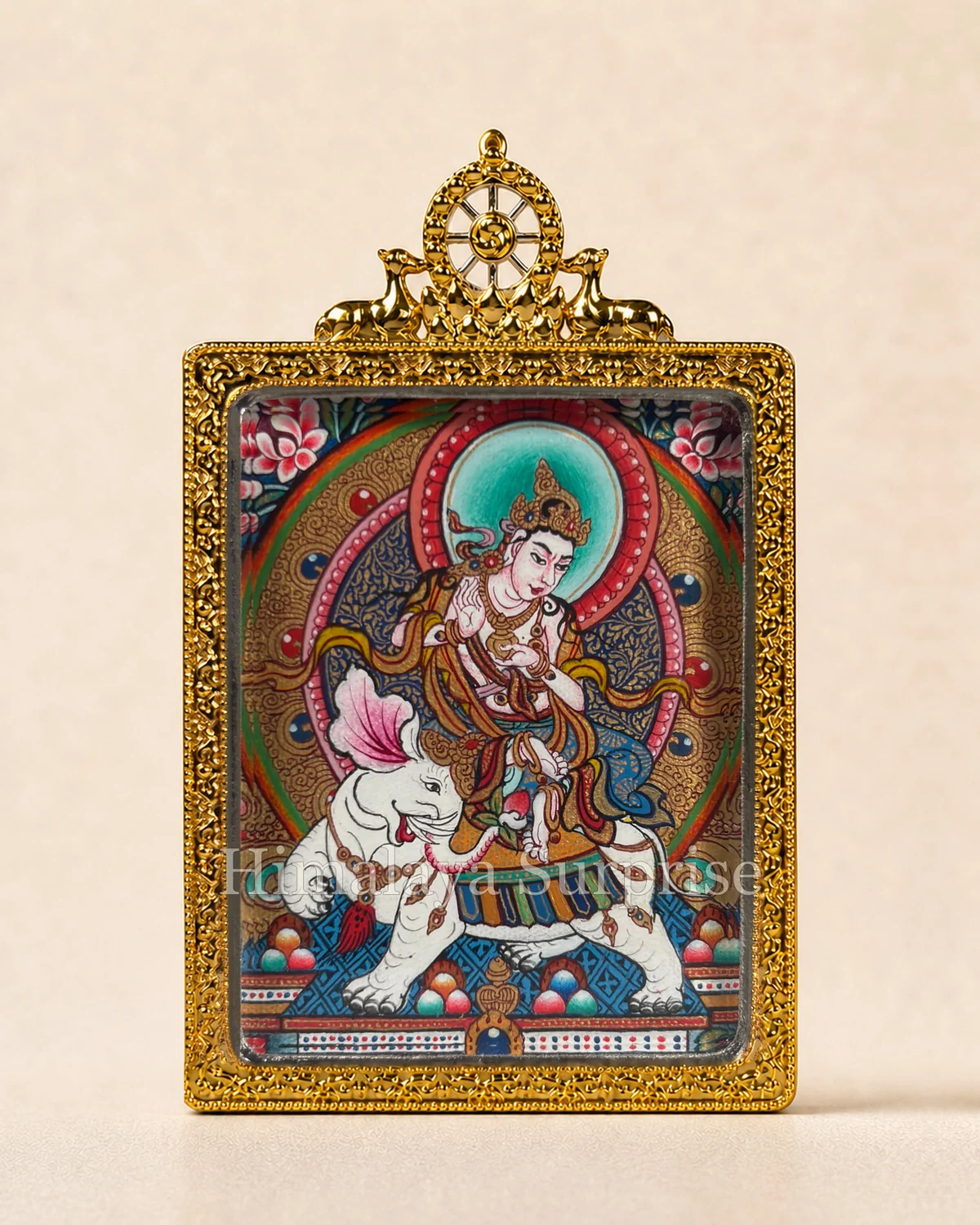
Samantabhadra rides a white elephant as figure, mount, and polychrome gold-toned detail form a stable, open miniature composition with a sense of support.
The elephant’s measured movement gives the work support and forward rhythm, while figure and mount remain clearly ordered through polychrome and gold-toned detail. The open composition makes the relation between aspiration and practice visibly steady.
Traditional context and devotional practice
Samantabhadra Bodhisattva represents turning vast vows into sustained action, while the white elephant conveys steadiness, strength and patient forward movement. Devotees pray for vows not to falter, for virtue and practice to grow, and for the strength to benefit others over time and dedicate merit to all beings.
What to notice
Samantabhadra's composed figure is balanced by the white elephant beneath, giving the miniature a clear vertical relationship between bodhisattva and mount. Layered colour helps separate the elephant, lotus setting and surrounding details without losing the quiet dignity of the central axis.
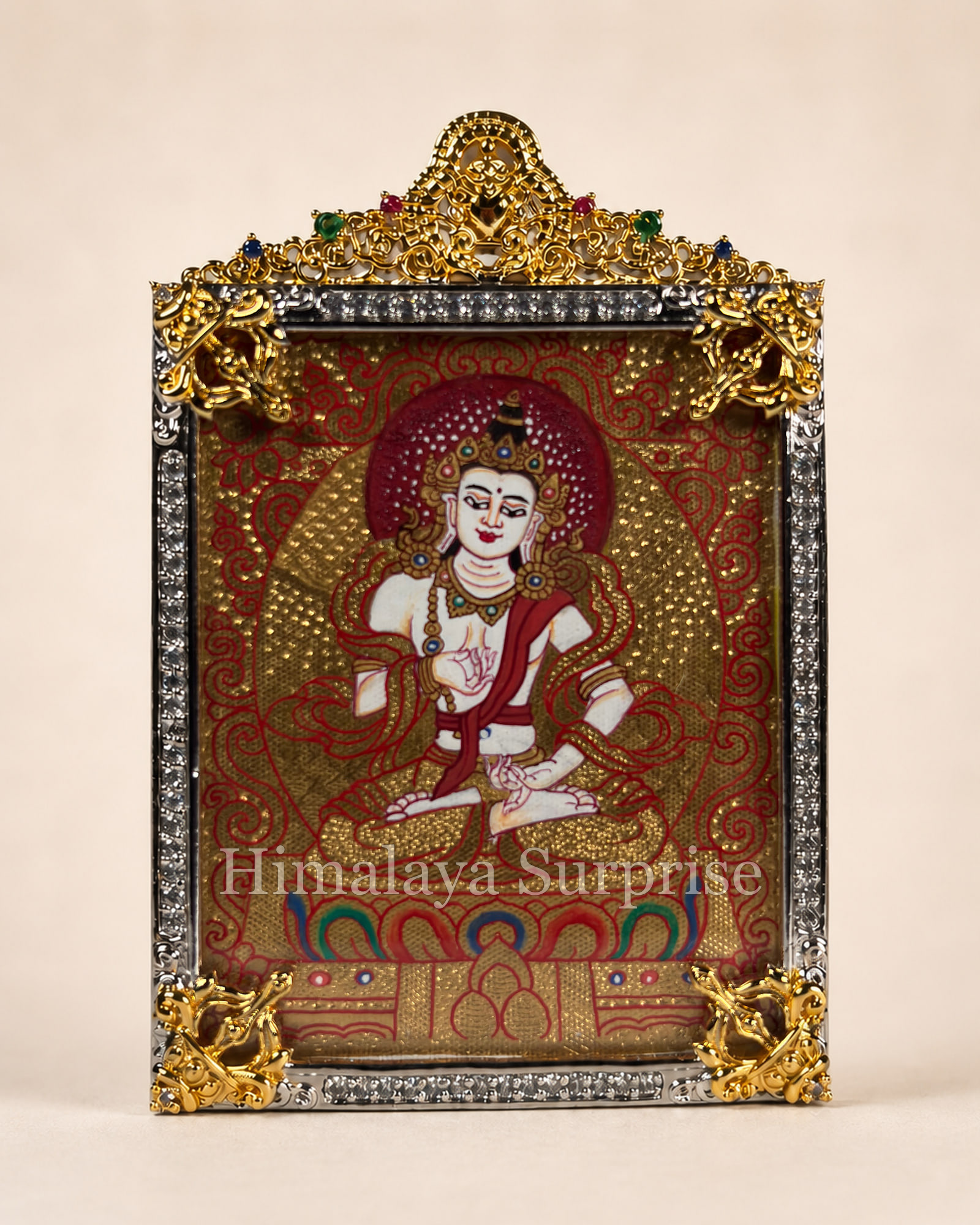
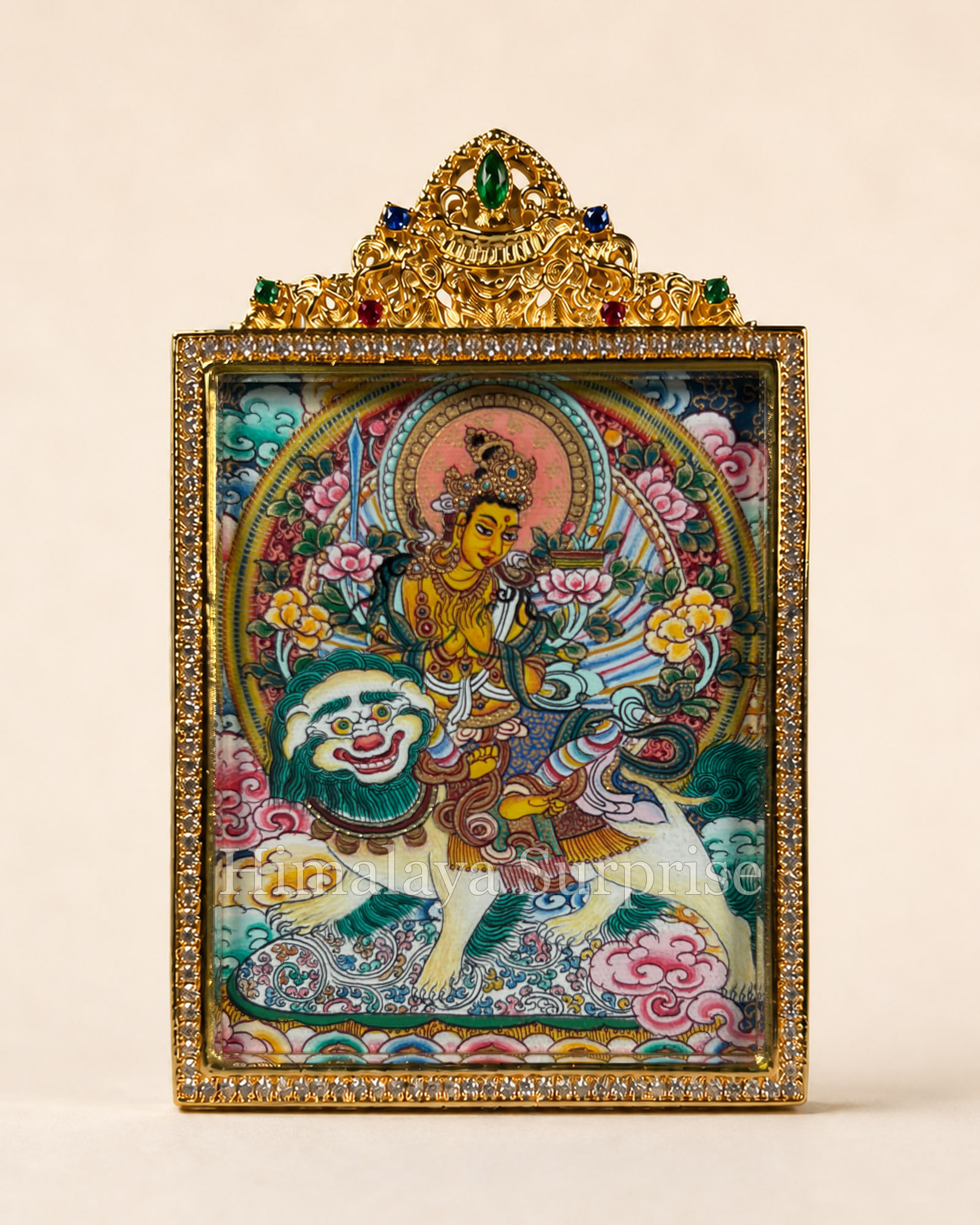
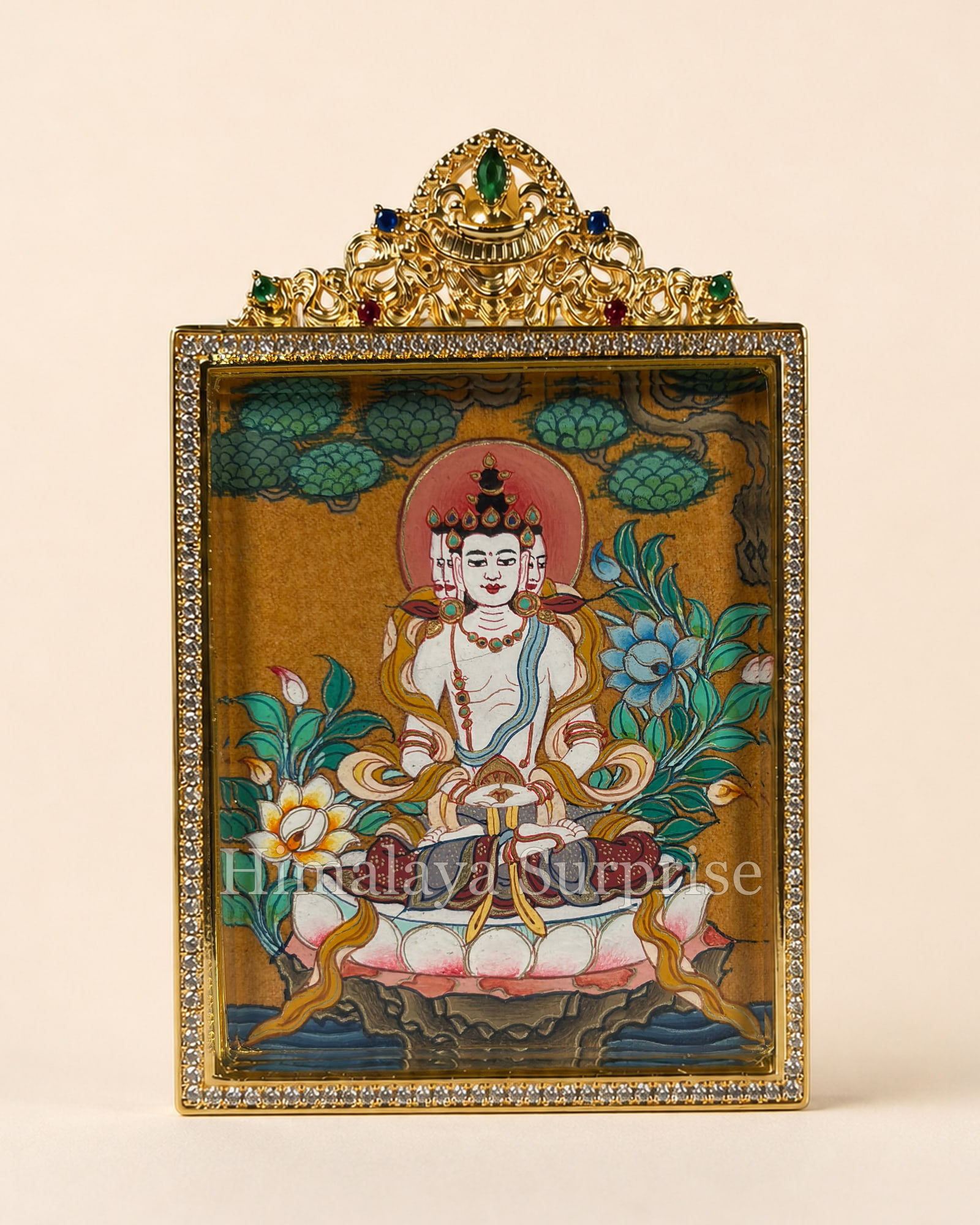
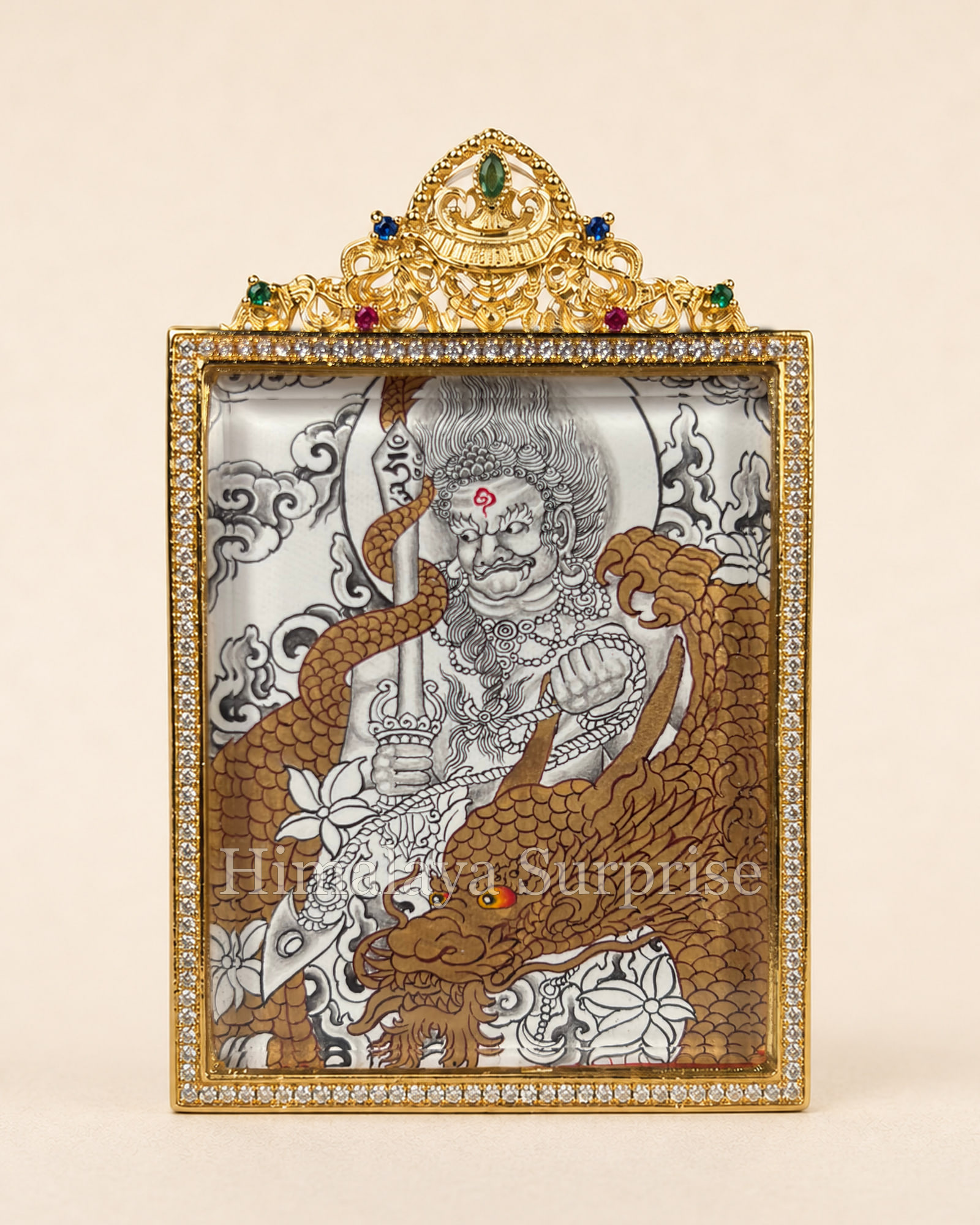
The white elephant makes this work more scenic and relational than the white peaceful bodhisattva without a mount. It also differs from the blue-lion Manjushri through a slower, more grounded animal rhythm and from the lotus-bearing white figure through the explicit mount relationship.
Choose this work if a bodhisattva-and-mount composition, measured colour and a sense of grounded movement appeal to you. It rewards close viewing of the elephant's form, the central posture and the way the surrounding colour holds them together.