Discover / Collector Guides
Original Thangka Paintings: What Hand-Painted Means
Understand original thangka paintings, traditional designs and hand-painted surfaces. Explore drawing, colour and gold through close details of individual works.
In this story
An original thangka painting is an individual painted work, rather than a printed reproduction of a finished image. Its subject may be deeply traditional: a Buddha, a bodhisattva or a composition passed between generations of painters. What makes it an original painting is the making of this particular object. Looking closely at its lines, colours and small relationships gives that distinction something you can actually enjoy.
What “original” means in a traditional painting
In ordinary art and shop descriptions, original distinguishes an individually made painting from a reproduction. It does not mean that its religious subject has never appeared before. A traditional image can be painted many times, while each finished work remains a separate painting. The figure’s proportions, posture and attributes may belong to an established visual language; their execution belongs to the work in front of you.
This is a useful distinction when looking at thangkas. Recognising a familiar figure is part of their purpose, rather than evidence that a painting lacks individuality. A gently angled face, the rhythm of a garment edge or the space between figures can differ within a shared composition. Looking for those choices is more rewarding than expecting every painter to invent a new subject.
How a painted image takes shape
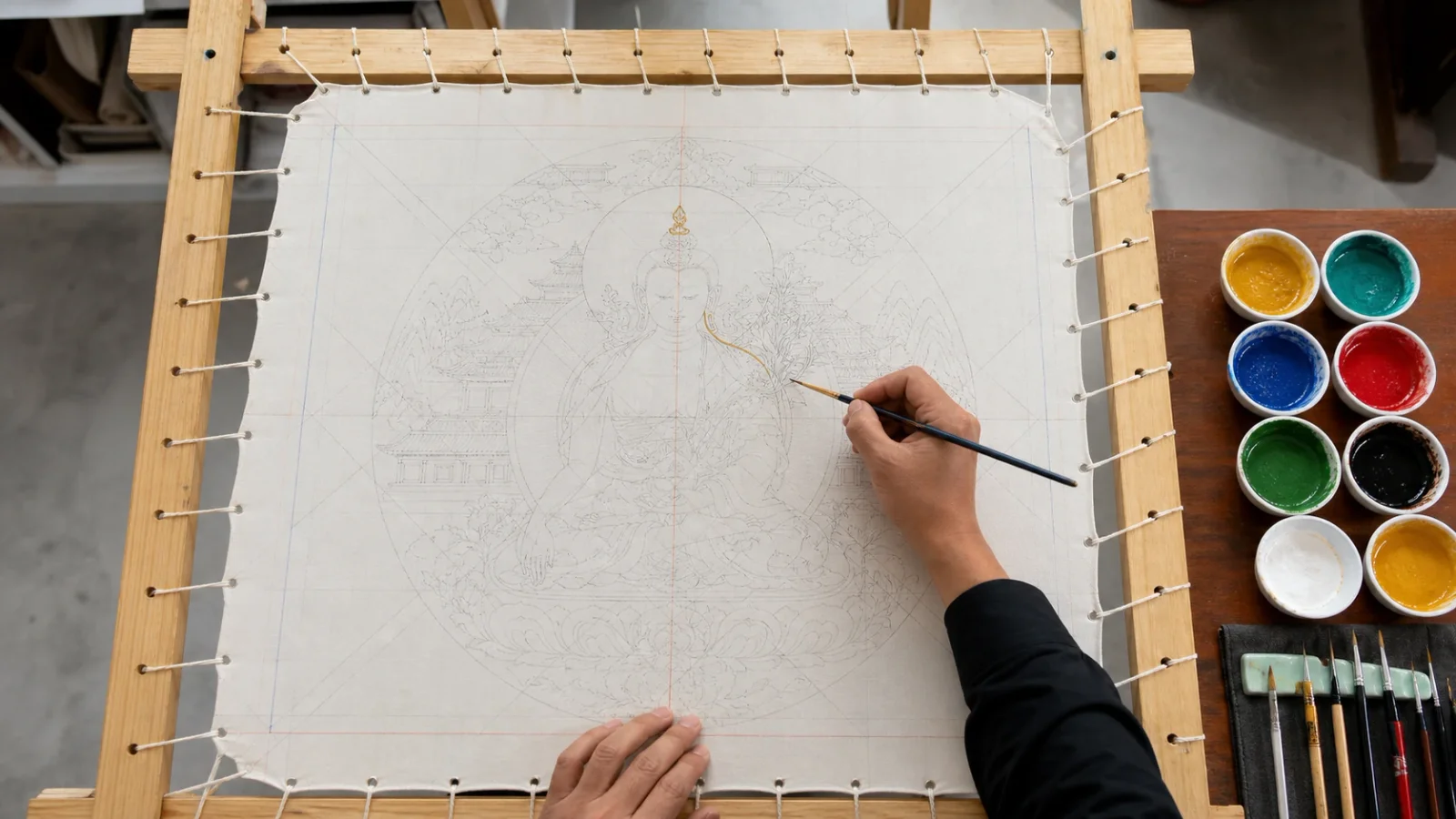
Many painted thangkas begin with a textile support prepared to receive drawing and paint. The composition is arranged, colours are laid in and finer contours bring faces, garments and ornaments into focus. Gold can appear in particular details or across a larger ground. The order and materials vary between works and workshops; this is a broad description of painting, rather than one recipe for every thangka.
“Hand-painted” describes the making of the image. It is a different question from whether the painter designed every element afresh, used a traditional model or worked within a studio. Preliminary proportion drawings and established compositions can guide an individual painting. Our guide to how a thangka is painted follows these stages in more detail.
A close view of the drawing
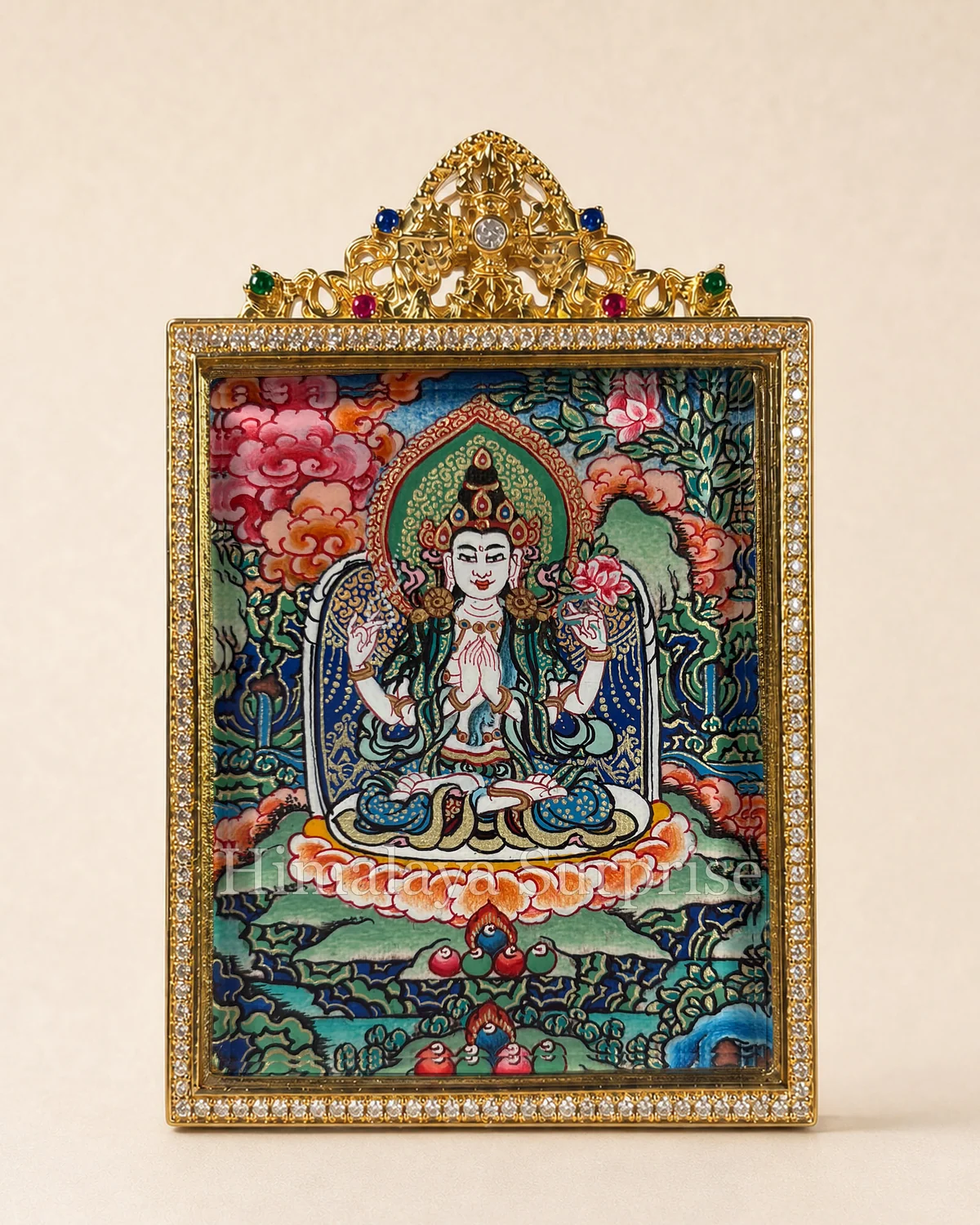
The four-armed Avalokiteshvara miniature above has a painted image measuring 4 × 5 cm. This close view makes the face, joined hands, crown and garment edges easier to follow. The face is calm, while the surrounding lines are busy with small ornaments. At this scale, the relationship between clear shapes and fine detail matters as much as the number of details themselves.
Try following one contour from beginning to end: an eyelid, a finger or the border of a sleeve. Notice where it changes direction and how it separates neighbouring colours. Then step back to the figure as a whole. Close looking and overall looking answer different questions, and moving between them is a simple way to become familiar with a painting.
Gold ground and colour are different ways of drawing attention
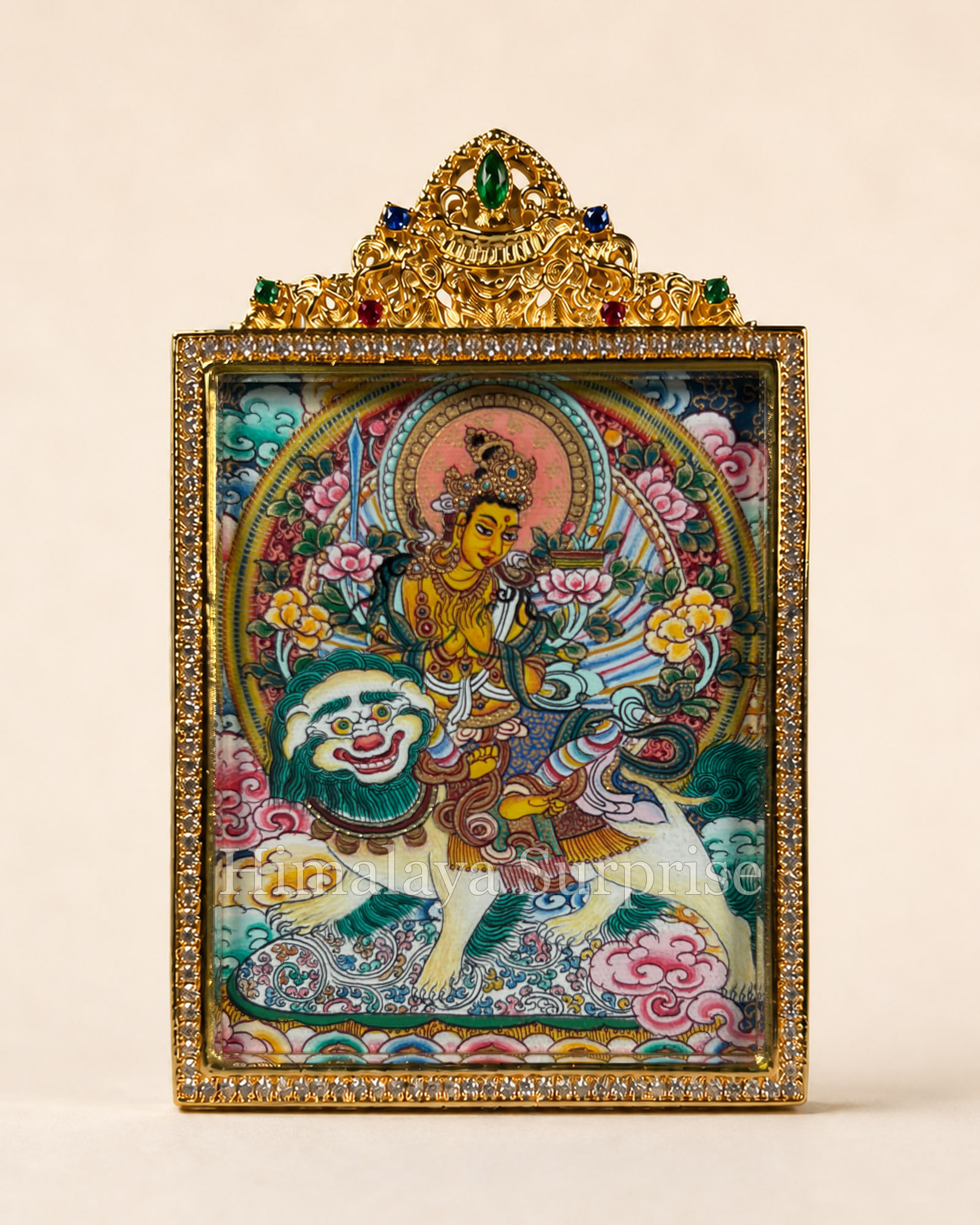
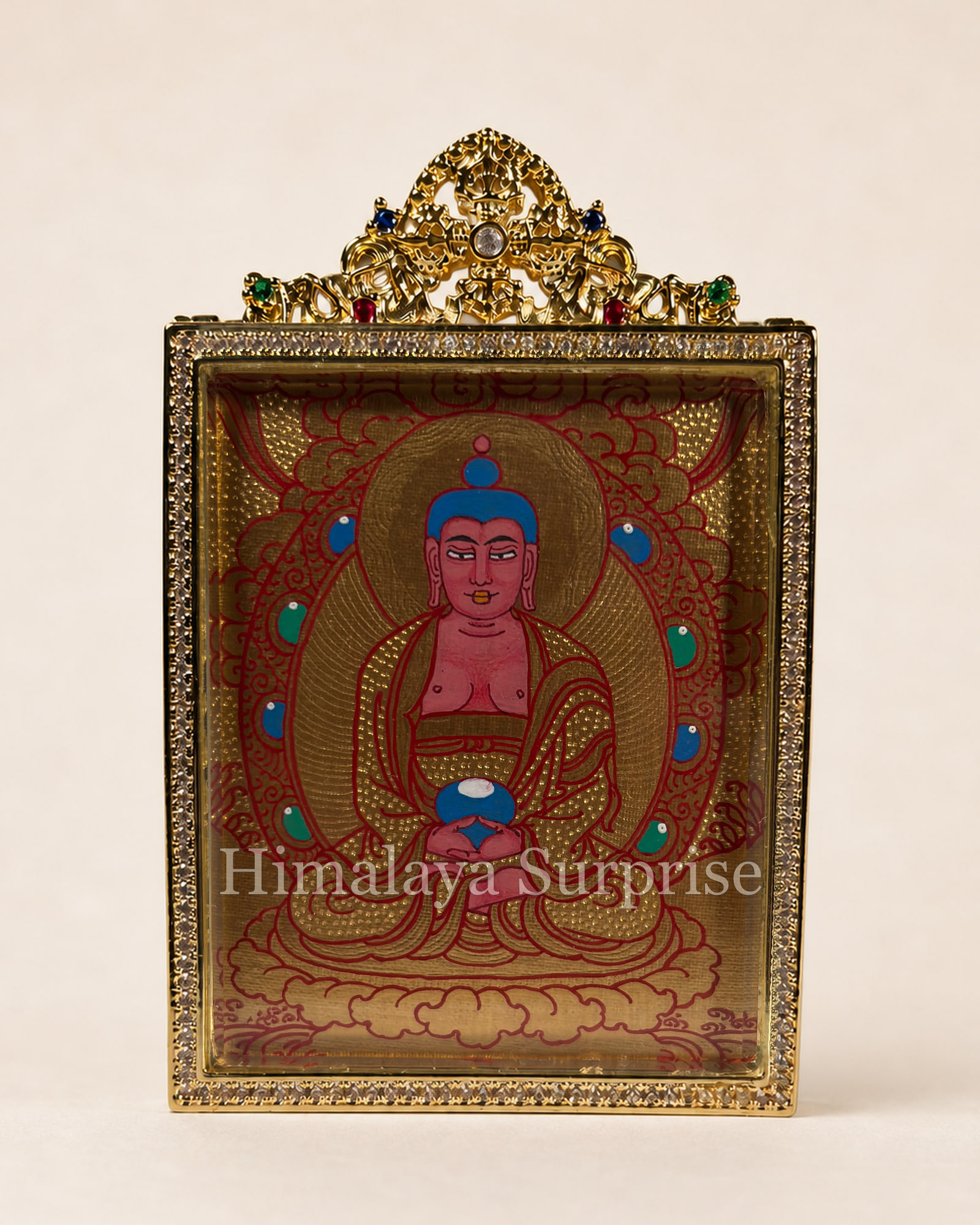
In this detail of Manjushri TG-009, fine red lines build the figure and lotus against a gold ground. The drawing remains visible because the contours carry much of the image. Gold is therefore more than an isolated ornament here: it participates in the overall appearance. In a polychrome work, a painter can organise the image through separate areas of colour as well as through outlines.
Neither approach is automatically a higher grade of painting. A gold-ground image can be spare or dense; a colourful image can be equally intricate. Looking at the lines and their relationship to the background is more useful than ranking works by a colour label. The thangka price guide compares a gold-ground and a polychrome miniature that shared a listed price when the examples were reviewed.
A painting and a print offer different surfaces
A print reproduces a finished image through a printing process; a painting is formed through the application of drawing and paint to its own support. Both can show the same figure, colours and arrangement. A well-made print may be a practical way to enjoy a favourite image. Its role as a reproduction does not make its subject less meaningful.
Fine photographs help with visual comparison, but they are not always decisive about the making method. Paper or fabric texture, a glossy finish and small irregularities can also appear in reproductions or in photographs. It is better to use the stated format to understand what is being offered, and the image to understand what you like about it. A thangka can also be made in embroidery or appliqué, with another kind of structure entirely.
The individuality within a familiar subject
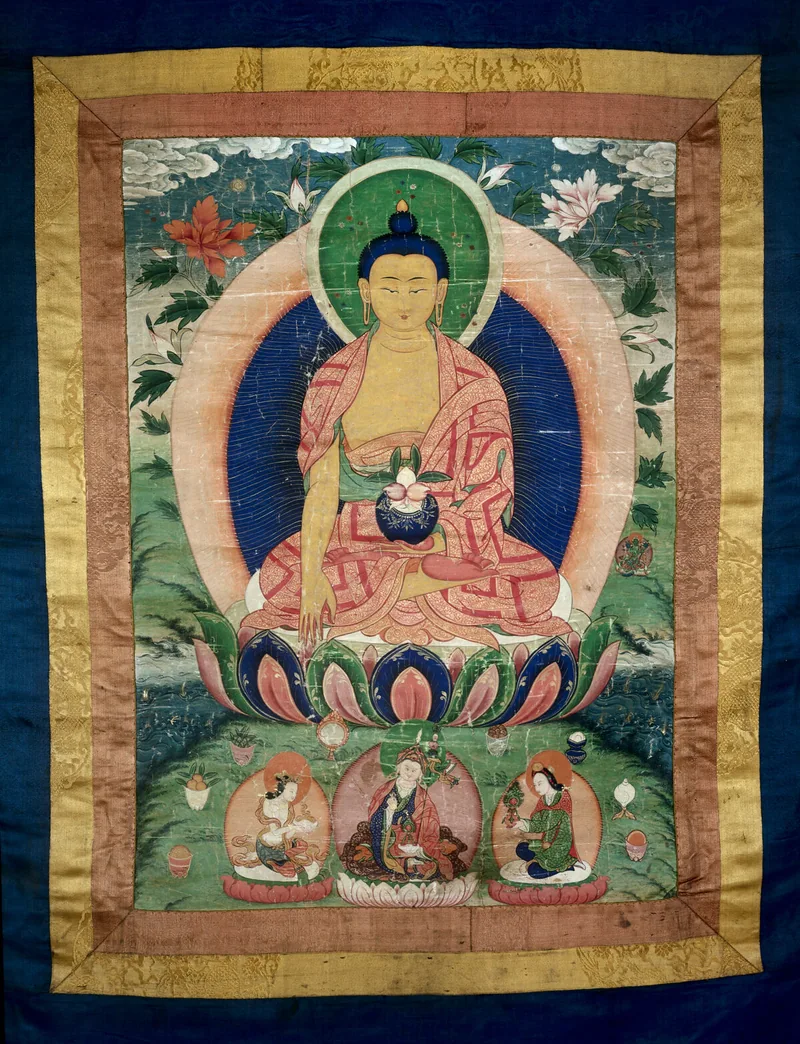
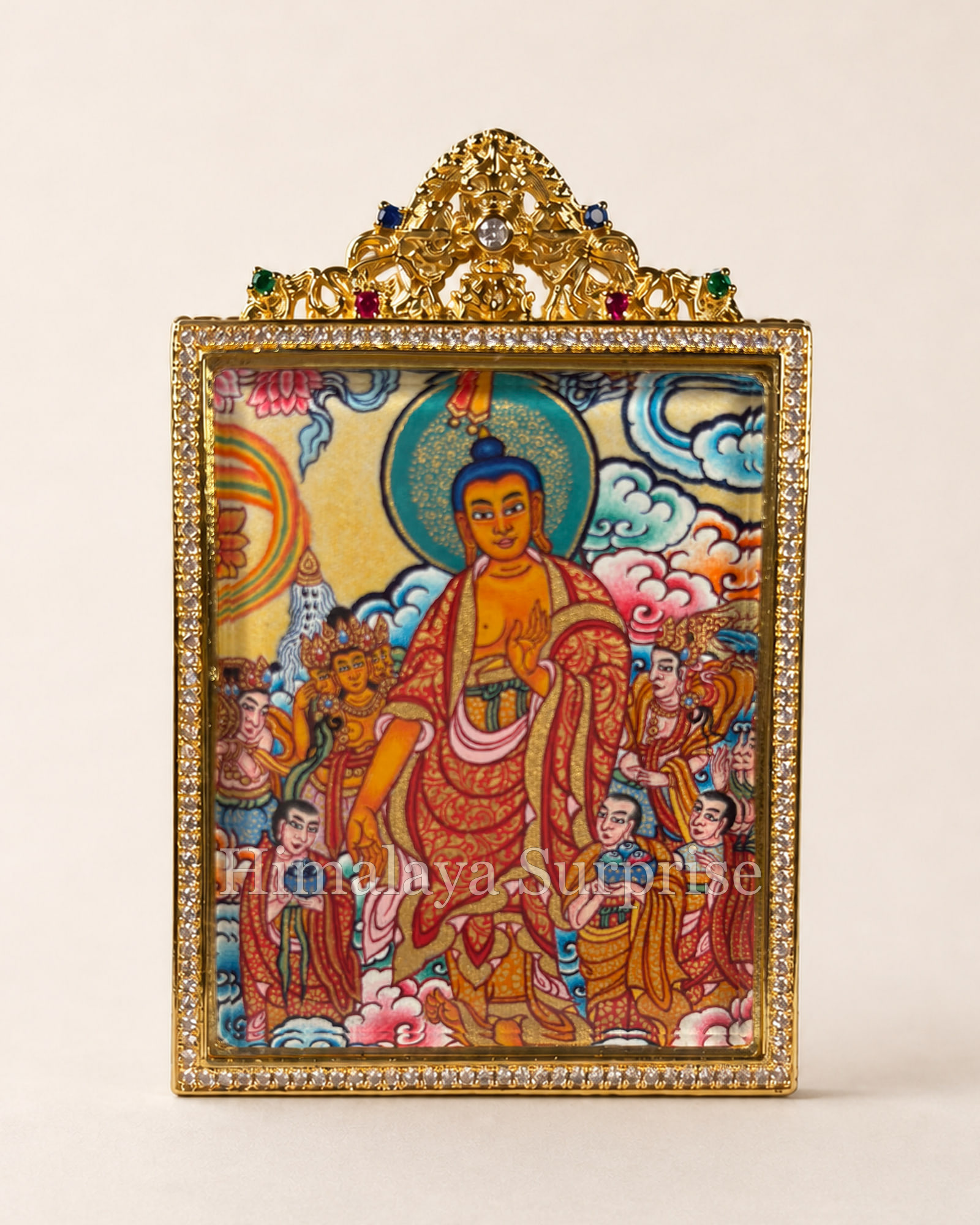
This Shakyamuni detail shows warm facial colour beside a red garment worked with gold patterns. The eyes, mouth and edges of the robe hold different kinds of attention: expression in one area, ornament in another. Such relationships are easy to miss when a small image is seen only as a thumbnail. A closer view reveals how much happens within a few centimetres.
Two paintings of the same subject may share attributes yet feel different in expression, spacing and palette. Those differences give you something specific to compare, without turning every work into a competition over detail or technique. Familiarity grows through looking: the more often you return to a painting, the more its particular character becomes apparent.
Traditional, contemporary and antique
These words describe different aspects of a work. A contemporary painting can use a traditional composition. An antique is an older object, with questions of date and history beyond the distinction between paint and print. Consecration concerns religious use. None of these categories needs to be folded into the word original. Keeping them separate makes an individual painting easier to understand. Authenticity also needs a context: being an original painting, having a particular age and having a religious use are different questions.
Spend time with the image
Once you know the format, there is time for the simpler pleasure of looking. Return to the face that caught your attention, follow a line through the garment or notice a small figure at the edge. A traditional subject can remain familiar while the painting continues to reveal something particular.
Questions and answers
What is an original thangka painting?
In the context of paintings, it is an individual painted work rather than a printed reproduction of a finished image. Its subject and composition can follow a traditional model.
Can a traditional design still be an original painting?
Yes. Original does not require a newly invented subject. Established figures and compositions can be painted individually, with differences in drawing, colour and expression.
How can I tell a hand-painted thangka from a print?
The stated format is the starting point. Close views can show the surface and drawing more clearly, but texture or small irregularities in a photograph do not settle the making method on their own.
Are all original thangkas old?
No. An original can be contemporary. Original describes the individual painting, while antique concerns its age and history.