In this article
Scale Changes Spatial Relationships
When a large image is reduced to a smaller field, its lines and negative spaces must be reduced with it. The relationships within the composition have to be rebuilt for the new scale. A miniature field has limited room, yet the subject, surrounding elements, clothing, borders, and background still need to remain proportionate and legible together.
In a smaller format, the distance between local elements becomes much tighter. The width of a line, the space between figures, and the separation between a hand, an object, and a garment all affect the balance of the whole image. The painter must reorganize these relationships rather than simply copy the large image at a smaller size.
The Difficulty of a Full-Size Thangka
A full-size thangka provides a larger field in which the face, body, attributes, background, and surrounding figures can be laid out during the underdrawing stage. Proportion guides and measuring tools can be used across a wider surface, while the painter keeps the number of figures, the background layers, and the overall rhythm of the composition in balance.
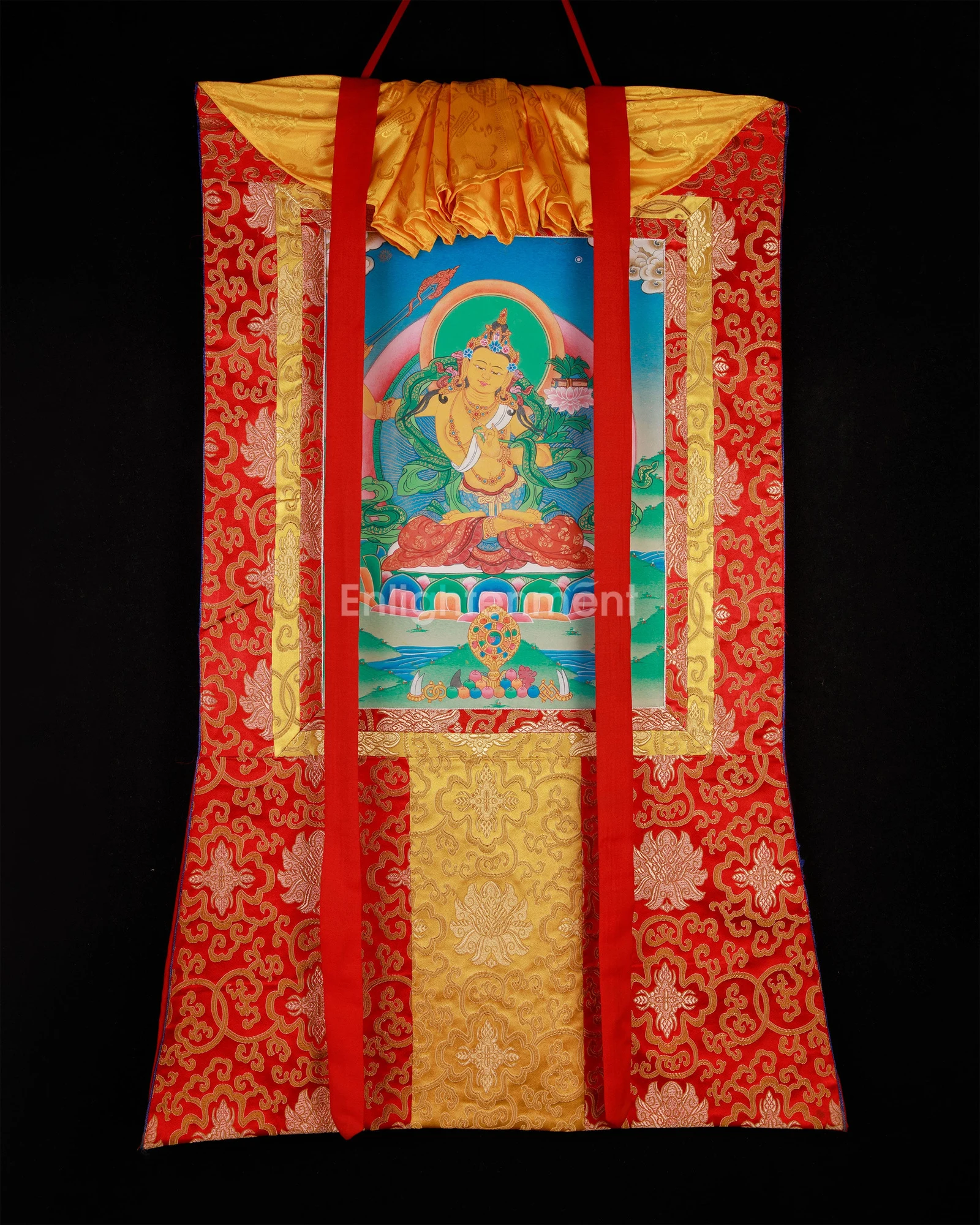
The work also grows with the scale of the image. A complex composition requires a sustained period of drawing, colouring, outlining, opening the face, and completing details. The painter must keep checking the relationship between each local area and the complete painting. The difficulty of a large thangka lies in scale, composition, and the amount of work that must remain coherent across the entire surface.
The Difficulty of a Miniature Thangka
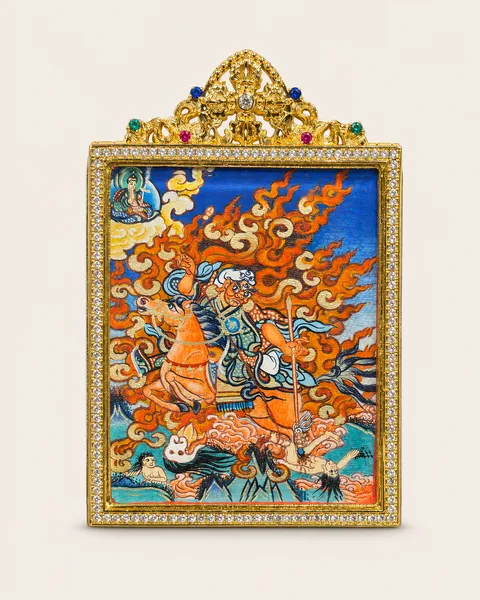
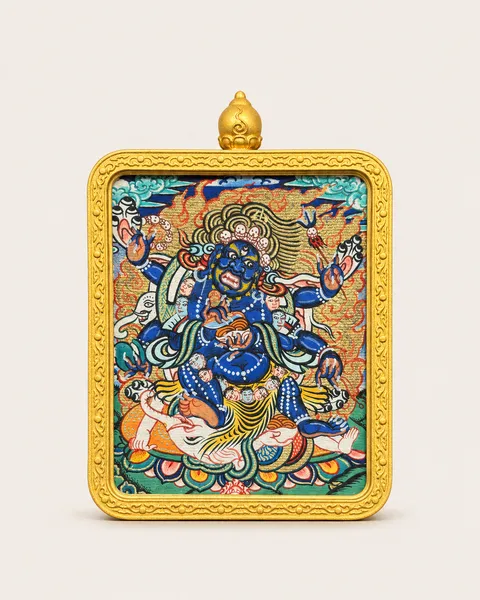
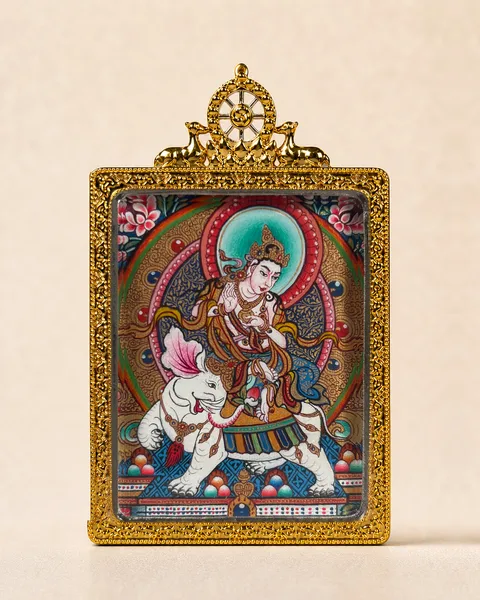
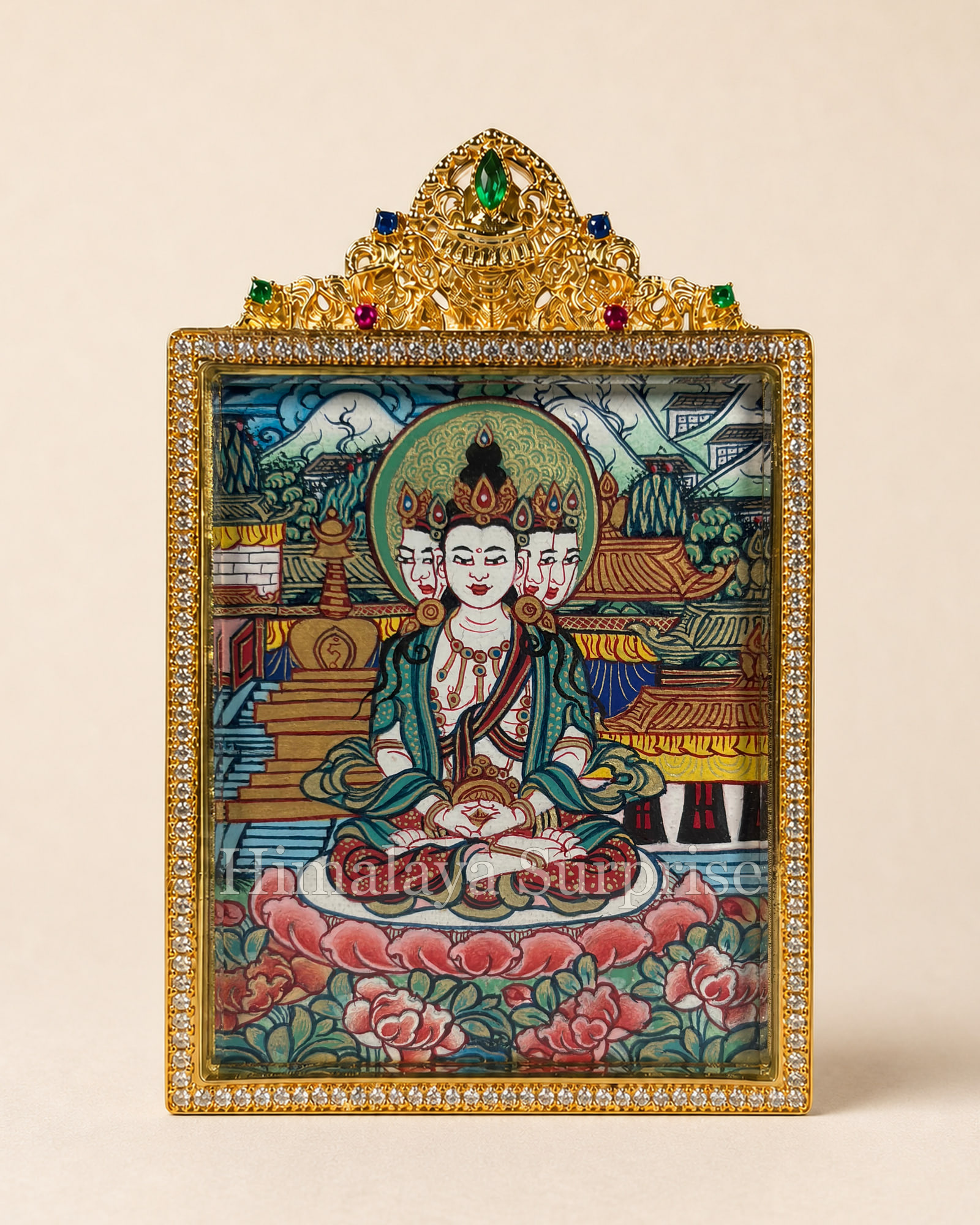
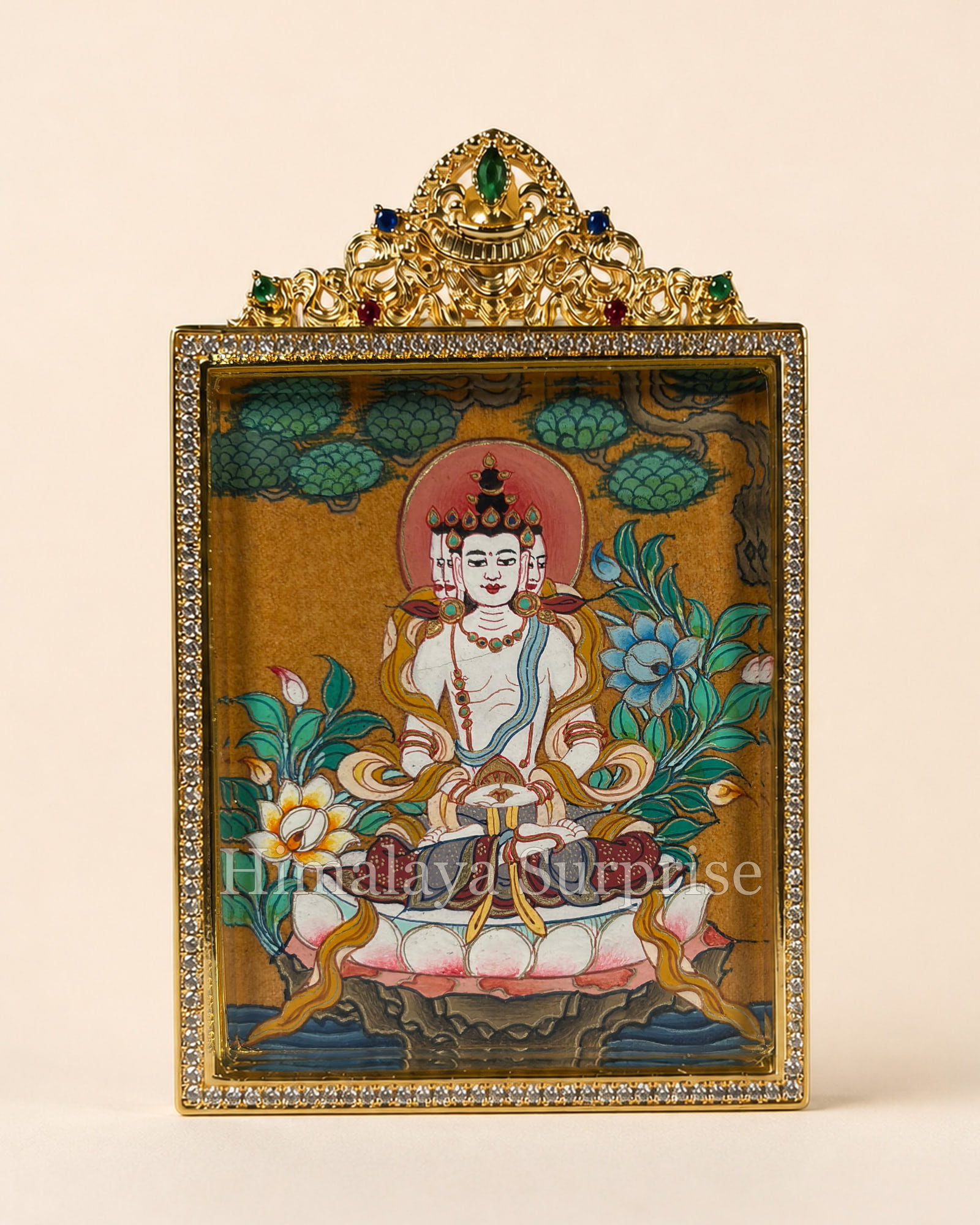
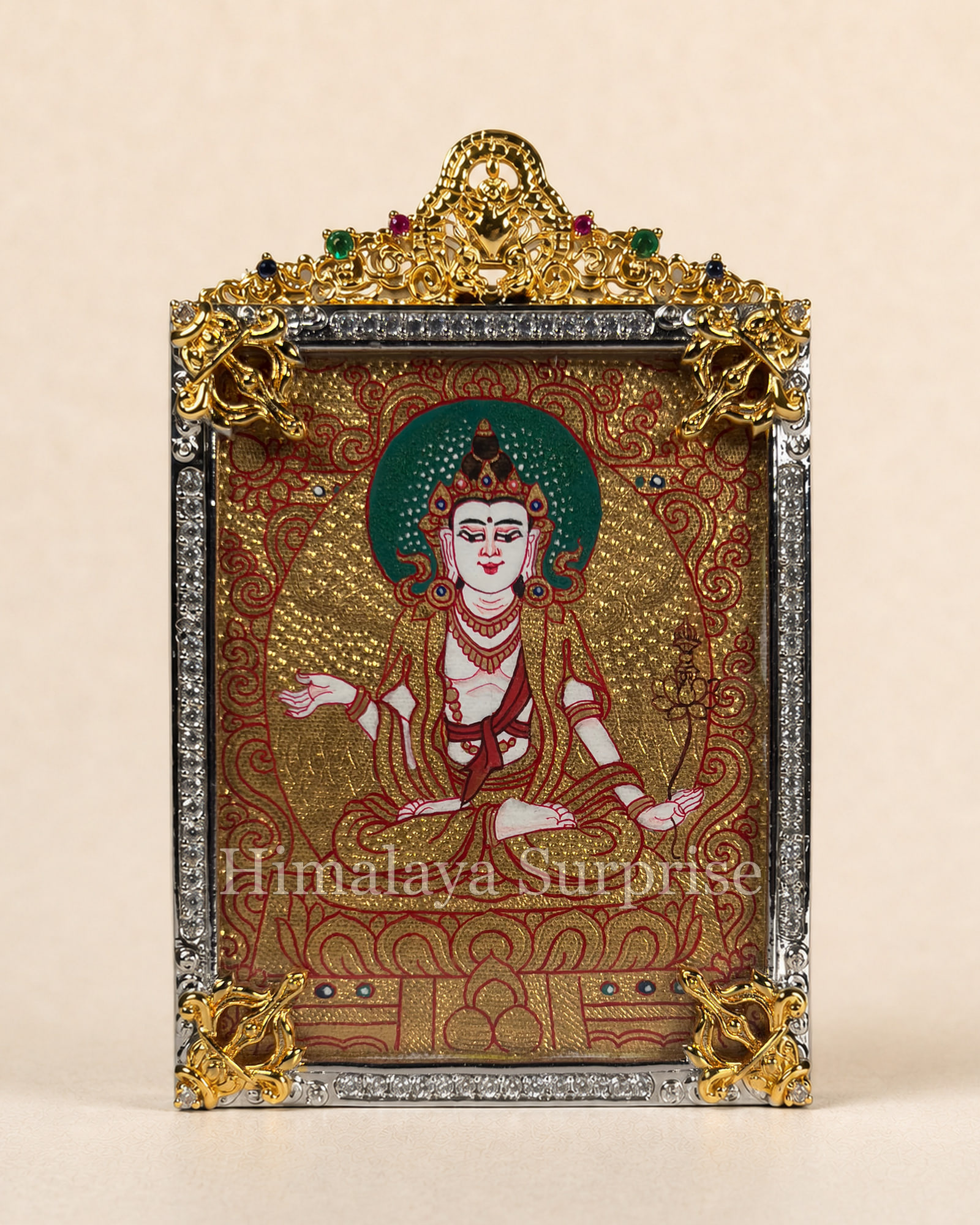
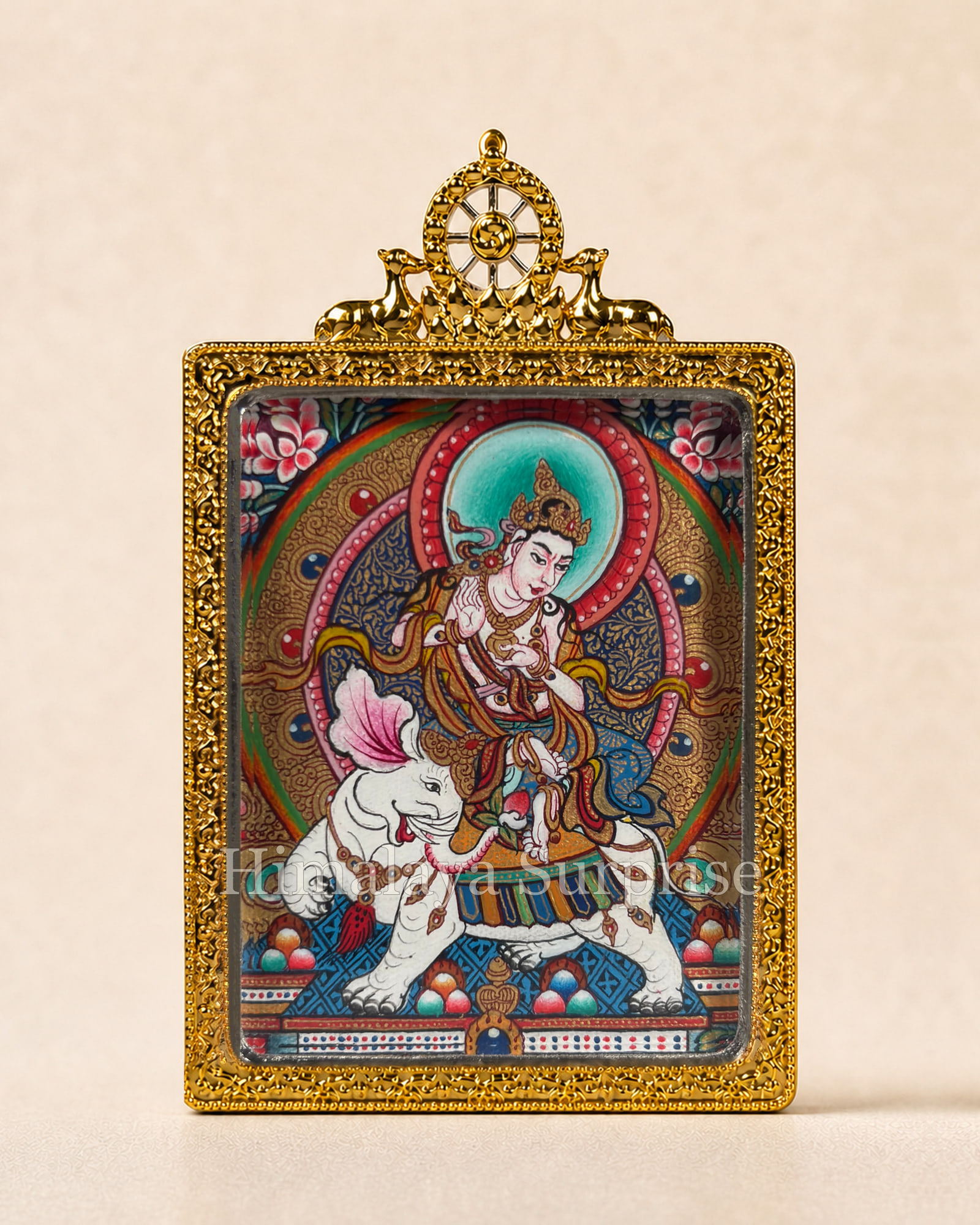
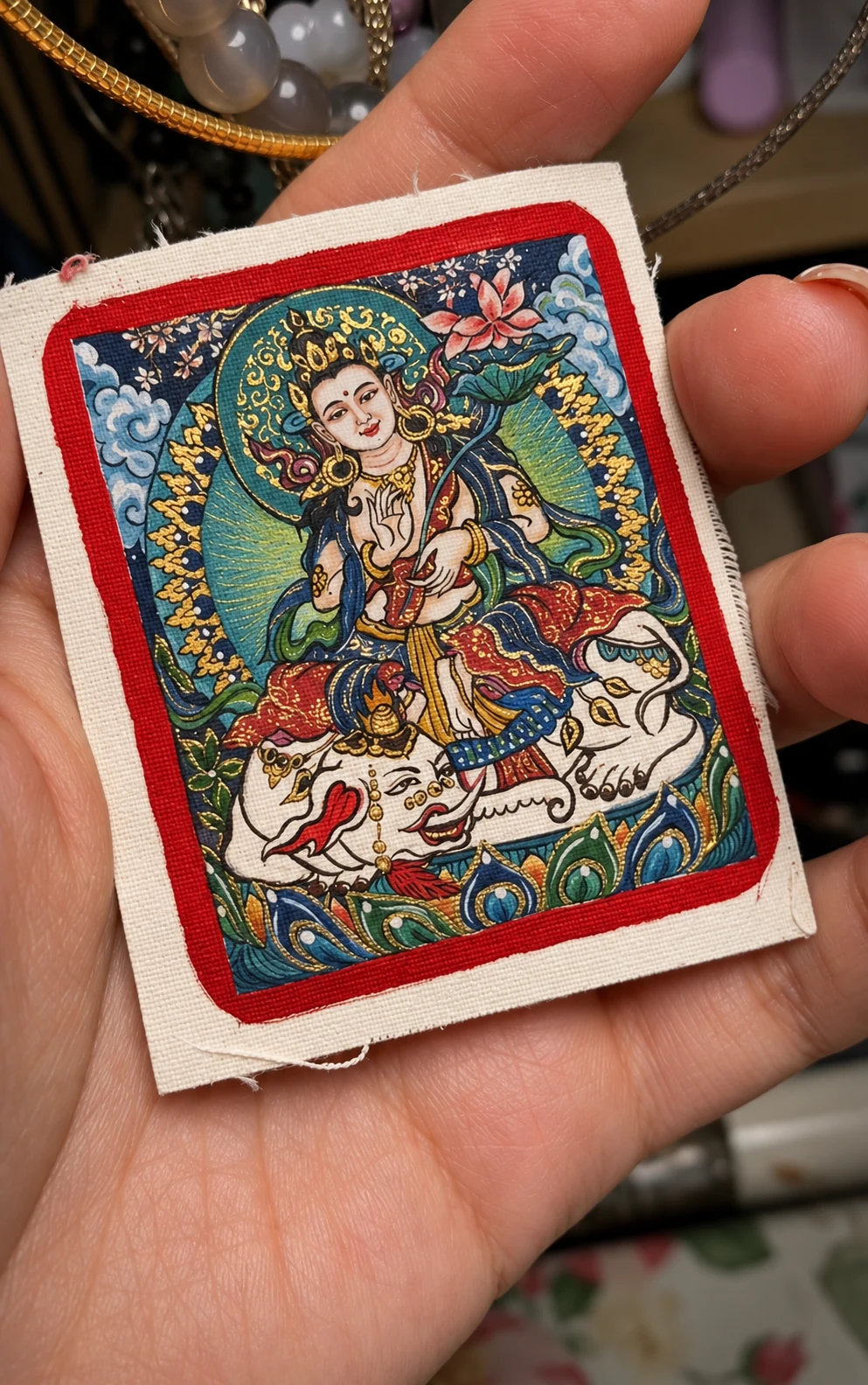
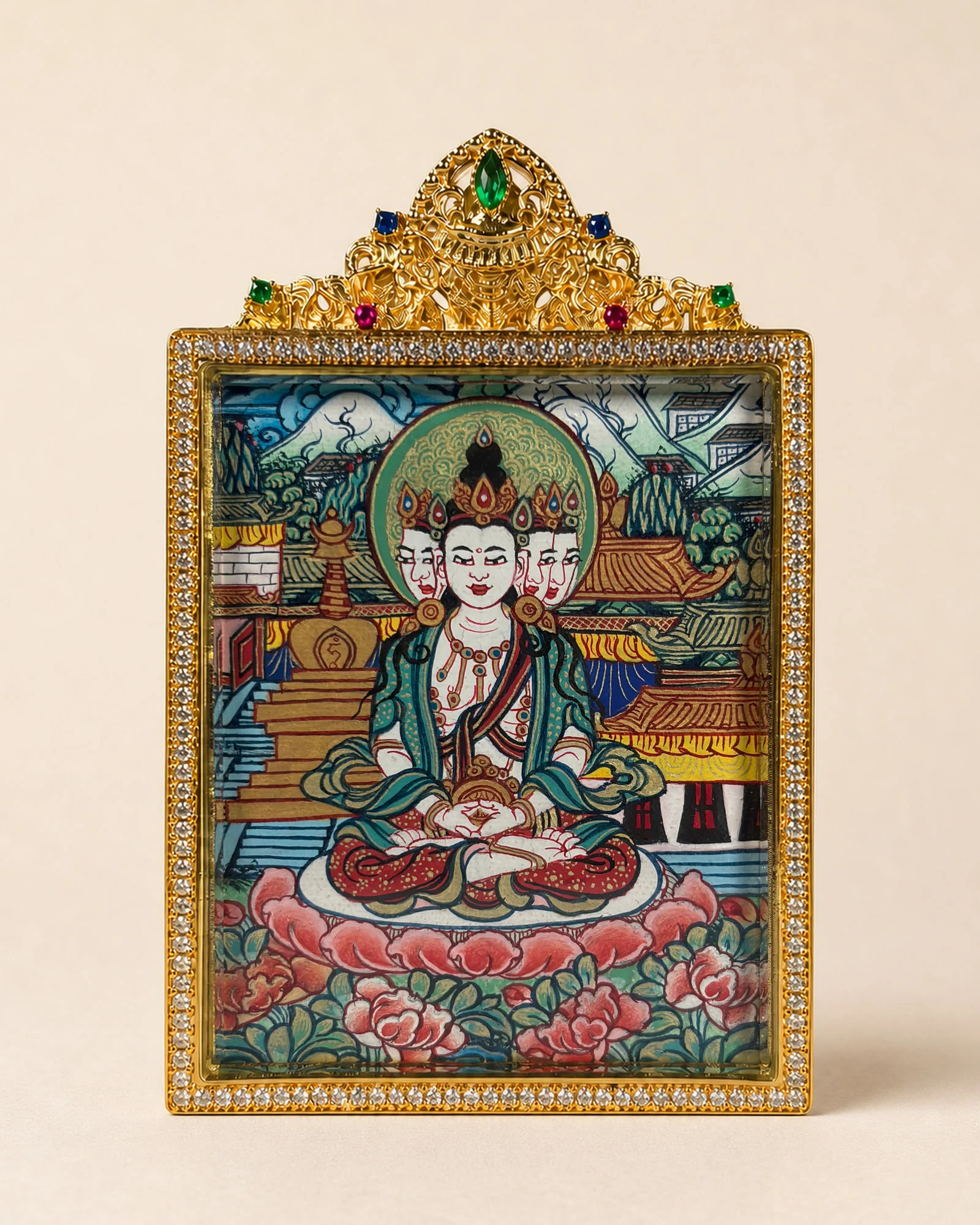
A miniature thangka may have only a few centimetres of painted space, yet it still has to contain a complete face, clothing, gesture, headdress, clouds, and ornamental detail. The face may approach the size of a needle point. The hand must stay steady, and the line must remain fine, controlled, and legible.
Because the local areas sit so close to one another, a small change in proportion can affect the neighbouring forms. The face, hands, attributes, clothing, and background must all keep their boundaries. Linework, shading, and colour edges require exact control, and the painter’s experience becomes visible in whether the small forms remain clear.
A miniature work still passes through a complete sequence of painting. Underdrawing, colouring, layered treatment, and finishing details all remain part of the process. The small painted field compresses each operation into a few centimetres and makes the stability of the hand, the precision of the line, and the judgement of each local relationship especially demanding.
From a Large Composition to a Miniature Field
A full-size thangka can provide a reference for the composition and design of a miniature work. The arrangement of figures, the subject, and the overall rhythm can first be understood through the larger field. Once the work enters a small painted area, the lines, negative spaces, face, and objects have to be established again for that scale, with a separate underdrawing for the miniature composition.
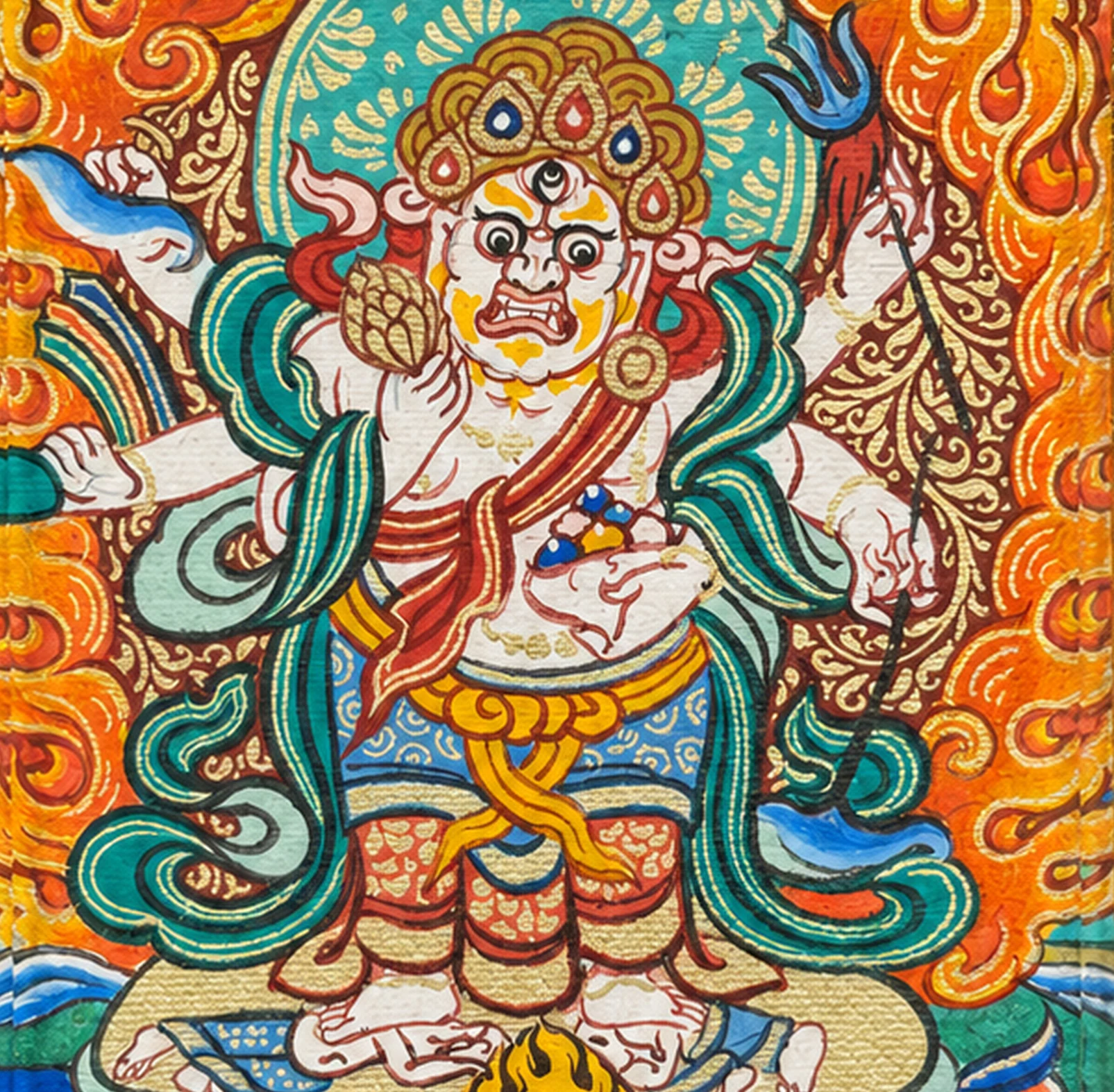
The painter must decide which details need to remain, how much space each element can occupy, and which lines need to be adapted to a smaller brush movement. The overall composition is set first, followed by the placement of figures and objects according to sacred proportion. The change of scale therefore reaches every structural relationship in the image.
A Miniature Thangka Demands Greater Precision
A full-size thangka is an important foundation for learning the craft. A miniature thangka raises the demands for precision, line control, shading, and the application of sacred proportion. The painter establishes the main figure and its position, then builds the proportional relationships; inside a field of only a few centimetres, the face, brush tip, and surrounding details require a higher level of control.
A miniature work still completes the full sequence of painting. Underdrawing, colouring, layered treatment, and finishing details each have a role, while the small field compresses every operation into a confined space. The face, clothing, gestures, clouds, ornamental patterns, and colour relationships must all remain complete within that field. Stability of the hand, precision of the line, and local judgement directly affect the finished image.
Display Space and Wearing
In museums and public exhibitions, a large thangka is often approached through its history, lineage, transmission, subject, style, and technique. When viewing a miniature thangka, attention is more readily drawn to the face, contour lines, shading, and the control of small areas. The quality of these local details becomes clearer at close range or under magnification.
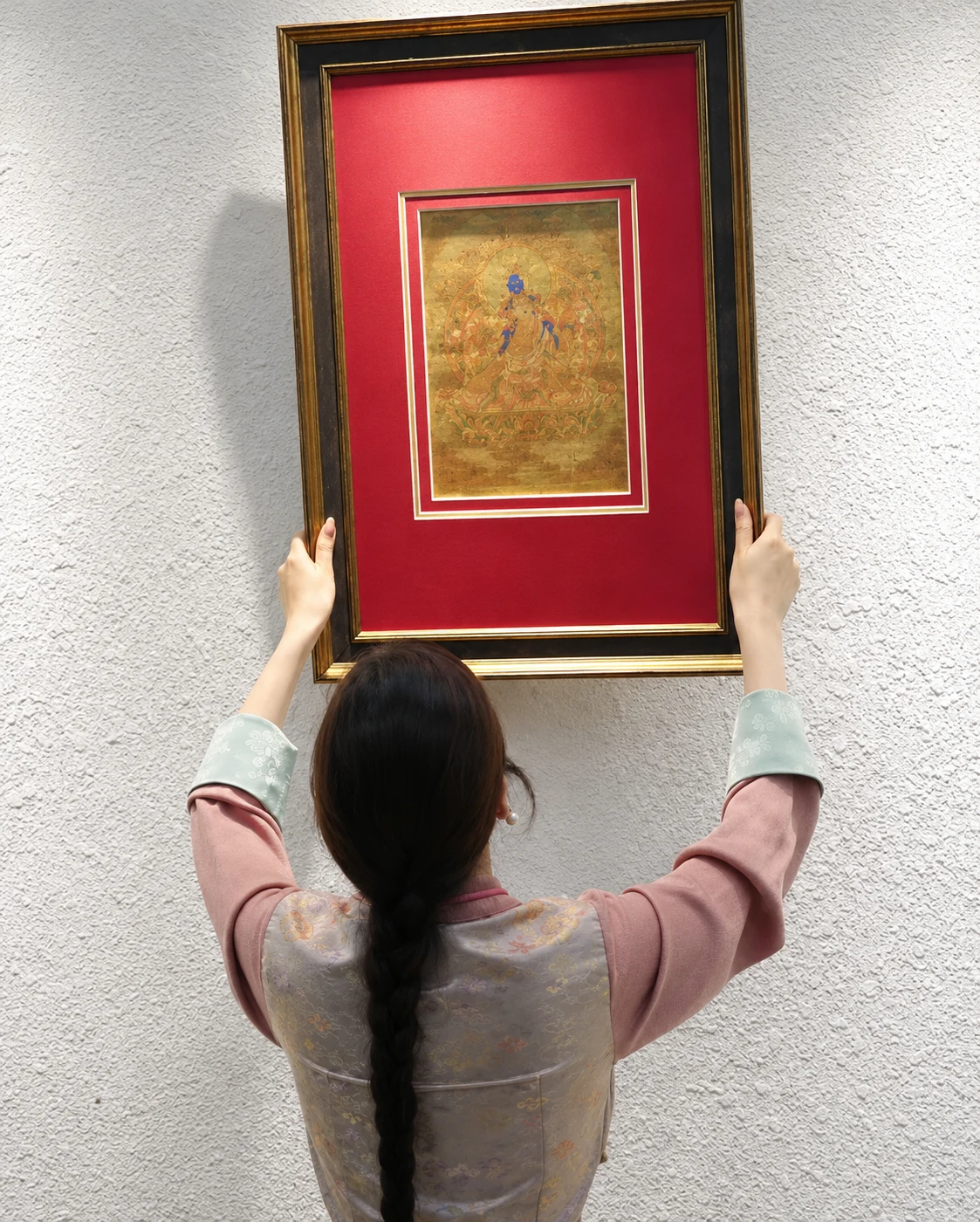
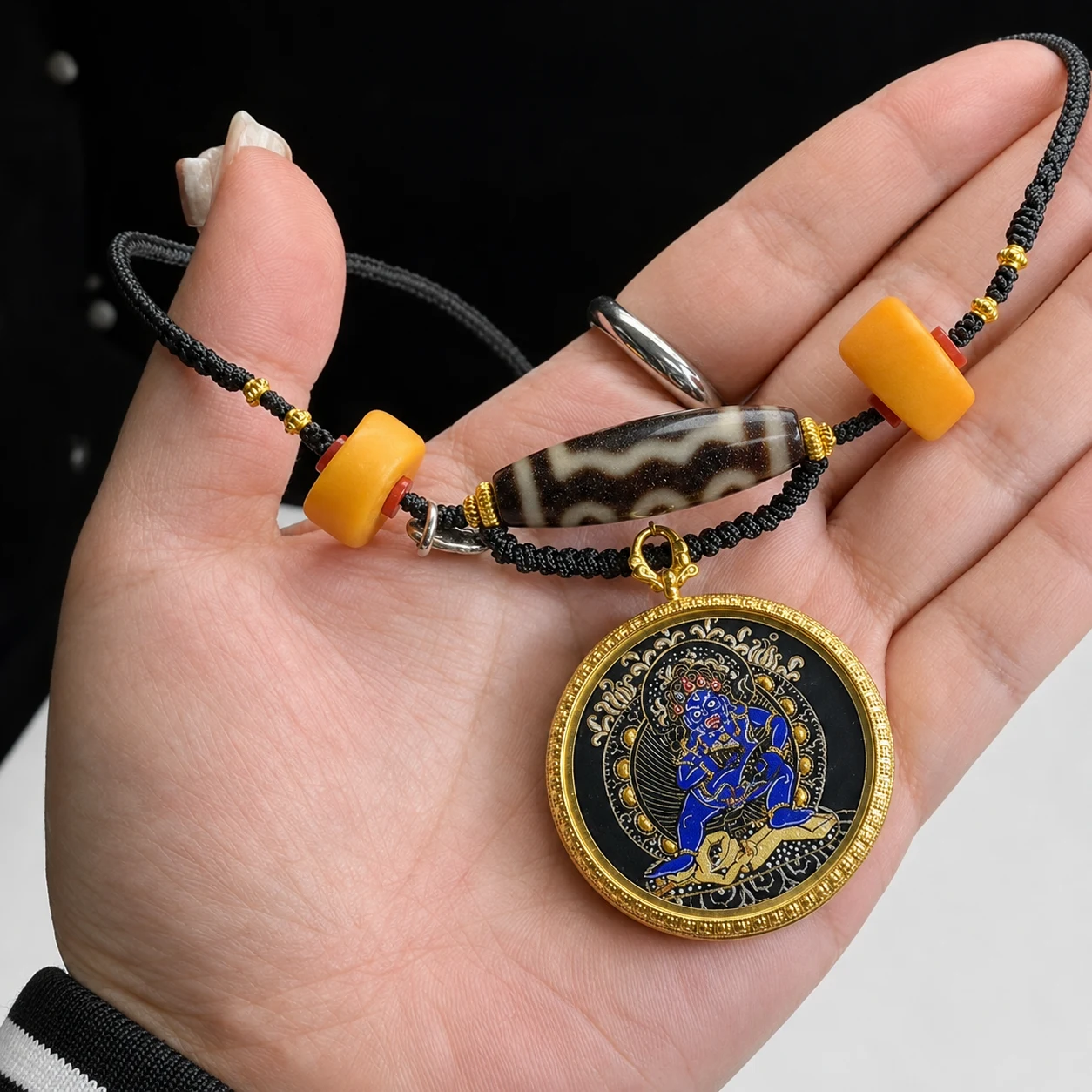
A full-size thangka is well suited to a home or office where the complete composition can be viewed across a larger space, and it may also be used for offering and prayer. A miniature thangka can be placed inside a gau box and worn close to the body. It can be understood as a small mobile shrine, carrying a sense of daily prayer, protection, and spiritual companionship.
When choosing a format, begin with the intended setting. A full-size thangka may suit someone who wants to view a complete composition in a home, office, or dedicated display space. A miniature thangka may suit someone who wants to place it in a gau box and carry it as a daily companion and symbol of prayer. In the smaller painted field, the work remains complete while placing higher demands on detail control and the painter’s skill.