Craft & Makers
Miniature Thangka Art: What Small Scale Changes in the Painting
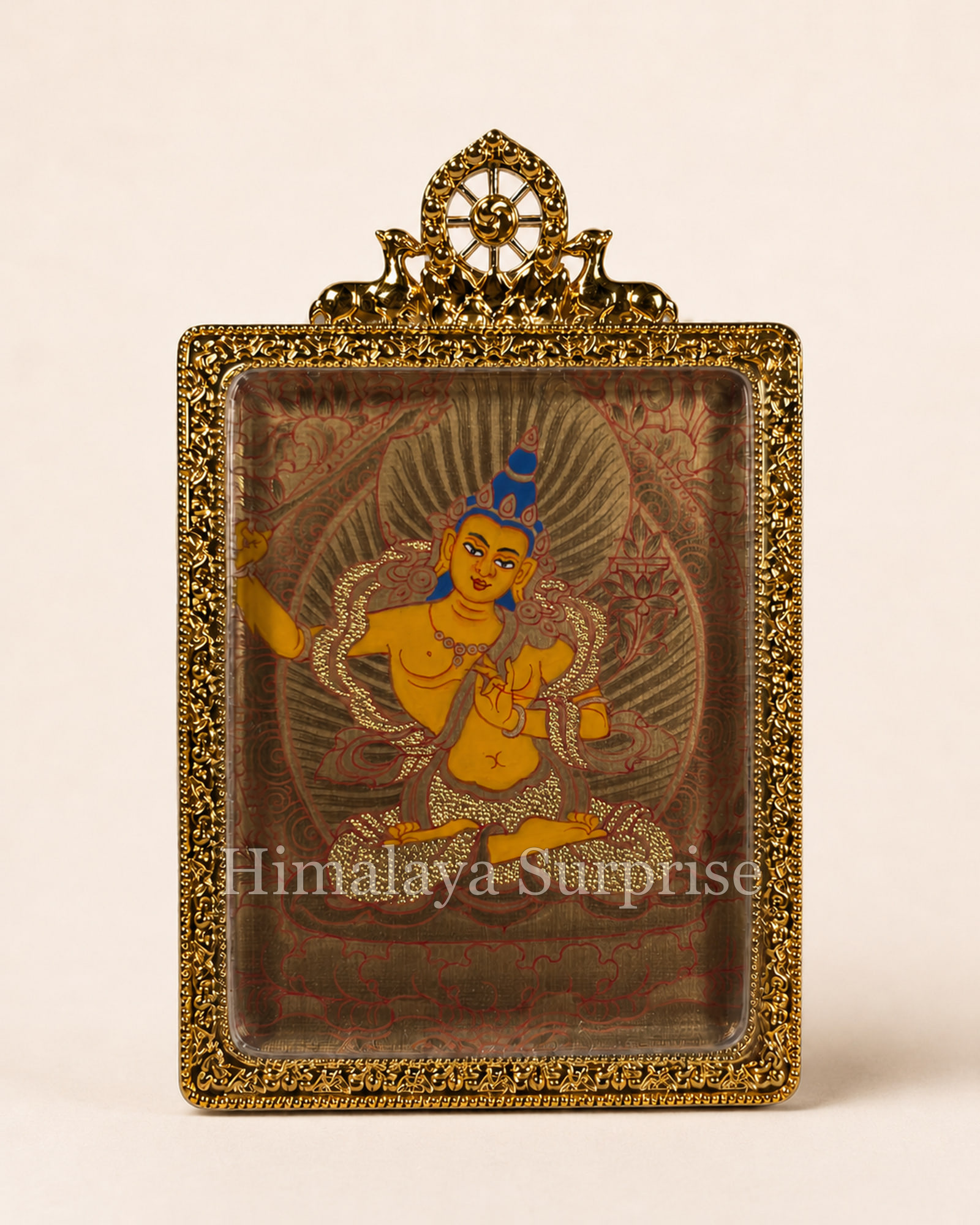
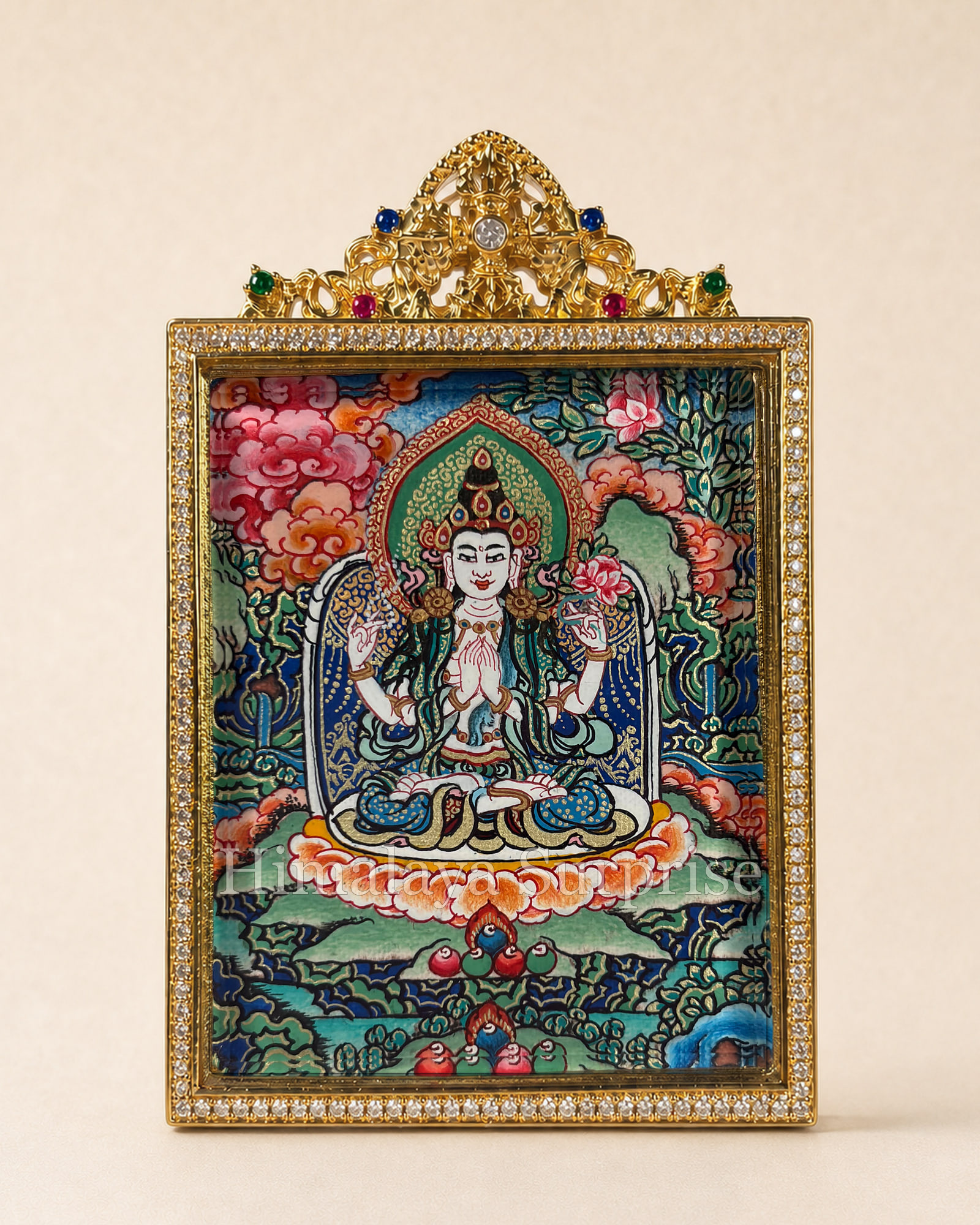
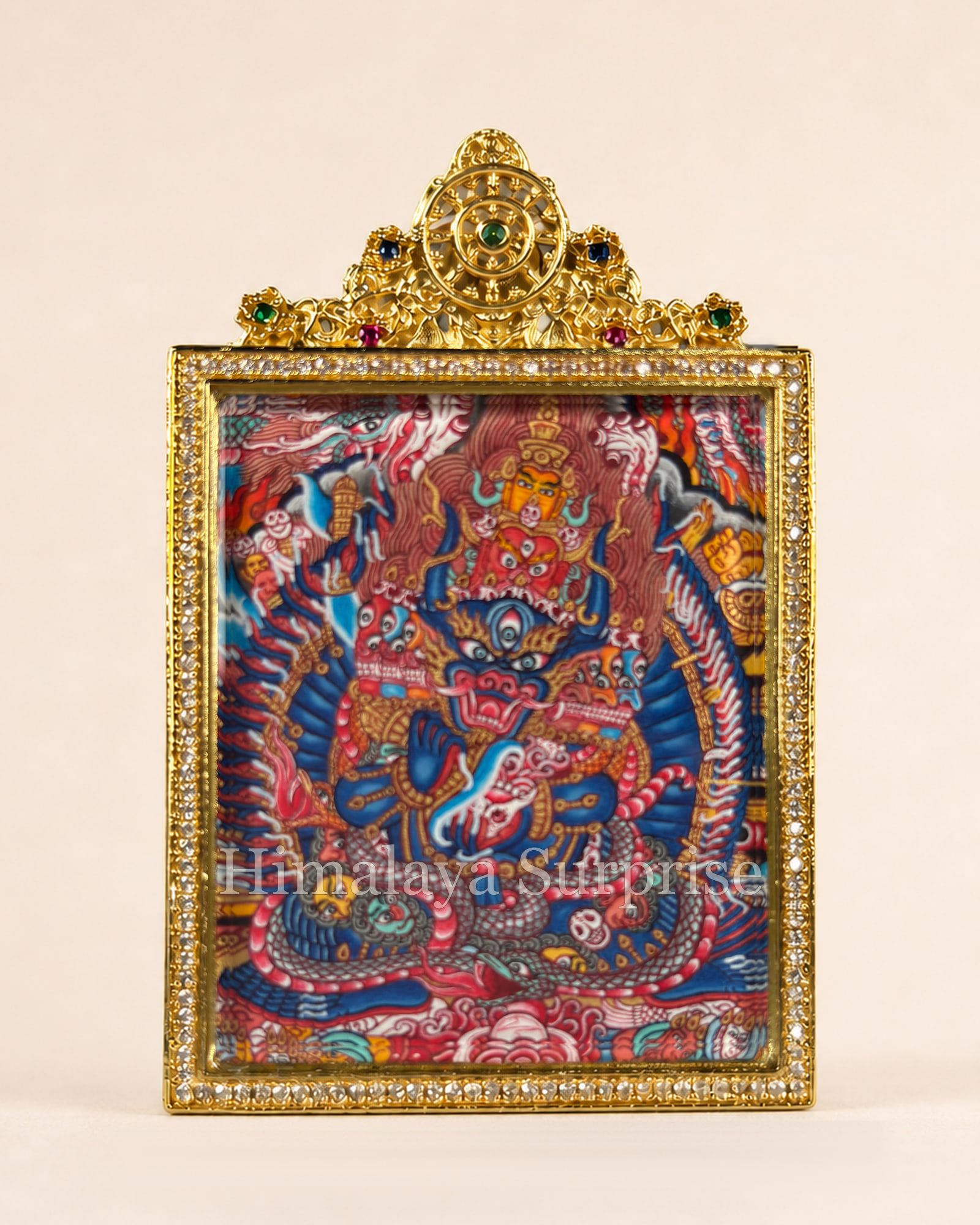
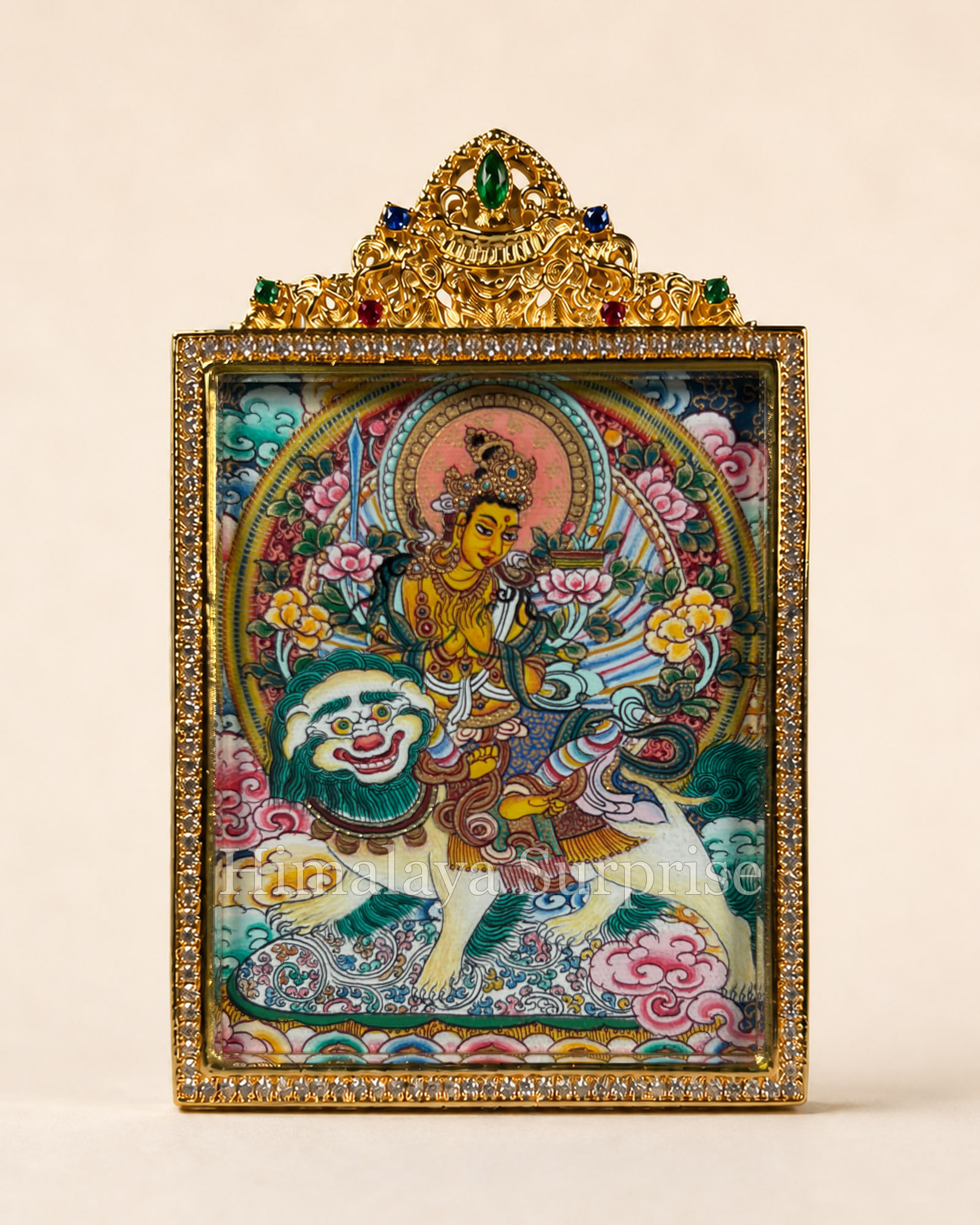
In this guide, miniature thangka art means a complete hand-painted image in the Himalayan Buddhist tradition—not model decoration, a printed reduction or a cropped fragment. Each one-of-one work has a recorded painted field of about 4 × 5 cm. Proportion, expression, gestures, attributes, ornament, colour and gold detail still have to read as one coherent image. The small surface gives a drifting line or uncertain proportion nowhere to hide, so the work depends on measured control and patient finishing. With its secure loop and cord, the framed painting can also travel close to its owner.
View related available works ↓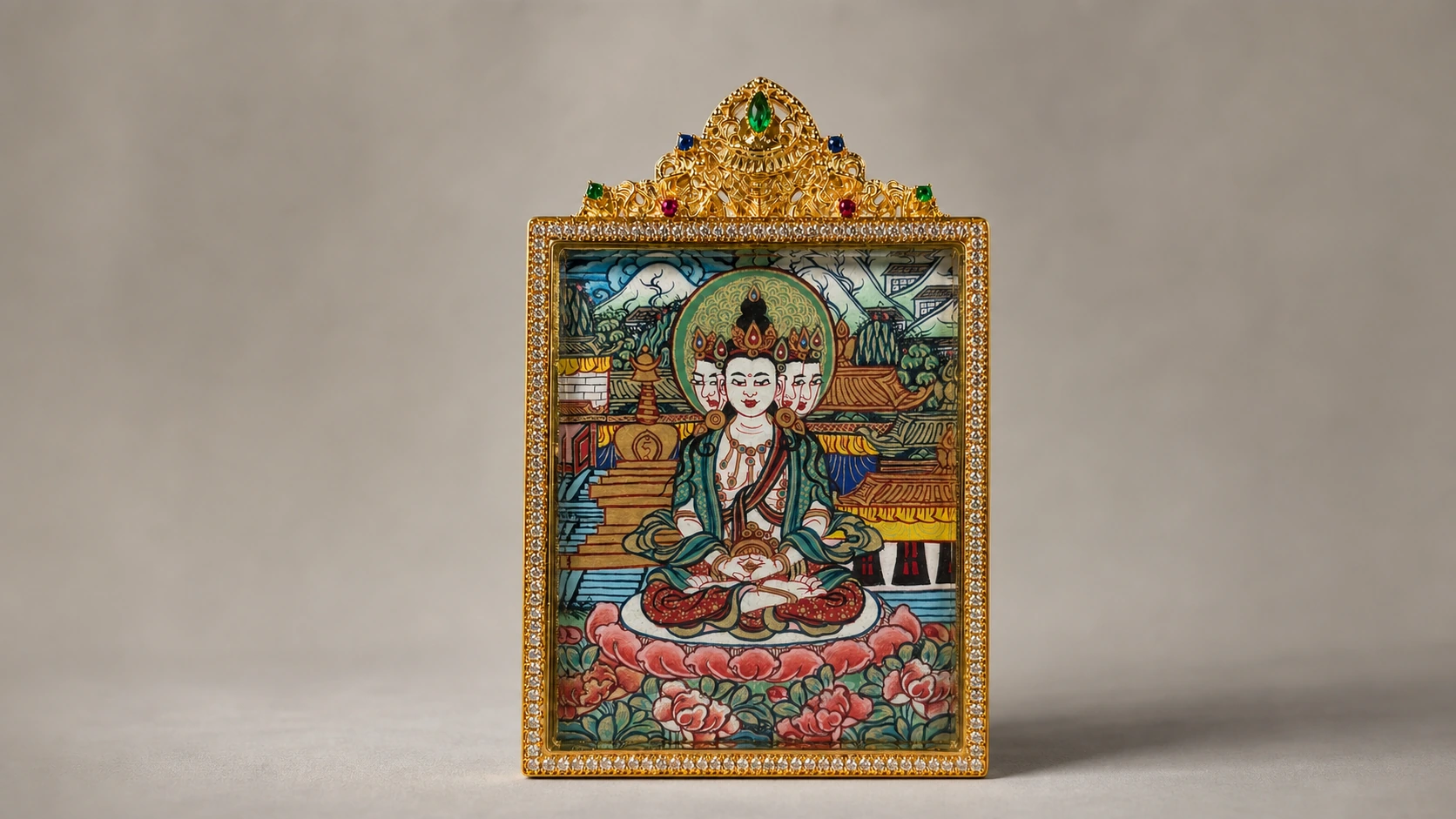
What makes a miniature thangka a complete work?
A miniature thangka is a small painting in its own right, not a tiny figure within a larger scene. Our works hold a complete central image within a painted area of about 4 × 5 cm: the composition begins and ends inside that small field.
The compact field still has to hold a readable deity, posture, gestures, attributes and surrounding ornament. It is a miniature Buddhist painting within the wider fields of miniature Buddhist art and miniature Himalayan art; its scale is not a shortcut: this palm-sized painting is built from many interdependent decisions on a surface scarcely larger than a matchbox.
Each miniature artwork is painted as a complete, individual image. Our original miniature art consists of contemporary, one-of-one hand-painted works. The figure, colour and ornament are composed together within the small painted field.
Why hand-painted miniature art demands greater control
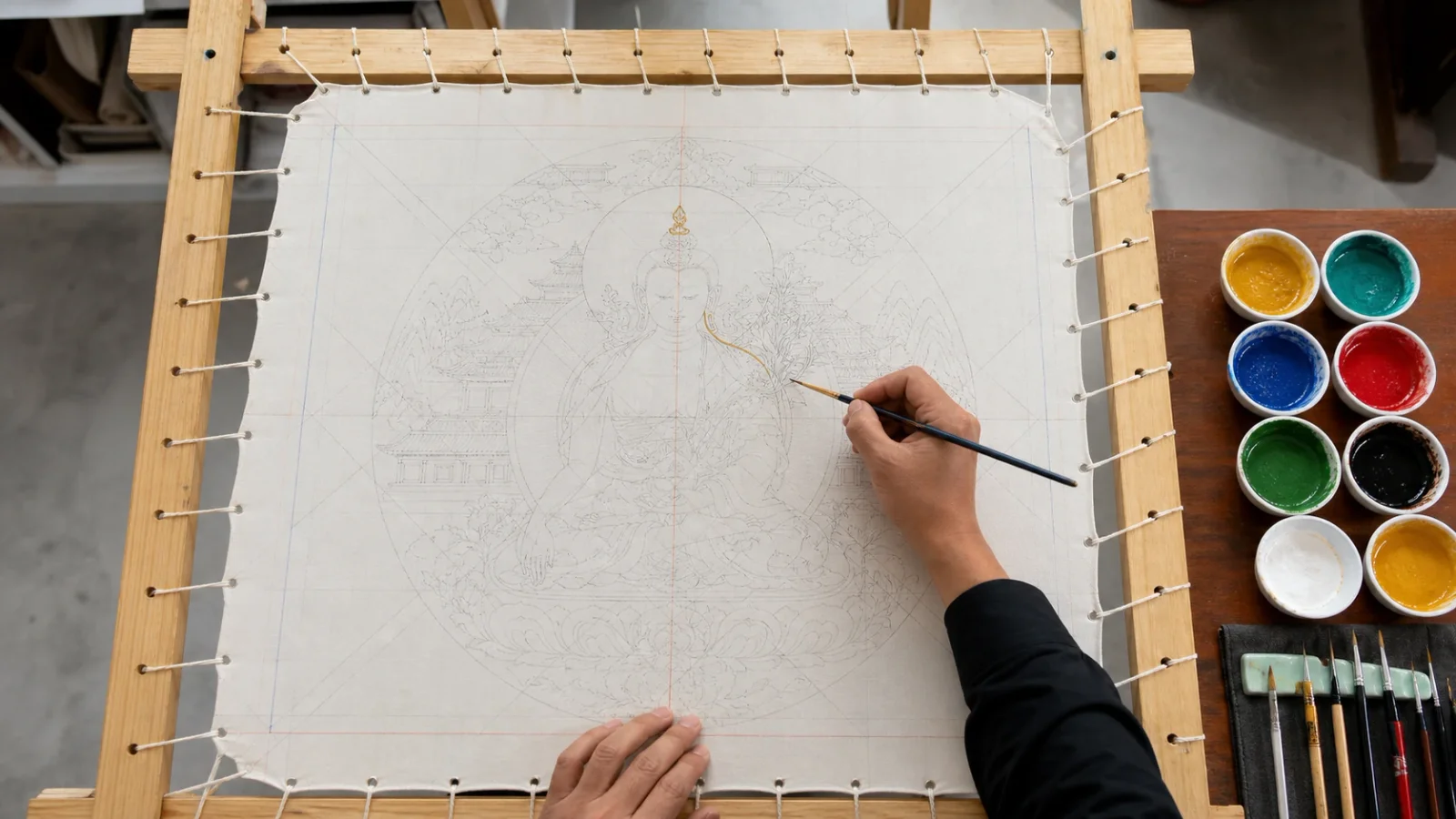
Documented thangka practice begins with a prepared support and a measured iconographic drawing before colour, shading, outlining and gold are developed in stages. On a miniature surface, a fractionally heavy contour can close a facial feature, a small shift can alter a hand or attribute, and an overfilled border can weaken the central figure. The smaller format is less forgiving because each mark occupies more of the available image.
In small-format fine art, complexity does not mean filling every gap. A detailed miniature painting succeeds when many relationships remain clear at once: the deity stays stable, the face retains expression, gestures and attributes remain distinct, colour transitions do not cloud the drawing, and fine gold detail strengthens the composition. Precision and restraint have to work together; detail is valuable only when it keeps the image readable.
The broad label “micro painting art” is used for several small-scale practices. In this guide it refers specifically to a complete hand-painted thangka, not to watch-dial painting, model decoration or another kind of decorative miniature.
How long does a miniature thangka take to paint?
Each miniature thangka in the Himalaya Surprise collection takes around two weeks to paint. The artist develops the drawing, colour, shading and fine gold work within a painted area of about 4 × 5 cm. That time goes into a complete image with a distinct expression and carefully resolved detail.
Those two weeks are spent making the painting, from the first drawing through colour and fine finishing. Our available works are already complete, so choosing one does not mean waiting for the artist to begin a new painting.
With a cord, the painting can travel with you
Thangkas have long travelled with their owners: a scroll can be rolled, carried and opened again. Small sacred images can also be housed in a gau, a portable shrine carried on a neck cord or shoulder strap. Our miniature thangkas are presented in Gau boxes, with the painted image visible at the front.
The Gau box and included cord give each finished painting a wearable, portable form. The work can stay close during travel or daily life and can be lifted into view whenever you want to return to its expression, lines and colour. The Gau box is part of the artwork's presentation, not its outer shipping packaging.
Close looking reveals the difficulty
A large thangka can command a room; a miniature asks for a more intimate encounter. Held close, the viewer can follow the turn of an eyelid, the separation between fingers and attributes, the rhythm of ornament and the way a gold line meets colour. The pleasure of the format lies in discovering how much visual order and handwork can remain present within a few centimetres.
What does 4 × 5 cm actually measure?
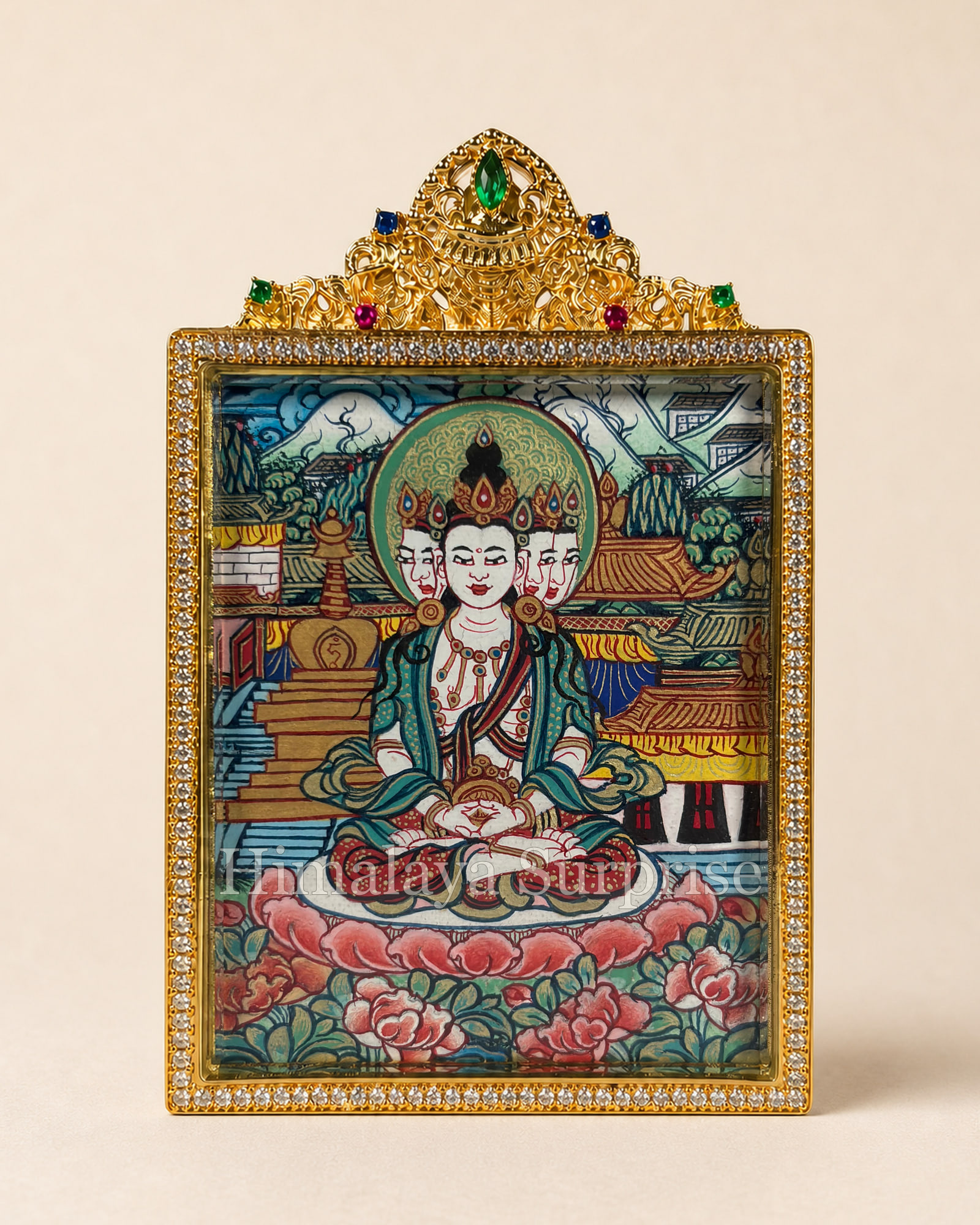
A complete painting, in miniature
This Vairocana painting measures 4 cm wide by 5 cm high—approximately 1.57 × 1.97 inches. The measurements follow the painted field inside the gold frame, excluding the frame and hanging loop.
The face, gestures, lotus seat and surrounding scene all come together within that small painted field. Open the photograph to explore the linework and colour at a larger scale.
Measurements refer to the work; the photograph scales with your screen.