Discover / Living with art
Thangka Pendants: Wearable Art, Size and Everyday Care
Understand thangka pendant size, the included Gau box and cord, and how to wear and care for a miniature painting without confusing the painted area with the whole pendant.
In this story
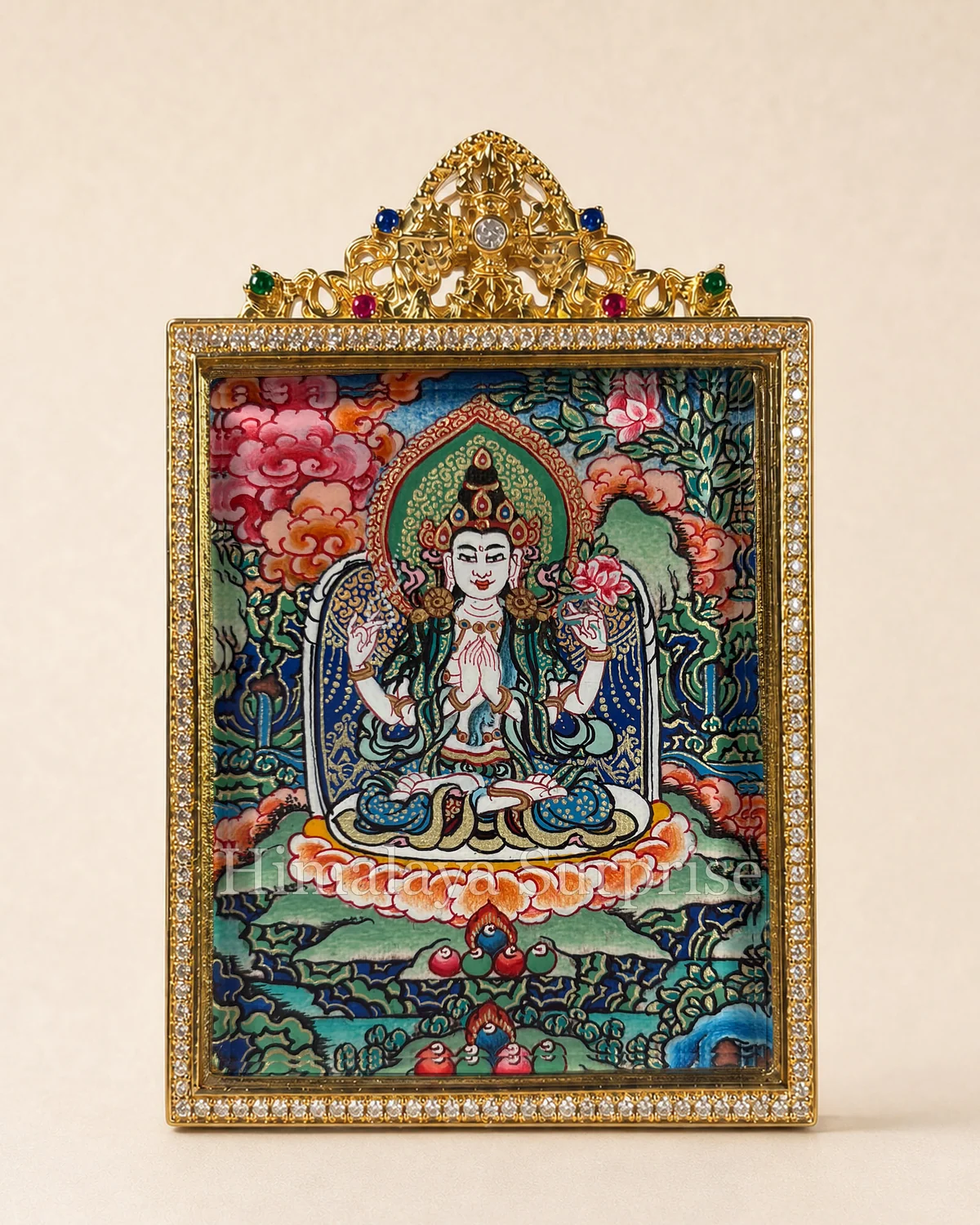
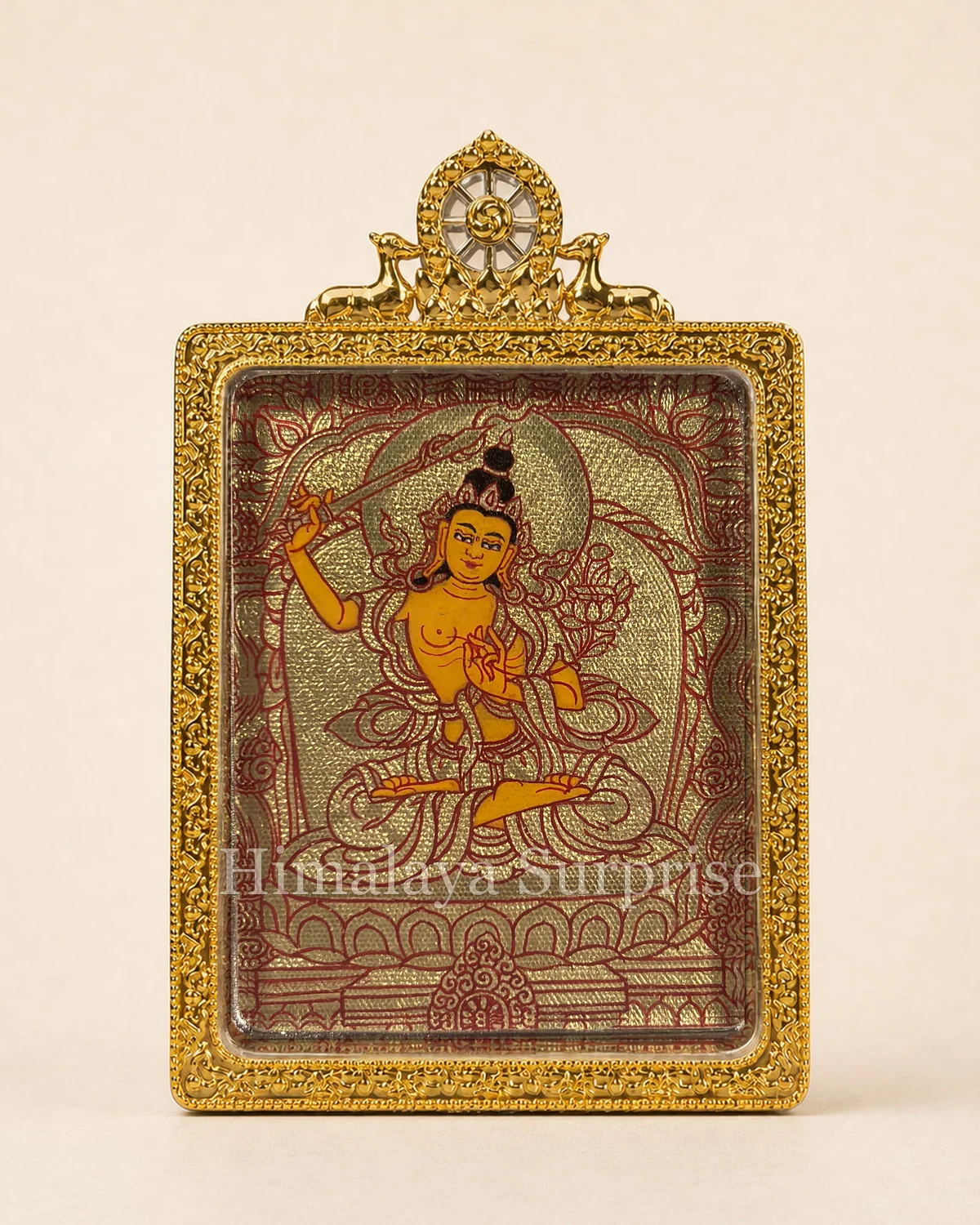
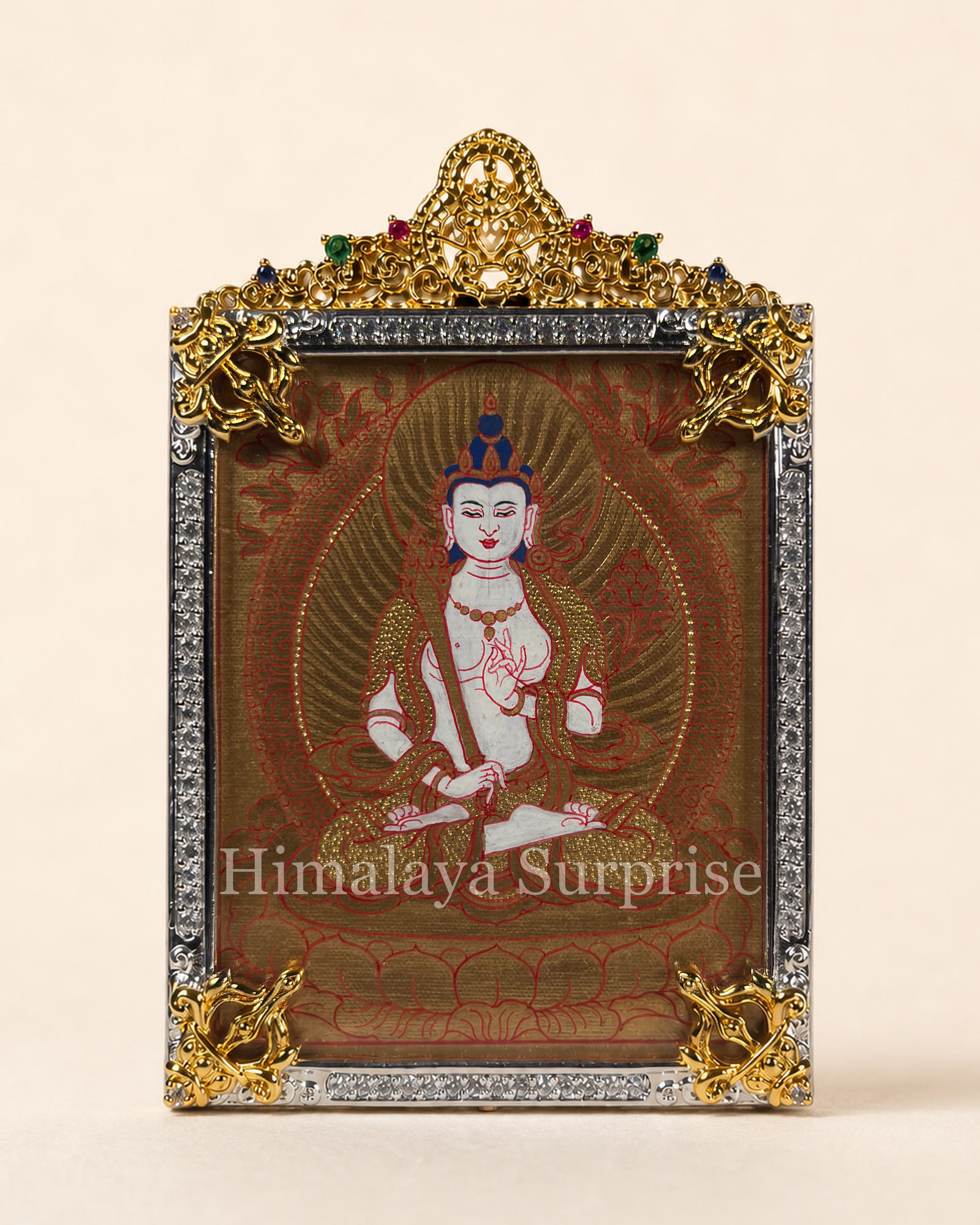
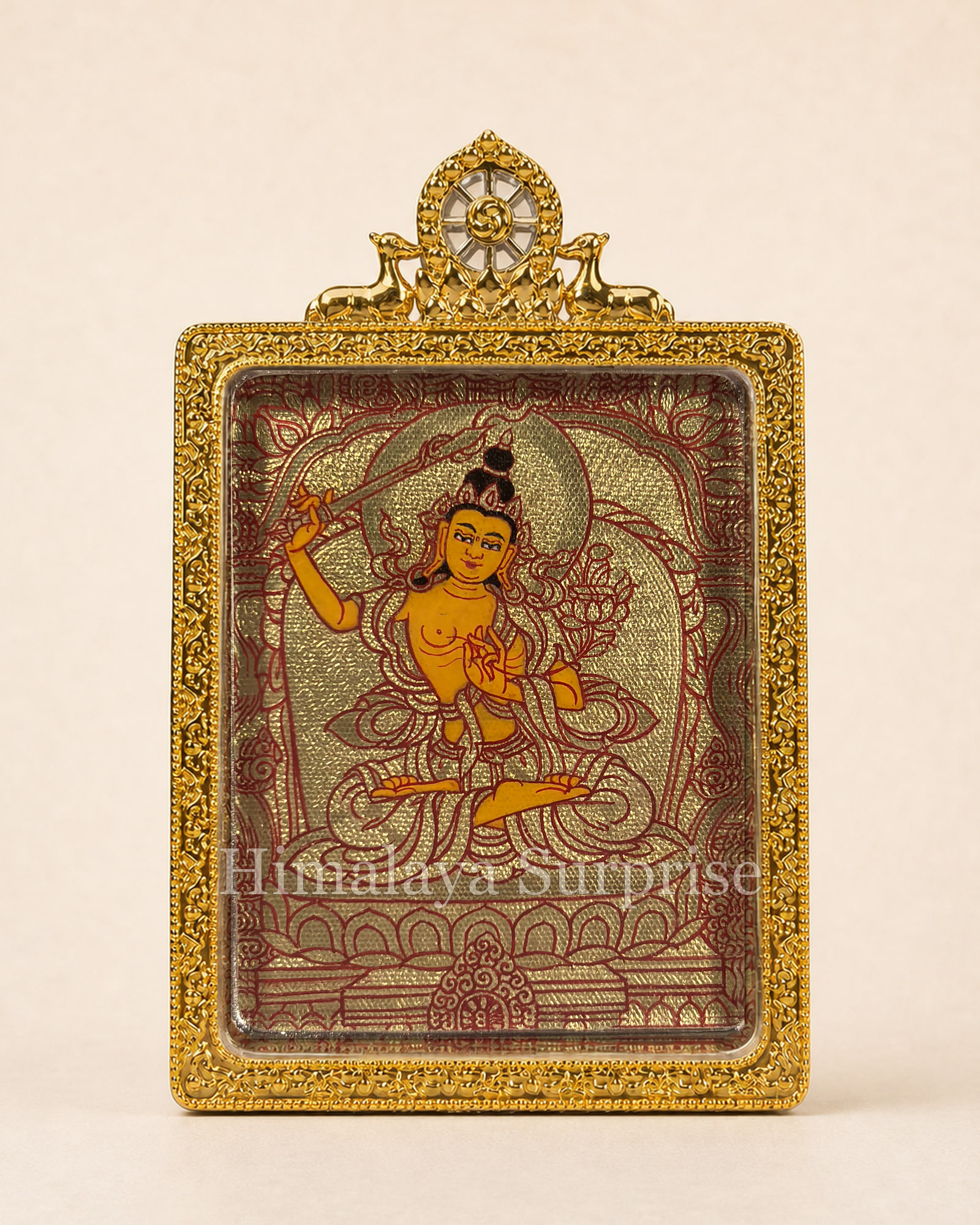
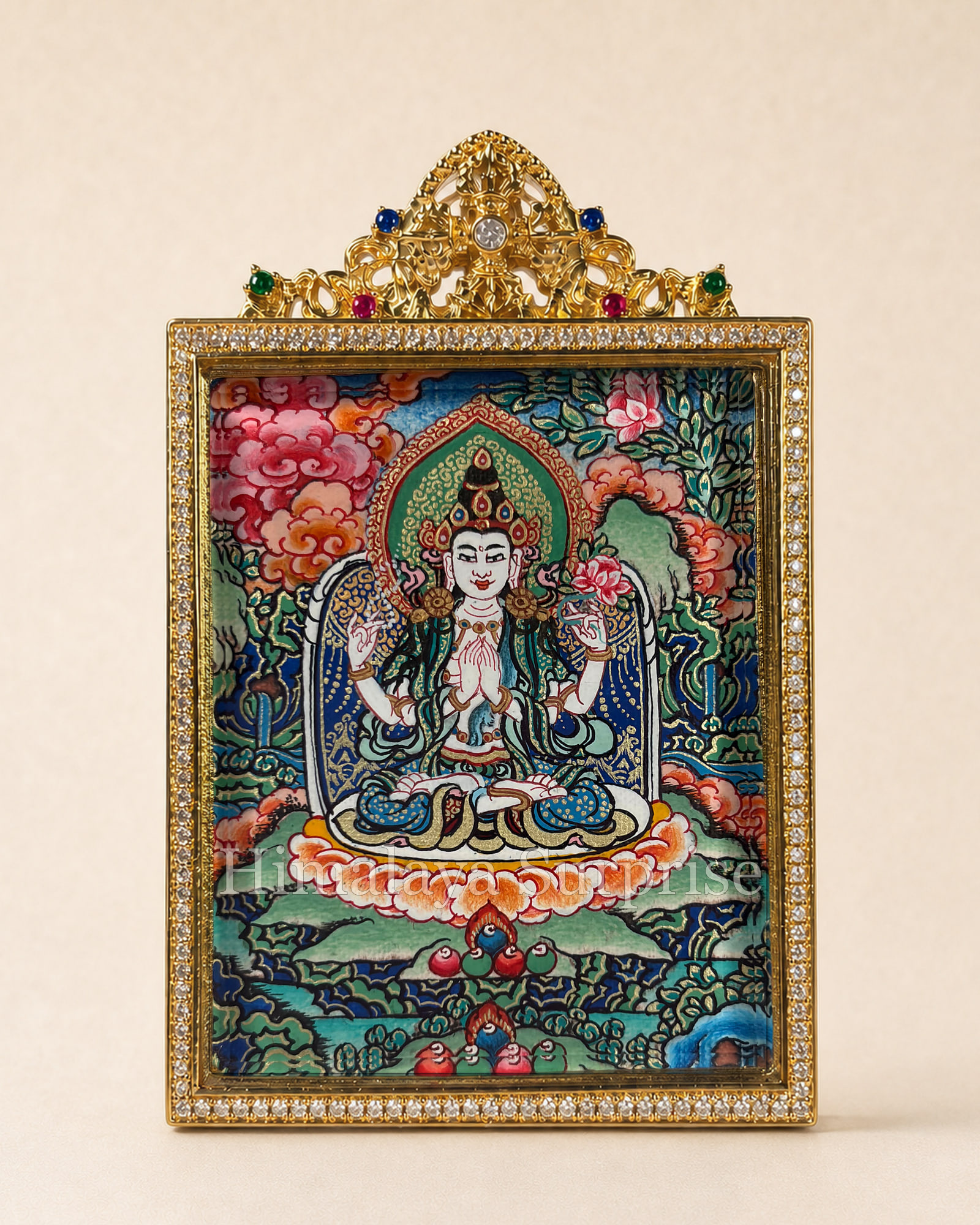
A thangka pendant brings a miniature painting into daily life. In our current collection, the painted area is 4 × 5 cm, with a Gau box and cord included. The painting remains the centre of the work; its case and cord give it a portable form. Understanding those parts makes both its size and its care easier to judge.
How big is a thangka pendant?
Our miniature thangkas have a painted area of 4 × 5 cm: 40 × 50 mm, or approximately 1.57 × 1.97 inches. This measures the image inside the case. The outer housing, crown or hanging loop adds to the complete pendant, so a painting dimension and an overall pendant dimension answer different questions.
To picture that scale, measure a 40 × 50 mm rectangle on paper. It is a useful reference for the image, even though the frame around it will extend beyond the rectangle. There is no single standard size for every thangka pendant: miniature paintings, cases and mounts can be made in different proportions.
The painting, case and cord
The painting carries the figure, gestures, colour and fine lines. The surrounding case supports and protects it, while the hanging loop connects the complete object to its cord. These parts belong together, but their measurements are not interchangeable. A cord length does not describe the size of the image; an image dimension does not describe the weight or thickness of the housing.
Front and reverse views help explain how a pendant is put together. In the TG-002 photographs here, the front presents the miniature painting and its ornamental surround; the reverse shows the back of the housing and the hanging arrangement. The photographs reveal the form, rather than supplying measurements that have not been stated.
What is a Gau box?
A gau is a portable shrine or amulet case. Depending on its design and tradition, it may hold a sacred image, text, mantra, relic or tsa-tsa. The name is also written ga’u, gawu or ghau. Some forms are carried around the neck; larger examples may be worn with a shoulder strap.
Our thangka pendants use a Gau box to house a hand-painted miniature. A thangka pendant and a Gau are therefore related terms rather than exact synonyms: the first names a painting presented as a pendant, while the second names a kind of container with a much broader history of use.
Reading size from a product photograph
A large photograph is useful for seeing the face, hands and painted details. It is less useful for judging physical scale. Cropping, browser zoom and the size of your screen all change how large the same pendant appears. Enlarging a photograph reveals more of the image; it does not enlarge the painting itself.
Read dimensions alongside the photographs, keeping the painted area and complete case separate. If the outer size or weight matters for how you plan to wear a particular work, a direct enquiry is more useful than estimating it from an enlarged image.
How it rests when worn
For a thangka pendant with a cord, its length and adjustment, the shape of the case and the position of the hanging loop determine where the pendant rests. Clothing changes the way it sits as well. A taller or rounder case can look quite different on the same cord, so the 4 × 5 cm image measurement cannot predict one fixed position on the body.
Let the housing rest securely and keep the painting facing outward. Before wearing, check the loop, cord and knot for looseness or wear. If an attachment has loosened or a cord is fraying, set the work aside until the fitting has been assessed. A secure connection is part of enjoying a small painting on the move.
Everyday care for a thangka pendant
Take the pendant off before bathing, swimming or exercise. Keep it away from perfume, skincare sprays, smoke, heat and repeated knocks against keys or hard jewellery. A protective case helps with everyday handling, but it does not make a painted miniature waterproof or resistant to every kind of impact.
Care for the part you are actually touching. The painted surface and its fine gold details should remain untouched. A clean, soft, dry cloth may remove loose dust from a clearly separate, stable exterior housing or glazing, without rubbing the painting, pressing the cover or opening the case to clean inside. Avoid liquids, metal polish and jewellery-cleaning products near the image and its edges.
Between wears, rest the complete pendant in a dry, padded space, separate from hard objects and direct sunlight. Support the frame for tabletop viewing rather than leaving it suspended by its cord or resting the image face-down. If paint lifts or powders, a water mark appears or a damp smell develops, stop cleaning and seek advice suited to the particular work. Our full thangka care guide explains the different needs of paintings, mounts and protective housings.
Choosing an image to live with
Begin with the painting: the figure, expression, hands and attributes are what you will return to at close range. A small scale invites a particular kind of attention. Fine outlines, the curve of a lotus and changes in the light on gold can reward looking slowly, even within a few centimetres.
Then consider how you hope to enjoy it: worn against clothing, carried on a journey or kept for quiet viewing at home. Our miniature thangka guide brings these choices together. Size is a useful practical reference; the image is what gives the work its lasting place.
Questions and answers
Does 4 × 5 cm describe the whole thangka pendant?
For our current miniature thangka collection, 4 × 5 cm describes the painted area — 40 × 50 mm, or about 1.57 × 1.97 in. The Gau box, frame, hanging loop and cord are separate parts of the complete pendant.
How should I care for a thangka pendant?
Check the cord and fittings before wearing; remove it before bathing, swimming or exercise. Keep the painting untouched, avoid water, sprays and impacts, and store the complete work in a dry padded space. Clean only a clearly separate, stable exterior housing or cover gently; do not use jewellery polish near the painted image.
Can I judge the actual pendant size from a product photograph?
A photograph shows shape, finish and detail, but screen size, cropping and zoom change how large it looks. Use the stated measurement for physical scale. If only a photograph is available, it cannot by itself establish the actual size.
What determines where a thangka pendant sits when worn?
The cord's length and adjustment work together with the pendant's shape, thickness and hanging point. Clothing and how the cord is worn also matter, so the painted area alone does not determine one standard position.
What is a Gau box?
A Gau, also written ga'u, gawu or ghau, is a portable shrine or amulet case. In our thangka pendants, the Gau box houses the hand-painted miniature. Its case dimensions and the painted area's dimensions describe different parts of the work.