Choosing & collecting
Choosing your first miniature thangka
Start with a painting you like, then consider its subject, dimensions and how you would enjoy it. A shortlist of two or three works makes the choice more personal and more practical.
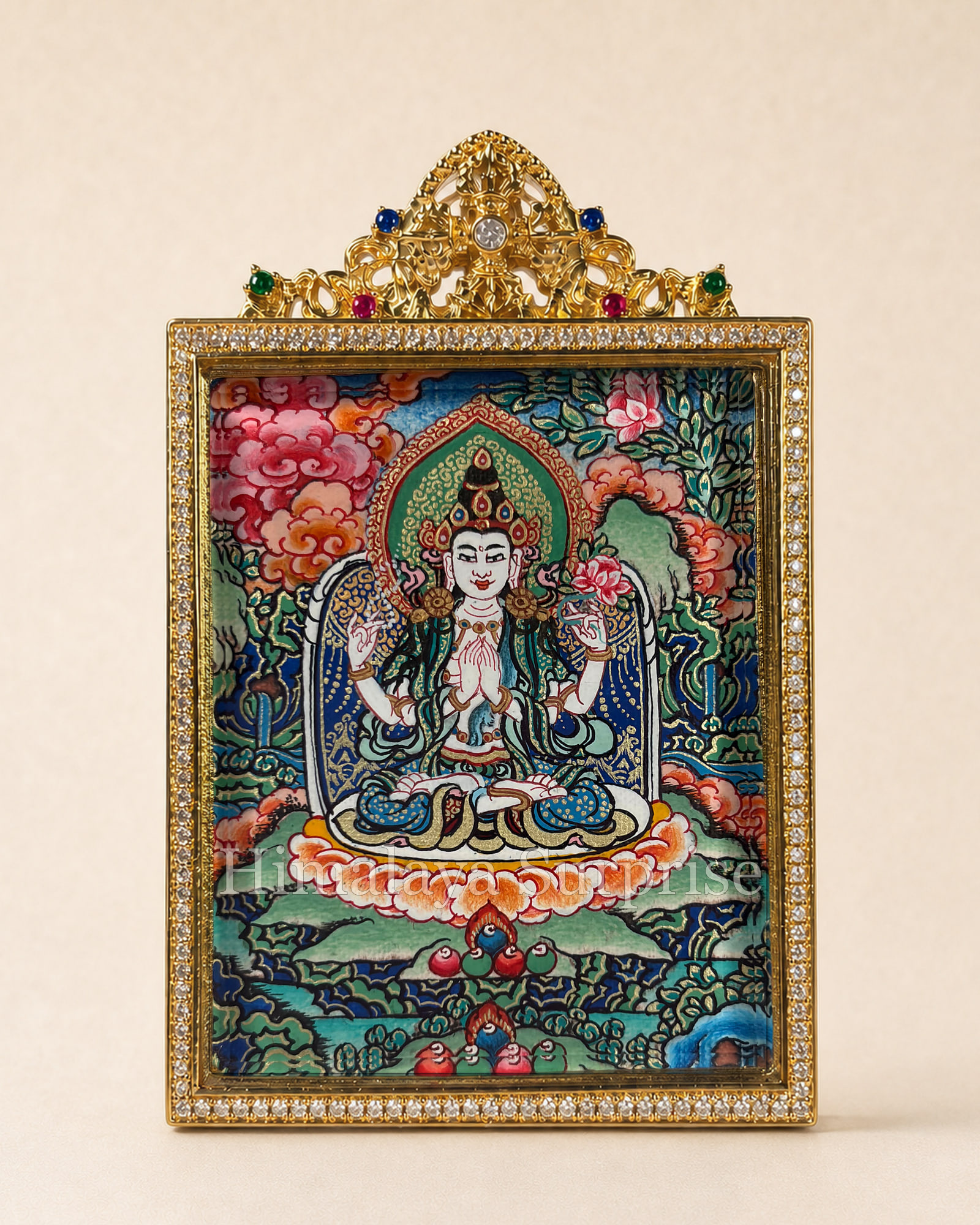
Your first miniature thangka need not begin with a complicated list of meanings. A face, a shade of blue or a fine line emerging from gold may be what makes you pause. That response is a useful place to start.
Next, bring the feeling to a practical choice. Which work attracts you? How would you enjoy it? Do its photographs and dimensions match your expectations? These questions are more useful than learning every subject at once.
Compare two or three works, not the entire collection
Keep a small shortlist. You do not need to rank it immediately; simply note what first caught your attention: colour, expression, posture or intricate ornament.
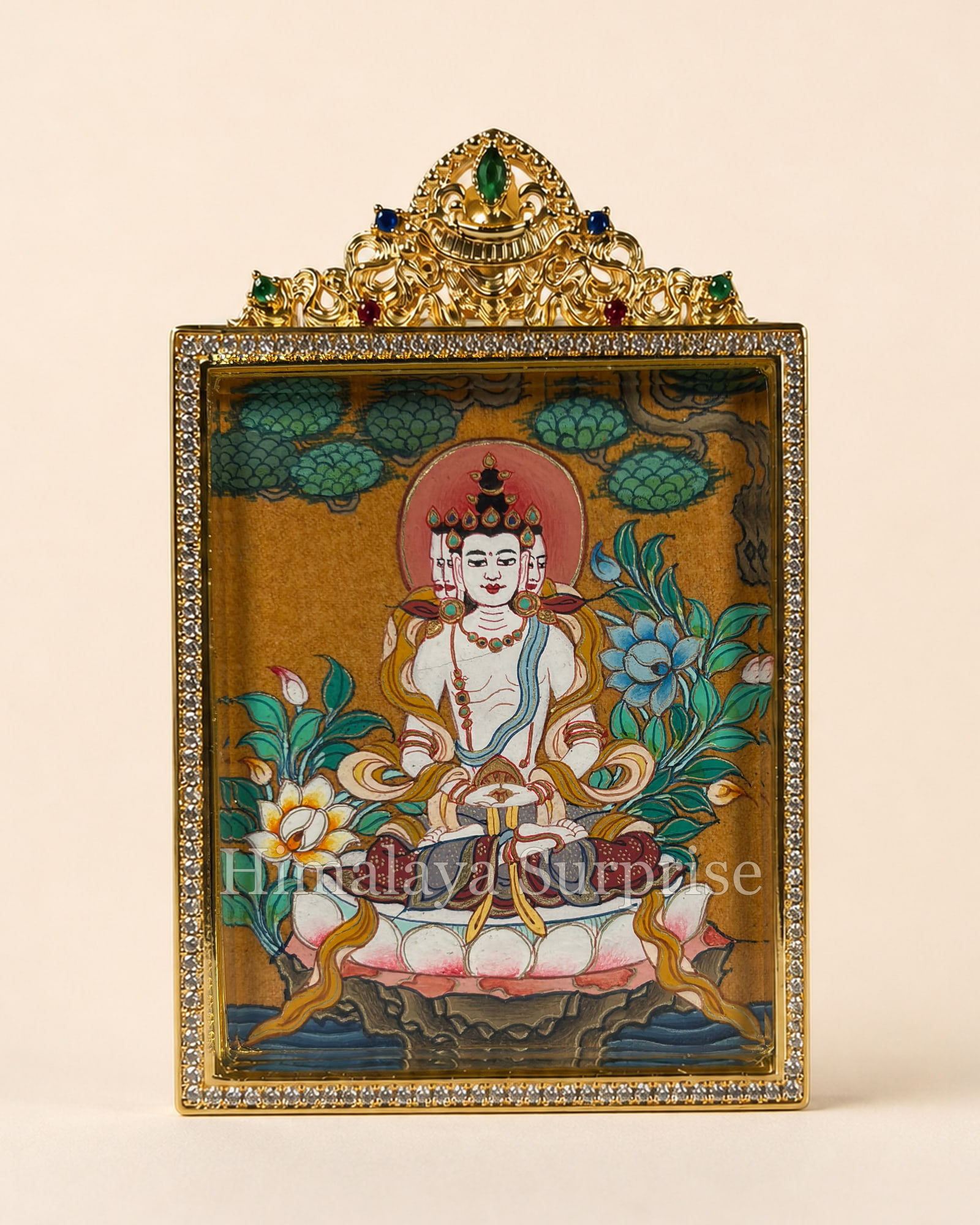
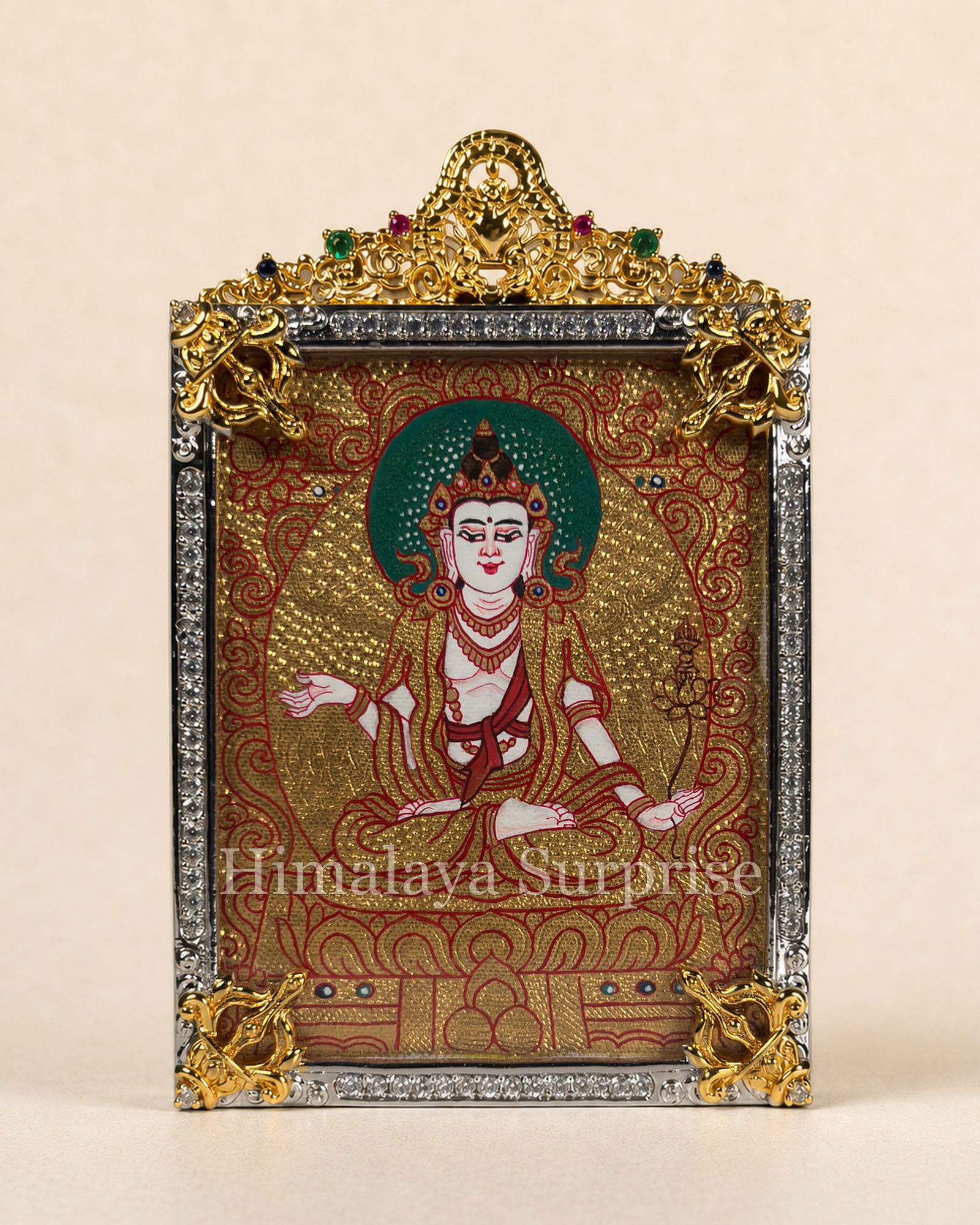
, Four-Armed Avalokiteshvara, combines a white figure, blue-green garments and layered lotus petals. , a gold-ground Manjushri, unfolds through red drawing within a more unified field. Their viewing experiences differ without one style needing to be labelled superior.
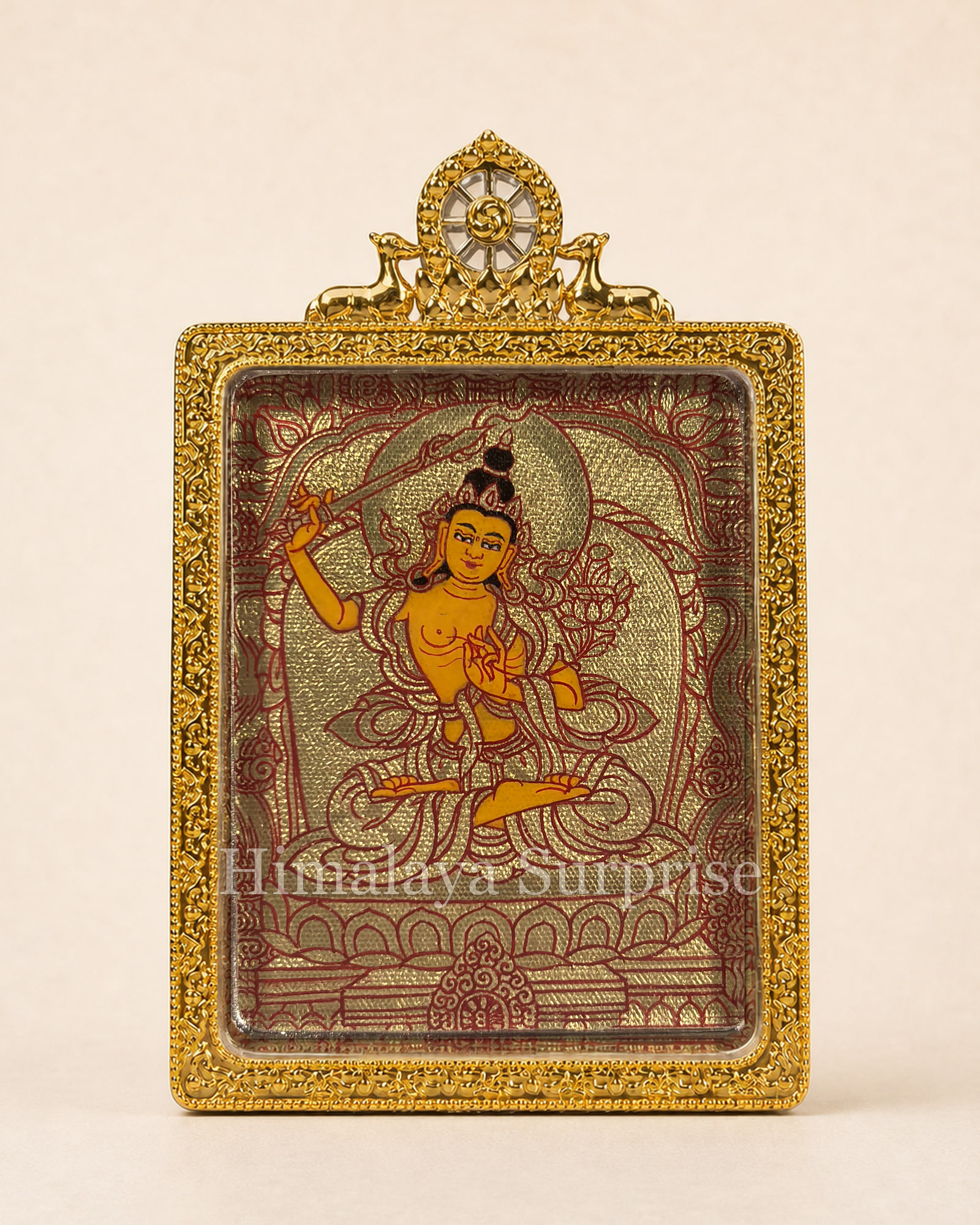
Compare three things you can actually see
Begin with the face: which expression holds your attention? Then look at gestures and attributes: which would you enjoy understanding more deeply? Finally, return to the whole. Does the relationship between figure, setting and lotus seat appeal to you?
After examining enlarged details, look again at an ordinary viewing size. A close-up helps explain workmanship; a full view shows what you are likely to notice first in daily life.
Knowledge of the subject can enter here. Four-Armed Avalokiteshvara is associated with compassion, Manjushri with wisdom. Those associations can enrich your preference without determining a compulsory choice.
Consider how you would enjoy the work
Would you mainly wear it or keep it in a stable place for close looking? For wearing, the frame, cord and overall weight matter. For display, consider suitable support and gentle light.
For a gift, begin with the recipient’s interests and comfort with religious imagery, then consider the subject and visual style. A thoughtful choice responds to an individual rather than assigning one figure to a broad category of people.
Read the dimensions: picture and frame are different
The 4 × 5 cm listed for and describes the painted area, excluding the frame. Draw a rectangle 4 cm wide and 5 cm high on paper with a ruler to get a feel for that area. An on-screen photograph changes with device size and zoom, so it is not a reliable physical scale.
For wearing, also confirm overall framed dimensions, weight and cord information. Enquire with the work number about details not provided on the page rather than estimating them from a photograph.
Read the photographs and record together
Open each shortlisted work and review the front and reverse views, painting dimensions, artist and material record, then its current price and availability. You are choosing an individual object, not an abstract category such as “Manjushri” or “Avalokiteshvara.”
The buyer guide explains delivery, payment and purchase arrangements. Reading work details and service information separately makes it easier to identify anything you need to confirm before ordering.
A useful way to ask for help
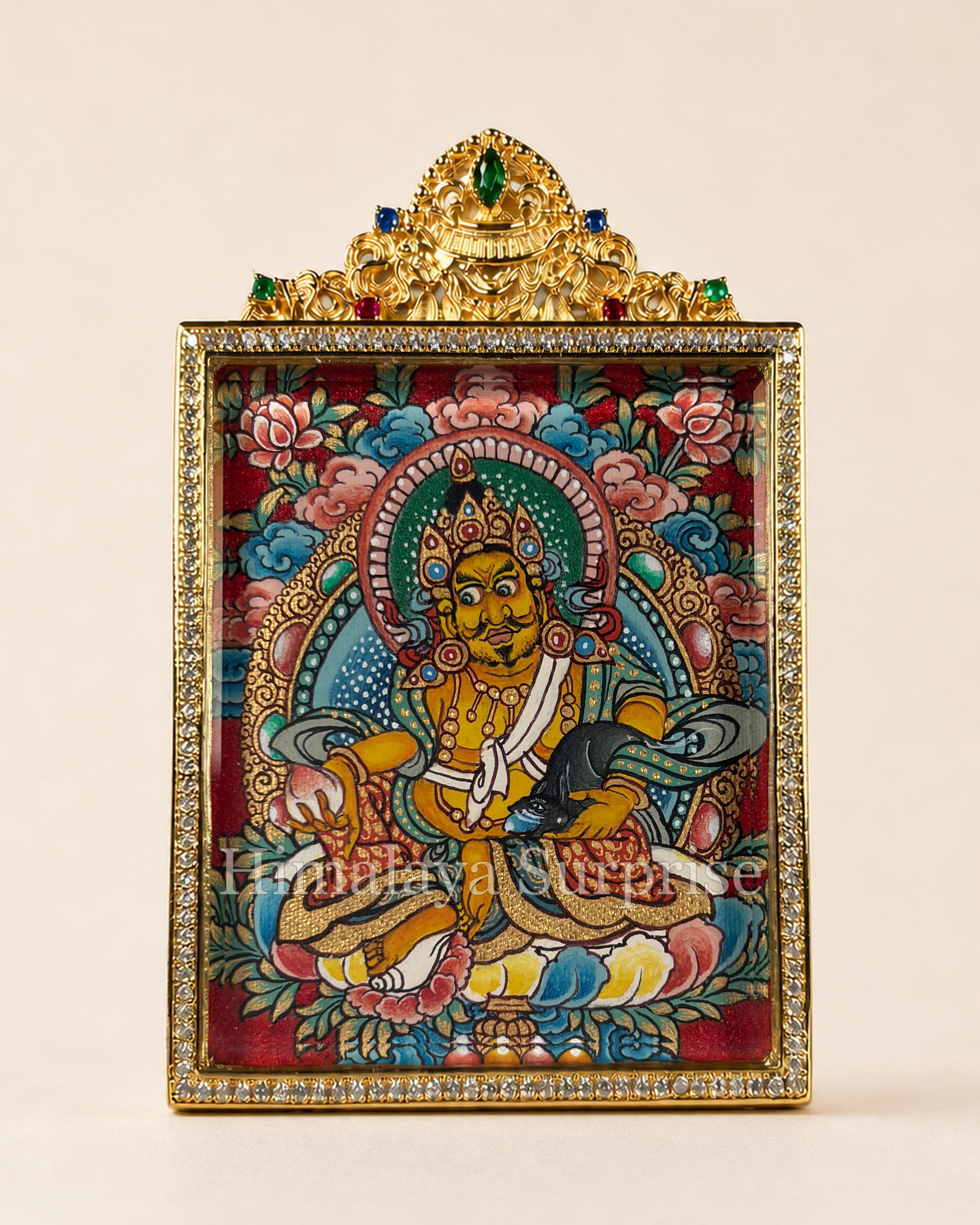
“I am comparing and , mainly for wearing. I am drawn to fine linework and would like to confirm their framed dimensions and weight. Could you help me compare them?”
Sharing the work numbers, intended use and the details that matter to you makes the conversation specific. When a work feels right, continue from its page. When you are still deciding, begin with a clearer comparison.