In this article
Preparing and Stretching the Canvas
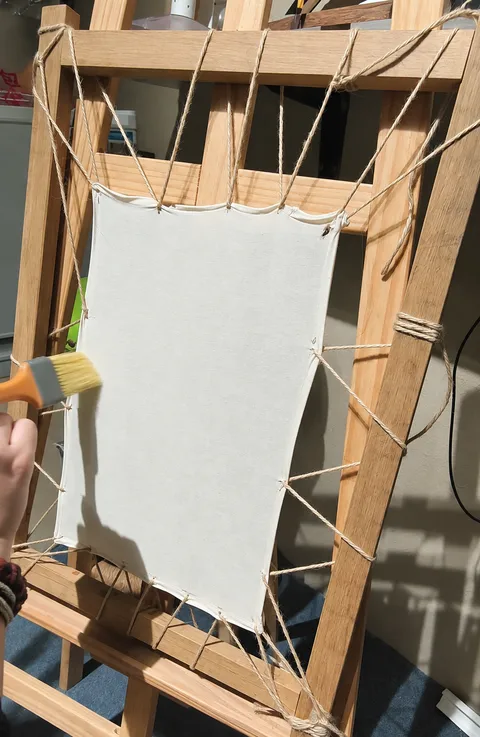
The canvas is usually a light-colored, fine-weave cotton cloth; some practices also use hemp. The edges are stitched to a frame and pulled tight with rope so the surface is even and stable. The exact way of stretching can vary. In one documented process, the canvas is first secured to a bamboo frame and then stretched onto a wooden frame to maintain uniform tension. Local process records also show frames, wire, and rope used together to hold the cloth in place.
The stretched cloth receives a ground made with materials such as bone glue, gypsum, or another white base. The coating is applied in thin layers and allowed to dry before the surface is worked again. The canvas is then rubbed repeatedly with smooth stones, pebbles, or other polished tools until it becomes level, fine, and firm.
The ground and polishing give the paint an even surface to sit on. They also reduce absorption into the cloth and help limit problems such as cracking or loss of color. Once the surface has dried completely and its texture has been flattened, it is ready for the underdrawing.
Measurement, Layout, and Underdrawing
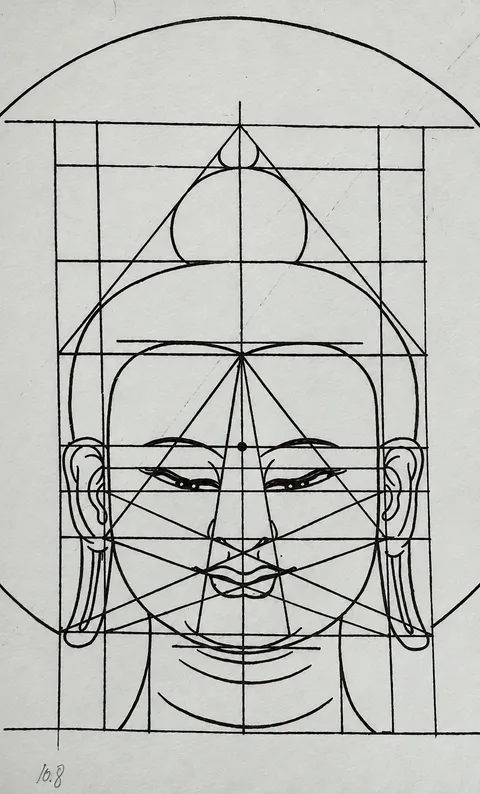
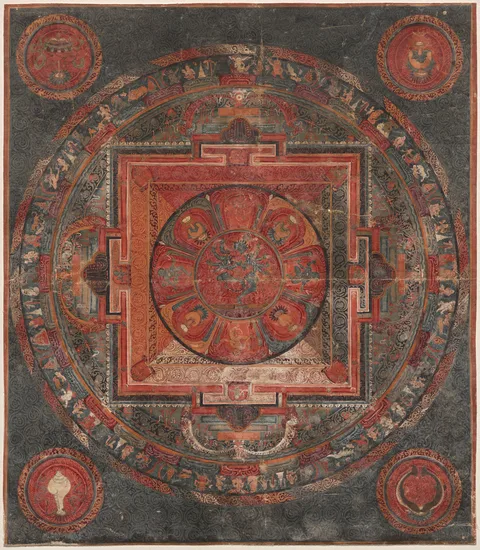
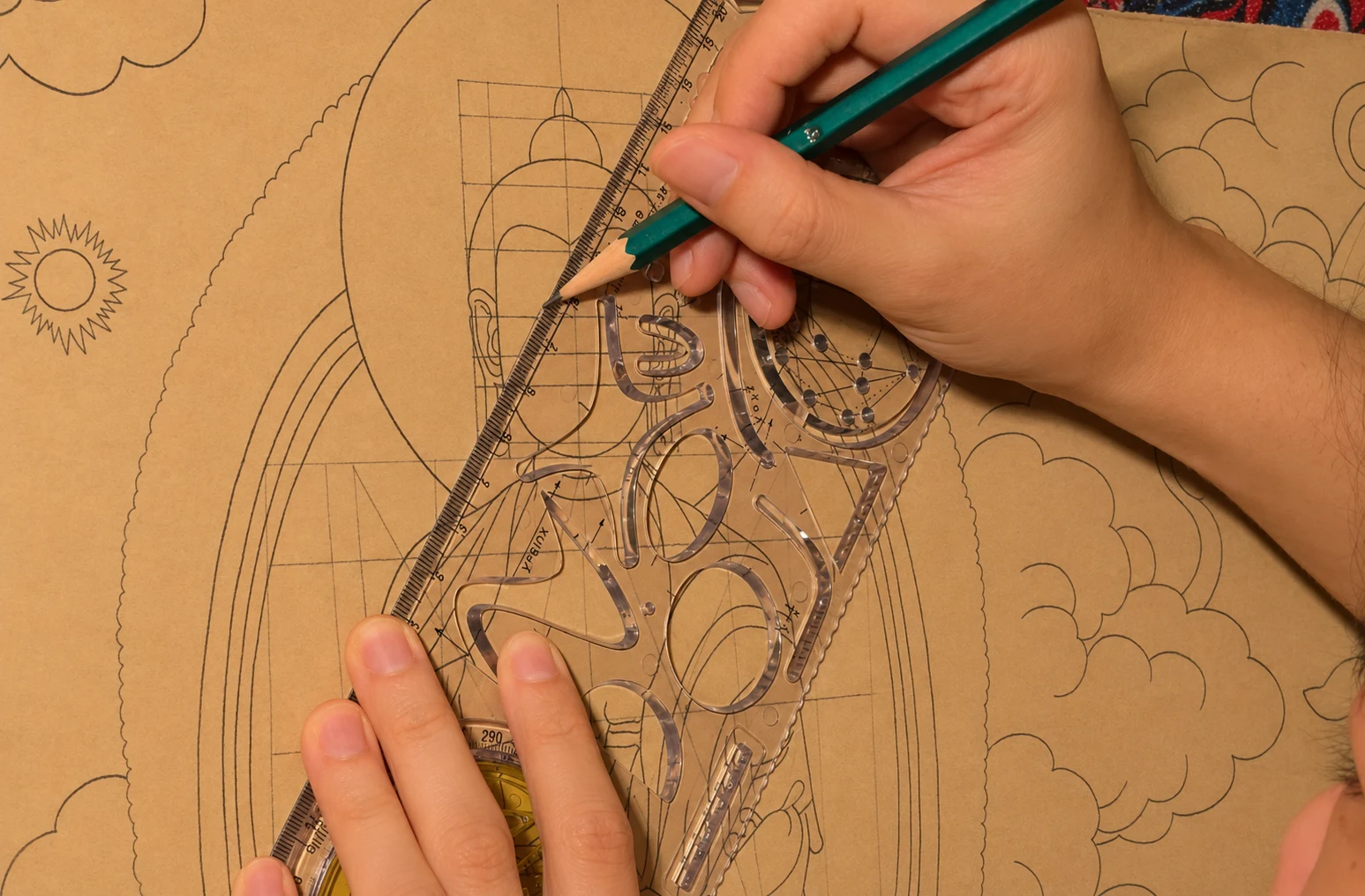
The prepared canvas is positioned before the image is drawn. The painter establishes a center point, a central vertical line, edges, and diagonals to organize the composition. The main figure, attendants, ornaments, landscapes, flowers, and other elements are placed according to the layout and proportional system required by the image.
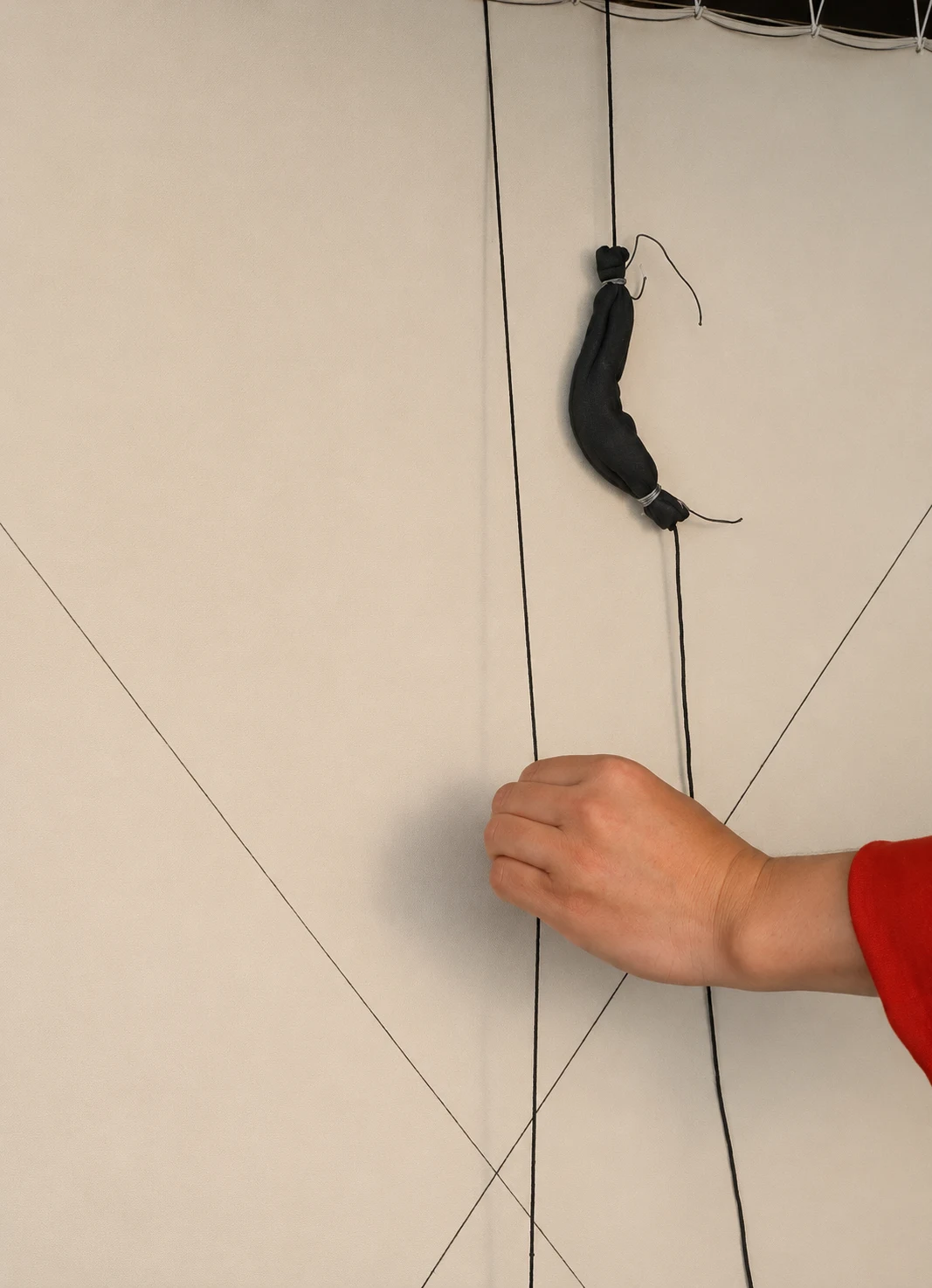
Measurement concerns more than size. In thangka drawing, proportional relationships also organize a figure’s posture, hand gestures, and overall form. Center lines, diagonals, and gridlines transfer those relationships onto the canvas and give the painter references for placing details. A drawing may also carry color notations that indicate how different areas will be painted later.
The first sketch is made with charcoal. The painter then uses black ink to refine the contours and establish the structure of the main figure and the surrounding forms. Once the underdrawing is fixed, the later color work follows the structure already set on the canvas.
Pigments and Layered Color
Thangka colors may come from mineral, plant, and animal materials. Mineral pigments are first crushed and ground, then washed and settled in water so particles of different sizes can be separated. The selected color powder is mixed with water and a binding material such as bone glue, adjusted to a workable proportion, and left to settle before use.
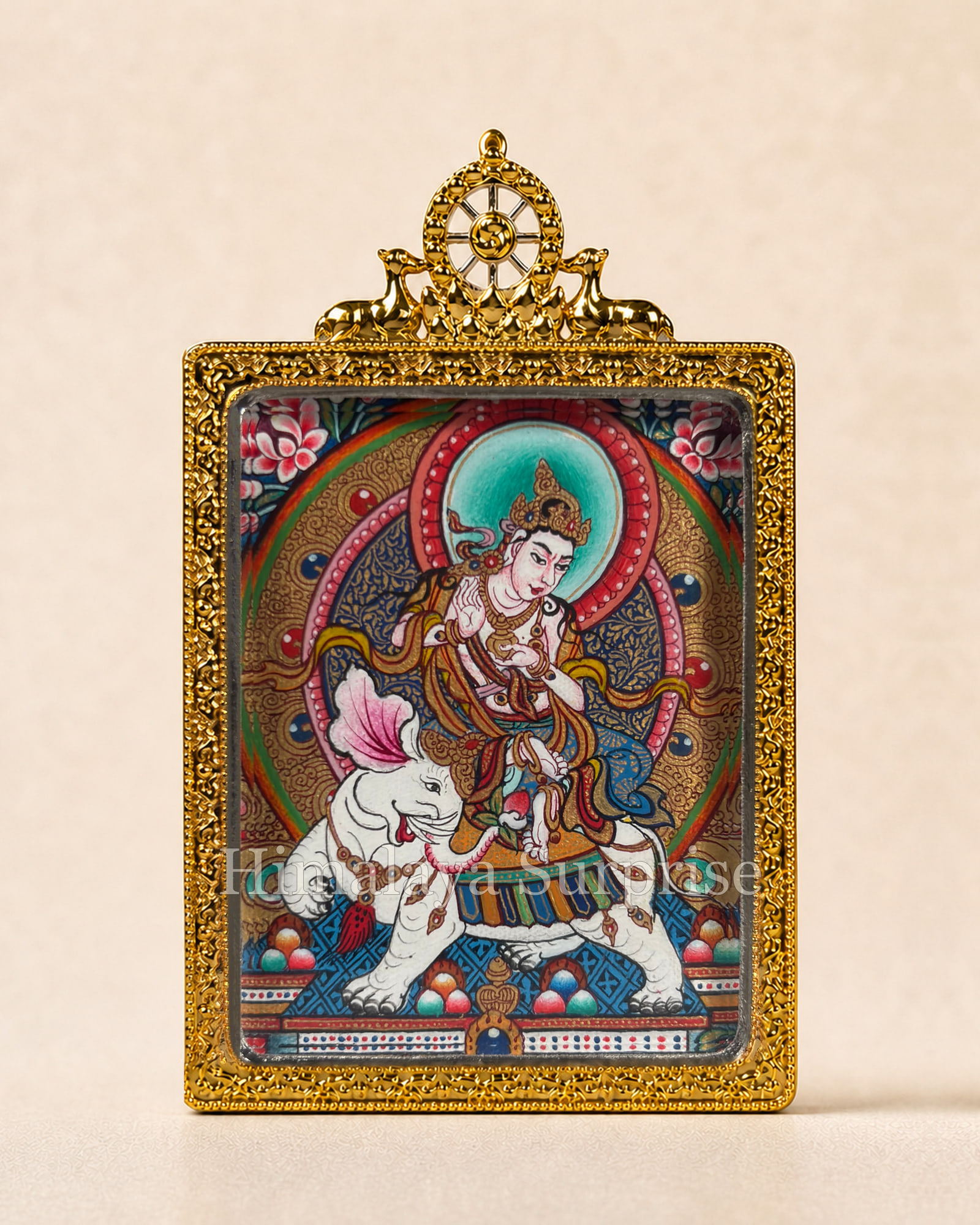
Color is applied by area. The painter may begin with the sky, ground, water, rocks, clouds, and other background elements before moving into the central figure and its body. Colors are built from lighter areas to darker ones, and from broad fields to smaller details. In one documented sequence, the central image proceeds from the lotus throne to the clothing and then the body; the order can change with the composition and the arrangement of the image.
Each layer is allowed to dry before the next is added, which keeps the colors from becoming muddy. Pointillist color work and shading then build transitions within the same color family. These changes of tone give form to skin, petals, folds of clothing, and other details.
Outlining, Gilding, and Detail
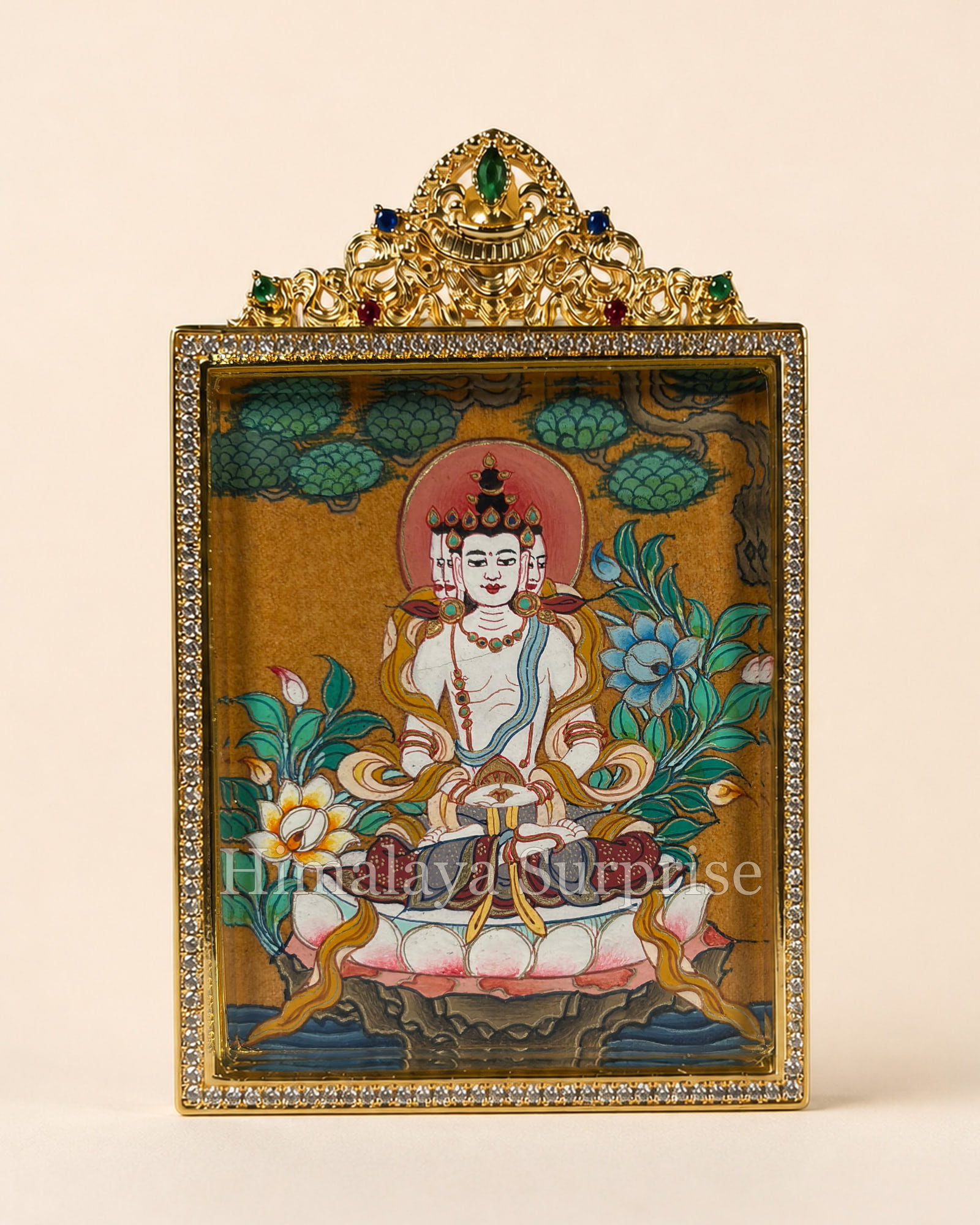
After the color and shading are established, the painter redraws the contours with a fine brush. The line remains controlled and even, while changes in thickness distinguish the outer contour, clothing folds, and ornamental patterns. Fine linework turns the underdrawing into the visible structure of the finished image.
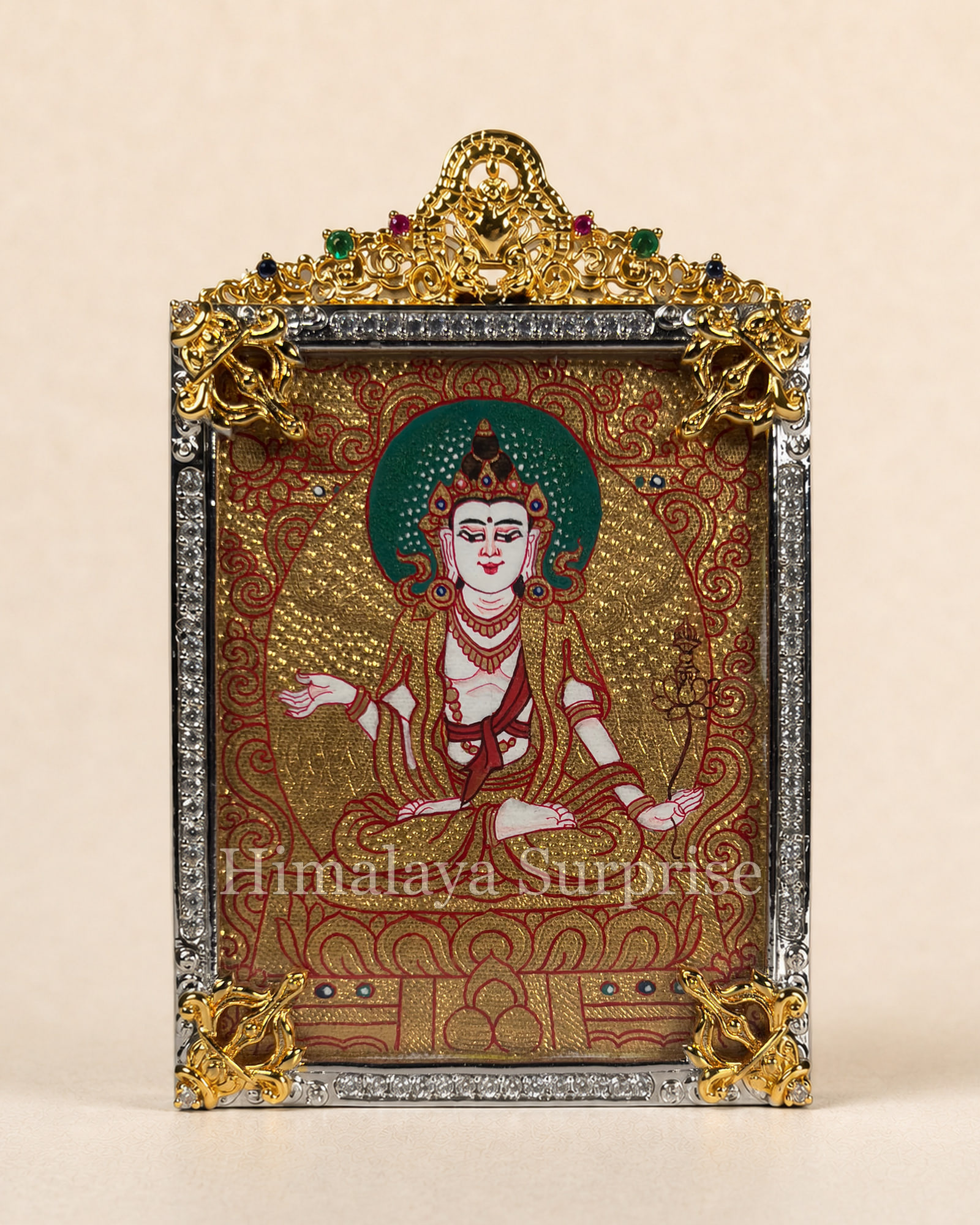
Gilding uses gold powder mixed with a binding liquid. A fine brush applies it to areas such as crowns, hair ornaments, clothing patterns, and borders. Some processes build up selected details before they dry and are polished to bring out the light on the surface.
The painter then adds flowers, clouds, landscapes, animals, and other small ornaments, while correcting color differences. A final review looks at the image as a whole: tones are brought into balance, light and dark are adjusted, proportions are checked, and visible flaws are repaired.
Opening the Face and Mounting the Painting
The opening of the face completes the small features of the figure. It may include the eyebrows, eyes, pupils, nostrils, lips, hands, fingernails, and hair. The eyes are completed near the end of the painting. In some teacher-student practices, a teacher demonstrates or completes this stage.
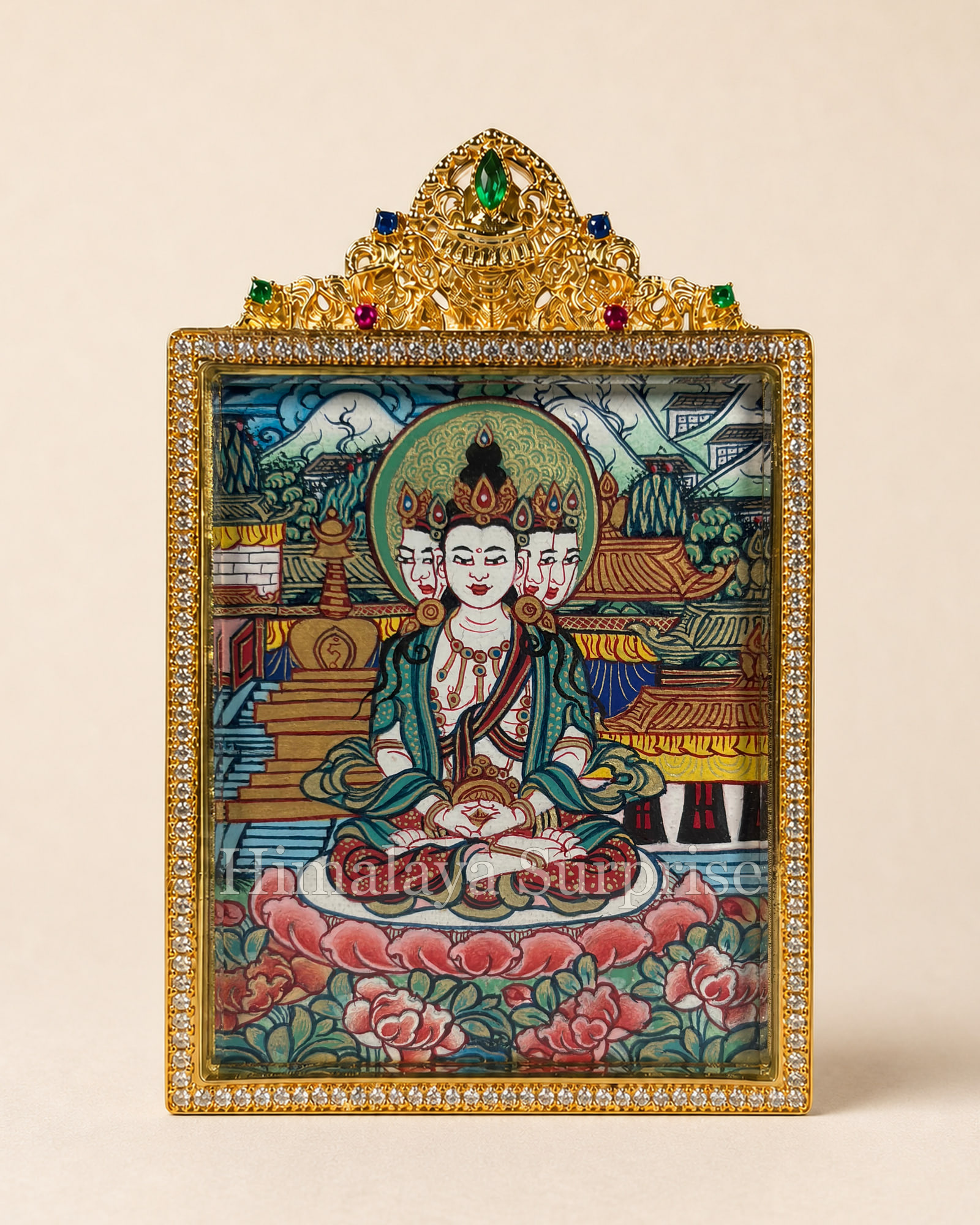
After the painted surface is finished, the canvas can be mounted according to the needs of the work. Silk or brocade may be added as a border. A complete hanging mount can also include a protective curtain and a bottom wooden roller, allowing the thangka to hang flat, open for viewing, and roll up for storage.
Some processes also place writing on corresponding areas of the back and include a consecration performed by a teacher. These steps connect the painted surface, its mounting, and its final preparation as one completed work.
How Long Does It Take to Paint a Thangka?
A thangka may take six months to complete, or the work may continue for several years. That period includes canvas preparation, drying, layered color, pointillist shading, outlining, facial details, and mounting. The time required changes with the complexity of the image, the painter’s experience, the time available for the work, and the resources of the commission.
Training also takes time. Traditional instruction can begin with simple forms and basic proportions before moving toward more complex figures. Measurement, facial details, and fine ornament require repeated practice. The long production period therefore reflects both the number of stages in the painting and the skill needed to carry each stage into the next.