In this article
Measurement Sets the Scale of the Figure
Measurement gives each part of the figure a proportional size. A finger width can serve as a basic unit, and the length of the face can also be used for calculation. In practice, a large painting may use a full finger as its standard, while a small painting may use a single finger joint. When the format changes, the image can still be developed through the same proportional relationships.
Standing figures, seated figures, warrior forms, and figures holding implements each have corresponding measurements. The size of the work, the ratio between head and body, and the objects held in the hands are arranged within the same system.
The Central Axis and Horizontal Points Define the Face
The composition begins by setting the position and size of each figure. A vertical central axis is drawn on the cloth or paper. The painter marks the measurement of the head along this axis and then establishes a series of horizontal points. In a detailed underdrawing, seven horizontal points organize the face, including the crown point, the brow center, the tip of the nose, and the chin.
The distance between the crown and the chin can be divided through a “2–4–4–4–4” relationship to obtain the other points. Another practical method is to establish one unit of length and repeat it as the points are taken. These references give the face a working structure before the smaller features are drawn.
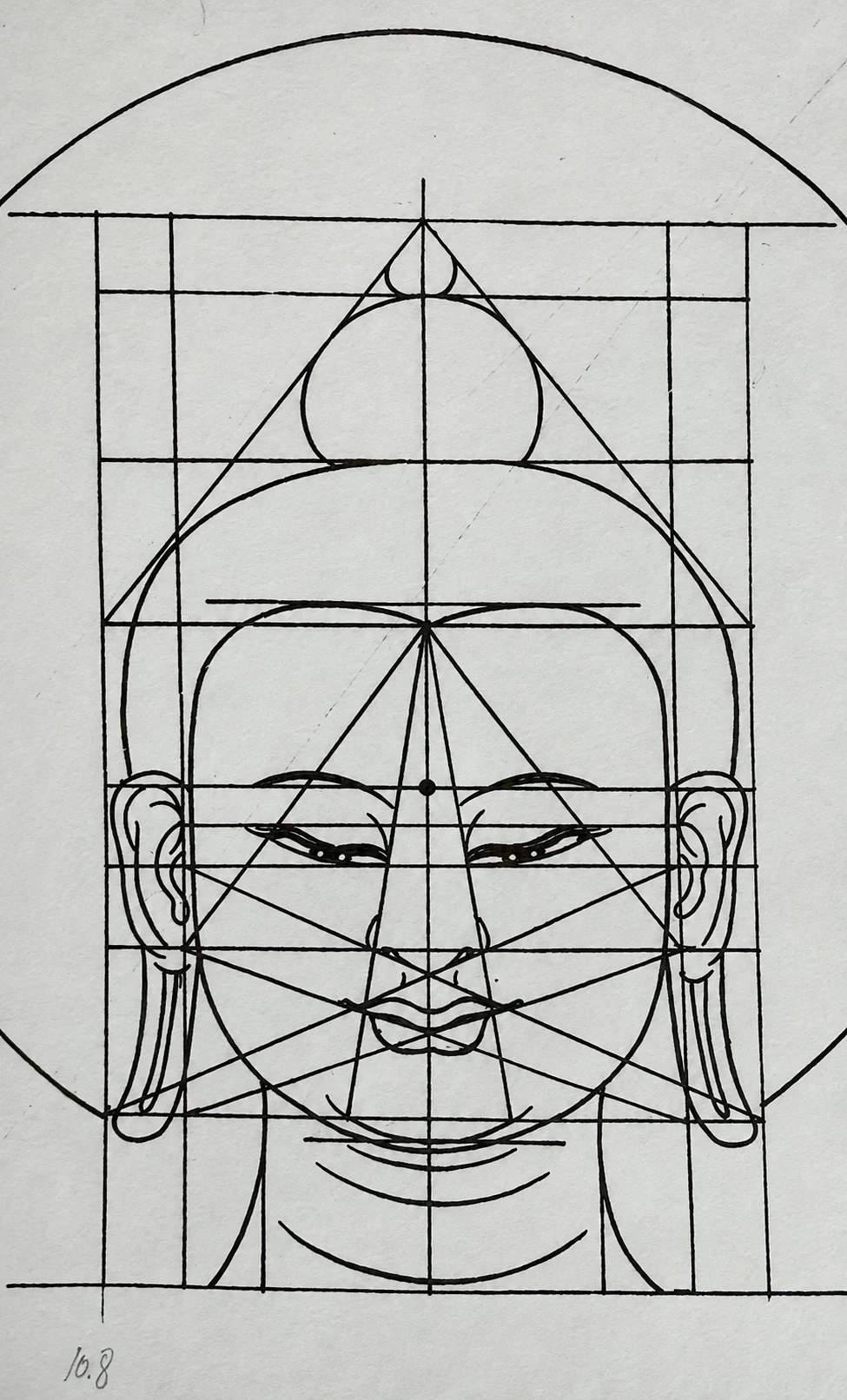
Additional points locate the outer edge of the face, the outer edge of the ears, the upper and lower eye lines, and the eye-division line. Connecting the points provides working references for the width of the face, the width of the ears, the line of the nose, and the centre of the lips.
Hands, Implements, and Posture in the Same Proportional System
The measurement system extends beyond the face. It also covers the size of the body, a seated or standing posture, the hand gesture, the implement held by the figure, and the relationship between the figure and its seat. Each posture requires a corresponding arrangement of the body. The hand gesture and implement enter the underdrawing together with the figure.
The position and size of the principal figure and the other figures are established during composition. Their relationships, along with the gestures, implements, and seat, are set before the painter moves into the final contour.
From Grid and Guides to the Underdrawing
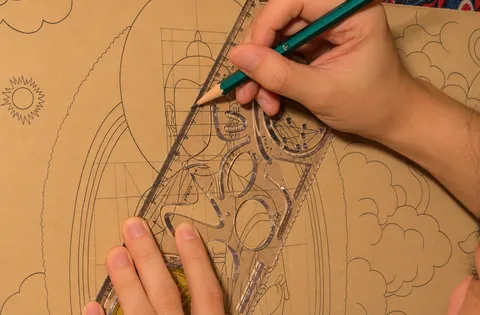
The painter begins the underdrawing lightly with charcoal on the prepared canvas. The main figure, implements, clouds, flowers, and other elements are placed according to the subject and the composition. Proportions are adjusted repeatedly until the form is settled. Measurement points, guides, and a grid transfer the structure into the image, allowing the contour to follow an established framework.
With long practice, an experienced painter can begin a drawing without marking every grid line one by one. The proportional method remains in the hand even when the visible guides are reduced. Beginners need repeated practice with the grid, measurement points, and proportional relationships before the same structure can be placed steadily.
Linework Carries the Underdrawing Forward
After the underdrawing has been confirmed, the painter uses a fine brush to redraw the contours. The line is expected to remain fluid and even, while changes in weight and rhythm serve different parts of the image. The outer contour, clothing folds, and ornamental patterns each receive an appropriate treatment.
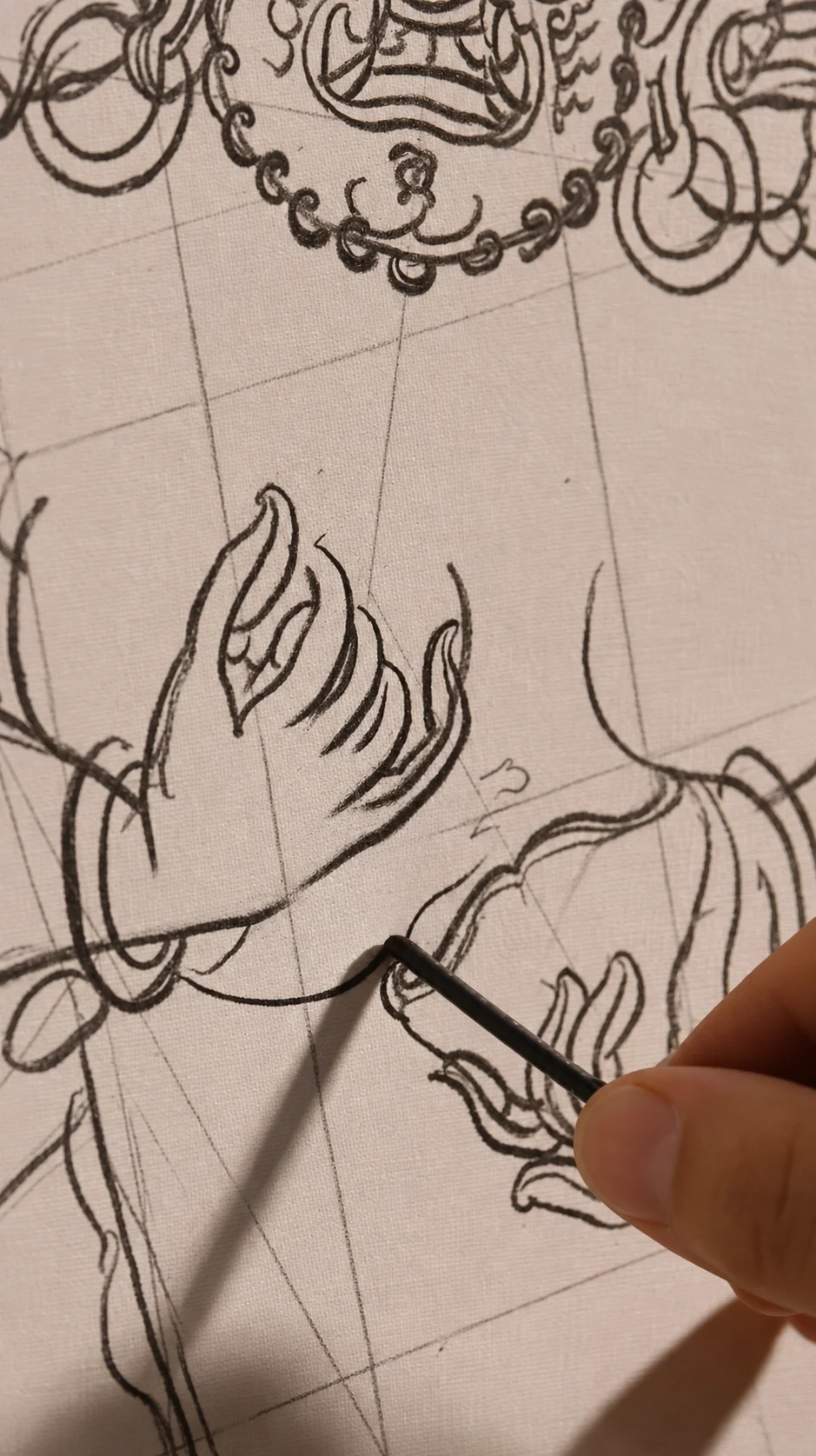
Thangka linework requires a suitable brush and pigment, together with control of pressure and rhythm. The line stays even while controlled changes in thickness establish layers between the contour, the clothing, and the ornament. Local features such as flames follow the same discipline of line. Once the linework is complete, the painting can move into later stages of color application, shading, and gilding.
Differences Across Lineages
Different lineages can vary in drawing style and in the way the image is begun. Their basic proportional relationships are broadly similar. Training turns the full measurement system into a practical skill: beginners first memorize the relationships, then repeat them through underdrawing and linework. As experience grows, a painter may reduce the visible use of rulers and grids while continuing to work within the established proportions.