In this article
Canvas and ground
The canvas is usually white or off-white cotton cloth. The cloth is first sewn to a wooden or iron frame. Thread and cord secure the edges, keeping the surface stretched and even while it is prepared for painting.
The stretched cloth then moves through coating, grounding, drying, and polishing. Bone glue, plaster, and water are mixed and spread across the surface. Once the layer has dried, the surface is worked repeatedly with stones, smooth pebbles, an inverted bowl, or a smooth wooden board. Coarse polishing addresses raised areas and loose fibres; finer polishing gradually produces a smoother, more even surface.
After this preparation, the cotton cloth becomes a surface for drawing, laying in colour, and making lines. The thickness of the ground, its drying condition, and the degree of polishing provide the surface on which the following materials can be applied.
Mineral and plant-based pigments
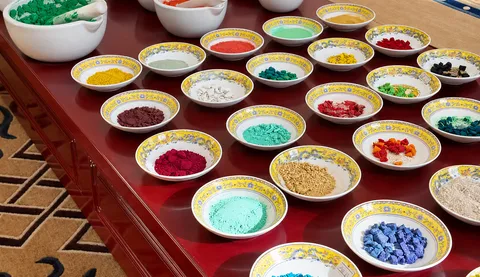
Thangka pigments come from both mineral and plant sources. Mineral materials enter the process as ore, stone fragments, or other solid pieces. Plant-based colours are extracted from parts such as roots, stems, and flowers, with particular materials varying by region and lineage.
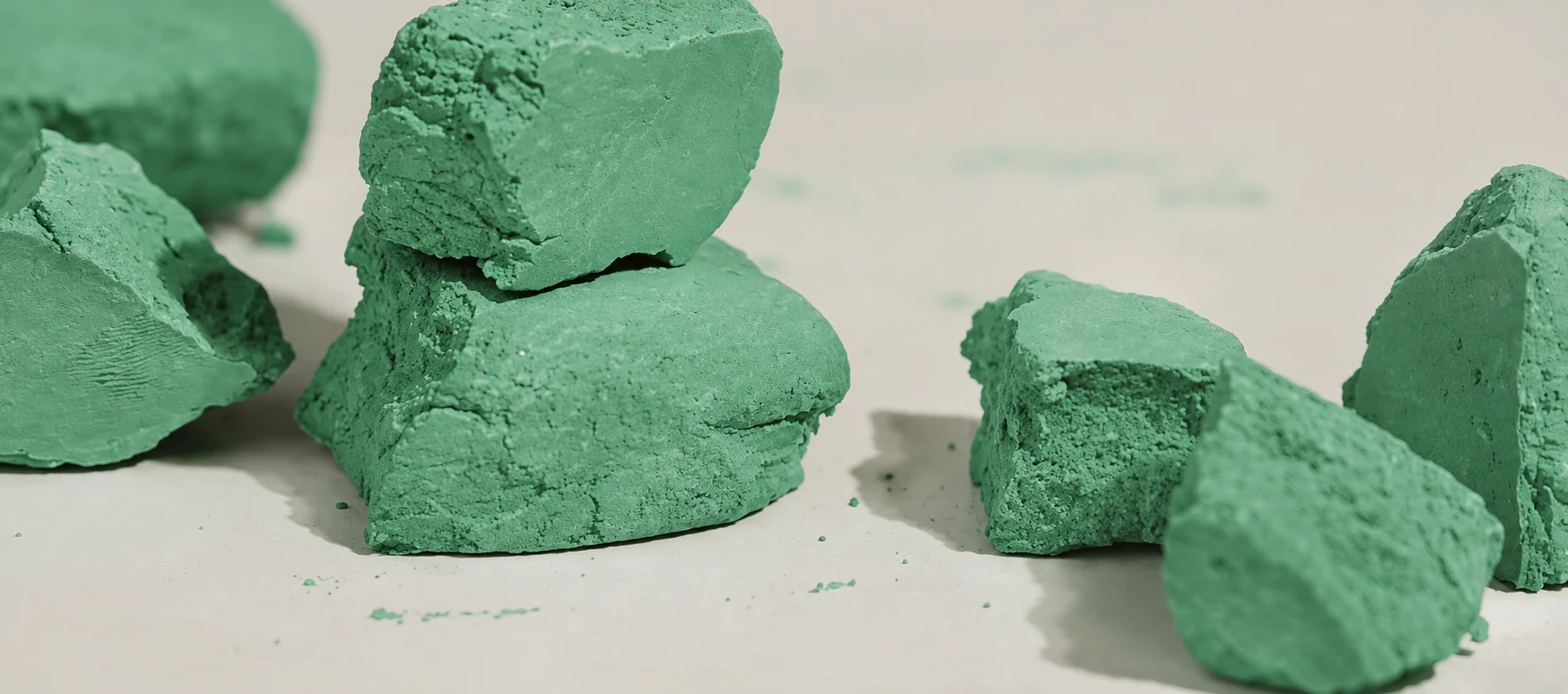
Examples of mineral materials include turquoise, malachite, cinnabar, red coral, lapis lazuli, agate, and pearl. In these material examples, cinnabar corresponds to red, lapis lazuli to blue, turquoise to green, and pearl or chalk to white.
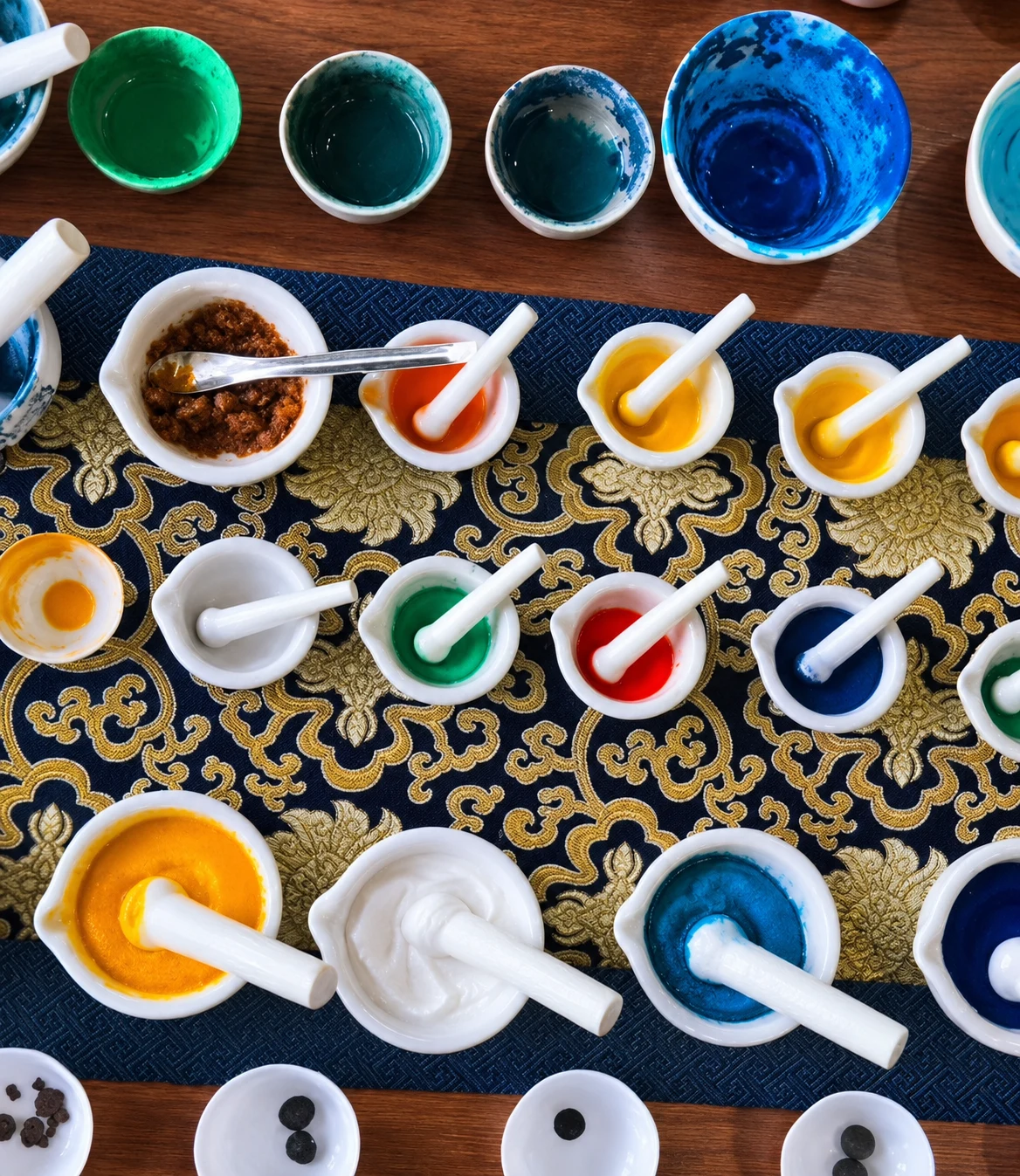
Before these materials reach the canvas, solid pieces must be turned into powders and then prepared as workable colour. Particle size and the state of the processed material affect how it can enter a ground colour, a layered passage, or a fine detail.
Grinding, settling, and mixing
Mineral material is first crushed and then ground repeatedly. Water is added to the ground powder, which is then processed through settling, washing, and separation. Particles of different coarseness separate during this stage, and some materials require several days of continued grinding.
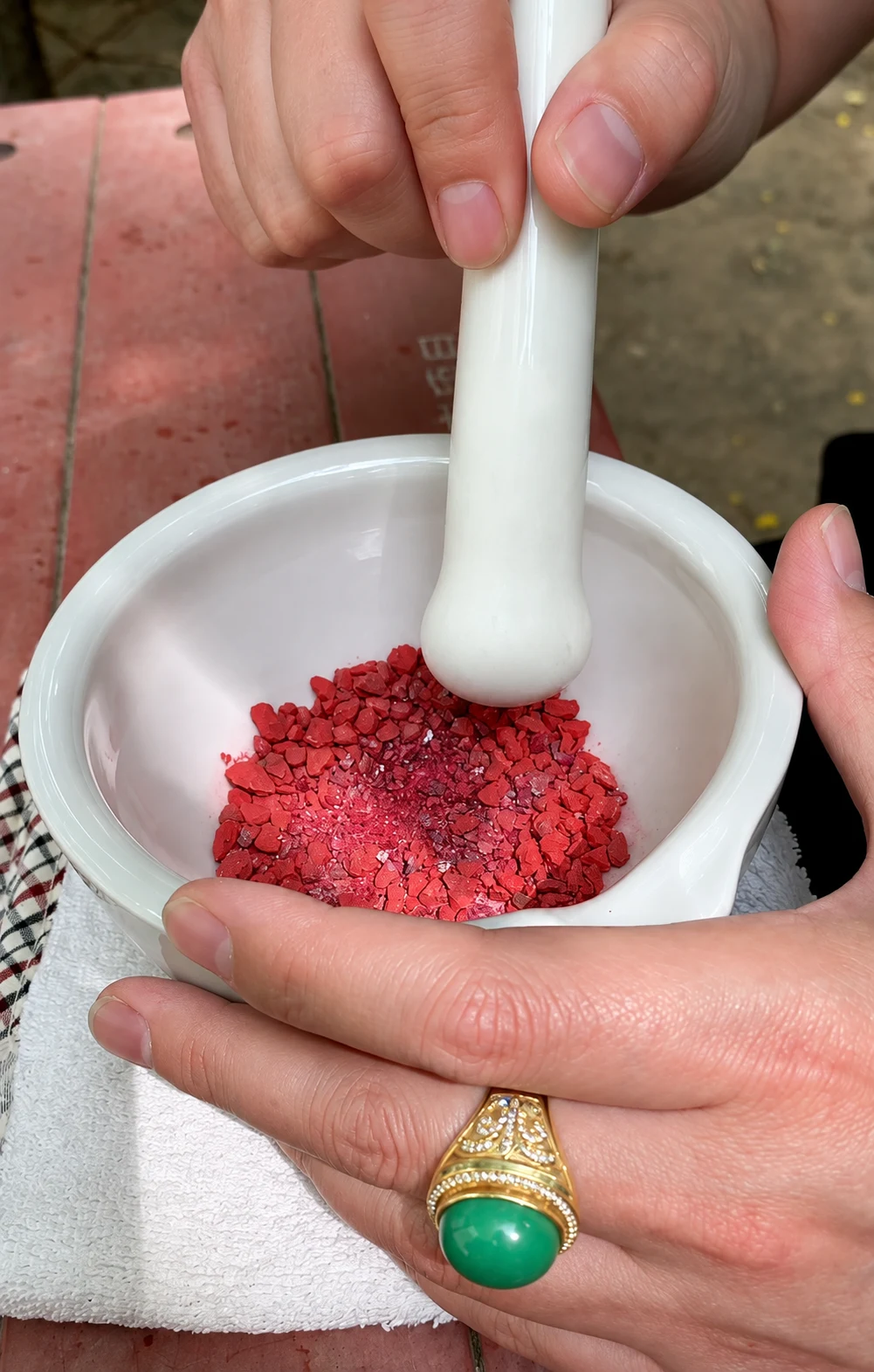
Once the raw material has become a fine powder, it can be mixed. Powder, water, and glue are stirred together until the mixture can be spread, layered, or used for lines on the cloth.
The prepared colour is tested along the edge of the canvas. After it dries, the test area is rubbed and checked for colour loss or cracking. The condition of the glue, water, and pigment is then adjusted before the material is used across the painting.
Bone glue and adhesion
Bone glue appears in both canvas preparation and pigment mixing. In the ground, it helps connect the prepared layer to the cloth. In the pigment mixture, it helps mineral powder adhere to the prepared surface.
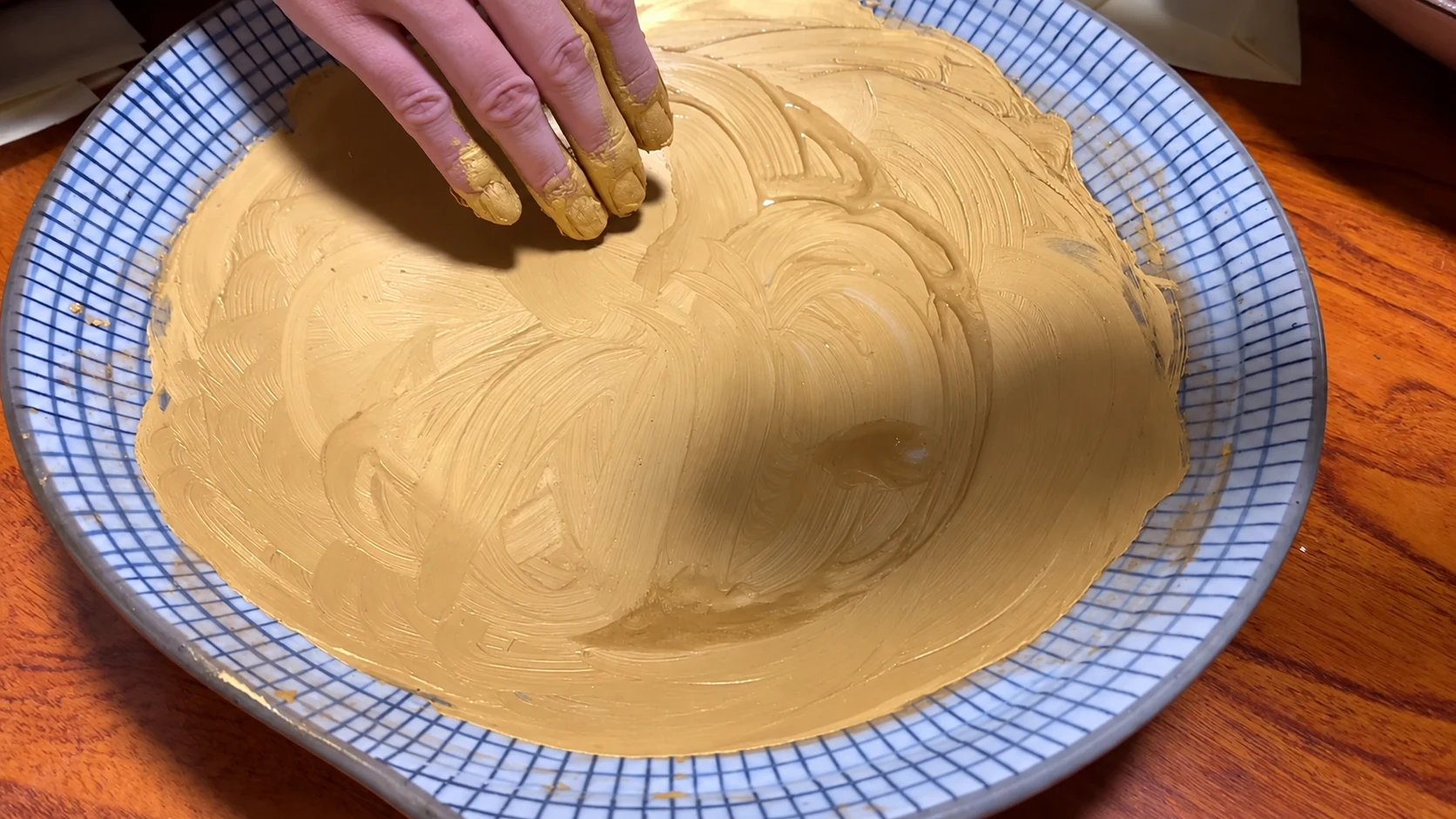
During colour preparation, glue is added gradually and stirred thoroughly into the powder. Edge testing, drying, and rubbing check whether the colour remains on the surface and whether the layer develops cracks. When either problem appears, the condition of the glue, water, and pigment is adjusted again.
Gold leaf, gold powder, and gilding
The gold materials used in thangka painting include gold leaf, gold powder, and gold glue. Gold leaf is ground by hand into powder, which is then mixed with gold glue to create a material suitable for gilding.
The mixture needs enough flow to follow a line while remaining concentrated rather than watery. It is used for gilded lines and selected gold details. The fineness of the powder, the addition of glue, and the way the mixture is stirred affect whether a line remains continuous and whether the gold stays in place on the surface.
The material changes form at each step: a sheet of gold becomes powder, the powder enters a glue mixture, and the mixture becomes a controlled gilded stroke.
Tools and the painting process
The tools correspond to the stages of material preparation. The frame, thread, and cord stretch the cotton cloth. Stones, pebbles, support boards, an inverted bowl, and smooth wood work the ground. Grinding and mixing tools turn solid materials into usable colour.
Brushes enter the painting stage. A long brush is suited to outlining, while a shorter brush can be used for writing or fine details. Different tools determine how pigment, gold powder, and the prepared ground are placed and held on the surface.
From cotton cloth to a prepared ground, from mineral pieces to fine powder, from powder and glue to paint, and from gold leaf to gilded detail, the materials follow the stages of the process. This material sequence turns raw substances into the surface, colour, and gold detail of a thangka.