Gold Forms the Ground of the Painting
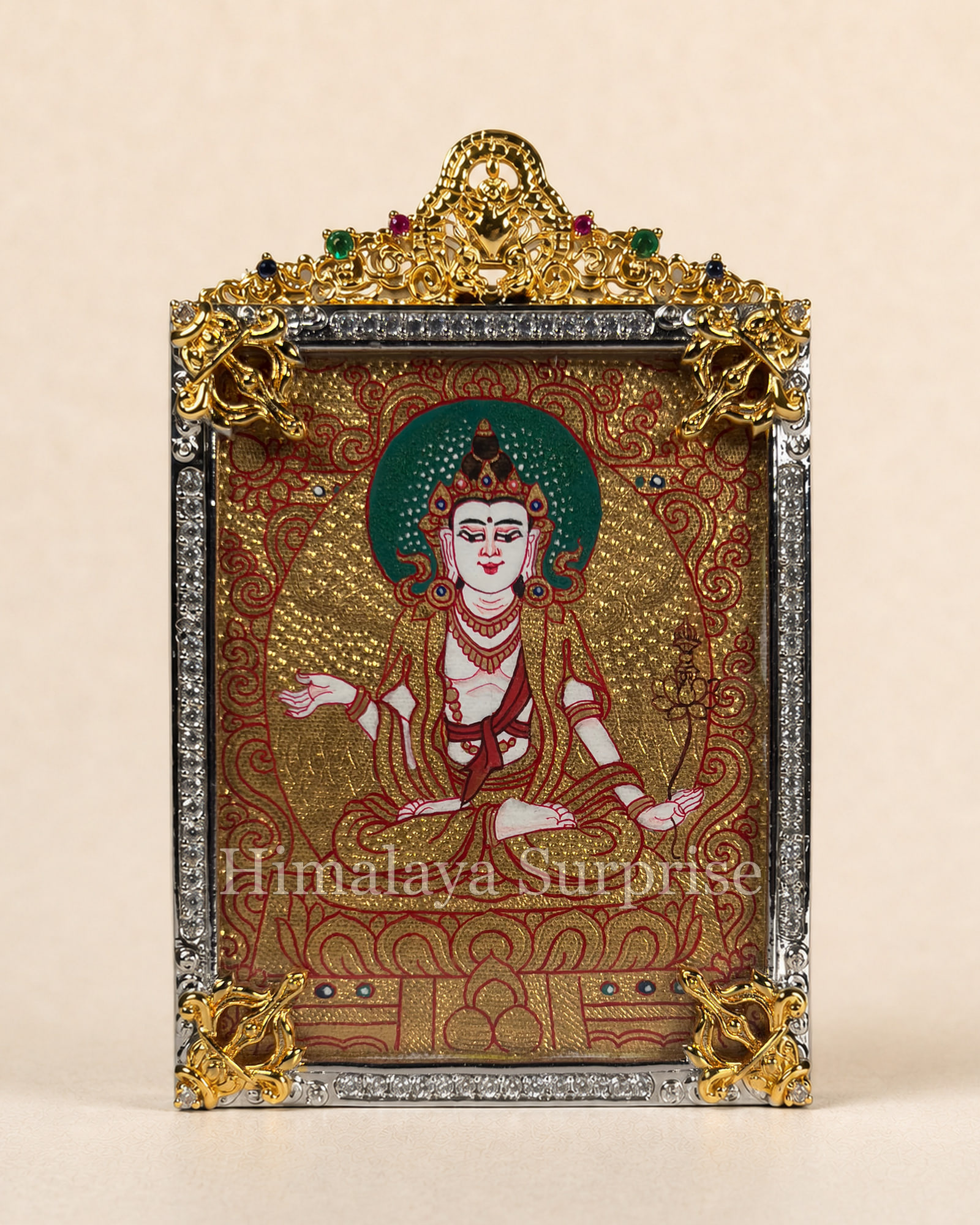
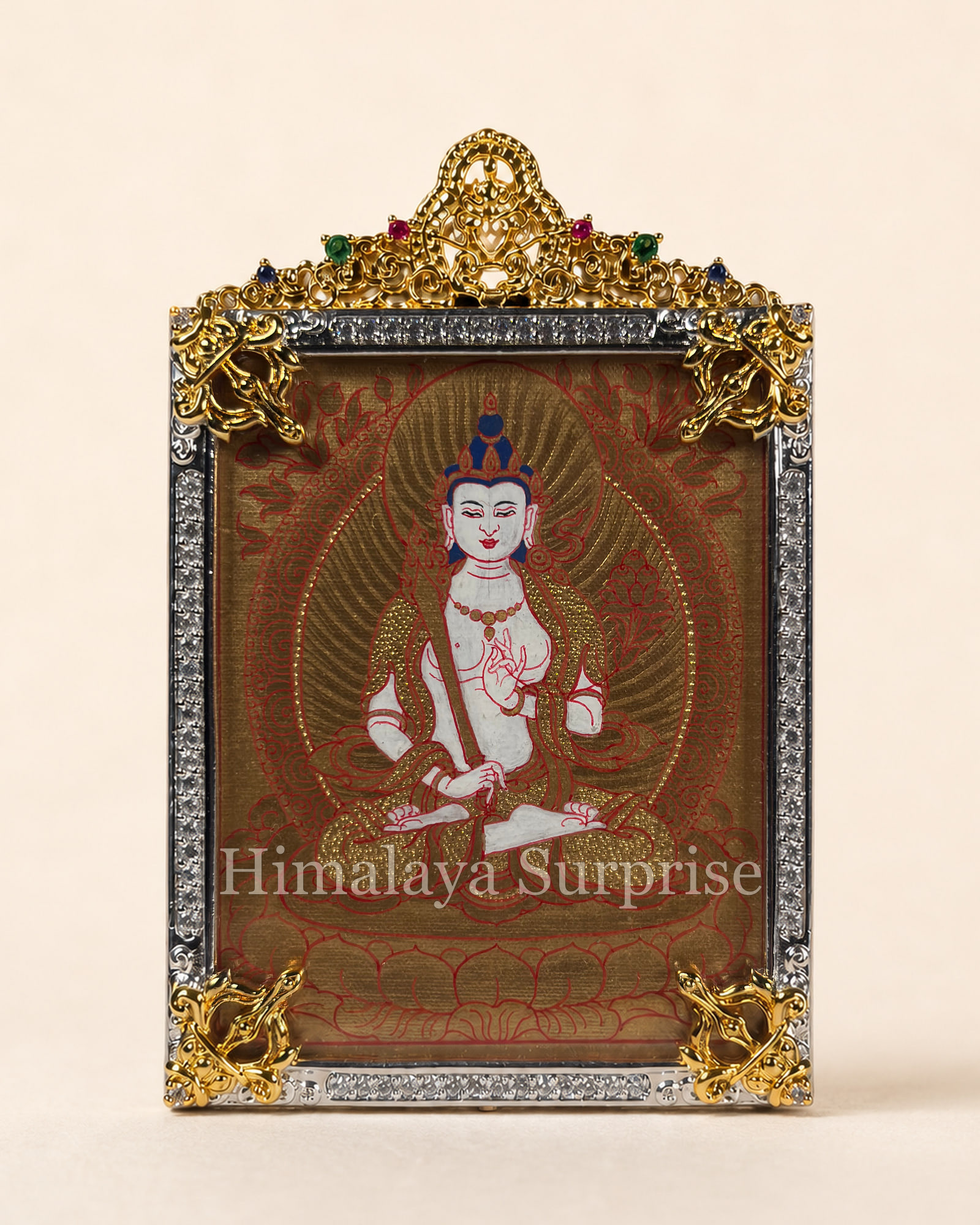
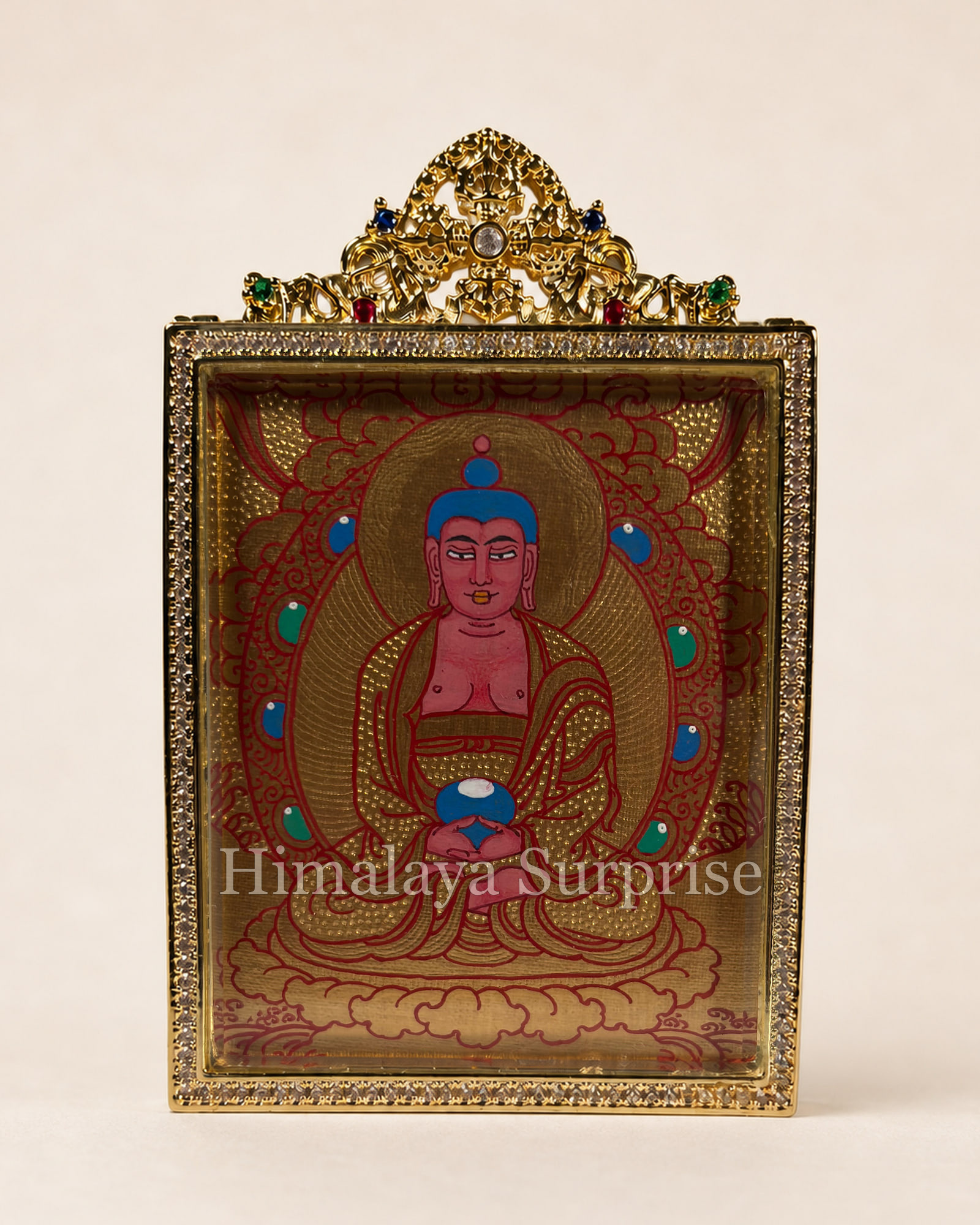
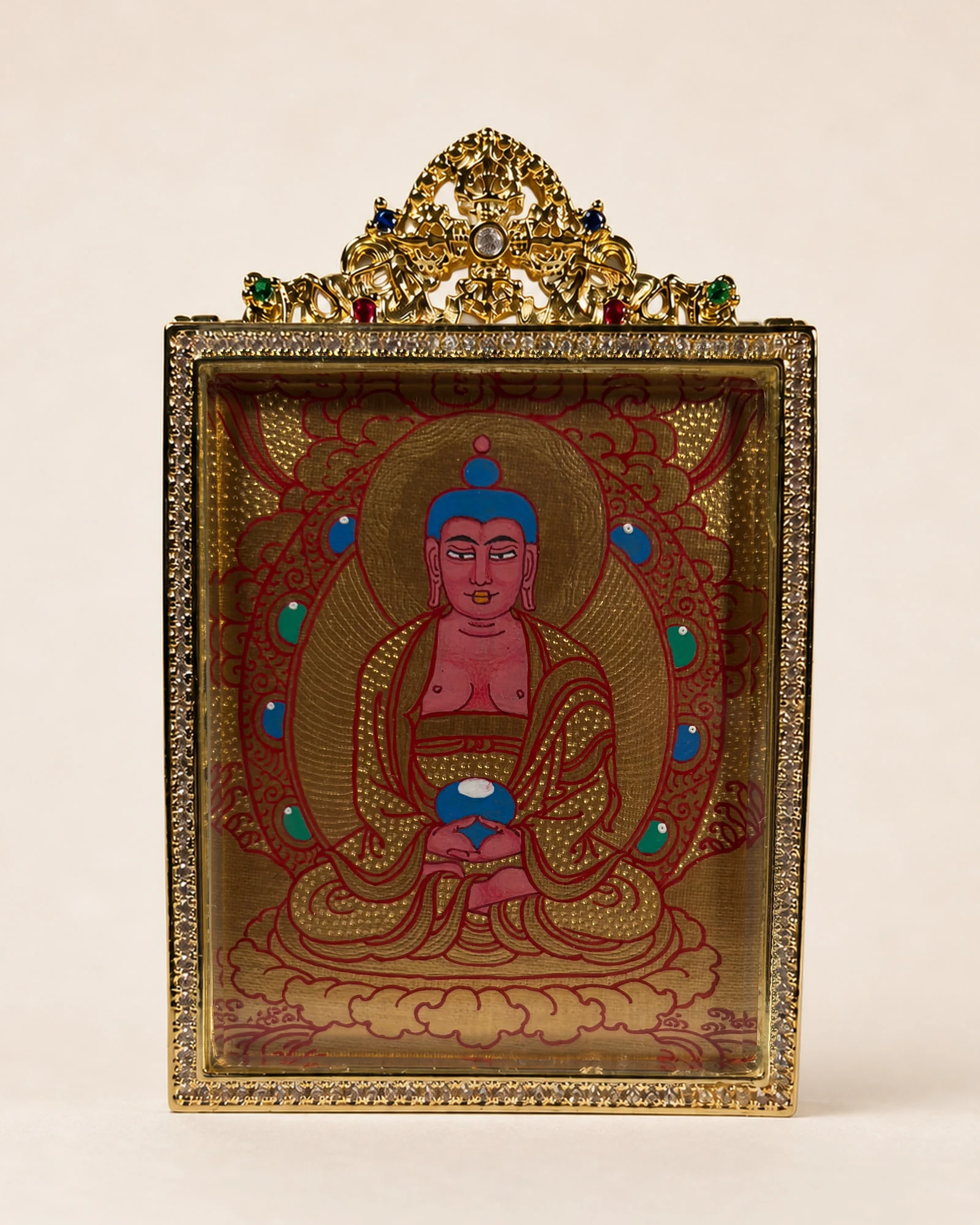
Gold-ground, or gold thangka, uses gold as the broad base colour. Gold leaf is gathered and mixed with animal glue, then repeatedly ground in one direction with a finger until it becomes a fine powder. When the glue thickens or begins to set, the base of the dish must remain warm. The grinding can continue for more than twenty hours.
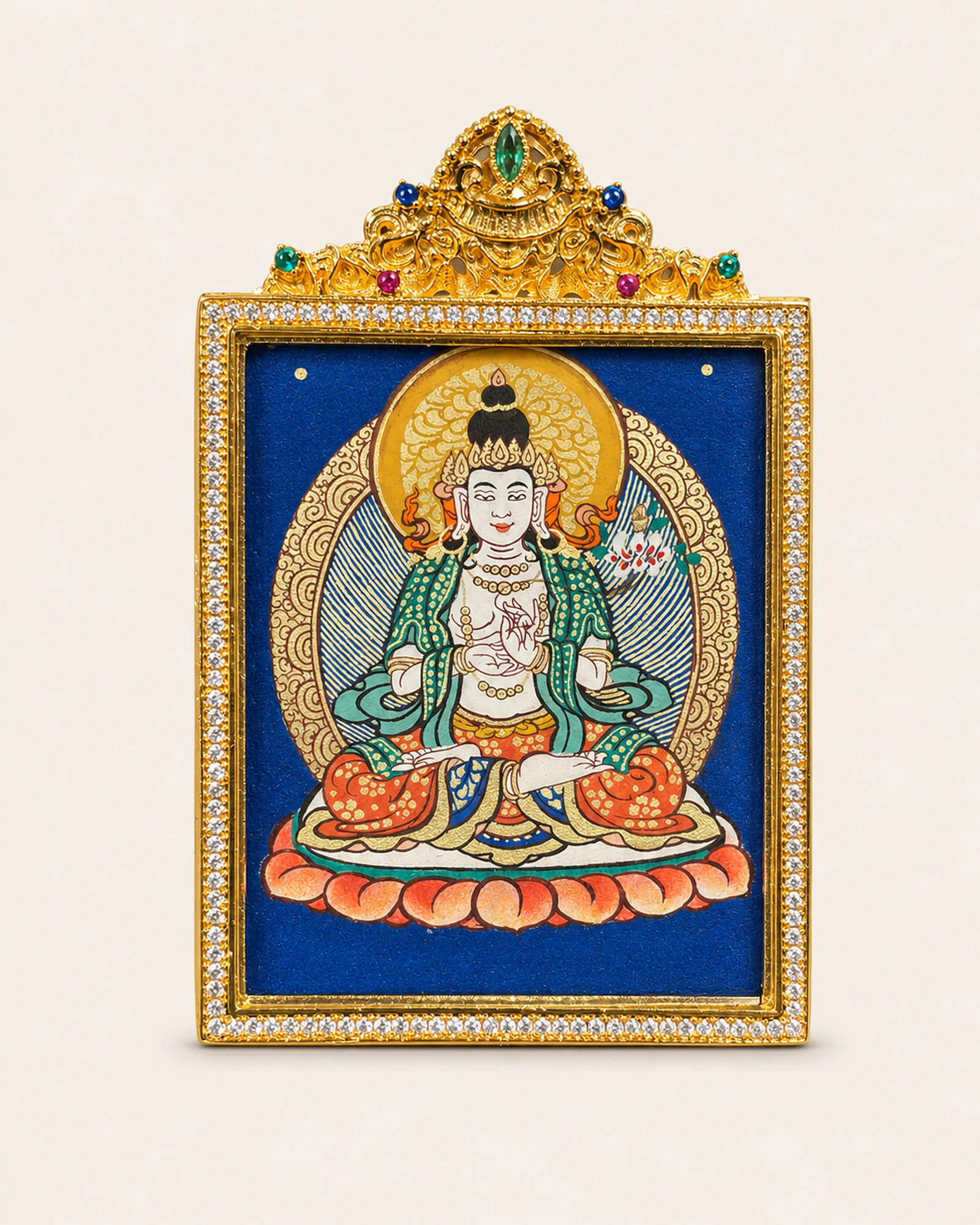
The ground gold is filtered, left to settle, and separated. Fine gold powder sinks to the bottom of the bowl while the glue and impurities above it are poured away. Once the remaining water has evaporated, the dry powder is ground again with glue and water so that more sediment and impurities can be removed.
After the gold powder is placed on the painting, the gold layer is built up repeatedly. If it is too thin, carved patterns will not catch the light; if it is too thick, the surface can flake. Some areas require dozens of applications. Once the layer has enough body, an agate tool can carve clear patterns into it.
The gold surface is then polished and carved. As the light changes, it shows variations in brightness, relief, and depth. Figures, clouds, leaves, and bases still require line work and local colour, so the gold ground and these details work together to form the image.
Gold lines or gold powder can also be used on local patterns, and the finished gold surface is polished.
Polychrome Colour Builds the Layers
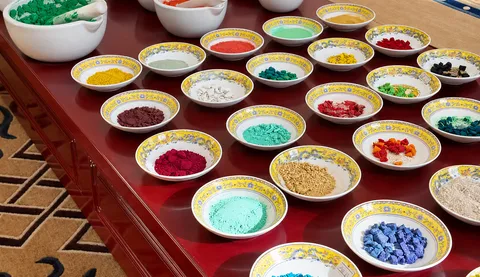
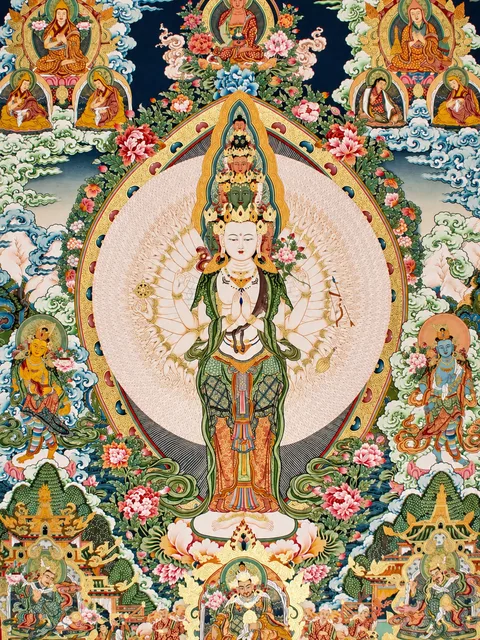
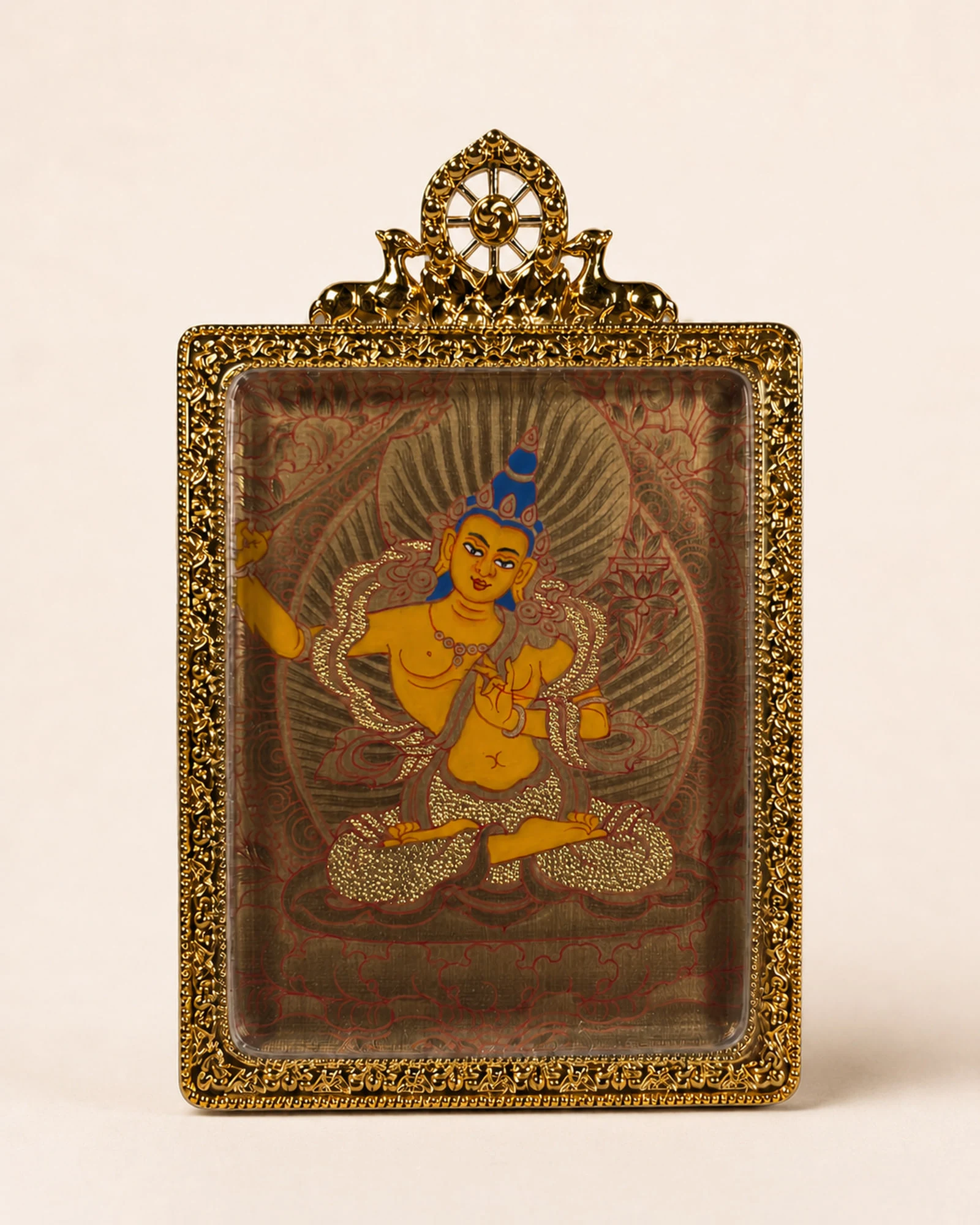
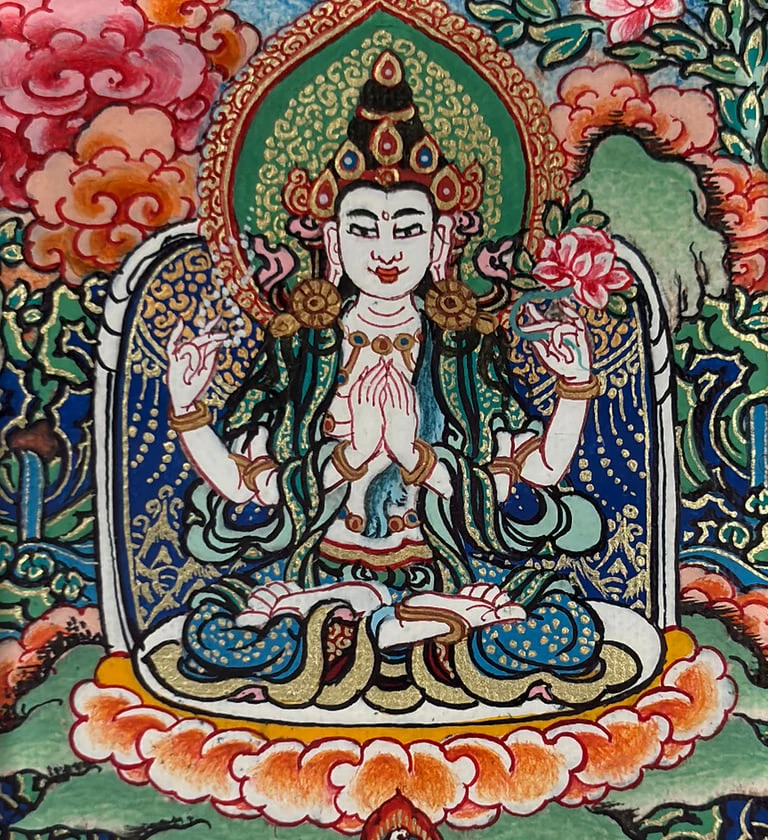
A polychrome thangka places several colours within figures, clothing, landscapes, flowers, and borders. Red, yellow, blue, green, and white can be combined and adjusted. These colours may come from mineral and other pigment materials. Mineral pigments are selected, crushed, ground, separated in water, settled, and screened before being mixed with glue and water and applied to the cloth.
Polychrome colour begins with broad flat application and then moves into tonal changes, stippling, dry shading, or wet shading. The painter mixes different values by hand and builds them layer by layer, giving clothing, landscapes, and borders a transition from dark to light.
The sequence moves from flat colour to line work and dry or wet shading, which establishes the changes in depth.
A polychrome image may use azurite, malachite, vermilion, and gold powder. Particle size, the bonding strength of the glue, the thickness of the pigment, and the amount of water at the tip of the brush all change the coverage, sheen, and transition. Its depth comes from the combination, layering, and shading of many colours.
Coverage Distinguishes Gold Ground from Local Gilding
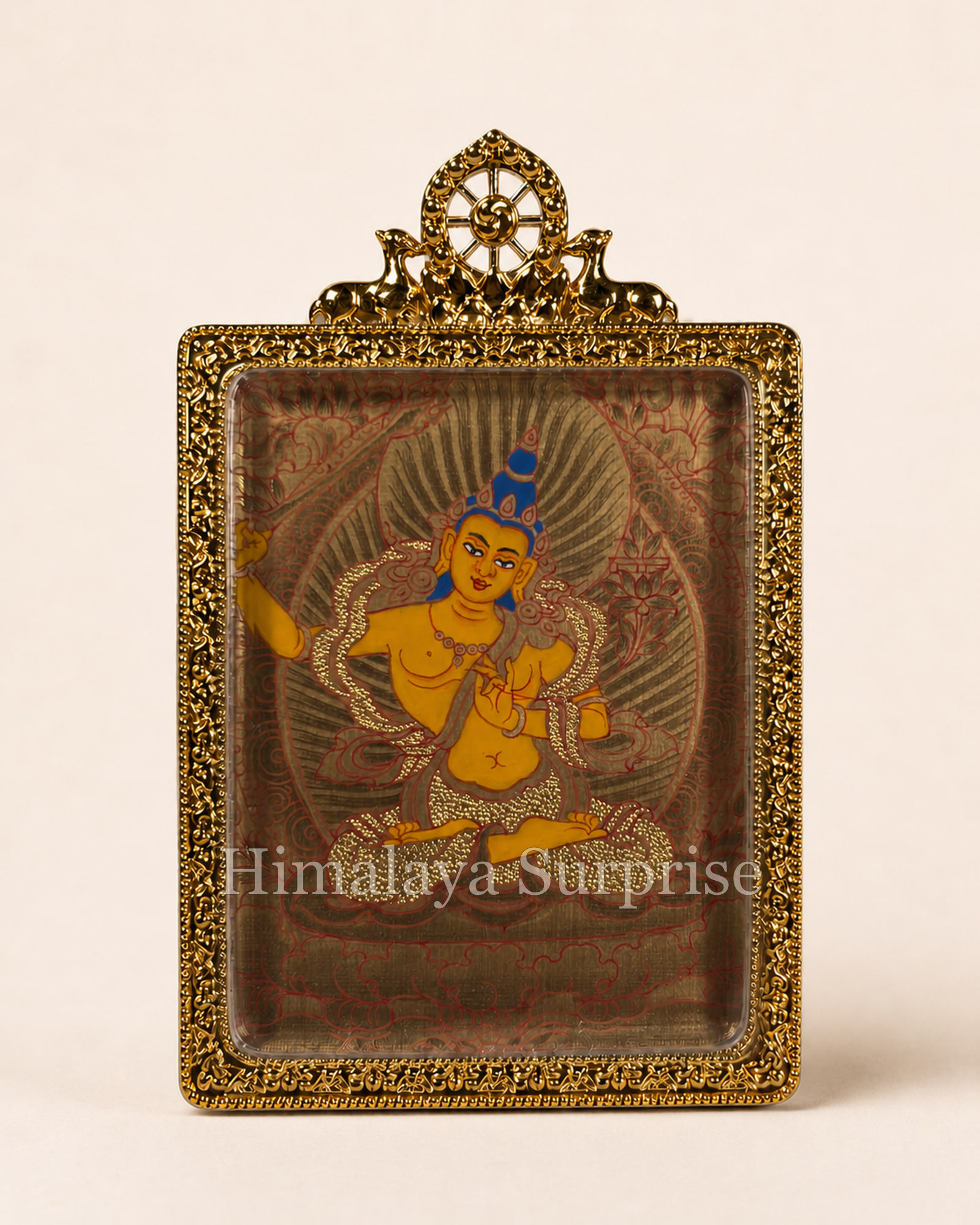
Gold ground covers a broad background area, with figures, landscapes, and patterns unfolding on the same gold field. Local gilding places gold powder or gold lines on selected areas such as figure outlines, garment folds, cloud motifs, leaves, jewellery, and other details.
A black ground uses black as the background, with gold carrying much of the outlining and local decoration. A red ground spreads red or vermilion across the background, then uses gold lines to define forms and ornaments. Black-ground works with colour may alternate red gold and yellow gold in the line work, while shading appears in blue skies, auspicious clouds, flame patterns, landscapes, and lotus roundels.
Gold lines also vary in thickness. Cloud edges, garment folds, flowers, and figure outlines can be drawn with gold or coloured lines. These changes in line weight give ribbons, clothing, and cloud forms a sense of turning, and gold lines remain especially clear against a dark ground.
A gold-ground work can include local colour, and a polychrome work can include gold lines in figures, clothing, or patterns. The distinction depends on how broadly and where each treatment is used across the image.
Colour and Craft in a Miniature Painted Space
A miniature thangka places the main figure, gestures, attributes, clothing, background, and border inside a painted area only a few centimetres wide. The face, hands, and fine lines must remain clear in that small space, while the colour layers and composition continue to work together.
A gold-ground miniature needs continuity in its gold background so that the main figure, garment folds, clouds, and leaves emerge from the gold layer. A polychrome miniature needs to retain several colour layers so that the face, gestures, ritual objects, and clothing remain legible.
The central work in a gold-ground piece lies in preparing the gold powder, building the layers, polishing the surface, and carving the patterns. In a polychrome piece, it lies in preparing mineral pigments, applying flat colour, shading, and drawing the lines. Gold powder forms continuous coverage when spread as a ground; on a brush it becomes lines and gradual transitions. Mineral colour builds the darker and lighter passages of a polychrome surface layer by layer.