In this article
Ground Colors
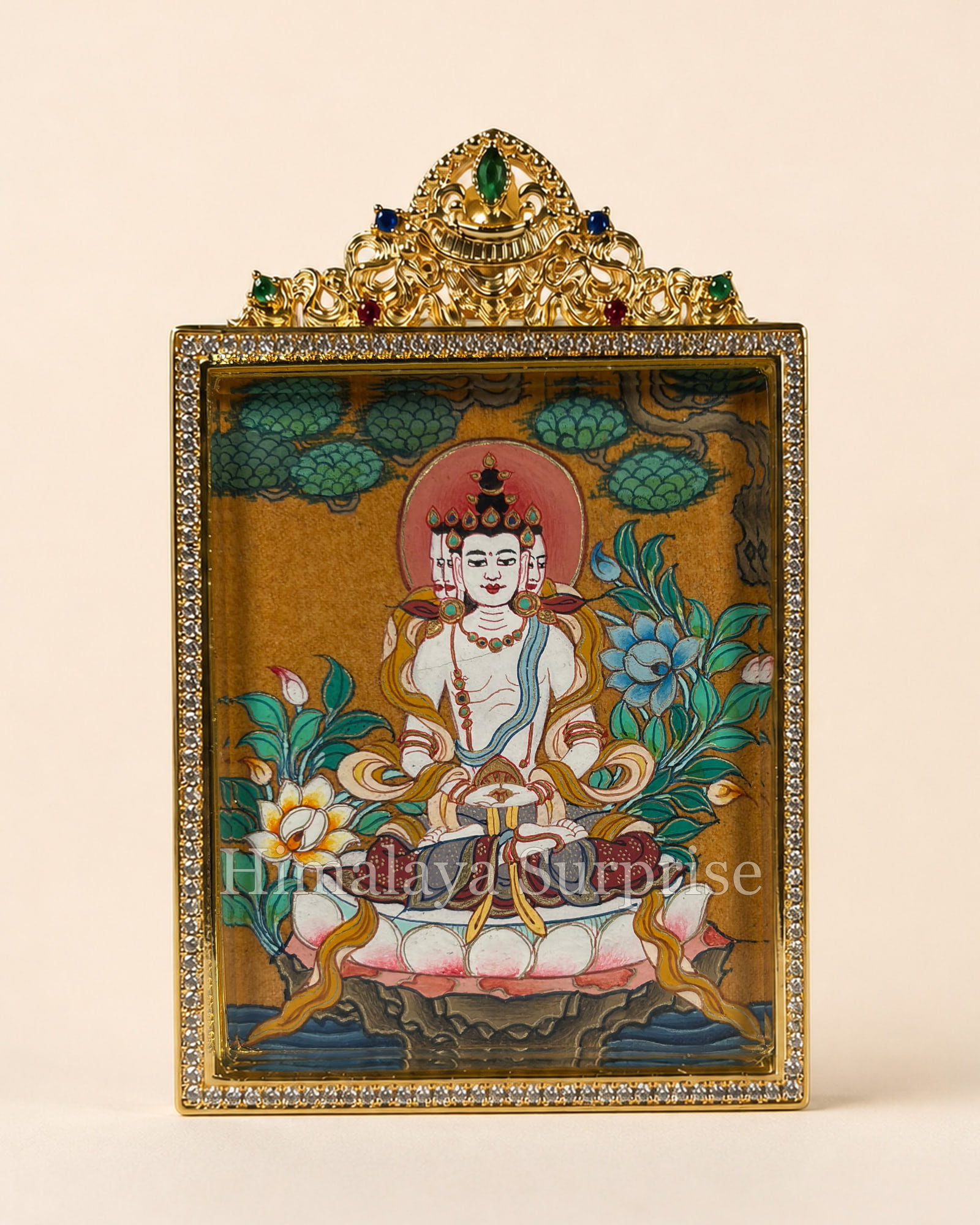
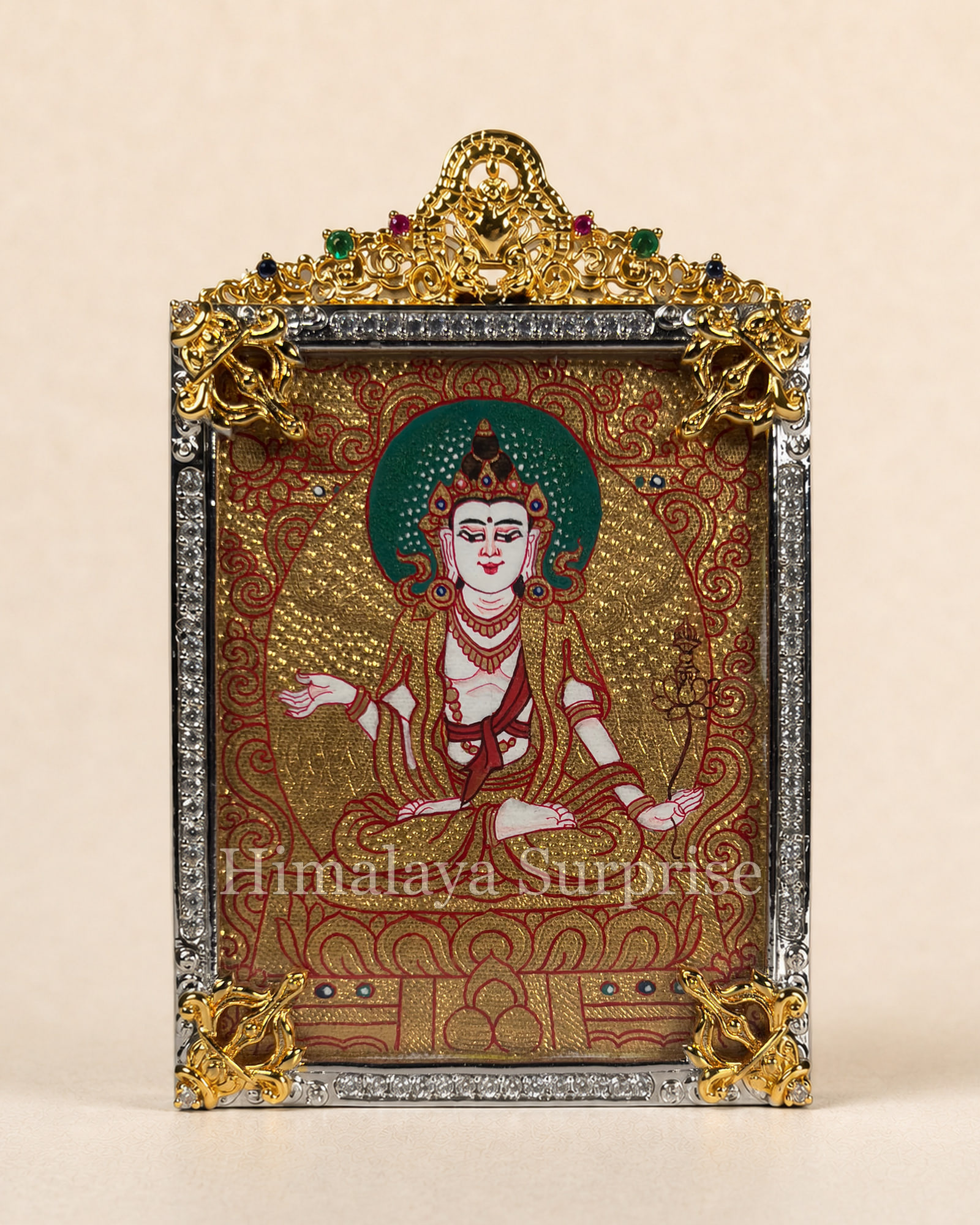
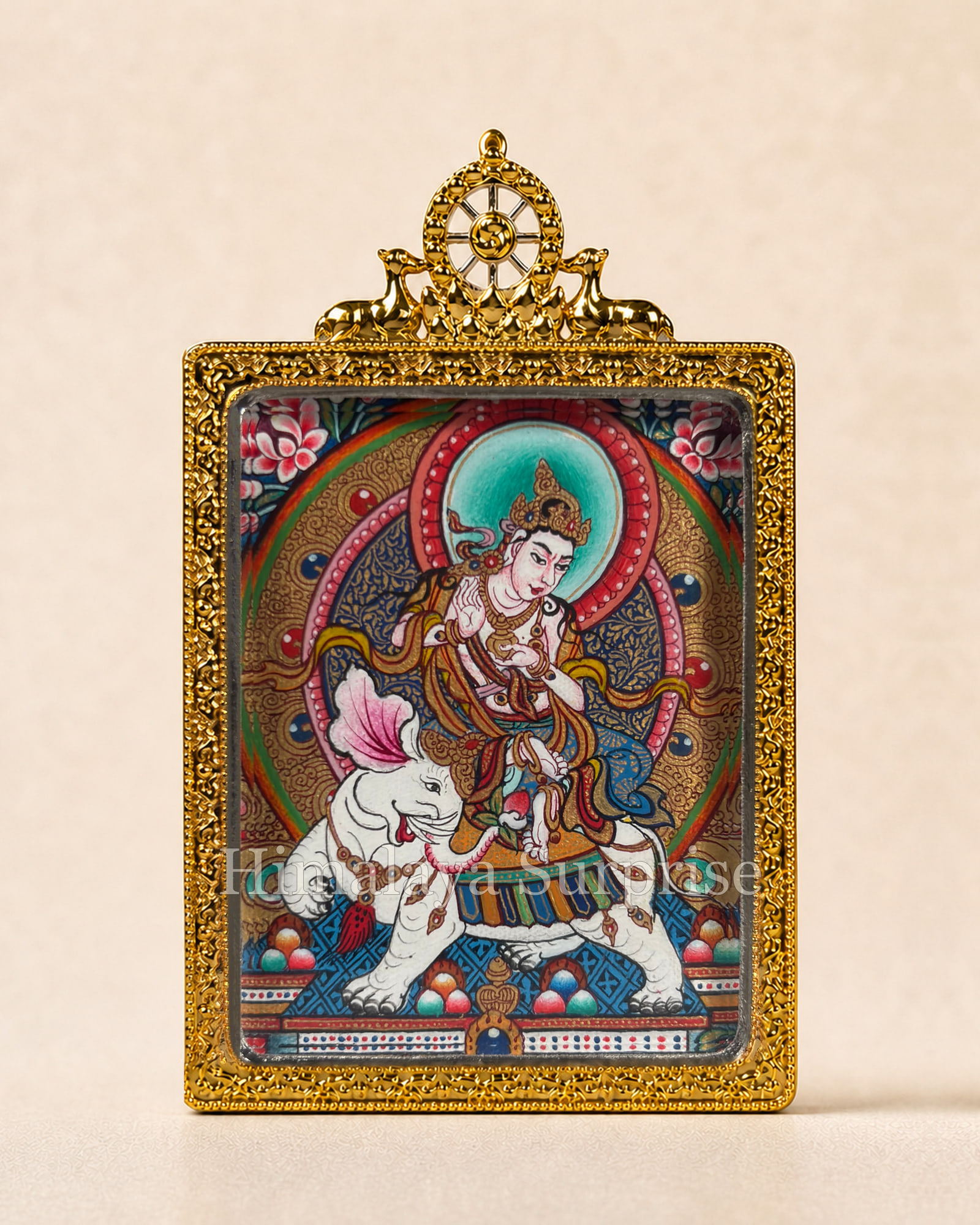
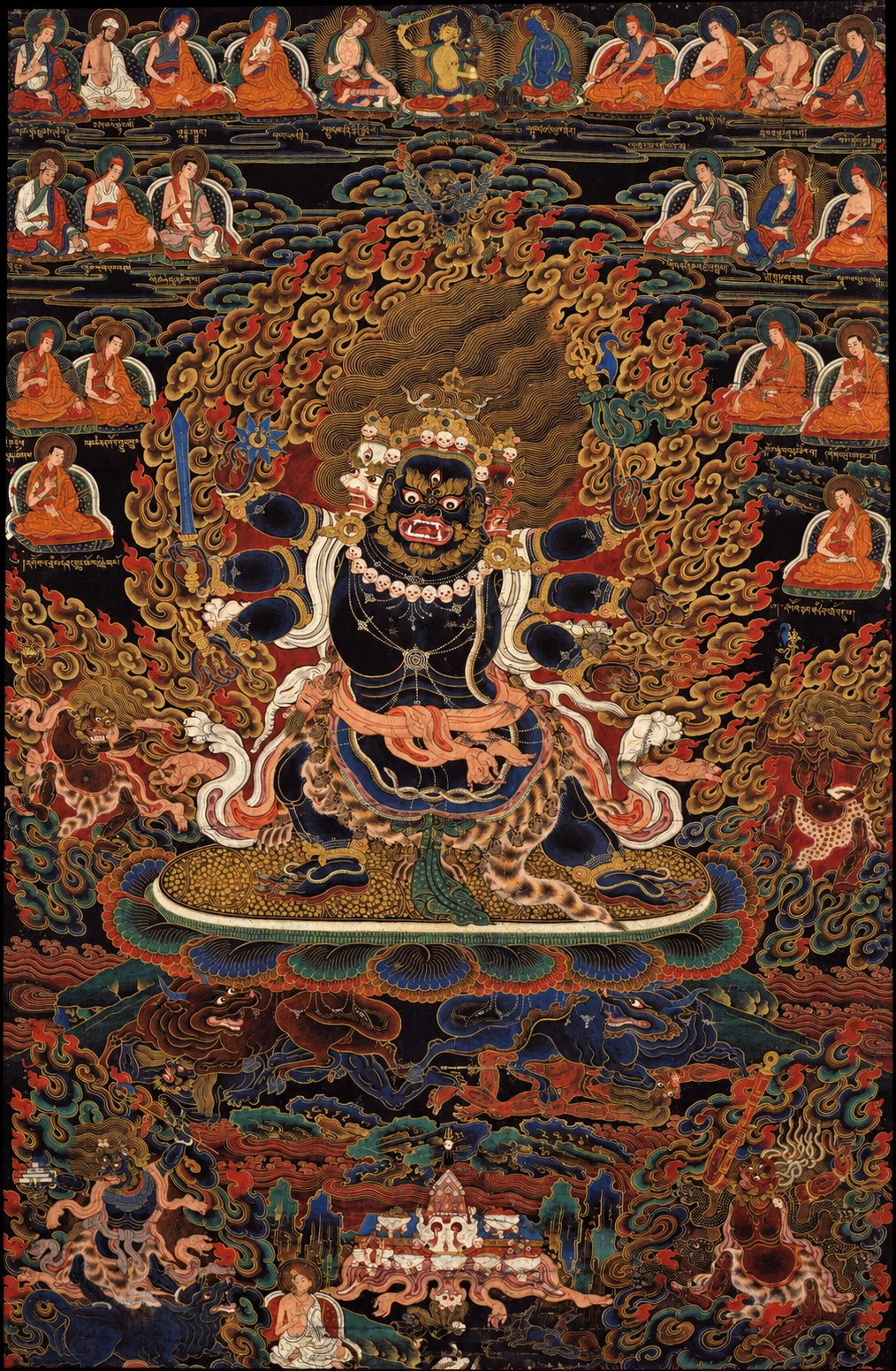
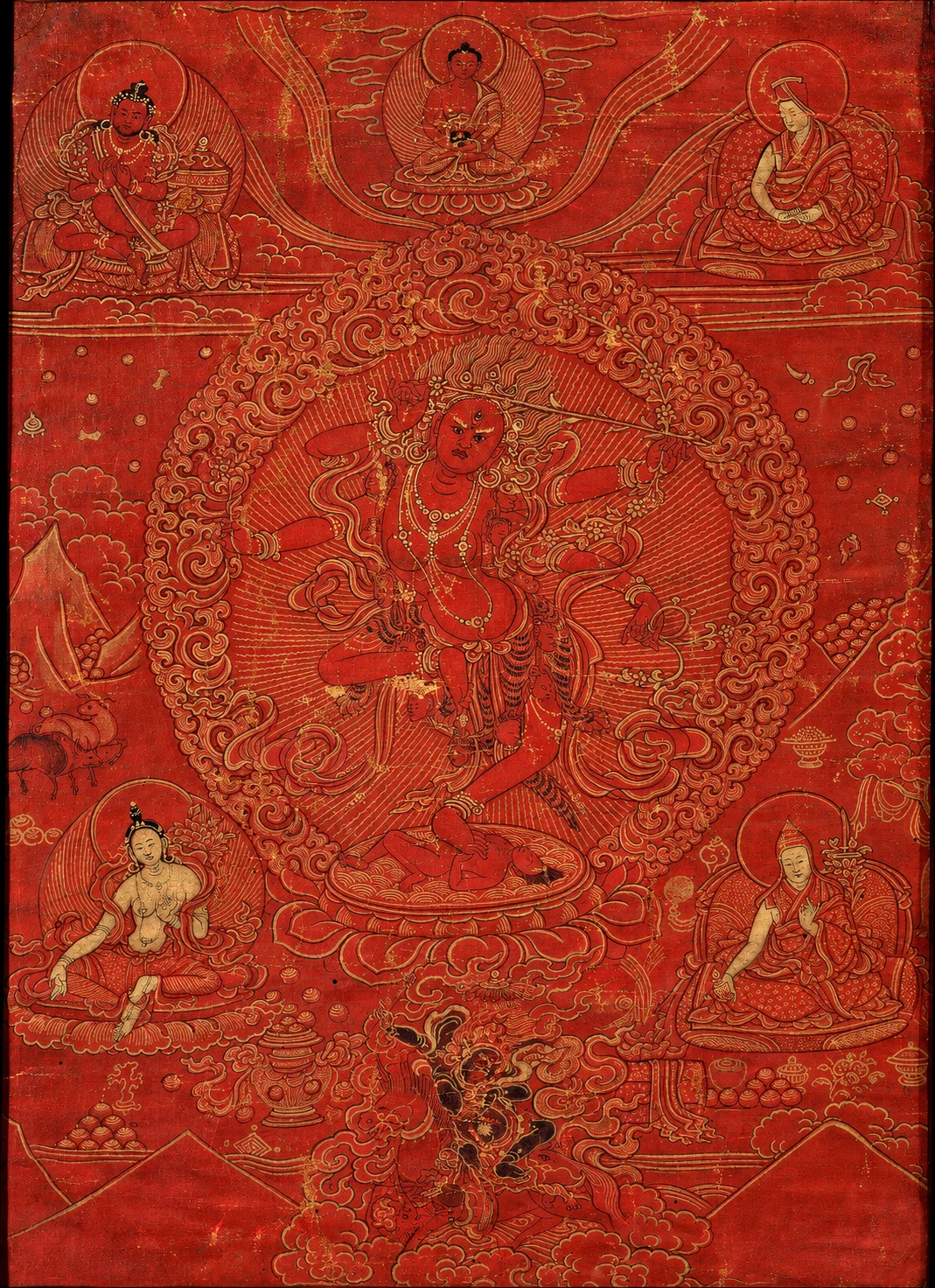
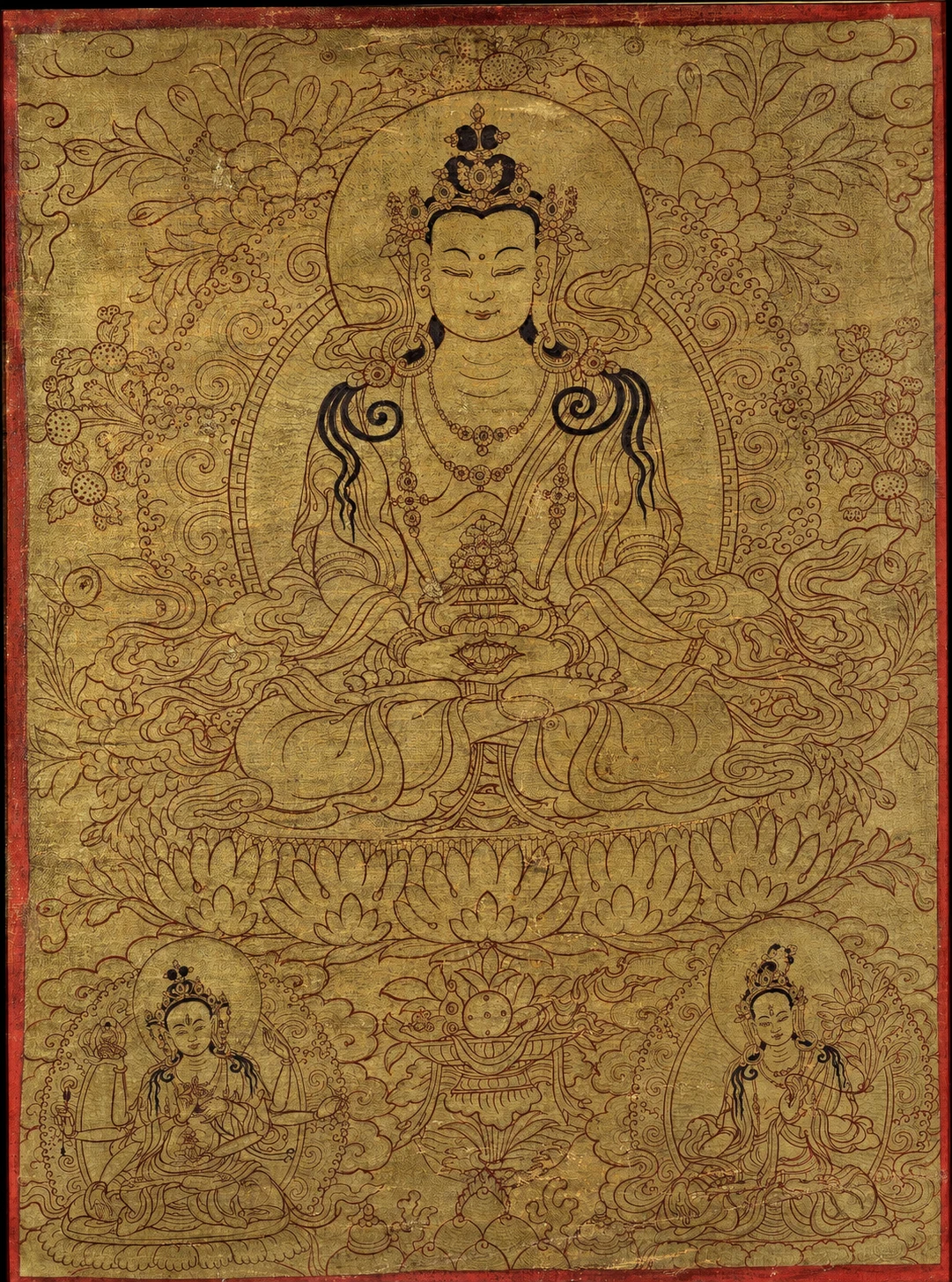
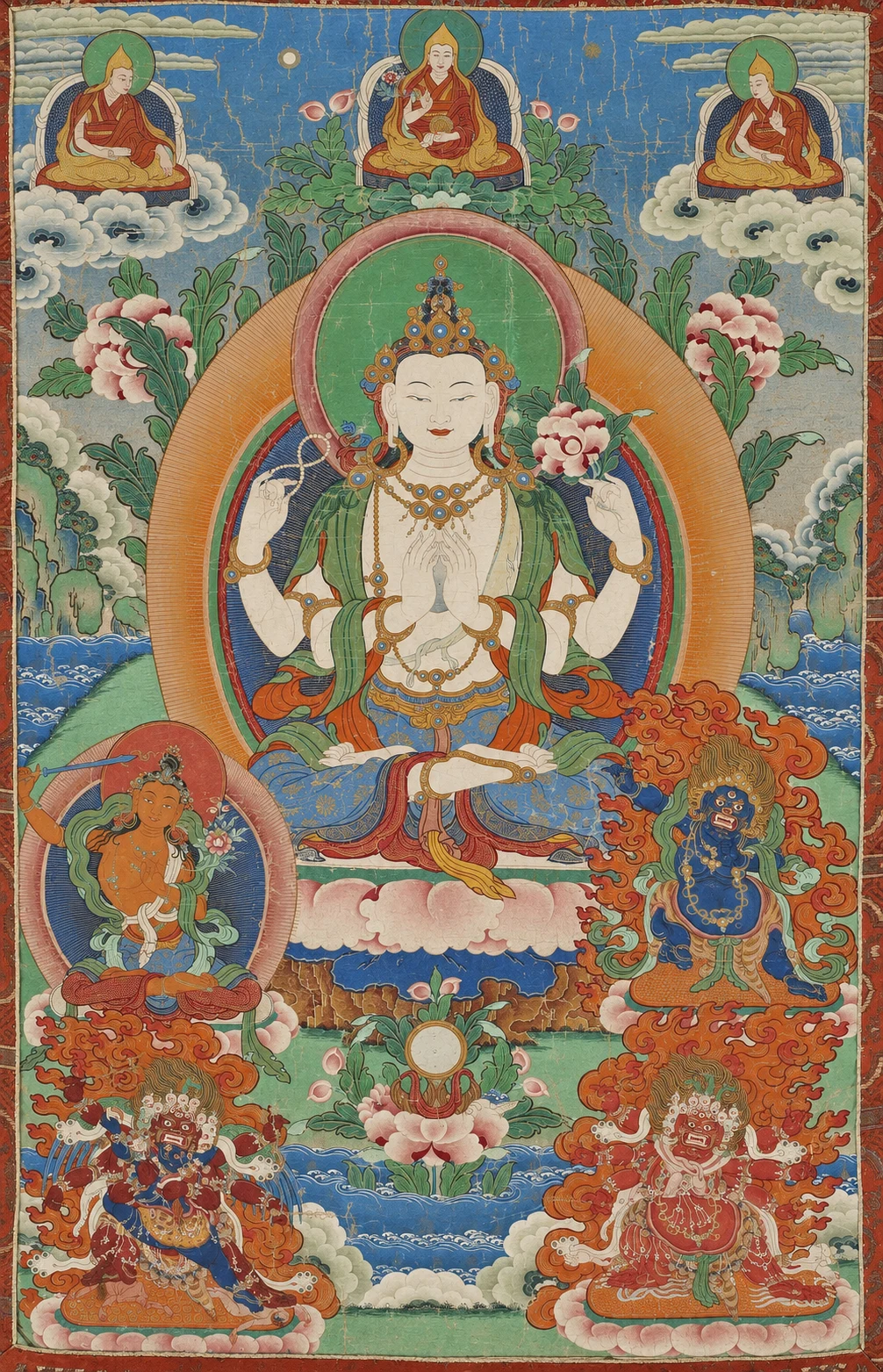
A polychrome thangka is painted with several colors. A black-ground or black-gold work uses black as its background and gold for the outlines. A red-ground or red thangka uses a red background with gold lines. A gold-ground or gold thangka lays gold across a broad area. Blue-ground works use blue as the main ground, while silver, green, and purple grounds organize the image around their corresponding colors.
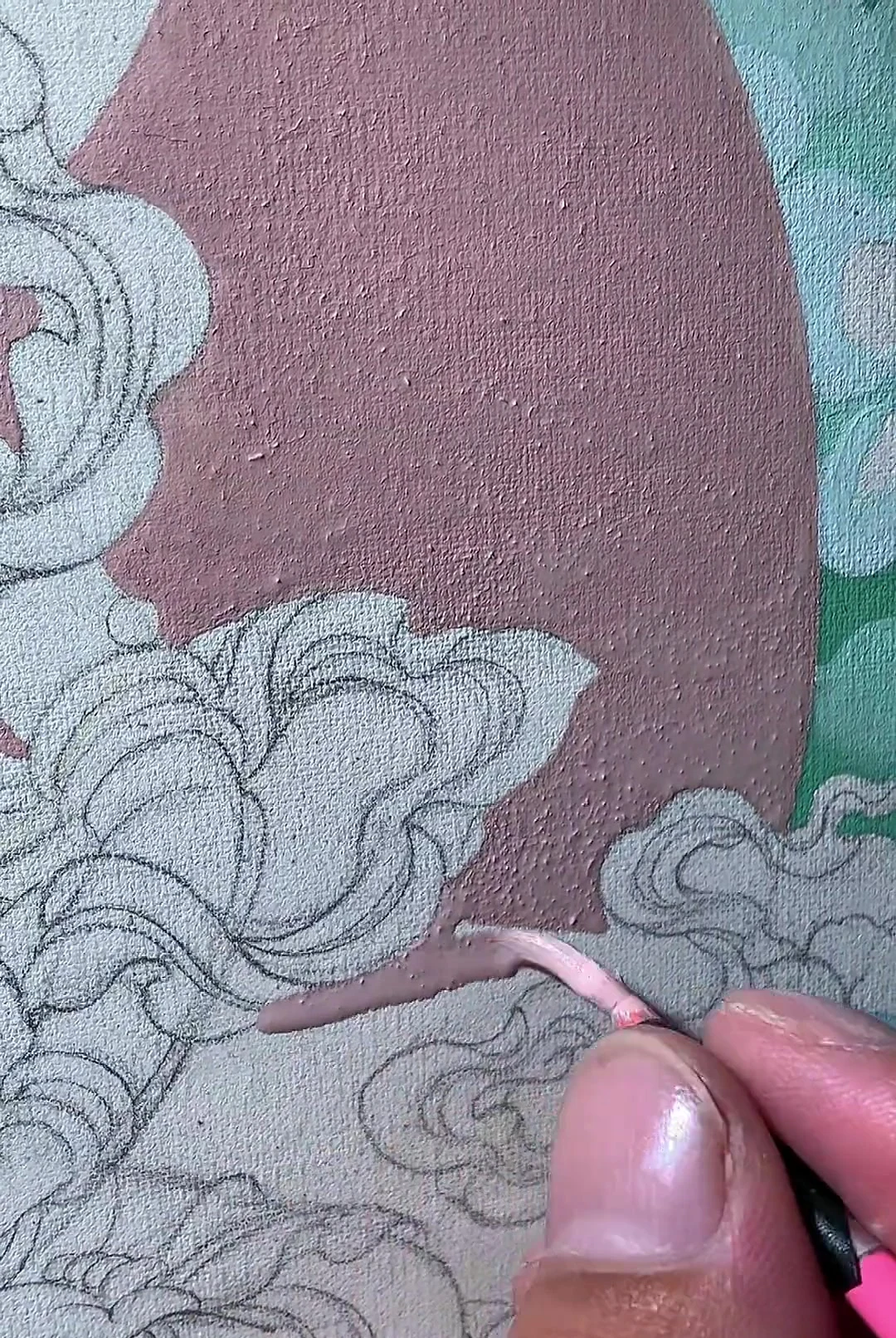
The ground covers the larger area first. Figures, landscapes, flowers, and gold lines are then developed across it. When the same deity is painted on a different ground, the overall impression and color contrast change. On a black ground, gold appears mainly in lines and local decoration; on a gold ground, it covers the broader background. Red-ground and polychrome works may add other colors, so the finished color scheme is formed by the ground, gold lines, and local areas of color together.
Black-Gold Thangkas
A black-gold thangka uses a black ground. Gold lines define figures, clothing, flames, clouds, and scrolling foliage, while selected areas may also use red, blue, and green mineral pigments. The black background and gold drawing create a strong contrast. In black-gold works with added color, red-gold and yellow-gold lines can alternate in the outlines. Shading may appear in blue skies, clouds, flame patterns, landscapes, and lotus-and-moon areas.
Red-Ground Thangkas
A red-ground thangka, also called a red thangka, spreads red or vermilion across the background and uses gold lines to outline forms and decoration. Figures, ritual objects, landscapes, and borders may also include blue, green, white, and yellow. Cinnabar is one of the red pigments used for this color range.
Gold-Ground Thangkas
A gold-ground thangka lays gold across the background, making gold the main field of the image. Some works use an agate tool to incise details into the gold; others use gold lines to outline the forms. The first relies on incised gold, while the second relies on outlined gold.
The difference between gold-ground and black-gold work lies in where the gold is placed. Black-gold uses black as the ground and gives gold a mainly linear and decorative role. Gold-ground uses gold across the larger background area.
Polychrome Thangkas
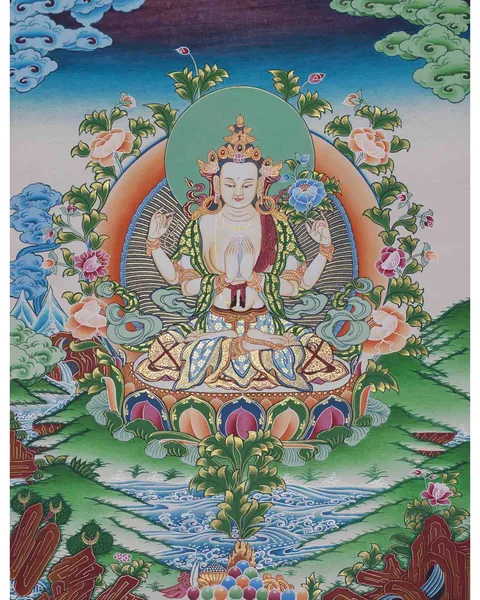
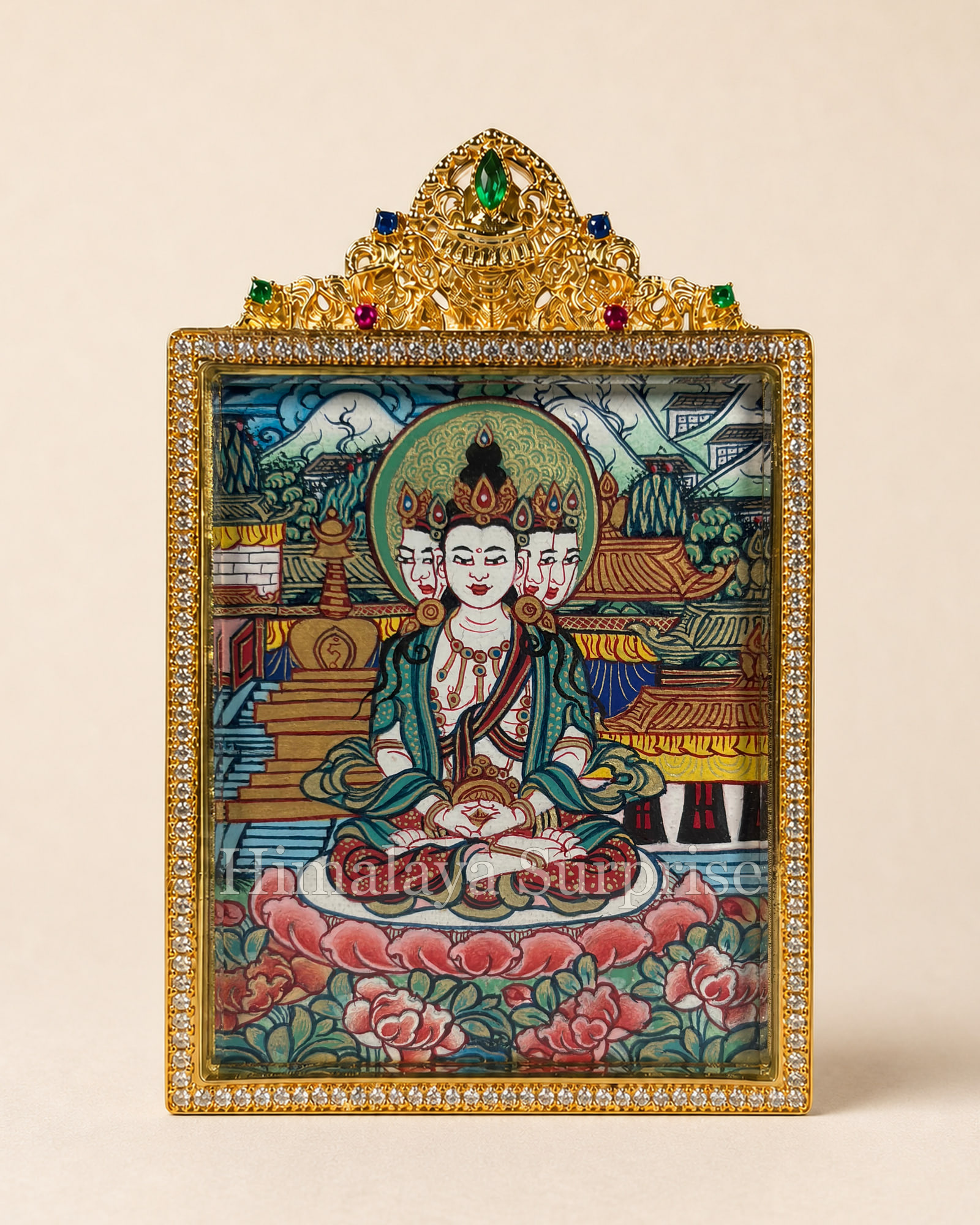
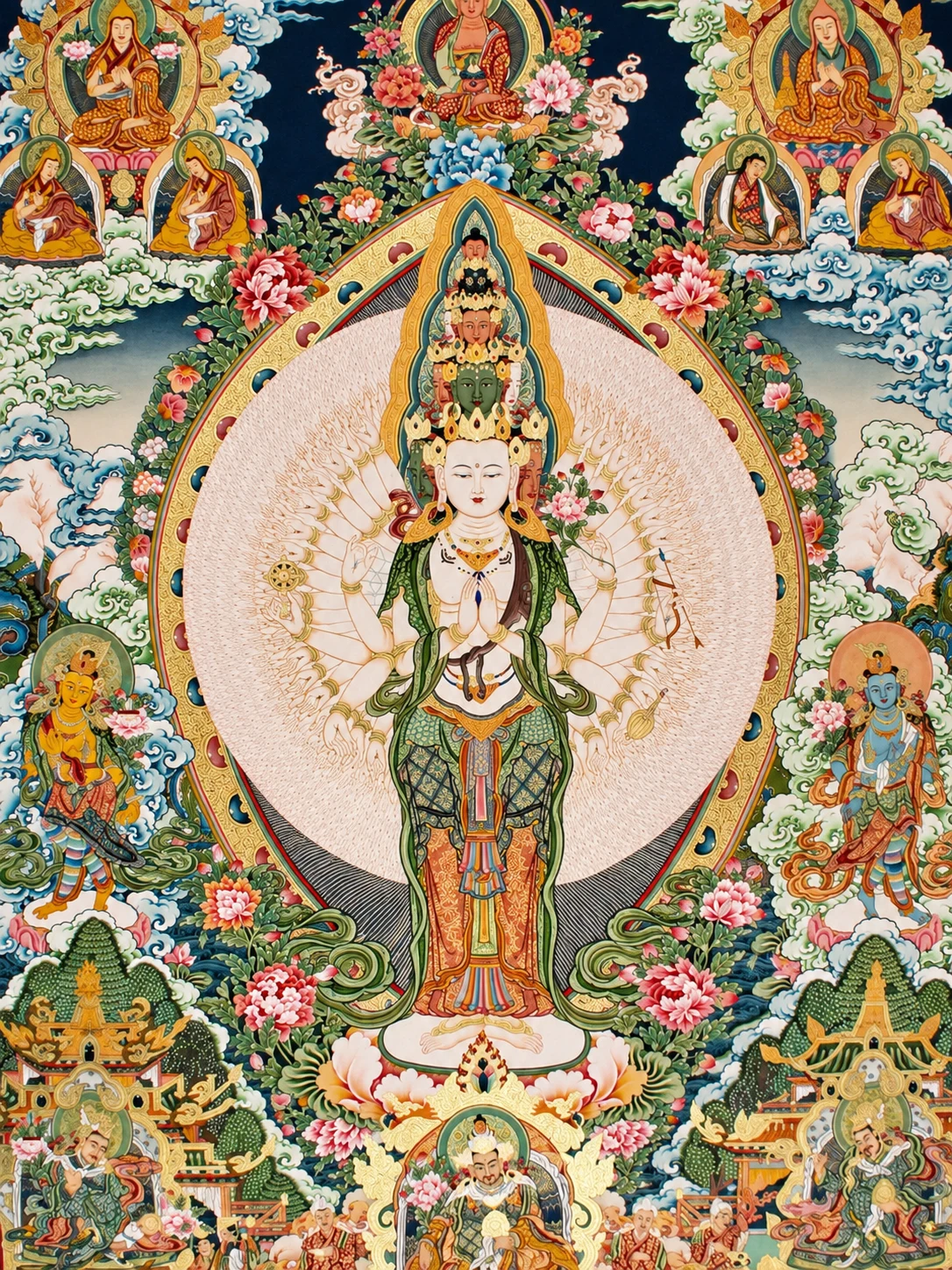
A polychrome thangka uses several colors together. Red, yellow, blue, green, and white can appear in the figures, clothing, landscapes, and borders. Color is first laid across the larger ground, then darker and lighter colors are repeatedly shaded. Dot shading, dry shading, and wet shading can all create a transition from dark to light.
Polychrome painting requires the colors to be prepared separately and layered onto the image. The painter controls the water, thickness, and edge of each stroke. Mixing, laying, shading, and outlining involve more steps, so preparation and coloring take more time. The image is built through multiple colors, changes of layer, and color contrast.
Mineral Pigments and Color Layers
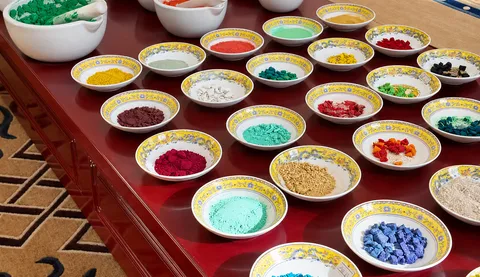
Thangka colors are often organized around five color groups: red, yellow, blue, green, and white. Blue may use lapis lazuli; green may use turquoise or stone green; red may use cinnabar; yellow may use stone yellow or orpiment; and white may use dolomite, shell powder, pearl powder, or white stone powder.
Before an ore becomes pigment, it is selected, crushed, ground, mixed with water, separated into layers, settled, and sieved. The material may be washed repeatedly so that particles are separated by size. During painting, mineral powder is mixed with glue and water so it adheres to the canvas. The canvas is also prepared with glue and a ground layer, then polished to create a surface ready for color.
Painting begins with broad flat areas, then moves through changes of tone, dot shading, dry or wet shading, outlining, and gold surface work. Gold lines can define structure and mark boundaries between areas of color. Gold surfaces may also be polished with an agate tool. The mineral particles, the proportion of glue and water, the moisture on the brush, and the shading method all change the thickness, sheen, and transitions of the color.