Figures & meaning
Why do fierce figures appear in Buddhist art?
Wide eyes, flames and expansive gestures form a forceful visual language. Its meaning begins with the religious setting of the image.
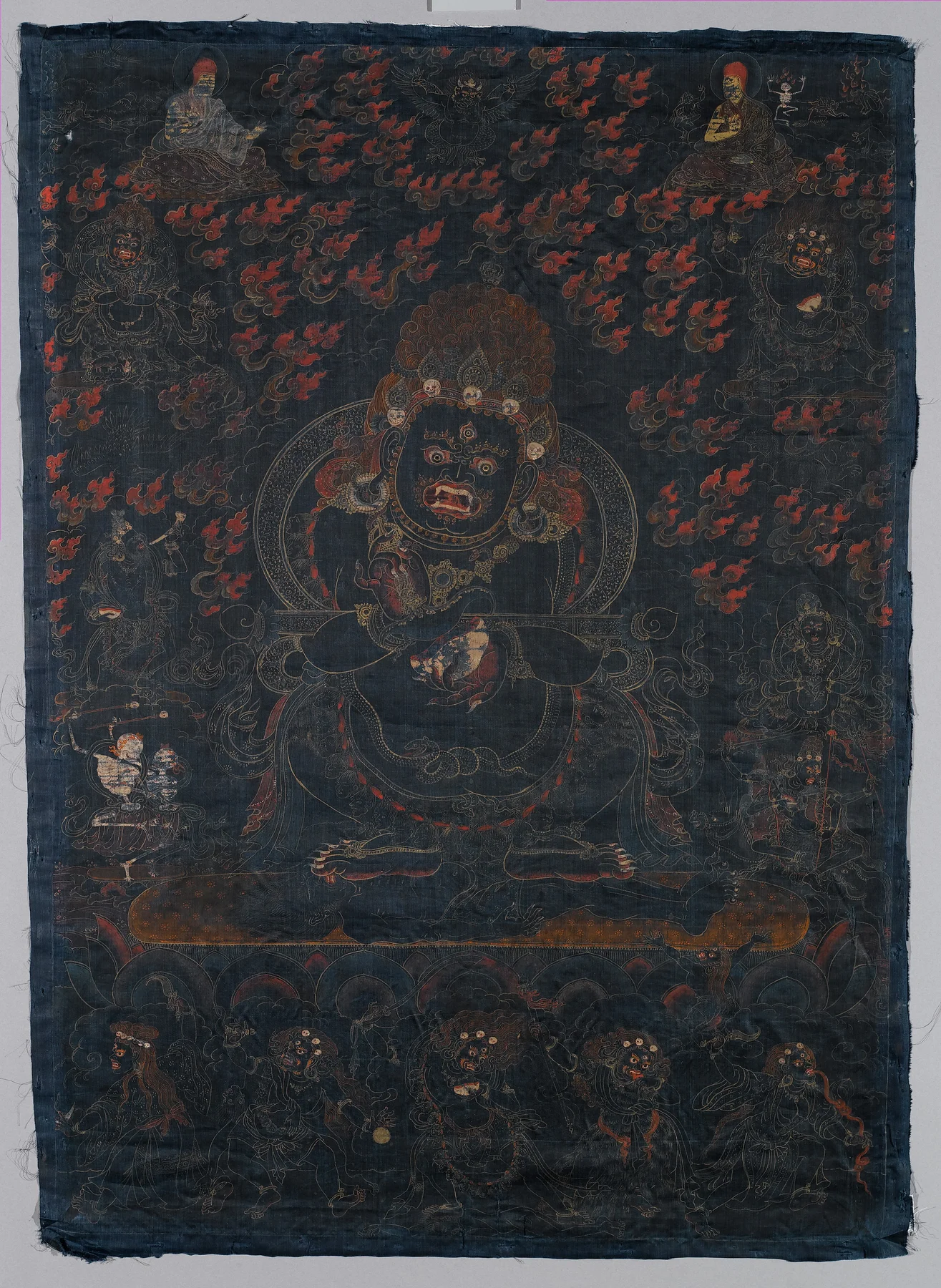
Buddhist art includes more than tranquil faces. In some thangkas, eyes are wide, bodies charged with movement and flames curl around a tightly organised array of attributes and ornaments. Such figures are often described as wrathful.
Wrath here is a visual language. It can express the force of overcoming obstacles, transforming attachment and cutting through ignorance. Compassion appears not only as gentleness, but as decisive action.
Identify the figure before reading its force
Wrathful describes an appearance and mode of expression, not a single identity. Some figures are wrathful manifestations of enlightened beings; others belong to protector traditions. Name, attributes, number of faces and arms, and lineage context shape the interpretation.
Begin with the work’s recorded subject, then compare faces, arms, posture and implements. A ring of flames or a skull crown alone cannot distinguish the full range of these traditions.
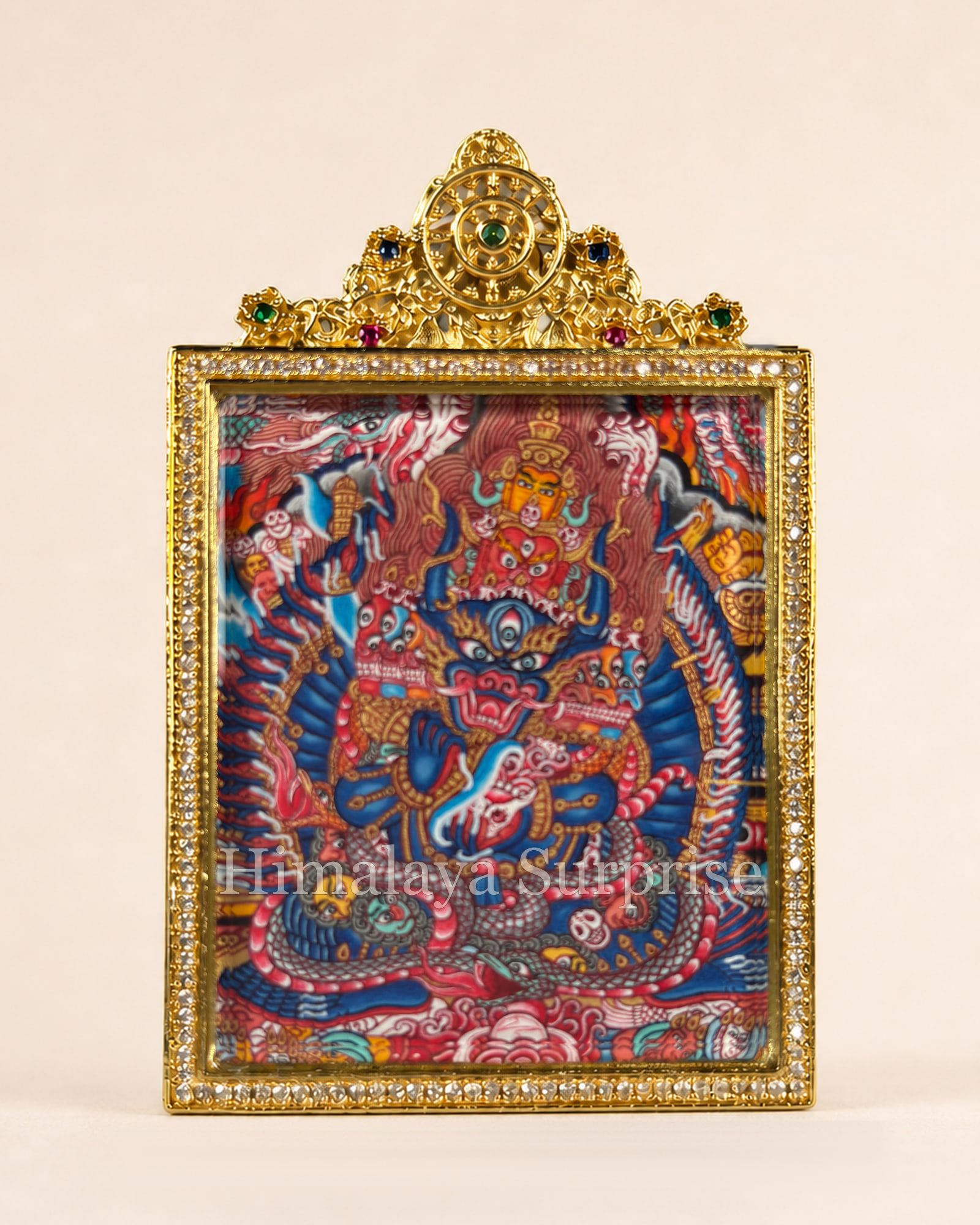
The Mahakala illustrated here belongs to a protector tradition. A dark ground and bright drawing allow body, garments and surrounding figures to emerge, concentrating the painting’s force in contour and movement.
Flames, implements and stance
In many tantric images, flames are associated with wisdom and the clearing of ignorance. A painter makes that meaning visible through rising, curling lines. Fire both encloses the figure and extends its movement outwards.
Implements and ornaments need the context of the particular deity. A five-skull crown, for example, can express the transformation of five poisons into five wisdoms; a trampling stance often relates to overcoming obstacles and attachment. These are contextual readings, not a universal symbol key.
Choose one detail, then return to the composition. Where does an implement point? How does the arm respond? Do the flames continue the movement of the body? Meaning and design often meet in the same small passage.
Intensity held within precise order
The energy of a wrathful painting often depends on a clear centre and carefully ordered layers. Face, torso and principal arms establish the structure; secondary attributes and surrounding figures gather around it.
Step back to read the silhouette, then come closer to the drawing. Distance reveals the overall force. Proximity shows how teeth, hair, ornaments and flames have been arranged within limited space so that density remains legible.
Religious context and close looking move the experience beyond a first impression of ferocity. The image becomes an artistic expression in which wisdom, action and visual tension work together.
A CLOSER LOOK
Fierce does not mean the same figure
These two miniature wrathful-deity paintings show how colour, stance and surrounding ornament shape a fierce presence. The sword is a useful starting point; the whole composition completes the reading.
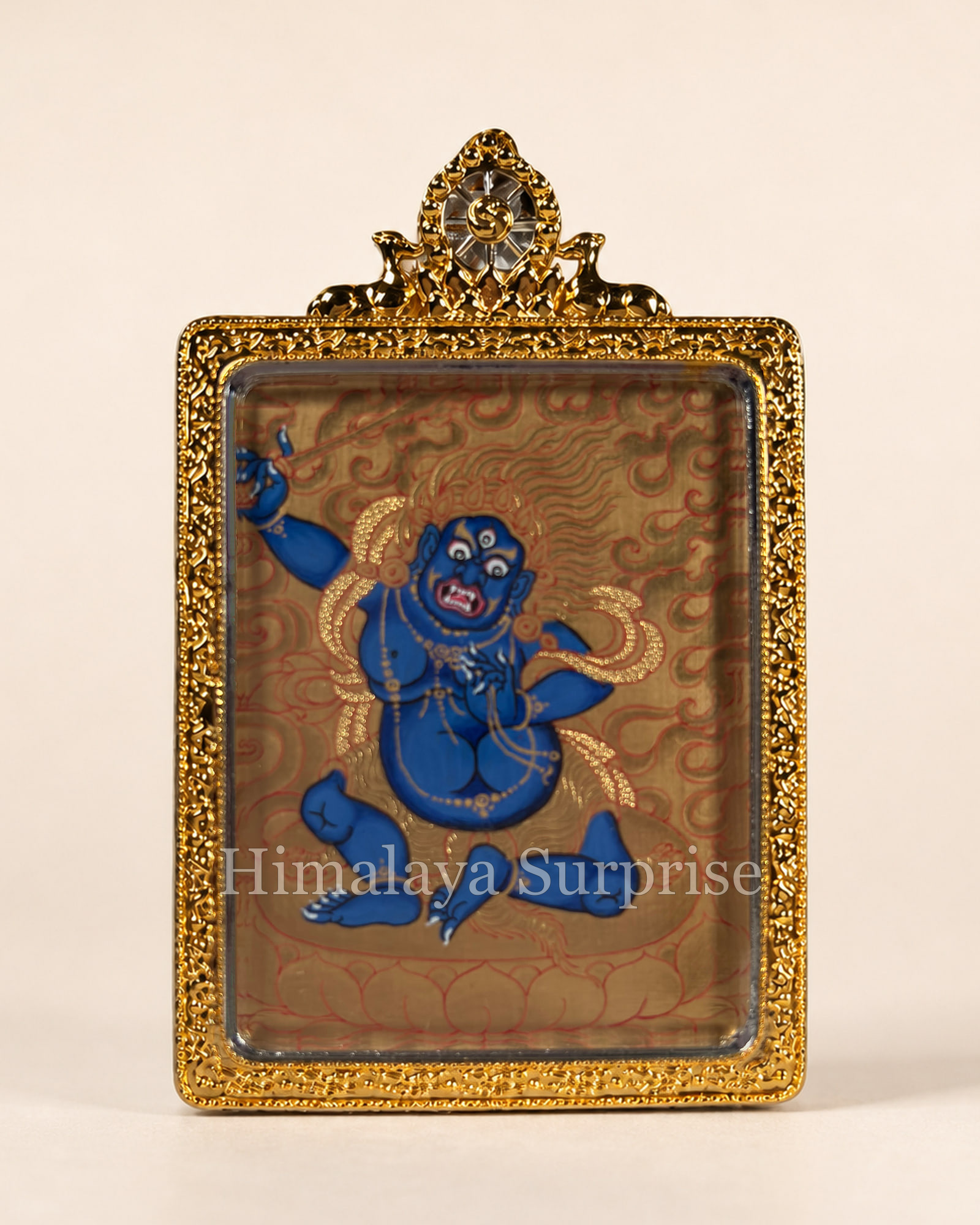
Gold-ground Acala
- A dark figure is framed by a bright gold field. The raised sword draws the eye upward; the powerful stance anchors it below.
- Look beyond the face: the arms and the relationship between figure and ground create much of the intensity.
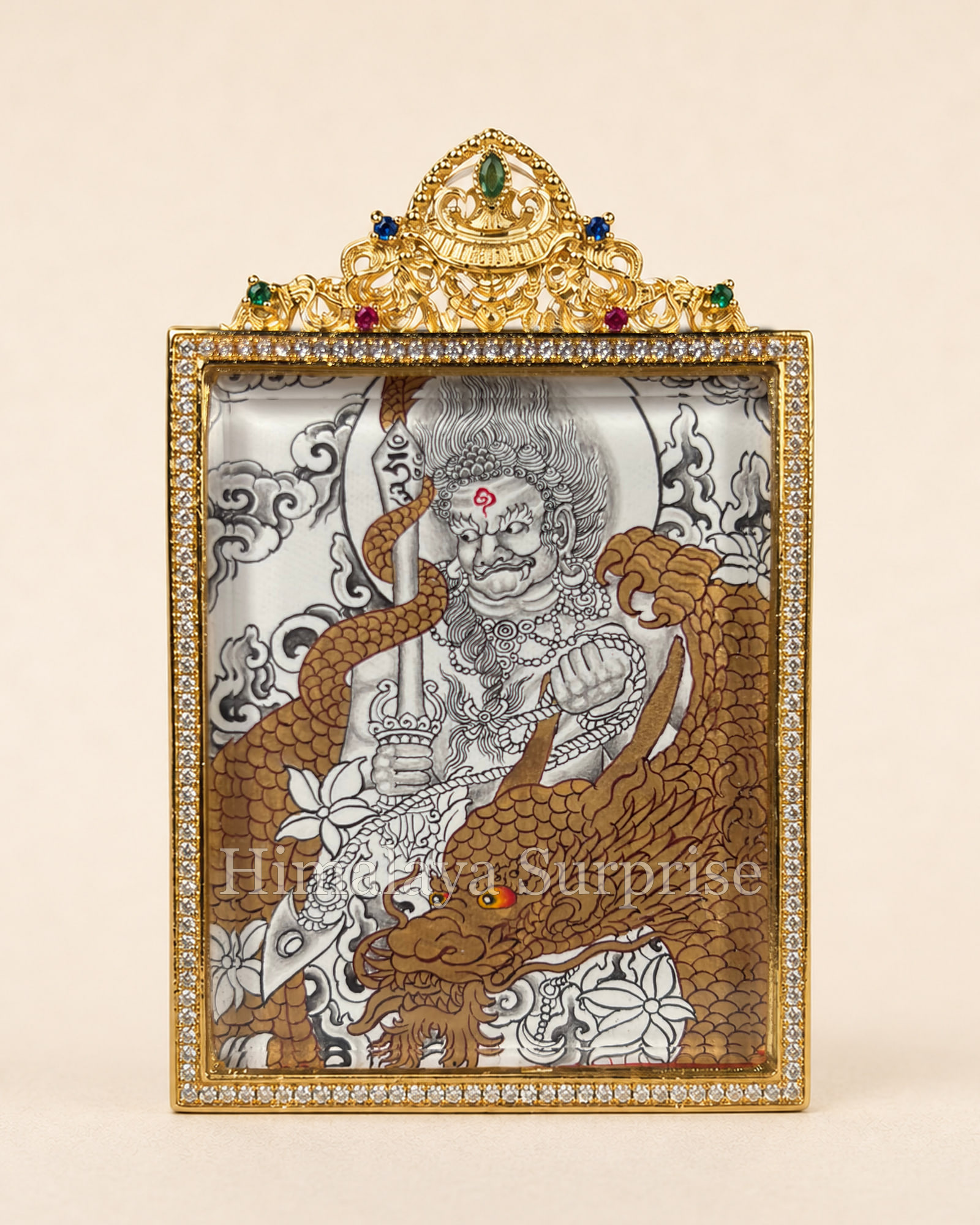
Acala with a golden dragon
- Dark contours on a pale ground meet the golden dragon crossing the foreground. Follow the dragon's scales, then return to the figure behind it.
- Compared with , the composition comes closer: face, hair and jewellery fill more of the field, with the dragon creating a second focal point.