Subjects & Meaning
Jambhala, Vasudhara or Vaishravana? Three Wealth-Related Figures Compared
Jambhala, Vasudhara and Vaishravana can all appear in images connected with wealth, abundance or protection, but they are not the same figure. Jambhala is a wealth deity with multiple forms, Vasudhara is a female wealth goddess, and Vaishravana is principally a guardian king of the north who also carries wealth associations.
View related available works ↓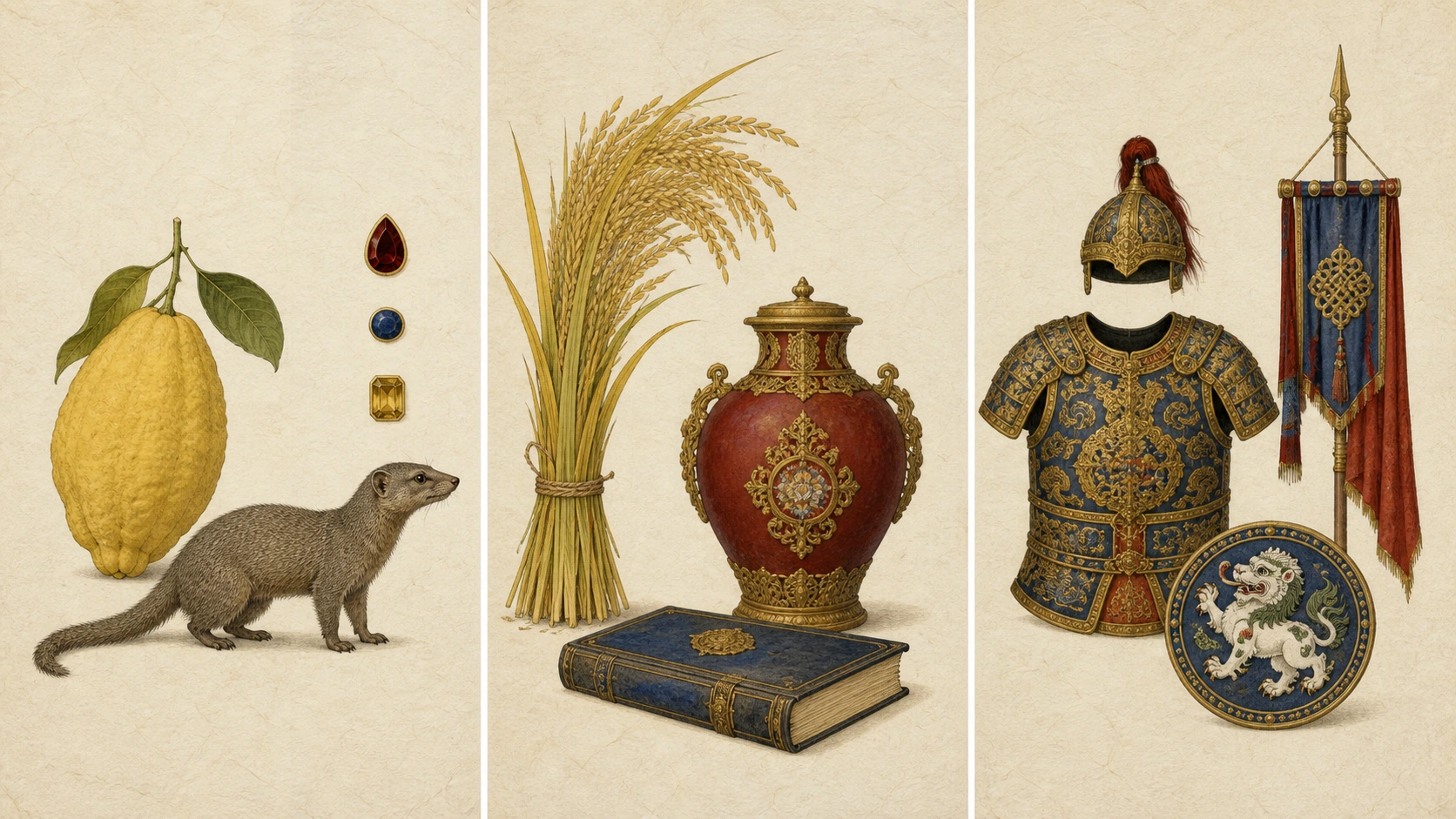
Quick comparison
At a glance: three wealth-related figures
Shared wealth imagery does not make these figures interchangeable. Start with role, attributes, vehicle and documented title.
| Reading clue | Jambhala | Vasudhara | Vaishravana |
|---|---|---|---|
| Principal role | A wealth deity with multiple colour and iconographic forms | A female Buddhist deity associated with abundance and resources | The guardian king of the north and a protector of the directions |
| Common visual clues | Several colour forms; a citron-like fruit and jewel-emitting mongoose in some Yellow Jambhala images | A wealth vase, grain, jewels or scripture, depending on the form | Armour; a snow lion in some documented forms; banner, mongoose or other wealth imagery |
| What separates them | Colour, arm count, vehicle and attributes change across forms | Gendered form, attendants, position and the complete composition matter | Direction, armour, vehicle and guardian role remain central |
| Avoid this shortcut | A mongoose alone does not identify every wealth-related figure as Jambhala | A vase or grain alone does not prove Vasudhara | A mongoose or rich appearance does not erase the guardian-king identity |
The basic distinction
Jambhala belongs to the family of wealth deities and appears in several colour forms, including yellow, white, red, black and green. Vasudhara is usually represented as a female deity of prosperity and abundance. Vaishravana is a guardian king of the north and one of the protectors of the directions.
The shared connection with wealth does not erase their different roles. A figure can be associated with resources while also belonging to a larger system of guardianship, ritual protection, generosity or ethical responsibility.
Jambhala: multiple forms of a wealth deity
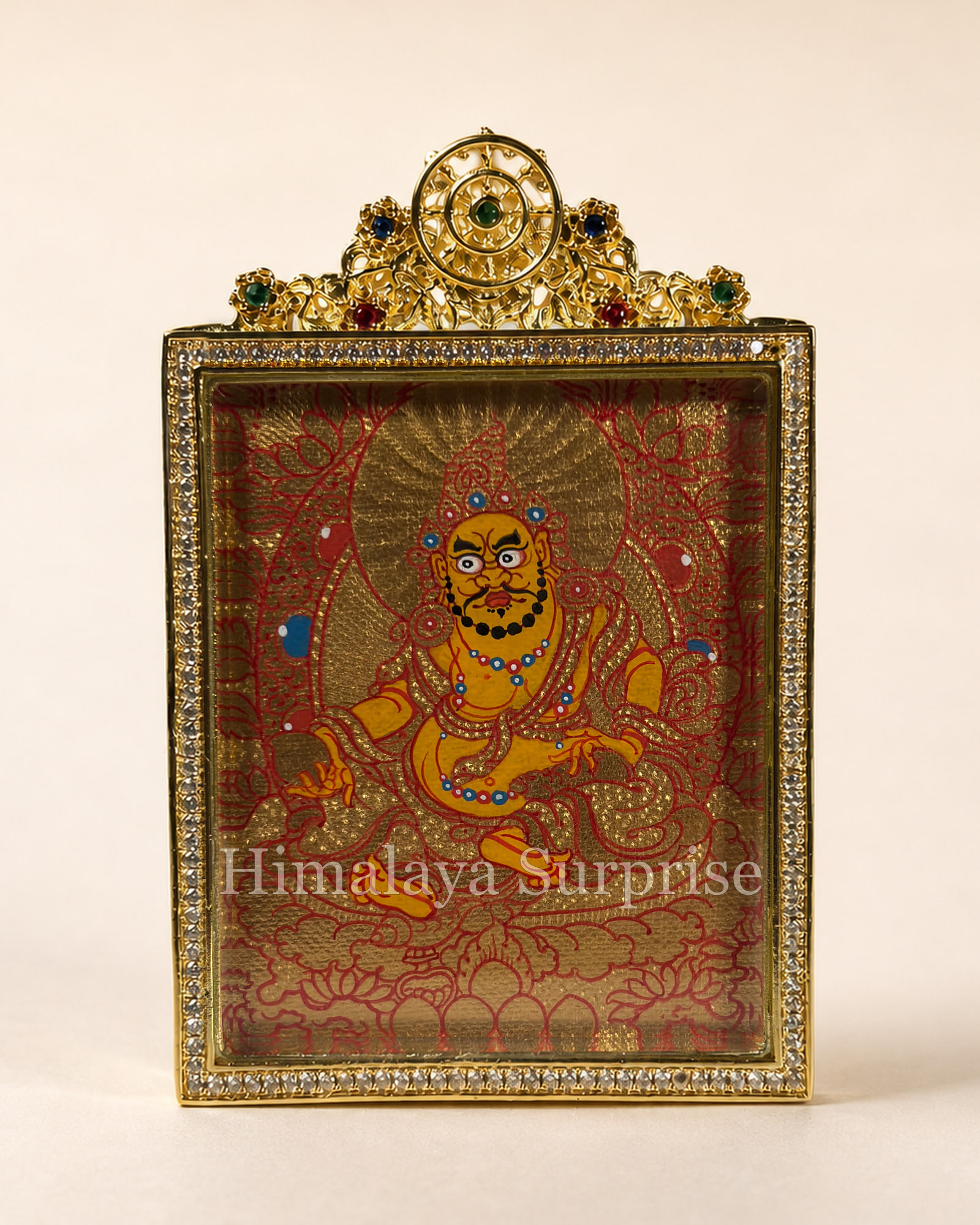
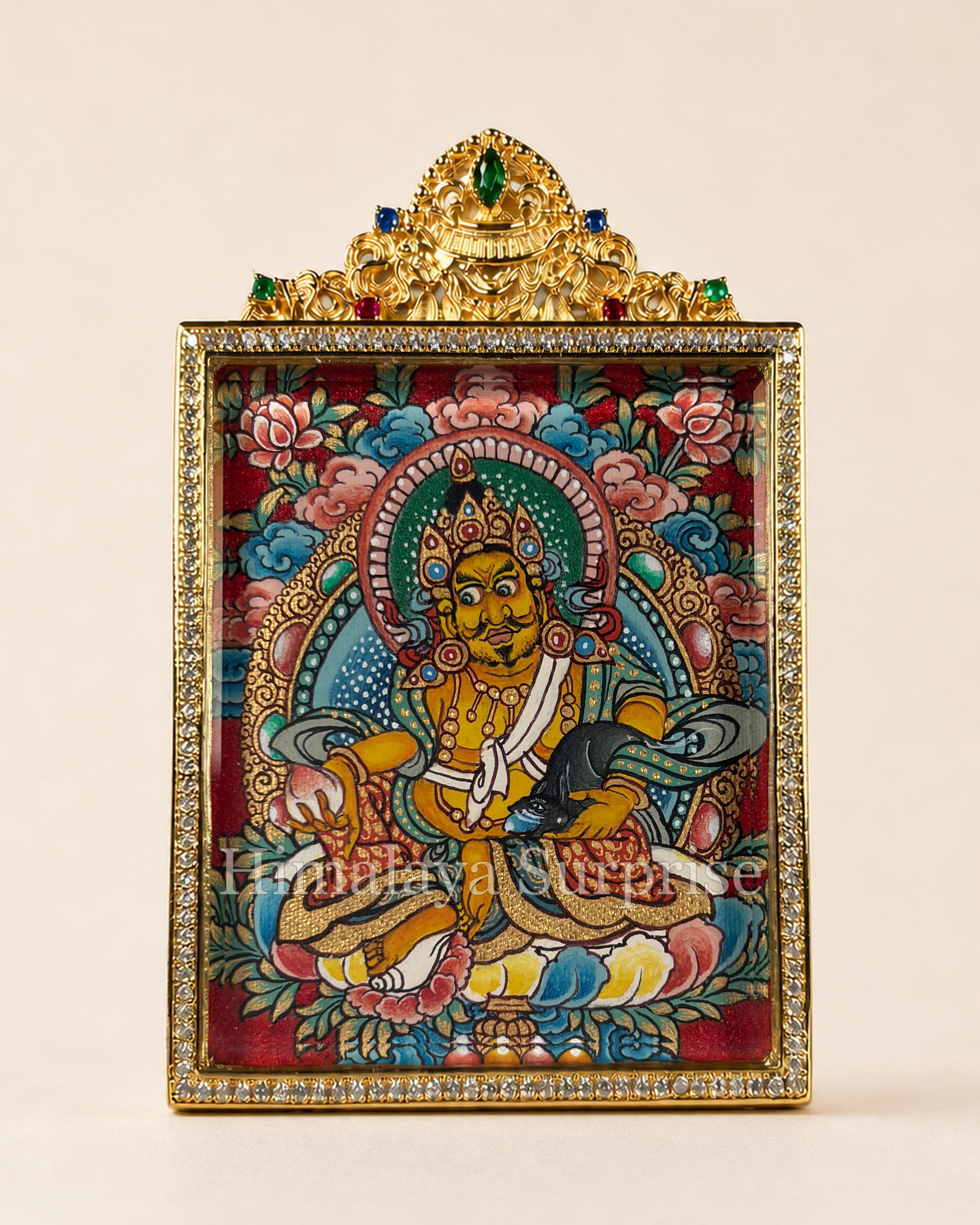
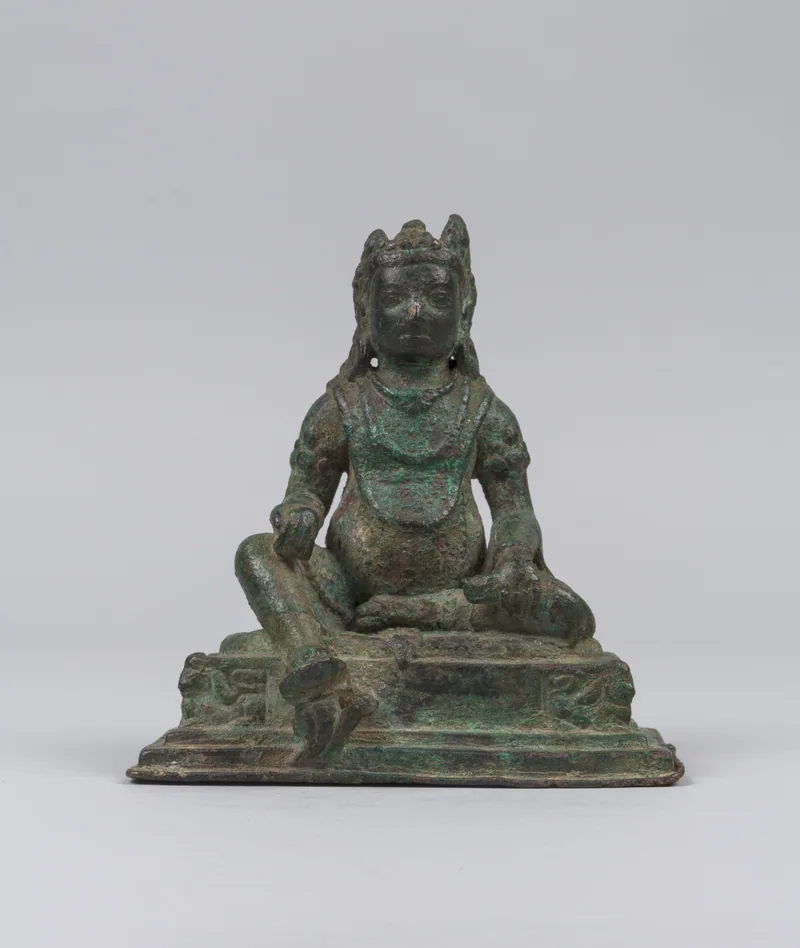
Jambhala is often compared with Kubera and appears in multiple Buddhist forms. Yellow Jambhala may be shown richly adorned and seated, sometimes holding a citron-like fruit and a jewel-emitting mongoose. Other forms change the body colour, number of arms, vehicle and attributes. A mongoose is an important clue in some forms, but it is not enough to identify every wealth-related figure as Jambhala.
Traditional discussions may connect Jambhala with wealth, resources, generosity and the reduction of grasping. A responsible page should present those as religious and ethical associations, not as a financial forecast or a prediction of individual change.
Vasudhara: a female figure of abundance
Vasudhara is a female Buddhist deity associated with wealth, abundance and the flourishing of resources. In Nepalese and Himalayan images she may hold or be surrounded by a wealth vase, grain, jewels or a scripture, depending on the form. Her appearance and the number of arms can vary considerably, so the exact work and tradition should be named when known.
The presence of a vase or grain does not automatically make a female figure Vasudhara. Compare the full body, attributes, attendants, mandala position and catalogue record. A wealth goddess can also appear as part of a larger composition rather than as a solitary central figure.
Vaishravana: guardian king of the north
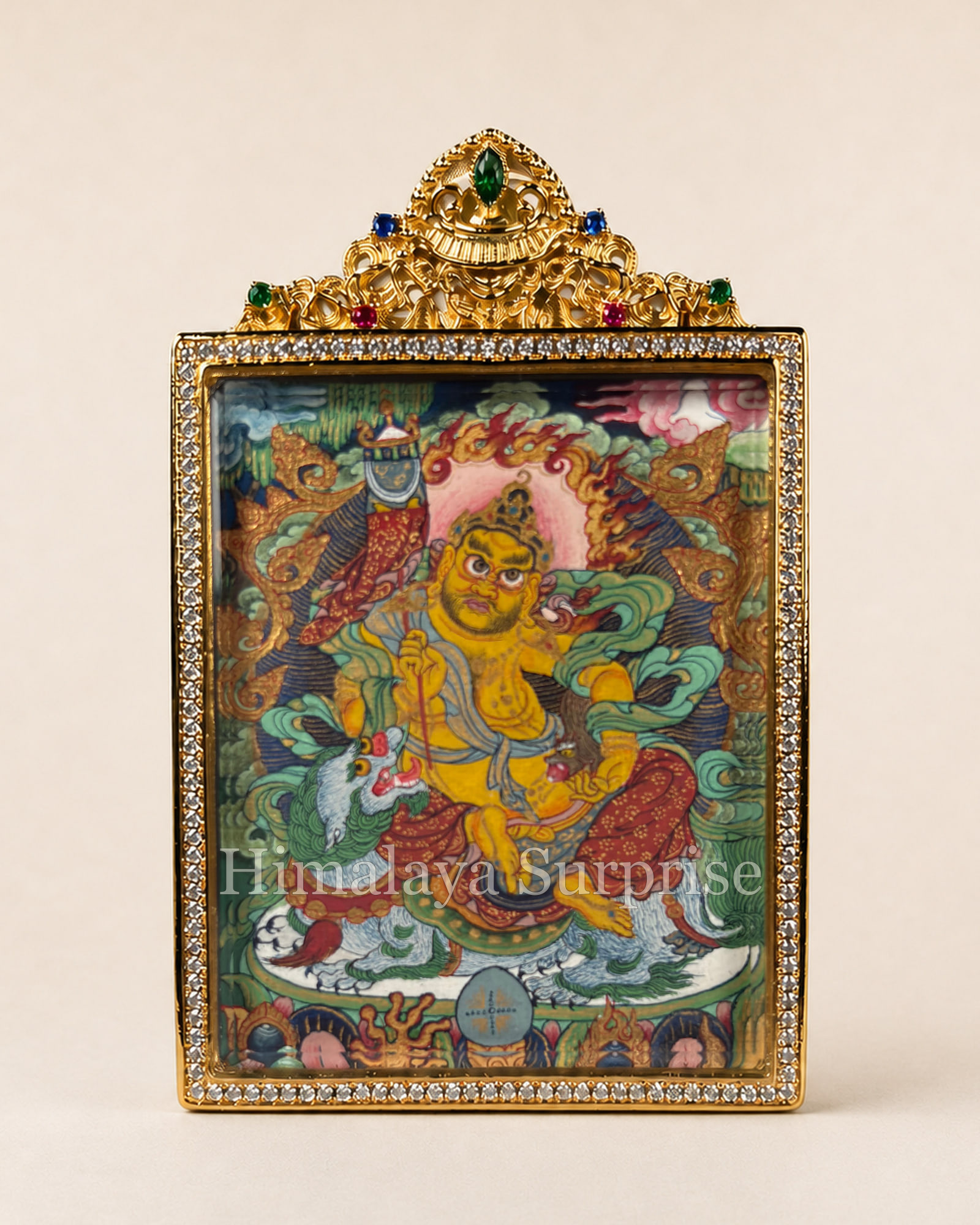
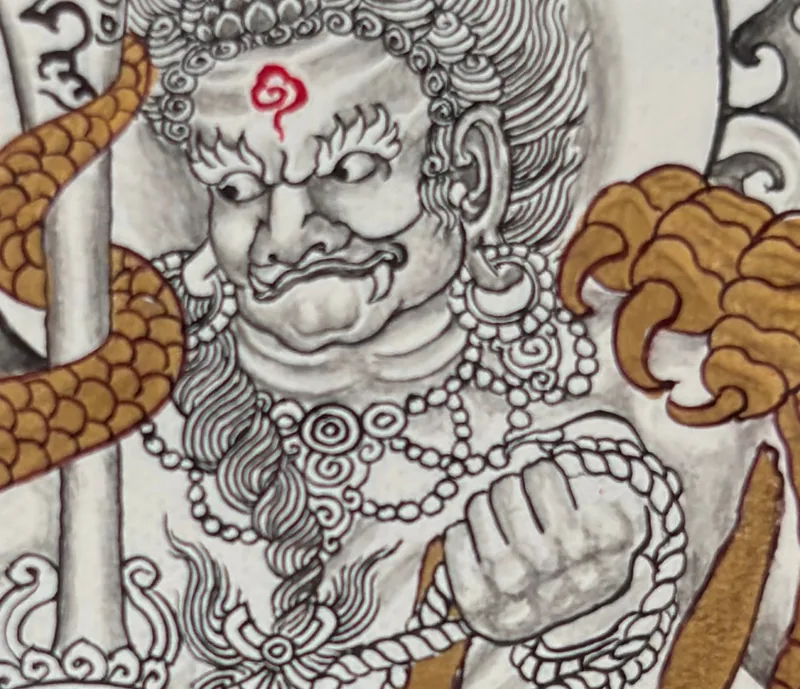
Vaishravana is principally the guardian king of the north. In Tibetan images he is often shown as a warrior king in armour; documented forms may place him on a snow lion and may include generals or retinue figures, while early forms can appear without the lion. A banner, mongoose, jewels or other wealth imagery may appear, but his directional guardianship and royal-protector role remain central.
This is why Vaishravana should not be collapsed into Jambhala simply because both may hold a mongoose or appear wealthy. Vehicle, armour, direction, retinue and title help distinguish the guardian king from a wealth deity.
How should a catalogue name the figure?
Start with what you can see: body, posture, clothing and implements. Then compare those details with the surrounding figures and the work's title. A jewel or mongoose is a useful clue, but the complete combination distinguishes Jambhala, Vasudhara and Vaishravana.
Traditional wealth language should also remain contextual. It can discuss generosity, resources, prosperity, guardianship and responsibility without presenting money, luck or protection as guaranteed personal results.