Learning the craft
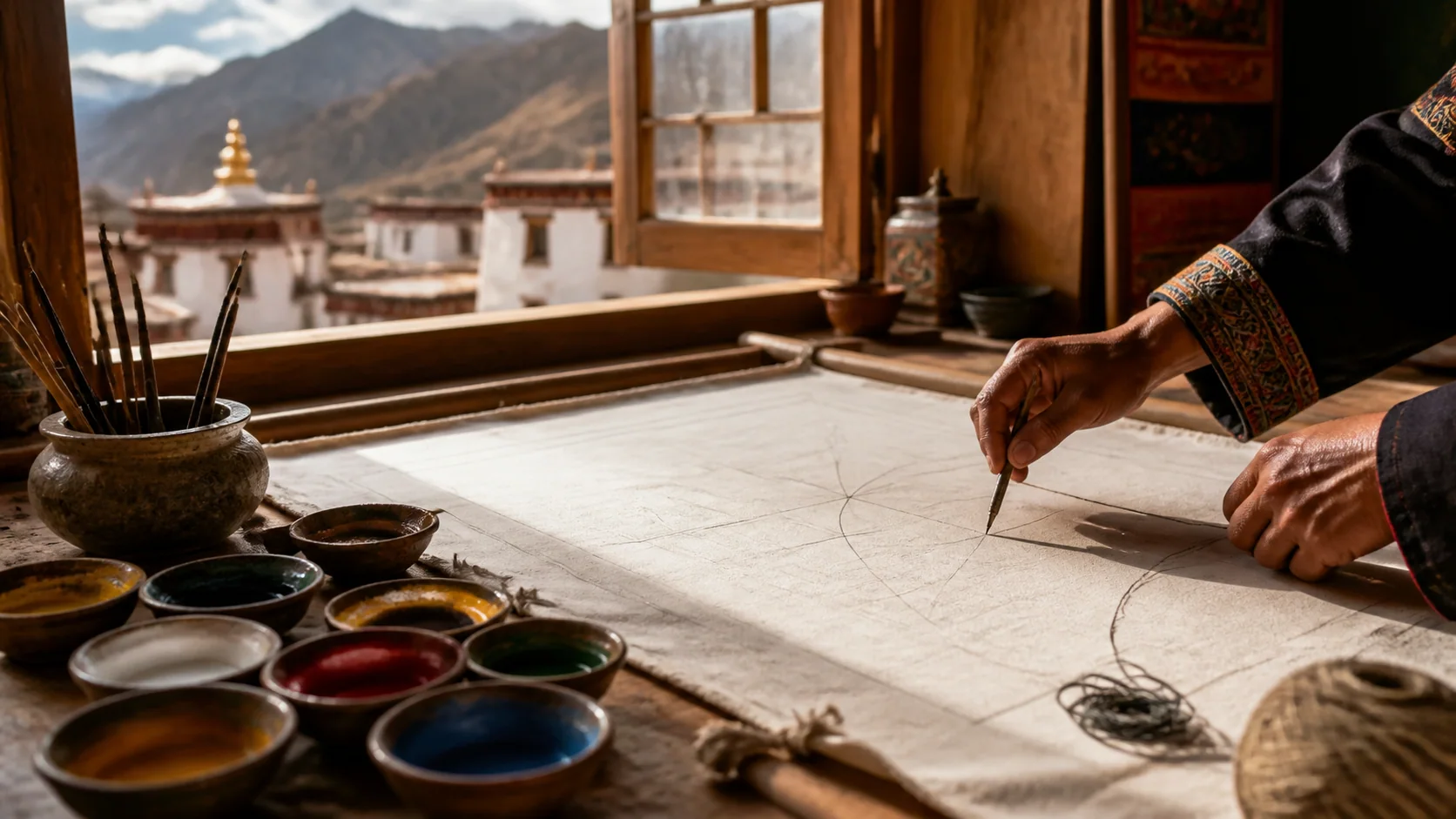
The classroom photographs documented by Dastkari Haat Samiti show students learning proportions before moving to more complex compositions. Training develops both the hand and the eye: drawing, comparing and correcting become part of the painter's working rhythm.
A shared visual language
A figure's posture, gestures, colour and attributes carry meaning. Learning to paint a thangka therefore involves understanding what these details communicate, as well as how to draw them. A lotus, a hand position or a particular implement belongs to the subject's identity.
Tradition in the details
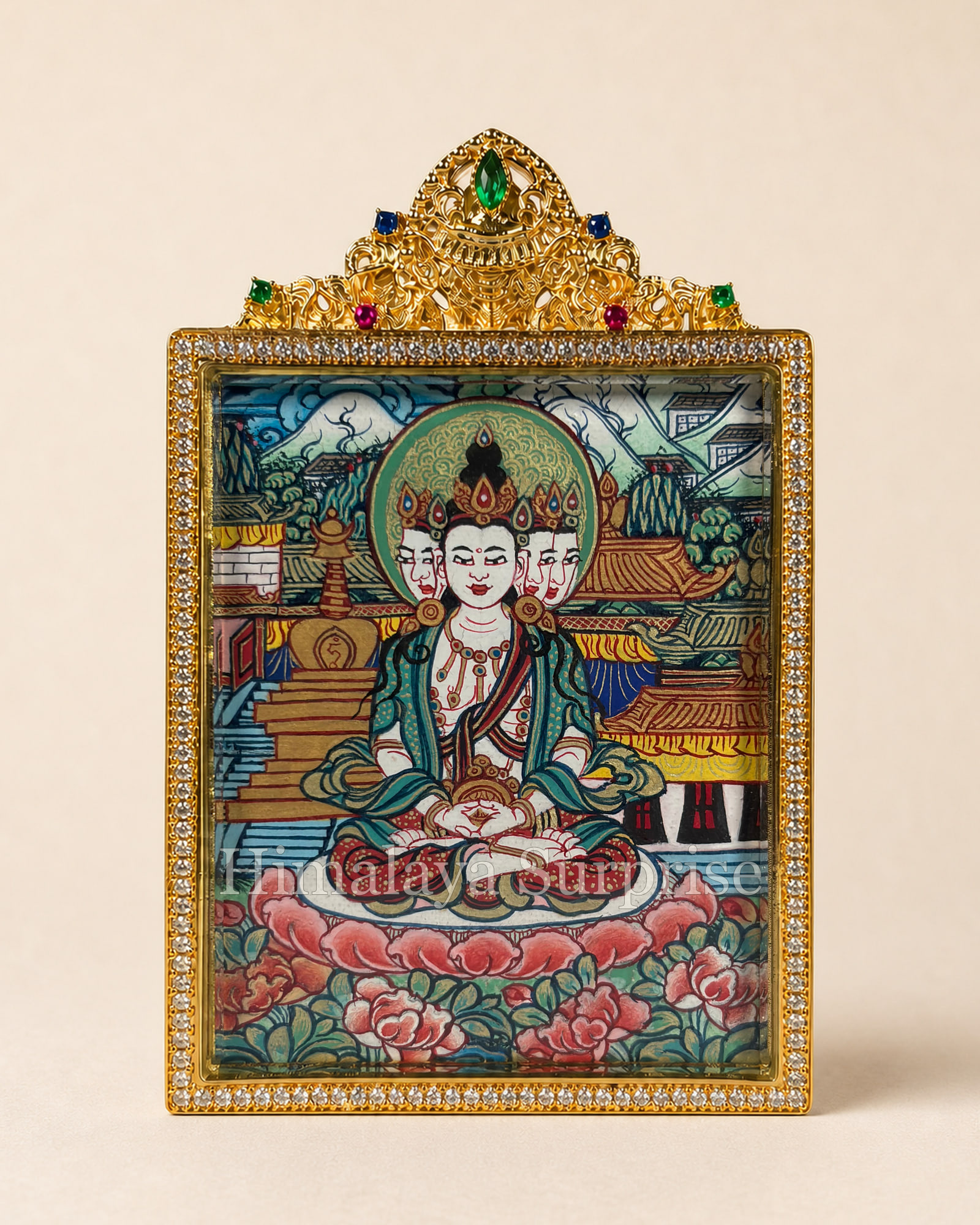
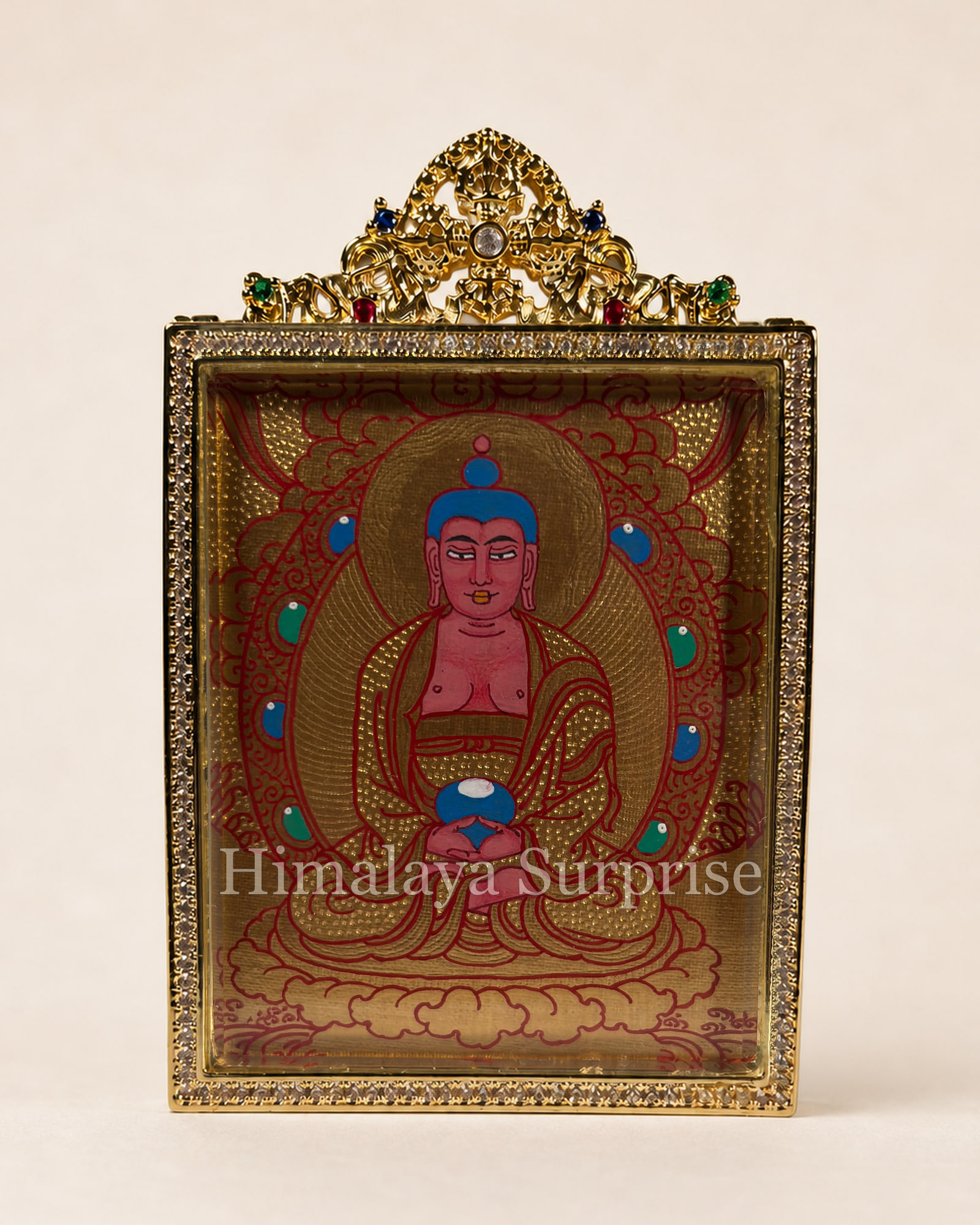
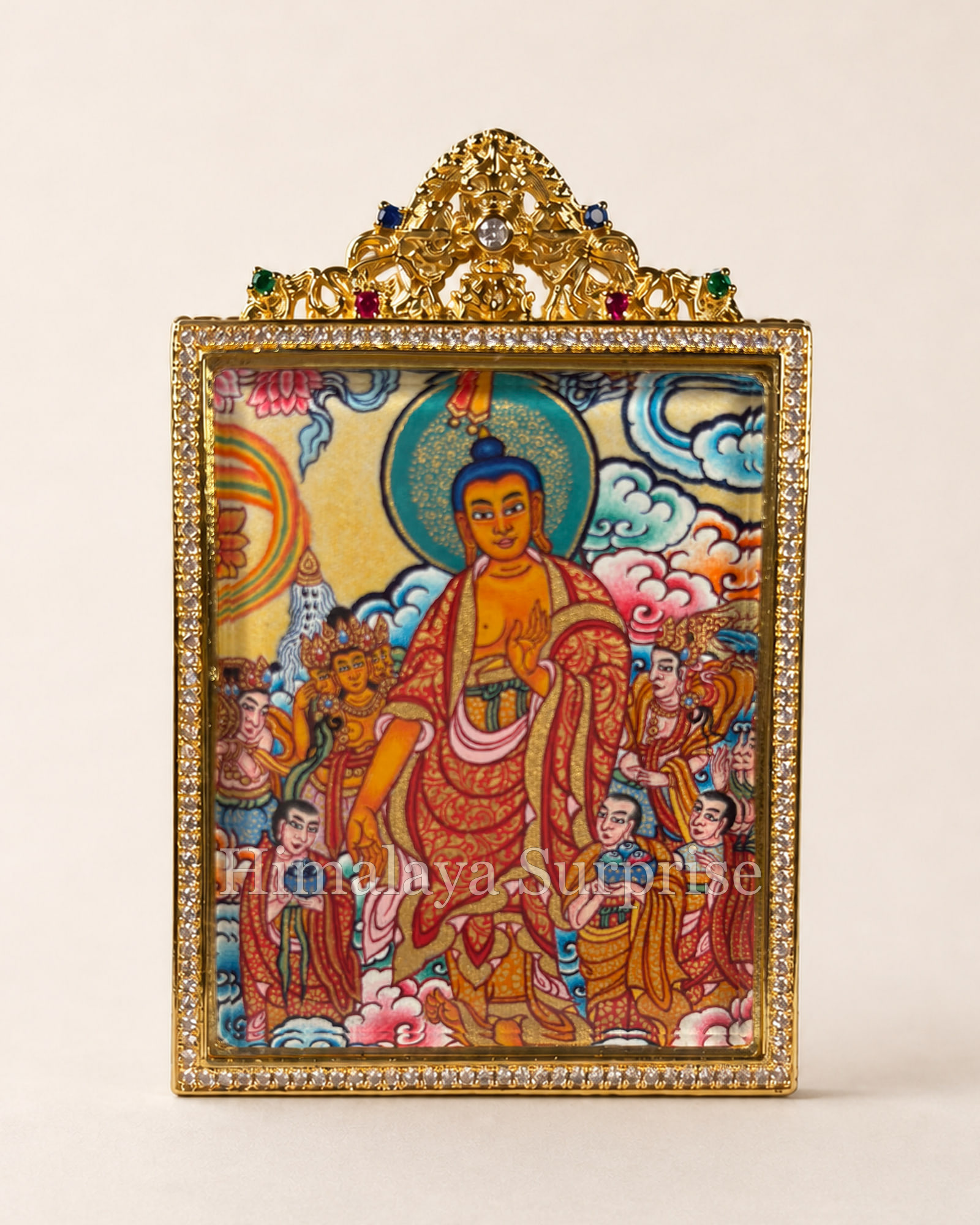
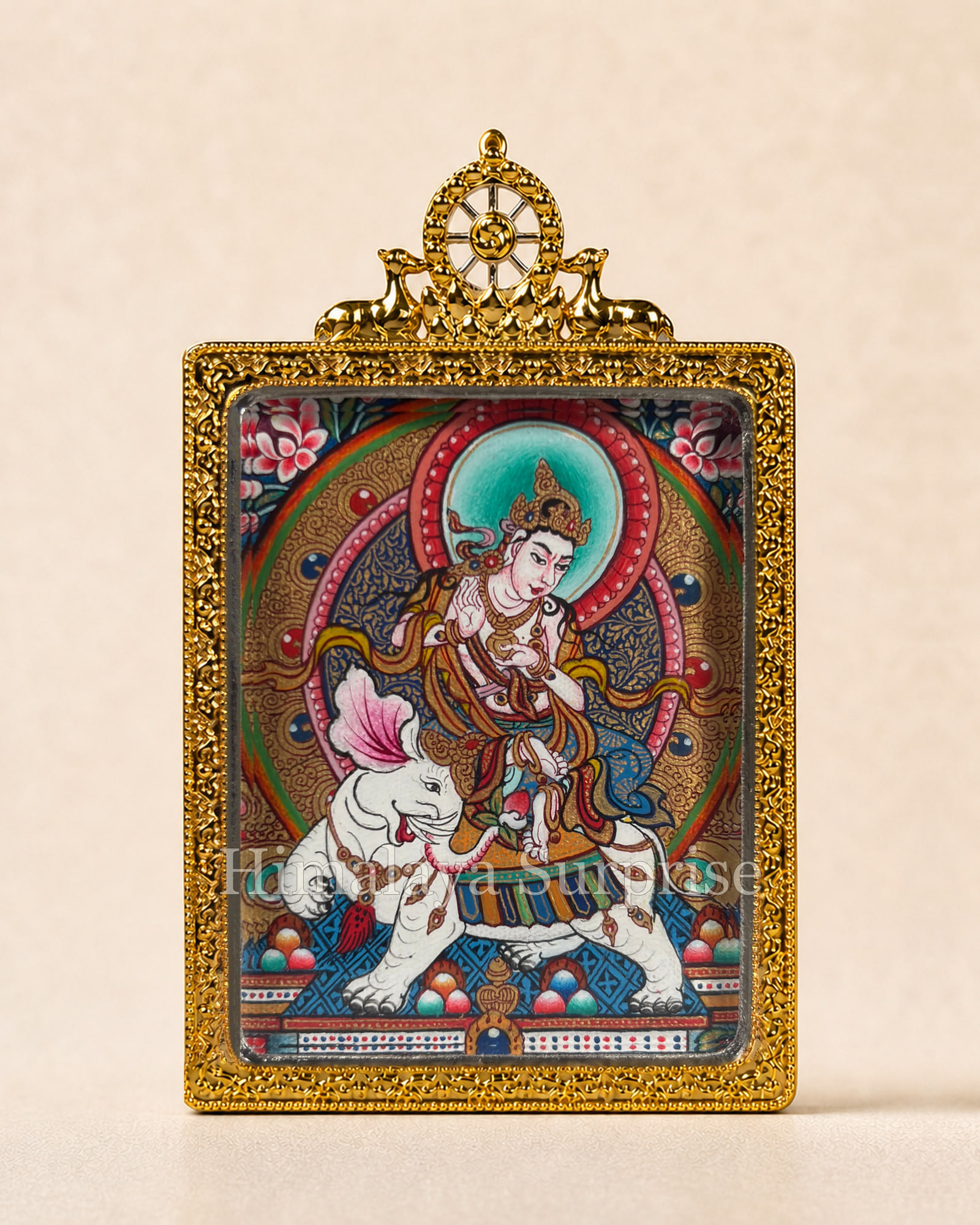
Within a shared subject, paintings can differ in palette, ornament and the balance between the central figure and its surroundings. Looking at two works together makes these choices clearer: follow the outline, the surrounding forms and the transition between colours.
A living tradition, close at hand
Himalaya Surprise's miniature thangkas bring hand-painted imagery into a 4 × 5 cm painted surface. Each comes with a cord for wearing or carrying and can also be kept for collection or display. The small format invites close attention to the line, colour and expression of a complete painting.