Discover / Subjects & Meaning
Vajrapani Meaning: The Vajra, Power and Changing Forms in Buddhist Art
Who is Vajrapani? Follow the vajra-bearing bodhisattva from Gandharan reliefs to Tibetan painting, and explore peaceful forms, fierce expressions and shared attributes.
In this story
Vajrapani means “holder of the vajra”: a Buddhist bodhisattva associated with the power and active energy of awakening. The vajra in his name is both a thunderbolt and a diamond-like symbol of indestructibility. His images range from a muscular companion beside the Buddha to a richly adorned peaceful figure, or a fierce deity with raised hair and flames. The implement gives the subject continuity; the changing body reveals how artists in different Buddhist settings have understood his role.
What the name Vajrapani means
The Sanskrit name combines vajra with pāṇi, “hand”. English translations include “vajra-holder” and “holder of the thunderbolt”. In Tibetan the figure is commonly called Chagna Dorje, with spelling variants such as Chakna Dorje. Dorje is the Tibetan name for the vajra itself.
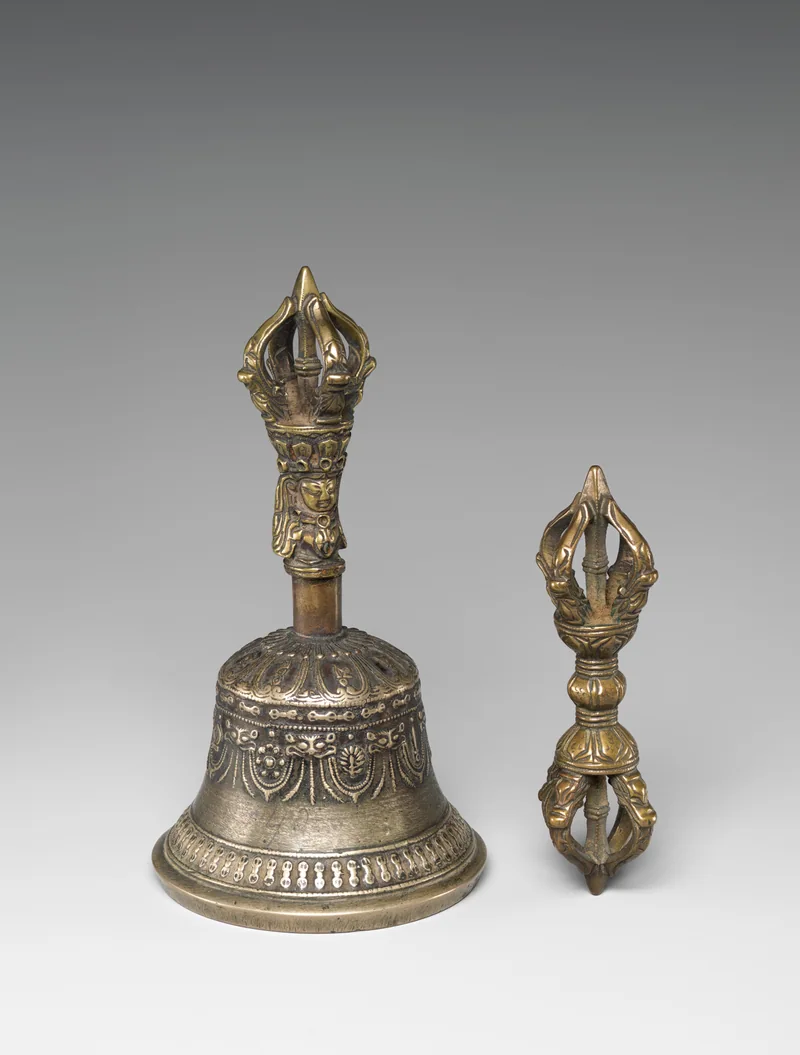
Vajrapani is the named figure; the vajra or dorje is an implement used throughout Buddhist art and ritual. The short sceptre may appear in a raised hand, close to the chest or supported by a flower. Its position, together with the figure’s posture and setting, helps make the image legible.
Why Vajrapani represents power
Vajrapani’s protective role is closely connected with the Buddha and the teaching. In Mahayana art he can appear as the Buddha’s attendant; in some Vajrayana traditions he is also associated with safeguarding tantric teachings and is known as Guhyapati, “Lord of Secrets”.
Strength is expressed through the image: a firmly planted foot, a lifted implement or a body that seems ready to move. In a fierce form, the intensity conveys forceful awakened activity directed against ignorance and obstacles. Peaceful forms give this same subject a different bearing, with jewellery, a crown and a composed face.
A guardian beside the Buddha’s first sermon
A Gandharan schist relief in the Metropolitan Museum of Art, dated to around the second century, shows the Buddha teaching among five monks. Vajrapani stands beside him with a bar-shaped vajra. The protector’s muscular body draws on the imagery of Heracles, carried into the region through contact with the Mediterranean world.
The museum points out that Vajrapani does not appear in the written account of this first sermon. The sculptor introduced him into the scene as an auspicious protector. That small difference between a narrative and its visual treatment is revealing: an artist could expand a familiar episode to give the teaching a visible guardian.
When the weapon becomes a companion
A seventh- to early eighth-century sandstone figure, from Bihar and probably Nalanda, shows Vajrapani standing in a flexed pose with the vajra raised. His long locks and unequal ear ornaments give the sculpture a distinctive silhouette. A smaller attendant stands below the resting hand.
This smaller figure is a personification of the weapon. A club and axe appear with the attendant, extending the main figure’s identity into a second body. Looking down from the raised vajra therefore reveals more than decoration: the sculptor has given the power of an attribute its own presence.
Vajra and bell in an early Kashmir bronze
The eighth-century Kashmir bronze at the beginning of this article pairs a vajra in the raised right hand with a bell in the left. Silver details brighten the eyes; orange-red colour remains in the upward-rising hair. One leg hangs down toward a stepped, rocky base where small lions appear.
The force of the face is balanced by a seated, stable body. This early work brings together attributes that are familiar in later Himalayan art, while its base and surviving coloured details make the individual sculpture memorable.
Peaceful and wrathful Vajrapani
Himalayan Art Resources distinguishes peaceful, semi-wrathful and wrathful appearances. Peaceful figures may be white, green or blue, standing or seated. Familiar wrathful forms often raise a vajra, with broad eyes, vigorous posture and surrounding fire. The many traditions make room for different hand arrangements and additional implements.
Colour alone is a poor way to separate these forms. A green figure can be peaceful; a seated figure can have a fierce expression. The visual character emerges from several decisions at once: the face, movement, adornment, implements and surrounding figures.
A peaceful figure in a Tibetan initiation card
A small Tibetan painting from the early fifteenth century offers a quieter image. Titled Vajrapani, it shows a green, crowned central figure with a pale yellow companion against a red field. Curving blue haloes surround the heads; finely drawn ornaments and folded legs fill the small space.
Painted in opaque watercolour on paper, the card measures about 16 × 14.5 centimetres. It belongs to a set of initiation cards that could be arranged as a mandala during a ceremony. Its meaning comes partly from that larger arrangement: each small painting had a place within an organised sacred space.
Wisdom, compassion and power
Vajrapani is often discussed with Manjushri and Avalokiteshvara. The three bring wisdom, compassion and power into relation; selected tantric traditions call them the Lords of the Three Families. The grouping explains an important place Vajrapani holds among bodhisattvas, while his solo images and narrative appearances show a wider range of settings.
Our three-bodhisattva comparison follows their different attributes. Here, the sequence of individual works shows another side of the subject: the same vajra-bearing identity can be expressed through markedly different bodies.
Vajrapani and Vajrasattva can share attributes
Peaceful Vajrapani and Vajrasattva can both hold a vajra and bell, sometimes in very similar poses. A crown or a pale body does not separate them reliably. In close cases, an inscription or the other figures in a composition becomes more useful than another general rule about colour.
The Kashmir bronze and Tibetan card show why this matters. One makes strength visible through raised hair, bright eyes and a weighty base; the other uses a green crowned body within an intimate, carefully ordered painting. Both are recorded as Vajrapani. An attribute begins the reading, and a particular work gives it depth.
Questions and answers
What does Vajrapani symbolize?
Vajrapani is associated with the power and active energy of awakening, and with protecting the Buddha and the teaching. Artists express that role through the vajra and through peaceful or forceful forms.
Is Vajrapani always blue and wrathful?
No. Buddhist art preserves peaceful, semi-wrathful and wrathful appearances. Peaceful forms can be white, green or blue, and their posture and attributes vary by tradition.
Are Vajrapani and Vajrasattva the same?
They are distinct figures, although peaceful forms may share a vajra, bell and a similar posture. Inscriptions and the surrounding composition can help distinguish closely related images.
What is Vajrapani called in Tibetan?
Chagna Dorje is a common English rendering, also written Chakna Dorje. Dorje is the Tibetan term for vajra, the implement central to the name.