Subjects & Meaning
Manjushri, Avalokiteshvara or Vajrapani? A Visual Guide
These three bodhisattvas are often discussed together, but they are not interchangeable figures. Manjushri is commonly approached through wisdom, Avalokiteshvara through compassion and Vajrapani through power or forceful activity. Their actual identities are established through a combination of attributes, gestures, form and context.
View related available works ↓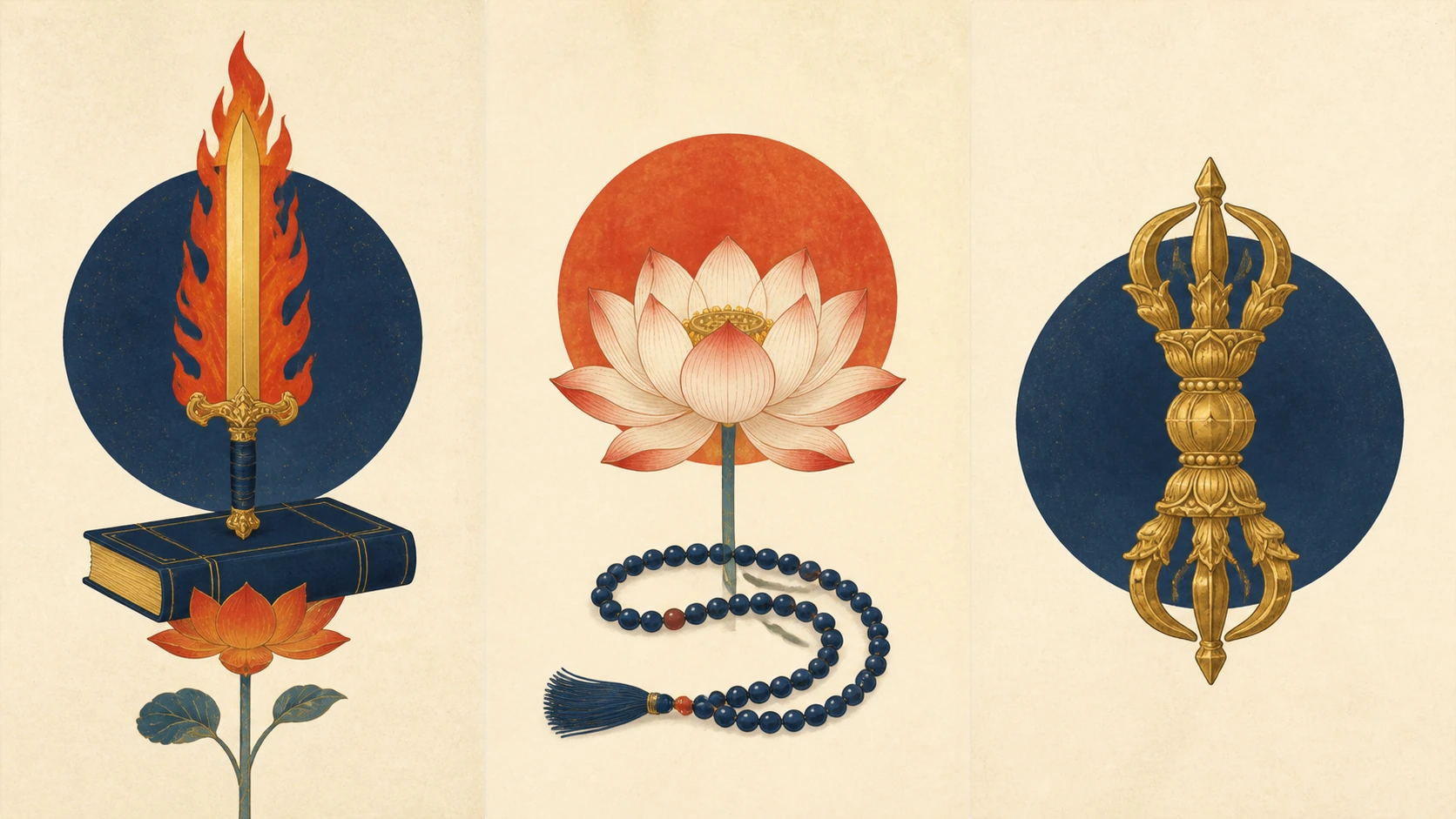
Quick comparison
At a glance: three bodhisattvas
These are useful starting clues, not mechanical labels. Read the attributes with the complete image and its documented context.
| Reading clue | Manjushri | Avalokiteshvara | Vajrapani |
|---|---|---|---|
| Common association | Wisdom | Compassion | The power aspect of awakened activity |
| Common visual clues | Wisdom sword and a scripture resting on a lotus | Lotus, rosary, multiple arms or a small Amitabha in the crown | Vajra, dynamic posture, raised hair, flames or a wrathful form |
| Forms can vary | A lion appears in some forms, but not in every image | Peaceful, crowned, seated, standing and four-armed forms occur | Peaceful forms also exist alongside forceful or wrathful forms |
| Do not identify from one clue | A sword alone is not conclusive; compare the lotus, text, posture and title | The absence of a crown Amitabha does not disprove Avalokiteshvara | A vajra alone is not conclusive; other figures may hold one |
The three figures at a glance
In a common visual shorthand, Manjushri represents the wisdom aspect, Avalokiteshvara the compassion aspect and Vajrapani the power aspect of awakened activity. In selected Kriya Tantra contexts, they are known together as the Lords of the Three Families. This relational grouping does not make them versions of one another; it explains why they are frequently placed together.
The practical clues are simple but must be combined: sword and scripture point toward Manjushri; lotus, rosary, multiple arms or a small Amitabha image may point toward Avalokiteshvara; a vajra and a forceful or wrathful form may point toward Vajrapani. Because forms vary, these are clues rather than mechanical rules.
Manjushri: wisdom made visible
Manjushri is the bodhisattva most closely associated with wisdom in many Mahayana and Vajrayana traditions. The raised sword is commonly read as cutting through ignorance, while a lotus may support a text associated with transcendent wisdom. In some forms a lion appears as a mount or companion, but not every Manjushri image includes one.
A sword alone is not conclusive. Other deities can hold blades or ritual implements, and some Manjushri forms change the number of arms, colours or attributes. Read the sword together with the lotus, scripture, posture, companions and the title of the individual work.
A CLOSER LOOK
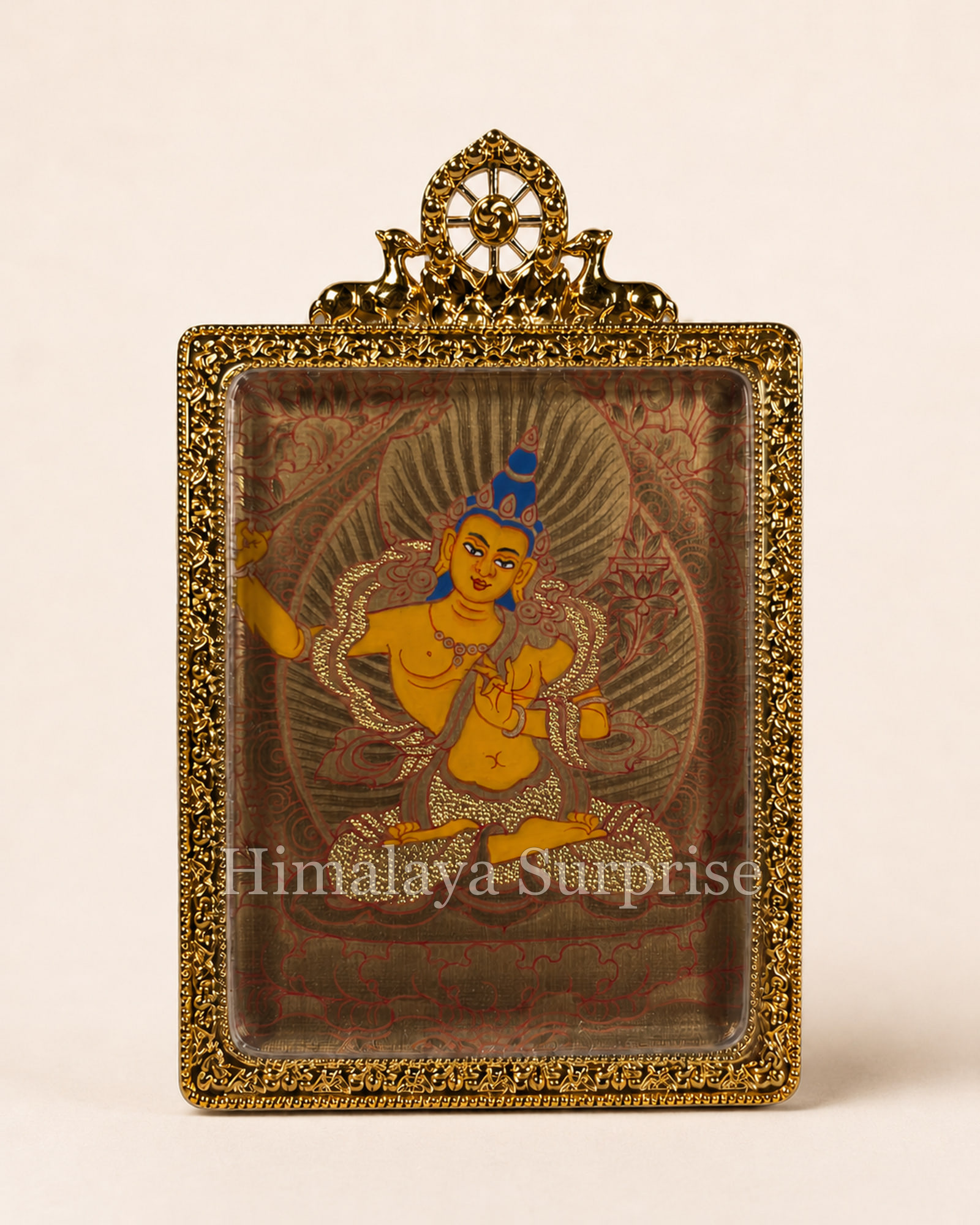
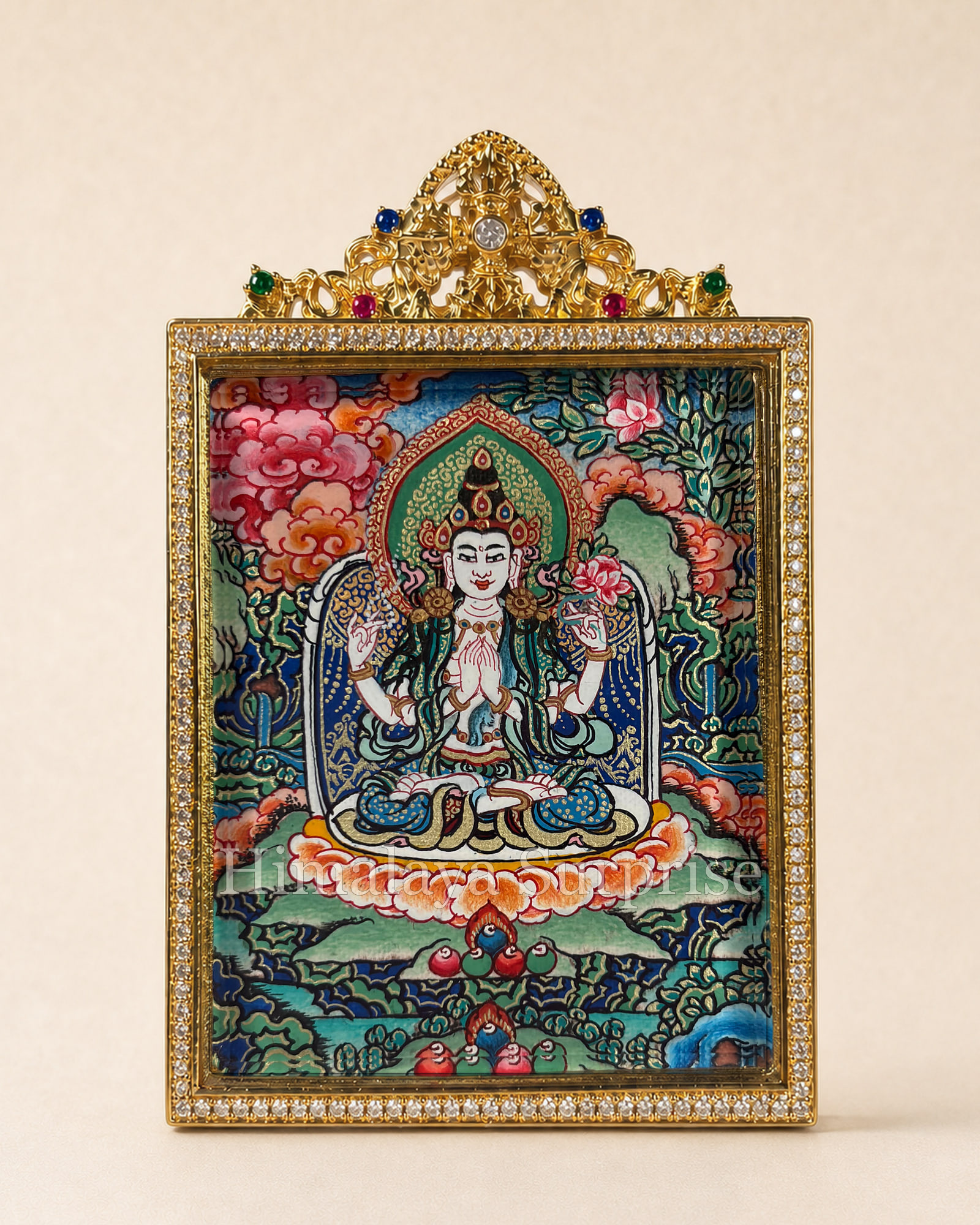
Sword and joined hands: compare two works
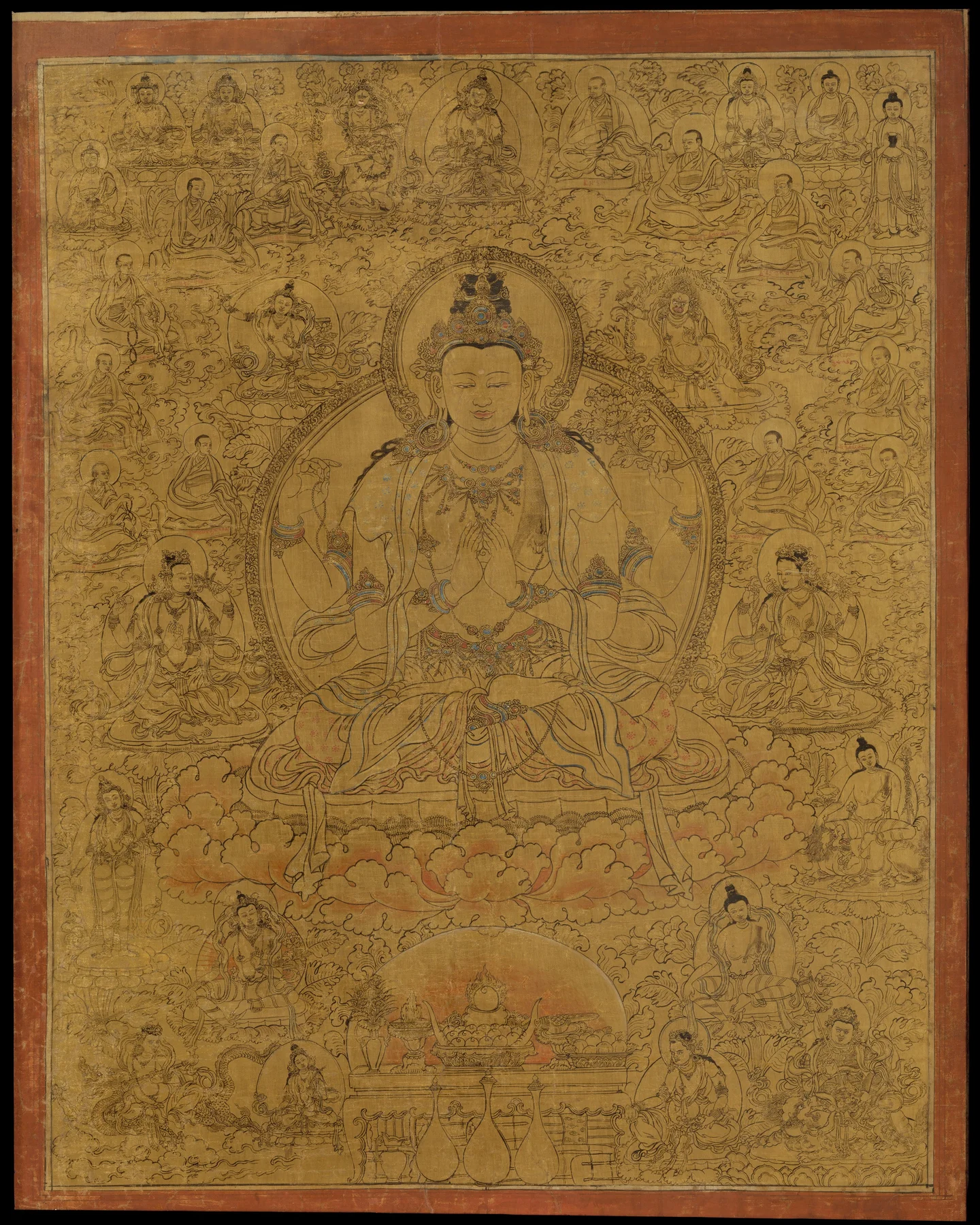
Start with what the hands are doing. These actual works offer a close comparison of Manjushri and Four-Armed Avalokiteshvara; Vajrapani is discussed in the comparison above.
Manjushri with raised sword
- Follow the raised arm toward the sword. On the other side, look for the small rectangular book resting above the lotus.
- The warm-coloured figure stands out against an intricately drawn gold ground. Look closely at the hand, then follow the longer robe contours.
Four-Armed Avalokiteshvara
- The central hands join at the chest; the outer arms open the silhouette to either side. Count the arms before reading the surrounding ornament.
- Flowers, foliage and layered lotus petals build a more densely coloured setting than the gold-ground Manjushri.
Avalokiteshvara: compassion in action
Avalokiteshvara is widely associated with compassion. The four-armed form is especially recognisable through a gathered arrangement of hands: two may meet at the heart while the others hold a lotus and rosary or make related gestures. Other forms may be peaceful, crowned, seated, standing or accompanied by attendants.
In Tibetan and Himalayan contexts, a small Amitabha can appear in the crown, but its absence does not disprove Avalokiteshvara. The arm count, gesture, attributes and composition should be read as a group rather than as a checklist detached from regional convention.
Vajrapani: the vajra and forceful activity
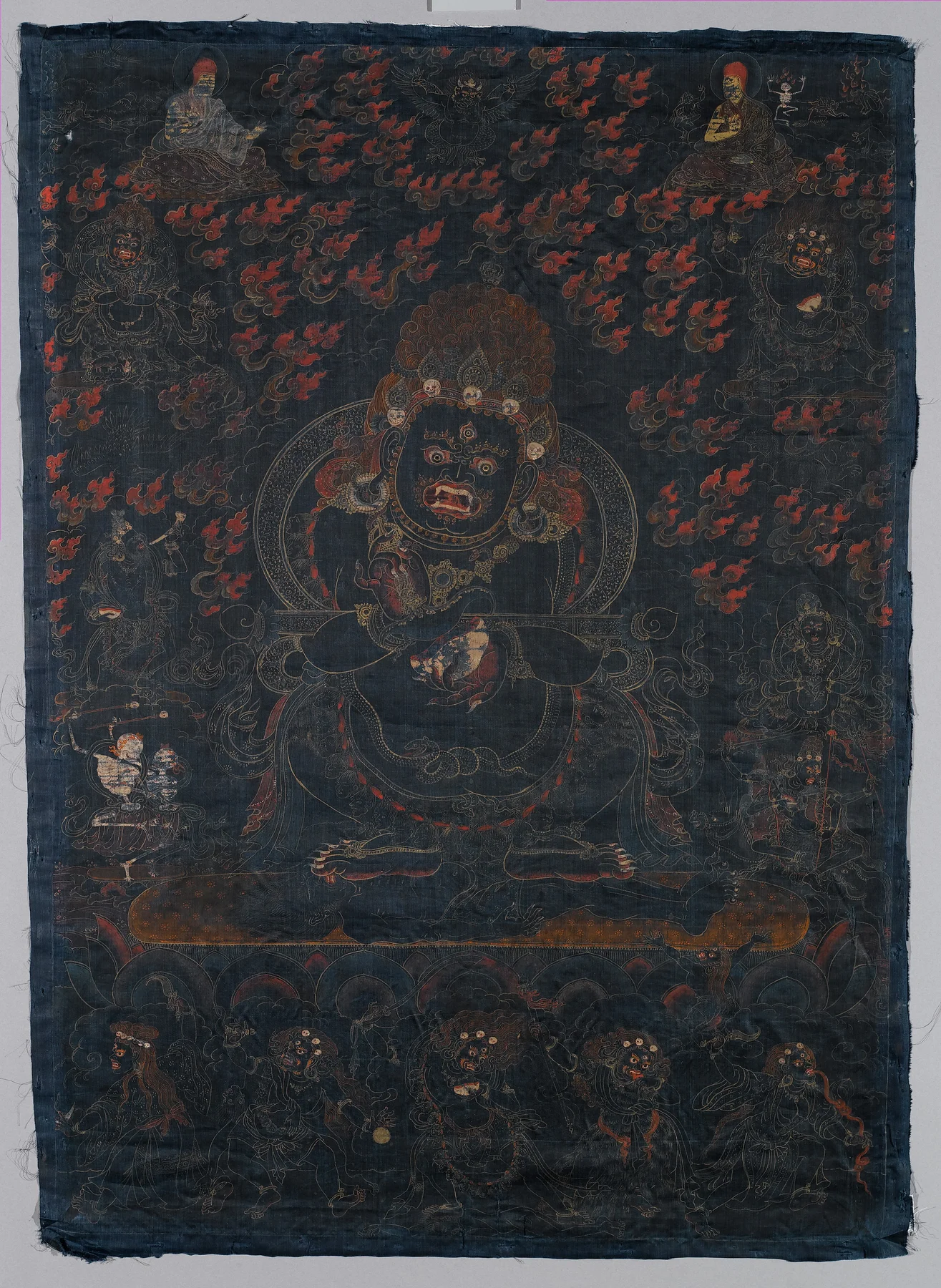
Vajrapani is associated with the power aspect of the Buddhas and is often represented holding a vajra. In many Himalayan paintings he appears dark blue, with raised hair, wide eyes, a dynamic stance and flames. This wrathful presentation should be understood within Buddhist visual language as forceful activity, not as evidence of anger in an ordinary psychological sense.
Peaceful forms also exist, and other figures may hold a vajra. A responsible identification therefore checks the full posture, body colour, attributes, accompanying figures and documented title. The vajra opens the question; it does not close it by itself.
Why do they appear together?
The grouping of Manjushri, Avalokiteshvara and Vajrapani presents wisdom, compassion and power as complementary aspects rather than competing deities. The arrangement gives viewers a way to read a wider Buddhist visual system: understanding, care and decisive activity must support one another.
The exact group, order and iconography can change by tradition. When an individual image does not provide enough evidence, use “recorded as” or “possibly” rather than forcing a definitive name.