Discover / Subjects & Meaning
Vajrasattva Meaning: The Vajra, Bell and Purification in Buddhist Art
What does Vajrasattva mean? Understand Dorje Sempa, the vajra and bell, purification and the Hundred-Syllable Mantra through thangkas and museum artworks.
In this story
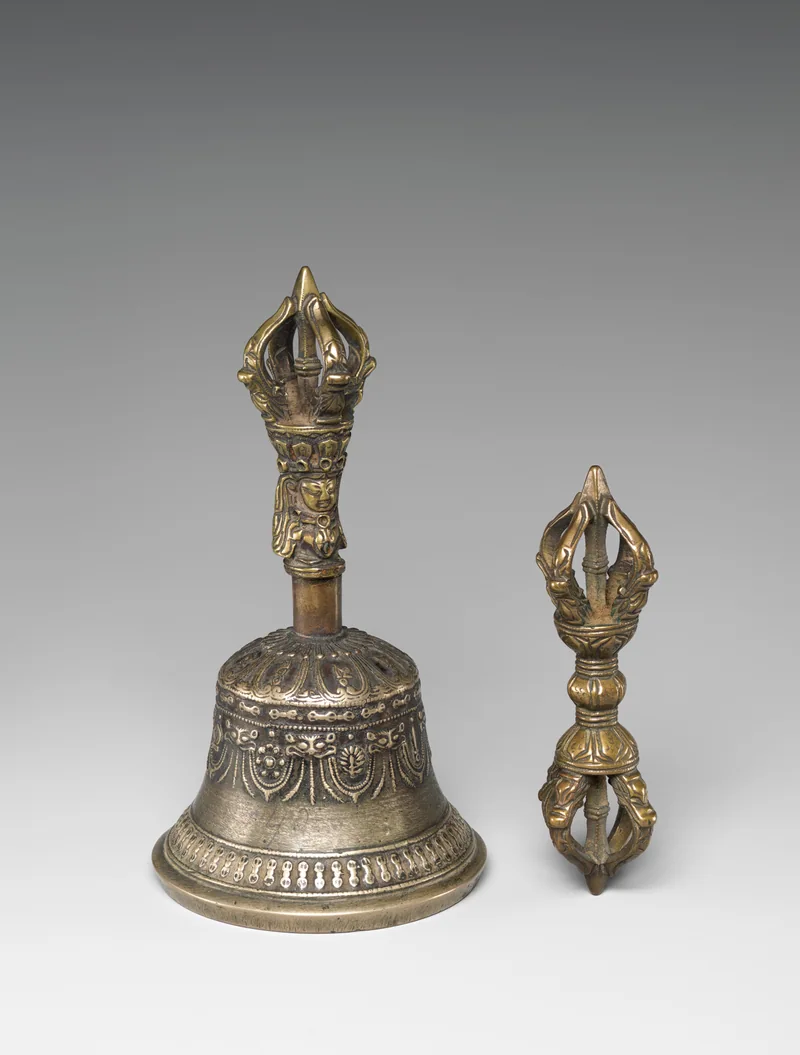
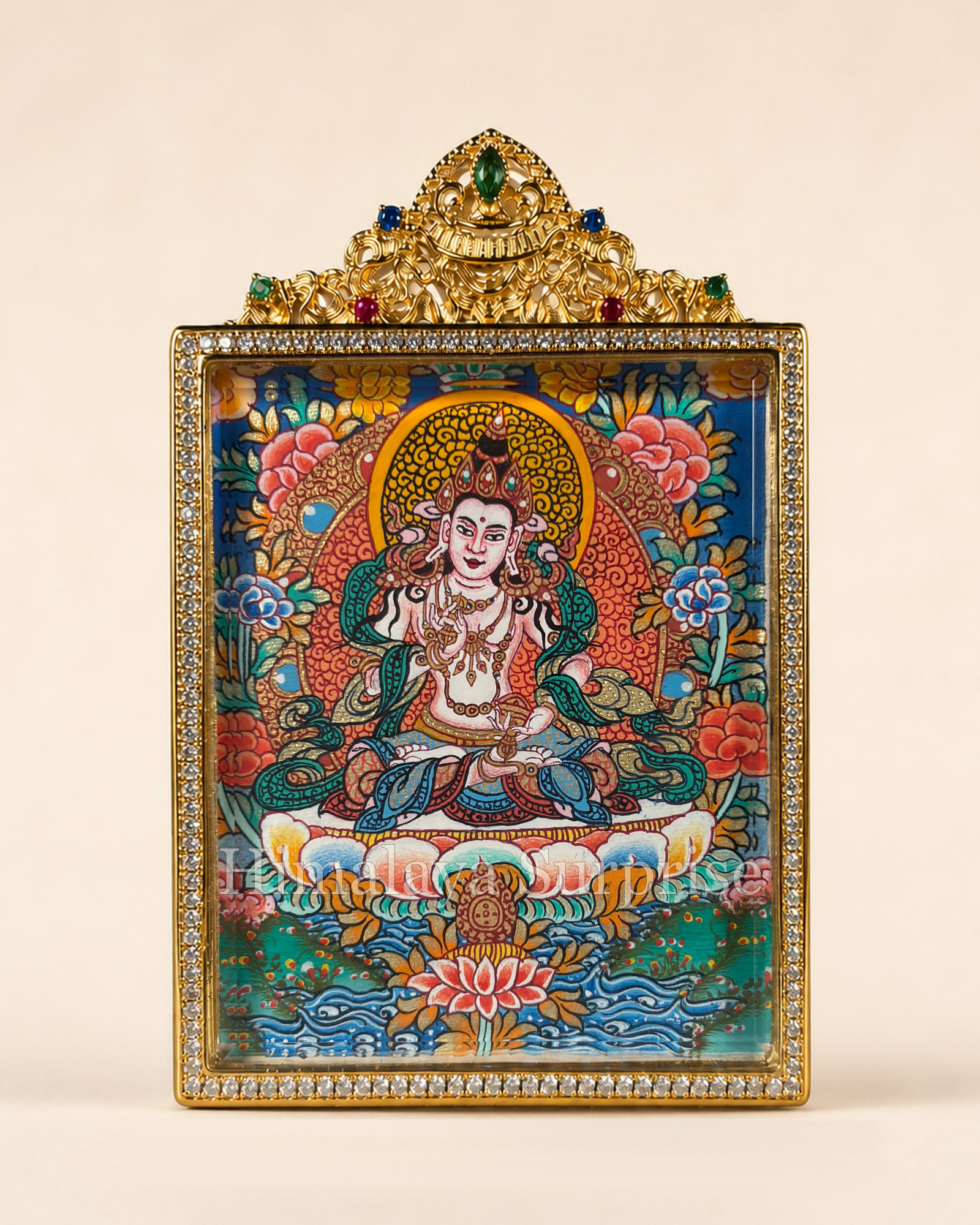
Vajrasattva means “vajra being”, often translated as “diamond being”. In Tibetan Buddhism he is closely associated with purification and the Hundred-Syllable Mantra; his Tibetan name is Dorje Sempa. The familiar image is white and peaceful, with a vajra held near the heart and a bell beside the hip. Those two small implements connect a miniature thangka with much older sculptures, even when the posture, setting and style look quite different.
Who is Vajrasattva?
The Sanskrit name combines vajra, a word associated with diamond and thunderbolt, with sattva, a being. Vajra also carries the sense of indestructibility in Buddhist imagery. Dorje Sempa is the corresponding Tibetan name; Dorje is the Tibetan word used for vajra. This explains why both names appear in descriptions of the same subject.
Vajrasattva has several roles in tantric Buddhism. Purification is the association most readers encounter first, especially in Tibetan practice, but specific forms also belong to particular meditational cycles. These settings differ, so not every Vajrasattva image illustrates one practice.
The two hands: vajra and bell
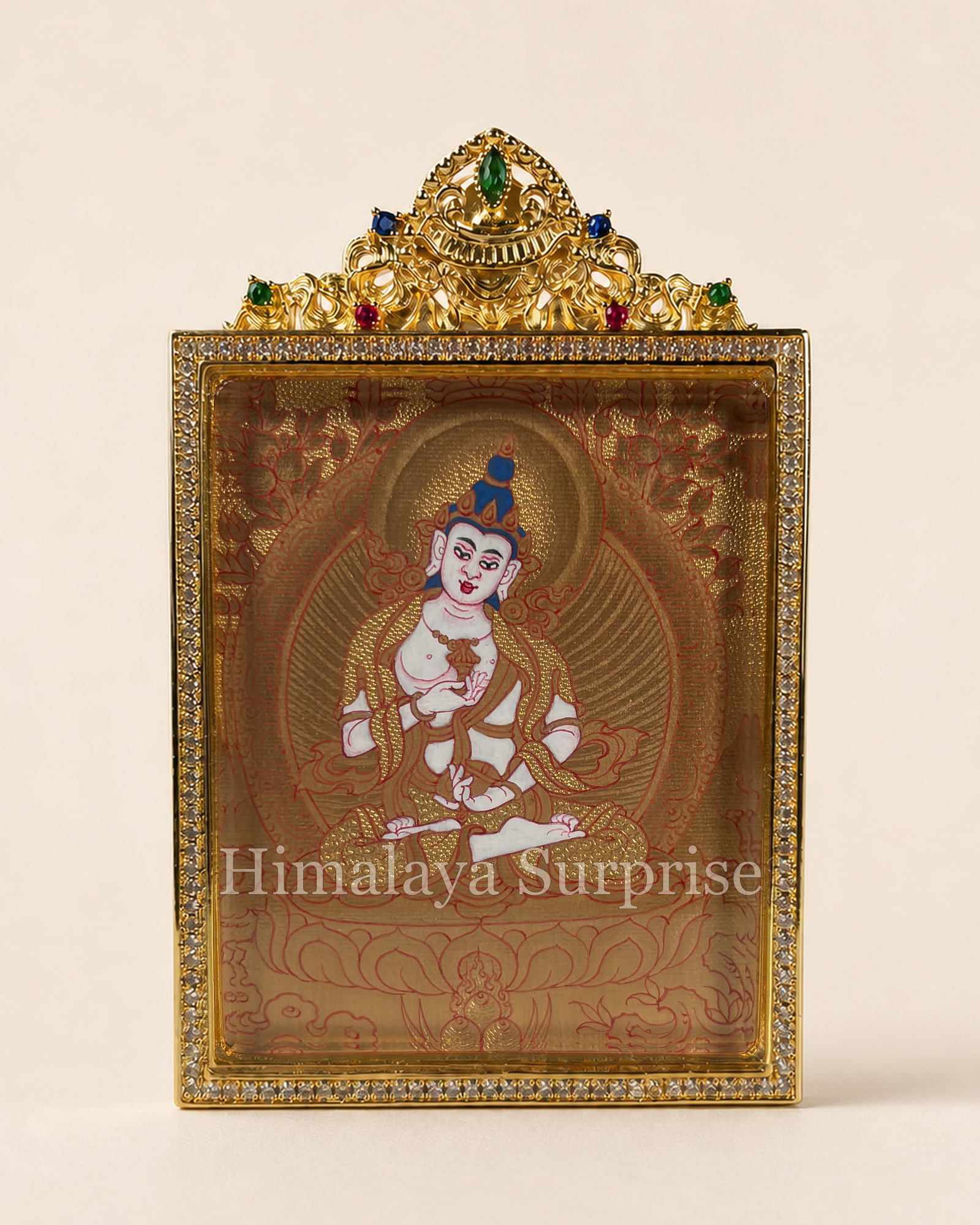
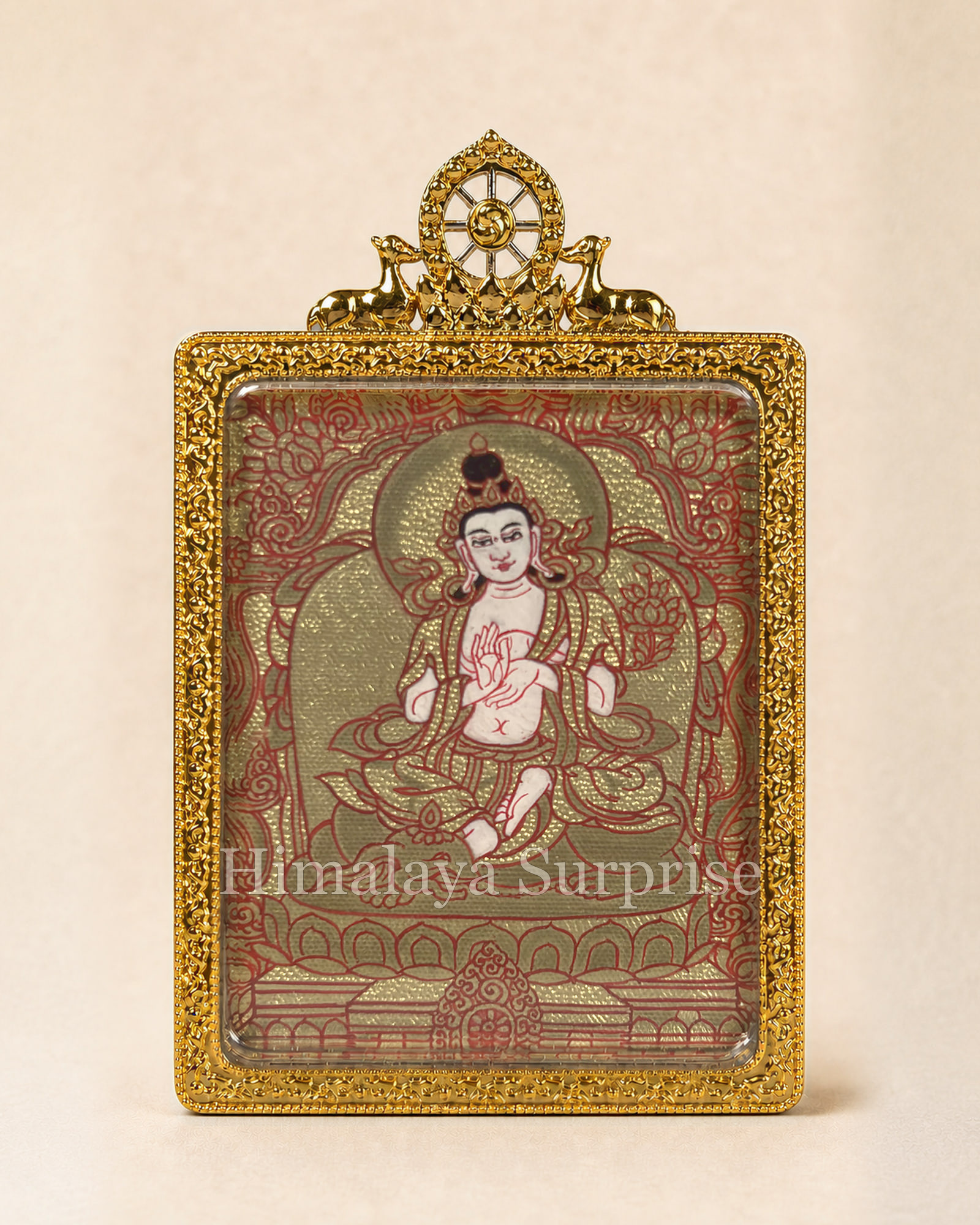
In the gold-ground thangka above, the white figure holds the vajra upright near the chest and lowers the bell at his left side. The hands give the peaceful, seated image a clear structure. A crown, ornaments and a lotus seat surround the body, while fine lines in the gold ground fill the space behind it.
The pair is commonly explained as method and wisdom: compassionate activity together with insight. It appears with other Buddhist figures too. Vajradhara, for example, is often blue and crosses the vajra and bell at the chest. In Vajrasattva’s familiar form, their separated positions make a different silhouette. Our vajra and dorje guide looks more closely at the implement itself.
Solitary forms and images with a consort
The white, one-faced, two-armed solitary form is especially familiar. Vajrasattva can also appear in embrace with a consort, often named Vajradhatu-ishvari. The consort is an additional figure within the sacred image, not a decorative variation of the solitary composition.
A Tibetan painting in the Field Museum, dated to the eighteenth century and recorded as item 54484, depicts a consort form associated with the Mindrolling tradition. The figure is a meditational deity. This specific example shows why “purification deity” is a useful introduction but does not cover every setting in which Vajrasattva appears.
Purification and the four powers
FPMT and Study Buddhism describe Vajrasattva purification through four powers: reliance on refuge and bodhichitta, regret for harmful actions, a remedial practice, and the resolve not to repeat the action. Their explanations put the emphasis on intention and conduct as well as contemplation. Regret concerns an action and its consequences; it is distinguished from condemning oneself.
This gives the peaceful image a more specific religious meaning. Purification involves acknowledging an action, applying a remedy and changing what follows. The four powers explain an ethical structure behind the familiar white figure and paired implements.
The Hundred-Syllable Mantra
The Hundred-Syllable Mantra is the long mantra particularly associated with Vajrasattva. A short Vajrasattva mantra is also used. Teachers discuss them in relation to purification, preliminary practices and the repair of tantric commitments. This is why searches for the deity’s name so often lead to prayer texts and practice explanations alongside images.
The sources differ in their detailed instructions and practice settings. Here the connection helps explain the subject of the artwork: the composed figure gives visual form to a theme that also lives in spoken prayer and contemplation.
A royal seated figure from Kashmir
An eighth-century sculpture from Kashmir in The Metropolitan Museum of Art offers a very different silhouette. Vajrasattva sits in royal ease on a stylised mountain, one leg pendant and its foot resting on a lotus. The figure is made of brass with silver inlay and stands only 16.9 centimetres high. The vajra and bell are among his attributes.
Below the seat, a naga and nagini rise from water with hands lifted in devotion. These small figures make the setting part of the sculpture’s story. The same named deity can therefore appear in an animated, populated scene, far from the still symmetry of a frontal thangka.
A standing figure from Western Tibet
The Met also preserves a Standing Vajrasattva from Western Tibet, dated to about the eleventh century. This gilt-bronze figure is 18.1 centimetres high. Its upright posture changes the relationship between body and base, while the narrow form brings the ornaments and limbs close to the central axis.
Placed beside the seated Kashmir sculpture, it makes a simple comparison possible: Vajrasattva is a subject with a long artistic history, rather than a figure confined to one standard seated pose. Regional workshops gave the subject different proportions, surfaces and rhythms.
Vajrasattva in Angkor-period Cambodia
A bronze Vajrasattva in the Cleveland Museum of Art was made in Cambodia in the twelfth or thirteenth century, in the Angkor Thom style. The vajra is in his right hand and the bell in his left. Cords descend from the crown toward the shoulders; others fall from the belt and curl symmetrically over the legs.
Those lines give the small figure a distinctive ornamental rhythm. The paired implements connect it with the other examples, while the crown, face and treatment of the body give it a regional character of its own. It is an example of Cambodian Buddhist sculpture, sharing a subject with Himalayan art.
The subject in miniature painting
In our gold-ground Vajrasattva, fine contours give the white body and its ornaments a crisp presence against gold. The polychrome Vajrasattva offers another treatment of the same subject. The shared name opens a comparison; the interest lies in how each painter gives form to the face, hands and surrounding space.
Questions and answers
What does Vajrasattva mean?
The Sanskrit name combines vajra and sattva: “vajra being”, often translated as “diamond being”. The Tibetan name is Dorje Sempa. In Tibetan Buddhism Vajrasattva is closely associated with purification.
Why does Vajrasattva hold a vajra and bell?
The pair is commonly understood as method and wisdom. In the familiar white, two-armed form, the vajra is held near the heart and the bell low at the left side.
Is Vajrasattva the same as Vajrapani?
They are distinct subjects. Vajrapani has peaceful and wrathful forms; the peaceful form can resemble Vajrasattva. Body colour, implements and the specific object record help distinguish them.
What are the four powers in Vajrasattva practice?
Common explanations describe reliance, regret, remedial action and a resolve not to repeat the harmful action. They connect purification with intention, contemplation and future conduct.