Discover / Subjects & Meaning
Buddhist Symbols and Their Meanings: The Wheel, Lotus and Buddha Images
Explore Buddhist symbols through the Dharma wheel, Bodhi tree, footprints, lotus and two early sculptures, with clear distinctions between traditions.
In this story
There is no single image that explains all of Buddhism. The Dharma wheel is one of its most widely recognised emblems; a lotus, a tree or a Buddha figure tells a different part of the story. Their meaning becomes clearer when we see how they appear in actual works.
What is the main Buddhist symbol?
For a short answer, begin with the Dharma wheel, or dharmachakra: a wheel representing the Buddha’s teaching. An eight-spoked version is commonly connected with the Noble Eightfold Path. It is a useful starting point, rather than an emblem whose every appearance has exactly the same interpretation.
Other familiar signs include the lotus and the Bodhi tree, while Buddha images make awakening visible through a human figure. Some symbols refer to a remembered event; others belong to a particular ritual, regional tradition or group. A list of names is useful, but it cannot tell us all of these differences.
The wheel in a scene of the first sermon
Look at the stone relief above. The Buddha sits among listeners, with a small wheel immediately below his hands. This Gandharan work dates to about the second century. Its subject is the first sermon: the teaching is described as setting the wheel of the Dharma in motion.
Here the wheel is part of a story, not a detached logo. The monks gather around the teacher, while Vajrapani stands at the Buddha’s right holding a bar-shaped vajra. The sculptor has brought a teaching emblem, a human Buddha and a protector into the same scene.
A Dharma wheel is different from the Wheel of Life, or bhavachakra. The latter is a detailed image of cyclic existence, usually with realms and other scenes inside a great enclosing wheel. Similar circular shapes do not make the two images interchangeable.
A tree, a seat and a pair of footprints
The Bodhi tree recalls the Buddha’s awakening at Bodh Gaya. In Buddhist tradition this is a pipal tree, so its recognisable heart-shaped leaf can evoke a particular place and event. The tree also appears within larger narratives, where its position beside a seat or a worshipping group helps explain the scene.
Early Buddhist works often honour the Buddha through a tree, an empty seat, a stupa or carved footprints. These signs can make a presence felt without giving the central place to a human figure. The complex history of such images is richer than a simple rule that early artists were forbidden to depict the Buddha.
Buddhapada means “Buddha’s feet.” A limestone example from Phanigiri, dated to the late third or fourth century and held by the State Museum in Hyderabad, places a wheel on each sole. The carved feet join a sign of the Buddha’s presence with a sign of his teaching. They are devotional images, not evidence that the stone preserves a physical footprint left by him.
The stupa: a sacred structure within an image
A stupa is a sacred monument associated with relics, remembrance and devotion. Its form can appear as architecture, a small ritual object or a detail inside a painting. It carries meaning through what it commemorates and through the ways people approach it.
This third-century limestone panel from Nagarjunakonda shows a richly decorated stupa. At its entrance stands the Buddha, one hand raised. The subject is his descent from the Heaven of the Thirty-three; a ladder rises above him, and devotees kneel below.
The building and the Buddha figure work together. This is a helpful reminder that sacred symbols did not simply disappear when human Buddha images became established. They could share a composition, giving it several connected layers of meaning.
The lotus and the eight auspicious signs
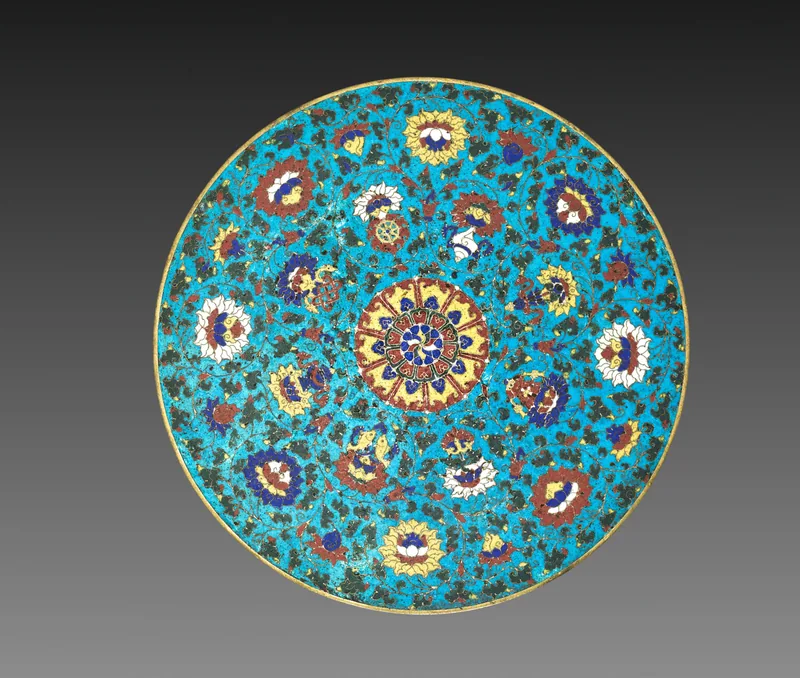
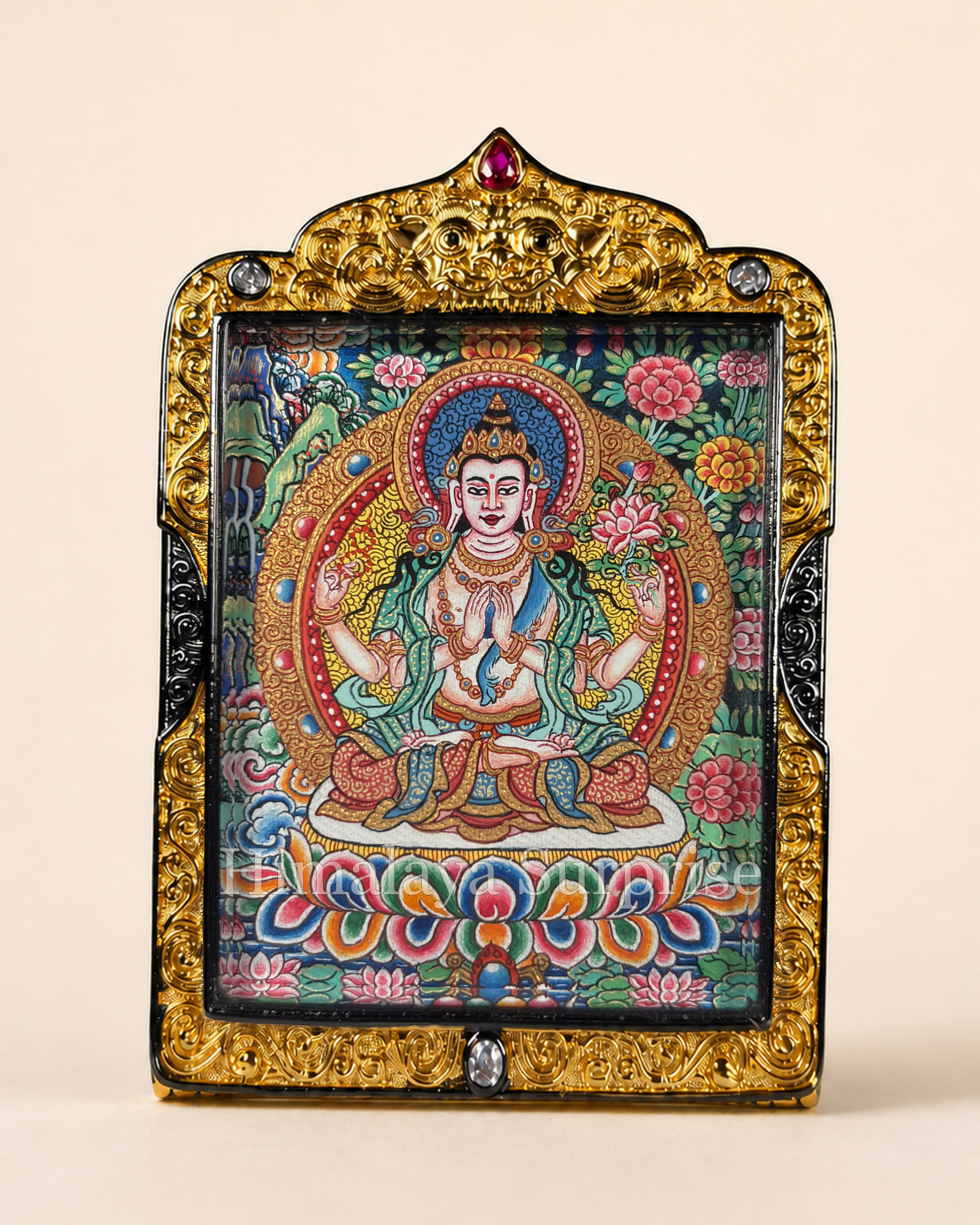
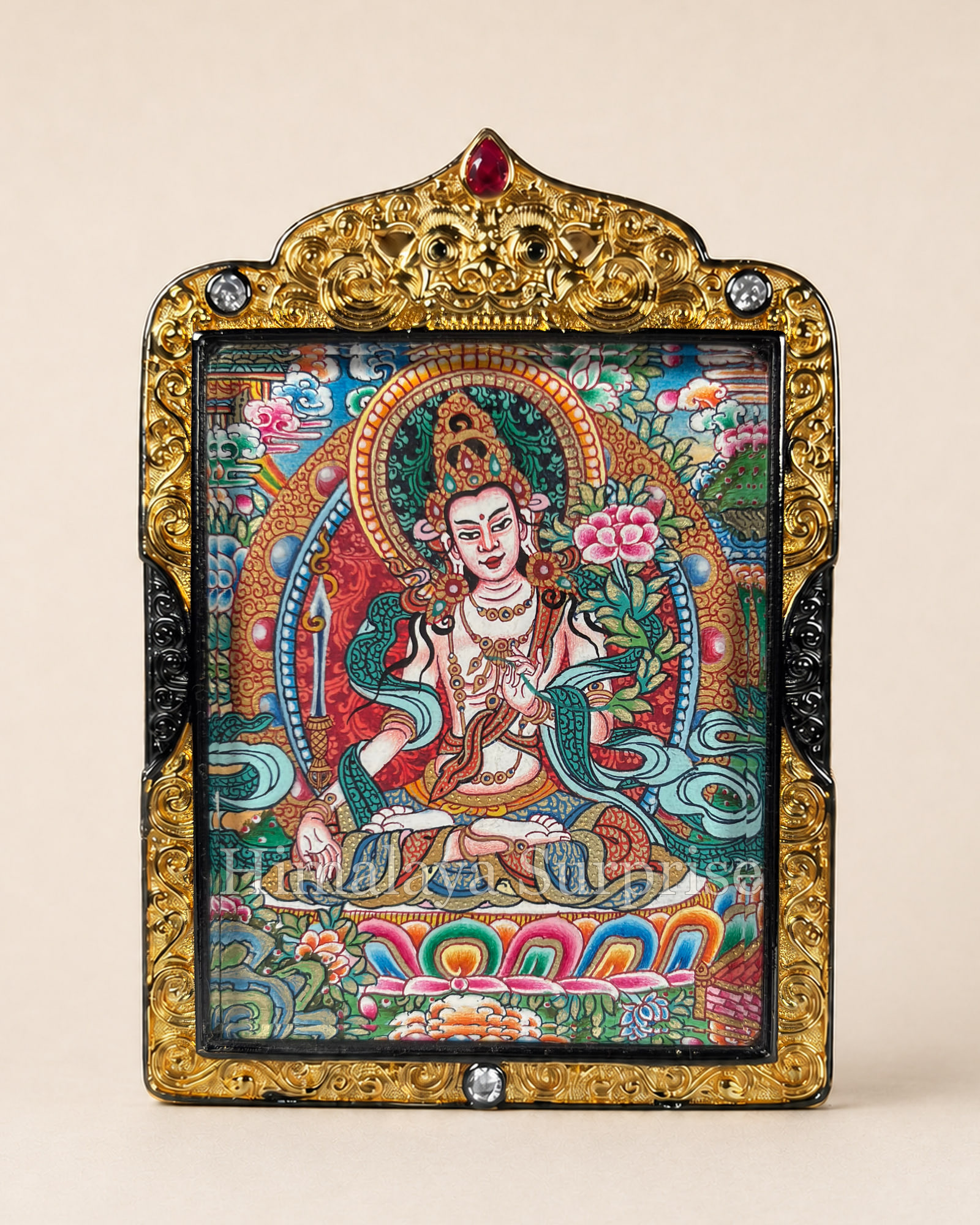
The lotus is often associated with purity and awakening: a flower rises above the muddy water in which it grows. In Buddhist art it can become a seat beneath a figure, a flower held at the shoulder or an ornament. Following its stem and seeing what rests on the blossom tells us more than the colour alone.
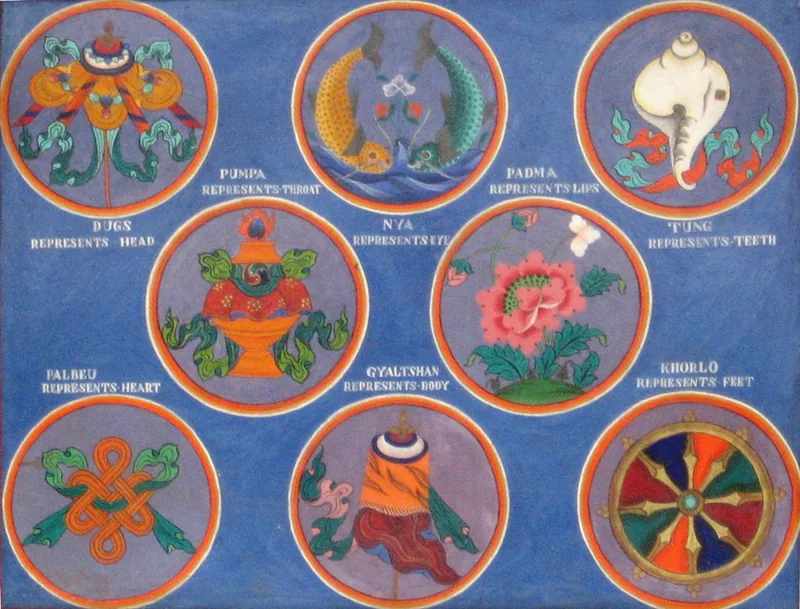
In Tibetan Buddhist art the lotus also belongs to the eight auspicious symbols, alongside the parasol, golden fish, treasure vase, conch, endless knot, victory banner and Dharma wheel. The group brings together images of protection, freedom, abundance, purity, the reach of the teaching, wisdom with compassion, overcoming obstacles and the Dharma. These are traditional interpretations, rather than promises made by an object.
The eight auspicious signs are not a catalogue of every Buddhist symbol. Nor are they the Eight Great Events, which describe episodes in the Buddha’s life. For the individual forms, see our guide to the eight auspicious symbols; the lotus in Buddhist art has its own visual language.
Buddha images, gestures and different traditions
A Buddha image commonly points to awakening, but its gesture can make the subject more specific. A hand reaching toward the earth recalls the moment of enlightenment; hands resting in the lap suggest meditation; a raised open palm can offer reassurance. A gesture is most informative when read with the rest of the figure and its setting.
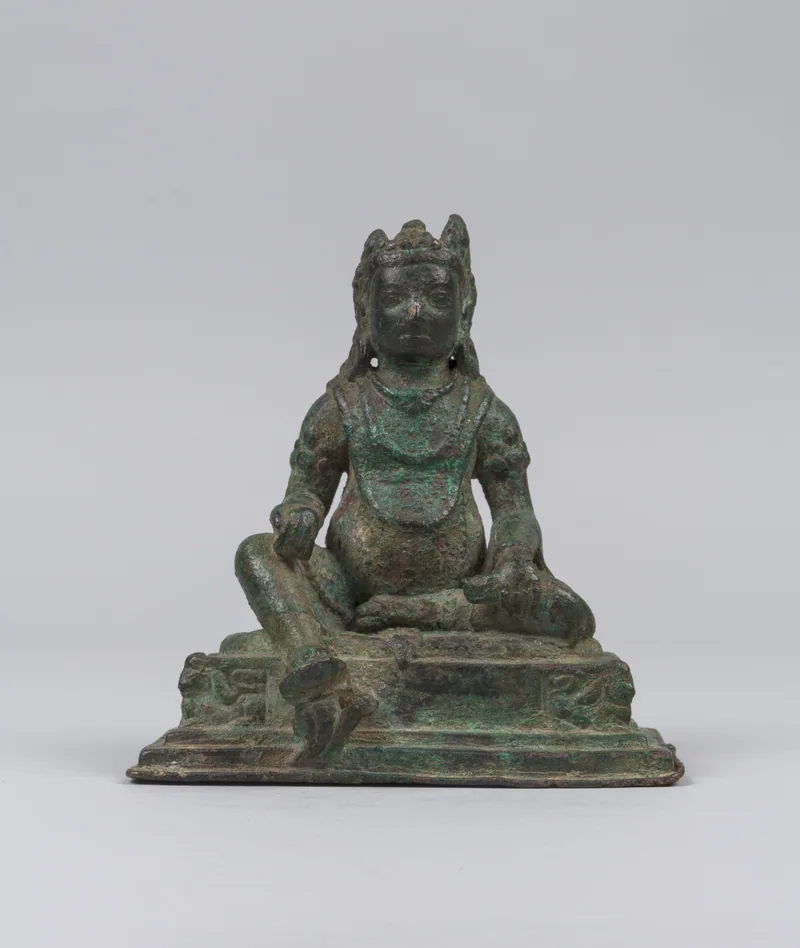
The round-bellied “Laughing Buddha” is usually Budai, known in Japan as Hotei. He is a different figure from the historical Buddha, Shakyamuni. Likewise, a crowned Buddha is not automatically a bodhisattva. The five Buddha families offer another setting for interpreting such figures.
In Vajrayana traditions, a vajra and bell can express the relationship between method and wisdom. The syllable Om appears in a number of Buddhist mantras and also belongs to other Indian religious traditions. A familiar sign can be shared across traditions without becoming the universal emblem of all of them.
Why an old swastika needs historical context
The swastika has sacred uses in Buddhism, Hinduism and Jainism that long precede the twentieth century. Its Sanskrit name is associated with well-being, and it can appear on Buddhist objects as an auspicious sign. Its presence in an old religious work therefore needs to be understood in that work’s own setting.
The Nazi appropriation gave the symbol a devastating modern association with antisemitism and genocide; extremist uses still carry that meaning. A simple claim that one turning direction is religious and the other is Nazi does not explain the history. Date, setting and the surrounding imagery matter.
How symbols take meaning in everyday practice
Not every meaningful object is an emblem carved on a wall. Flowers, light, incense and beads enter Buddhist practice in different ways. The Buddhist Temple of Chicago, a Jodo Shinshu temple, explains flowers through impermanence and candlelight through wisdom. Such explanations help us hear a living community’s voice, without treating its usage as the only Buddhist one.
The small wheel in a sermon scene, the lotus beneath a figure and the flower placed before an image are connected by attention and remembrance. Their forms invite us to look closely; their settings give that looking somewhere to begin.
Questions and answers
Is there one symbol for all Buddhism?
The Dharma wheel is a widely recognised emblem of the teaching, but no single sign covers every Buddhist tradition or use. The lotus, Bodhi tree, stupa and Buddha images convey other aspects.
What do the eight spokes of a Dharma wheel mean?
An eight-spoked Dharma wheel commonly refers to the Noble Eightfold Path. Other wheel forms exist, so the number should be read in the particular image rather than assumed.
Are Buddha footprints real footprints?
The carved footprints discussed here are devotional representations. Their wheels and other marks communicate the Buddha’s presence and teaching; they do not establish a surviving physical impression.
Are the eight auspicious symbols the same as the Eight Great Events?
No. The eight auspicious symbols are a group of emblems, including the lotus and Dharma wheel. The Eight Great Events refer to episodes in the Buddha’s biography.
Does a lotus always have one fixed meaning?
Purity and awakening are familiar associations, but a lotus can also serve as a seat, a held attribute or an ornament. Its relationship to the surrounding figure and objects makes the reading more precise.