Discover / Subjects & Meaning
21 Taras Meaning: Lineages, Forms and Visual Reading
A clear guide to the 21 Taras: the praise, the Atisha and Suryagupta systems, Nyingma forms, and how a group is read in a real artwork.
In this story
Twenty-one Taras is a subject family, not a single template. Read the praise, the lineage and the artwork together, then let the composition show which details belong together.
What does “21 Taras” refer to?
In Tibetan Buddhist tradition, the name is tied to the Praise to Tārā with Twenty-One Verses of Homage. Its first twenty-one verses describe Tara's body, posture and qualities; six final verses belong to the liturgy's closing instructions and benefits. The praise and a painted set are related, but they are not the same kind of record.
Later commentaries pair verses with names and forms, but those pairings do not always agree. Start with the lineage and the object before using a list.
Three visual families to keep apart
Three broad systems recur in discussions: Suryagupta, Atisha and Nyingma terma. They are not one set recoloured; posture, faces, arms, body colour, implements, gestures and arrangement may change.
The Atisha visual key: a close basic form
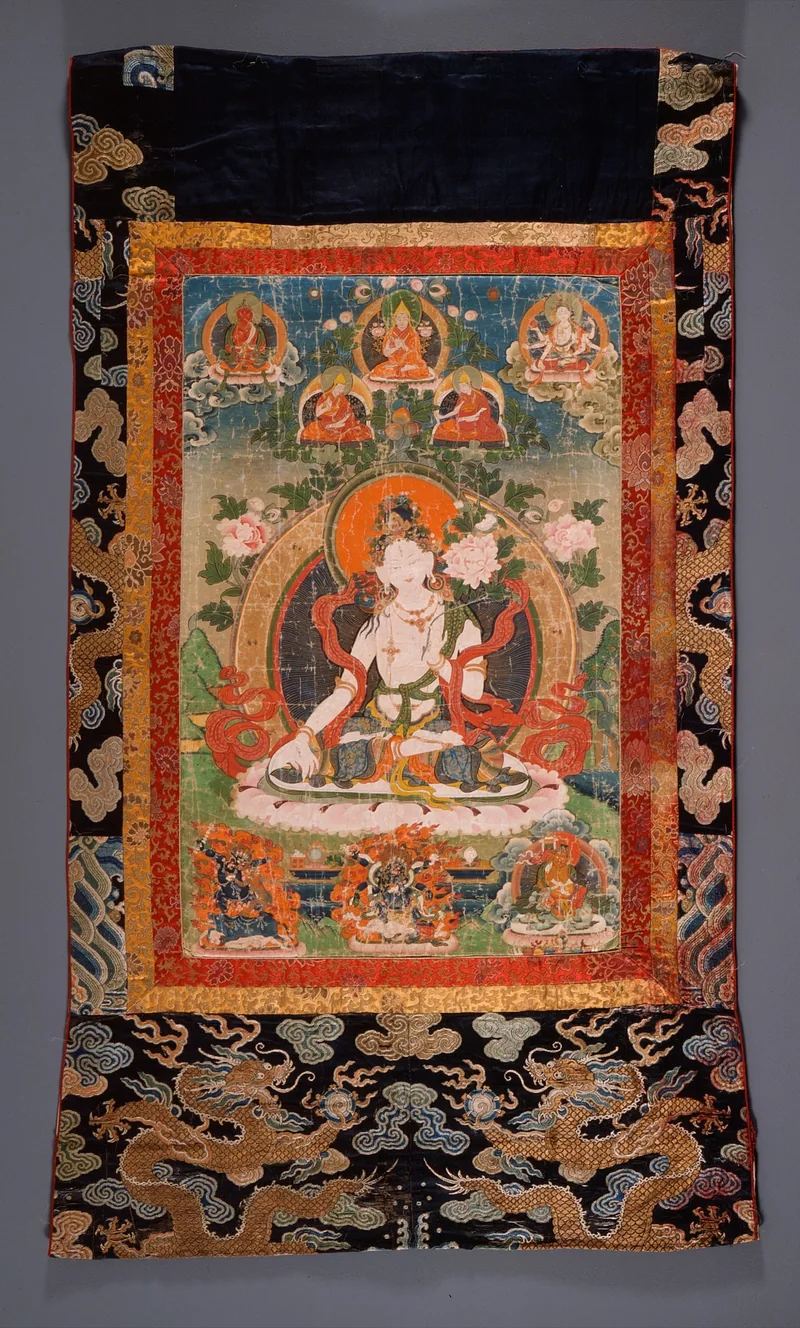
Atisha forms share one face, two arms and a seated pose. Body colour changes; each holds a matching vase in the extended right hand.
Suryagupta variation
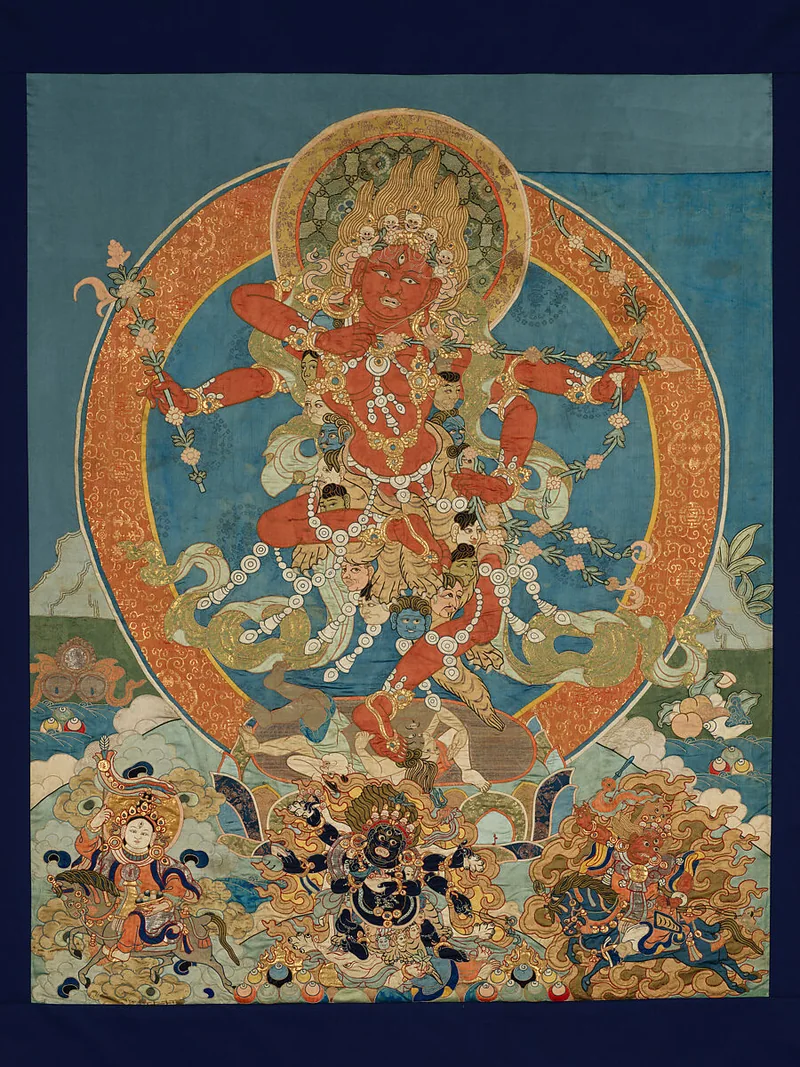
Suryagupta descriptions allow wider variation in posture, heads, arms, colour, implements and gestures. Colour alone cannot settle the question.
The praise is not a universal caption for every verse. Commentaries and lists differ, so a mismatch may reflect another lineage.
Nyingma emblems
Nyingma terma images may keep a one-face, two-arm form while changing colours and placing emblems on the lotus instead of matching vases.
Look at the centre and the surrounding figures before assigning numbered names. Their relationship is part of what makes the group readable.
Stone group
A Tibetan stone group titled Twenty-One Emanations of the Goddess Tara places White Tara at centre, repeats her iconography and shows a meditating monk.
Figures arc and continue below; red, blue-green and gold remain. Follow the repeated faces and poses before turning to a list of names.
The Eight Fears are a different visual system
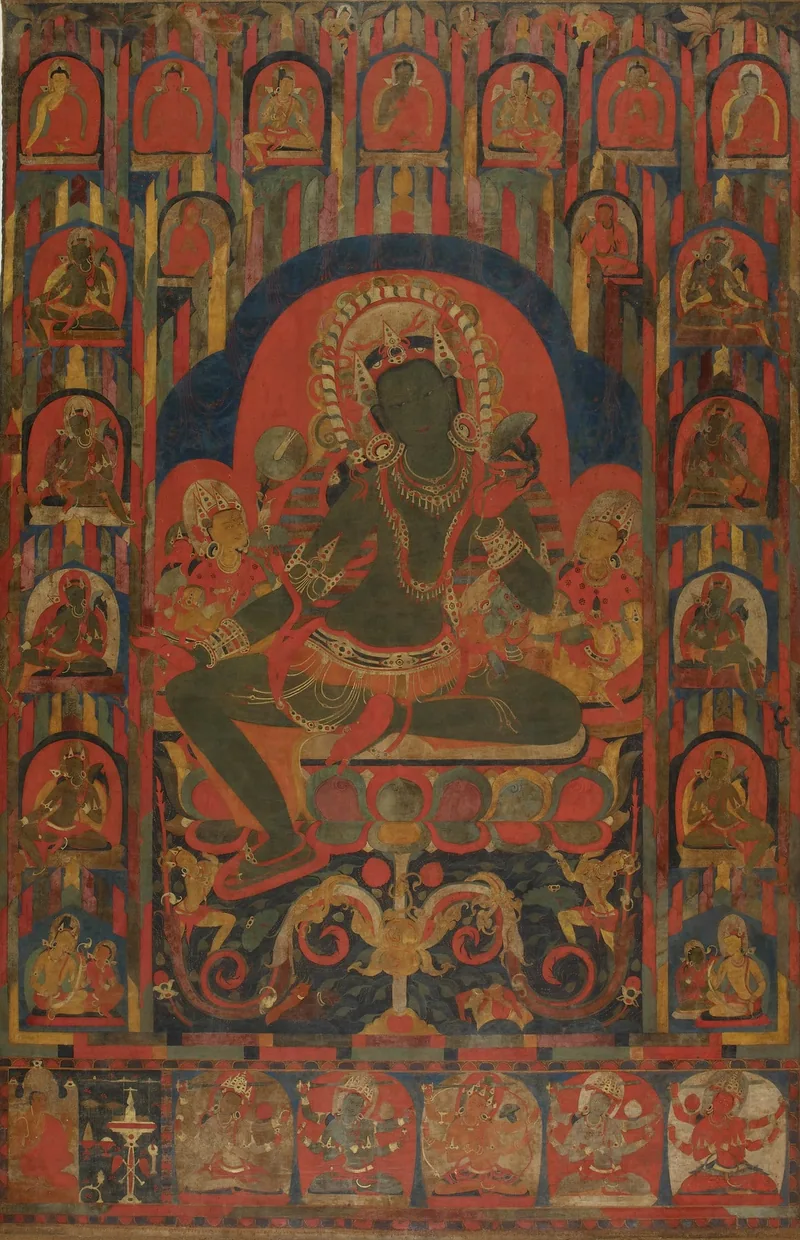
Green Tara paintings with rescue scenes from the Eight Great Fears are a separate composition, not automatically a 21-Tara set. They combine a principal Tara, danger scenes and paired inner obstacles.
Several small figures around a central Tara do not prove a 21-figure subject. Read the composition first.
How to read a 21 Tara image
Begin with the whole picture. Is it a single Tara, a central figure with surrounding scenes, one complete group, or a series of separate panels? Then follow the visual clues in order: central and surrounding positions, faces and arms, seated or dynamic posture, hand gestures, vases or lotus emblems, and the captions or inscriptions that identify a lineage. This sequence keeps an attractive colour from becoming an overconfident answer.
Questions and answers
What are the 21 Taras in Buddhism?
They are Tara forms associated with this praise. Names and visual details vary with lineage and commentary.
Is Green Tara one of the 21 Taras?
Not automatically. The Atisha enumeration discussed here does not include green, while a painting may place Green Tara at the centre and treat the surrounding group as another subject.
How are Atisha and Suryagupta Taras different?
Atisha keeps a close one-face, two-arm seated form with matching vases; Suryagupta varies more in posture, faces, arms, implements and gestures.
Are the Eight Fears the same as the 21 Taras?
No. The Eight Fears have their own Green Tara narrative; number and placement alone are insufficient.