Subjects & Meaning
Shakyamuni, Amitabha or Medicine Buddha? How to Tell Them Apart
These three Buddhas may all appear seated and calm, so a single colour or facial expression is not enough for identification. Begin with the whole figure: clothing, hand gestures, held objects, surrounding figures and the title or record of the work.
View related available works ↓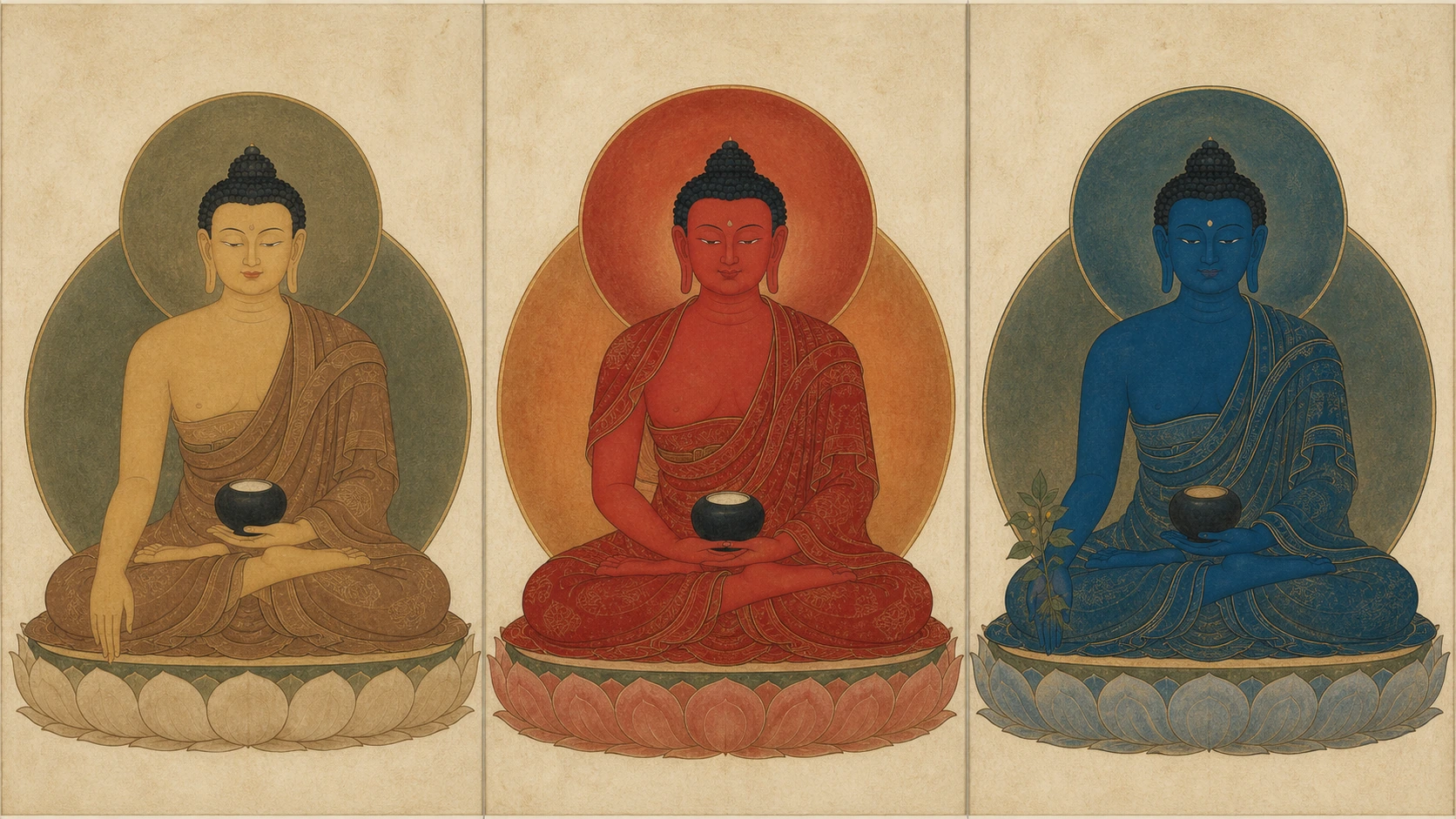
Quick comparison
At a glance: three Buddhas
Use several clues together. A colour, posture or bowl on its own is not a complete identification.
| Reading clue | Shakyamuni Buddha | Amitabha Buddha | Medicine Buddha |
|---|---|---|---|
| Primary reference | The historical Buddha, Siddhartha Gautama | The Buddha associated with Sukhavati, the Western Pure Land | Bhaiṣajyaguru, the Buddha associated with medicine and care traditions |
| Common visual clues | Monastic robes, earth-touching gesture and a bowl in the lap | Meditation gesture, a bowl, or a Pure Land triad; some Himalayan forms are red | Often a blue body with a medicine bowl, medicinal plant or fruit |
| What to check next | Teaching scenes, disciples, life episodes and the recorded title | Lotus-landscape setting, attendants and the complete composition | The hand gesture, held object, surrounding figures and the work record |
| Avoid this shortcut | A calm seated Buddha without the earth-touching gesture is not automatically Shakyamuni | A solitary red Buddha is not automatically Amitabha | Blue colour or a bowl alone does not prove Medicine Buddha |
The short answer: what is the clearest difference?
Shakyamuni is the historical Buddha and is frequently represented as a monk. Amitabha is associated with Sukhavati, the Western Pure Land, and is often read through a meditation posture, a red body in some Himalayan forms or a triad with Avalokiteshvara and Mahasthamaprapta. Medicine Buddha, or Bhaiṣajyaguru, is commonly shown with a blue body and a bowl or medicinal plant.
These are starting clues, not automatic labels. Colour changes across regional traditions, and the same seated posture can belong to more than one Buddha. The strongest identification comes from several clues agreeing with one another and with the object's documented title.
Shakyamuni: the historical Buddha
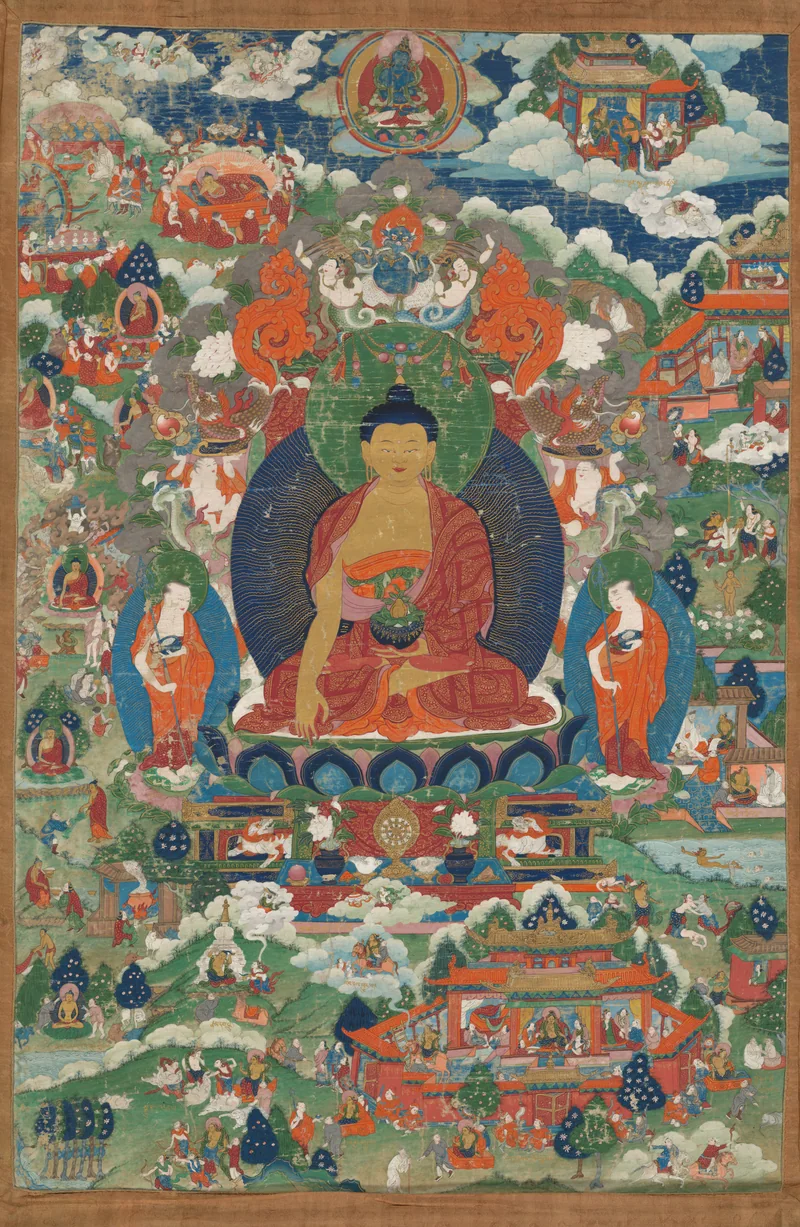
Shakyamuni, or Siddhartha Gautama, is the historical Buddha whose awakening and teaching form a foundation of Buddhist traditions. In many Himalayan paintings, he wears monastic robes, sits in a composed posture, touches the ground with his right hand and supports a bowl in the lap with his left hand. The earth-touching gesture refers to the narrative of calling the earth to witness his awakening.
A teaching scene, disciples or episodes from the Buddha's life can reinforce the identification. A calm seated figure without the earth-touching gesture should not automatically be called Shakyamuni; compare the clothing, hands and surrounding narrative first.
A CLOSER LOOK
Two Buddhas, two compositions
A Buddha need not appear in the textbook pose. These works show why posture, setting and the recorded identity should be read together.
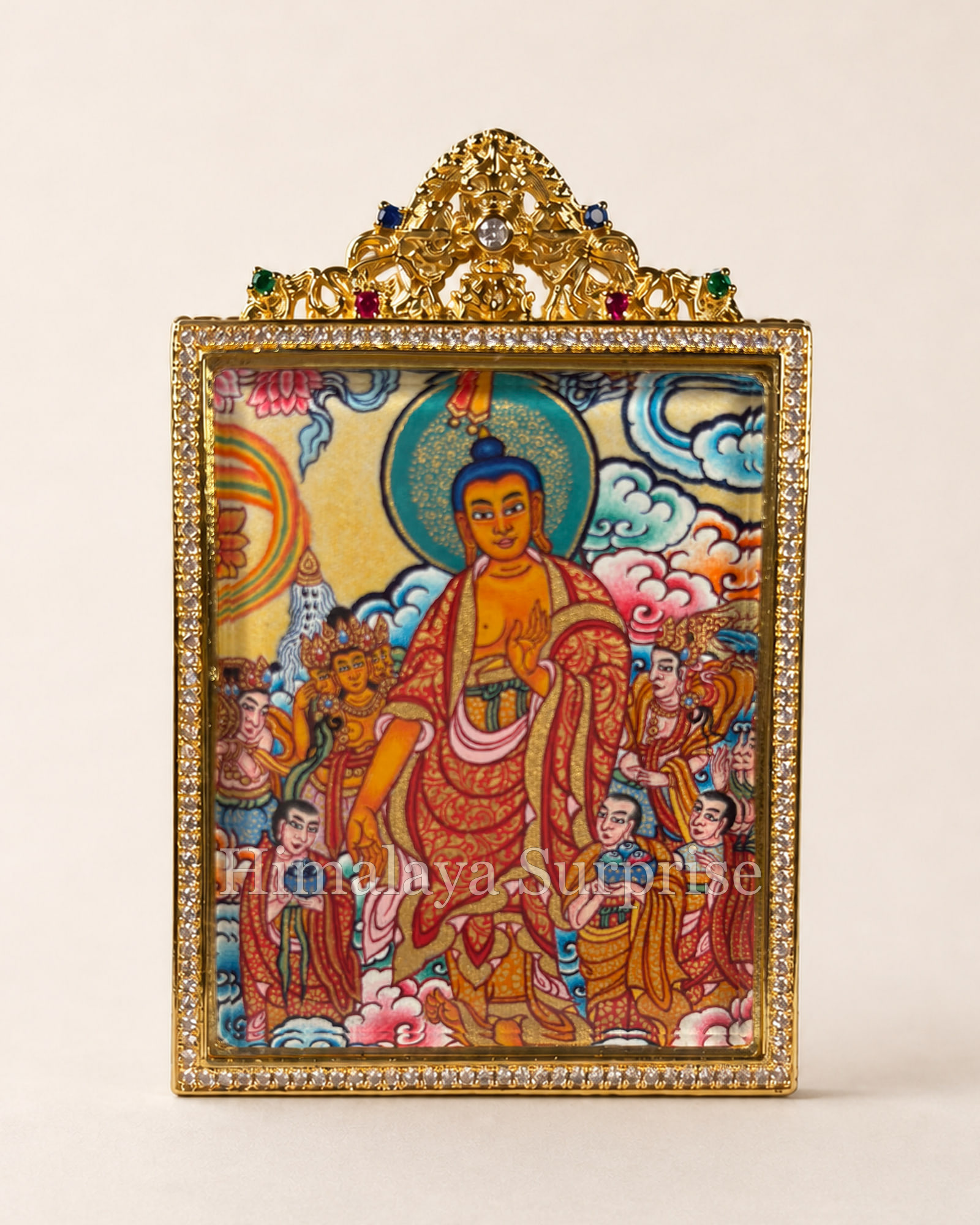
Shakyamuni in a teaching scene
- Here the principal figure stands within a narrative setting. This is not an example of the seated earth-touching pose described above.
- Follow the surrounding figures and landscape to read the scene, rather than looking for one familiar hand gesture alone.
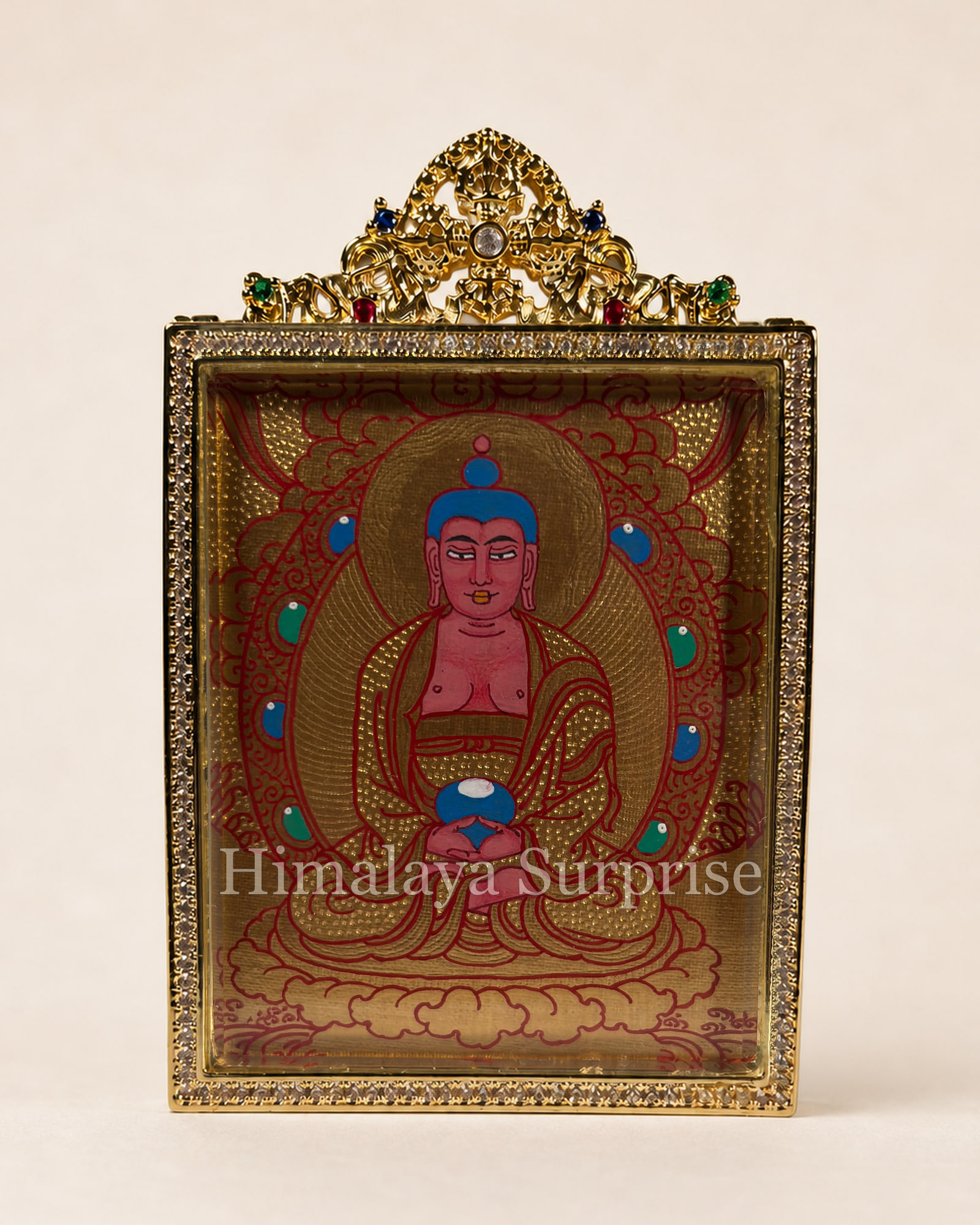
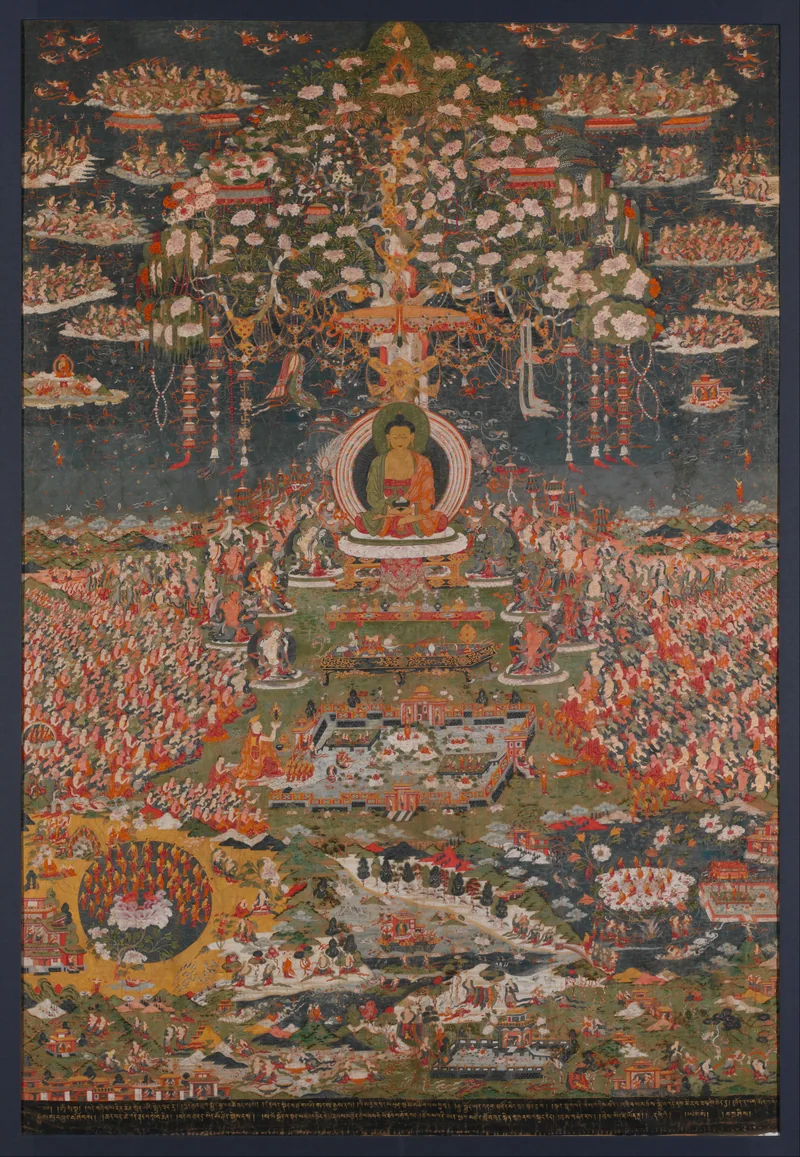
Amitabha on a gold ground
- The seated Buddha and gold-toned ground form a concentrated image. Look at the robe, the hands in the lap and the blue bowl, then compare the standing scene beside it.
- The difference is not simply red versus gold: composition and gesture remain important clues.
Amitabha: the Buddha of the Western Pure Land
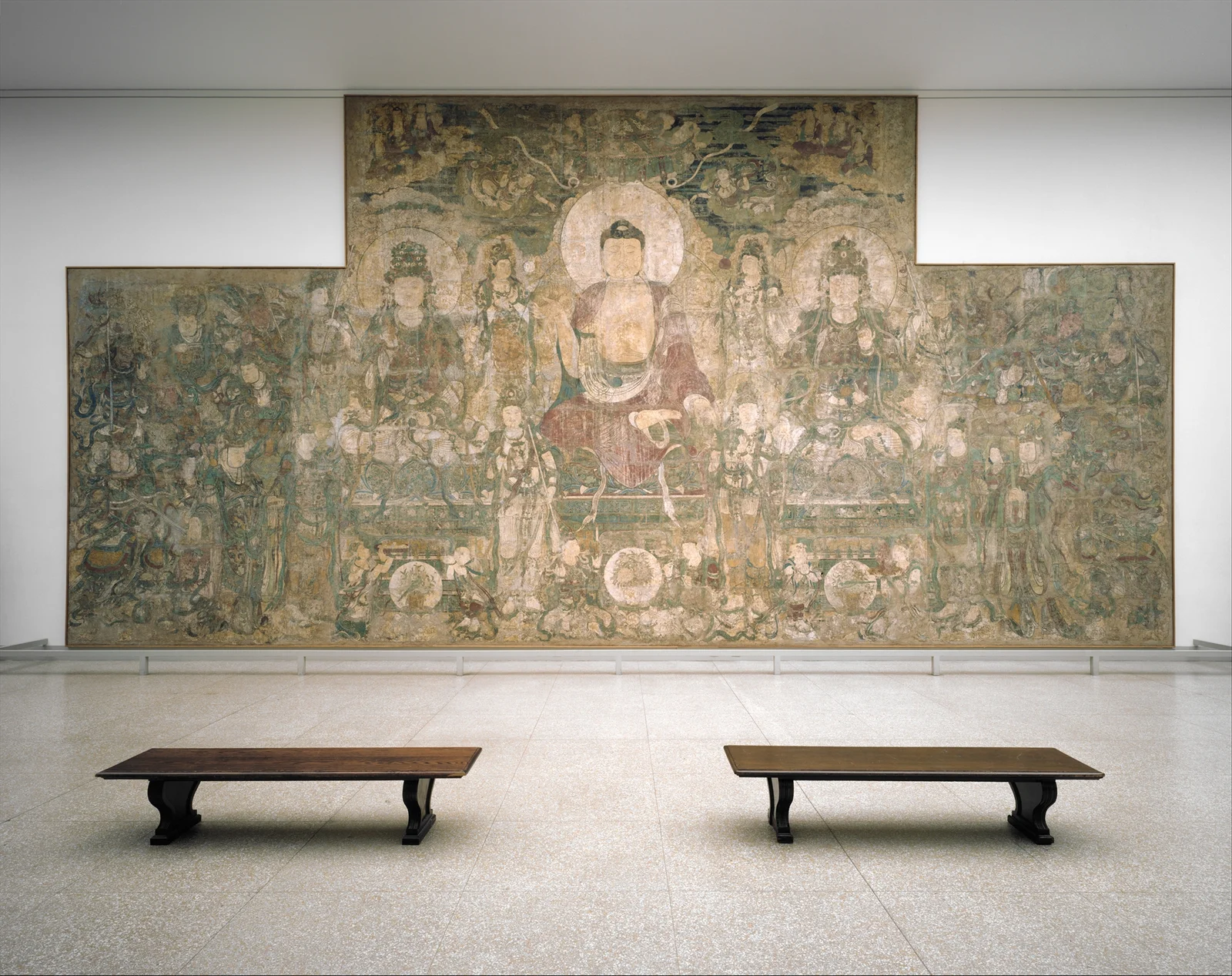
Amitabha is associated with Sukhavati, the Western Pure Land, in Mahayana Buddhist traditions. In many paintings he sits in meditation with the hands held together around a bowl or in a related meditative gesture. In Himalayan examples he may appear red, but colour alone is not decisive. In East Asian imagery, Amitabha often appears at the centre of a triad with Avalokiteshvara and Mahasthamaprapta.
A Pure Land landscape, lotus pond, attendants or a complete triad can therefore be useful context. A solitary red Buddha, however, is not automatically Amitabha; the complete image, regional convention and catalogue title must be considered together.
Medicine Buddha: the bowl, plant and traditions of care
Medicine Buddha, Bhaiṣajyaguru, is often shown with a blue body, seated in a Buddha form. The left hand supports a bowl, while the right hand may hold a medicinal plant or fruit, or make a gesture of generosity. These attributes connect the image with Buddhist medical and devotional traditions, but details differ across objects and regions.
“Medicine Buddha” describes a religious and artistic subject, not a medical treatment. A painting may carry traditional associations with healing, care and well-being, while health decisions remain matters for qualified medical professionals.
When the clues overlap
If a figure is seated with a bowl but no clear medicinal plant, do not decide from the bowl alone. If a red Buddha lacks a Pure Land setting, do not decide from colour alone. Compare gesture, robe, crown, held object, attendants, inscription, composition and the work's recorded name.
A responsible catalogue can say “identified as” or “recorded as” when the evidence is limited. That is not a weakness; it tells the viewer exactly what is visible and what remains dependent on a source record.