Discover / Materials & Craft
Metal Thangka: Repoussé, Relief and Materials
Learn how the phrase metal thangka overlaps with repoussé sheet relief, cast Buddhist sculpture, metal prints, gold-ground painting and gau housings.
In this story
People use “metal thangka” for more than one kind of Buddhist object. A painted thangka on prepared cloth, a repoussé relief raised from sheet metal, a cast sculpture, a flat metal print and a metal gau housing can share a deity or a gold-coloured surface. Start by separating the support or body, the construction, and the finish; the distinctions become much clearer.
Begin with support or body, construction and finish
Start with three related questions. Is the image carried by prepared cloth, silk or a rigid panel, or is the visible object itself a metal body? How was the image or body constructed—painted, raised from a sheet, cast in the round, engraved, or printed? What was applied or refined afterward—pigment, gold paint, gilding, inlay, chasing or another finish?
These layers can meet in one object, but they do different jobs. A metal body may be gilded; a cloth painting may use a gold ground; a flat panel may reproduce a painted image. A bright surface therefore cannot, by itself, identify the support or the making process.
A painted thangka begins with a textile support
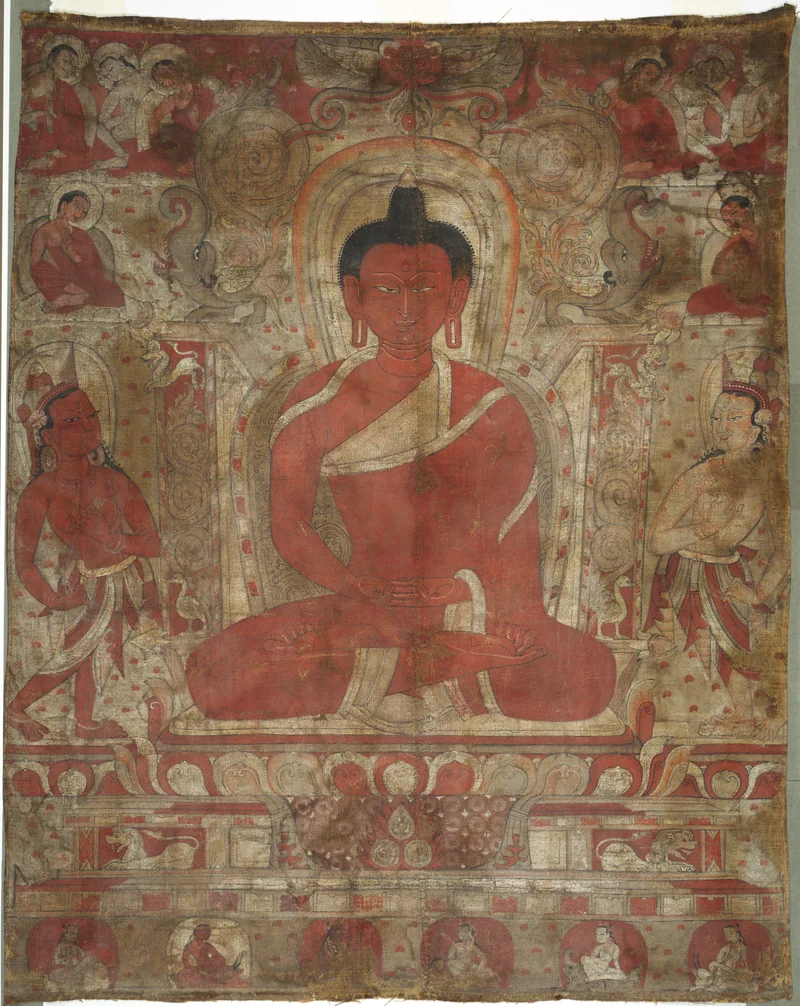
A cloth-based thangka is a hanging image painted on prepared cloth or silk. Stretching the textile, applying and smoothing the ground, measuring the composition, laying in colour and refining the lines all belong to the painting process. The support remains textile even when the finished image includes gold paint or gold ornament.
Mounting can add a textile surround, rods, a cover or other display parts, so the complete hanging is larger than its painted panel. That construction is different from a metal relief or a cast figure. Our guide to how a thangka is painted follows the cloth-based sequence in more detail.
Repoussé raises a relief from sheet metal
The Rubin Museum’s account of repoussé describes hammering workable sheet metal over a wooden or other matrix to build a relief. Heating during the work restores malleability. Complex forms can be assembled from several parts, and the surface can then be chased or gilded.
A fourteenth-century Flying Naga from Nepal or Tibet in the Rubin collection is made of gilt copper alloy using repoussé. It gives the technique a concrete example: a metal sheet shaped into a raised form, rather than a body built by pouring metal into a mould.
Casting builds a three-dimensional body
In a Newar lost-wax example described by the Rubin Museum, the maker first forms a wax model, builds a layered clay mould around it, heats the mould to remove the wax and fire the clay, pours in molten metal, and breaks the mould after cooling. Joining, chasing, polishing or gilding can follow. This sequence shows how the wax model gives way to a metal body.
Casting and repoussé describe ways of forming an object; bronze describes a material. A cast body and a sheet-metal relief may both be engraved, inlaid or gilded afterward. Their similar finish can conceal quite different structures underneath.
The same iconography can cross media
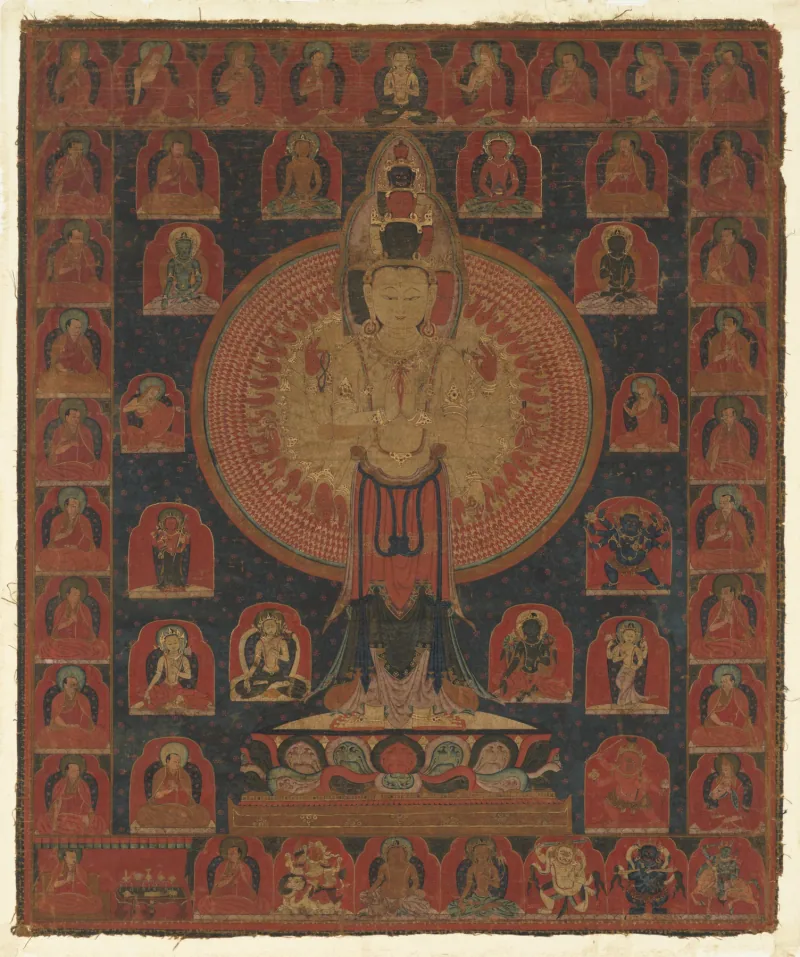
Avalokiteshvara provides a clear comparison. This early-fifteenth-century temple hanging from China depicts Avalokiteshvara as Shadakshari Lokeshvara. The Metropolitan Museum identifies its medium as silk twill damask: the image belongs to a woven textile, rather than a painted panel or a metal body.
Set beside it, a Four-Armed Avalokiteshvara from Peninsular Thailand is a bronze, three-dimensional sculpture. The subject connects the two works; the woven hanging presents the figure across a surface, while the sculpture gives it volume. Recognising the deity is one part of looking. Following how its image takes form is another.
A metal body can carry several surface treatments
In this seventh- to eighth-century Four-Armed Avalokiteshvara from Peninsular Thailand, the bronze body carries a recognisable Buddhist image. A small seated Amitabha appears in the hair above the head. The subject connects it with the silk hanging, while the sculpture gives that subject volume and a different relation to surrounding space.
The Met’s Vairochana record shows the same distinction from another angle: it describes an eleventh- to twelfth-century Nepalese sculpture in gilt-copper alloy with gold paint and blue pigment. The object combines a metal body with coloured and reflective surface treatments; its medium and object type do not make it a gold-ground painting.
Gold describes a surface layer, not always a support
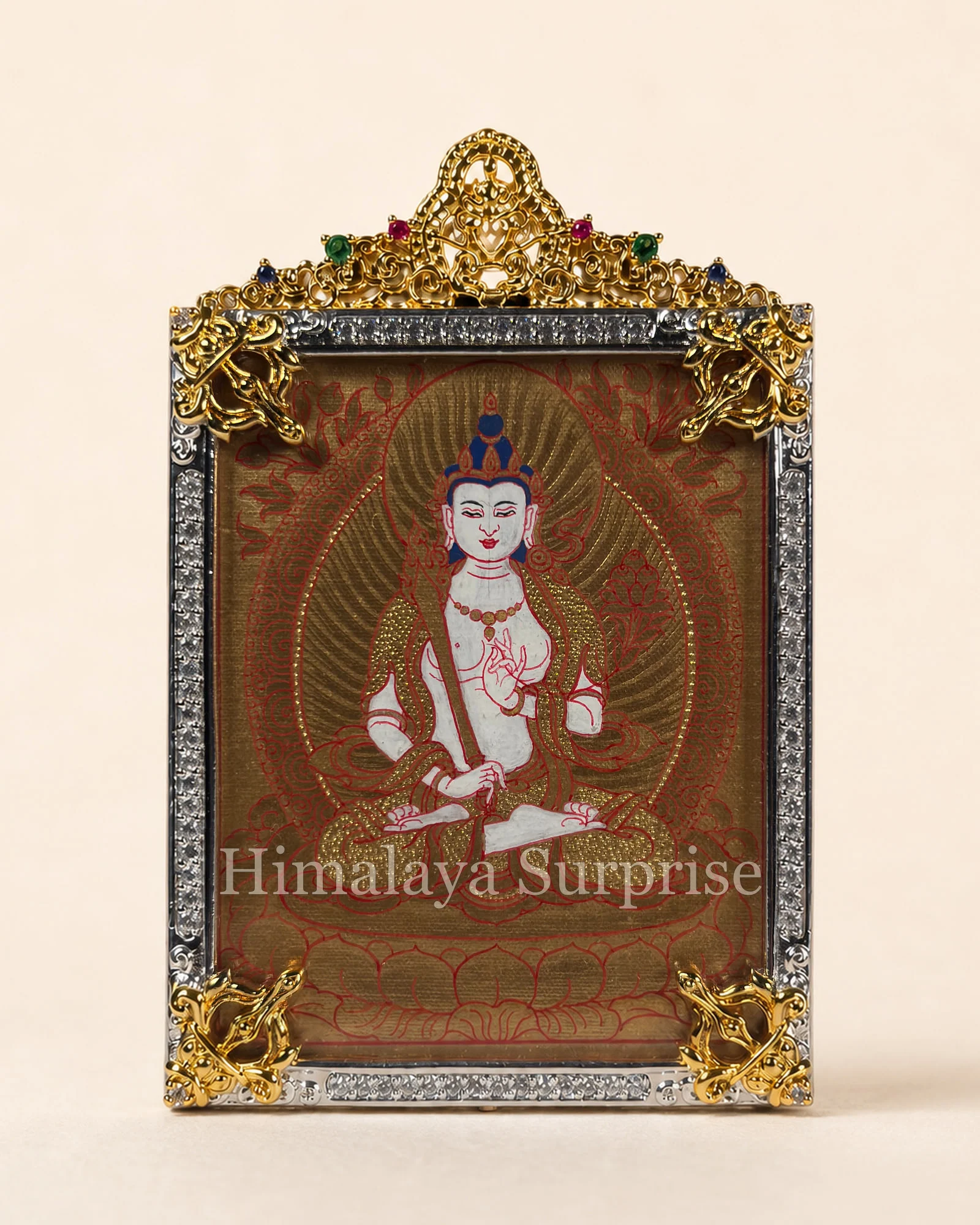
A gold-ground thangka describes a broad gold field used within a painting. Gold linework can describe garments, flowers or borders; gold paint can sit on a metal object; gilding can cover only selected areas. These uses share a reflective appearance, but they do not share one support or one construction method.
When a description says “gold thangka” or “golden metal”, ask whether gold names the ground, the paint, the coating or the underlying alloy. Our guide to gold in thangka painting follows the painted-surface question; this page keeps it separate from the metal body.
A metal print is a flat image on a rigid panel
Modern listings also use metal-art language for a printed or transferred Buddhist image on a rigid metal panel. In that format, the image layer and the panel are flat unless the specification says otherwise. It may reproduce the look of a painted thangka, but it is not automatically a repoussé relief, a cast sculpture or a painted cloth object.
A flat panel and a raised relief can present a similar composition, but they occupy space differently. In one, the image sits on a surface; in the other, the metal itself has been shaped into the image. That difference is more informative than the shared title.
The metal housing and the image inside a gau
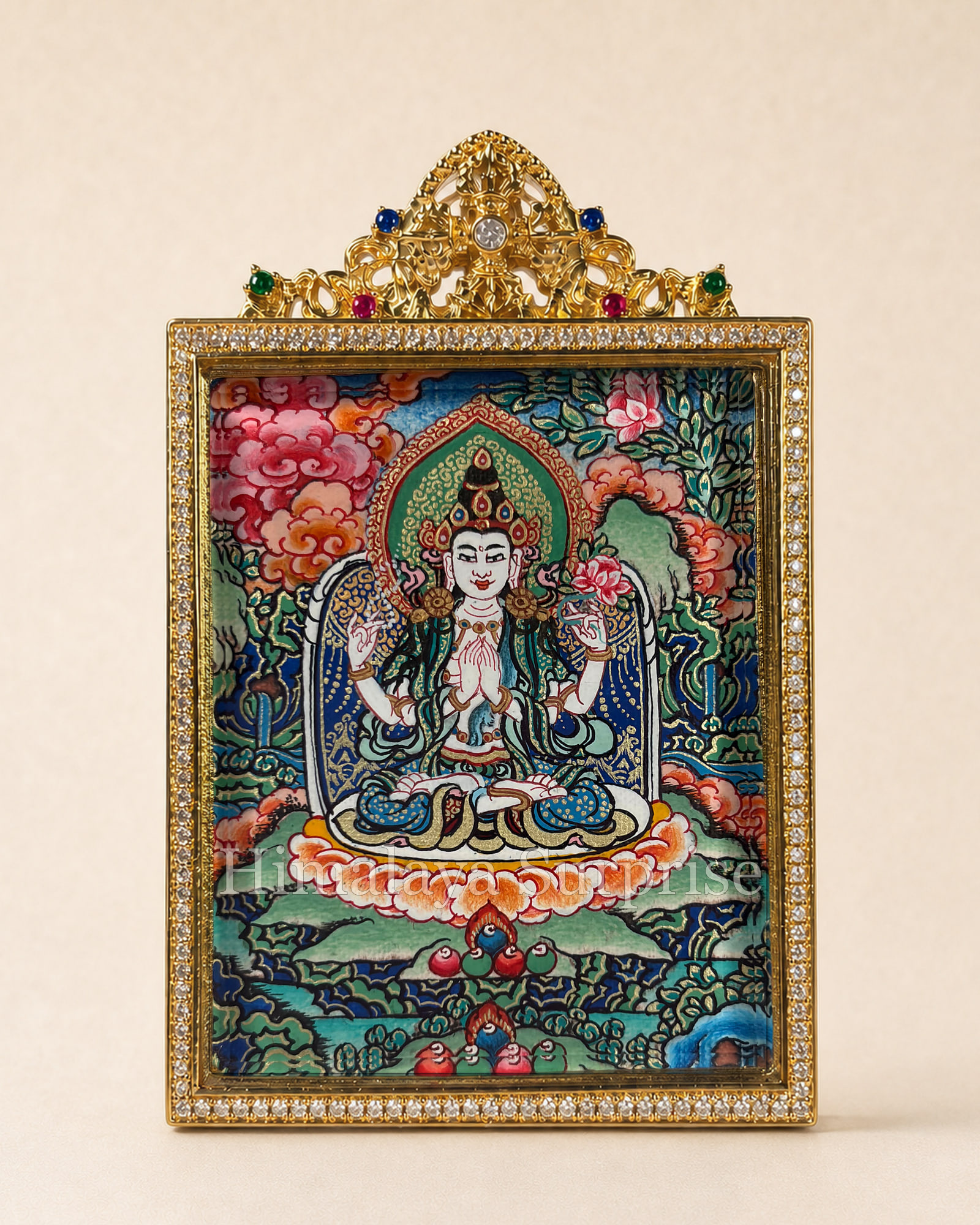
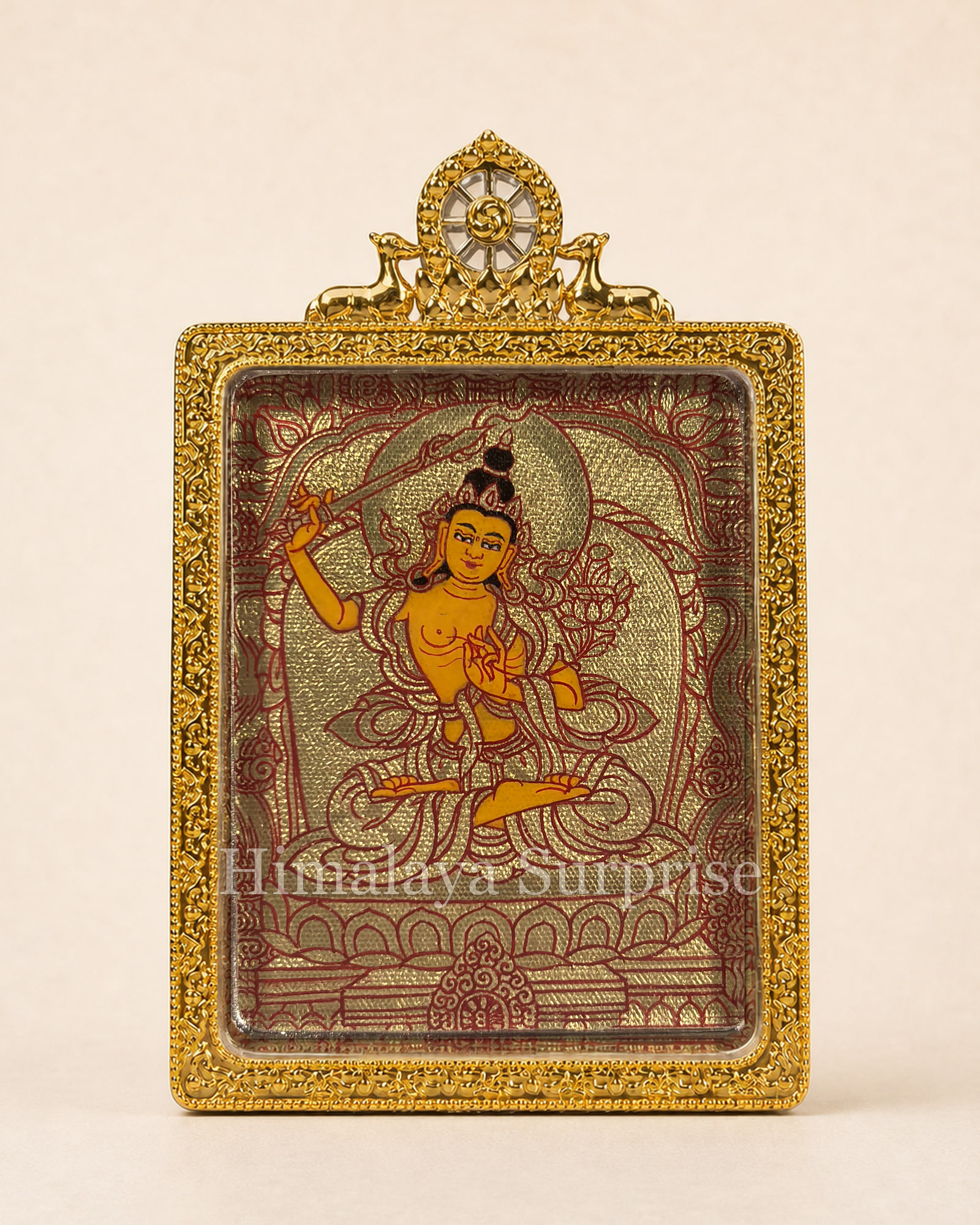
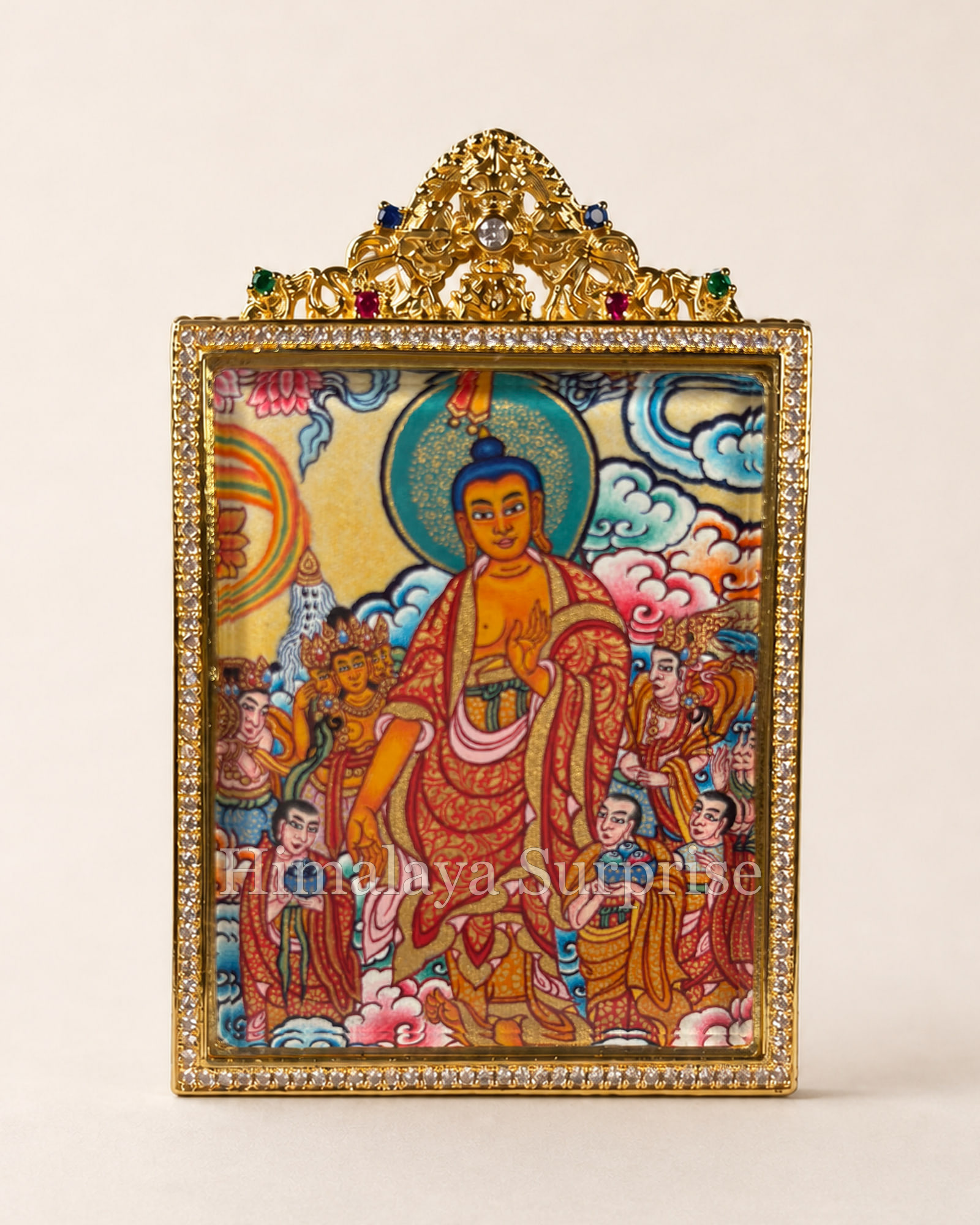
A gau is a small shrine or housing that may be worn or carried. Its metal outer shell can frame or protect a small image or another sacred object. In a pendant, the painted image, case, loop and cord are separate parts: a metal housing does not turn the image inside into a metal thangka. Our pendant guide follows that distinction through a miniature painted image and its gau case.
The metal surround and the small painting inside invite different kinds of looking. One has edges, fittings and an outer silhouette; the other has a face, gesture and composition. Seeing both parts clearly makes a miniature more interesting, without confusing the housing with the painted image.
Questions and answers
What does “metal thangka” mean?
It is a commercial phrase used for more than one format. It may point to a Buddhist image made as sheet-metal relief, a metal sculpture, or another metal presentation. The support and construction should be named separately; the phrase alone is not a standardized museum category.
Is every metal thangka made with repoussé?
No. Repoussé raises a form from sheet metal, while casting forms a body in a mould. A metal print presents an image on a panel. These are different processes, even when the objects depict the same Buddhist figure.
Is a gold-ground thangka a metal thangka?
No. A gold-ground thangka is a painting on prepared cloth whose visible ground is gold. The gold ground is a surface treatment within the painted image; it does not turn the cloth support into metal. Gold paint or gilding can also appear on metal objects, so the support still matters.
Is a metal print the same as a metal sculpture?
No. A metal print normally describes an image applied to a rigid panel, while a sculpture has a three-dimensional body. A raised sheet relief is another construction again. The image layer and the body should be described separately.