Craft & Makers
How to Read a Buddhist Mandala: Layout, Deities & Meaning
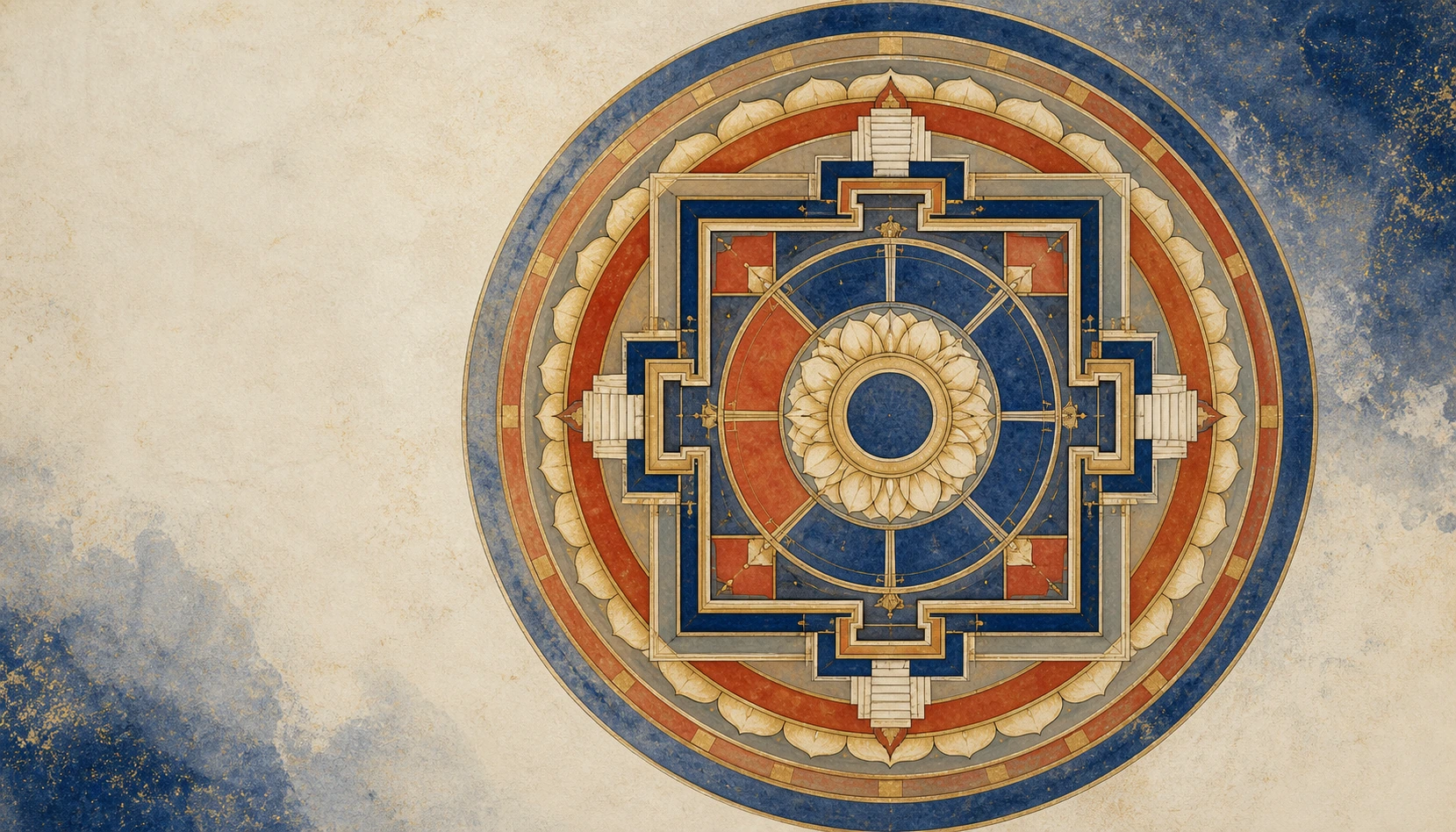
A Buddhist mandala is not merely a decorative circle. In Vajrayana contexts, it can represent a deity's cosmic abode, an ordered palace, a ritual space or a visual support for meditation and initiation. A quick first reading moves centre → palace → gates → outer field; then check the documented tradition rather than assigning meaning from colour or symmetry alone.
What is a Buddhist mandala?
In Buddhist art, especially in Vajrayana traditions, a mandala commonly presents a sacred realm as an ordered diagram. A central deity may appear within a palace, with gates, walls, directional zones and a retinue arranged around it. The form can be painted, constructed in three dimensions, built architecturally or represented through a ritual arrangement of images.
The word should not be used for every circular Buddhist design. Some circles are halos, wheels, floral diagrams or decorative borders. The complete composition and its documented ritual or iconographic context determine whether “mandala” is the accurate description.
- Quick read: centre → palace → gates → outer field. Use this as a viewing route, not a universal template.
- Traditions differ: read the complete image alongside its text, lineage and work record before naming a system or assigning a ritual meaning.
How should you begin reading one?
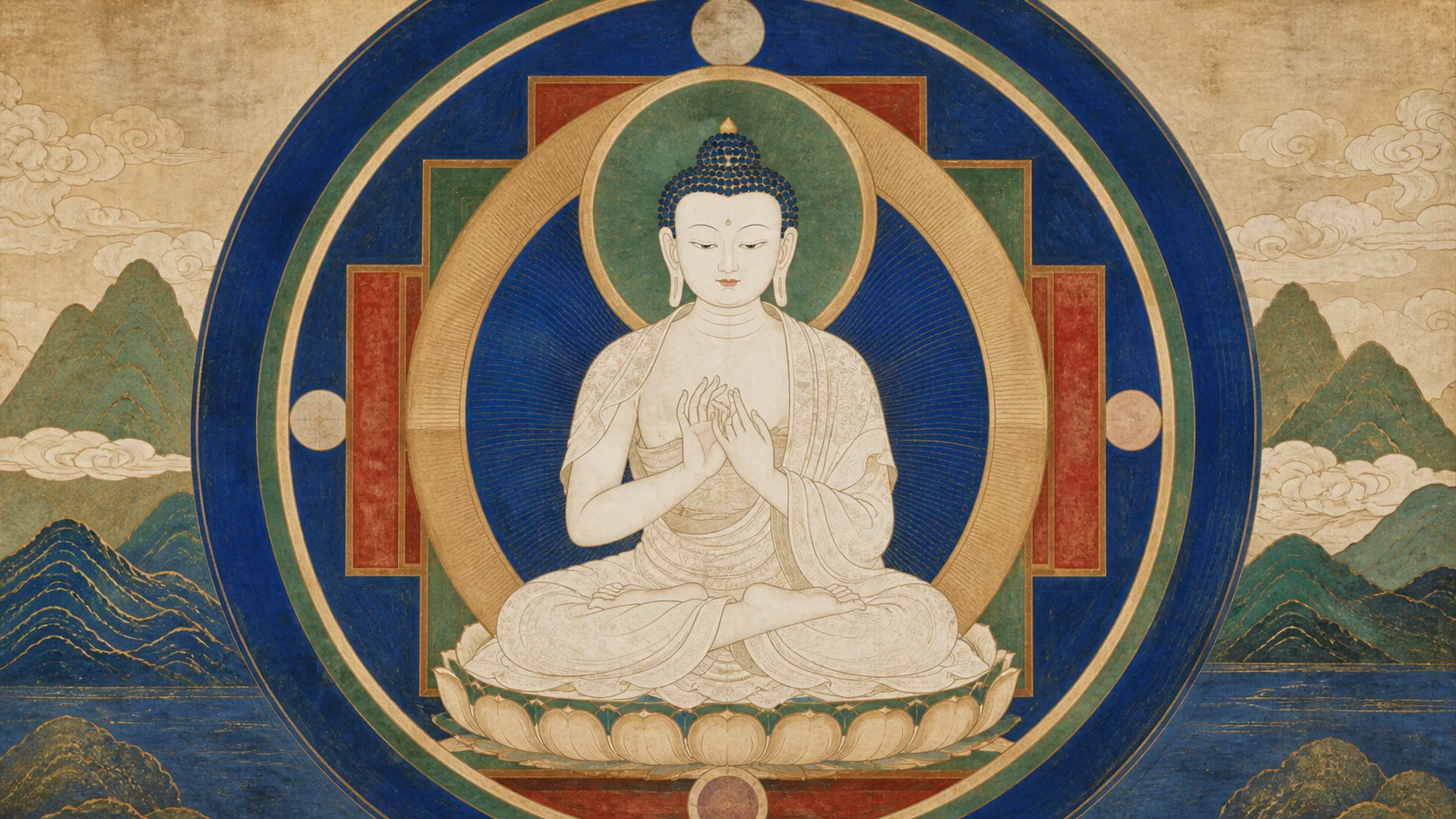
Start at the centre. Identify the principal figure, its posture, hand gestures, attributes and throne or lotus seat. Then move outward: examine the surrounding palace, the four gates, directional figures, subsidiary deities, offerings and any outer ring. This centre-to-edge movement helps you understand hierarchy before interpreting individual symbols.
Mandalas do not all use the same number of figures or the same arrangement. Different texts, practices and regional traditions shape their compositions. Read the centre, directions and surrounding figures as a connected whole, then relate that structure to the mandala's name and tradition.
How do deities, directions and symbols work together?
A mandala is relational. A deity's position may refer to a direction, a family, an element, a quality of awakening or a particular ritual role. Colour, posture, attributes and companions can reinforce these relationships, but none should be detached from the system in which the image was made.
A central Buddha and the figures around it may form a five-Buddha arrangement, while a complex tantric mandala may include many layers of deities and protective figures. Such systems are not interchangeable. If a title, inscription or catalogue identifies the cycle, retain that specificity rather than replacing it with a generic phrase such as “spiritual mandala.”
Is every mandala a thangka?
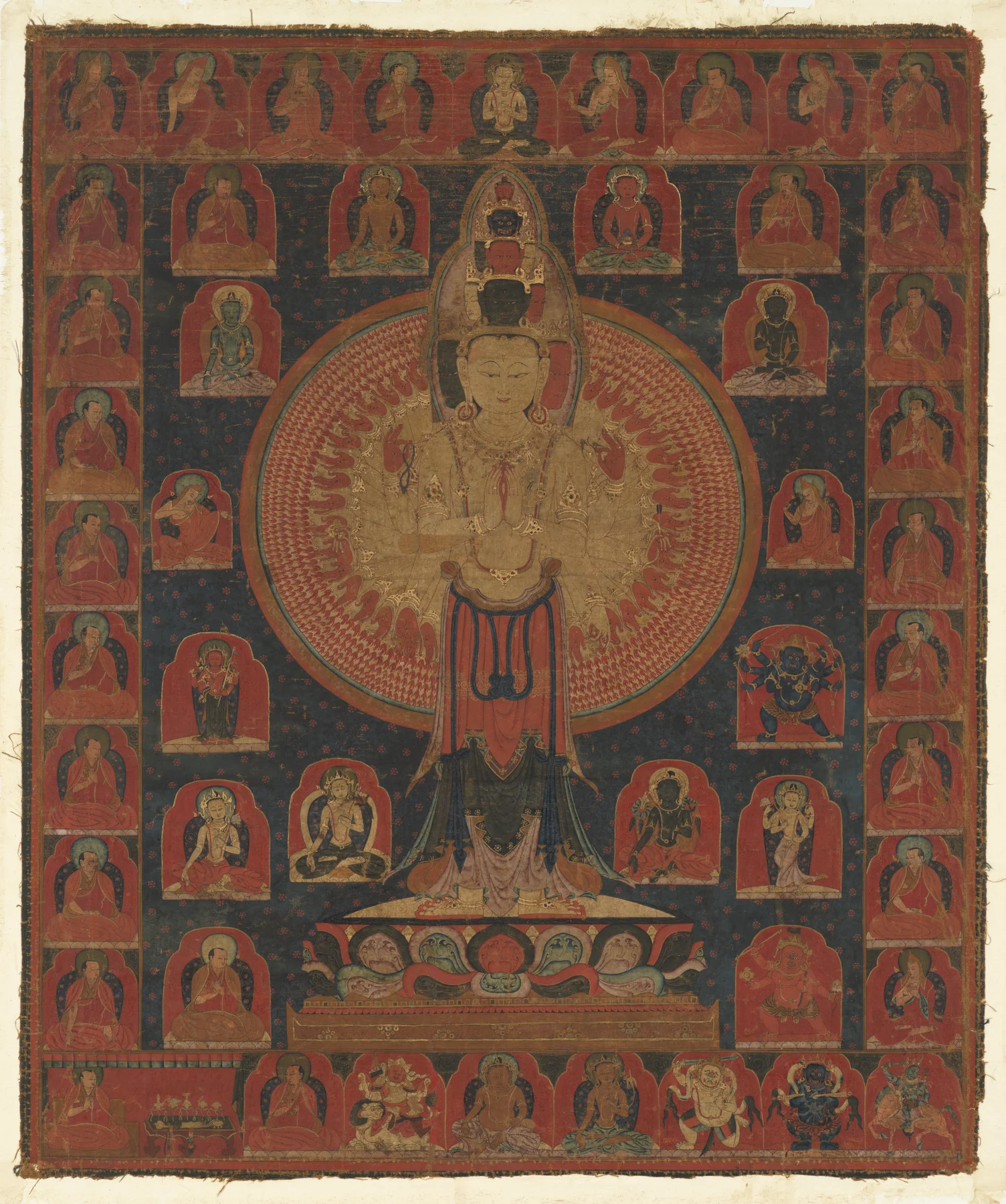
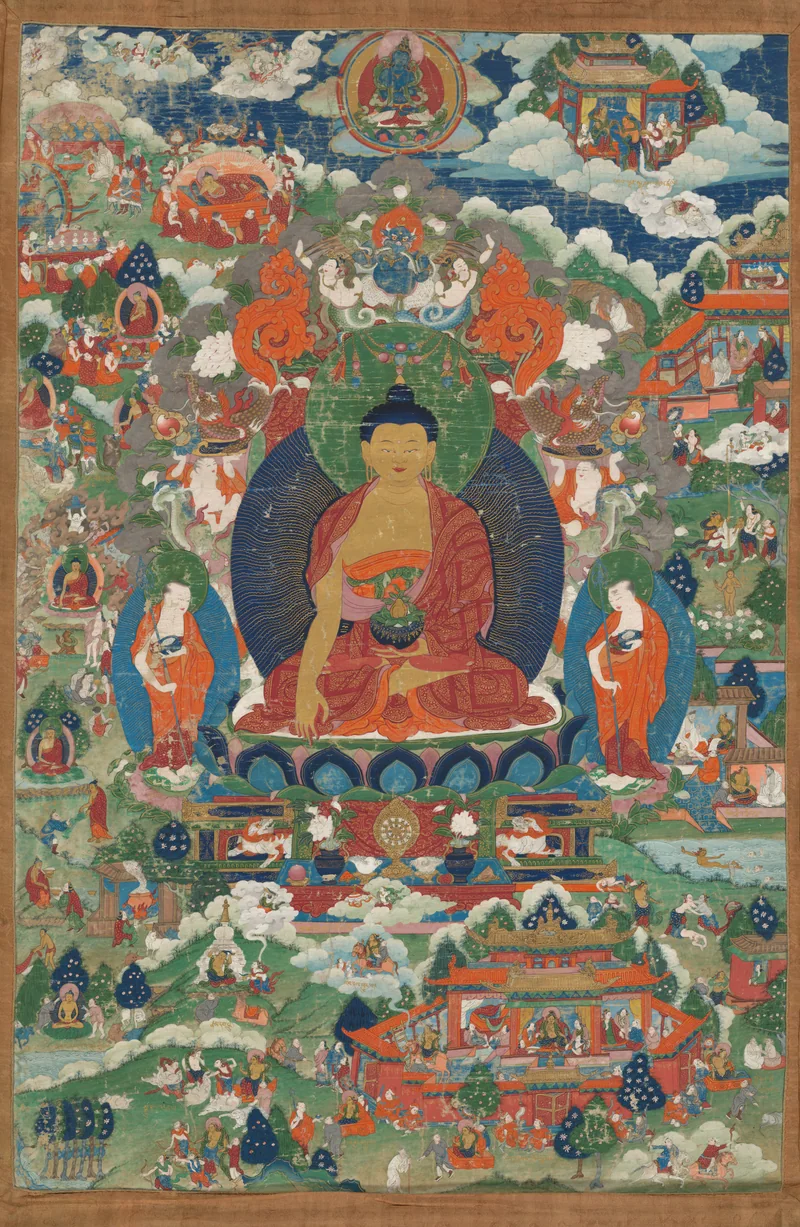
No. A thangka is a hanging scroll or textile image, while a mandala describes a compositional, cosmological and ritual structure. A mandala can be painted as a thangka, but it can also exist as a three-dimensional model, architectural space, ritual diagram or other medium. Conversely, many thangkas show one deity, a teacher, a narrative or a symbolic subject without being mandalas.
A careful viewer should ask three separate questions: what medium is this, what subject or system does it depict, and what use or context is documented? These questions prevent the common errors of treating a decorative circle as a mandala or treating every small painted image as a ritual object.
A viewing route: from centre to outer field
- Centre: locate the principal figure or central symbol—the image's first focal point.
- Palace: follow the square enclosure and gates to understand the image's spatial order.
- Retinue: compare where the surrounding figures sit, then look at their attributes and colours in relation to one another.
- Outer field: notice lotus petals, flames or other boundaries, then return to the centre to take in the whole structure.
Follow the centre, palace, retinue and outer field in the image above, then return to the centre to take in the whole arrangement. Individual mandalas have their own layouts.