Subjects & Meaning
What Does Vairocana Represent? The Buddha at the Centre of the Cosmos
Vairocana, also called Mahāvairocana or the Great Illuminator, embodies all-pervading wisdom and often occupies the centre of the Five Buddha system. In esoteric and Mahayana Buddhist traditions, devotees honour him with aspirations for wisdom, clear understanding and freedom from ignorance. To read a Vairocana image, begin with its central position and gesture, then test that first impression against crown, attendants and the complete composition.
View related available works ↓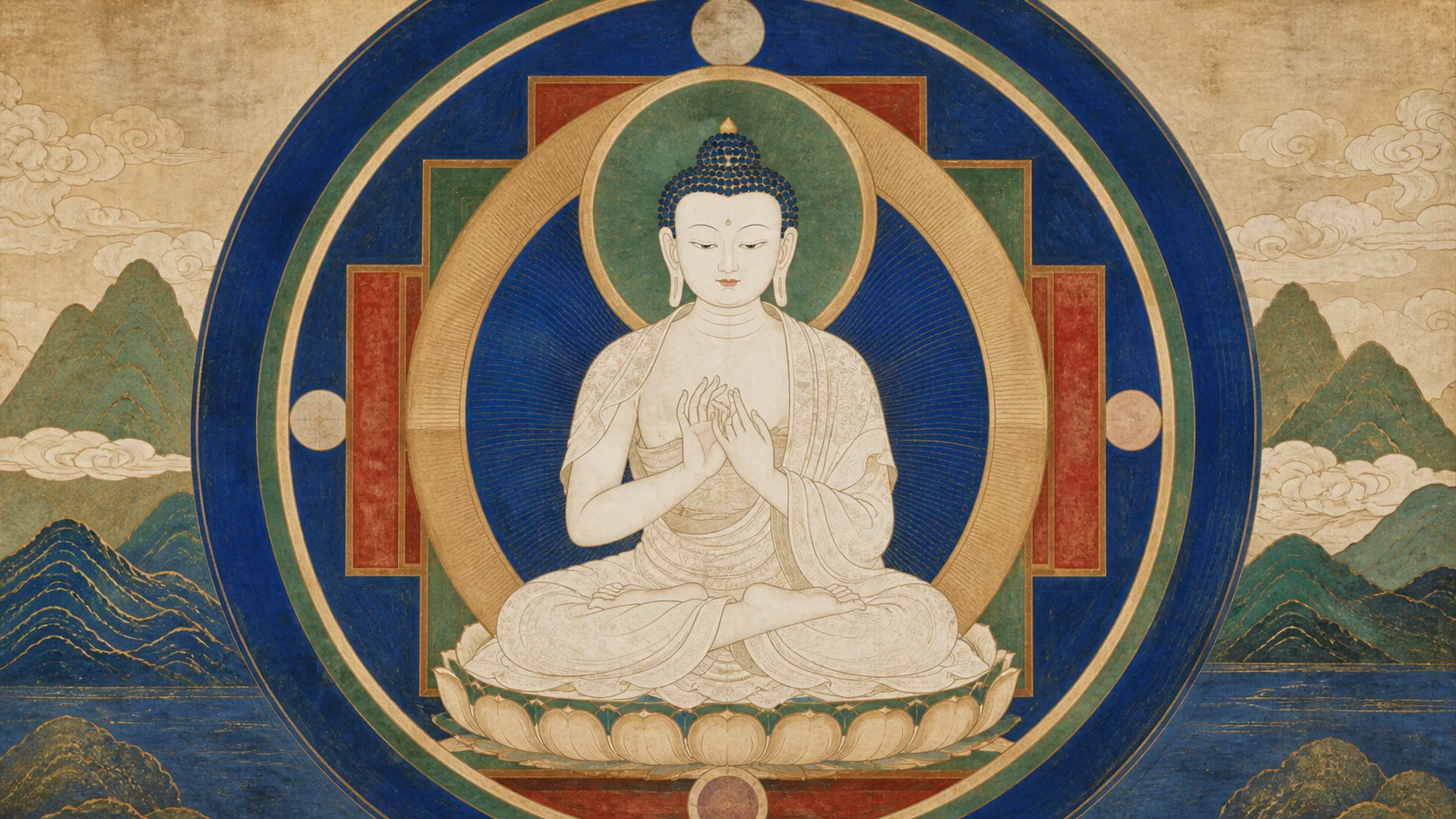
How can you identify Vairocana? Centre and gesture
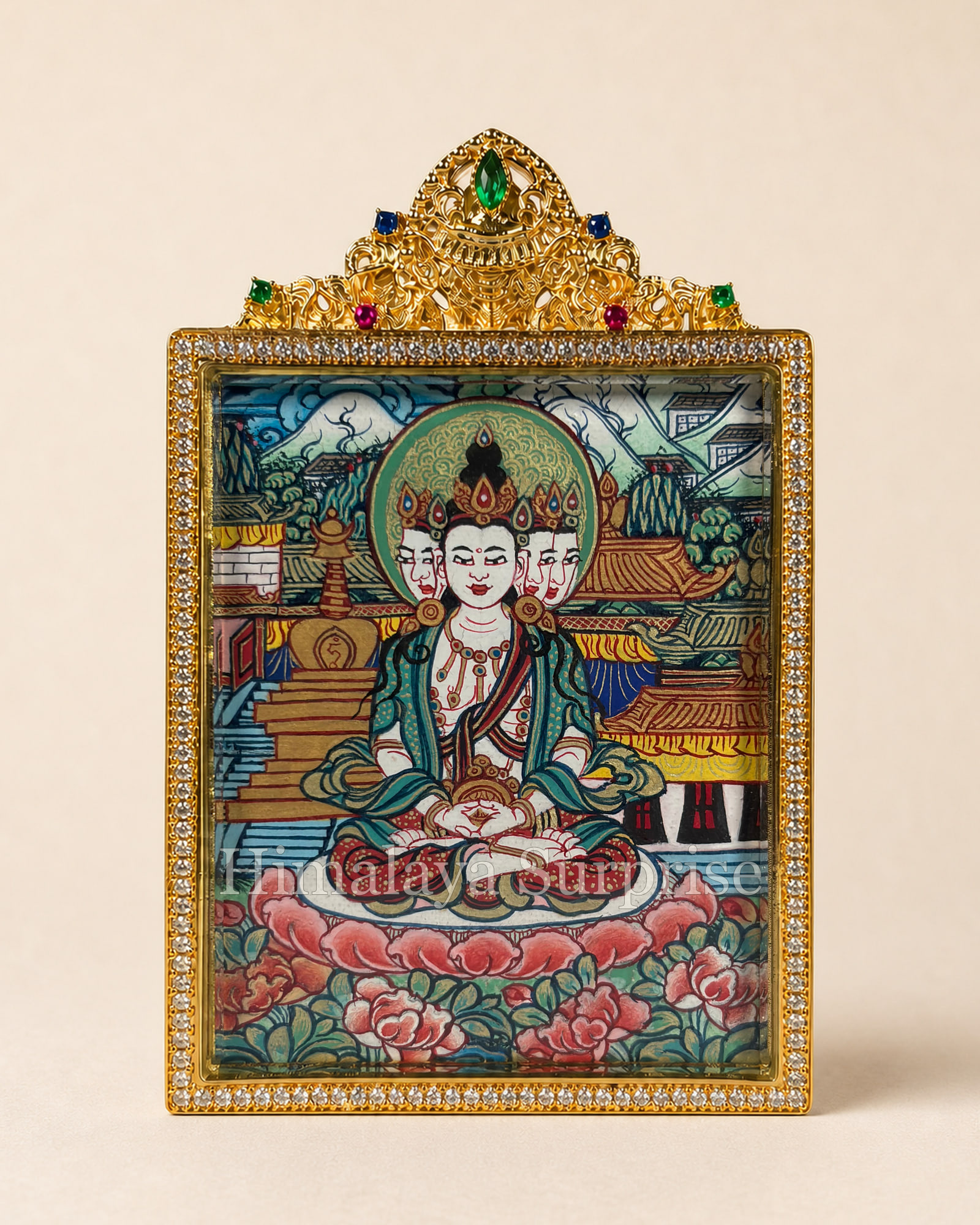
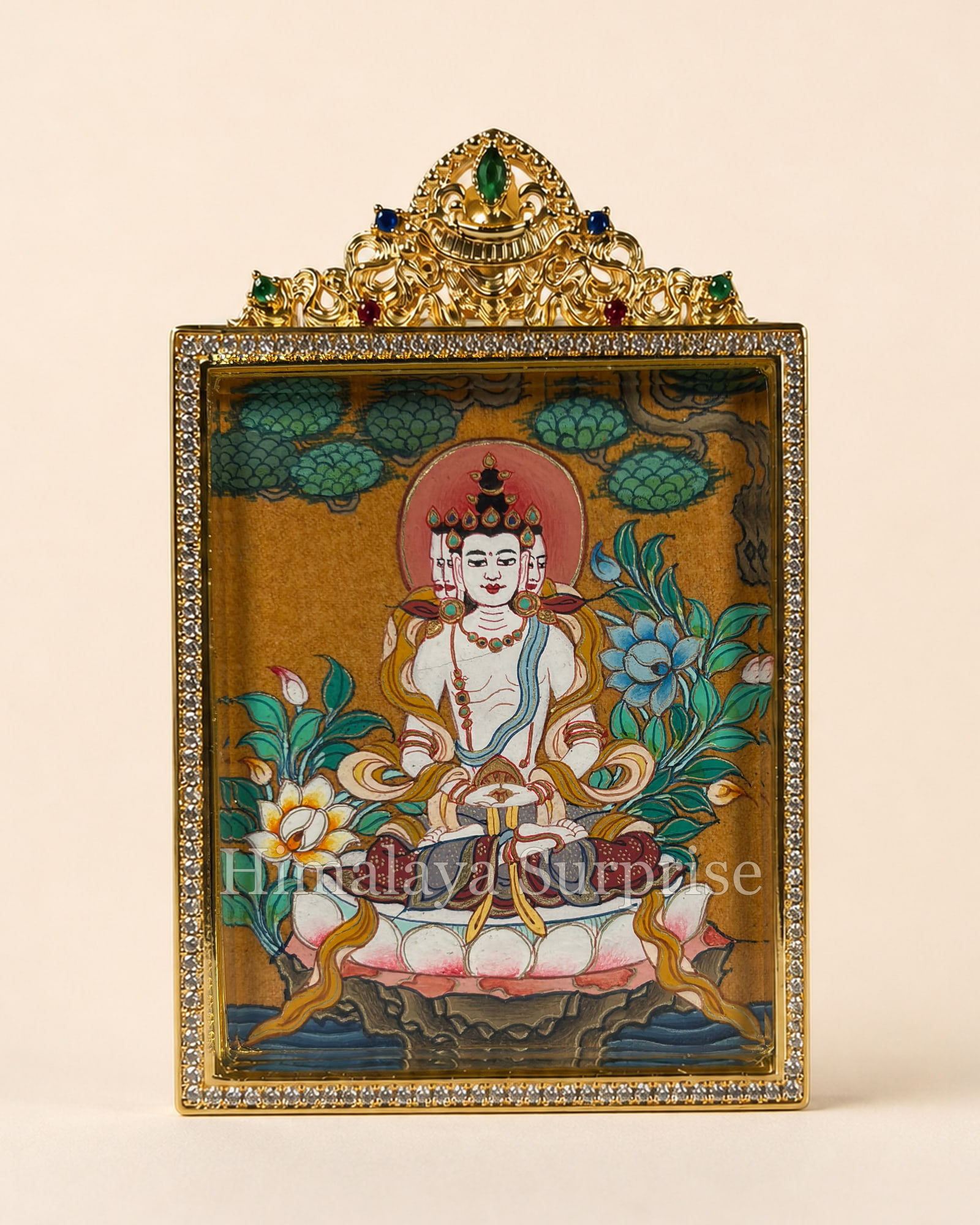
Vairocana represents the Buddha at the centre of the sacred cosmos. His images may use teaching or esoteric hand gestures. Placement, gesture and surrounding figures help establish his identity more clearly than a single face or colour.
These examples show why one fixed silhouette is not enough. First establish whether the principal figure is central, crowned or monastically robed, richly adorned or restrained, and which gesture is present. This helps separate Vairocana from a generic central Buddha or Shakyamuni; then compare attendants, vehicles, inscriptions and the documented title.
Read the Five Buddha setting and retinue
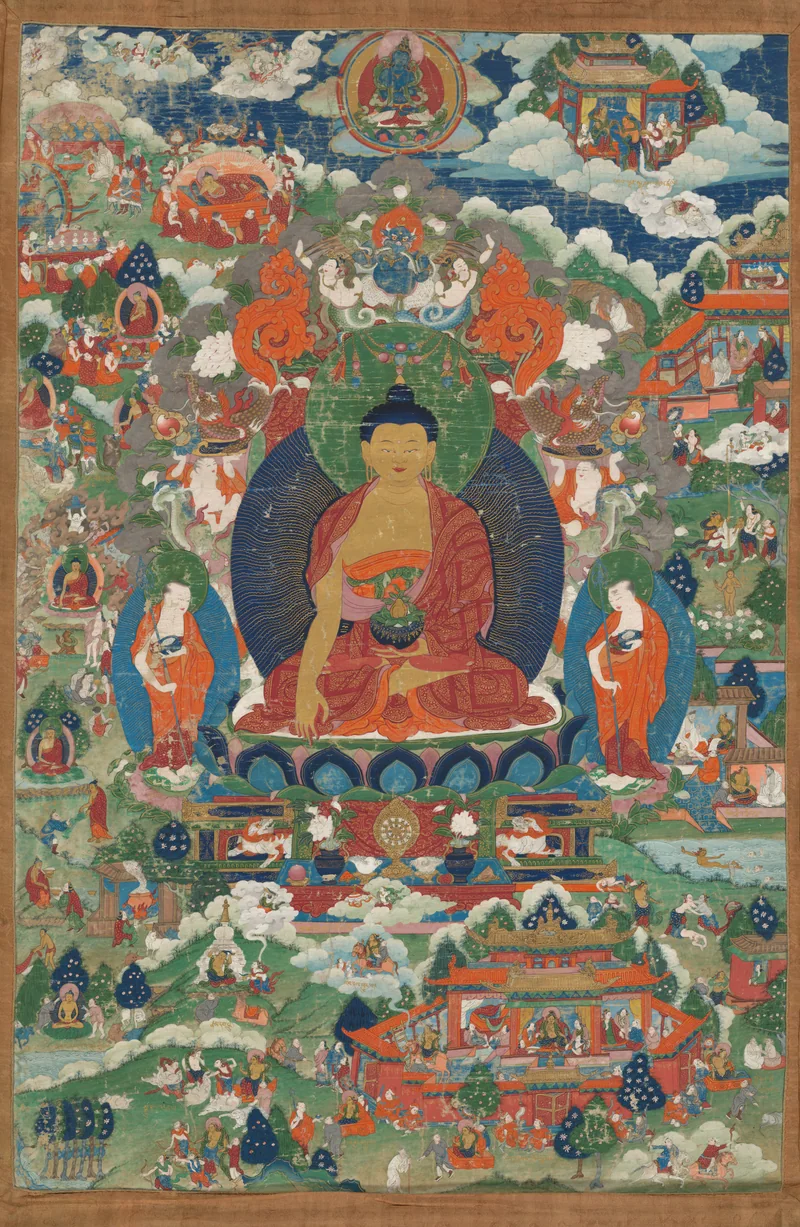
A large central figure surrounded by smaller attendants gives the painting a clear hierarchy. Measured proportions, symmetry and repeated forms lead the eye outward and back again. Colour and gold articulate those relationships rather than simply filling the surface.
Other works show Vairocana at the centre of the Five Transcendent Buddhas. When looking at a thangka, notice whether the figure stands at the centre of a group, a mandala or a teaching assembly. That larger arrangement can be as useful a clue as a single attribute.
Why devotees honour Vairocana
In esoteric and Mahayana Buddhist traditions, devotees honour Vairocana with aspirations for wisdom, clear understanding and freedom from ignorance. As the central Buddha of the Five Buddha system, he represents the all-pervading wisdom through which the whole sacred world is understood.
Central placement, gesture, gold and symmetry translate this meaning into composition. The eye meets the principal figure first, then moves outward through attendants, directions and repeated forms, as though illumination were extending from the centre to the whole image.