How can you identify Ākāśagarbha? Start with the whole figure
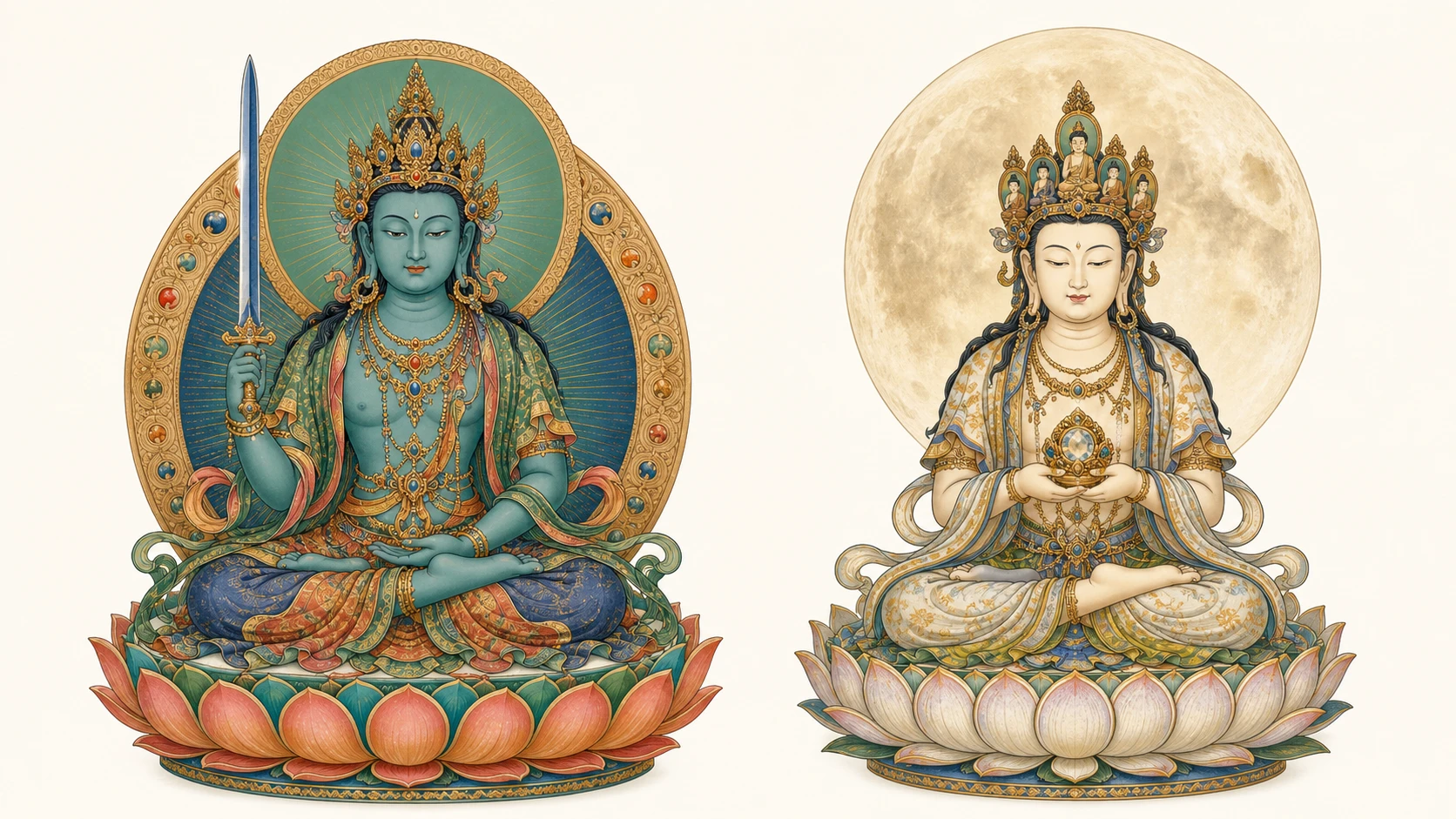
A British Museum Japanese hanging scroll identifies Ākāśagarbha seated on a lotus before a full moon. The bodhisattva holds a wish-fulfilling jewel and wears a crown containing five meditating figures. These clues are useful precisely because the museum record names the form; they describe one Japanese example rather than a rule for every Himalayan painting.
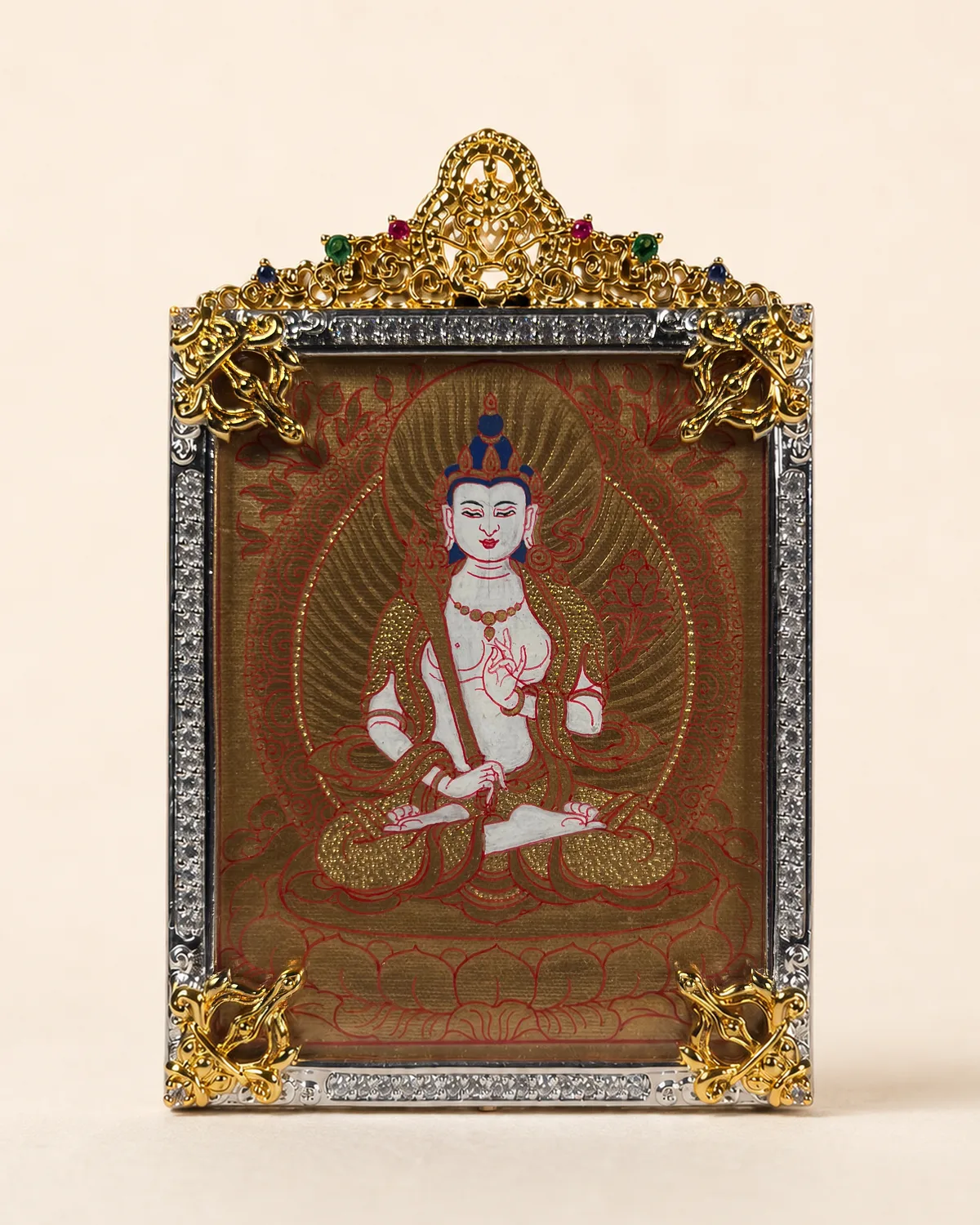
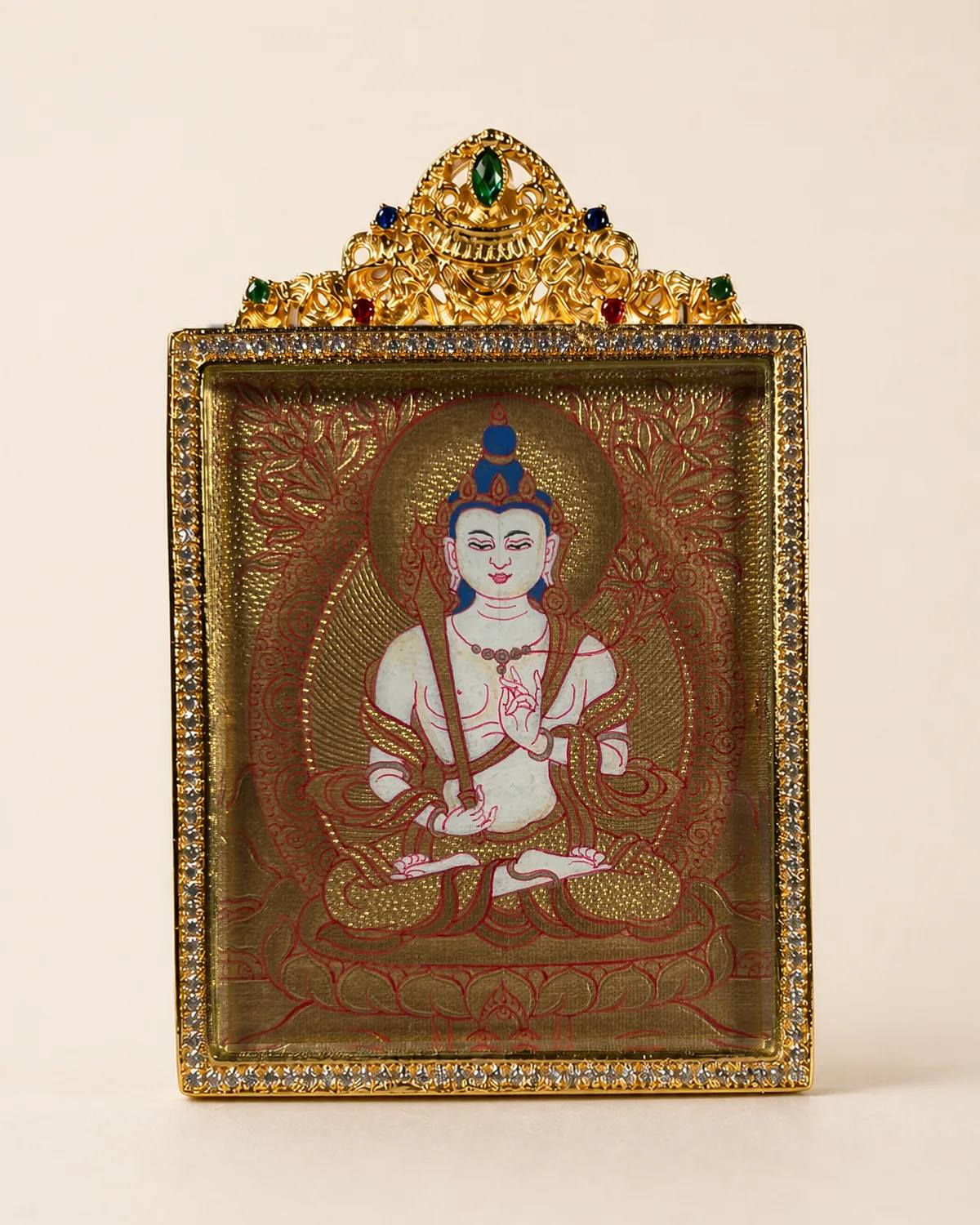
A Dunhuang painting in the same museum is only tentatively identified as Ākāśagarbha: it shows a frowning bodhisattva on a lotus with sun and moon emblems. The record itself is a good lesson in method. A calm white figure, a gold ground, one long-stemmed attribute, or a moon-like disc can begin an inquiry, but none can by itself distinguish this bodhisattva from another jewel-bearing figure or settle a title.
One name, several visual worlds and contexts
The Metropolitan Museum of Art records Ākāśagarbha in an early-fifteenth-century Tibetan initiation-card set. Its collection text explains that such tsakali could be arranged as a mandala to establish a sacred space and were used by monastic teachers in Vajrayana initiation. Here the subject belongs to a ritual and relational setting, not simply a portrait type.
A Rubin Museum account places Ākāśagarbha among the Eight Great Bodhisattvas of Mahayana traditions and describes one Tibetan example as androgynous, riding a fish. Differences like these are not mistakes to smooth away; they show why regional practice, set membership, medium and a documented title must be read together.
Why devotees pray to Ākāśagarbha
Within Mahayana traditions associated with Ākāśagarbha, devotees pray for stronger memory, learning and wisdom. Practices connected with the figure also carry aspirations for the growth of merit and the fulfilment of wholesome vows.
The name, often understood as a treasury of boundless space, explains why wisdom and merit are described as vast and continually cultivated. In individual works, lotus, jewel, moon, crown or other attributes must still be read within their regional and ritual context.
References
- Himalayan Art ResourcesAkashagarbha: Iconography and Regional Forms
- The Metropolitan Museum of ArtInitiation Card (Tsakalis): Akashagarbha
- The British MuseumKokuzo-bosatsu (Akasagarbha Bodhisattva)
- The British MuseumTentatively Identified Akasagarbha Painting from Dunhuang
- Rubin Museum of Himalayan ArtAkashagarbha and the Eight Great Bodhisattvas
- National Institutes for Cultural Heritage, JapanĀkāśagarbha Bodhisattva