Discover / Subjects & Meaning
Vajrakilaya Meaning: The Phurba, Wrathful Form and How to Read His Images
Learn how Vajrakilaya, Vajrakumara and Dorje Phurba relate, and how to read the phurba, faces, arms and wings without reducing every image to one fixed formula.
In this story
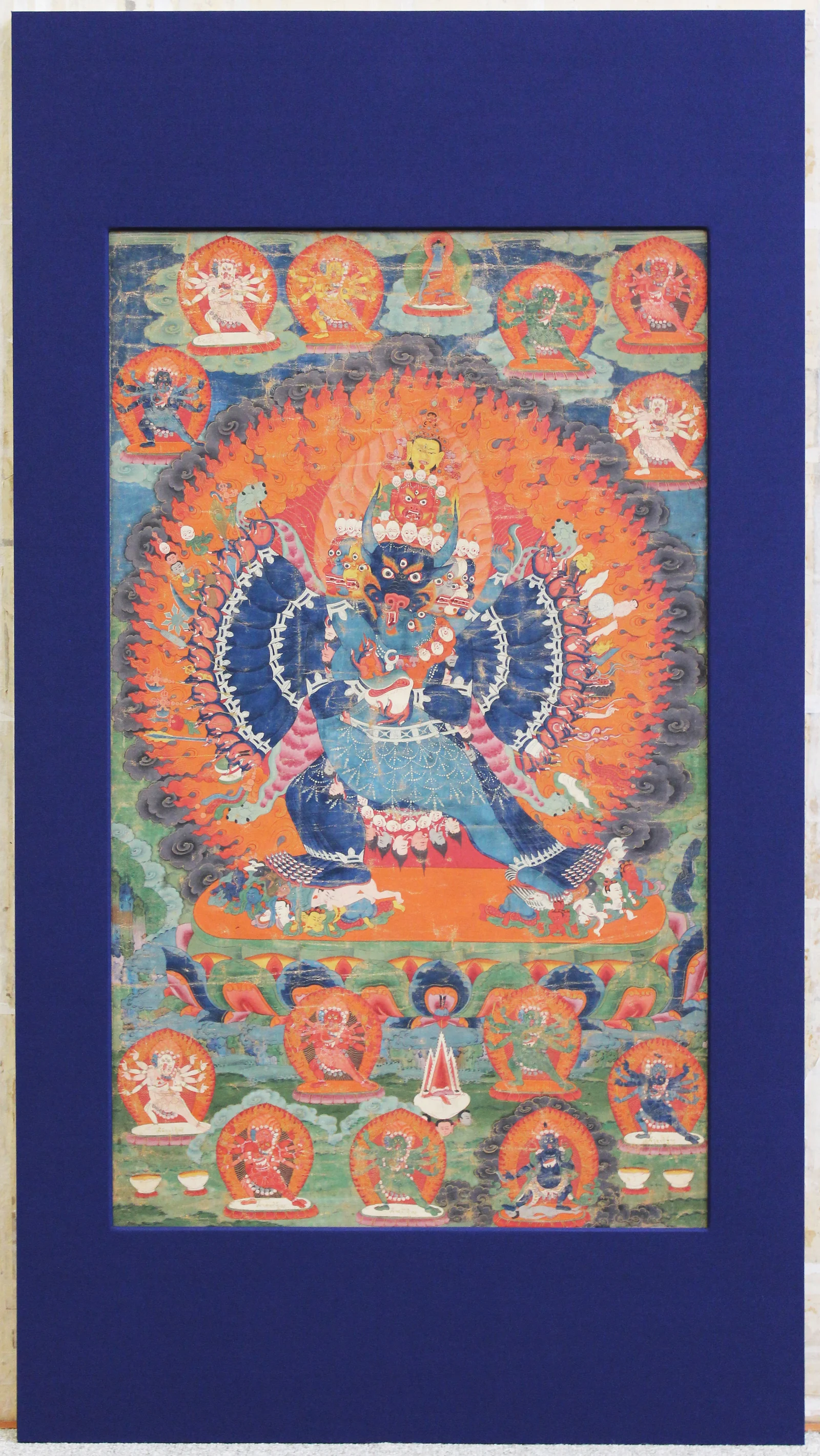
A blue-black figure stands amid curling red flames, with several faces and arms opening across the picture. Vajrakilaya is a wrathful Buddhist meditation deity, also called Vajrakumara or Dorje Phurba. His name is closely associated with the phurba, a pointed ritual implement. In his images, the upright peg, spreading limbs and fiery surround give awakened activity a forceful visual form.
Vajrakilaya, Vajrakumara and Dorje Phurba
Vajrakilaya, Vajrakila and Vajrakumara are names encountered for this deity. Vajrakumara means “Vajra Youth”; Dorje Phurba is his Tibetan name. He is a specific figure with his own traditions, rather than a general name for every fierce Buddhist image.
The shorter word phurba can name the implement itself. A painting of Vajrakilaya and a carved phurba therefore share a subject without being the same object: one presents a deity, while the other gives the pointed implement a physical form. This distinction makes the varied images under the name easier to understand.
Why does Vajrakilaya look wrathful?
Wide eyes, exposed teeth, skull ornaments and fire belong to the visual language of wrathful Buddhist art. Here that intensity is associated with enlightened action and overcoming obstacles on the Buddhist path. It gives compassion an active, forceful expression rather than depicting an ordinary fit of anger.
In the opening image, the blue-black body is enclosed by bright red flames and set against a cool blue sky. The flames echo the outward movement of the arms; clouds and green hills establish a quieter space beyond them. The contrast gives the central figure energy while keeping the composition legible. The broader guide to wrathful imagery explores this visual language across other subjects.
Faces, arms, legs and the phurba
A familiar form has three faces, six arms and four legs. The phurba is a defining attribute, while wings and other implements can enrich the figure. Forms vary across traditions: these counts describe one recognizable arrangement, rather than every possible depiction.
The photographed image brings the three faces close together: a dark central face is flanked by pale and red faces. The arms spread outward, while the hands at the centre hold the pointed implement close to the body. Skull ornaments continue across the heads, joining the faces into one compact group. Following the overlapping hands is more revealing than reading each colour in isolation.
From a painted attribute to a carved phurba
The phurba, or kīla, is a three-sided ritual dagger or peg. A physical example makes its long, tapered structure easier to see than a small attribute within a busy painting. In this Tibetan work from the late fourteenth or early fifteenth century, the phurba is carved from ebony with coloured details; the dagger is 42.5 cm high and the separate stand is 3.5 cm high.
The carved upper portion and tapering lower section give the object a strong vertical rhythm. By comparison, the opening image carries that vertical line into a much wider arrangement of faces, hands, flames and landscape. Looking between the two shows how the same implement can shape both an object and a picture.
Padmasambhava, Pharping and later traditions
Traditional accounts link Vajrakilaya with Padmasambhava’s retreat at Pharping in Nepal and his transmission of teachings in Tibet to Yeshe Tsogyal and other disciples. The story joins an Indian teaching background, a Nepalese retreat setting and Tibetan lines of transmission. Its importance lies in the religious memory of those connections.
Vajrakilaya has an important place in Nyingma and Sakya traditions, alongside later treasure-teaching cycles. One nineteenth-century example is Sangtik Phurba, associated with Chokgyur Lingpa’s 1859 revelation at Tsadra Rinchen Drak. Such distinct cycles help explain why a familiar deity name can accompany different teachers, texts and arrangements of figures.
How to read a Vajrakilaya image
Begin near the centre, where the faces, hands and phurba meet. Then follow the arms toward their outer attributes and the legs toward the lotus base. The flames gather these movements into one surround. Beyond them, smaller figures and landscape elements give the central image a setting. This route through the picture keeps the details connected to the whole composition.
The three faces, extended limbs and central peg make this Vajrakilaya image distinctive. The ebony phurba offers another encounter with the same subject through carving and scale. Together they show how a named Buddhist figure can be understood through both the movement of a picture and the structure of an object.
Questions and answers
Is Vajrakilaya the same as Dorje Phurba?
Dorje Phurba is a Tibetan name for the deity Vajrakilaya. The shorter word phurba can also name the three-sided ritual implement that appears in his imagery.
Why is Vajrakilaya shown with several faces and arms?
A familiar form has three faces, six arms and four legs. The repeated faces and spreading limbs shape the composition, while the overlapping hands gather attention around the central phurba. Other depictions can use different arrangements.
What is a phurba?
A phurba, or kīla, is a three-sided ritual dagger or peg. It appears as a held attribute in Vajrakilaya imagery and also as an independent carved or metal object.
Does a wrathful image mean an angry or harmful deity?
In Buddhist art, wrathful imagery gives enlightened action a forceful appearance. Wide eyes, teeth and flames belong to that visual language; they do not by themselves depict ordinary anger.