Discover / Subjects & Meaning
Vaishravana Meaning: North Guardian, Snow Lion and Eight Horsemen
Learn how Vaiśravaṇa, the Buddhist guardian of the north, is shown through armour, banner, mongoose, snow lion and eight horsemen, and how the figure changes across Tibetan and Japanese art.
In this story
Vaiśravaṇa is one of the Four Heavenly Kings and guardian of the northern direction. In Tibetan art he may appear as an armoured warrior king riding a snow lion with eight horsemen. A 15th-century Tibetan painting at The Met shows these features together, including high boots that point to Central Asian connections.
One guardian, several names
Vaiśravaṇa is the Sanskrit form used in Buddhist art; Pali texts use Vessavaṇa. Tibetan writes rnam thos sras, commonly read Namthöse, while Chinese uses 多闻天王 and Japan uses Bishamonten or Tamonten. These names belong to different language and artistic settings, so they do not imply one fixed image.
Across these settings, the figure remains connected with the northern guardian role. A Chinese or Japanese temple guardian, a Tibetan entrance mural and a Tibetan lion-riding painting may therefore look different while sharing the Vaiśravaṇa identity.
The northern guardian belongs to the Four Kings
In Buddhist cosmology Vaiśravaṇa is one of the Four Heavenly Kings, or lokapālas, who watch the cardinal directions. His quarter is the north, and he is a leader of the yakshas. His images combine this guardianship with royal dress and associations with treasure and generosity.
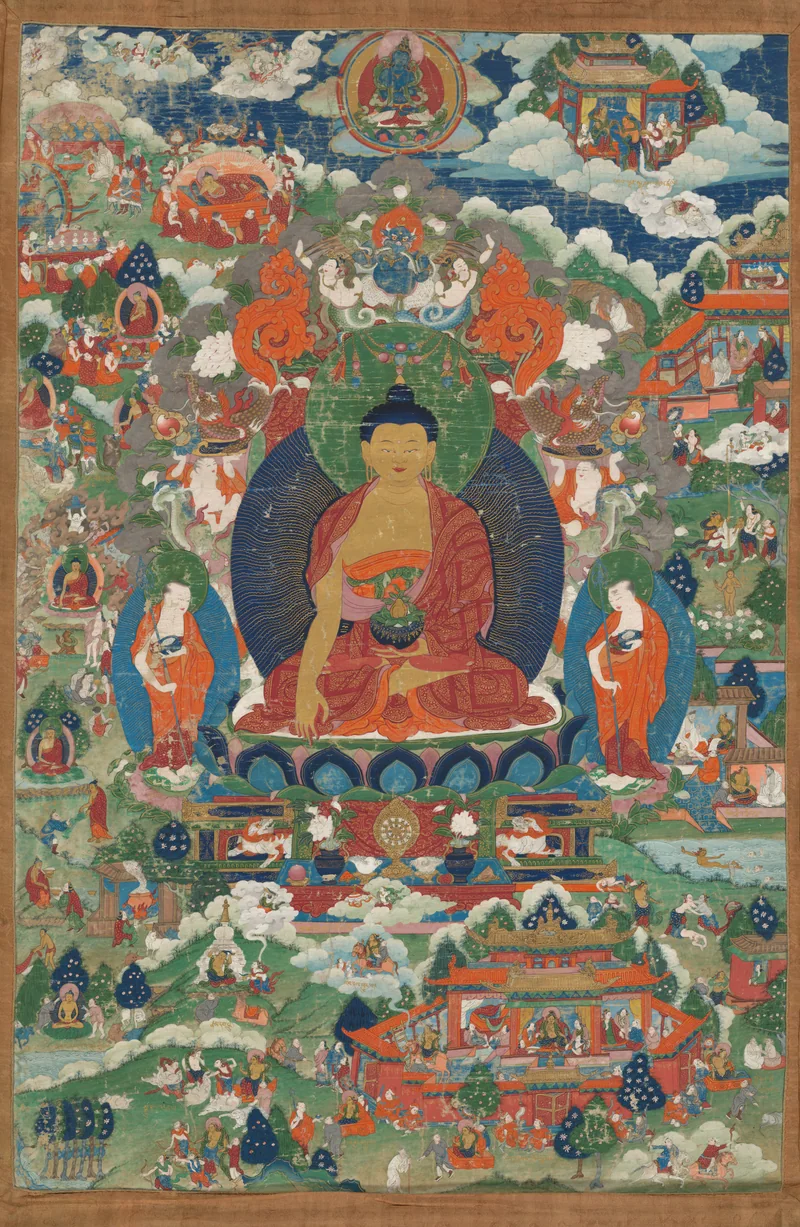
The Four Kings often appear together on temple entrance walls or in larger scenes around Shakyamuni and the great elders. That setting is different from an independent Vaishravana Riding a Lion image, in which the north king becomes the central subject. Not every Vaishravana therefore has a lion, eight horsemen or the same wealth attributes.
A 15th-century painting brings the form into focus
The painting shown above was made in Tibet in the 15th century, in distemper on cloth. The image measures about 81.3 by 73.9 centimetres. Vaishravana sits on a snow lion and is surrounded by eight generals, known as the Lords of the Horses. Full armour and high boots make his warrior-king dress especially clear.
The central king is much larger than the mounted figures around him. His snow lion fills the space beneath his body, while the riders occupy the surrounding field. This arrangement lets the viewer see the guardian and his retinue together, without losing the central figure among the many animals, weapons and ornaments.
The eight horsemen connect the image with Tibetan painting
The eight horsemen belong to this prominent lion-riding form in Tibetan tantric art. Their horses and figures surround the king as a retinue. A temple entrance showing the Four Kings presents another grouping: there, Vaishravana stands alongside the guardians of the other three directions.
The high boots in this painting recall connections with Central Asia. The lion-riding subject also appears in fourteenth- and fifteenth-century Tibetan murals at Shalu and Gyantse. The cloth painting brings a subject familiar from those larger architectural settings into a work that can be viewed as one complete composition.
Bishamonten carries the northern guardian into Japan
An early-15th-century Japanese hanging scroll in the Philadelphia Museum of Art names the figure Bishamonten. He appears as one of the Four Heavenly Kings, a warrior-like guardian of the north, with a spear in one hand and a small pagoda in the other. The pagoda can be read as a treasure house whose contents are guarded and distributed within this image’s folklore setting.
This Japanese example makes the regional shift easy to see. A spear and pagoda emphasise a different visual pair from the Tibetan snow lion and horsemen, yet the north, armour and guardian role remain recognisable.
Vaishravana beside Jambhala and Vasudhara
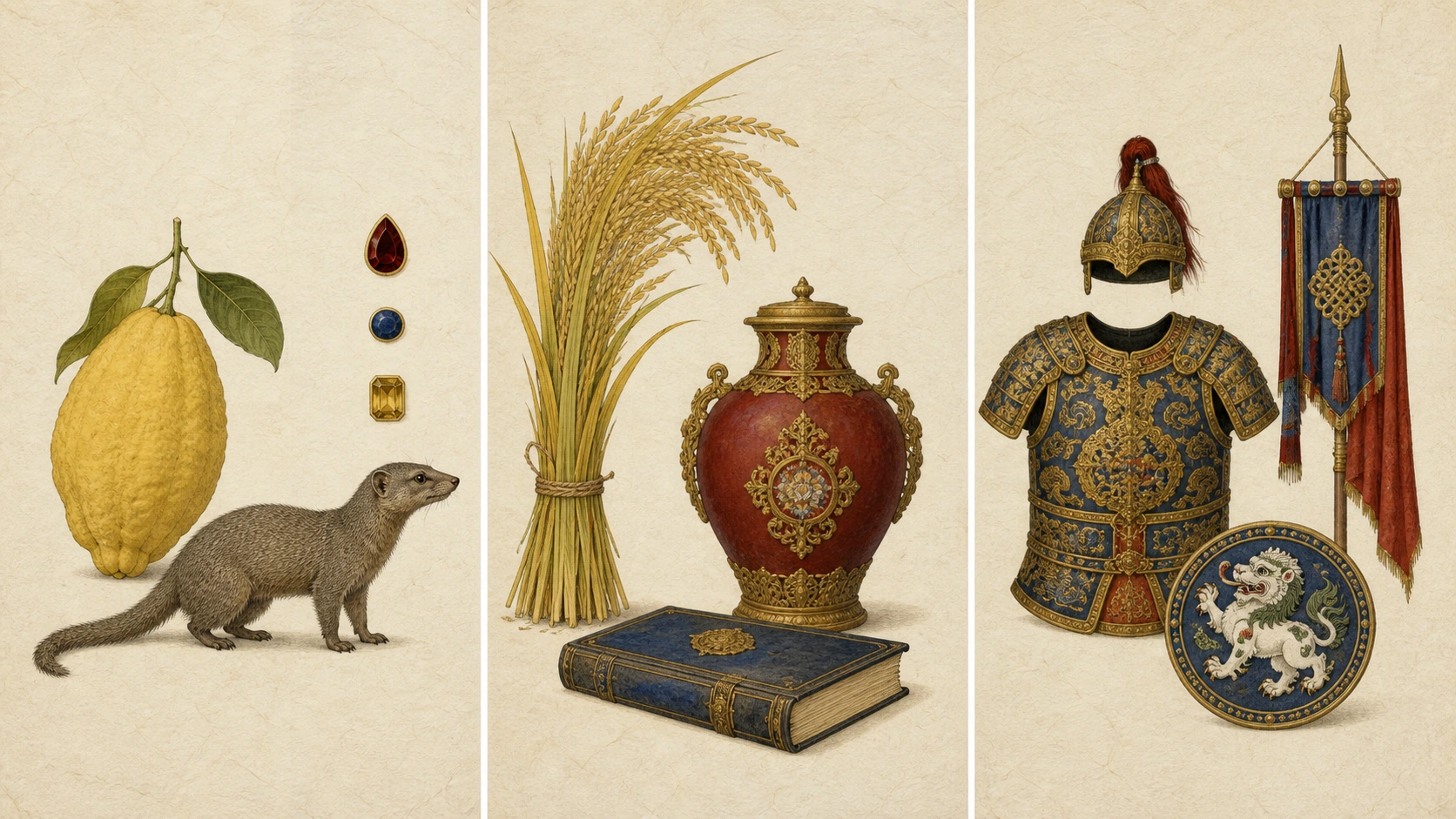
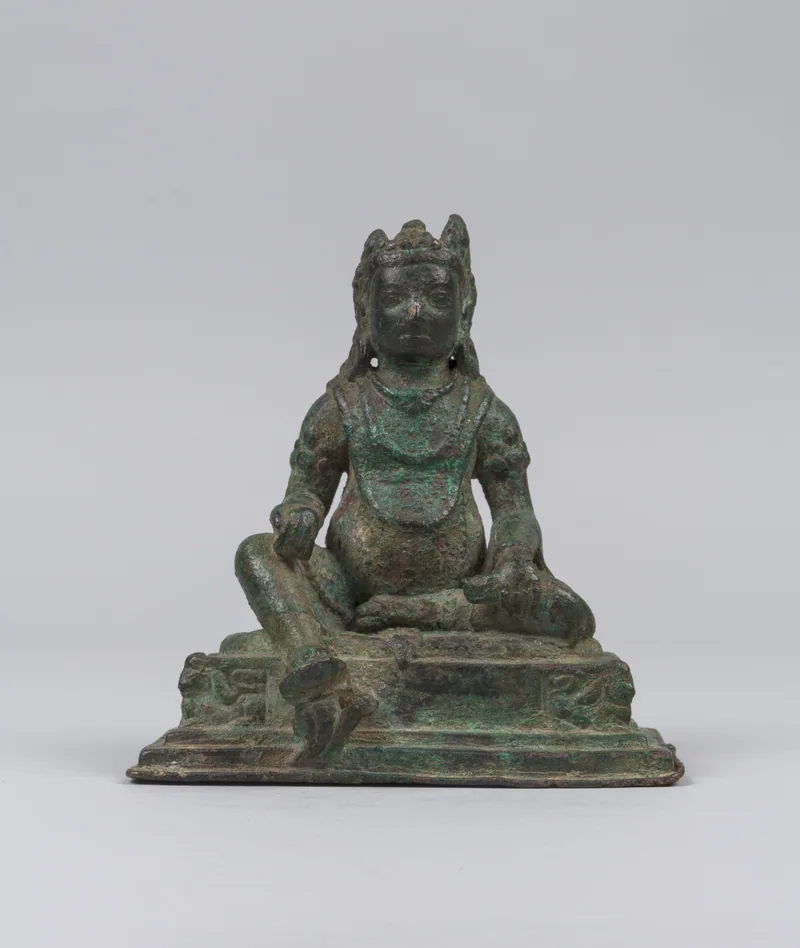
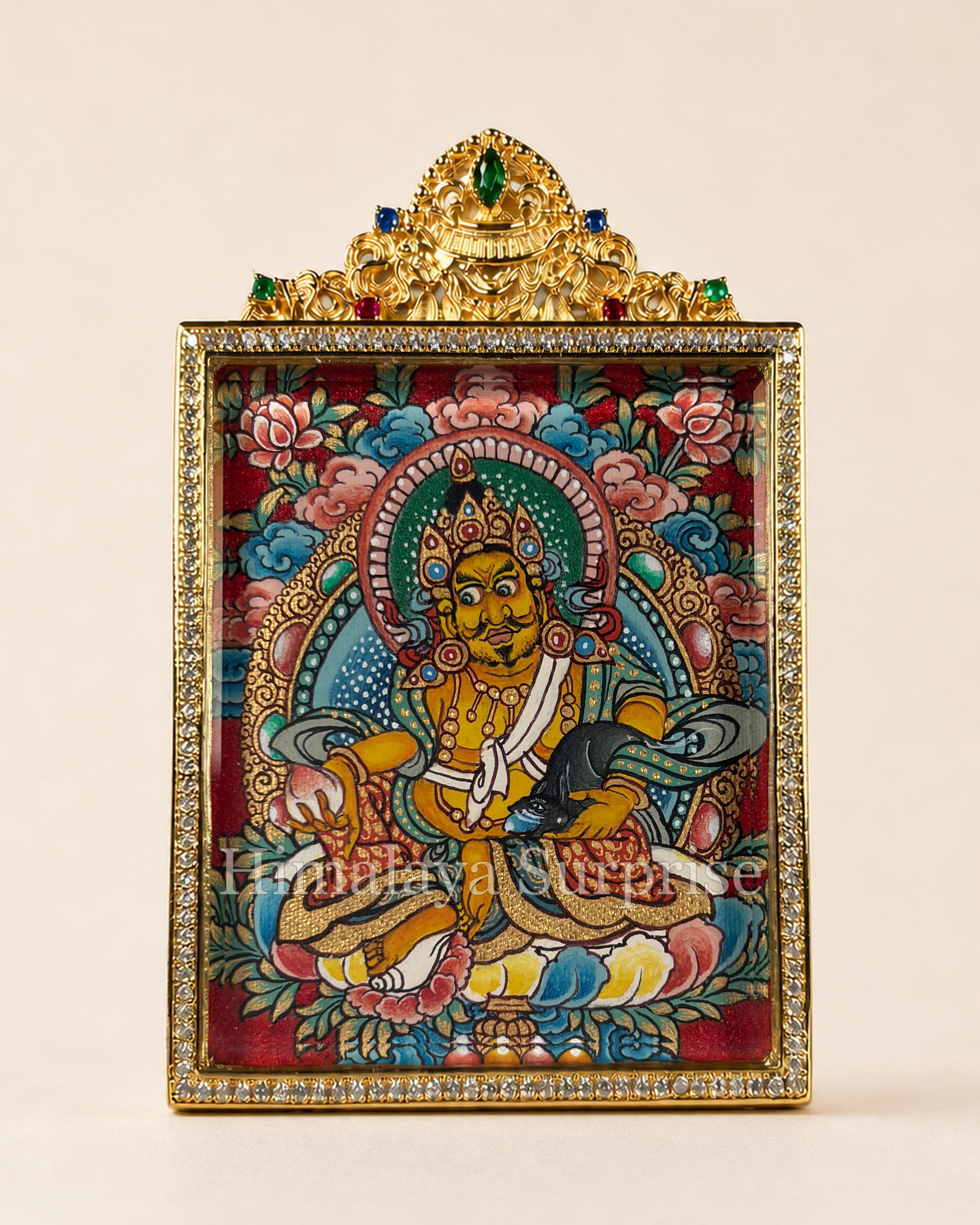
Vaishravana, Jambhala and Vasudhara can all appear alongside language of wealth, resources or abundance. Their visual roles differ. Vaishravana is anchored by direction, armour and guardianship; Jambhala is a family of wealth-deity forms with changing colours, mounts and attributes; Vasudhara is commonly approached through a female form and grain, jewels, a vessel or scripture.
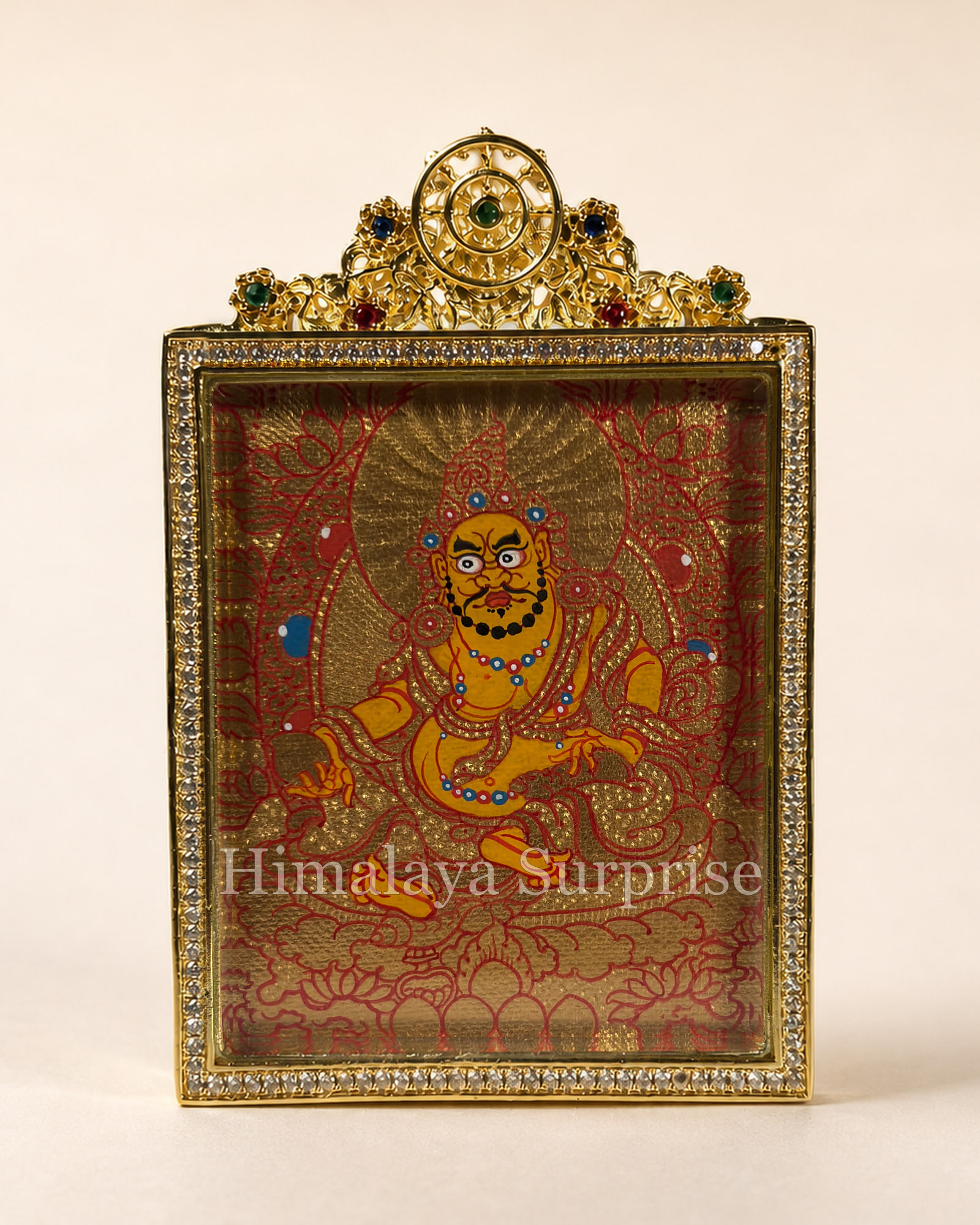
Some lineages identify Vaishravana with Yellow Jambhala, while other art-historical settings keep the northern guardian distinct. Our comparison of the three figures explores their related wealth associations and different forms.
Questions and answers
What other names are used for Vaishravana?
Vaiśravaṇa is the Sanskrit form; the Pali form is Vessavaṇa and the Tibetan form is rnam thos sras, commonly read Namthöse. In Chinese he is 多闻天王; in Japan, Bishamonten or Tamonten. These names belong to related Buddhist language and art traditions.
Is Vaishravana the same as Yellow Jambhala?
Some lineages use that identification. In wider Buddhist art, Vaishravana is defined through his northern guardian and warrior-king role, while Jambhala names a family of wealth-deity forms. The answer depends on the tradition and the image being discussed.
Does Vaishravana always ride a snow lion?
No. The snow lion and eight horsemen belong to a prominent lion-riding form, especially in Tibetan tantric art. Vaishravana can also appear among the Four Heavenly Kings at a temple entrance, in a mandala or in other regional forms without the same mount and retinue.
What do the banner, mongoose and pagoda signify?
A victory banner can express sovereignty, a mongoose can connect treasure with generosity, and a pagoda in Japanese Bishamonten imagery can be read as a guarded treasure house. The emphasis changes with the image and its tradition.