Discover / Culture and ritual
Thangka Consecration: What It Means in Tibetan Buddhist Art
Learn what thangka consecration means, how it differs from painting the eyes and mounting, and what historical examples reveal about statue filling and writing on a thangka's reverse.
In this story
A thangka can be a carefully painted textile, a sacred image in use, and a work of art to be looked at. Consecration is the ceremony through which that image enters a religious life of devotion and ritual. It does not replace the painted surface: cloth, pigment, composition and mounting remain part of what the work is.
What consecration adds to a thangka
In Tibetan Buddhist settings, consecration is a ceremony that places an image within a devotional and ritual relationship. The image may be a thangka, a statue or another sacred form. The ceremony and the visible work meet, but they are not the same thing: one concerns religious use, while the other can be examined through subject, support, colour and mounting.
The same painting can therefore be approached in two ways at once: by following its line, colour, textile structure and composition, and by considering the community and setting in which the image has been used.
Painting, eyes, mounting and consecration
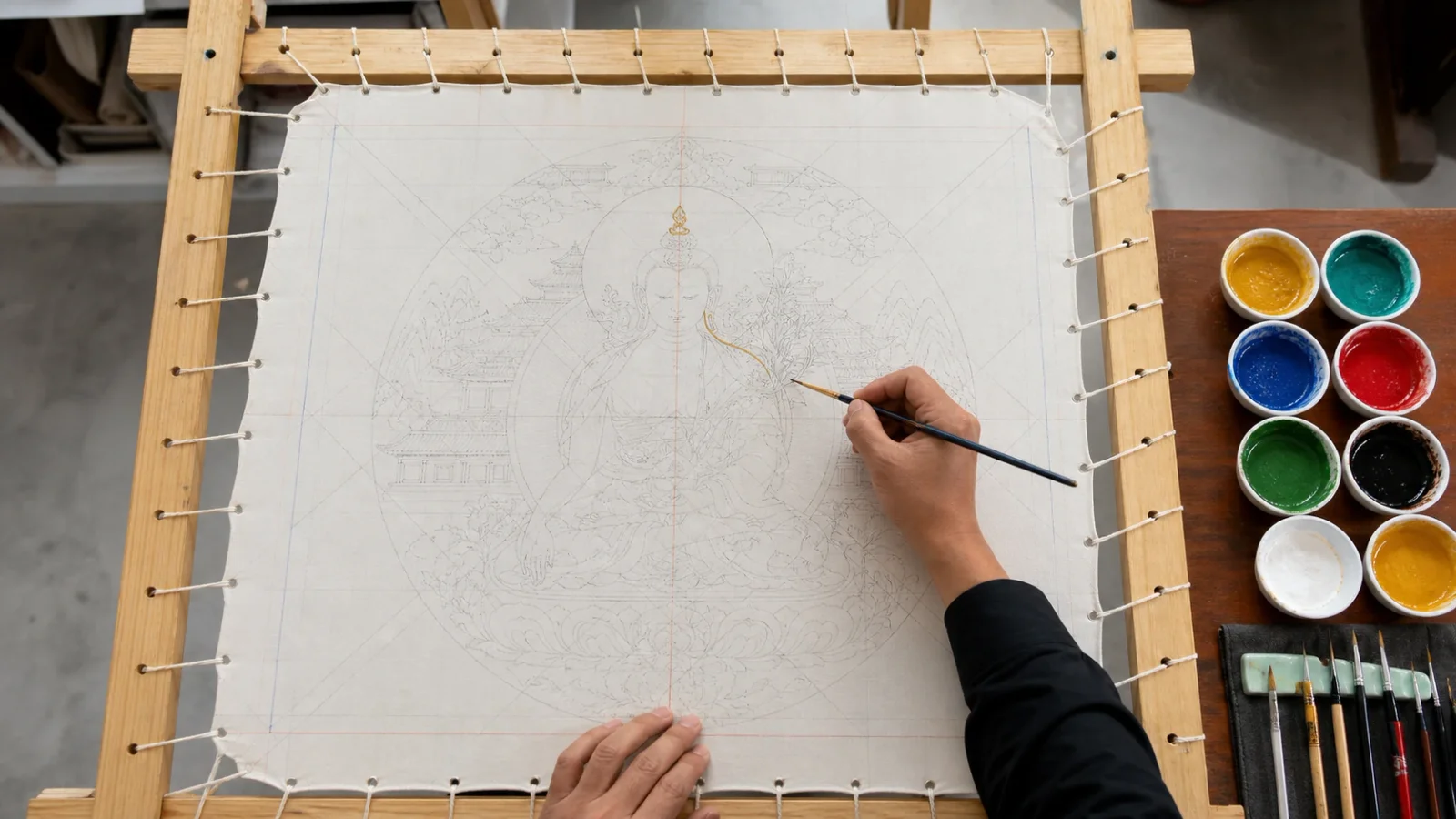
The painting develops through drawing, colour, modelling and finishing. In some practices, completing the eyes is a meaningful late moment in making the image. Mounting then gives the painted textile its finished hanging form. Consecration belongs to a different register: it is a religious ceremony, not another layer of paint.
These parts can appear close together in a work's life, but they do different jobs. Looking at a face or a brocade edge lets the painting and its presentation speak in their own visual language, while the ceremony belongs to the image's religious setting.
Why a statue and a thangka are not prepared alike
A Winter 1995 interview with the Namgyal Institute draws a practical distinction: a statue is filled before consecration, while a thangka receives the consecration ceremony without that filling. It is a historical account of one monastery's practice, not a sequence that every lineage must follow.
The distinction is useful when a description moves between a painted textile and a three-dimensional figure. Keeping the two forms in view makes the religious and artistic sides of both easier to understand.
Consecration can be renewed; the reverse may carry its own clues
A Field Museum conservation account describes thangkas as being consecrated repeatedly and notes that empowerment symbols may be written on the reverse. That possibility makes the back worth noticing, but it is not a feature of every thangka. The painting and its mounting remain part of the image as a whole.
A reverse inscription can connect different periods of an object's use. Alongside the painted surface, it preserves another trace of the image's life.
A fourteen-thangka series and its reverse writing
Amy Heller's study of an eighteenth-century series of fourteen Drukpa Kagyu thangkas gives a concrete example. The backs identify central figures by name; some inscriptions indicate a position on the left or right of the series, and the Tilopa and Naropa entries include the words ‘om a hum’. In this group, a name, a sequence note and a ritual-related inscription are different kinds of writing.
Some paintings were framed, so not every reverse could be read, and one missing painting's inscription was unavailable. The value of the example lies in its specificity: it shows how one group used the back, rather than prescribing how every thangka must be read.
The image remains more than a label
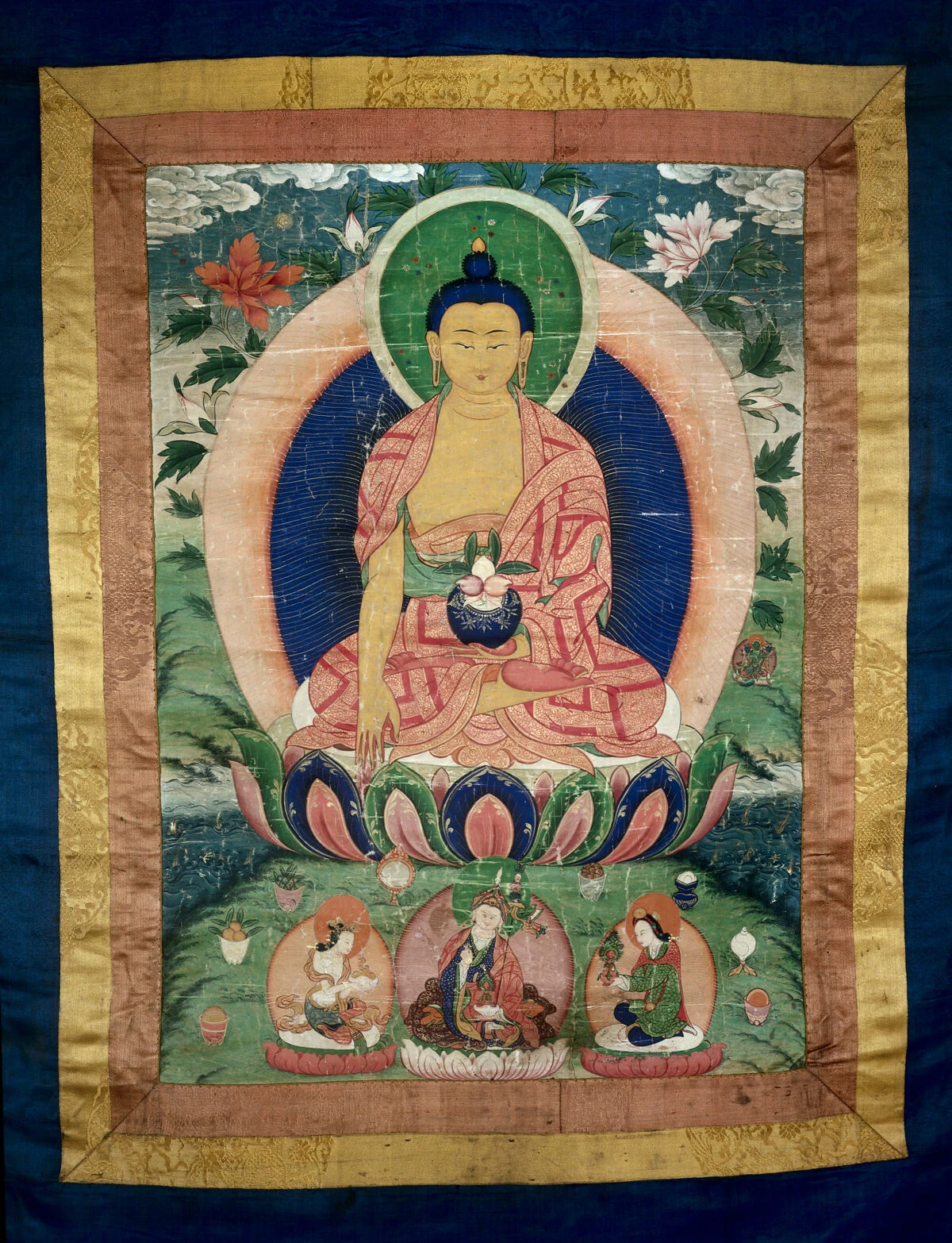
When a thangka is in front of you, begin with the image: the central figure, surrounding forms, palette, brushwork, cloth and mounting. These visible decisions explain how the work asks to be seen as a painting.
Its religious life adds another layer rather than erasing its material one. A viewer can respect a thangka as a sacred image and still attend to its scale, colour, repair, textile border and the way the composition holds together.
Questions and answers
Is painting the eyes the same as consecration?
No. Painting the eyes can be a late moment in making a particular image, while consecration is a religious ceremony with its own setting. The two may be related in a tradition, but they describe different parts of a thangka's life.
Are statues and thangkas consecrated in the same way?
Not in the historical account described by the Namgyal Institute. It describes a statue being filled before consecration, while a thangka receives the ceremony without statue filling. Other lineages may describe their practices differently.
Can a thangka be consecrated more than once?
It can. A work may receive consecration again in a different religious setting, so it need not be understood as a ceremony that happens only once in its life.