Discover / Subjects & Meaning
Phurba Meaning: Form, Materials and Tibetan Buddhist Art
Explore a phurba through three historical objects and the different ways its form appears in art.
In this story
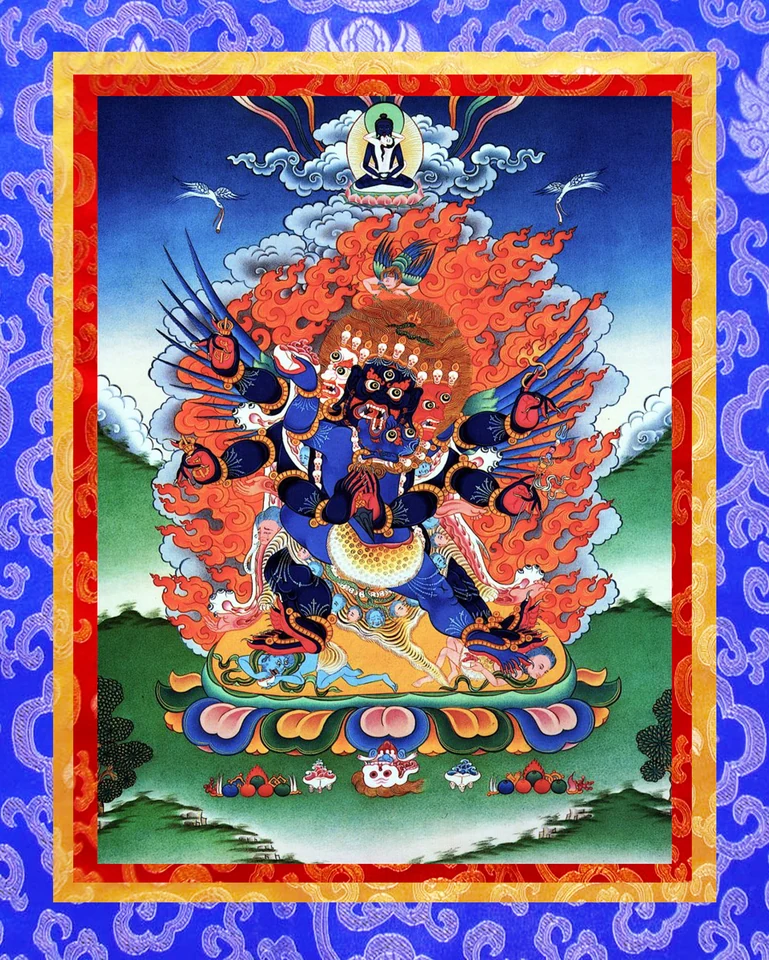
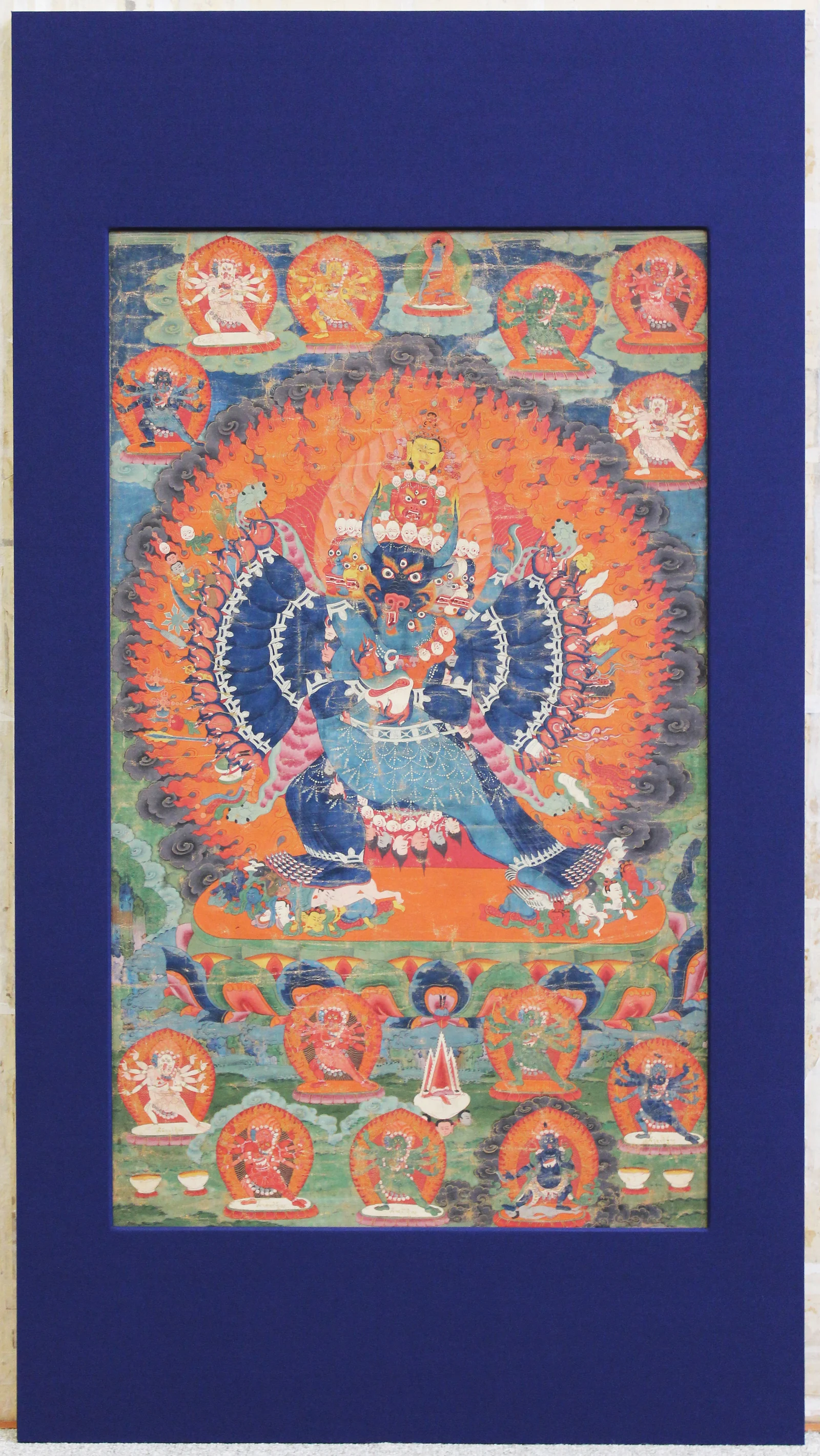
A phurba is a pointed, three-edged ritual implement associated with Vajrakilaya. In a painting it can be a small attribute held between a deity’s hands; as an object it can be an elaborate work of carving or metalwork. Three historical examples reveal how much can change within that recognisable silhouette.
What is a phurba? Shape, names and the figure beside it
Phurba is also written Phurpa. Sanskrit terminology includes kīla and kīlaya.
In Tibetan Buddhist imagery, Vajrakilaya is the deity; phurba is the implement.
From held attribute to freestanding object
The same implement can occupy two very different scales. Held within a deity image, it is one part of a larger arrangement of hands and attributes. Made as a freestanding object, its blade, handle and finial become the whole composition. Looking at both makes the relationship between the deity’s image and the crafted object easier to see.
A close view of metalwork: Walters 52.311
The 16th-century Tibetan Ritual Dagger shown here, accession 52.311, combines steel, silver, gold and copper. It measures 33 cm.
Silver serpents run along the three-sided blade; a golden makara marks the hilt, a sixteen-prong silver vajra rises above it, and three wrathful heads form the finial. Texture and relief build the vertical silhouette as much as the outline.
A carved form and a separate stand
The Met records a Tibetan ebony phurba and stand, late 14th–early 15th century; dagger 42.5 cm.
Its long taper and separate stand give the ebony form a quieter rhythm than the Walters metal example.
A Yongle-period object from China
This gilt-bronze phurba from China dates to the Yongle period (1403–1424) and measures 24.8 cm. It is an imperial-workshop object associated with court ceremony or tribute.
A three-headed makara marks one end of the handle; at the other are three grimacing faces of Mahakala, each crowned by three seated Buddhas. The crowded ornamental structure gives this compact object a very different rhythm from the long ebony example.
How the phurba works inside a visual composition
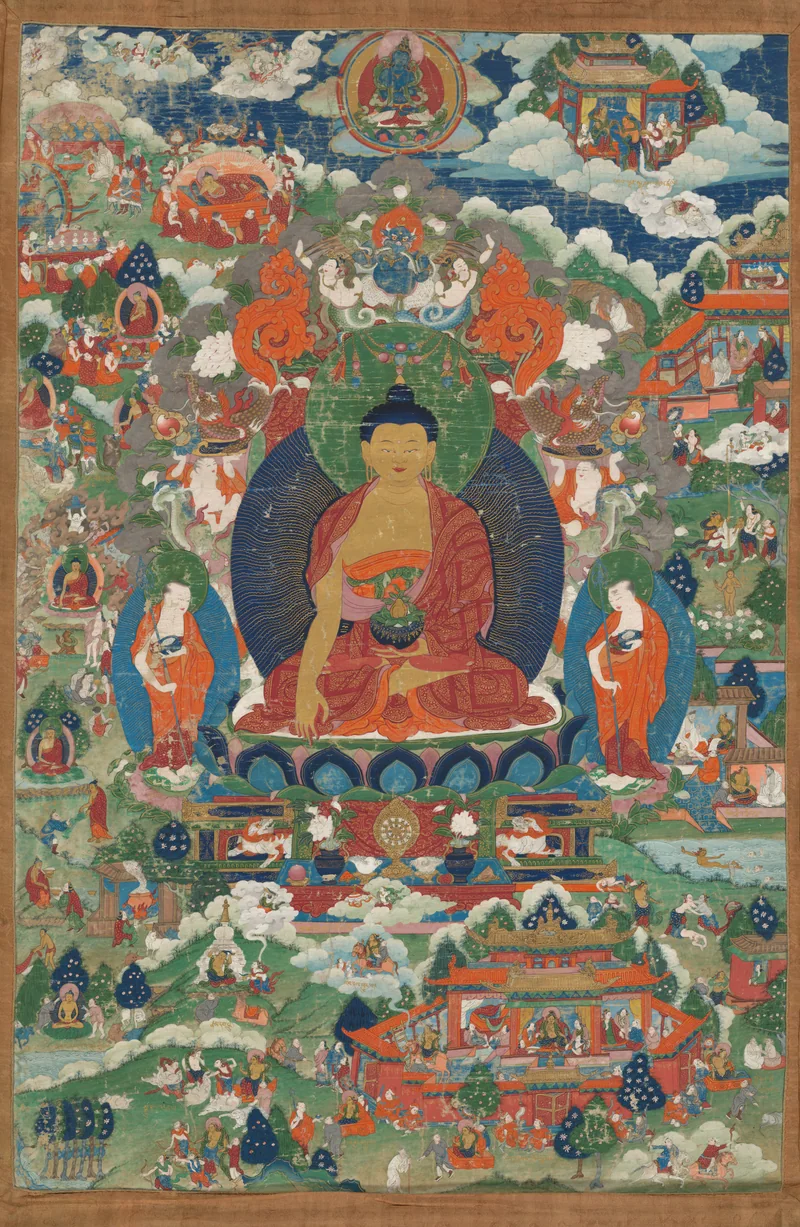
In a thangka, begin with the figure holding the implement. The number of faces and arms, the posture, the other attributes and the surrounding retinue tell you whether the phurba is part of a named deity’s identity or one element in a larger ritual scene. Its pointed line can echo the body of the central figure, the lotus below or the flames around it.
These images lead the eye along a vertical axis: from an expressive face or finial, through the hands or handle, down to the tapered point. The three objects shown here turn that simple movement into silver ornament, carved wood and gilded bronze. The repeated form draws them together; their surfaces reward a closer look.
Questions and answers
What is a phurba?
A pointed, three-edged ritual dagger or peg.
Is a phurba the same as Vajrakilaya?
No. Vajrakilaya is the deity; phurba is the associated implement.
What materials are shown?
Examples here include wood and metalwork; materials vary by object.