Discover / Subjects & Meaning
White Jambhala: Dragon, Dakinis and Iconographic Variations
Learn to recognise White Jambhala through his dragon mount, changing hand-held objects and the four dakinis linked with the Atisha tradition, with a museum object close reading.
In this story
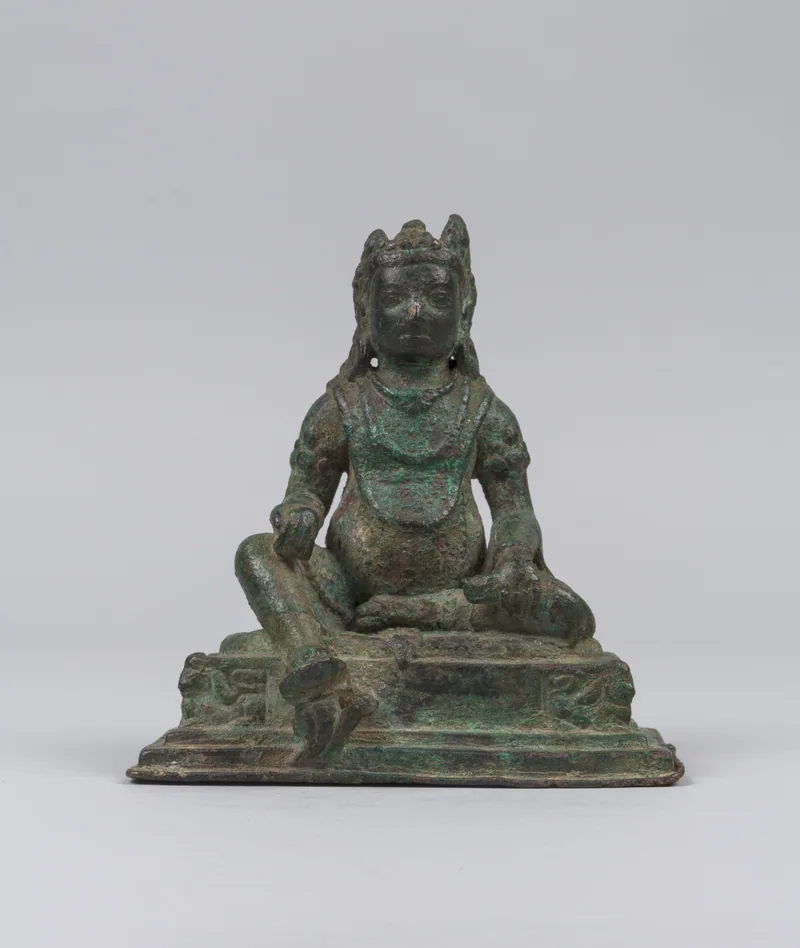
White Jambhala is a distinct form of Jambhala associated in one iconographic tradition with Jowo Atisha and Avalokiteshvara. His dragon mount is a strong visual clue, while the objects in his hands and the dakinis around him need to be read with more care because depictions vary. A small Metropolitan Museum sculpture shows why the name can mislead: its dark brass body is identified as White Jambhala because “White” names the form, not the material or surface colour.
White Jambhala names a form, not a material colour
Within the wider Jambhala subject, this White form is associated in one description with the tradition of Jowo Atisha and presented as an emanation of Avalokiteshvara. English sources also use White Dzambhala as a spelling variant. The dragon, hand-held objects and surrounding dakinis then give each image its particular shape.
Read the complete form, not a single colour or object
White Jambhala is easiest to recognise through a cluster of clues: body, posture, hands, mount and attendants. A pale figure or a mongoose alone is not enough; the full arrangement gives the form its identity.
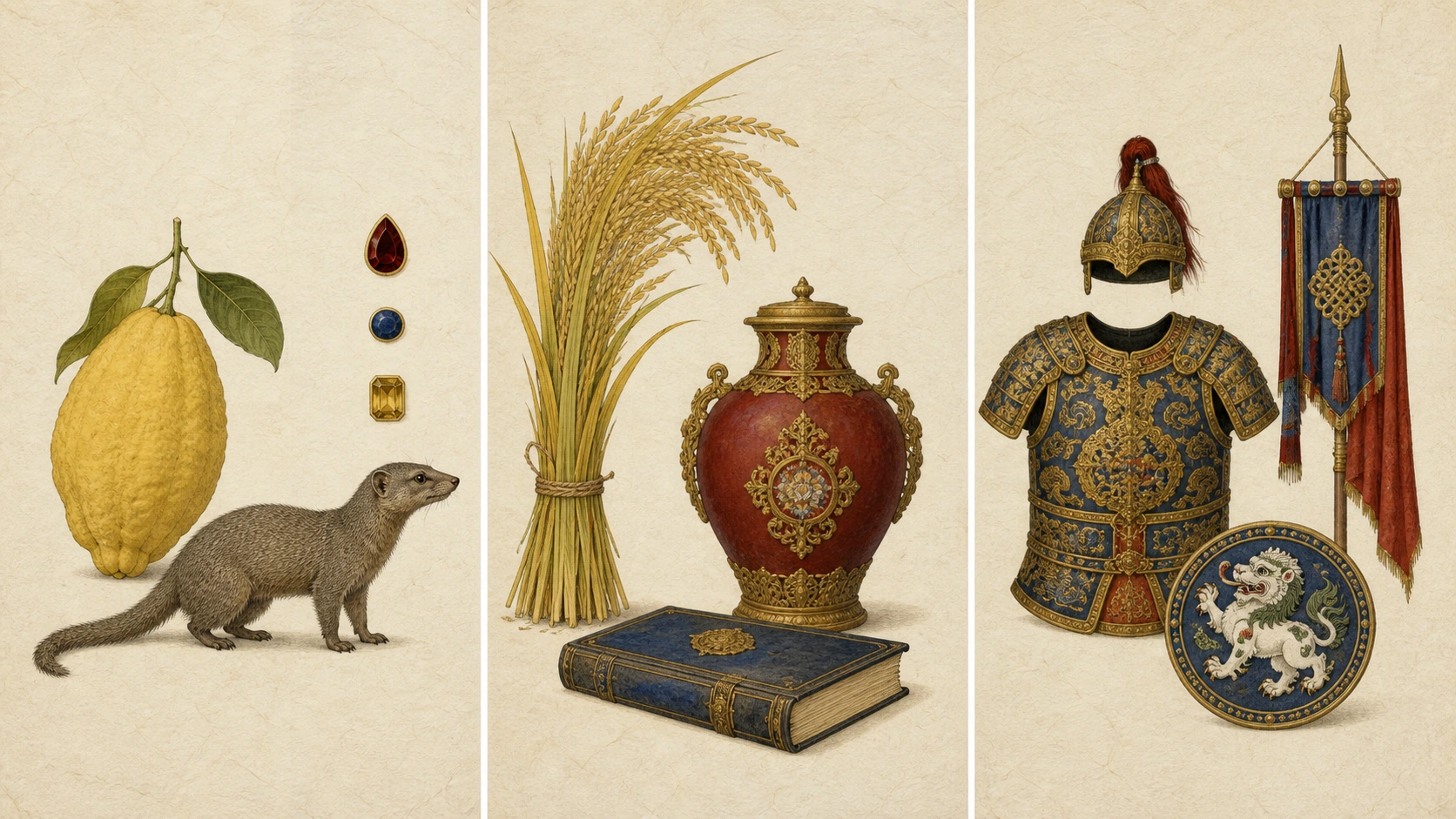
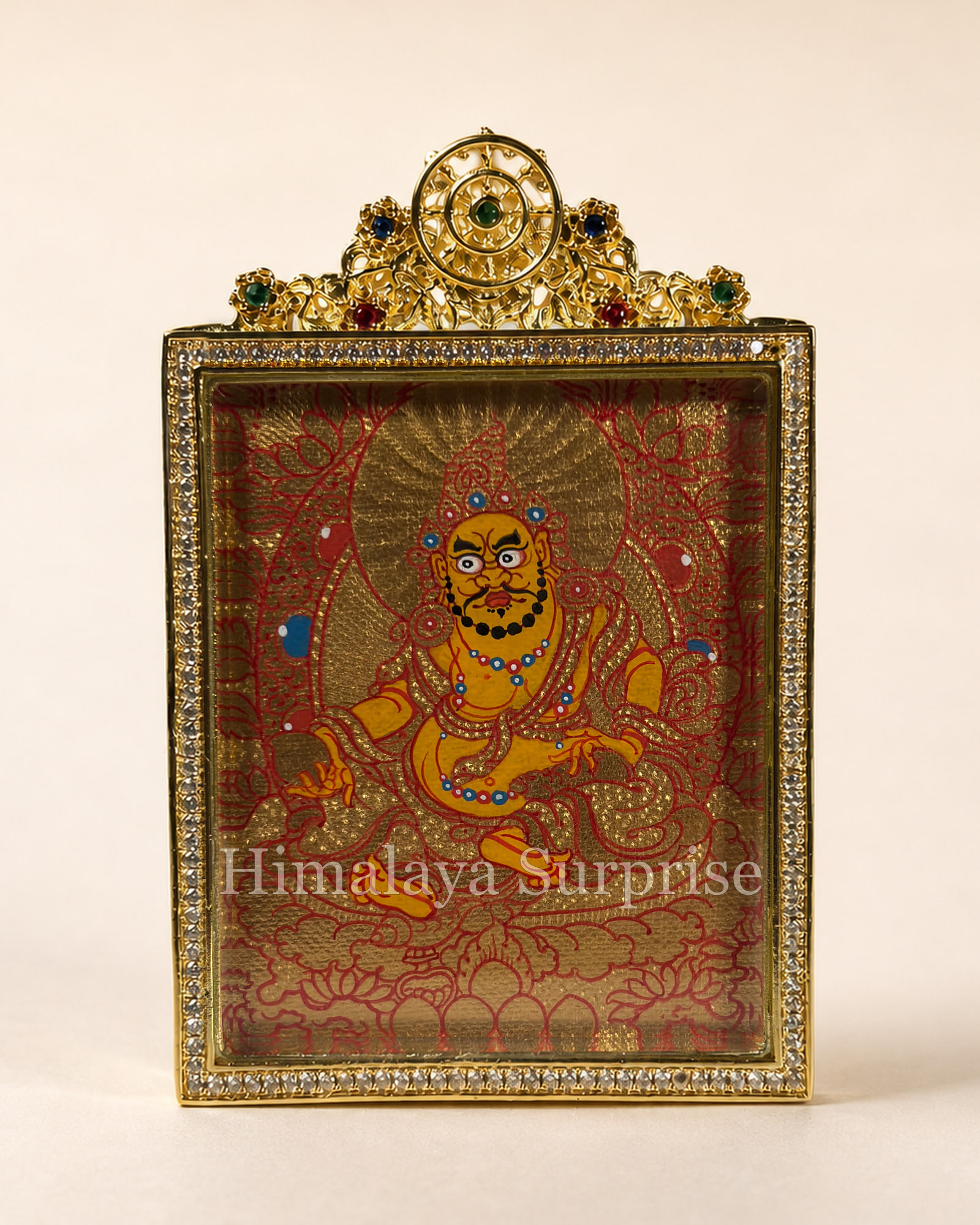
This also keeps White Jambhala separate from the familiar Yellow Jambhala picture. The Yellow Jambhala guide follows the fruit, jewel-emitting mongoose and other features of yellow forms; White Jambhala is more immediately associated here with the dragon and the traditions surrounding its retinue.
The dragon is the quickest visual clue
The dragon gives White Jambhala a particularly recognisable setting. Himalayan Art Resources describes the mount as turquoise or greenish and usually shown in a Chinese style, calling it the most distinctive feature of this iconography. The Metropolitan Museum uses the same relationship in the title White Jambhala on a Dragon, so the mount belongs to the subject rather than serving as generic decorative scenery.
For the Met object, the curatorial description adds a gold sword in the left hand and identifies it as a variant of the khatvanga ritual staff. The angled view makes the relationship between figure, hands and dragon easier to inspect. The Met associates that sword with this object; other White Jambhala images may place different attributes in different hands.
Held objects can change between depictions
The White Jambhala description notes that painted and sculptural representations do not always keep the attributes in the same left-and-right arrangement. Some depictions reverse the objects, and some omit the jewel-spitting mongoose altogether. The composition can therefore look different from one work to another while remaining within White Jambhala imagery.
In the Met object, the dragon and gold sword dominate the reading; another depiction may bring a mongoose forward or arrange the hands differently. Letting each work keep its own balance makes the variations legible instead of flattening them into one fixed picture.
Four dakinis in an Atisha-associated composition
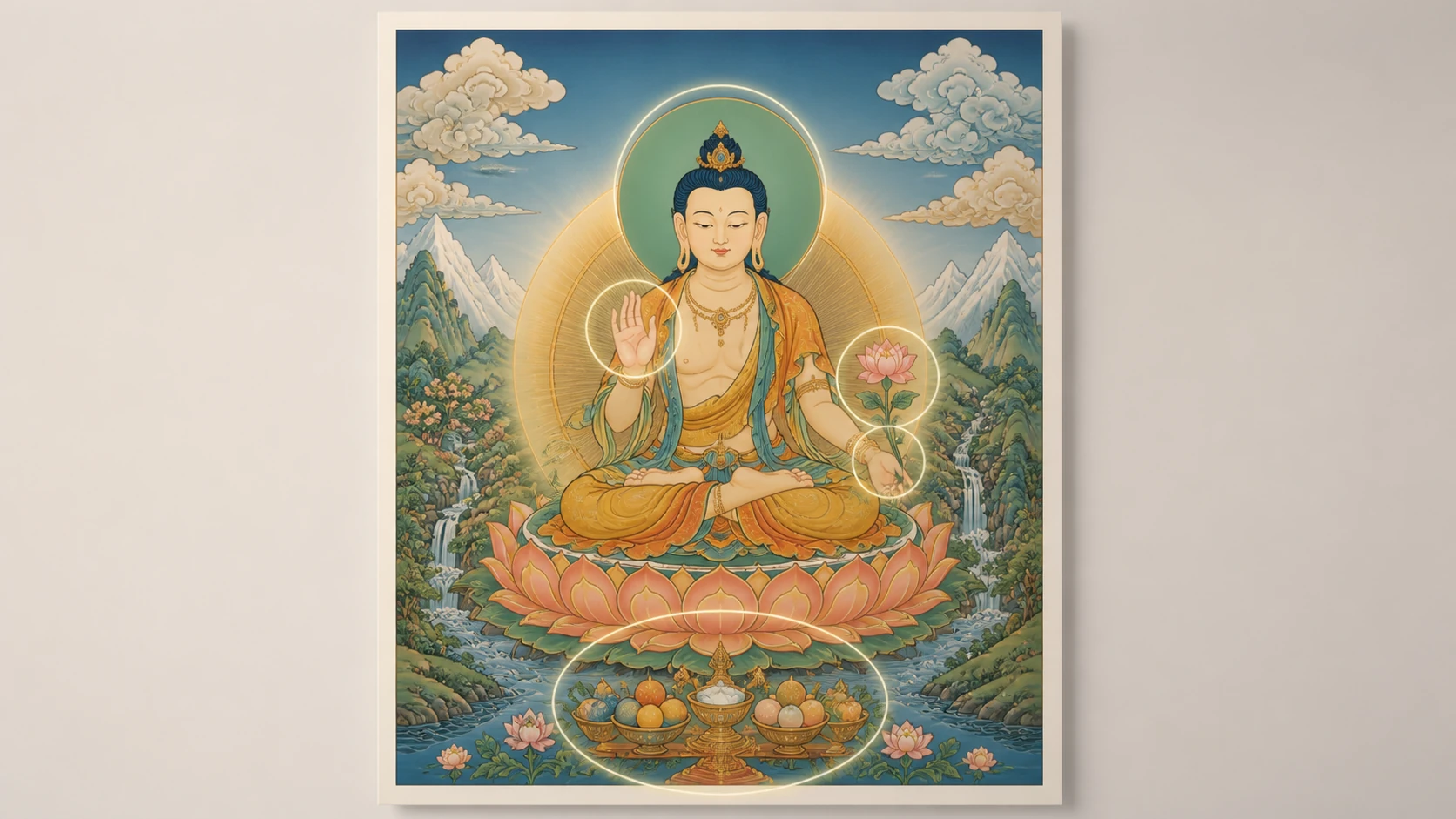
The same Himalayan Art Resources description names four dakinis accompanying White Jambhala in the Atisha-related group: Yellow Ratna Dakini holds a jewel and a vase; Blue Vajra Dakini holds a vajra and a monk’s begging bowl; Red Padma Dakini holds a lotus and a hook; Green Vishva Dakini holds a vishvavajra, or double vajra, and a wish-fulfilling jewel. Their colours and paired objects make the retinue more informative than the word “four” on its own.
This retinue is not simply another name for the five colour forms of Jambhala. Yellow, white, black, red and green can introduce a colour-based set of forms, while the White Jambhala with four dakinis describes a particular composition associated with Atisha. A work may therefore need both its principal deity and its retinue named, rather than being reduced to a colour label.
A museum object: White Jambhala on a Dragon
White Jambhala on a Dragon, object 48.30.12, was made in Mongolia in the 18th–19th century. Its medium is brass with pigment, inlaid with copper and silver, and it is a lost-wax cast sculpture. At 13.3 centimetres high, it is a compact three-dimensional object rather than a painted thangka on cloth.
The dark surface in the photographs gives the object a visual presence very different from the word White. Here, White identifies the deity form; brass, pigment and inlay describe how this particular object was made and finished. The reverse view restores the object’s volume: the subject is not only a front-facing set of symbols, but a cast figure and dragon that can be considered from more than one side.
The composition opens outward from the dragon
Seen as a composition, the dragon gives White Jambhala a moving base, while the four dakinis can distribute colour and paired objects around the central figure. The eye moves from the principal body to the dragon and then outward to the companions; the arrangement turns a wealth deity into a scene of relationships rather than a collection of isolated attributes.
In devotional language, this relationship joins abundance with compassion and generosity. The dragon’s movement, White Jambhala’s regal presence and the dakinis’ varied implements suggest a visual world in which resources support practice and giving. Practices and mantras differ by lineage, so the image is best appreciated as a particular tradition’s composition rather than a promise of personal results.
Questions and answers
Does “White” mean that White Jambhala is made from white material?
No. White names the deity form. The Metropolitan Museum’s 48.30.12 is a dark-looking brass sculpture with pigment and copper-and-silver inlay, yet its title is White Jambhala on a Dragon; the title and the medium answer different questions.
What does White Jambhala ride?
A dragon is the strongest recurring clue in the sources used here. Himalayan Art Resources describes a turquoise or greenish, usually Chinese-style dragon, and the Met object is titled White Jambhala on a Dragon. The exact treatment can still vary between works and traditions.
Does every White Jambhala hold a mongoose or a sword in the same hand?
No. The Met record places a gold sword, a khatvanga variant, in the left hand of its object. Other depictions can reverse attributes or omit the jewel-spitting mongoose. The hand arrangement therefore belongs with the wider scene when reading a particular image.
Are White Jambhala’s four dakinis the same as the five colour forms of Jambhala?
No. The four dakinis—Yellow Ratna, Blue Vajra, Red Padma and Green Vishva in the cited description—form a particular retinue associated with the Atisha tradition. The yellow, white, black, red and green names can introduce a different colour-based set of Jambhala forms. A work may need both its principal deity and its retinue named.