Discover / Subjects & Meaning
Vasudhara Meaning: Six Arms, Grain and Buddhist Abundance
Who is Vasudhara? Explore her two- and six-armed forms, grain, jewels and scripture through a Nepalese sculpture from 1082 and a painted mandala from 1777.
In this story
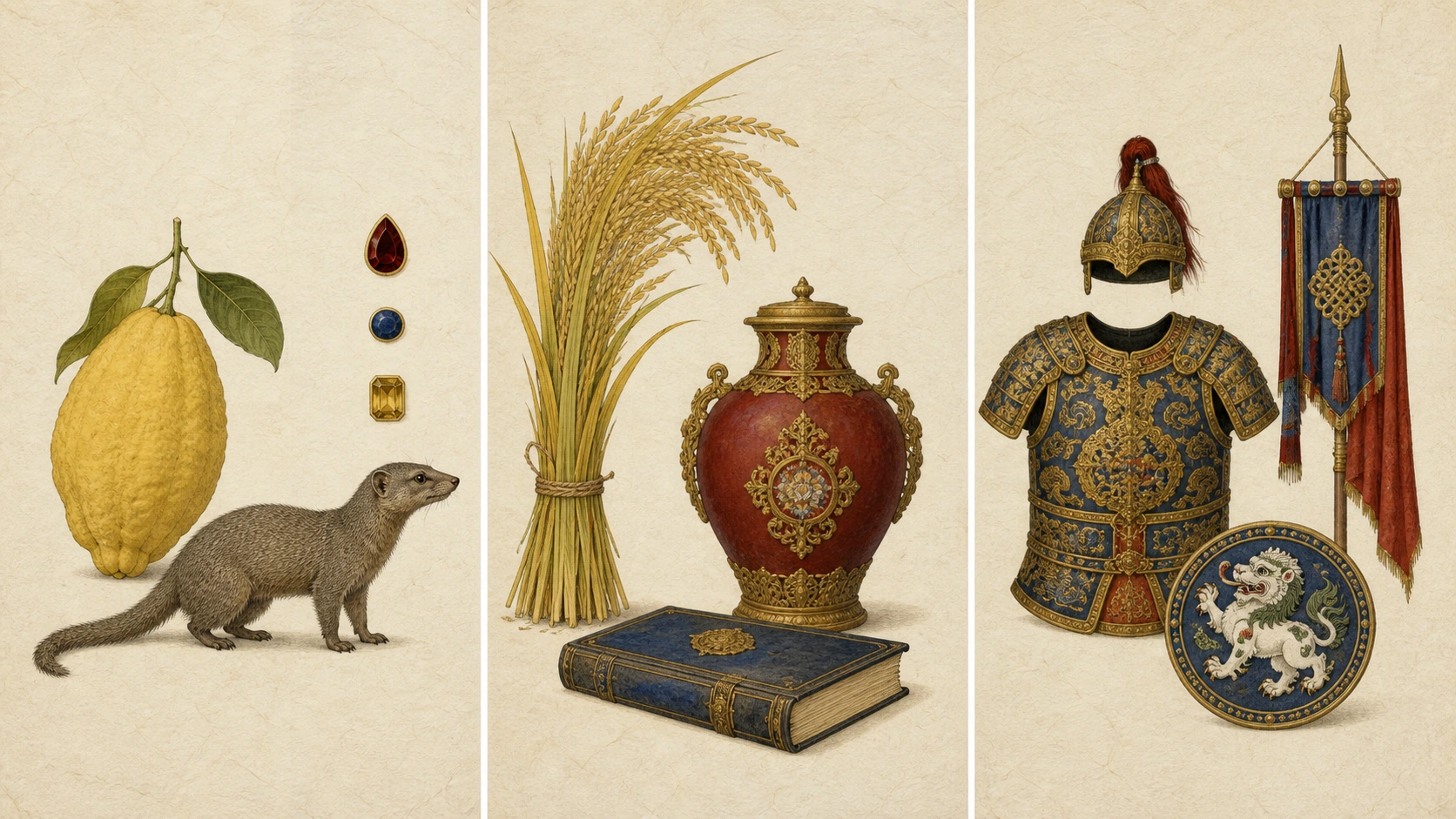
Vasudhara is a Buddhist goddess of wealth and abundance, whose name is commonly translated as “Stream of Gems” or “Bearer of Treasure.” Her images bring together a sheaf of grain, jewels, a vessel and a book. These objects connect the necessities of daily life with learning and generosity—a connection especially vivid in the art of Nepal’s Kathmandu Valley.
Who is Vasudhara, and why does she have different forms?
Vasudhara has a particularly important place in Newar Buddhism, the Buddhist culture of the Kathmandu Valley. She appears in household shrines as well as monastic settings. Her association with prosperity includes food and resources that sustain families, religious communities and the pursuit of wisdom.
Two-armed images are more frequent in Indian and Tibetan settings; six-armed images are especially prominent in Newar art. Yellow or golden colouring is familiar, and a relaxed seated posture is common. These are recurring forms rather than exclusive regional rules. The additional hands allow artists to place several aspects of abundance around one figure.
A six-armed sculpture dated 1082
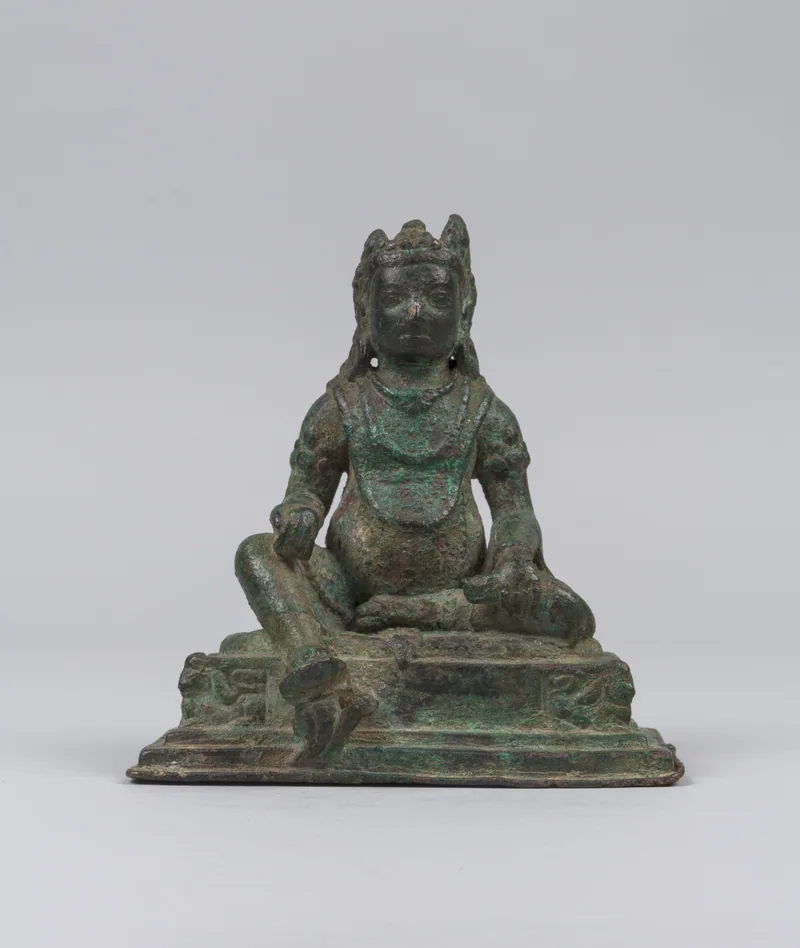
The gilt-copper figure shown above belongs to the National Museum of Asian Art. Made in Nepal in 1082, it stands just 20.9 centimetres high. Its six arms fan out beside a gently inclined torso; a large crown, inset stones and traces of vermilion give the small sculpture remarkable detail.
An inscription names the donors, Abonana and Maina, and provides the date. It brings a human moment into the image’s long history: a couple offered this sculpture more than nine centuries ago. Small Buddhas appear in the crown, while the hands hold objects that link the goddess to nourishment, longevity, treasure and wisdom.
What the grain, vessel, jewels and book mean
In this sculpture, the grain evokes nourishment and harvest, the vessel is associated with long life, and the wish-fulfilling jewels express abundance. The manuscript is the Prajnaparamita Sutra, the Perfection of Wisdom. Its presence makes learning central to the image, alongside material resources.
The raised hand beside the ear is another distinctive detail. The museum interprets it here as the goddess listening to her own prayers or mantras. Other descriptions of six-armed Vasudhara associate a raised hand with praising the Buddhas. Such differences are part of the figure’s artistic and religious history; one hand-position diagram cannot describe every example.
Why rice matters in the Kathmandu Valley
For Newar communities, rice has been a practical source of wealth: it feeds households, supports religious feasts and provides a surplus for trade. The valley’s fertile fields and monsoon rains make the sheaf in Vasudhara’s hand a recognizable part of local life. A cascade of grain and a cascade of jewels belong together because both suggest the resources on which a community depends.
The seasonal observance called Gatila or Tila honours Vasudhara before the autumn rice harvest. Household devotion and gatherings in monastery courtyards connect her imagery with both family and communal life. This agricultural background gives the grain a meaning that a generic label such as “wealth symbol” leaves out.
A painted mandala from 1777
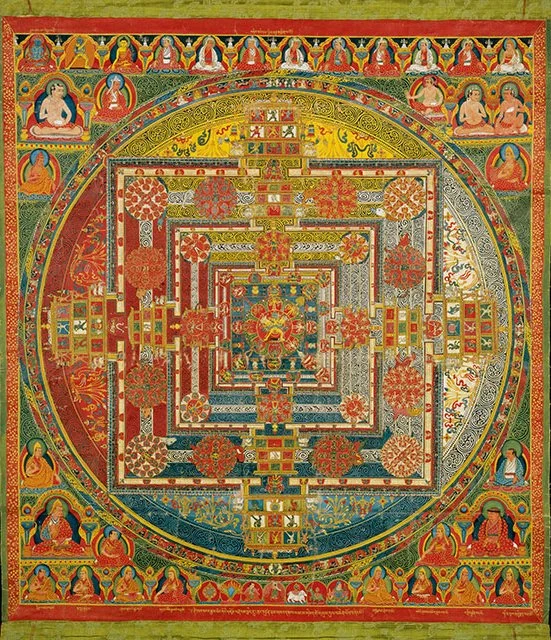
A Nepalese painting in the Metropolitan Museum of Art places Vasudhara at the centre of a mandala. Dated 1777, it surrounds her with a densely organized palace, gates and attendant figures. Red Avalokiteshvara and green Vajrapani flank the goddess; the golden Ila Devi appears below her. The scripture in Vasudhara’s upper left hand links the central figure to Mahayana learning and wisdom.
Yaksha guardians occupy the portals, while treasure-bearing figures pour gems from bags or open chests. Here, abundance extends beyond the goddess’s hands. It becomes a subject shared by the surrounding figures and the architecture of the mandala.
The worshippers beneath the mandala
At the bottom of the same painting, groups of worshippers face a white stupa. To its left, a Newar Vajracharya priest wears a ritual crown and conducts a ceremony before a fire altar. The scale changes from deities and palace walls to seated people, offerings and a shared gathering.
This lower band connects the goddess to the people who honoured her. Looking from the grain and jewels above to the ceremony below, we see how an image of prosperity could also commemorate the giving and religious life of a community.
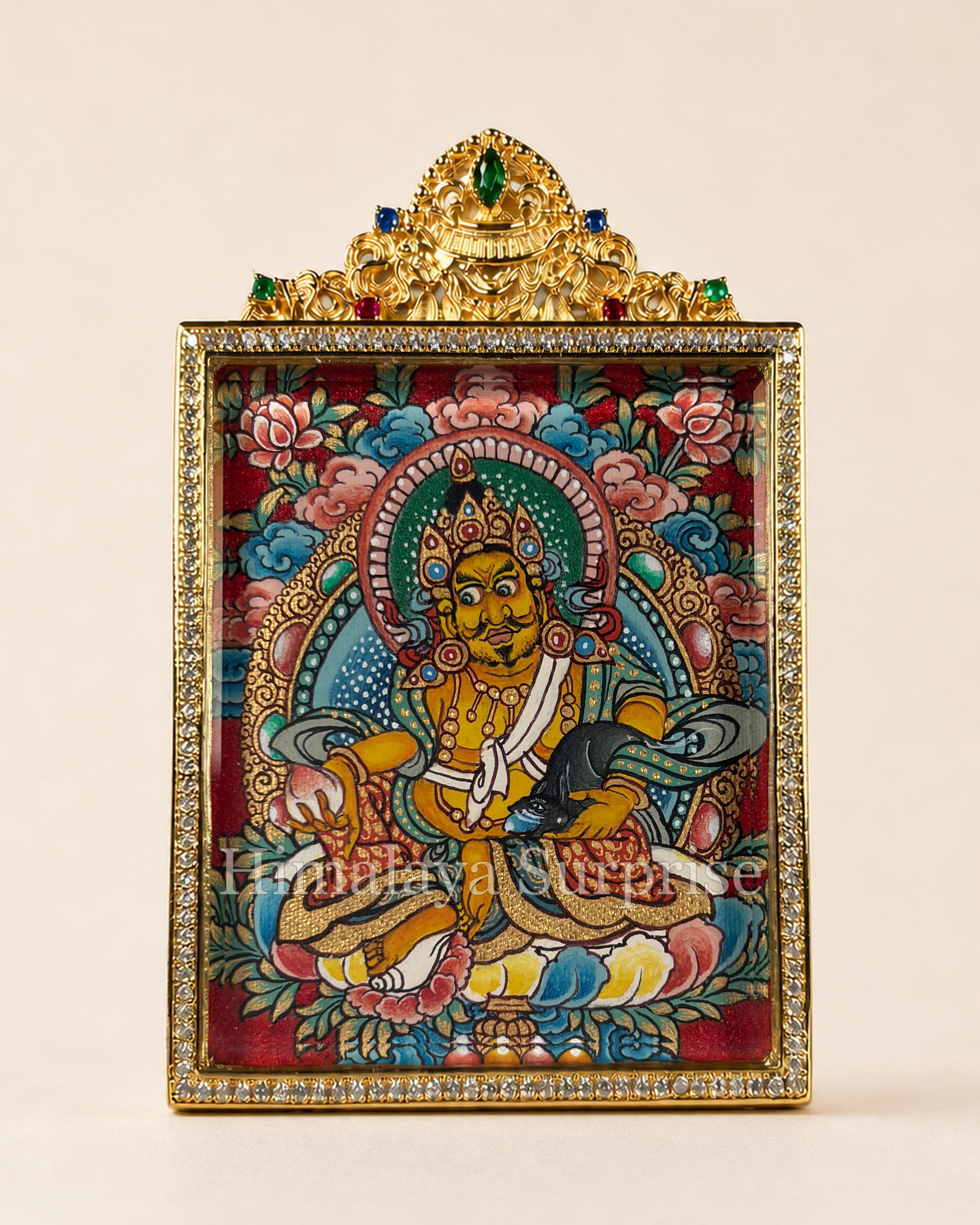
Vasudhara, Jambhala and Vaishravana
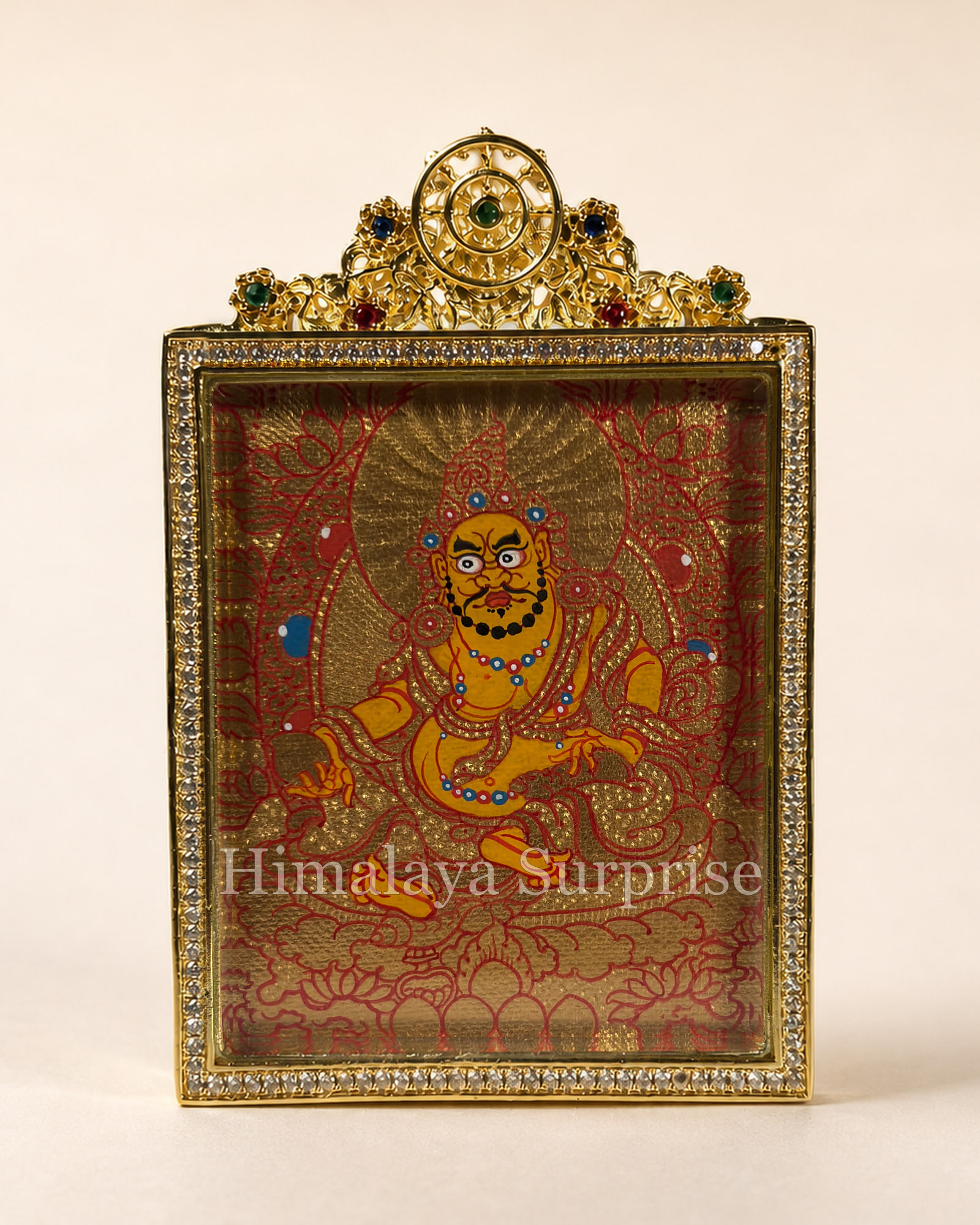
These neighbouring subjects share associations with wealth, but their artistic roles differ. Vasudhara’s female forms often combine grain, jewels, a vessel and scripture. Jambhala has a family of forms with different colours and attributes. Vaishravana is the guardian king of the north, frequently shown as an armoured ruler. Our guide to the three figures explores those distinctions in more detail.
Vasudhara’s own imagery offers a distinctive way to picture abundance: enough food to sustain life, resources to give, and a book through which wisdom can be learned. Across sculpture and painting, those ordinary and sacred concerns remain close together.
Questions and answers
What does Vasudhara mean?
The name is commonly translated as “Stream of Gems” or “Bearer of Treasure.” In Buddhism, Vasudhara is associated with wealth, abundance and support for spiritual life. Grain and scripture give that abundance agricultural and intellectual dimensions.
Does Vasudhara always have six arms?
No. Two-armed forms are more frequent in India and Tibet; six-armed forms are especially prominent in Newar art in Nepal. These are regional tendencies, with variation between individual works and traditions.
Why does a goddess of wealth hold a book?
The Prajnaparamita manuscript connects Vasudhara with Buddhist wisdom. Her imagery brings learning together with nourishment, precious resources and generosity; material and spiritual abundance appear within the same figure.
Is Vasudhara the same figure as Jambhala?
They have related wealth associations and may be linked within religious traditions, but their usual artistic forms are distinct. Vasudhara is commonly a female figure with grain, jewels, a vessel and scripture. Jambhala’s forms have their own attributes and colours.