Discover / Places & Traditions
Nepal Thangka Painting: Paubha and Tibetan Buddhist Workshops
Explore Nepal thangka painting through Newar paubha, Kathmandu workshops and three historical paintings. Understand the traditions and visual details behind a regional name.
In this story
A search for Nepal thangka brings together sacred paintings from the Kathmandu Valley, Tibetan Buddhist studios and works shaped by centuries of exchange. These paintings share subjects and ways of working, yet Nepal is a place rather than one painting style. Newar paubha and Tibetan thangka are connected traditions with different histories. Looking at their settings, artists and pictures helps explain both the differences and the connections.
“Nepal thangka” names a place, not one style
“Nepal thangka” can mean a painting made in Nepal, a work sold through a Nepal workshop, or a work discussed through Nepal’s long exchange with Tibet. Those are related questions, but they are not the same label. The useful first move is to ask which context is being described: Newar paubha in the Kathmandu Valley, a Tibetan Buddhist thangka made in a Nepal-based workshop, or a historical work whose catalogue records Nepal as its place.
Newar paubha belongs to the Kathmandu Valley’s own sacred-painting tradition. A Tibetan thangka made in a Kathmandu studio may instead follow Tibetan Buddhist models and training. Both can be described as paintings made in Nepal. A city can welcome different artists without giving all their pictures the same appearance.
Newar paubha: the Kathmandu Valley context
Newar painters have made devotional cloth paintings, illustrated manuscripts and painted wooden covers. Buddhist and Hindu subjects are part of this wider painting world. The Met’s study of Nepalese painting describes Newar craftsmanship reaching into Tibet and China. A practice rooted in the valley could also participate in much wider networks of patrons and artists.
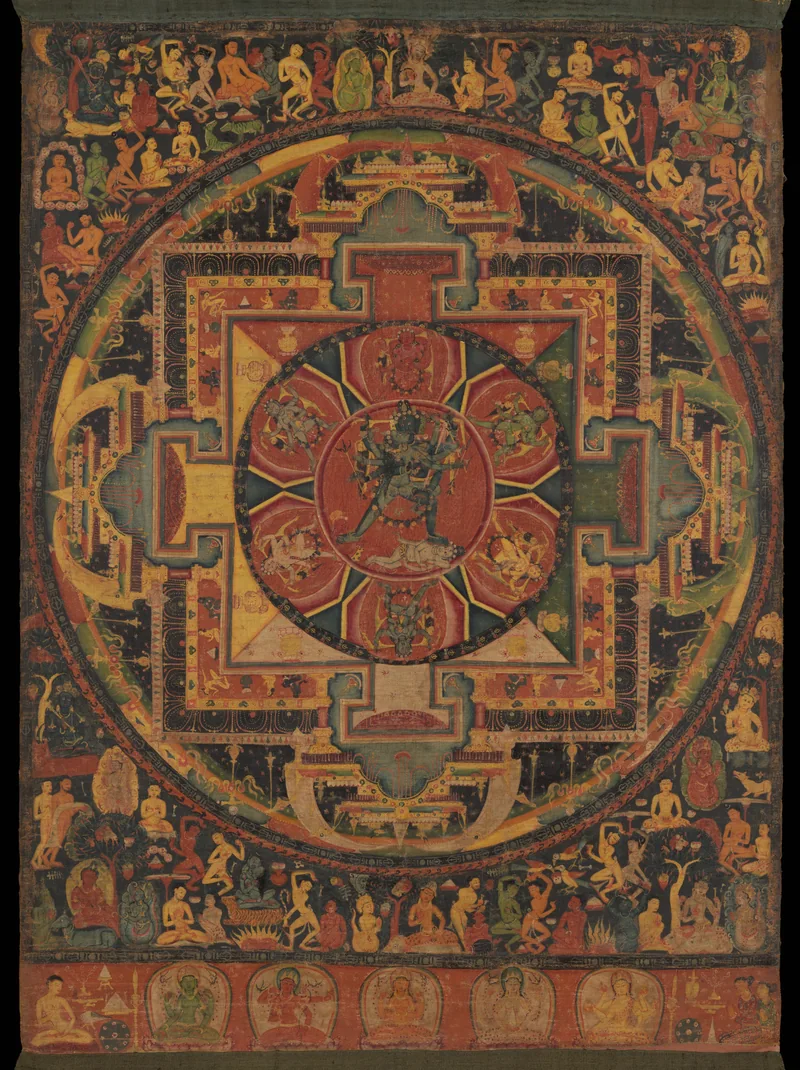
The opening Chakrasamvara Mandala, dated about 1100, makes that history tangible. The Met identifies it as Nepalese and discusses it as an early paubha. Around its central circle, repeated figures build a dense, ordered field; the lower register brings smaller figures into the composition. This is a historical example, rather than a formula for every contemporary Nepalese work.
Tibetan Buddhist workshops around Boudhanath
Boudhanath is an important contemporary setting for Tibetan Buddhist painting in Kathmandu. In Lion’s Roar, Mariana Restrepo interviews Raju Yonjon of Enlightenment Thangka about a studio near the stupa. His account includes learning from Jamyang Phuntsok, a teacher in the Karma Gadri tradition. This is one example of a Nepal-based studio continuing a Tibetan painting tradition through a particular teacher and students.
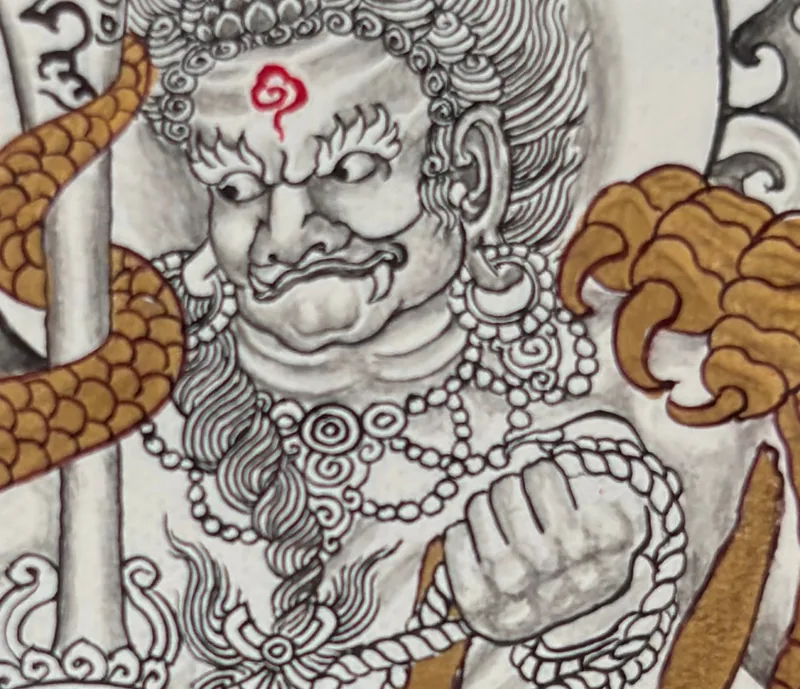
Training involves far more than filling a drawing with colour. Proportions, gestures and attributes organise the figure before details are completed; outlines, modelling and ornament give the image its clarity. Such skills make a workshop account more illuminating than a generic description of handmade art. Materials and working schedules, however, can differ between artists.
Artists and images crossing regions
Artistic exchange is visible in the Akshobhya painting shown here. The Met places it in Central Tibet in the thirteenth or early fourteenth century and identifies the artist as Newari, working in Tibet. That attribution connects a Tibetan setting with a Nepalese artistic background. It is more revealing than treating “Nepalese” and “Tibetan” as mutually exclusive labels.
The blue central figure, surrounding attendants and carefully separated architectural details create a strongly organised image. Following those relationships gives the eye something concrete to compare with the opening mandala. Artists could carry knowledge of figures, drawing and ornament across regions, while the resulting painting answered the needs of a new setting.
Figures, framing and colour
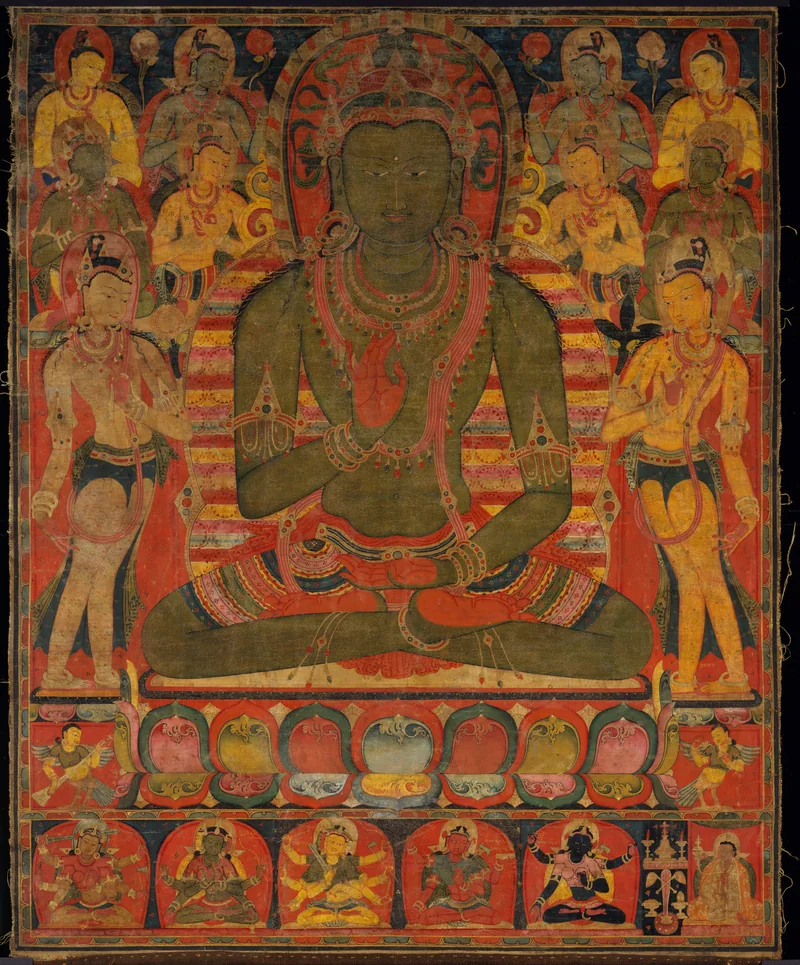
The green Buddha Amoghasiddhi, dated about 1200–1250 and made in Central Tibet, gives a different arrangement to explore. An architectural throne frames the principal figure, while bodhisattvas occupy the surrounding field. The Met relates the composition to eastern Indian Pala painting. The connections extend beyond a simple Nepal–Tibet comparison, showing how several artistic centres contributed to Himalayan painting.
Compare where each picture directs attention: into the mandala’s centre, towards a Buddha’s face, or along an ordered row of attendants. Then notice how small details change the pace of looking. Repeated halos give rhythm; an architectural edge holds a figure in place; a fine contour separates one ornament from the next. These visible choices offer more than reducing a region to a colour palette.
Seeing paintings in Kathmandu
Kathmandu’s galleries bring together finished paintings, workshop teaching and international sales. Patan offers another setting for understanding the valley’s religious and artistic life. A visit can be a chance to see how a painting moves from measured drawing to a completed image, or simply to spend time with several works and notice their different scales and compositions.
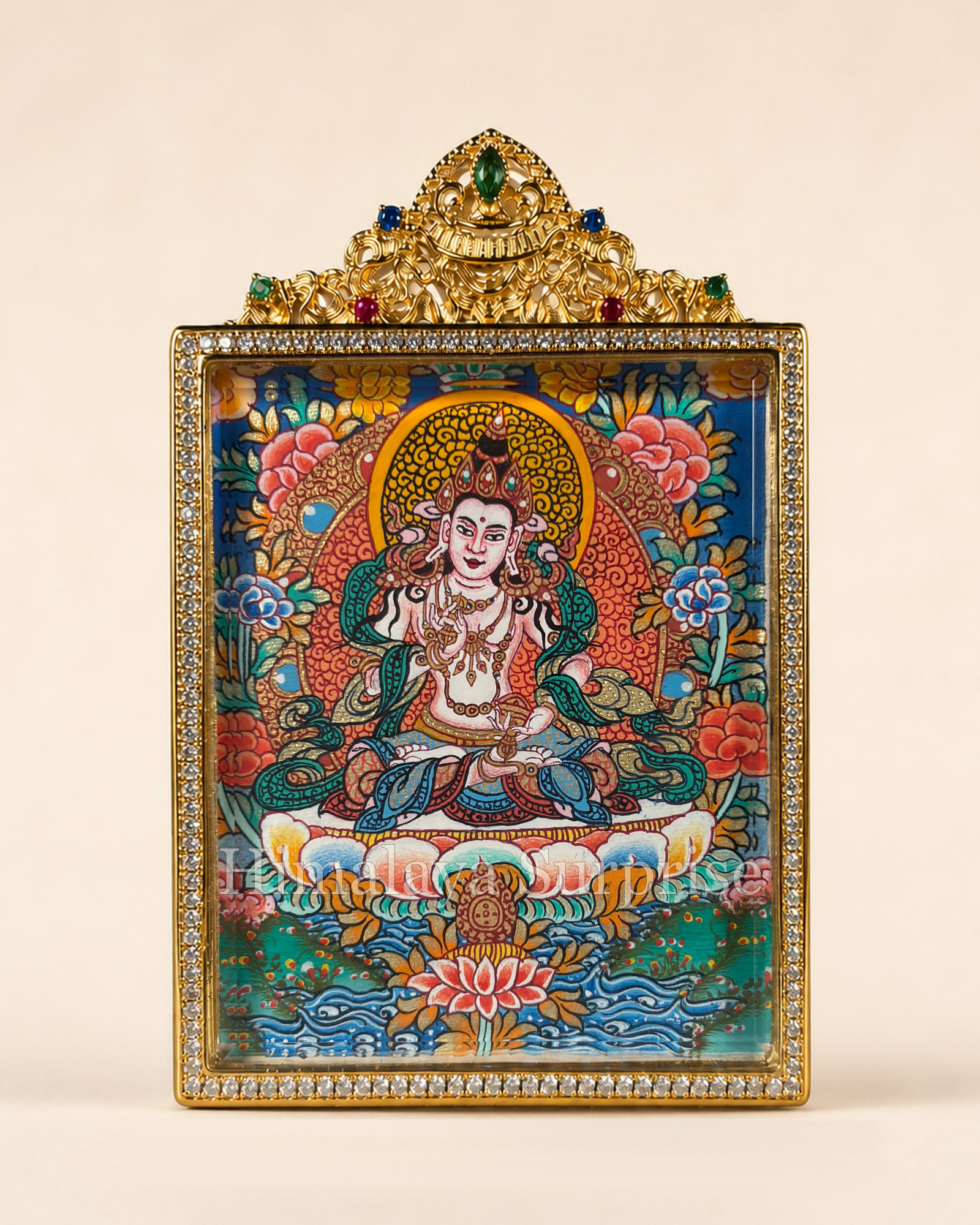
Prices vary substantially between prints, small paintings, elaborate compositions and works presented through an individual artist’s gallery. Size is only part of the difference: densely worked figures and ornament can take much more time than a simpler arrangement. Older travel articles describe their own moment, rather than a current price list. Today’s individual listing is the useful reference for cost.
A wider view of a familiar subject
Nepal’s importance becomes clearer when its paintings are allowed to have different histories. A Newar paubha, a Tibetan Buddhist workshop painting and an older work made by a travelling artist can share a subject without sharing every visual choice. The same approach makes comparison with Rebgong arts rewarding: look at the practice and the pictures, as well as the place.
From the valley’s early cloth paintings to present-day studios, these connections remain a reason to look closely. Notice a face, a gesture or a carefully drawn petal, then let the larger composition come back into view. A familiar subject often becomes more interesting through another painter’s decisions.
Questions and answers
What is the purpose of a Nepal thangka?
Its role depends on the particular work and community. A painting may be encountered in devotional practice, study, teaching, collecting or display. The word Nepal describes a place or production context; it does not promise a personal result or assign one use to every work.
Where can I see or buy a thangka in Kathmandu?
Boudhanath is one setting for Tibetan Buddhist studios and galleries, while Patan helps place Newar art within the valley’s religious life. These are examples of different artistic settings. The best visit depends on whether you want to see finished paintings, learn about a workshop or explore local art history.
How much does a Nepal thangka cost?
There is no single current price. Prints, small paintings and complex handmade compositions are different categories, and gallery prices change. Size, detail and the work involved influence cost. A current individual listing is more useful than an old travel price range.
Is every Nepal thangka a Newar paubha?
No. Paubha belongs to the Newar sacred-painting tradition of the Kathmandu Valley. Nepal also has workshops practising Tibetan Buddhist thangka painting. “Made in Nepal” describes a location and can apply to more than one tradition.