Discover / Painting Styles
Tibetan Thangka Painting Styles: Menri, Karma Gadri and Khyenri
Explore Menri, New Menri, Karma Gadri and Khyenri through their histories, figures and landscapes. See how Rebgong and ground colour fit into the picture.
In this story
A name such as Menri or Karma Gadri connects a thangka to a history of artists, models and visual choices. A gold ground tells us something different: how the painted surface is organised. Rebgong names a place where several traditions continue to be practised. Understanding these distinctions makes the paintings more interesting to look at, whether the composition is crowded with figures or opens into a spacious landscape.
The names describe different things
A painting tradition describes a visual language carried through models, teachers, workshops and time. A region describes where people worked, learned or commissioned images. A Buddhist school names a religious lineage; a subject names the deity, teacher or mandala; a technique describes how the image was made; and a ground describes the field beneath it. One thangka may carry all of these descriptions without allowing any one of them to replace the others.
A painting can belong to a regional workshop, depict a familiar deity and use a gold ground at the same time. Its setting and proportions may also draw on a transmitted style. These descriptions work together: the subject explains whom we see, while the painting tradition helps explain how that figure and its surroundings have been arranged.
Menri and Mensar: related names with an internal history
Himalayan Art Resources traces the older Menri tradition to Mantangpa in the mid-fifteenth century. New Menri developed in a different setting: Choying Gyatso and seventeenth-century Tashi Lhunpo in Shigatse. The later name men ri sar ma is also shortened to Mensar. The shared Menri name links the histories, although the later tradition was not simply an unchanged continuation.
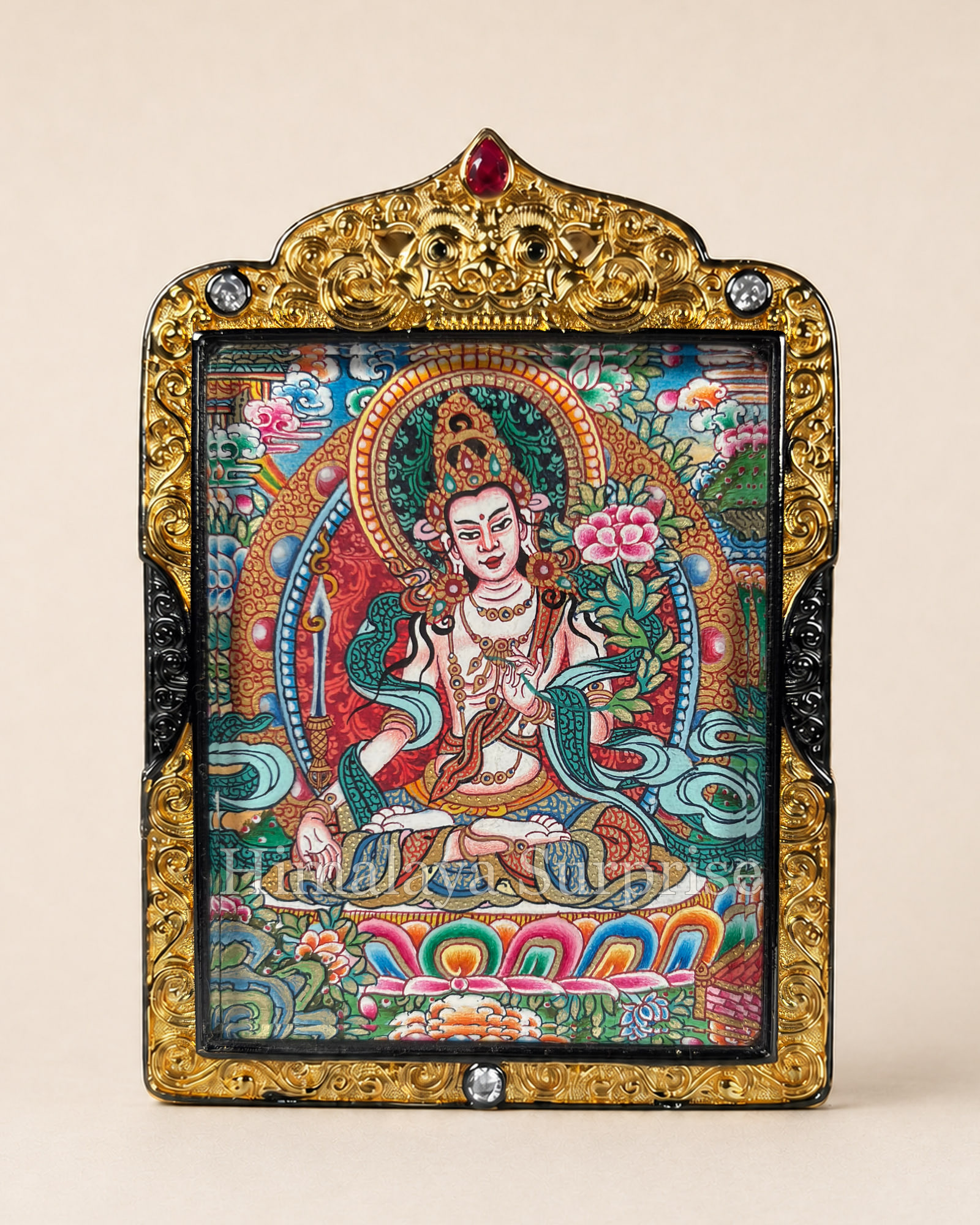
Figure proportions and the organisation of a principal image remain useful points of comparison. New Menri is also described through elaborate ornament and richly populated, lush settings. The terminology varies today: some centres use Menri broadly, while others distinguish New Menri. Looking at the dated tradition behind a name is more illuminating than expecting one fixed appearance across several centuries.
Karma Gadri and the open landscape
The Karma Gar-ri record is not a description of one unchanging palette. It places the tradition in a sixteenth-century Karmapa encampment context and discusses Menri- and Khyenri-related figures set against landscape models associated with Yongle court painting. Karma Gadri is therefore more precise than the familiar shorthand “Chinese landscape style”: it names a historical painting tradition with more than one period and artist.
Palpung adds another chapter to this history. Its eighteenth- to twentieth-century production includes Karma Gar-ri lineage painting and a distinctive approach with Khyenri-derived figures, spare arrangements and open backgrounds. Some eastern painters used the Karma Gar-ri name for both. The overlap explains why a broad label can cover differing ways of balancing figures and space.
Khyenri: character in the face and the scene
Khyenri is associated with the fifteenth-century painter Khyentse Chenmo at Gongkar Chode. Specialist descriptions draw attention to bright colour, closely worked detail, expressive faces and rounded halos in some sets. The interest lies in the treatment of individual forms: a face can feel particular, while a small creature or garment becomes an active part of the larger scene.
Khyentse Chenmo worked on painting and sculpture at Gongkar Chode between 1464 and 1476. Surviving murals offer lively narrative details and varied faces; their proportional systems also differ from other contemporary models. Earlier Gyantse painting belongs to the discussion of influences on Khyenri, rather than an attribution of those earlier murals to this painter. Artistic exchange can be traced without making every related work the creation of one hand.
Regions and artists on the move
Rebgong, in Amdo, is a regional artistic centre encompassing several styles and traditions. Tongren is the place name often used alongside it; the terms do not turn the region into a single school. A community can sustain particular drawing habits and teaching methods while artists continue to learn from more than one model. Rebgong arts follows this living practice more closely.
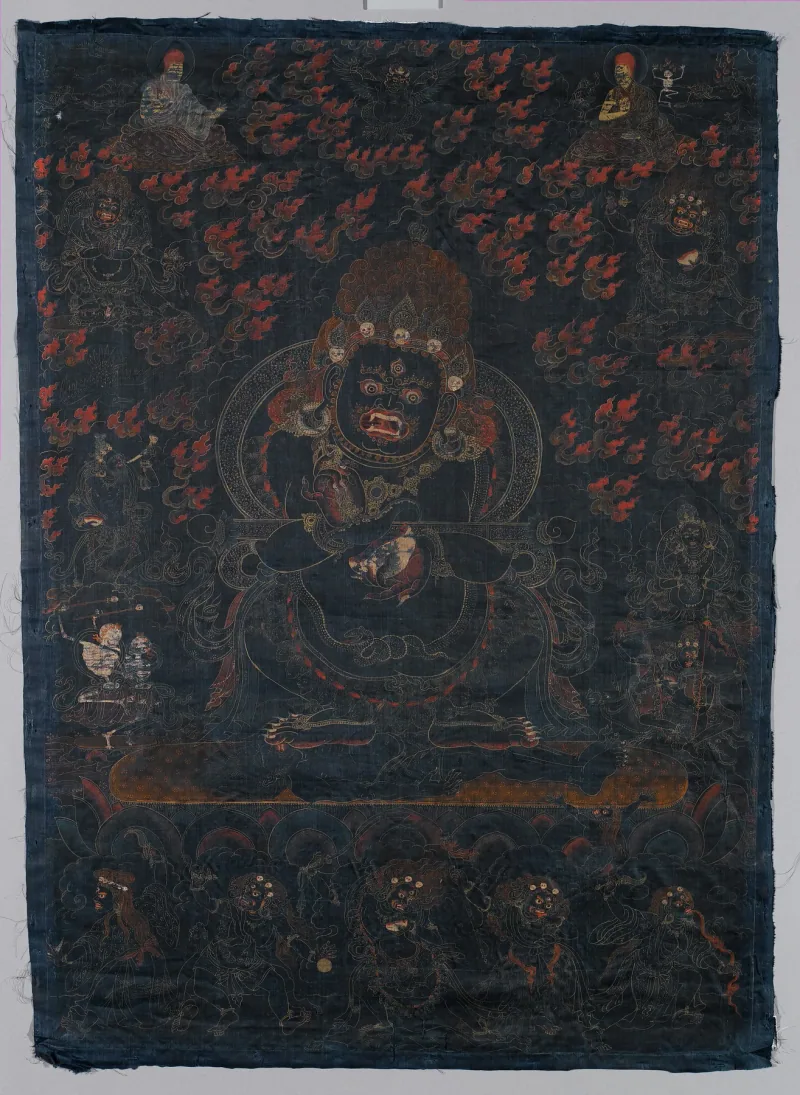
The Akshobhya painting shown here gives a particularly clear example of place and artists crossing boundaries. The Met dates it to the thirteenth or early fourteenth century and locates it in Central Tibet, while identifying the unnamed artist as Newari, working in Tibet. Its date precedes the fifteenth-century Menri and Khyenri traditions discussed here. Regional exchange had already shaped Tibetan painting long before those later school names developed.
Ground colour and painting tradition
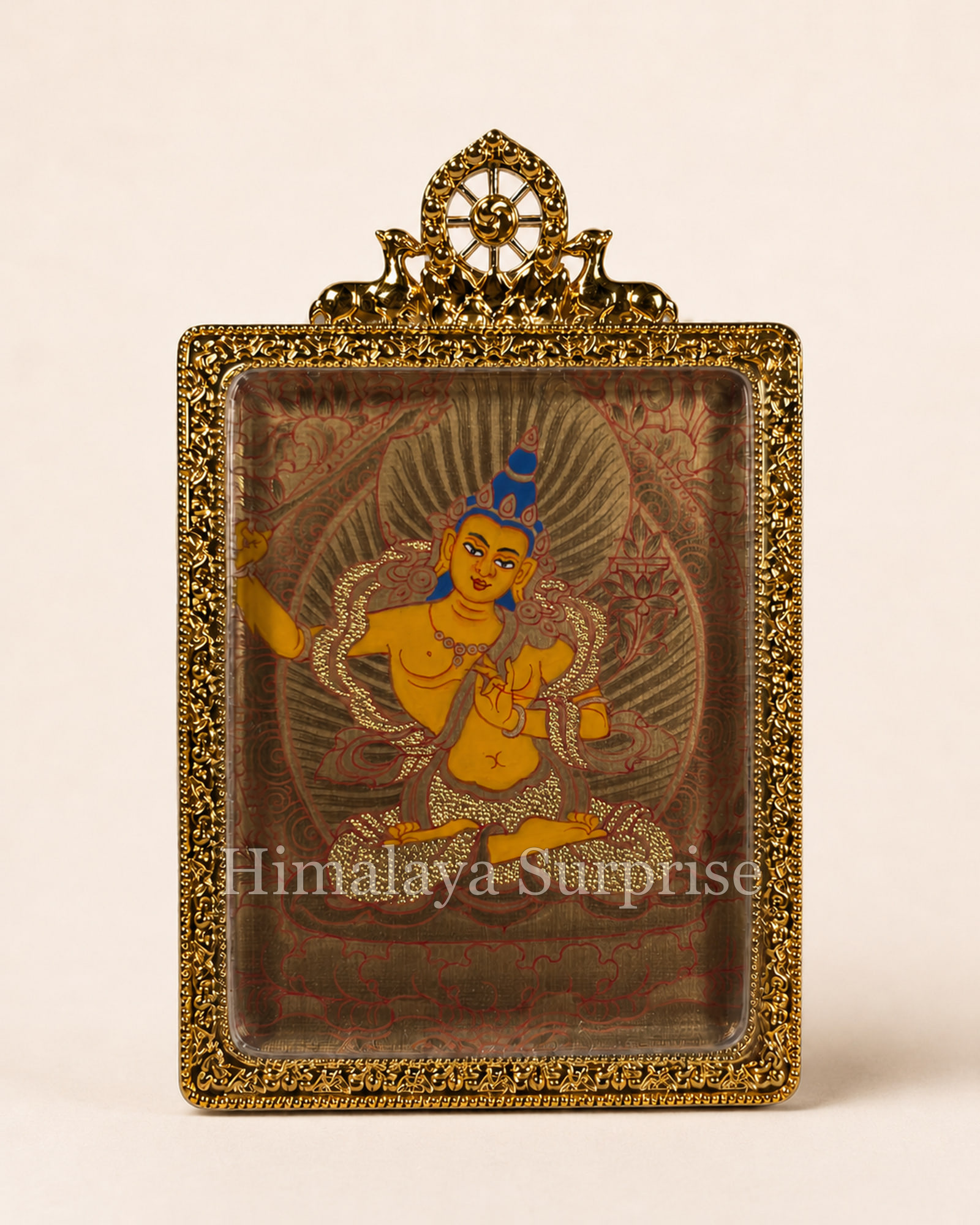
Black, red and gold grounds describe the visual field on which a picture unfolds. Polychrome painting brings several colours into the composition. These choices differ from both a named school and techniques such as painting, appliqué or block printing. A dark-bodied figure may stand against a blue or red field; its body colour alone does not make the work black-ground. The guide to thangka painting styles explores these colour relationships.
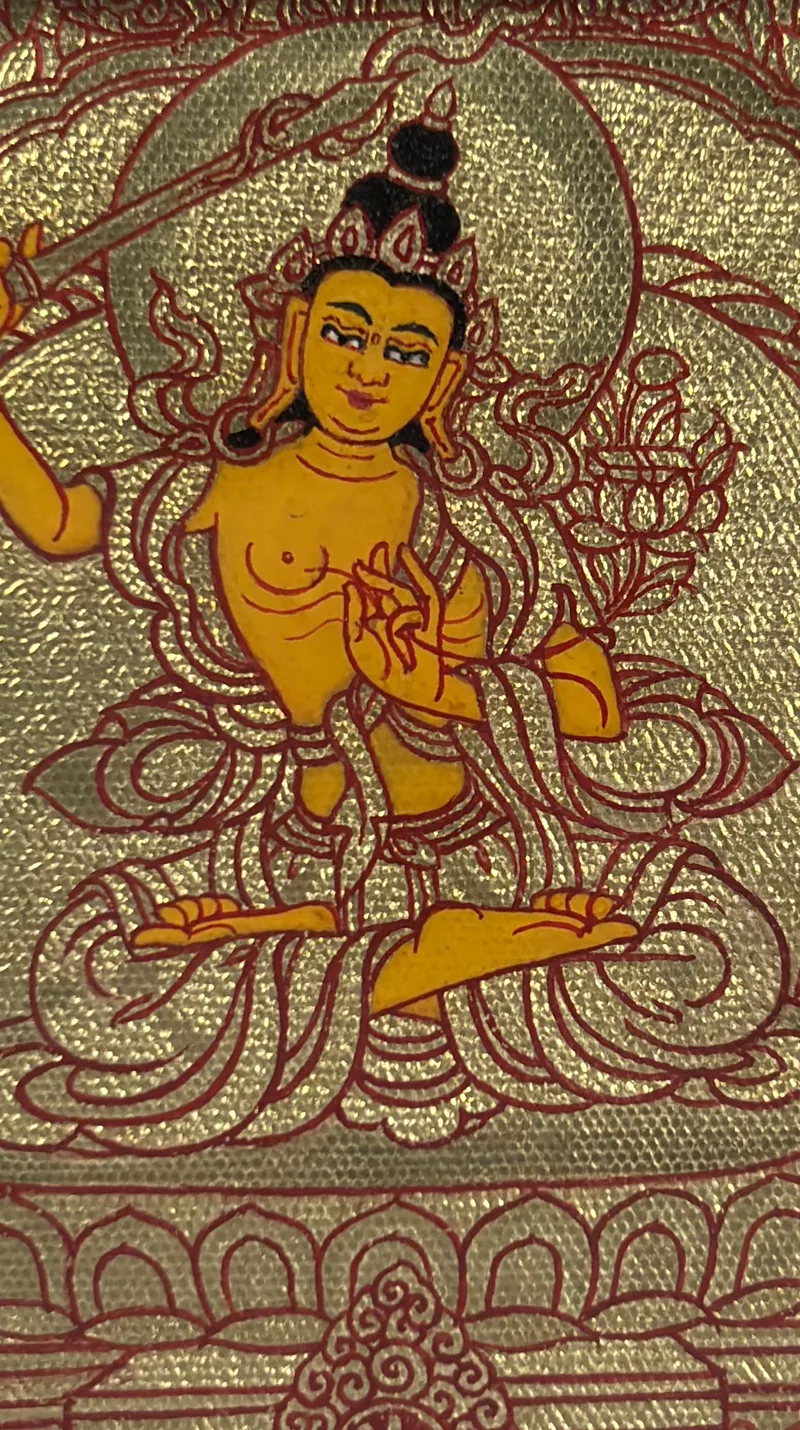
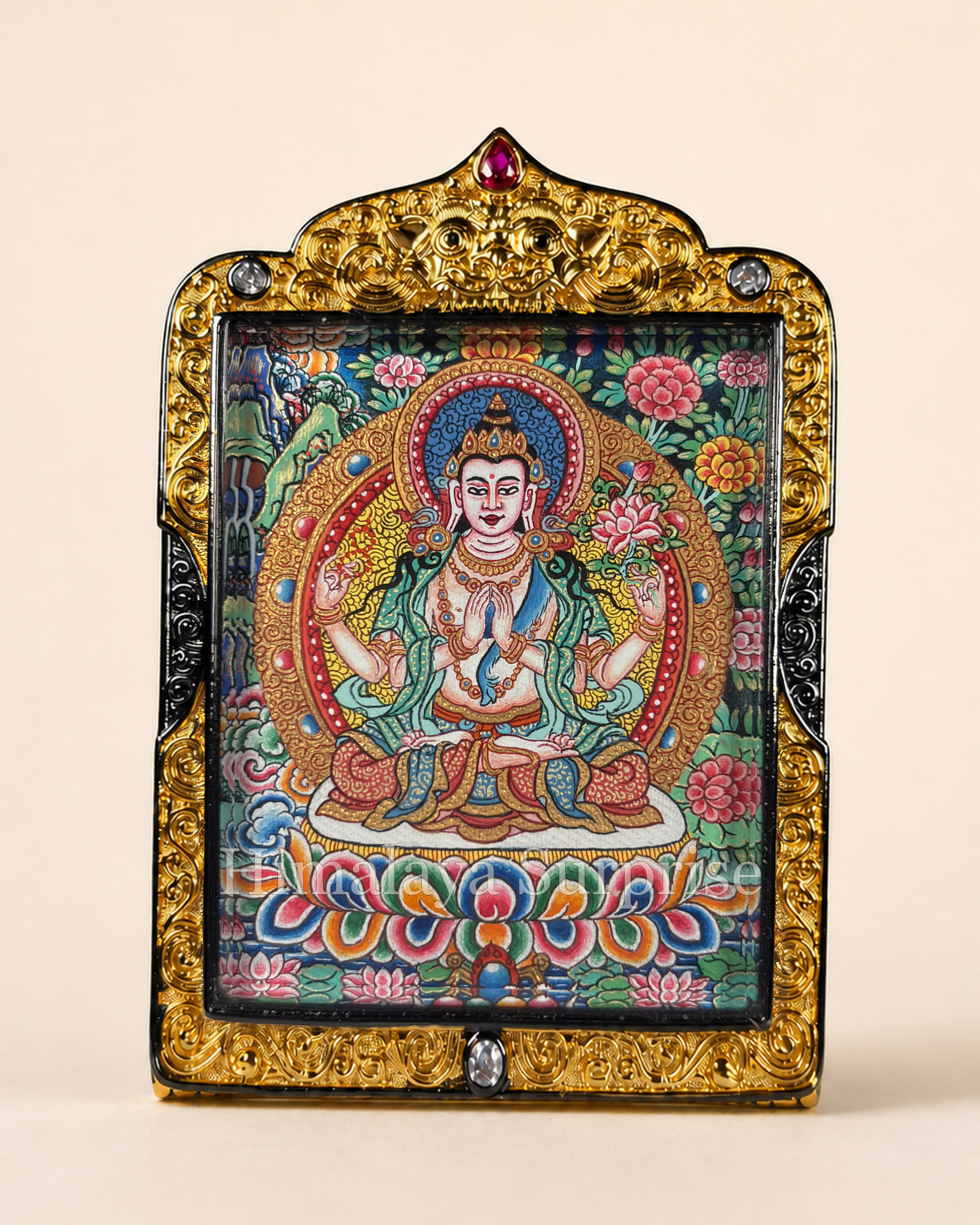
In the contemporary lotus-bearing figure shown here, close lines separate petals, jewellery and the folds of a pale garment from a golden field. The setting makes small coloured accents easy to notice. This is a useful example of drawing and ground working together; it is presented as a contemporary detail, without assigning it to one of the historical schools above.
Looking across time
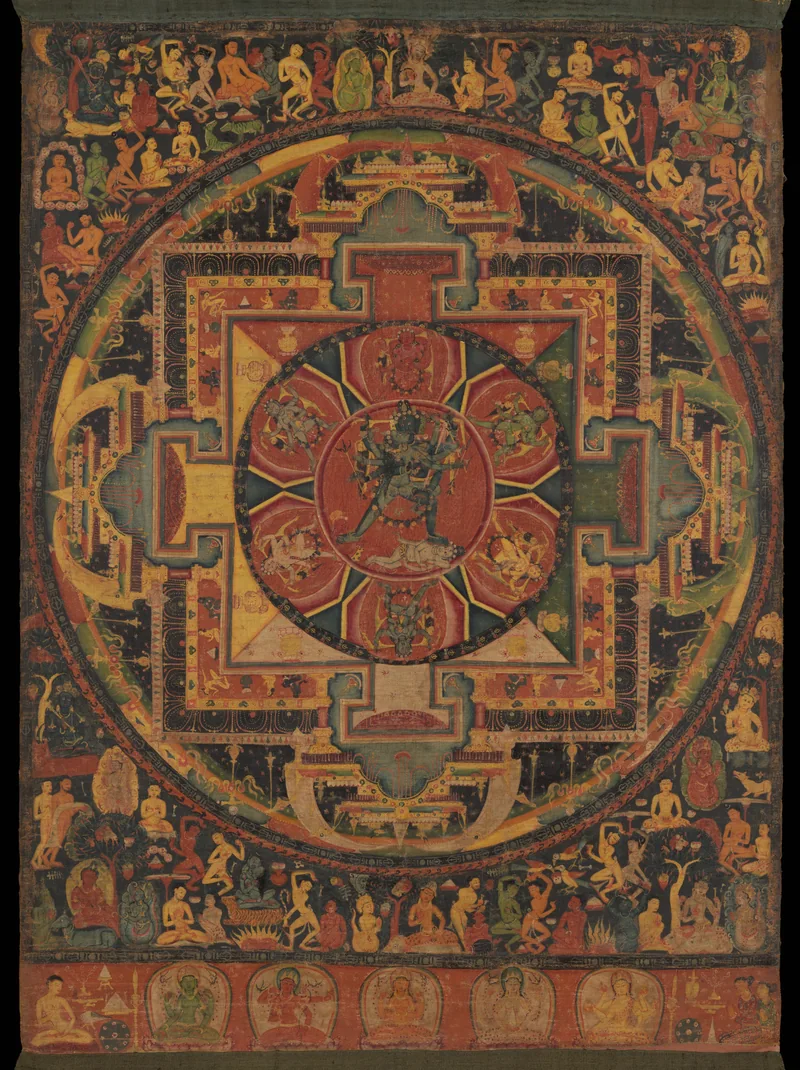
The opening Amoghasiddhi painting, dated about 1200–1250, also predates those later named traditions. Its principal green figure is framed by an architectural throne and an ordered arrangement of bodhisattvas. The Met relates its composition to eastern Indian Pala painting. It provides an earlier point of comparison for the ways a central figure, surrounding figures and architecture can form one visual whole.
Looking from one painting to another, follow the contour of a face, the spacing of figures and the point where a landscape opens into distance. A crowded assembly and a sparse setting create different rhythms, even when they share a subject. Style names become useful when they bring those choices and their histories into focus. The pleasure of comparison is in seeing more of each painting.
Questions and answers
What are the main Tibetan thangka painting traditions?
Menri, New Menri or Mensar, Karma Gadri and Khyenri are important named traditions. Regional centres such as Rebgong can encompass several traditions. Black, red and gold grounds describe a separate aspect of painting.
How are Menri and New Menri related?
They share a name but have different histories: older Menri is associated with Mantangpa in the fifteenth century, and New Menri with Choying Gyatso in the seventeenth. Present-day usage varies among artistic centres.
Is Karma Gadri a Buddhist religious school?
It is a painting tradition associated with the Karma Kagyu and Karmapa encampment context. Karma Kagyu names the religious lineage; Karma Gadri describes an artistic history.
Can a gold ground identify a painting school?
No. A ground is a compositional and material choice. It can occur within different traditions; figure design, landscape, period and artistic context contribute to a fuller understanding.