Quick answer
Three points to begin with.
- Measured drawing establishes the proportions, placement, and rhythm that guide the entire image.
- Line work, layered colour, and delicate shading bring the figures, gestures, and surrounding details into focus.
- Details painted in genuine 24K gold add a changing relationship with light, while close views reveal the pace and delicacy of the painter's hand.
Reading path from this site
Assess the image before the label
The practical value of this guide is a visual assessment order that keeps hand-painted language tied to evidence.
- Start with image evidence: Begin with line, colour, edges and repeated marks visible in the work.
- Separate clues from proof: Use process records and close-looking clues together; no single visual sign proves every production claim.
- Ask about this work: Follow the linked works and enquire about available documentation for the individual record. Then follow View hand-painted thangka works to compare the current individual record.
How to identify a hand-painted thangka from its drawing
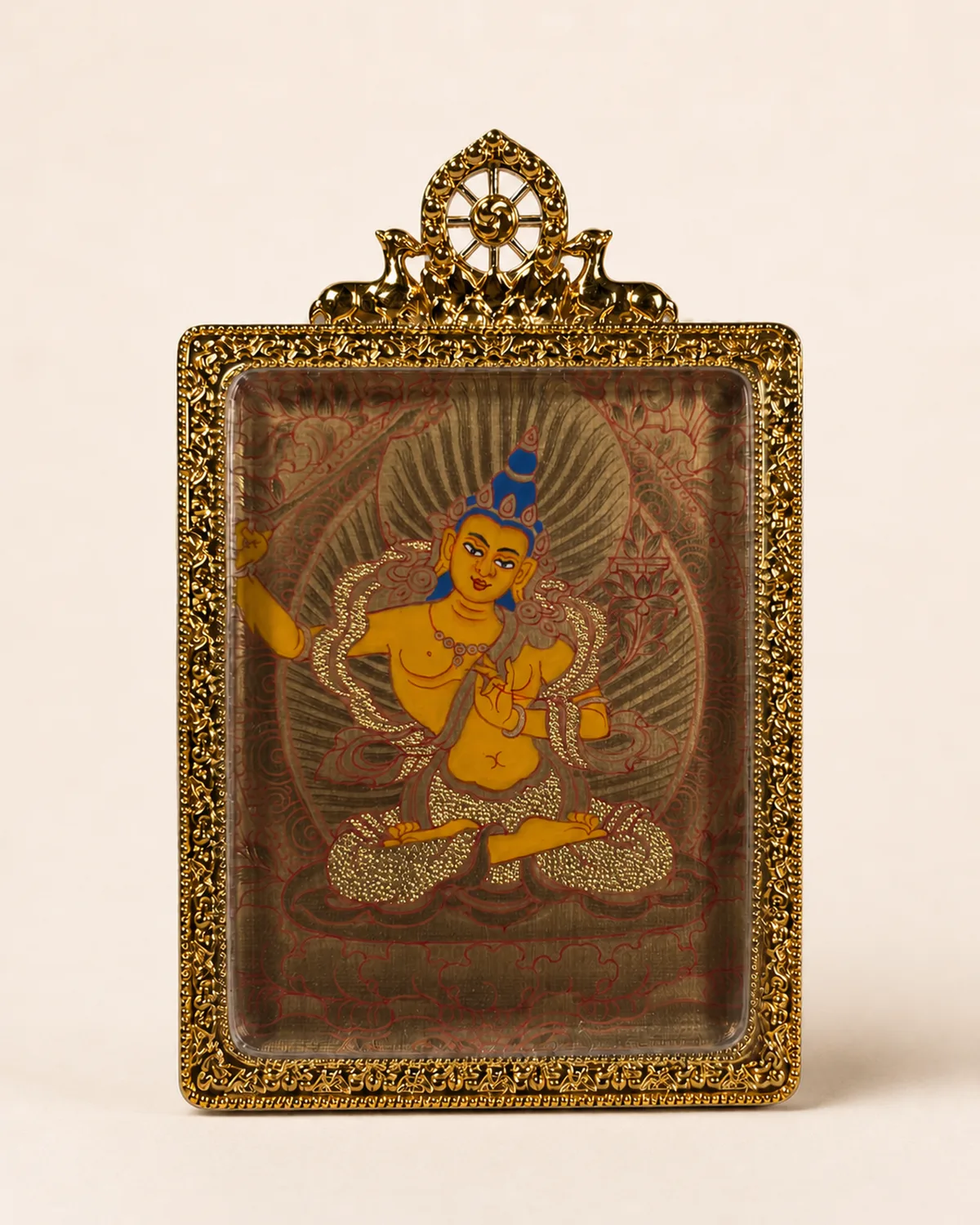
A hand-painted thangka begins with a carefully prepared support and a measured drawing. Proportion, central placement, border rhythm, and the relationship between figures are established before colour enters the image.
This first structure gives the finished painting a quiet balance. It lets the later line, colour, ornament, and gold work remain connected to the sacred image as a whole.
What should you notice in hand-drawn line work?
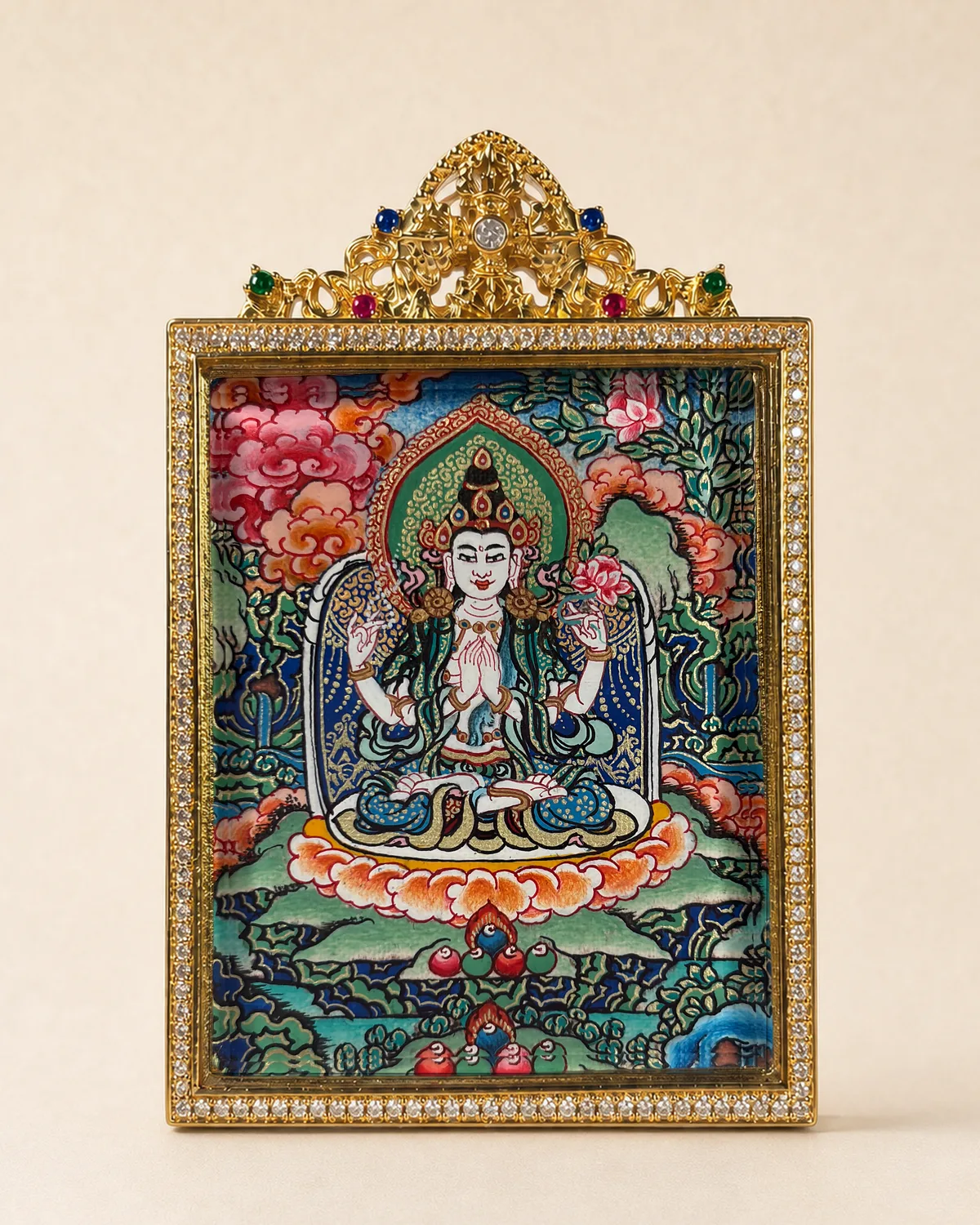
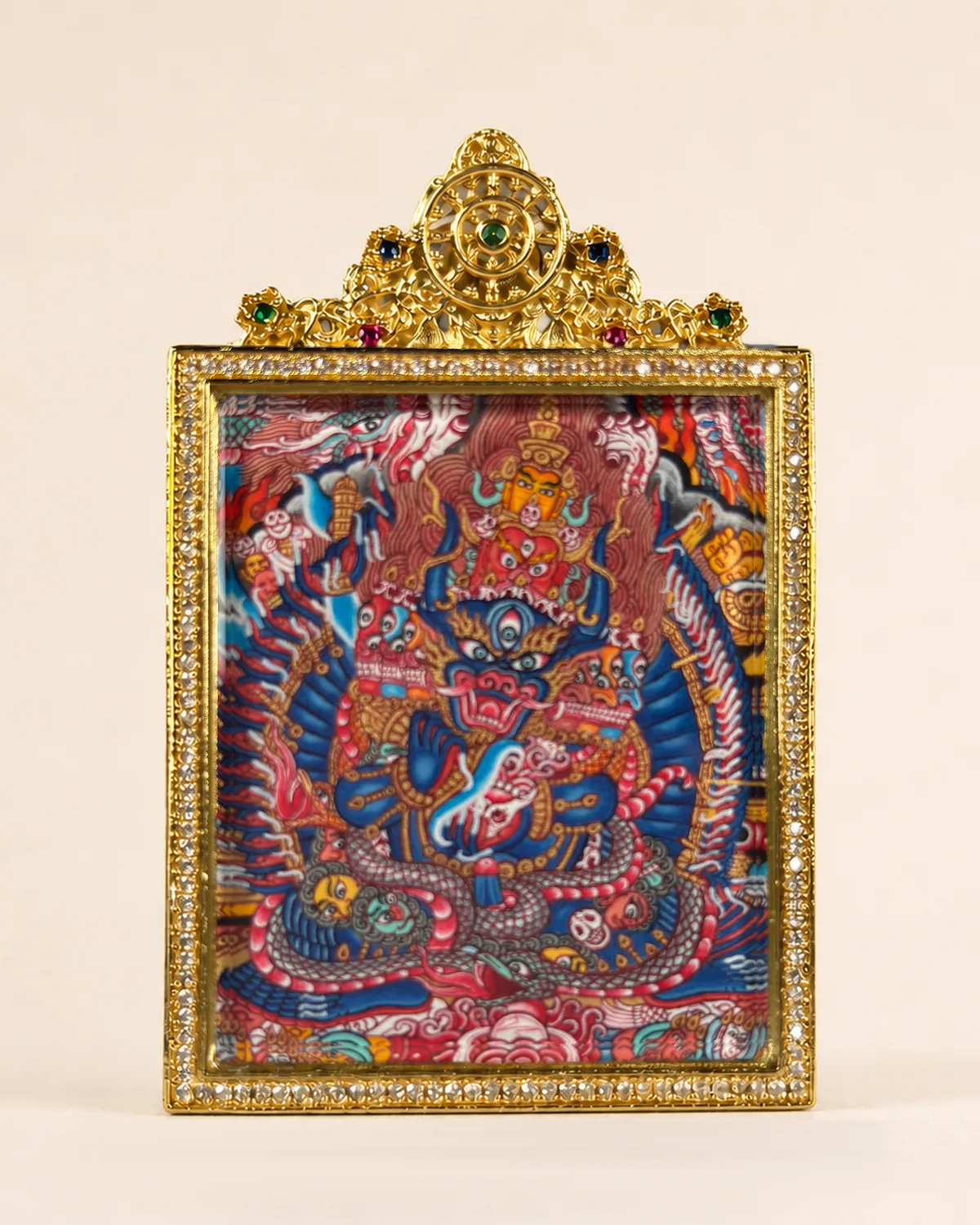
Line work carries the expression of a face, the movement of a hand, the fall of a robe, and the rhythm of a halo. A steady contour can make a small figure feel present, while fine repeated marks enrich jewellery, textile, and architectural detail.
In a complete view, the line work leads the eye through the composition. In a close view, subtle changes in pressure and direction reveal the music of the painter's hand.
How does layered colour appear on a hand-painted thangka?
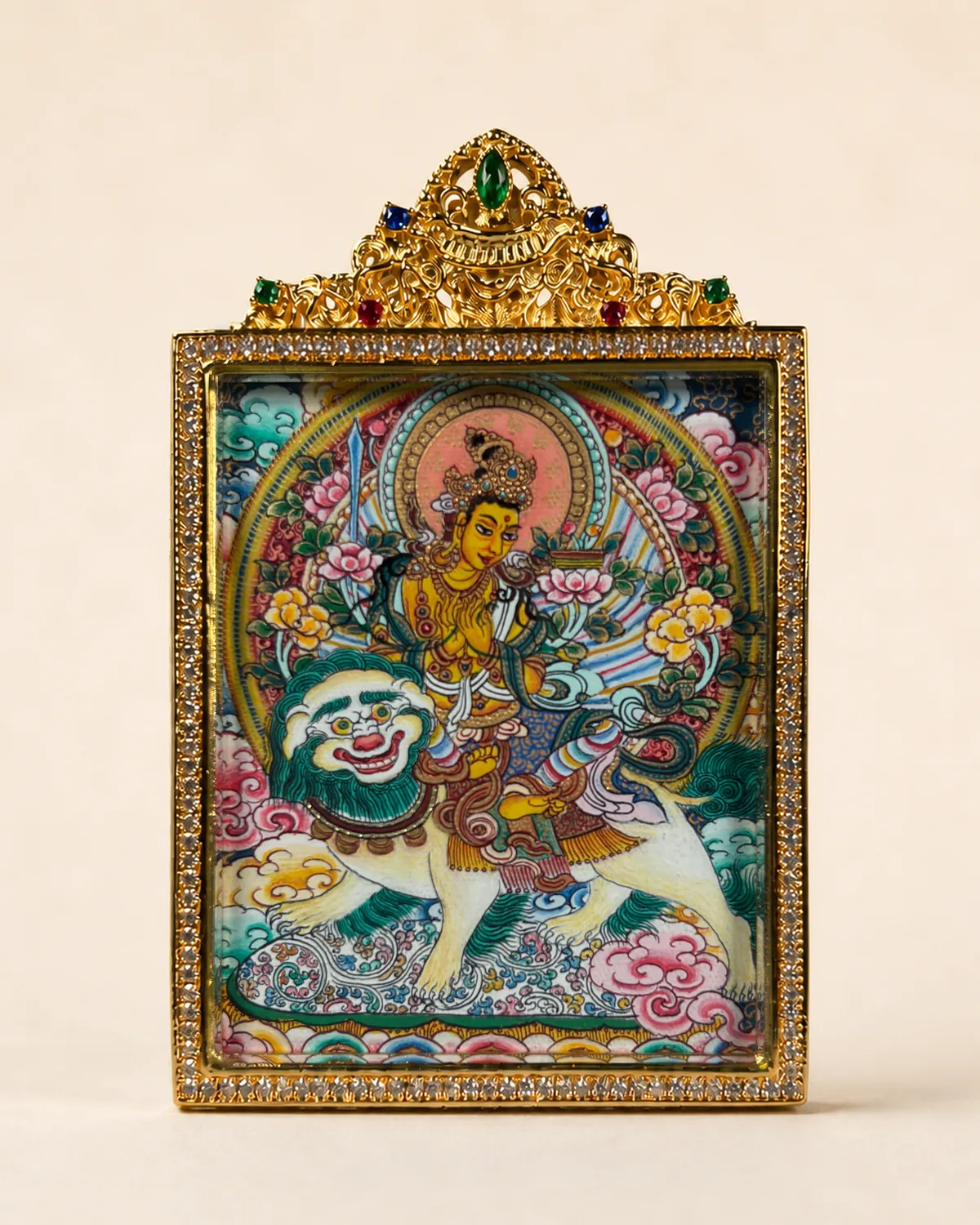
Colour enters the image in considered layers. Mineral tones, soft transitions, and carefully held highlights create the atmosphere around a figure, from deep lapis and cinnabar to quiet fields of cream, green, and warm earth.
Layering gives the image a sense of air and distance. A face can feel luminous, a lotus can open from a quiet field, and a patterned robe can hold both rhythm and softness.
How do genuine gold details respond to light?
In the current collection, details painted in genuine 24K gold trace crowns, jewellery, halos, robes, and sacred geometry. Their fine reflection changes as the viewer moves, giving the ornament a quiet pulse.
Gold work is most vivid when seen with the full composition. A closer view then reveals the pace of each edge, dot, and repeated ornament, bringing the hand-painted surface into an intimate scale.
How to tell if a thangka is authentic—and what photos cannot prove
Begin with the full image to feel the balance of the sacred composition. Then move closer to the face, hands, attributes, textile pattern, and gold line, allowing each detail to add a new layer of attention.
A high-resolution photograph or short video can preserve the movement of the eye across the surface: the texture of the support, the transition between colour layers, and the way gold responds to light. Together, these views let a hand-painted thangka be enjoyed as both a complete image and a world of detail.
Photographs support a careful visual reading, while pigment chemistry, gold purity, date, and authorship are documented separately in the individual work record or through a qualified examination when needed.
- Start with the full front view and note the balance of the principal figure, border and surrounding field.
- Move to face, hands, attributes, textile patterns and gold lines at a consistent viewing scale.
- Read the listed technique and materials alongside the photographs of the individual work.
Sources