Discover / Subjects & Meaning
What Is a Dakini? Meaning and Images in Buddhist Art
Understand dakini, khandroma and wisdom figures through Himalayan painting, a Vajravarahi bronze and a Japanese scroll—and learn why their identities matter.
In this story
In Tibetan Buddhism, a dakini can be a female figure associated with wisdom, a messenger of teachings, or a name used for an accomplished practitioner. The word does not name one goddess with one fixed appearance. To understand a dakini image, begin with the tradition and the particular person or deity it represents. A dancing figure, a skull cup and a white fox do not all tell the same story.
What does dakini mean?
Dakini is a Sanskrit word, often written ḍākinī. Its Tibetan equivalent, khandroma, is commonly translated as “sky-goer”; “sky-dancer” is another familiar English rendering. Those translations describe a Tibetan religious expression. They should not be treated as a settled literal etymology of the Sanskrit word.
Within Vajrayana Buddhism, dakinis are closely connected with wisdom and the transmission of teachings. Religious accounts describe them as guides, protectors or figures encountered in visions. Images can give that relationship a visible form, while teachings may also speak of a wisdom dakini without describing a physical body.
The meaning changes with the source. A temple painting, a biography of a teacher and a modern discussion of the “dakini principle” may be using the same word at different levels. Some teachers explain these levels through distinctions such as wisdom, meditation deity, embodied practice and a living woman. These distinctions help explain the teachings; appearance alone cannot convey the word’s full meaning.
A category is not a deity’s name
Vajrayogini and Vajravarahi are specific names in tantric Buddhist imagery. They belong to closely related traditions, but a catalogue’s use of one name still matters. “Dakini” is a broader word: it does not remove the need to identify the form, lineage and composition shown in an individual work.
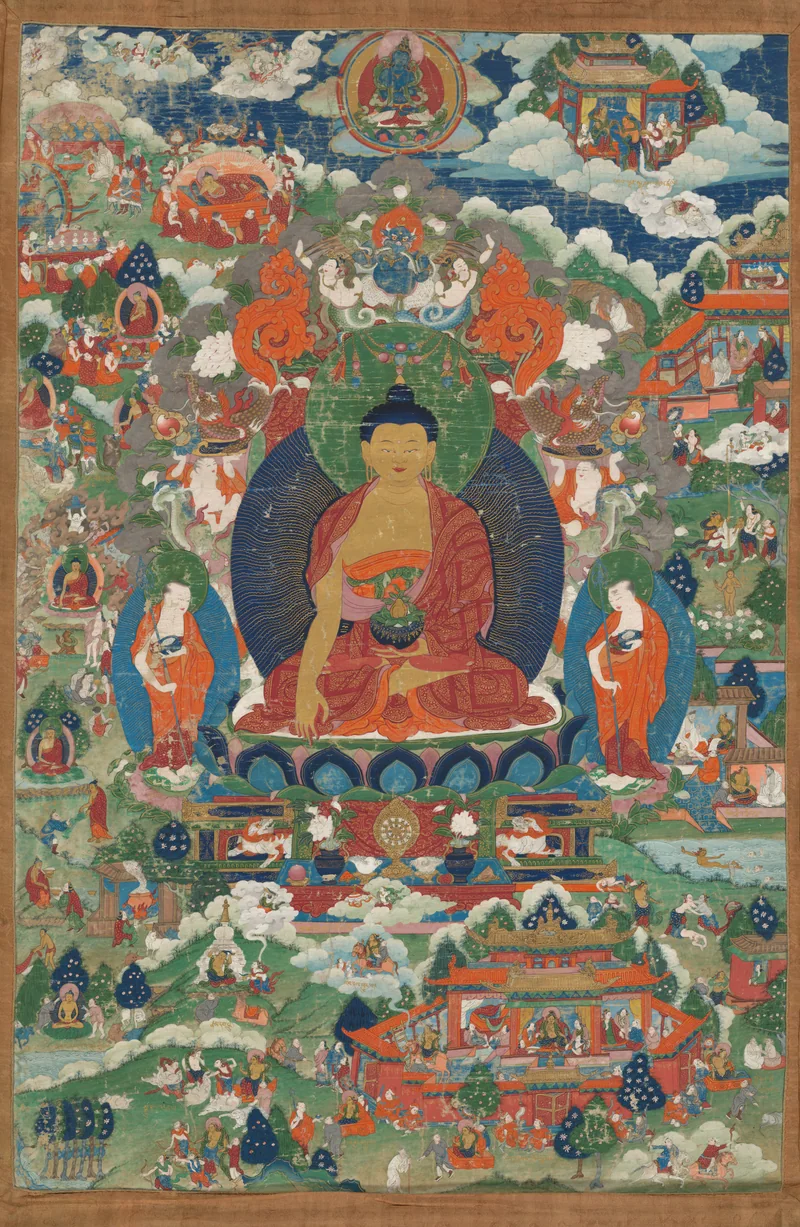
The painting above is titled Chakrasamvara and Vajravarahi. Made in Nepal’s Kathmandu Valley between 1575 and 1600, it places the red female deity with the twelve-armed Chakrasamvara at its centre. The surrounding figures and the beings beneath their feet are part of the complete subject. Calling it simply “a dakini painting” would leave the central relationship unexplained.
Here, looking at the whole painting is especially useful. The figures embrace within a field of flames, yet the painter keeps hands, implements and limbs separate enough to follow. The image belongs to a ritual and iconographic setting; its meaning cannot be reduced to a modern label such as romance or “feminine energy.”
A dancing Vajravarahi in bronze
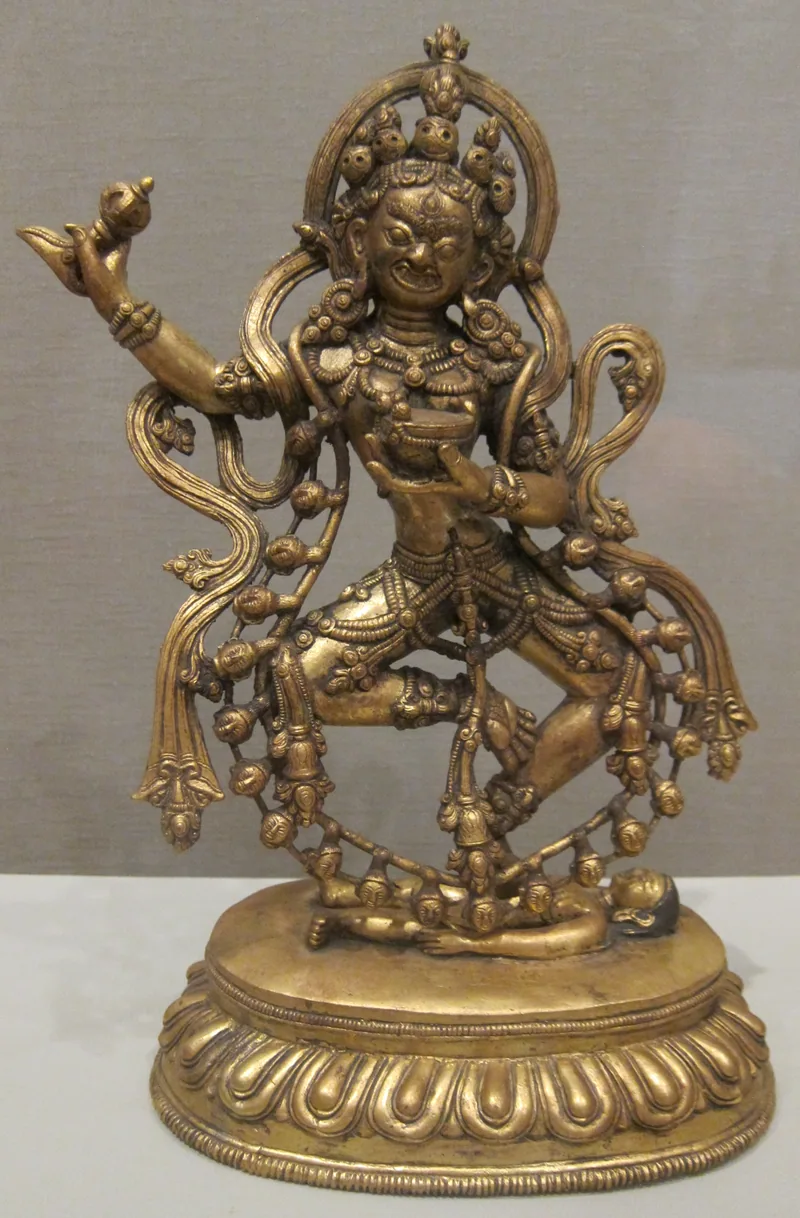
This small twelfth-century bronze is titled Vajravarahi Dancing on a Corpse. It was made in eastern India, where tantric Buddhist forms developed before and alongside their transmission to Tibet. Its place of manufacture and the wider history of devotion are related, but they are not the same fact.
The curved knife, skull cup and dancing stance belong to her visual vocabulary. A small boar’s head beside the human head provides a more specific clue to Vajravarahi, whose name includes “varahi,” the female boar. The full group of features carries more information than the dance pose alone.
In Buddhist interpretation, fierce implements can express the cutting of attachment and the transformation of ordinary experience. Their appearance does not make this a depiction of a generic demon. Equally, finding a curved knife in another painting does not prove that its figure is Vajravarahi: similar implements are shared by other tantric deities.
Why a human teacher may be called a dakini
Buddhist biographies and teachings also use dakini for accomplished women. This is why a question such as “Can a human be a dakini?” cannot be answered by pointing only to a supernatural-looking painting. The word can describe a teacher’s realised wisdom or role within a lineage, as well as an image used in meditation.
Machig Labdron, an eleventh- to twelfth-century Tibetan teacher closely associated with Chöd, offers a concrete example. A nineteenth-century painting in the Rubin Museum collection presents her in a dakini form. The date of that painting is the date of the artwork, not her lifetime. A historical teacher and a later devotional portrayal remain distinguishable even when the image brings them together.
Recognising this use of the word does not provide a test for deciding whether a stranger is a dakini. Birthmarks, personal attraction or a resemblance to a painted figure cannot establish spiritual attainment. The meaningful evidence lies in a named tradition, its accounts of the person, and the context in which the title is used.
The white fox belongs to another visual tradition
A white fox is not a general identifying feature of Tibetan dakinis. The Japanese deity usually called Dakiniten developed within a different religious setting, including relationships with Shingon Buddhism and Inari worship. Similar names can therefore lead a search reader to very different images.
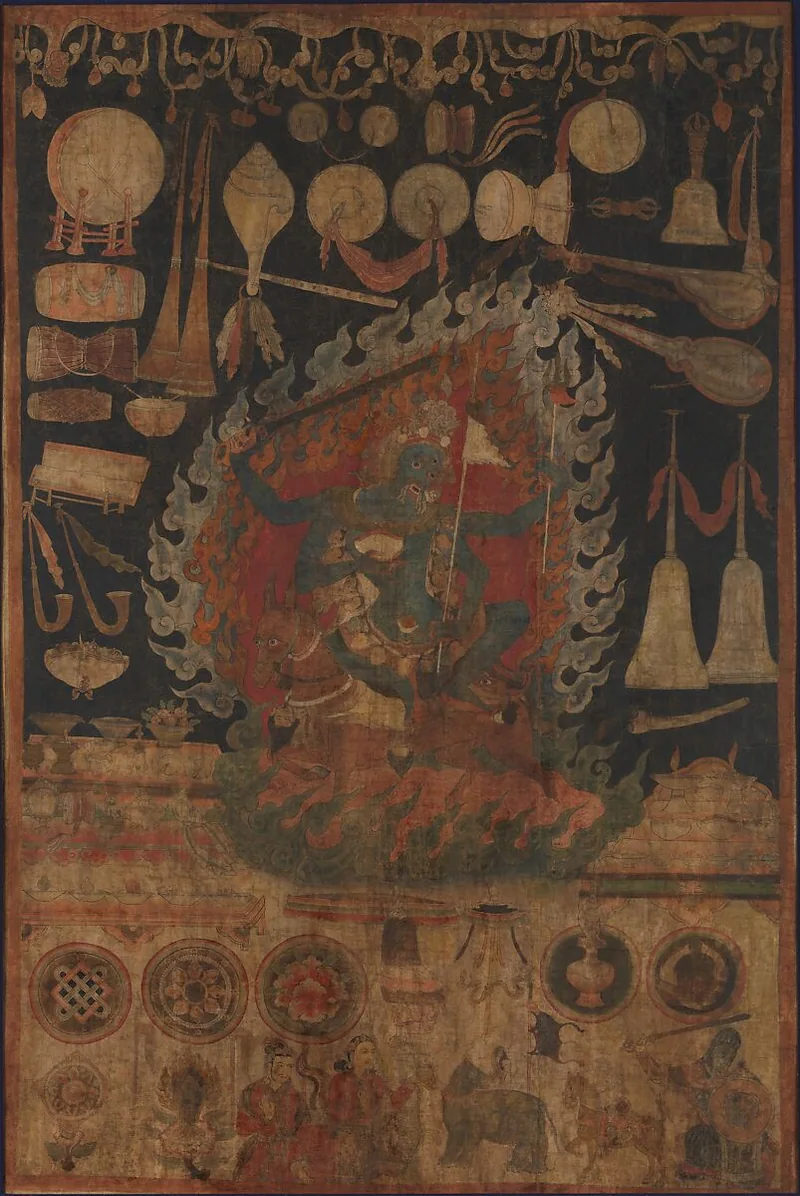
The seventeenth-century Japanese scroll shown here is titled The Buddhist Goddess Dakini. Its many-armed, three-faced figure rides a white fox; the three faces correspond to Dakini, Benzaiten and Kangiten. This is a particular combined form, not an illustration of how every dakini looks. The textile mounting also belongs to the object’s identity as a Japanese hanging scroll.
Placed beside the Nepalese painting and Indian bronze, it makes the difference tangible. Pose, companion figure, mount and surrounding symbols change. The useful comparison is between documented objects and traditions, rather than between pictures gathered under one English search term.
How to read a dakini-related thangka
Start with the title and the complete image. Does the central figure appear alone, in a paired composition, or among a larger assembly? Look at the number of faces and arms, then follow the hands to their implements. Attendants, teachers and inscriptions can place an otherwise familiar figure within a specific transmission. A cropped image may hide precisely those clues.
Colour can be useful, but it is not a name. A red body, a dancing stance or a skull cup is a starting point for comparison, not a final identification. Cleveland’s Cambodian bronze titled A Dakini leaves the object in the raised hand as only a possible flaying knife. Careful description leaves room for what the object does not clearly show.
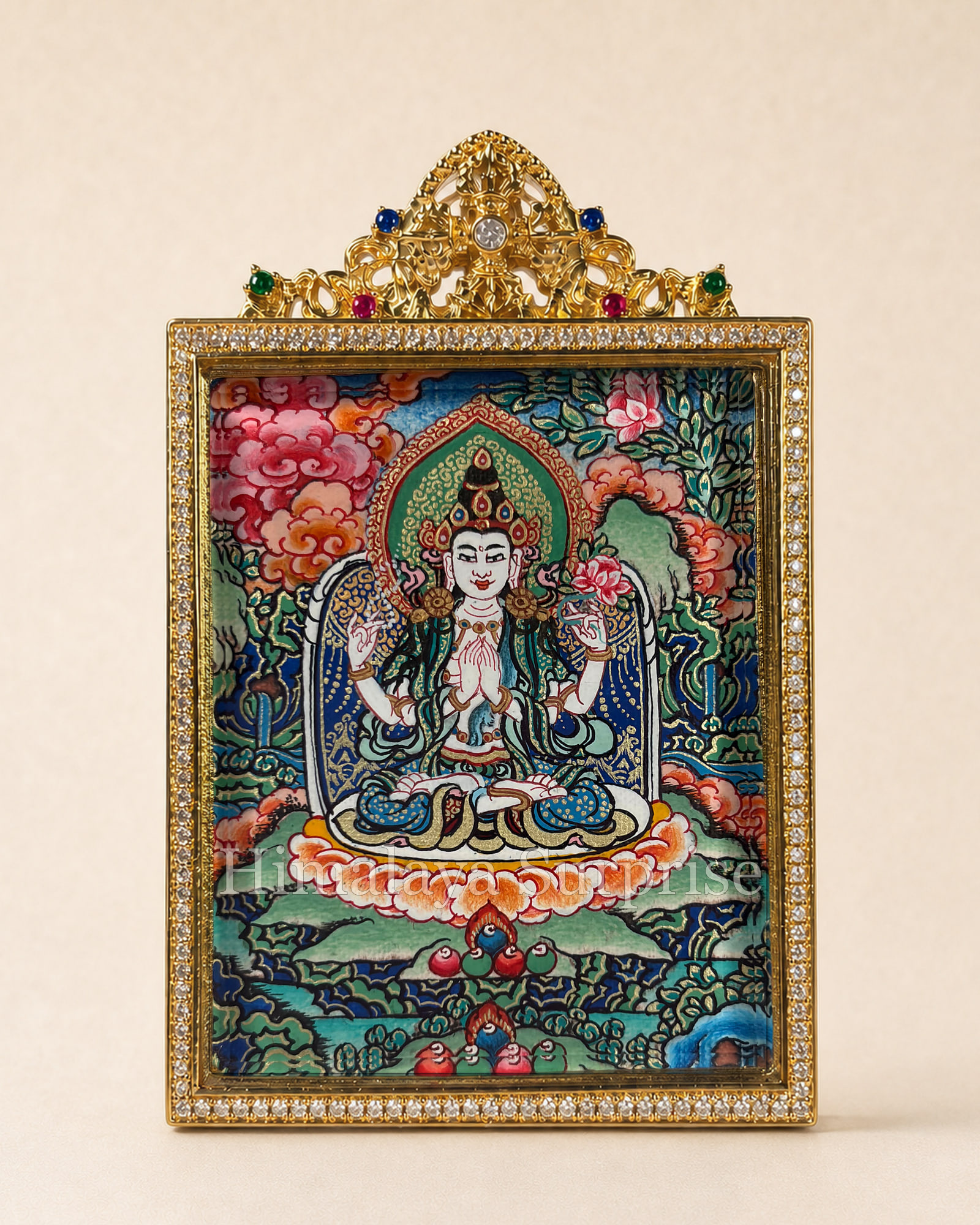
Once identity is understood, spend time with the painter’s work: the edge of a small cup, the space between overlapping arms, the continuity of a necklace, and the expression of the face. In a miniature thangka, these relationships have to remain readable at a much smaller scale. Ask for the full composition, painted dimensions and a clear close view when considering a work; the subject’s importance and the quality of a particular painting are different questions.
Formal tantric practice may involve empowerment and a teacher’s instruction. An art article can help explain names and visible forms; it cannot turn an unfamiliar painting into a self-contained practice manual. For ordinary looking, the best next step is simpler: establish what the image is, and then see how its details work together.
Questions and answers
Is a dakini a ghost?
In Tibetan Buddhist discussions of wisdom dakinis, “ghost” misses the religious meaning. The wider Sanskrit term has different histories in Hindu and Buddhist traditions, and some accounts include fierce or worldly beings. Identify the tradition before applying one English label to every use.
Are Tara and Vajrayogini the same?
They are distinct named figures with different iconographic and practice traditions. Both can be discussed in relation to enlightened female forms, but that broad connection does not make a Tara painting a Vajrayogini painting. Read the named subject and attributes of the particular work.
Is yogini another spelling of dakini?
No. Yogini is a different Sanskrit term, commonly used for a female yoga practitioner and, in some religious settings, particular divine figures. Its uses can overlap with dakini traditions, but the words are not interchangeable names for every female Buddhist image.