Discover / Collector Guides
Choosing a Thangka Gift: Subject, Size and Presentation
Choose a thangka gift around the recipient: subject, colour, size, framed or scroll format, and a personal note. A practical guide to giving thoughtfully.
In this story
A thoughtful thangka gift begins with the person who will live with it. Their interests, taste and space can guide the subject, palette, size and presentation.
Begin with the recipient and the purpose
The occasion tells you when to give; the recipient helps you decide what might suit. Someone may already study a particular figure or enjoy the art of a familiar tradition. Someone else may be drawn to fine lines, textiles or quiet colour. A small conversation about what they like can lead further than an elaborate surprise. If you keep the gift a surprise, a short note about why you chose it leaves room for their own response.
Let the subject follow an existing interest
If the recipient already has a favourite figure, that interest is a natural place to begin. Tara has long been associated with compassion; Green Tara with readiness to respond, White Tara with long-life aspirations. Amitabha is central to Pure Land traditions. These associations can give a painting personal resonance for someone familiar with them, without turning a birthday or house move into a fixed deity checklist.
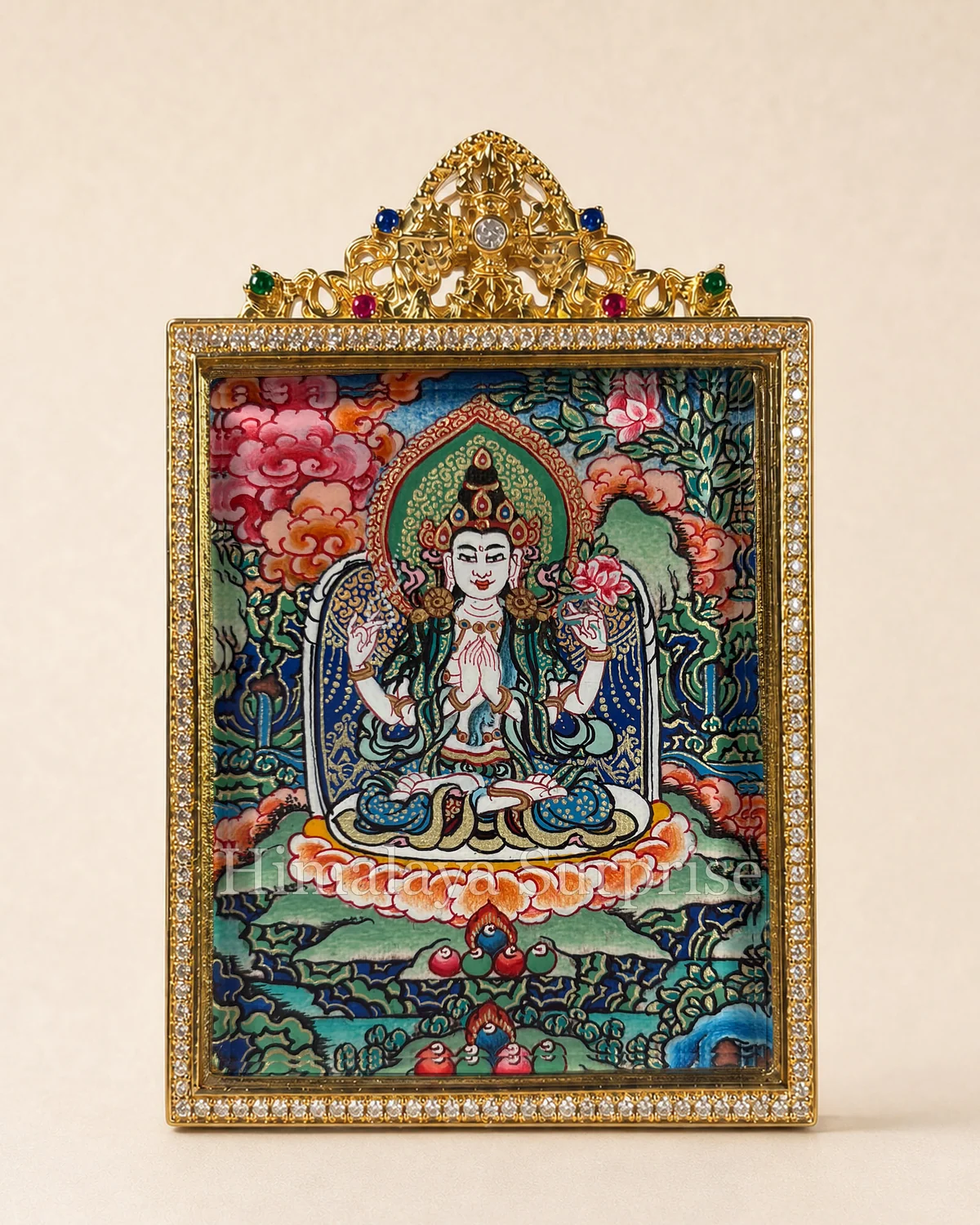
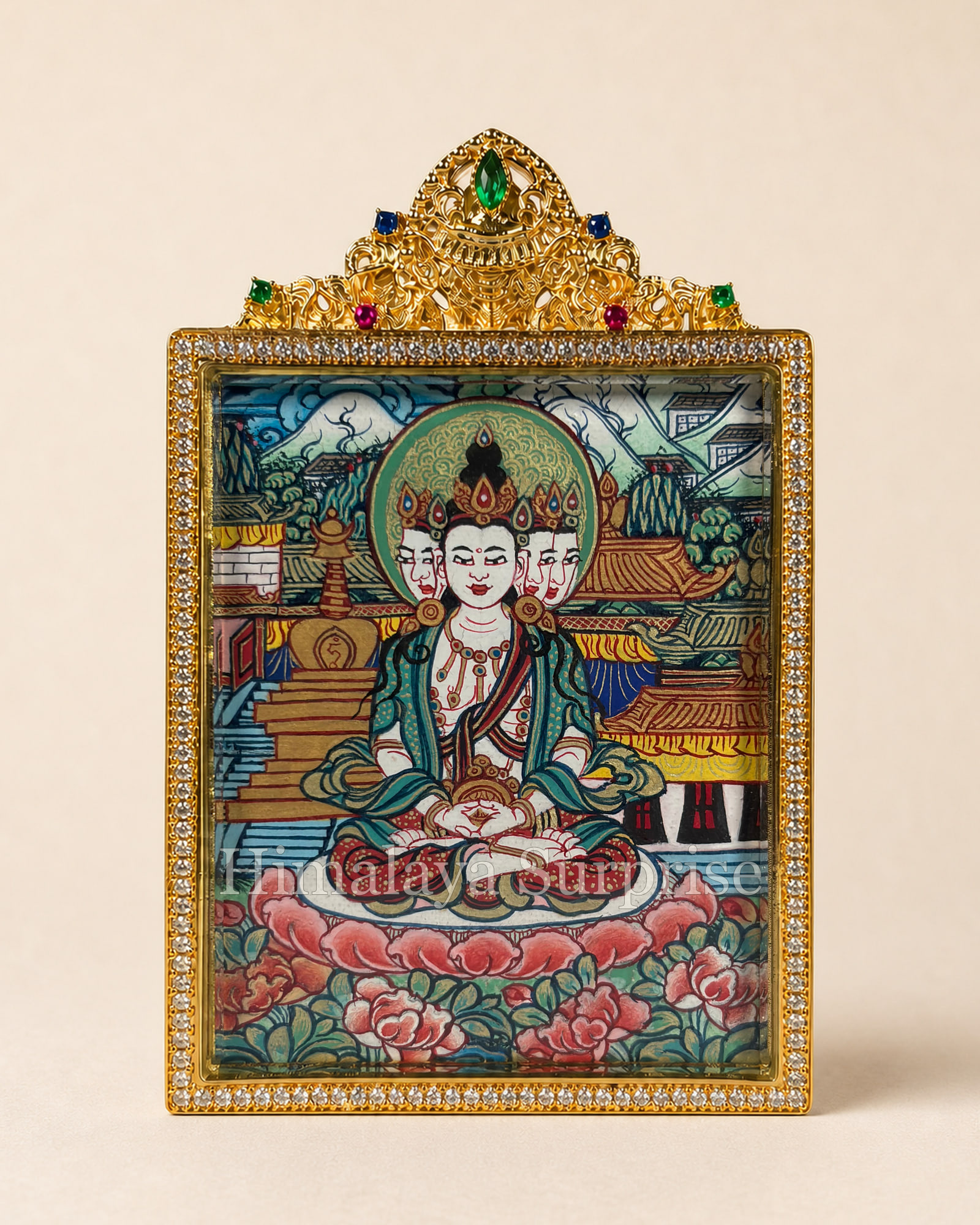
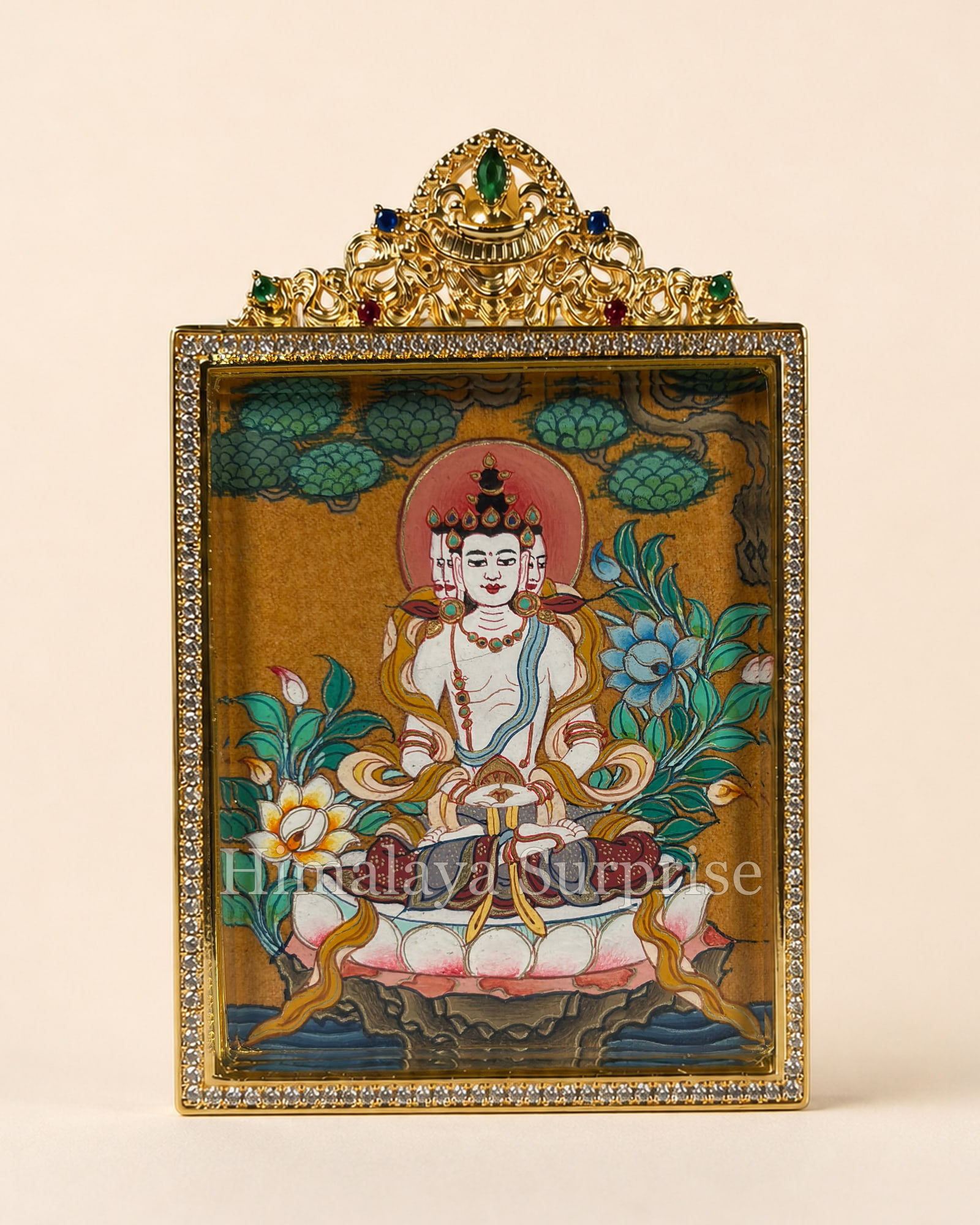
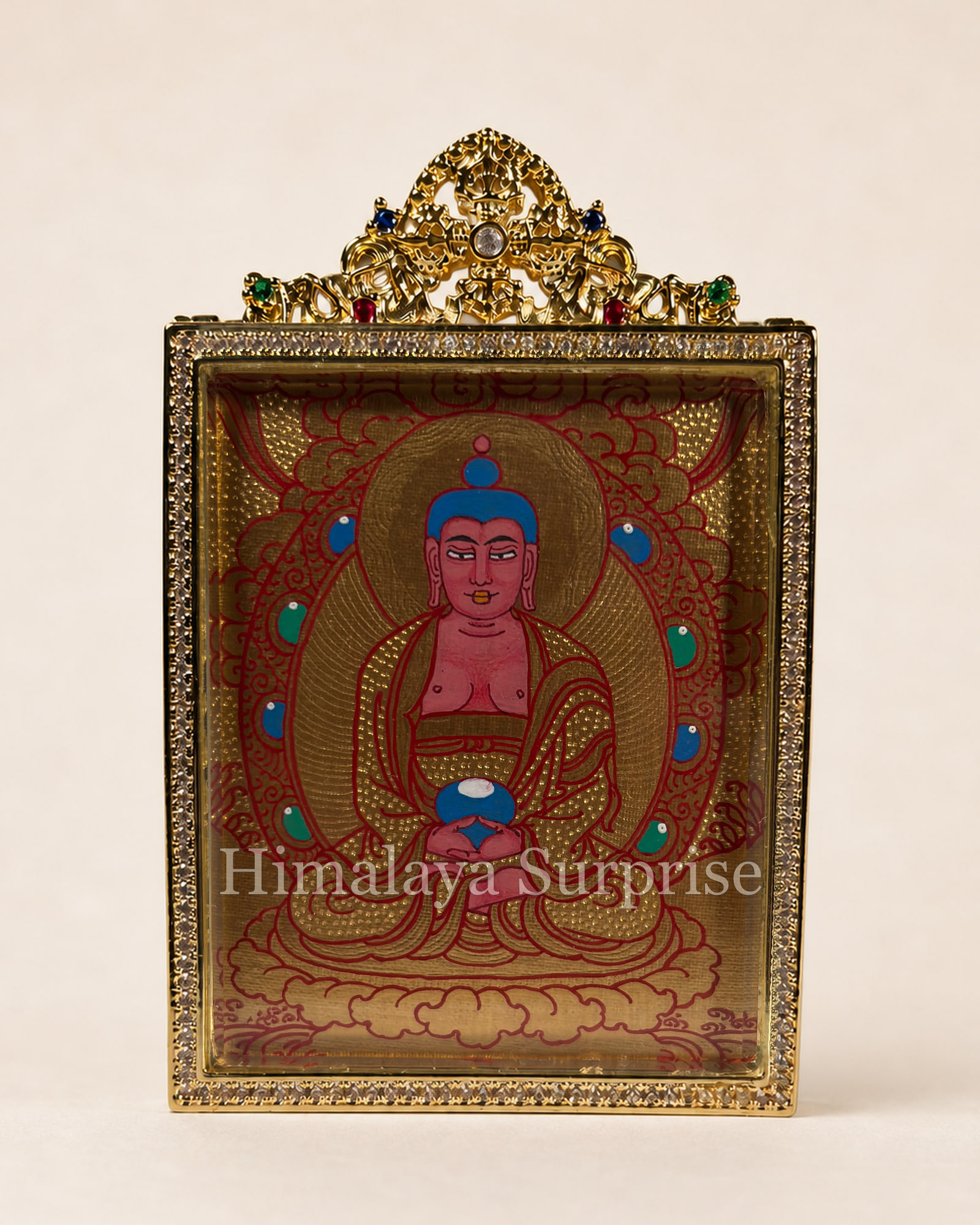
The paired Tara painting shown above brings two figures into a shared landscape: pale and green bodies, lotus seats and flower stems. In the Amitabha painting below, a central Buddha sits beneath a flowering tree, surrounded by smaller figures, pools and offerings. A recipient who enjoys close looking might appreciate the relationship between two figures; another may linger over the many small scenes around a central presence. Subject and composition work together.
Colour, contrast and the way a room feels
Colour often makes a gift feel personal before the subject is fully understood. The white and green figures in the paired Tara image have a different presence from Amitabha’s warm red body and dense surrounding landscape. Gold can pick out fine lines, while a dark ground can draw attention to the figures outlined against it. Look at the whole palette alongside the recipient’s taste and room. Screens can shift colour, but comparing two current images side by side can still help you notice the line, contrast and atmosphere you prefer.
Match the size to the place where it will be seen
A small thangka is not automatically the easier gift. A framed miniature may suit a shelf, desk or close viewing, while a larger work needs wall space, safe support and a sensible viewing distance. Separate the painted area from the complete outside or hanging size before ordering. A frame, brocade, rods or a hanging loop can change the finished dimensions, so imagine the whole object in the room rather than the painted panel alone. Look at doors, windows, heat, moisture and the ordinary path through the room. A smaller work can be intimate; a larger work can give a prepared wall more presence. The useful question is whether the recipient has a comfortable place and a realistic way to live with the size.
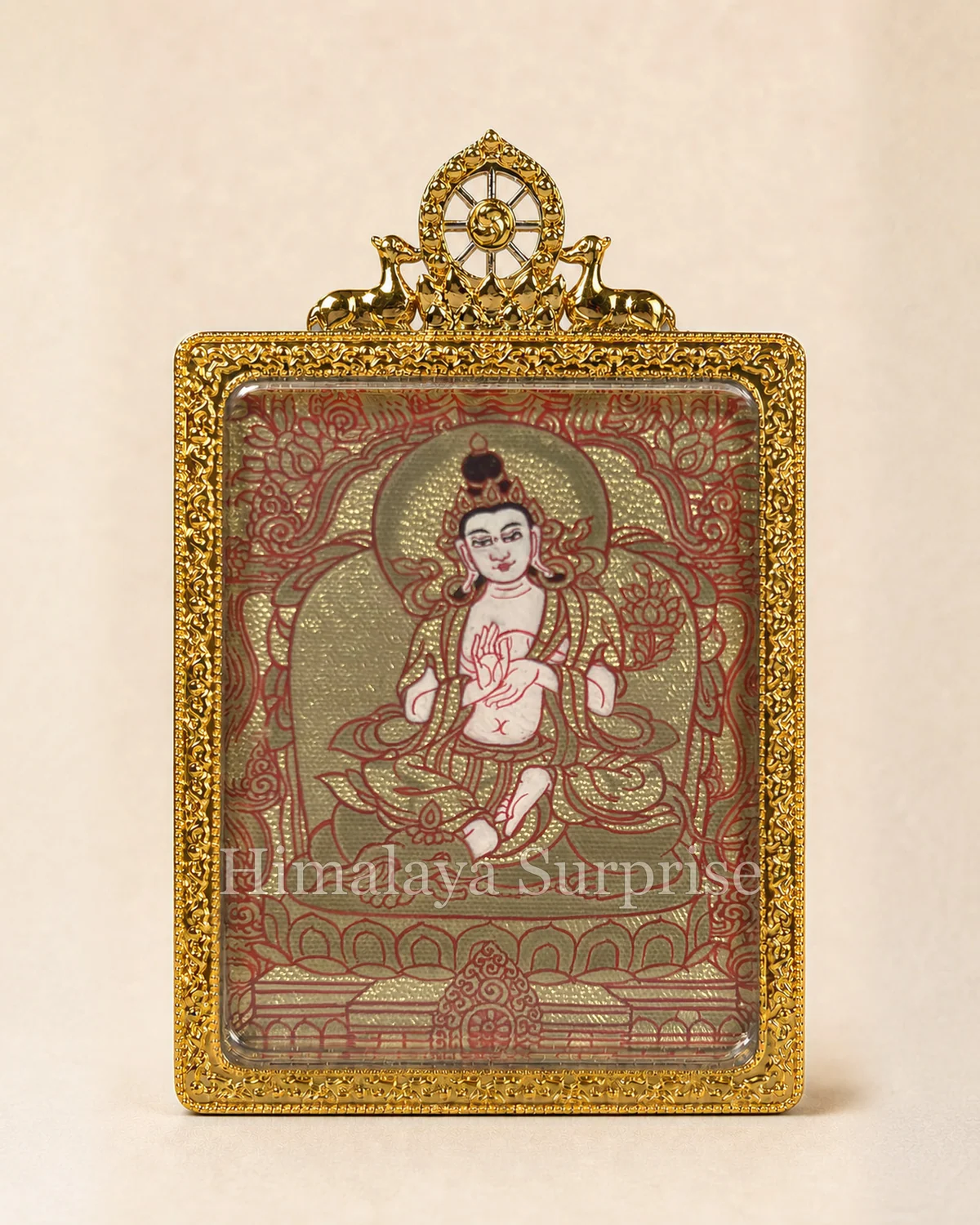
TG-012 illustrates one compact format: its painted image is 4 × 5 cm, with a larger decorative housing around it. Those are two different measurements. The complete outside dimensions matter when you are planning a shelf or a wall; the painted area tells you how closely the picture invites you to look. The size and display guide explains that distinction in more detail.
Choose framed or rolled with care in mind
A framed work has a defined visual boundary and may suit someone who wants to place the gift in a room soon after receiving it. A textile scroll has its own rhythm of opening, viewing and rolling, and asks for more deliberate handling and storage. Neither format is better in the abstract; the better gift is the one the recipient can live with comfortably. Keep either format away from water, strong sun, smoke, cooking vapour and repeated touching. A framed miniature and a traditional textile scroll do not have identical care needs, so let the person’s room, habits and willingness to handle the work guide the choice.
Preparing the gift
Once you have a work in mind, leave enough time for dispatch and delivery to the recipient’s destination. Check what the order includes, especially the frame or mount if it affects your plans. A ready-made work and a commission have different timing. The current buyer guide is the place for delivery and purchase terms. A personal note can be much simpler: say what drew you to the subject, line or palette.
Keep the note, ribbon and any decorative paper outside the work’s protective packaging rather than pressing them against the painted surface. If special gift wrapping matters, ask about the actual order; do not assume every seller provides it. The work should arrive protected, while the personal message can sit beside it.
Leave room for their own way of looking
A gift continues after the moment it is opened. The recipient may find a place for it immediately, or take time to decide where it belongs. Explain what drew you to the work, then leave space for a different response. A familiar figure, a favourite colour or a finely drawn line can become the beginning of their own relationship with the painting.
Questions and answers
What is a thoughtful thangka gift for someone who is not Buddhist?
Ask whether they would welcome a Buddhist image. If yes, start from their interest in painting, colour, craft or Himalayan culture, and let them decide how they want to look at it. A thoughtful gift does not require the recipient to share the giver’s beliefs.
Which subject should I choose as a thangka gift?
If the recipient names a figure or tradition, start there. Otherwise compare what is visible: a single figure, paired figures, a mandala or a narrative scene, along with the palette and scale that suit their space. The choice can begin with curiosity rather than a fixed gift list.
Is a small thangka always a better gift than a large one?
No. A small work may suit a shelf or close viewing, while a larger one may suit a prepared wall. Think about the room, viewing distance, light and support, then choose the scale the recipient can live with comfortably.
How can I make a thangka gift feel personal?
Write a separate note about what drew you to the subject, line or colour. Keep paper, ribbon and decorative material outside the work’s protective packaging so nothing presses against the painted surface. If gift wrapping or another special presentation matters, ask about the specific order rather than assuming it is included.