A Gau Box Is a Portable Shrine
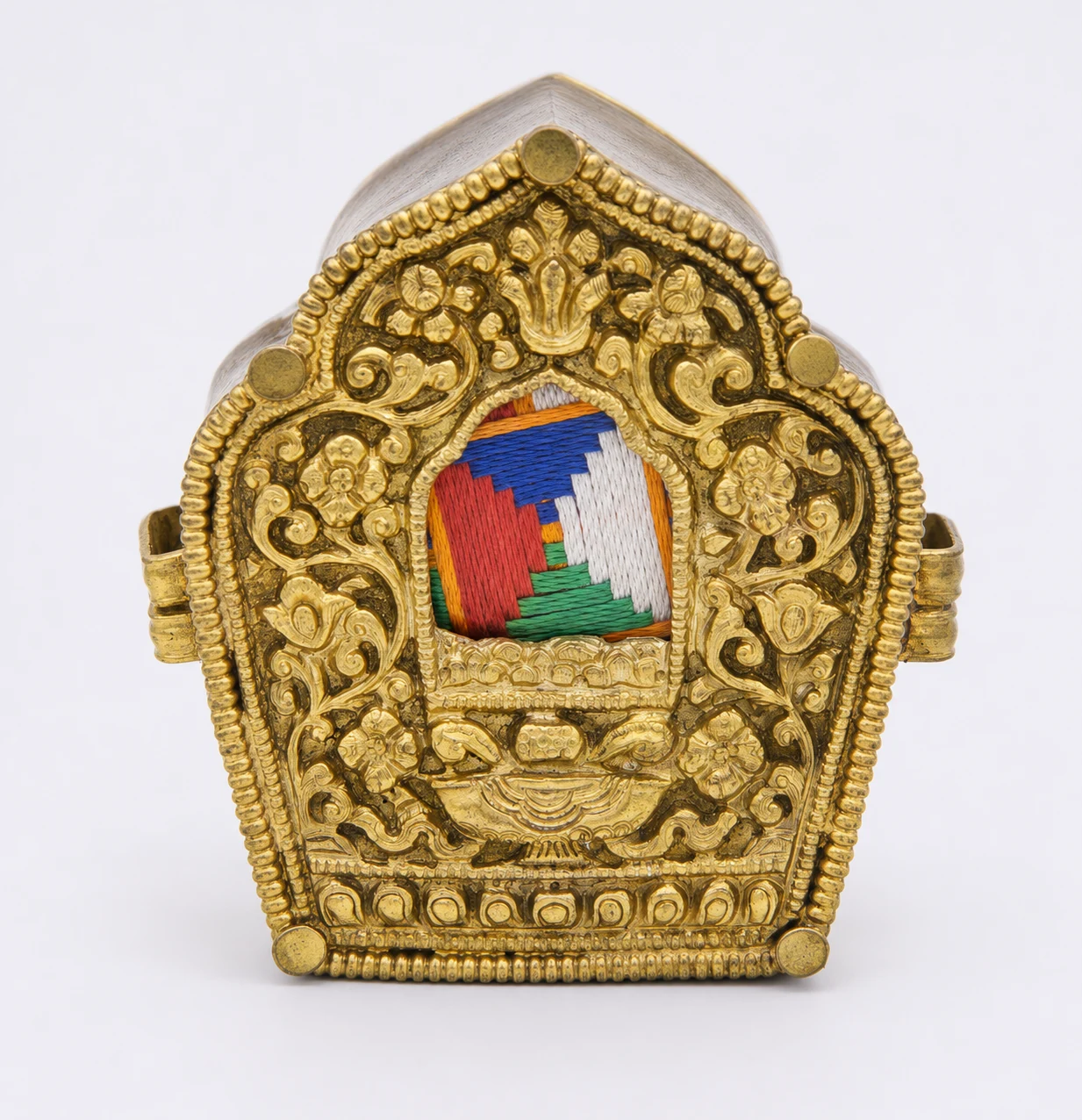
A shrine is a space for housing a sacred image. When that space is reduced in scale and placed inside a box, the gau becomes a shrine that can travel with its owner. In a portable context, a gau is often described as a “portable shrine” or a “mobile temple,” reducing a religious space once fixed in a monastery or home to an object that can stay close at hand.
The images, scriptures, tsatsas, pills, or other sacred objects inside work together with the case to form the gau’s contents and function. The case, window, inner space, and carrying connection form its basic structure.
What Is Kept Inside a Gau Box?
A gau may contain a small image, a miniature thangka panel, scripture, a mantra, a tsatsa, a relic, a medicinal pill, or another object received from a monastery, teacher, or family tradition. The contents of each case depend on its specific tradition, family source, and personal relationship.
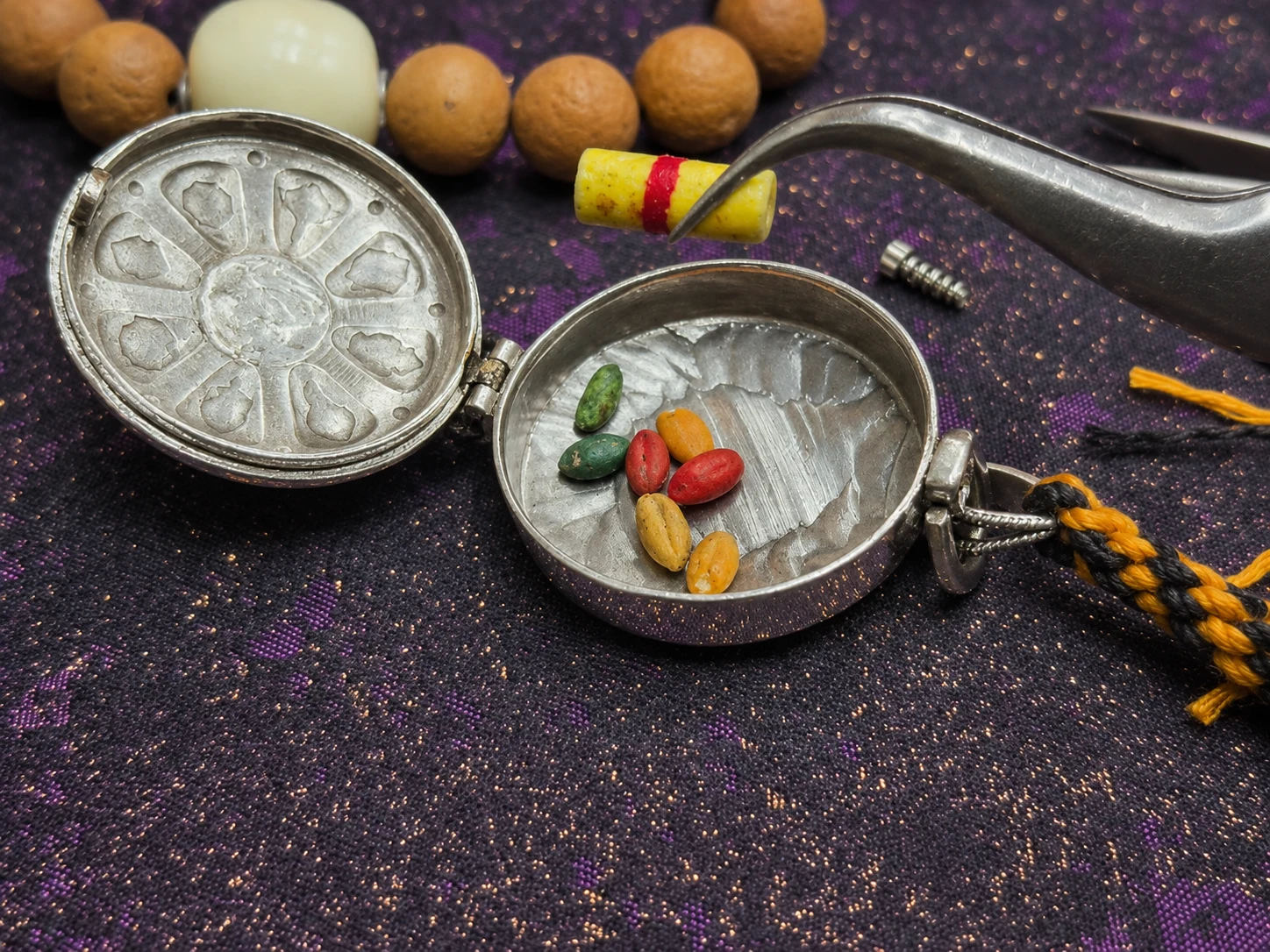
Some gaus have a front window that keeps the principal image or object visible. Others place greater emphasis on enclosure and storage, so the contents can be seen only when the case is opened. The window size, opening method, and inner space affect what the case can hold.
The objects inside have different sources and functions. The gau provides the structure for containment and carrying, while its specific meaning is connected to the contents and their relationship with the person who keeps them.
Forms, Windows, and Ways of Wearing a Gau
A gau does not have one fixed outline. Existing examples can be square, round, tower-shaped, or irregular; some narrow toward the top, some use an arched window, and others remain close to a simple box or oval form.
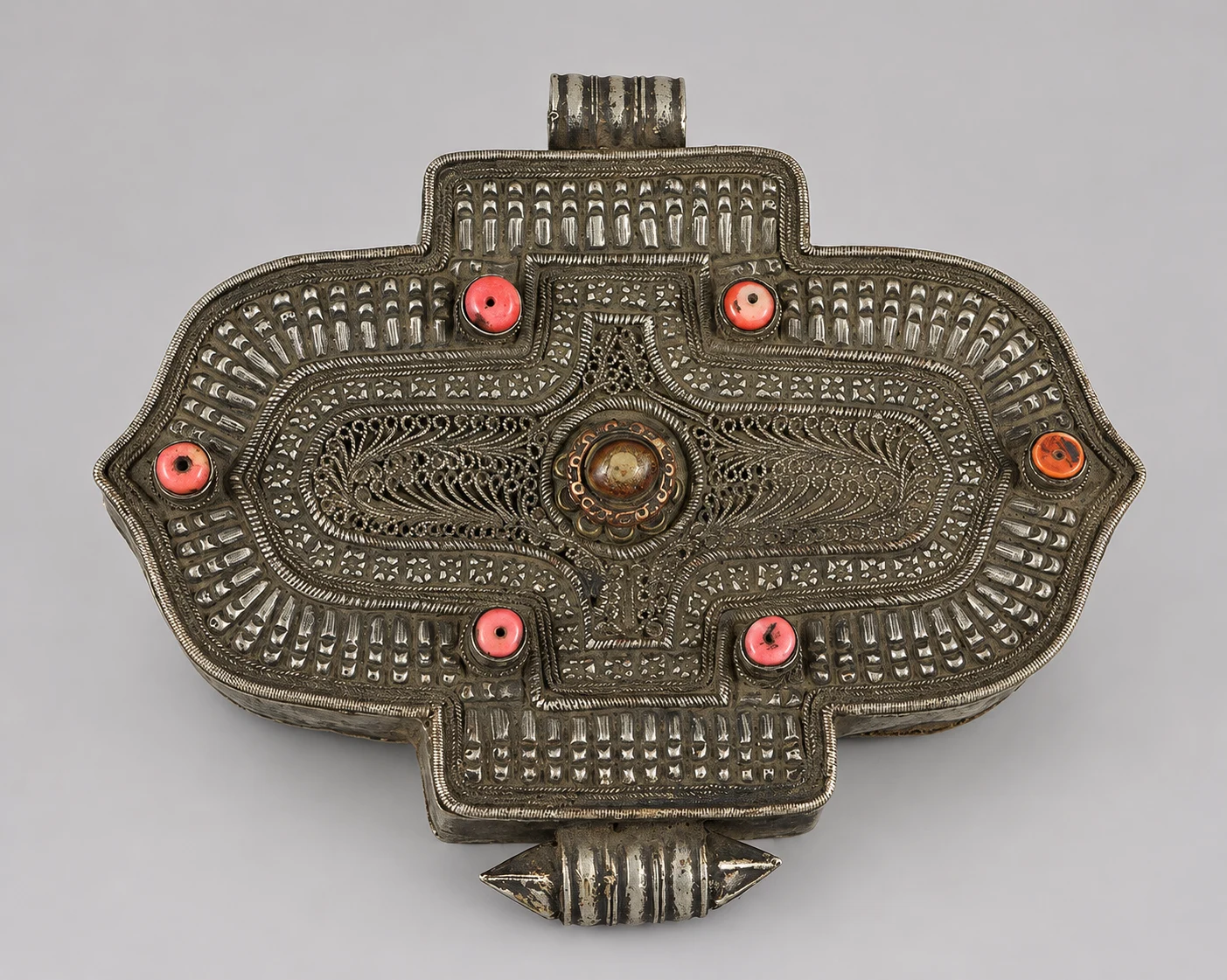
A small gau may be worn at the chest with a loop, cord, or necklace. It may also be placed in a vehicle, on a desk, or in another setting where an object is kept. A larger case may serve as a display, offering, or collecting object.
The window, top, base, and sides can carry dragons, lotus motifs, scrolling foliage, the Eight Auspicious Symbols, or other ornament. Gemstones, turquoise, coral, and amber may be used for inlay or decoration. These motifs and materials shape the appearance of the case.
Materials and Craft in the Case
Gau cases can be made from gold, silver, copper, iron, or wood. Metal cases may feature chasing, wirework, inlay, carving, and surface decoration; the material and technique affect the case’s weight, touch, colour, and fine detail.
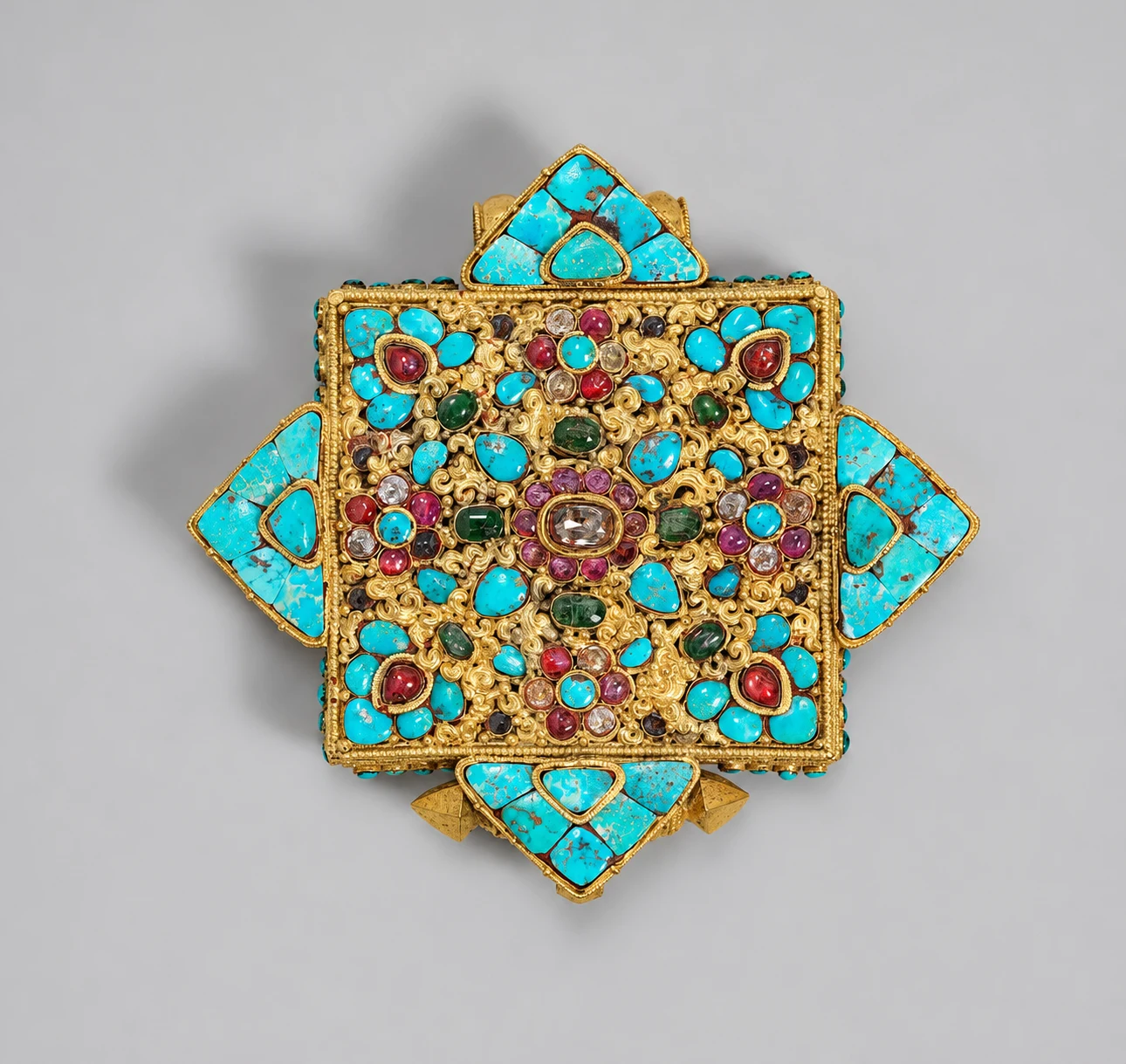
As the case becomes smaller, the distance between its window, border, loop, and ornament becomes tighter, so the details require more controlled execution. The case’s opening, connections, edges, and inner space need to work together.
The same motif can look different when the material, construction method, or form changes. Metal sheen, the feel of wood, gemstone colour, and hand-worked ornament create the visual layers of the case.
Gau Boxes, Miniature Thangkas, and Gau-Style Box Frames
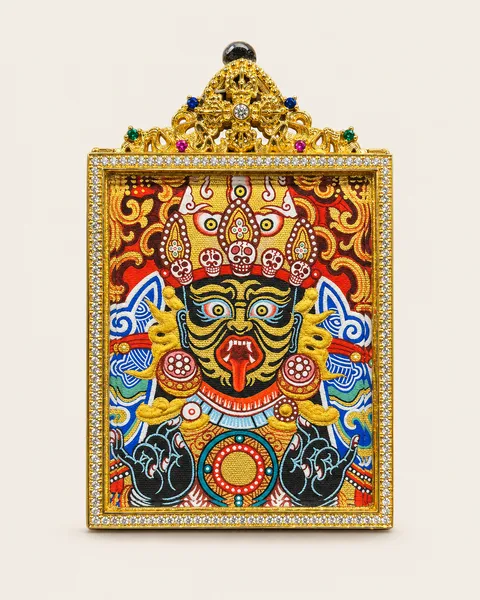
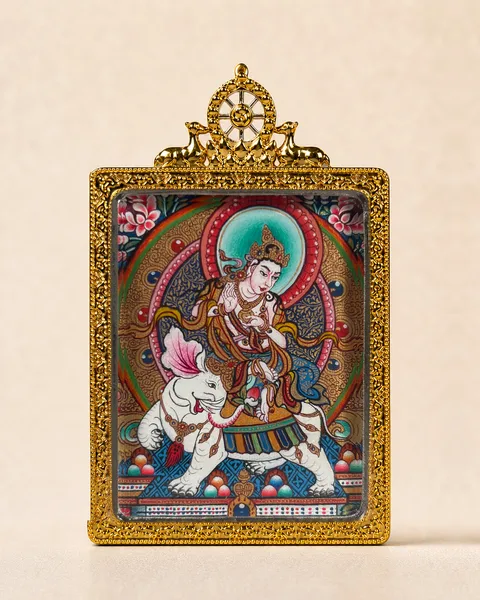
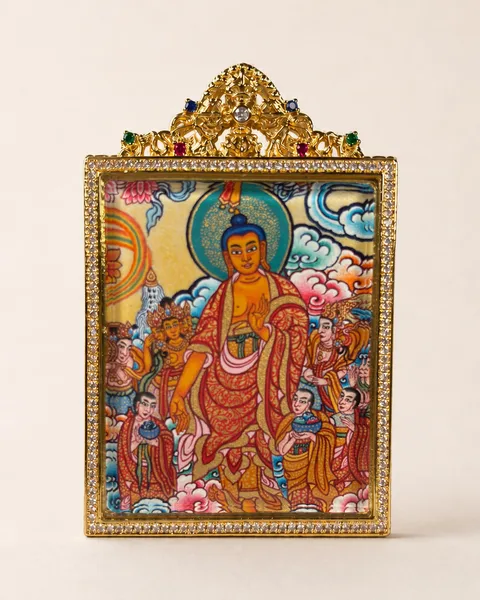
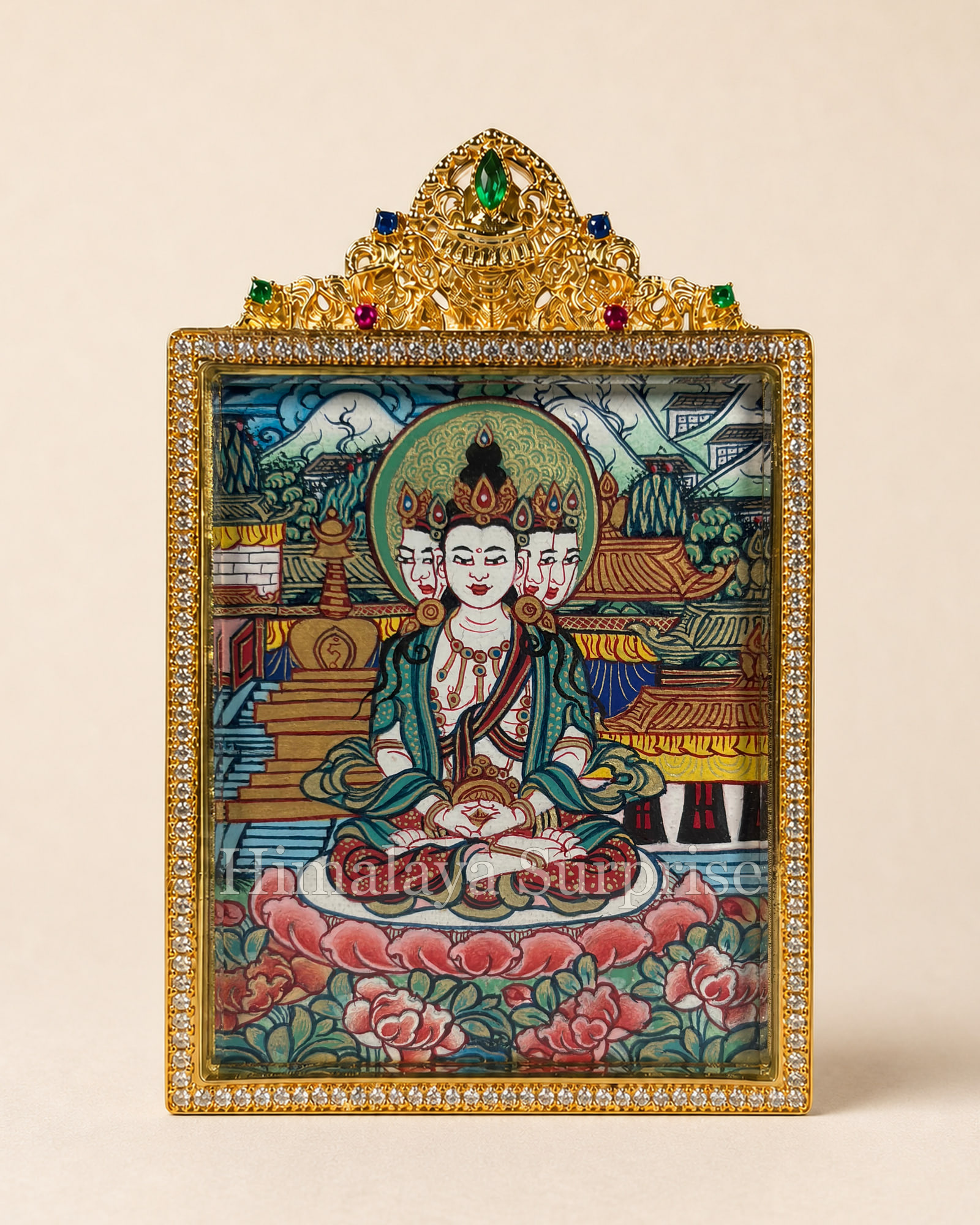
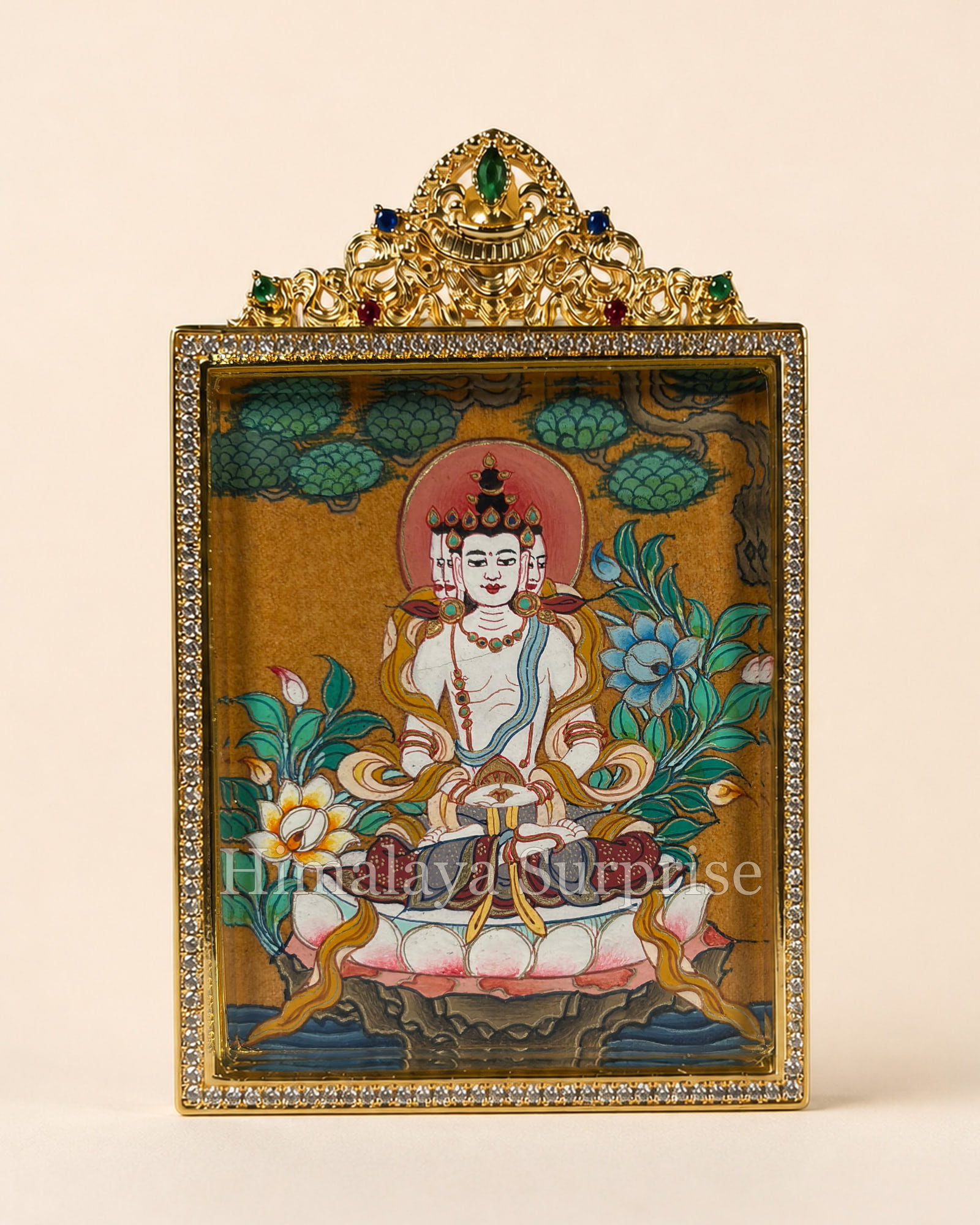
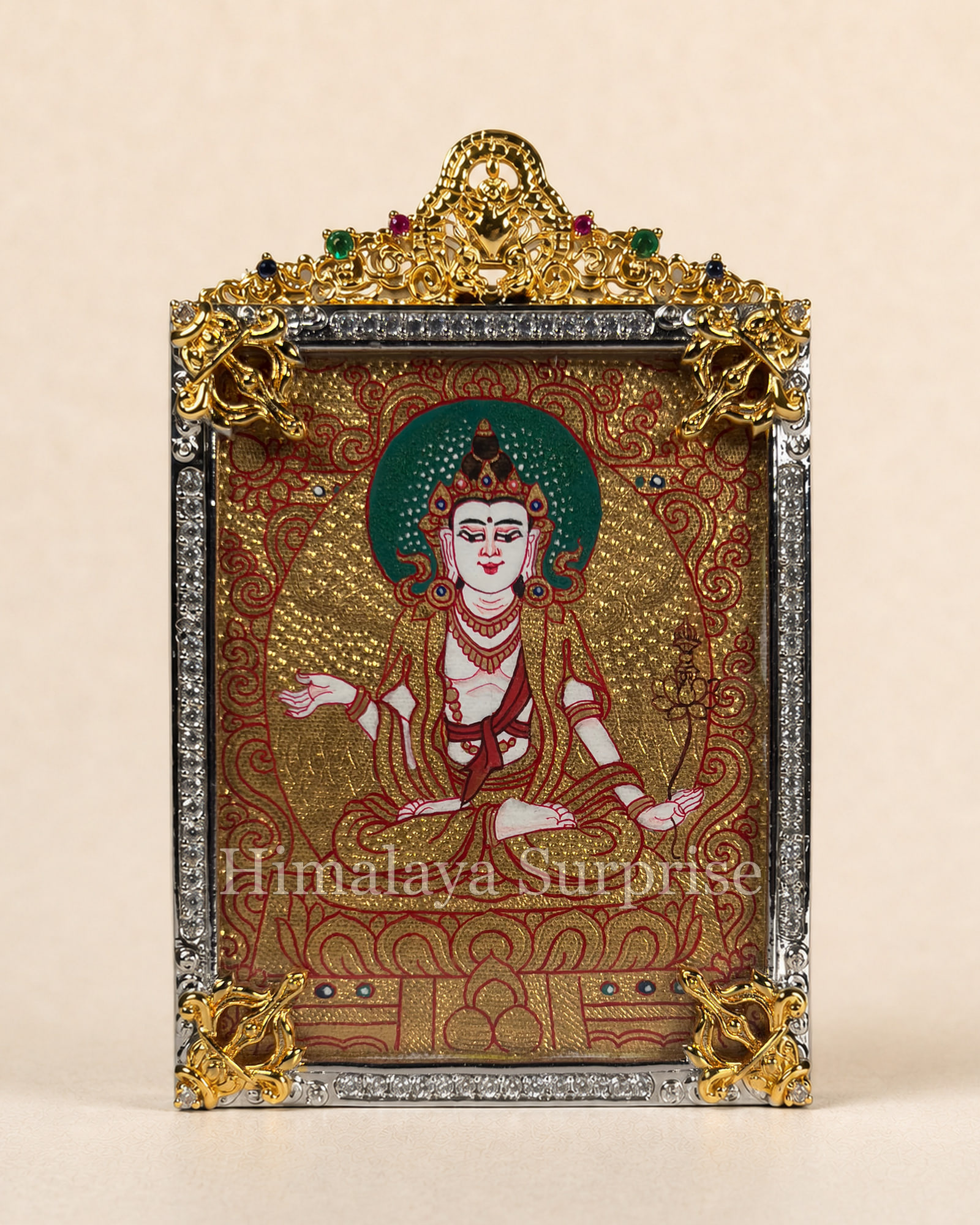
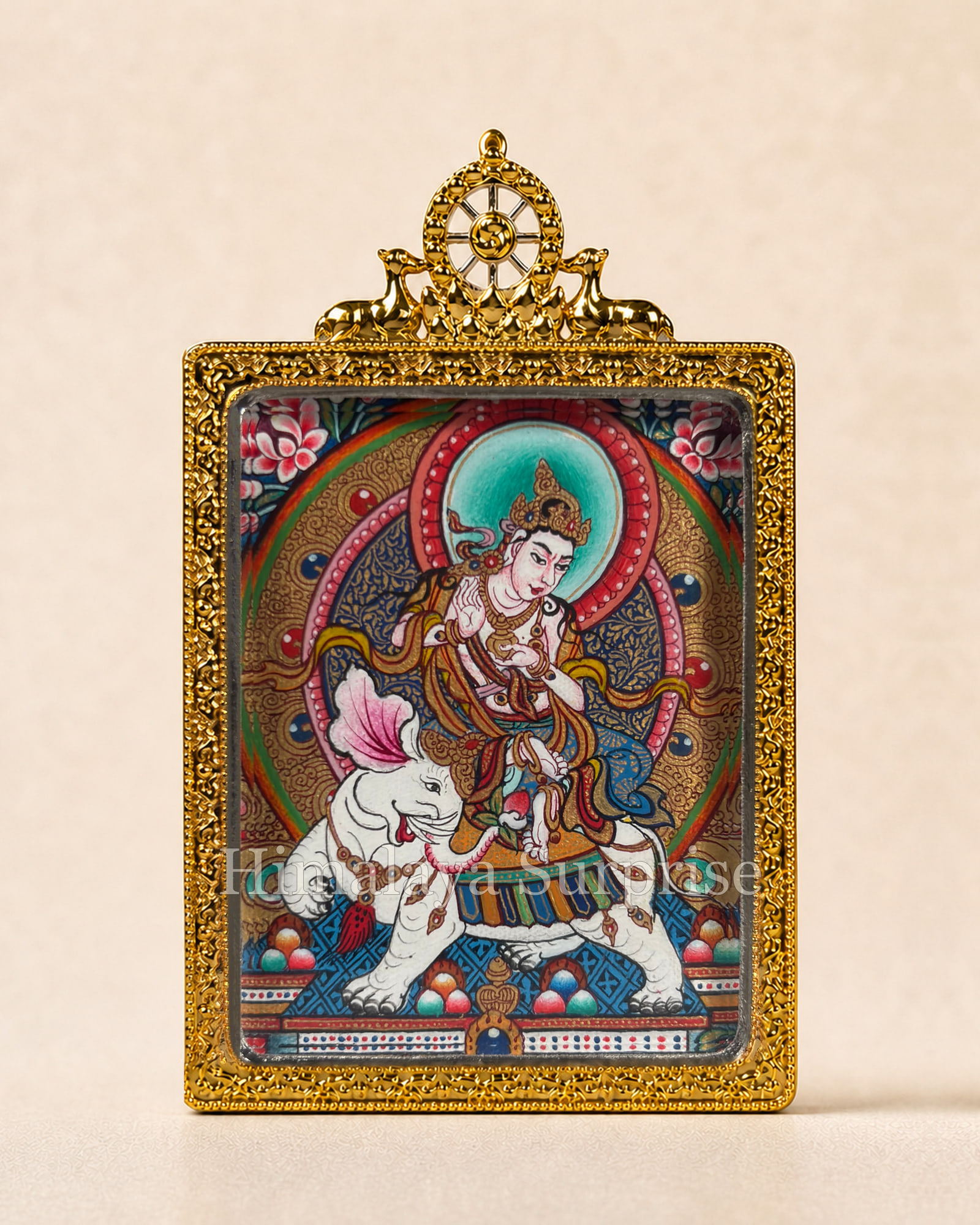
A miniature thangka is the painted image, while a gau is the box-shaped structure that contains, surrounds, and protects the contents. A miniature thangka may be placed inside a gau and worn with a cord or necklace. An ordinary outer frame with a loop and strap can form a portable display structure; a gau-style box frame adds a case that supports and protects the painted image.
In the current product, the painted image sits inside a gau-style box frame. The frame supports and protects the image, while the loop and cord connect it to the wearing position. The image, box frame, and cord each have a distinct role; together they form a wearable miniature thangka.