A Miniature Thangka Is the Painted Image
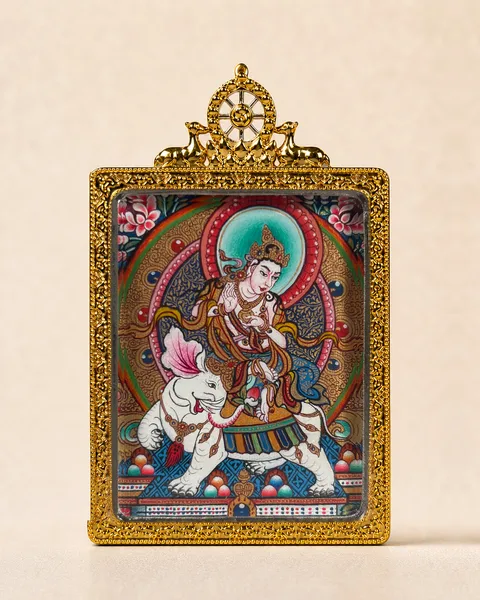
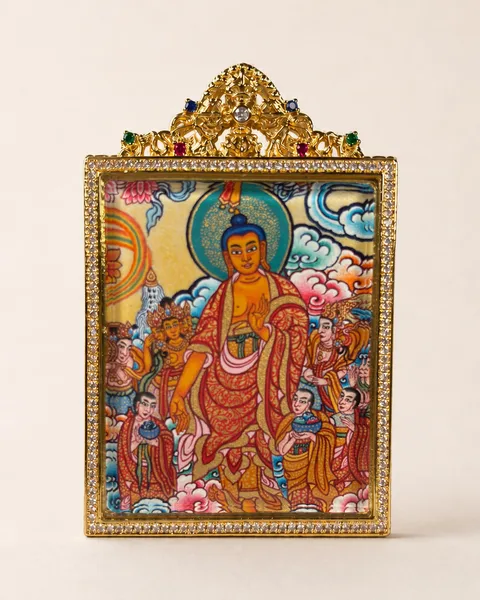
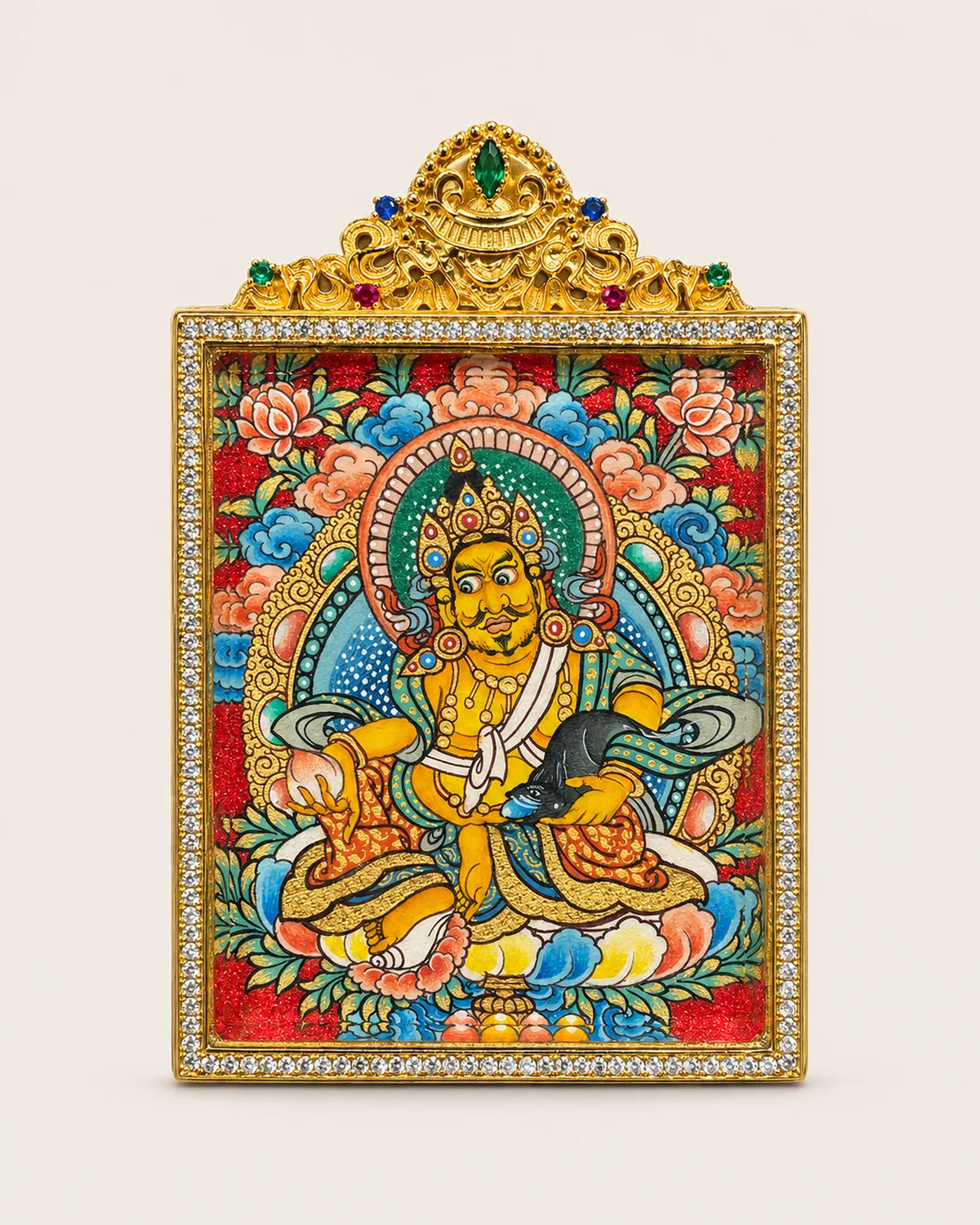
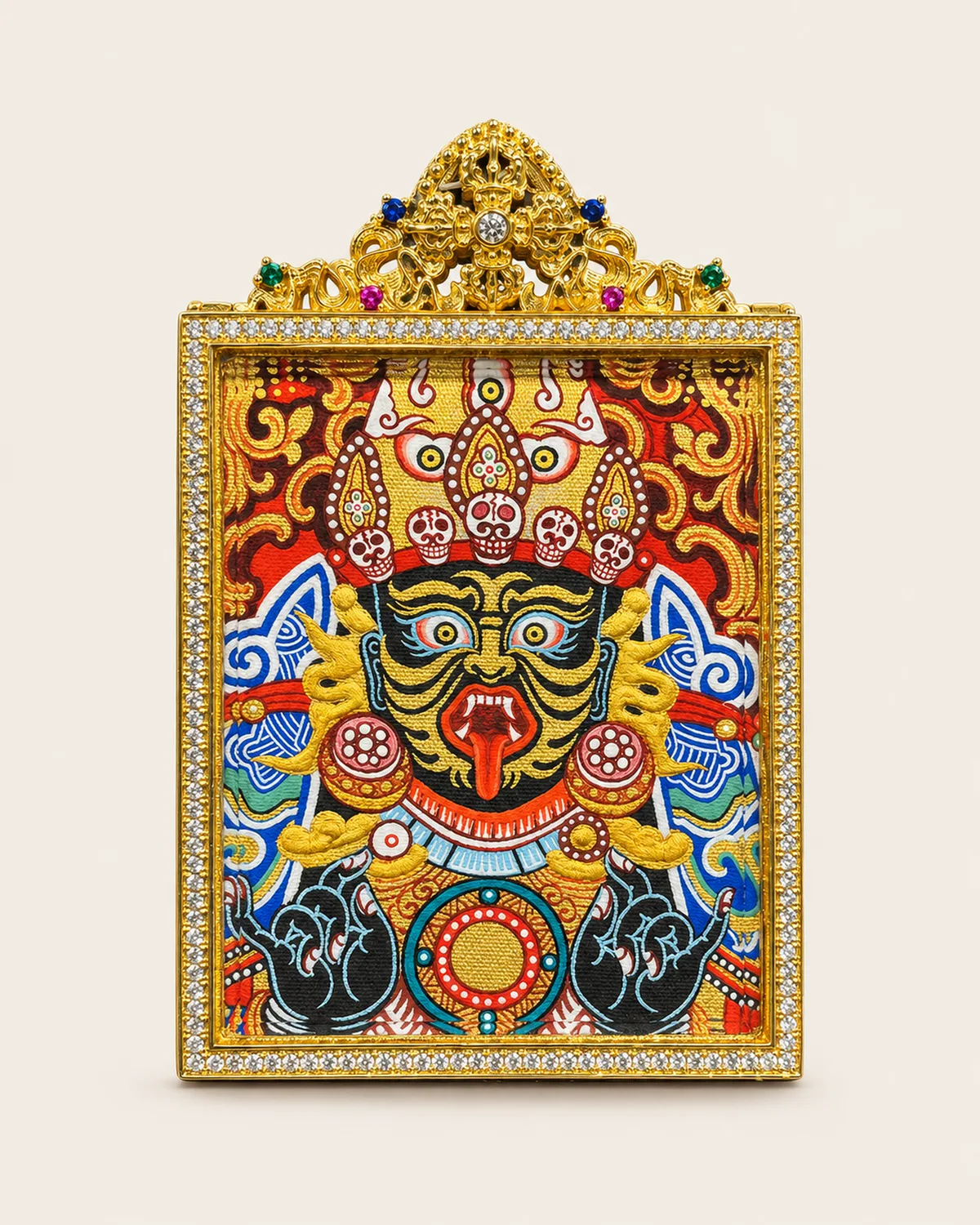
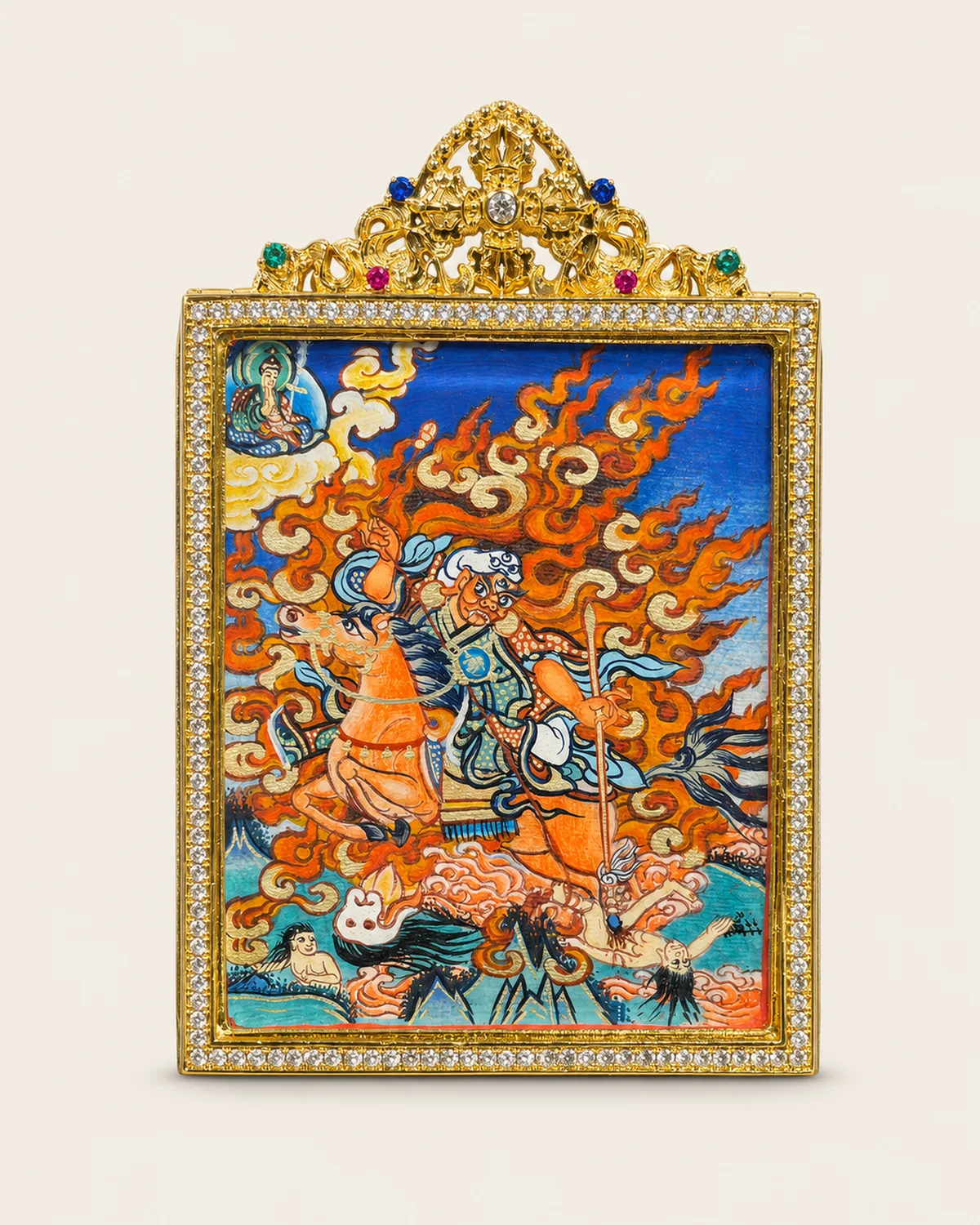
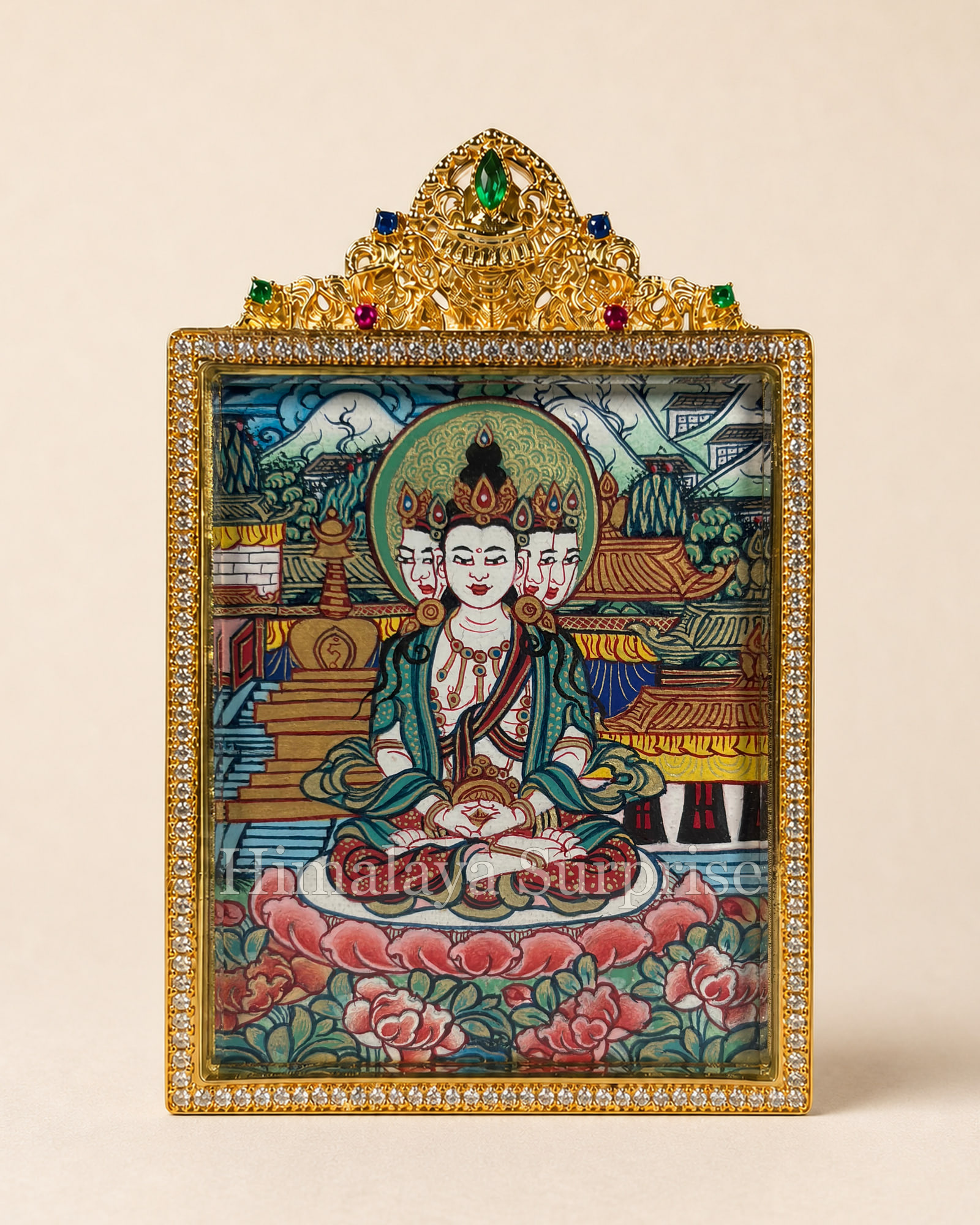
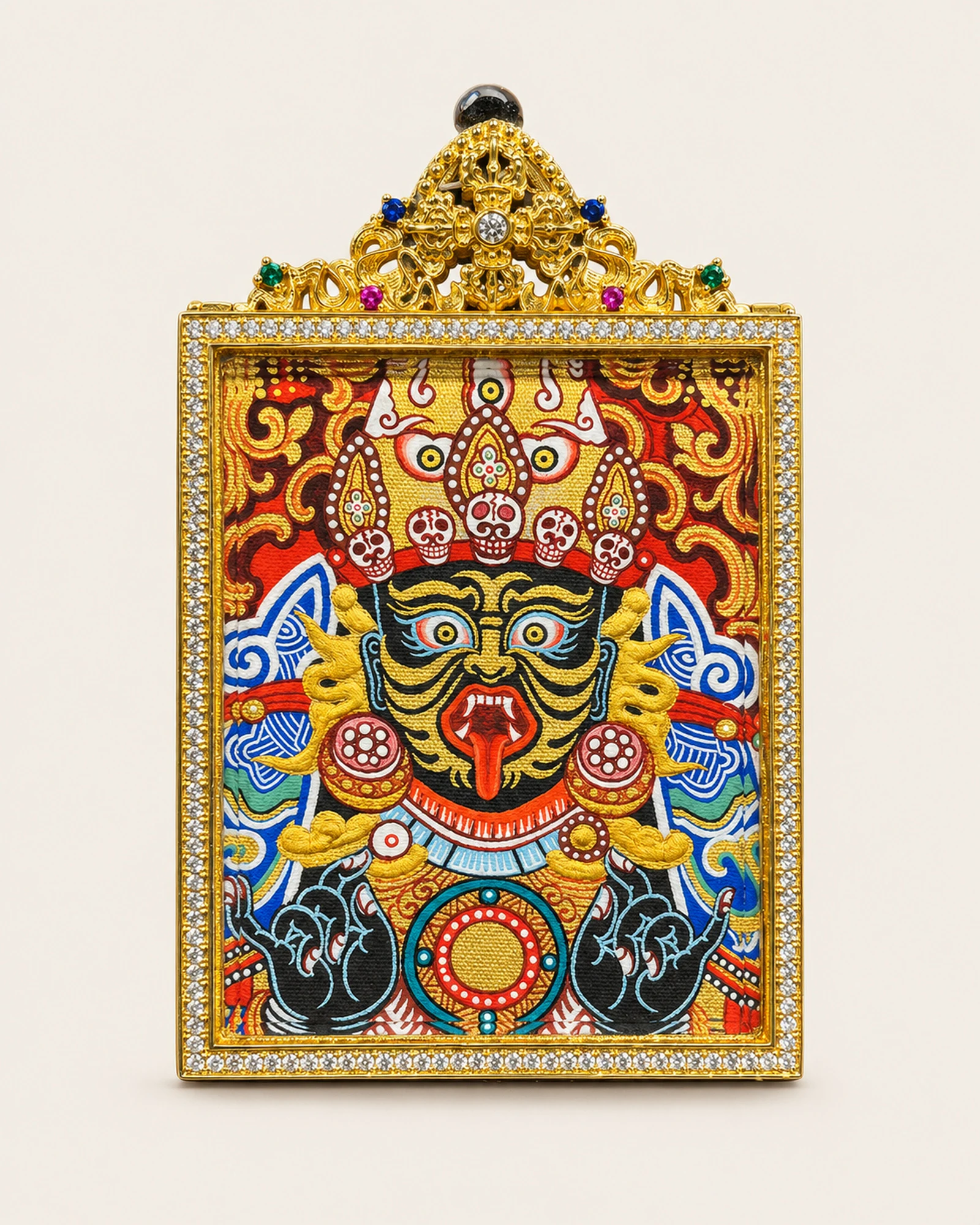
A miniature thangka is a thangka completed within a small painted area. Even when the image is only a few centimetres high, the subject, posture, colours, and visual layers still need to remain legible.
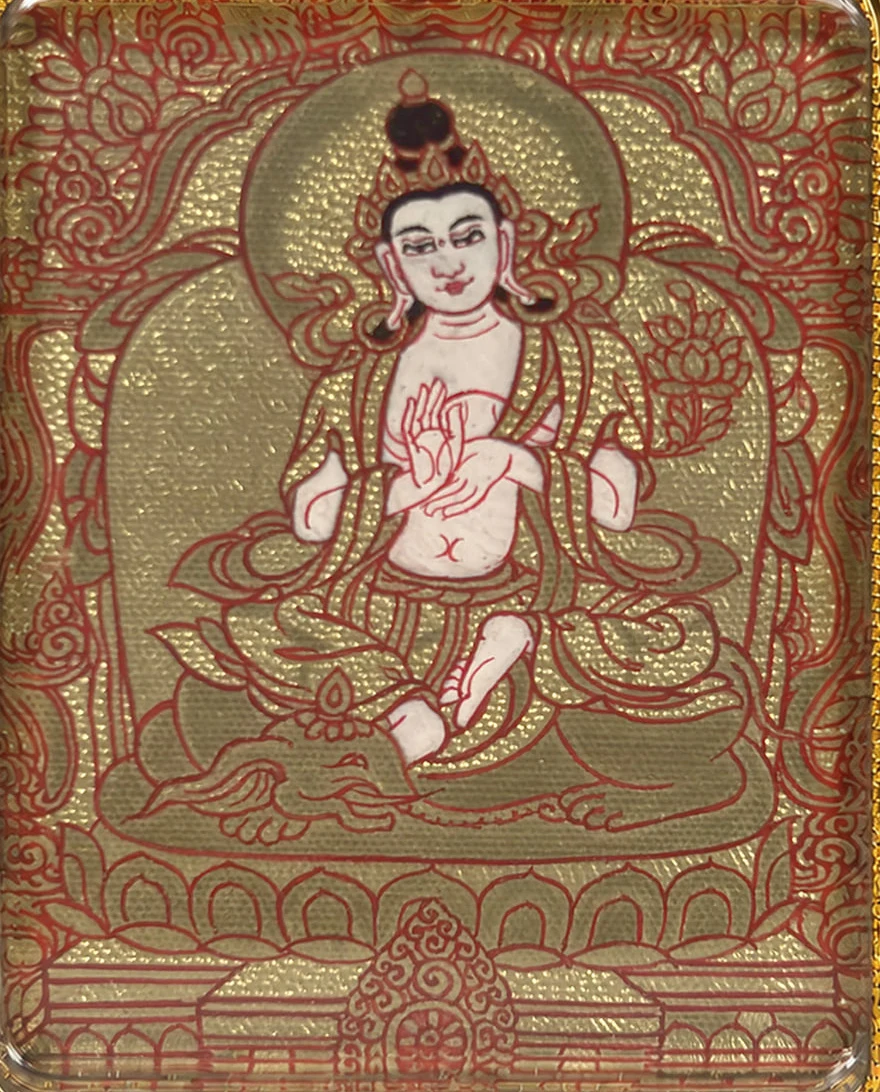
The smaller format changes the available painting space. It does not remove the information carried by the image. The deity, gesture, hand mudra, attributes, clothing, and colour relationships are all expressed through the painted image itself.
The miniature thangka is therefore the centre of the work. It can be viewed as a small hand-painted artwork, or it can be placed inside a case and combined with a cord to form a portable object.
A Gau Box Is the Container
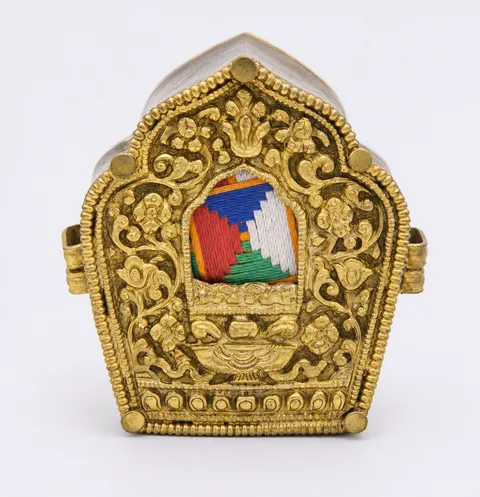
A Gau box—also written gau, gawu, or ga’u—is a small, portable box used to contain, protect, and carry valued religious contents. Its structure may include an outer case, a window or opening, an interior space, and a ring or cord attachment.
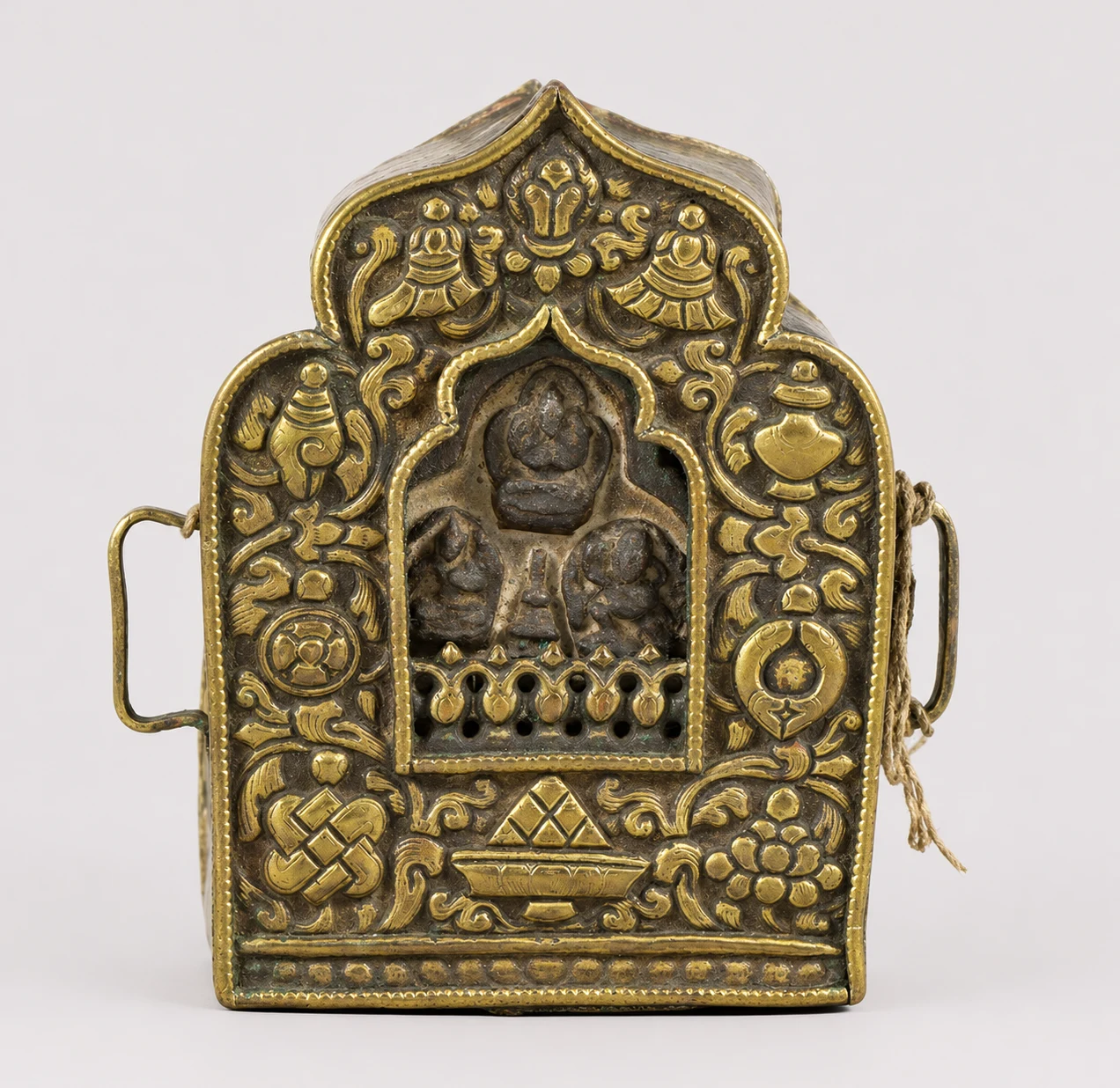
The contents can include a small image, a miniature thangka card, scripture, mantras, tsa-tsas, relics, amrita pills, or other treasured objects connected with a monastery, teacher, or family tradition. The box supplies the containing and carrying structure; the contents give the individual box its particular history and meaning.
A Gau box can also be understood as a portable shrine. A sacred space that would otherwise remain in a temple or home is reduced to a small case that can travel with its owner.
How the Two Form a Wearable Work
A miniature thangka can be placed inside a Gau box and then worn with a cord or necklace. The painted image carries the visual content, the case provides enclosure, support, and protection, and the ring or cord connects the finished object to its place of wear.
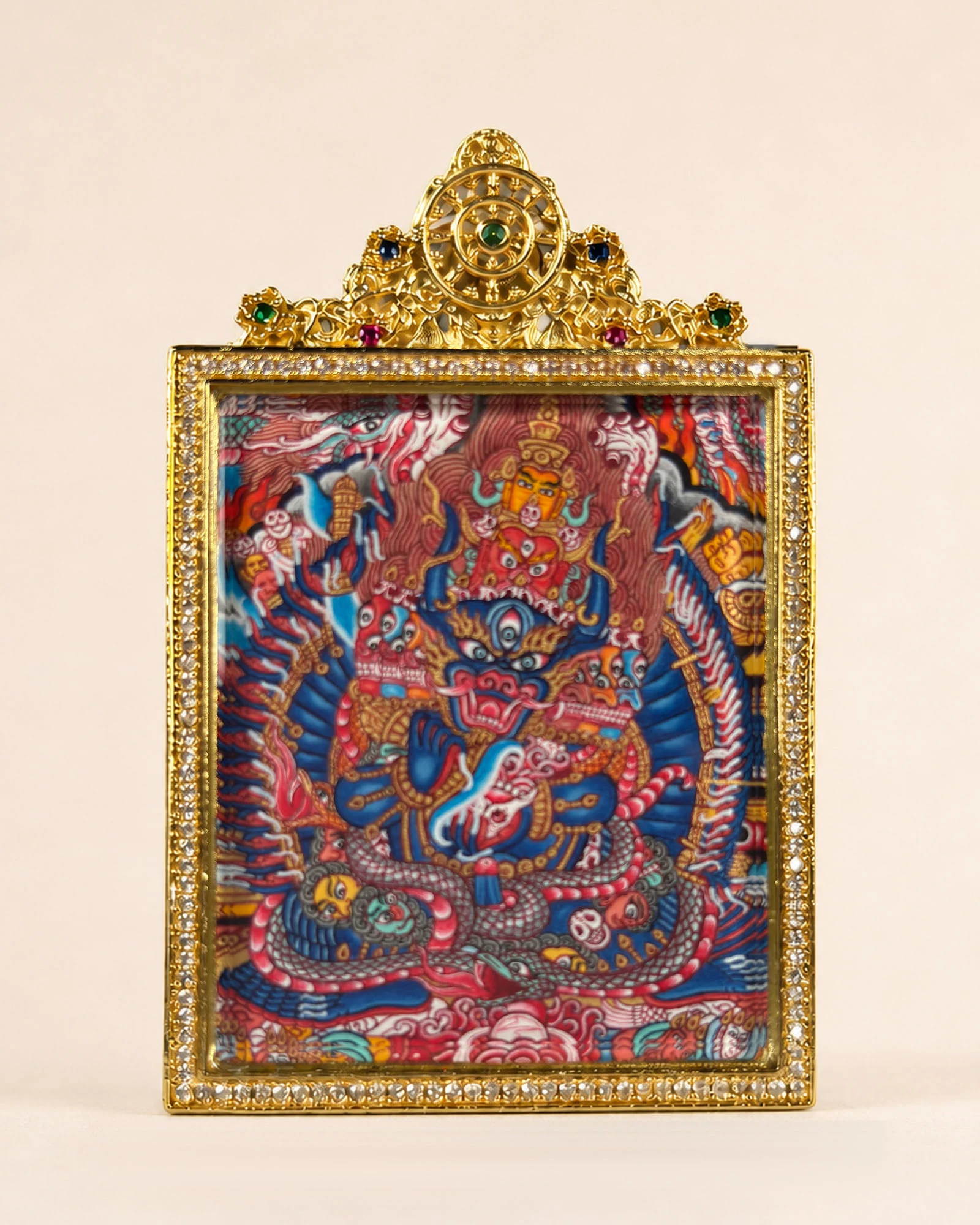
In the current product form, the painted image sits inside a Gau-style box frame. The frame supports and protects the painting, while the ring and cord provide the wearable connection. The image, frame, and cord each perform a different task and together form a wearable miniature thangka.
The form of the case, its opening or closure, and the position of the hanging loop affect how the work is secured and carried. A small image also needs to fit the interior dimensions of the case, while the protective and wearable connections remain stable.
A pendant or necklace describes a way of wearing an object. A Gau box describes a box-shaped structure. A miniature image may sit inside a Gau box frame and be worn with a cord or necklace; another work may keep the image visible in a conventional frame with a loop and cord, without having the box structure of a Gau.
Gau Boxes Vary in Shape and Content
A Gau box does not have one fixed outline. It may be square, round, shrine-shaped, oval, or irregular. Some forms narrow toward the top, while others use an arched window or a simpler closed case.
Some cases place a window on the front so that the main image or object remains visible. Others emphasize enclosure and storage, with the contents visible only when the case is opened. The size of the window, the opening method, and the interior space affect what the box can hold.
Gau boxes may be made from gold, silver, copper, iron, or wood. Metal cases can use chasing, filigree, inlay, carving, and surface decoration. Material and workmanship change the box’s weight, touch, colour, and fine detail.
Small Gau boxes are often worn at the chest with a ring, cord, or necklace. They may also be placed in a car, on a desk, or in another chosen location. Larger cases can serve as display, offering, or collecting objects.
Reading the Name of a Wearable Work
When a description says “miniature thangka,” it is naming the painted image and its content. When it says “Gau box,” it is naming the case, window, interior space, and wearable connection. When both names appear together, the image and the box-shaped structure have been combined in one finished work.
“Frame” can be useful as a general word, but a product description should distinguish an ordinary outer frame, a Gau-style box frame, and a true Gau box with an interior box space. The distinction tells the reader whether the object is a painting, a case that protects the image, or a completed wearable work made from both.
The miniature thangka determines what image the work presents. The Gau box determines how that image is supported, protected, and carried. Once those roles are clear, the dimensions, materials, opening, cord, and use of the finished work can be described precisely.